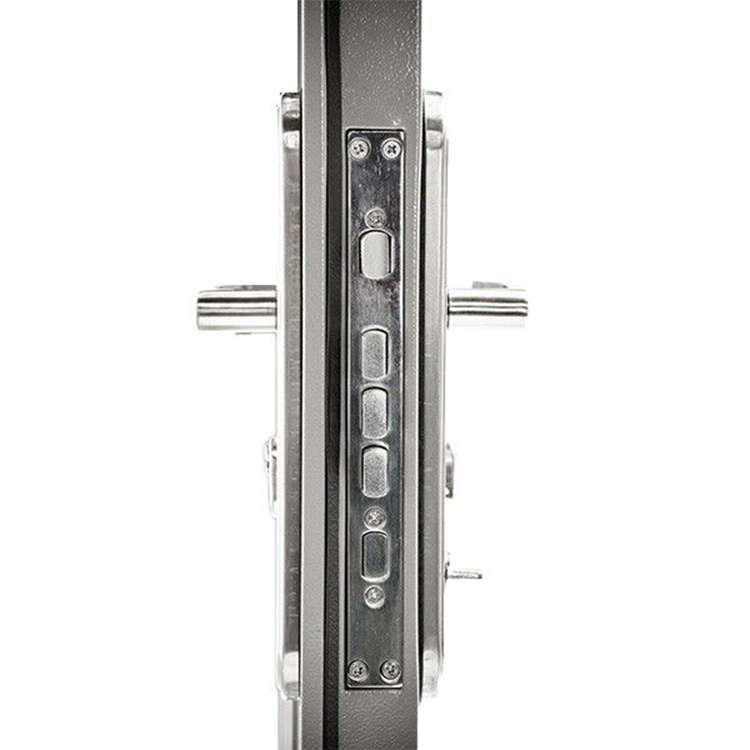
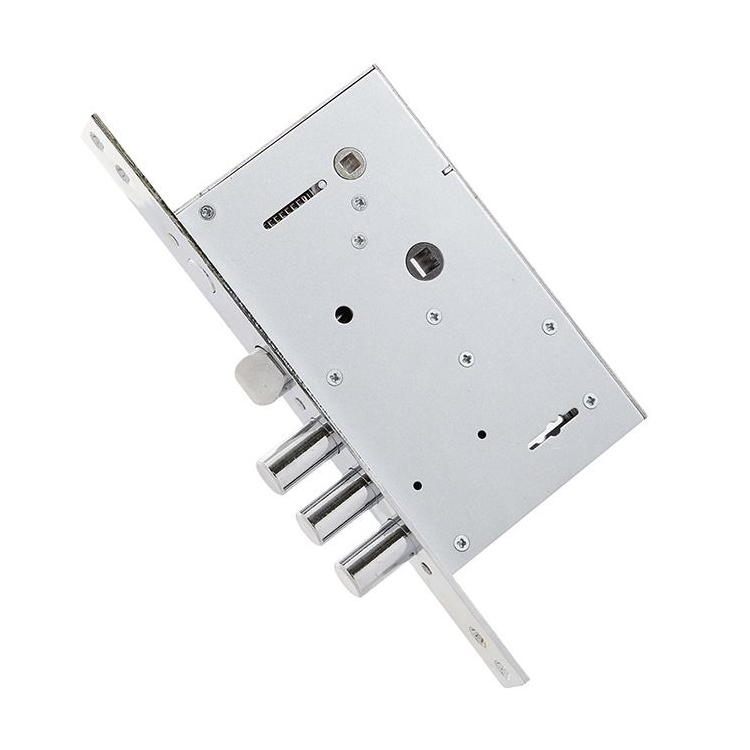
Looking for hardware solutions that meet European / American standards?
Use this guided inquiry modal to move from a generic quote form to a clearer technical conversation. Buyers can choose whether they need pricing, CAD / 3D files, or OEM / ODM support before sharing contact details.
Compatibility-first design across door / window systems
Repeatable production with clear inspection checkpoints
Documentation and change control for long-running programs
Responsive engineering support for fit and field feedback
I have watched beautifully rendered hardware concepts sail through procurement, impress everyone in a meeting, and then fall apart in the field because nobody asked the ugly questions about wear rate, actuator drag, stack-up tolerance, spring fatigue, handle return force, or what 200,000 abusive cycles actually do to zinc, stainless steel, nylon, and thin stamped linkages once dust, moisture, and user impatience enter the picture.
Table of Contents
And that surprises people?
When we talk about multi point locks, most buyers still think in brochure language: security, finish, sleek handle feel, maybe a clean latch line. I don’t. I think about force paths. I think about where the first burr forms. I think about whether the gearbox is masking a bad rod design. And I think about what happens when the installer is off by 1.8 mm and the customer still expects the system to close like day one.
That is the hard truth.
A high cycle duty lock is not just a normal lock used more often. It is a different engineering problem. The load is cumulative. Tiny inefficiencies become warranty claims. A weak return spring becomes a service call. Poor corrosion strategy becomes seized movement. Bad lubrication choice becomes noise, then friction, then deformation, then failure. It always starts small. It rarely stays small.
I’ve seen this especially in commercial sliding systems, equipment enclosures, and traffic-heavy access points where users slam, yank, twist, and misalign the hardware every single day. In those applications, “good enough” is another phrase for “we will pay for this later.”
So let’s stop pretending cosmetics matter more than cycle life.
The first design decision is mechanism architecture. Not finish. Not branding. Architecture. If you are designing multi point locking systems for high use, the question is simple: how many independent failure points have you introduced between the user’s hand and the final locking action? Every extra transfer point, every cam, every stamped connector, every floating guide adds tolerance demand. You can hide that on a drawing. You cannot hide it after 80,000 cycles.
I prefer brutally simple motion chains. Fewer conversions. Shorter travel. Lower friction. If the lock requires heroic handle force to move top and bottom locking points, the mechanism is already admitting defeat. The answer is not a stiffer handle. The answer is rebalancing the geometry so force transmission stays predictable over time.
Materials matter too
And no, “stainless” by itself tells me almost nothing. 201, 304, and 316 do not behave the same in polluted coastal air, humid plant rooms, or cleaning-chemical-heavy environments. If your rods are stainless but your hidden springs, pins, or stamped carriers are low-grade carbon steel with weak coating control, you do not have a corrosion-resistant system. You have a future callback disguised as a premium product.
For sliding assemblies, I often look at adjacent hardware categories because they reveal how a supplier thinks about durability. A company that pays attention to wear surfaces on sliding door latch lock hardware usually understands that repeated contact failure rarely starts in the obvious place. The same goes for compact operator ergonomics on slim sliding door handles with lock integration. Handle geometry changes user force input more than many engineers admit.
That brings me to a controversial opinion: a lot of so-called industrial multi point locks are not truly industrial. They are residential or light-commercial concepts with thicker skins and louder marketing. The giveaway is always the same. The mechanism feels decent when perfectly aligned, lightly loaded, and freshly lubricated. Then real life hits. Racking. Temperature shift. Dirt. Uneven closure. Users who do not baby hardware. Suddenly the lock needs “adjustment.” That word gets abused. Adjustment is often design failure wearing a tie.
What should a serious designer target instead?
Start with cycle definition. I do not like vague phrases such as “frequent use.” Put numbers on it. Is the target 50,000 cycles, 100,000, 250,000, 500,000? At what opening mass? At what misalignment window? At what operating temperature? With what salt spray exposure? Using which handle torque? On what frame substrate? Steel, aluminum, timber composite, or thin-wall cabinet stock all change load behavior. Without that matrix, the design brief is fiction.
Then look at latch strategy. A good multi point latch design separates three jobs that lazy engineering often blends together: positioning, sealing compression, and security engagement. When one component is forced to do all three, wear accelerates and user feel collapses. Positioning should be forgiving. Compression should be staged. Security engagement should be positive, repeatable, and insensitive to small frame variation.
Here is where adjacent hardware becomes useful again. The discipline you see in a well-made industrial cabinet rotary lock latch often translates well into multi-point thinking because rotary engagement tends to expose bad tolerance planning immediately. Likewise, some lessons from sliding window flush lock handles are surprisingly relevant when low-profile actuation and repeated flush operation are part of the brief.
I would also argue that friction management is the hidden battlefield. Everyone notices broken parts. Almost nobody respects gradual drag increase until it is too late. High-cycle systems live or die by contact surfaces, guide quality, spring consistency, coating thickness control, and lubricant compatibility. PTFE-filled polymers, hardened wear pins, controlled surface roughness, and stable grease selection can buy you years. Cheap plating and generic grease can steal them back in one season.
Below is the comparison I use when reviewing heavy duty door locking mechanisms for harsh, repetitive duty.
Design Element
Low-Cycle Design Habit
High-Cycle Duty Requirement
What Usually Fails First
Motion transfer
Multiple stamped linkages
Direct, low-loss force path
Connectors and pivots
Rod guidance
Loose channels, thin guides
Stable guides with low wear
Rod chatter and binding
Spring selection
Minimum-force, low-cost springs
Fatigue-rated springs with reserve margin
Handle return failure
Surface treatment
Cosmetic plating focus
Wear and corrosion strategy matched to environment
I do not trust any claim around “best multi point locks for high traffic doors” unless I know the test method. Was the cycle rig applying realistic side load? Was actuation measured for torque rise over time? Was misalignment introduced intentionally? Was contamination added? Was the assembly tested after corrosion exposure, not before? A lock that survives 200,000 clean bench cycles may still fail embarrassingly fast in a dusty corridor or damp utility area.
OEM selection changes everything
A supplier that understands only decorative hardware will almost always under-engineer a high-cycle lock core. I look for evidence in their broader catalog: repeated-use latch sets, spring-driven window mechanisms, keyed operating parts, and compact lock-handle assemblies. Even something as ordinary as a spring latch lock set for sliding windows tells me whether the manufacturer respects repeatable spring behavior and compact motion packaging. Those habits transfer. Or they do not.
Cost pressure makes this worse. Procurement loves shaving cents off internal components nobody sees. That is where the trap sits. Saving $0.18 on a spring, pin, or guide insert can create a warranty event that costs 100 times more once labor, shipping, downtime, and reputation damage are counted. I have seen teams fight over finish color for two weeks and spend eight minutes on spring cycle data. That is why mediocre hardware keeps winning bids and losing in service.
So what do I recommend?
First, reduce complexity before you increase material grade. Better geometry beats premium alloy in a bad design.
Second, design for abuse, not ideal use. Users pull before they align. They over-torque. They use one hand while carrying a box in the other. Build for that reality.
Third, budget tolerance where movement happens. Not where CAD looks pretty.
Fourth, separate sealing and locking loads wherever possible. Combined-load designs feel clever until the wear curve starts climbing.
Fifth, validate with ugly tests. Dirty tests. Misaligned tests. Over-travel tests. Handle slam tests. Corrosion-after-cycle and cycle-after-corrosion tests. If the product only looks good in a clean lab, it is not ready.
That is the difference between a lock that sells and a lock that survives.
For engineers asking how to design multi point locks for high cycle duty, the short version is this: simplify the mechanism, harden the wear interfaces, rate the springs honestly, build in tolerance forgiveness, and test the assembly in the conditions your sales team is too polite to mention.
Because the field is never polite.
FAQs
What is a high cycle duty multi point lock?
A high cycle duty multi point lock is a locking system engineered to maintain consistent engagement, acceptable operating force, and structural integrity across very large numbers of repeated open-close-actuate events, typically under variable alignment, contamination, and user-applied loads rather than ideal laboratory conditions.
In practice, that means the lock is not judged by first-week feel. It is judged by how little it degrades after tens or hundreds of thousands of cycles. I look for fatigue-rated springs, stable rod guides, low-loss force transfer, and verified tolerance resilience.
Why do multi point locks fail early in high traffic applications?
Early failure in multi point locks usually means friction, tolerance stack-up, weak return components, or combined latch-and-compression loads are increasing internal stress faster than the mechanism can absorb, causing drag, deformation, inconsistent engagement, and eventually broken or seized operating parts.
Most failures are not dramatic on day one. They start as rising handle force, delayed return, noisy travel, or one locking point engaging later than the others. Ignore those signs, and the mechanism begins eating itself.
What materials work best for industrial multi point locks?
The best materials for industrial multi point locks are material systems chosen by function, wear pattern, corrosion exposure, and fatigue demand, not by sales language alone, so stainless steels, hardened pins, engineered polymers, and compatible lubricants must be selected as a working package.
I do not recommend material decisions in isolation. A 304 stainless rod paired with poor spring steel and rough guide surfaces is still a weak system. The real win comes from matched materials across the motion chain.
How should manufacturers test heavy duty door locking mechanisms?
Manufacturers should test heavy duty door locking mechanisms with instrumented cycle testing, misalignment loading, contamination exposure, corrosion conditioning, torque tracking, and post-test dimensional inspection so they can measure not just survival, but performance drift over the life of the mechanism.
A pass/fail result is not enough. I want to see force increase over time, latch wear pattern, spring loss, guide deformation, and failure thresholds. That data tells you whether the design is robust or merely lucky.
Are the best multi point locks for high traffic doors always the most expensive?
The best multi point locks for high traffic doors are not automatically the most expensive ones; they are the designs with the lowest lifetime friction growth, strongest tolerance control, most honest spring engineering, and the best validation under realistic abuse and environmental conditions.
I have seen expensive hardware fail because the money went into finish, packaging, and branding instead of wear interfaces and cycle durability. Price can signal quality. It can also disguise waste.
If you are sourcing or engineering multi point locks for demanding use, stop buying the story and start interrogating the mechanism. Review the force path, the material pairing, the test logic, and the tolerance stack before the product reaches the door. That is where expensive mistakes are still cheap.