Looking for hardware solutions that meet European / American standards?
Use this guided inquiry modal to move from a generic quote form to a clearer technical conversation. Buyers can choose whether they need pricing, CAD / 3D files, or OEM / ODM support before sharing contact details.
Compatibility-first design across door / window systems
Repeatable production with clear inspection checkpoints
Documentation and change control for long-running programs
Responsive engineering support for fit and field feedback
Price tags lie. I’ve sat through enough hardware reviews to know that teams will fight over a single-digit unit delta, then calmly approve years of truck rolls, emergency callouts, tenant complaints, and full-strip replacements because the original multipoint locking system was never meant to be repaired in pieces. Who exactly thinks that is smart buying?
In 2024, the producer price index for builders’ hardware, the bucket that includes lock units, key blanks, and door and window hardware, rose from 165.581 in January to 168.578 in December; Reuters also reported in April 2024 that the ISM prices-paid gauge for manufacturers climbed to 55.8, with 24% of companies reporting higher prices versus 18% a month earlier. That matters because every needless full-system replacement is happening inside a cost environment that is still hostile to waste.
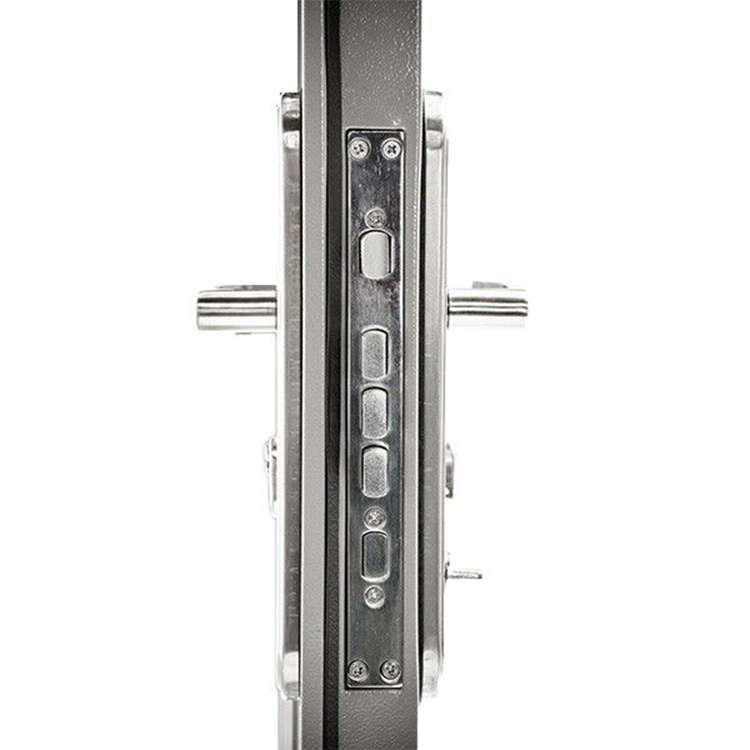
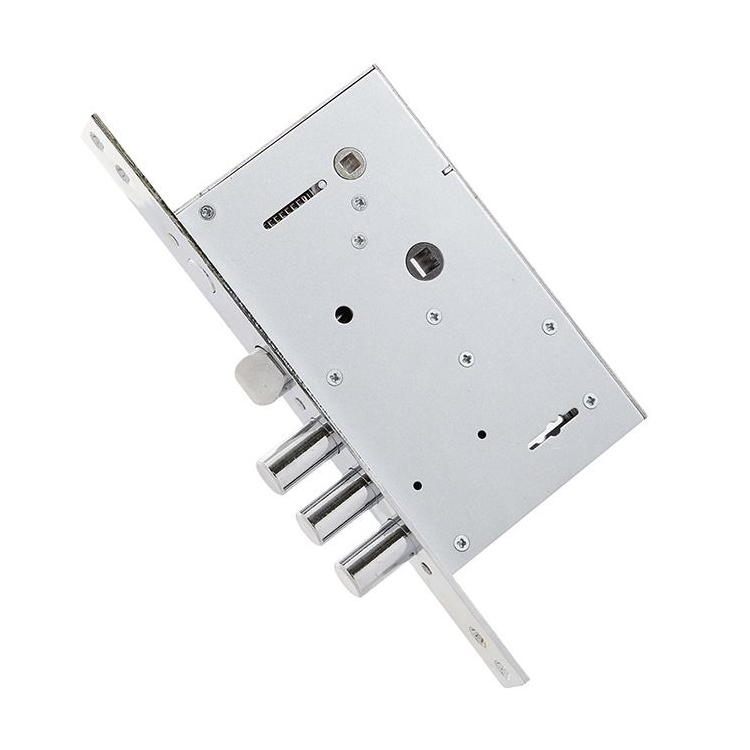
My hard truth is simple: the lifetime cost of multi point locks is rarely destroyed by the lock body alone. It gets destroyed by bad service access, oddball part geometry, poor handle-to-spindle fit, no replacement path for keeps or rollers, and a purchasing culture that still treats door and window hardware like decorative trim instead of a service asset.
Table of Contents
What “serviceable” should mean in the real world
A serviceable multi point lock is not magical. It is just honest hardware.
I want a system where the wear items can be touched, adjusted, and replaced without tearing the whole assembly off the opening. That means accessible fasteners, replaceable gearboxes, adjustable keeps, documented spindle sizes, clear handing logic, and parts that stay available long enough to matter. If the handle set dies and the only approved fix is “replace the full strip,” that is not a premium system. That is a disposable one dressed up in metal.
This is also where handle quality stops being cosmetic and starts becoming economic. I care a lot about the spindle interface, which is why matching the lock body with dependable companion hardware matters; a bad handle can make a decent lock look defective in six months. If you are building around casement or similar opening systems, the support hardware should be specified with the same discipline as the lock strip itself, whether that means a window spindle handle supplier, an OEM aluminum alloy casement window handle, or a modern black aluminum casement window handle. Ignore that interface and then blame the lock later? I see that all the time.
Public buyers already know the trick
Serious operators do not buy hardware as a one-time object. They buy a repair pathway.
Cherokee County’s 2024 detention-center RFP is blunt about it: locks were to be repaired or replaced as needed, cleaned, lubed, and adjusted to manufacturer tolerances, with same-business-day emergency repair capability required from the vendor; the county also framed award around “best value,” not lowest sticker price. That is not theoretical lifecycle thinking. That is an owner telling the market that serviceability beats romance.
Washington State did the same thing at scale in late 2024, structuring a statewide contract for doors, frames, hardware, and replacement parts, with optional installation, training, and locksmith or repair services, and a 48-month term beginning December 1, 2024. Read that slowly: replacement parts, training, repairs, term support. The market signal is obvious. Large buyers are paying for continuity, not just cartons.
And the maintenance math behind that shift is brutal. In a July 2024 audit, San Diego said it budgeted about $27 million for facility maintenance needs in FY2024 while estimating combined annual maintenance and deferred maintenance needs above $1 billion; the same audit said only 13% of Facilities Services maintenance activity was preventative maintenance, versus 70% recommended by best practices. Once you let reactive work dominate, hardware stops being a product category and becomes a labor problem.
Where the lifetime cost actually leaks out
The first leak is labor. The second is downtime. The third is parts chaos.
When every opening uses a different backset, different keep geometry, different spindle length, and a handle family with no stable replacement catalog, your maintenance team ends up paying in the ugliest currency possible: diagnosis time. Not repair time. Diagnosis time. The technician is no longer replacing a worn component; he is reverse-engineering the bill of materials on-site while your opening stays compromised.
That is why I dislike false customization. Finish choice is fine. Branding is fine. But engineering six slightly incompatible variants into the same property portfolio is how you manufacture future callouts for no reason at all. San Diego’s 2024 audit put this in broader facility terms: different component systems require different parts, different expertise, and sometimes different certifications, which increases maintenance cost. Same lesson, same mistake.
Here is the comparison buyers should have made on day one:
Cost Driver
Non-serviceable multi point locks
Serviceable multi point locks
Initial purchase price
Often lower
Sometimes slightly higher
Repair event
Full-strip or major assembly swap
Component-level repair or adjustment
Spare parts inventory
Inconsistent, model-specific, frequently obsolete
Smaller, standardized, predictable
Technician time
Longer diagnosis and larger tear-down
Faster access and targeted replacement
Downtime
Higher, especially when parts are unavailable
Lower, because common wear items are stocked
End-of-life strategy
Replace the whole system early
Extend usable life with planned maintenance
Real lifetime cost
Unstable and labor-heavy
Lower and easier to forecast
Maintenance beats replacement more often than buyers admit
I am not anti-replacement. I am anti-lazy replacement.
If the strip is bent, the gearbox housing is cracked, corrosion has migrated through the critical interfaces, or the system was badly specified from the start, replace it. But if the failure is a worn gearbox, drifting keep alignment, fatigued spindle interface, or tired handle mechanism, then replacing the entire assembly is usually an admission that the original spec had no service plan. That is bad engineering discipline masquerading as decisiveness.
The California Legislative Analyst’s Office made the bigger point in 2023: deferred maintenance is the backlog created when components are not replaced at end of useful life, inadequate routine maintenance can make building components reach that point prematurely, and a facility condition index above 0.10 is commonly considered poor. The same report said UC’s backlog was about $7.3 billion and CSU’s about $6.5 billion, with CSU’s backlog growing 60% from 2017-18 to 2022-23. Hardware buyers should take the hint. Premature failure is expensive, and neglect compounds faster than procurement teams think.
The spec details I refuse to ignore
Small details decide big invoices. Why do so many teams still pretend otherwise?
I want the service manual before I want the sample board. I want confirmed replacement-part availability before I want finish approval. I want to know whether the lock body, keep set, spindle interface, and handle family share a stable platform across SKUs. And yes, I want the accessory hardware to behave like part of a system, not a random add-on, which is why I pay attention to pieces such as a slim black aluminum casement window handle lock or a custom black window lever handle when I’m trying to reduce future service variance.
If a supplier cannot answer basic questions about replacement lead times, common failure points, screw mapping, spindle compatibility, and maintenance intervals, I assume the future owner will be the documentation department. That is never a good sign.
FAQs
What are serviceable multi point locks?
A serviceable multi point lock is a locking assembly designed so core wear components such as gearboxes, rollers, hooks, keeps, and handle-linked interfaces can be adjusted, repaired, or replaced individually without removing the entire mechanism, which lowers labor hours, downtime, and whole-system replacement spend.
That is the difference that matters. Buyers do not save money because the word “serviceable” sounds premium; they save money because the repair event becomes smaller, faster, and more predictable.
How do multi point locks reduce lifetime cost?
Serviceable multi point locks reduce lifetime cost by shifting maintenance from full-system replacement to component-level repair, which cuts technician time, avoids unnecessary material waste, improves spare-parts planning, and keeps openings operational longer before a complete changeout becomes financially justified.
The trap is thinking only about purchase price. The real savings come from fewer emergency visits, fewer incompatible SKUs, and less downtime when a single part wears out.
Are serviceable multi point locks better for commercial doors?
Serviceable multi point locks are better for commercial doors when the opening sees frequent use, carries security exposure, or supports facilities that cannot tolerate prolonged downtime, because repairability, parts continuity, and standardization matter more in hard-use environments than a marginally cheaper upfront unit price.
That is why public buyers and large operators keep writing repair, parts, and training into contracts. They are paying for uptime, not fantasy savings.
When should you repair instead of replace a multi point lock?
You should repair rather than replace a multi point lock when the main strip remains structurally sound and the failure is isolated to service components such as the gearbox, spindle interface, handle set, keeps, rollers, or alignment hardware, because targeted intervention usually restores function at lower labor and material cost.
Replace the full system when corrosion, strip deformation, obsolete part support, or repeated compatibility failures make continued service irrational. Not before.
Stop buying failure in bulk
I’ll say it plainly: non-serviceable hardware is often just deferred cost wrapped in a low opening price. If you want multi point locks that actually reduce lifetime cost, build the spec around repair access, standardization, and companion hardware that does not sabotage the system six months later.