
Global Hardware Sourcing Trends for Window and Door Manufacturers in 2026

Cheap got expensive
I’ll be blunt. The old habit of buying window and door hardware from a single low-cost region, then pretending freight, tariffs, compliance paperwork, corrosion exposure, and field-service headaches are somebody else’s problem, is now a budgeting error dressed up as procurement discipline. Why are so many manufacturers still acting surprised? Reuters reported that by May 31, 2024, the China-to-North Europe spot rate for a 40-foot container had climbed to $4,615, almost 3.5x the May 1 level, while China-to-U.S. East Coast pricing reached $6,061; and in January 2024, the China-to-U.S. West Coast rate had already jumped 43.2% week over week. Meanwhile, the U.S. Bureau of Economic Analysis said Mexico’s goods exports to the United States hit $475.6 billion in 2023, ahead of China’s $427.2 billion, while USTR moved steel and aluminum products from China to a 25% tariff rate in 2024. That is not background noise. That is the sourcing memo.
And here is my unpopular view: 2026 buyers are not really shopping for the cheapest handle, latch, or gearbox. We are shopping for lead-time certainty, compliance evidence, corrosion survival, and the odds that the part still works after an installer makes the completely predictable “small” substitution. That is why I would naturally route readers through Fschier’s hardware compliance audit for aluminum windows and doors, then into frame tolerances that prevent hardware binding, because the site already has the bones of a serious cluster: compliance, geometry, product taxonomy, and engineering-led sourcing logic.
جدول المحتويات

The sourcing center of gravity is moving
Three things changed. Freight got political, metal got political, and paperwork got expensive enough to matter more than the unit quote. Is that harsh? Good.
China is still central, but blind dependence is dead
I am not selling fairy tales about “post-China” sourcing. China still matters because tooling density, casting capacity, machining depth, finishing ecosystems, and OEM responsiveness are hard to replicate quickly. But the single-country playbook is weaker than it looks when Red Sea diversions blow up ocean rates and U.S. trade policy rewrites landed cost in one press release. So yes, I still believe China belongs in the supply base for many window hardware suppliers. I just do not believe it should sit there alone.
Mexico is gaining, but it is not magic
Mexico’s rise matters because it compresses transit risk and supports North American replenishment logic; BEA’s 2023 numbers are the clean proof point. But I think too many buyers romanticize nearshoring as if geography fixes weak metallurgy, sloppy tolerances, or thin coating systems. It does not. A bad handle from closer by is still a bad handle. And a bad hinge with a shorter truck ride still comes back as a warranty claim.
Compliance has become a buying filter, not a post-sale formality
This is where mediocre procurement teams get exposed. Fschier’s existing content already leans into fenestration hardware compliance, visual part ID guides for window and door hardware teams, و climate-ready multi-point lock strategies. That is the right direction, because by 2026 the real sourcing argument is not “Who is cheapest?” but “Who can prove the assembly, identify the parts, and survive the site conditions without hiding behind catalog copy?”
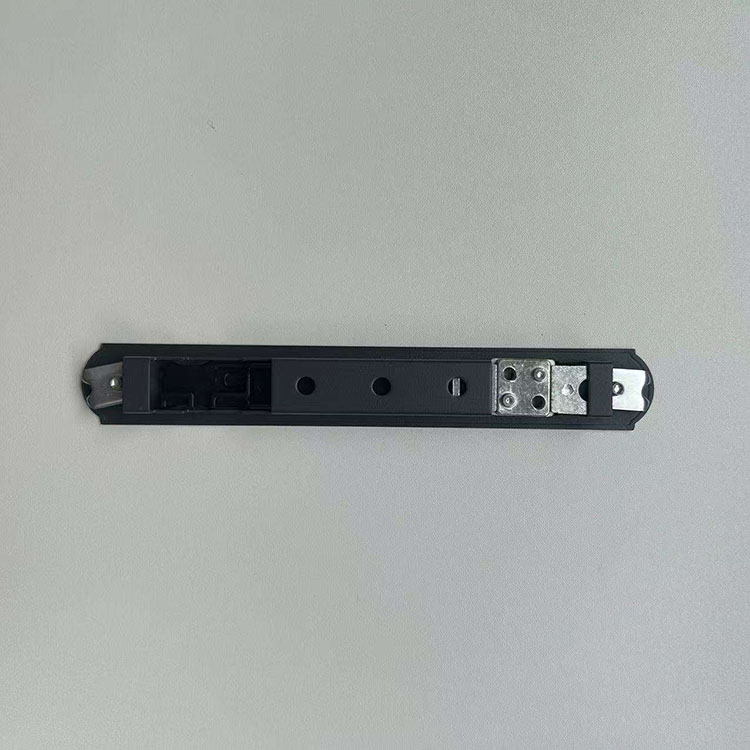
What smart manufacturers are buying now
I have seen this movie before. The buyer thinks he bought hardware. In reality, he bought future service tickets. Why keep repeating it?
The 2023 CPSC recall on Pella Architect Series Casement Windows should have rattled more people than it did: the agency said the sash could detach from the frame and fall, and the recall covered about 12,000 units. I do not care how premium the brand sounds. Once the opening fails in the field, the market stops admiring the brochure and starts counting liability. That is why serious window and door hardware sourcing in 2026 is moving toward assembly-level traceability, not component-level storytelling.
And climate pressure is no longer a coastal niche talking point. NOAA recorded 27 U.S. billion-dollar weather and climate disasters in 2024. That matters because hardware buyers are now being pushed to think harder about finish stack, galvanic pairing, stainless grades like 304 و 316, chloride exposure, gasket compression, and the way multi-point systems distribute load under movement and weather. Fschier’s multi-point lock systems page and its door and window handles catalog become more useful in that context when they are framed as system choices, not isolated products.
But here is the hard truth buyers hate: most failures do not begin with spectacular metallurgical collapse. They begin with stupidly ordinary errors. Wrong spindle diameter. Keeper offset by 1.5 mm. Mixed fastener chemistry. Service team ordering the wrong legacy part because nobody maintained a clean visual ID matrix. That is exactly why I would push internal authority into the دليل التعرف على الأجزاء المرئية and the frame tolerance guide instead of dumping all link equity into category pages and hoping Google does the thinking for us.
The 2026 table buyers should be using
What follows is my practical read, not consultant wallpaper.
| 2026 sourcing trend | What it really means | My take |
|---|---|---|
| Dual-region sourcing | High-risk components need at least two qualified supply paths | One-country dependence is now a margin leak |
| Tariff-modeled quoting | Quotes must be run in base-case and tariff-stress scenarios | If you cannot model landed cost volatility, you are guessing |
| Assembly-level compliance buying | Buyers want test support, drawings, BOM traceability, and revision control | “Compliant material” claims without assembly proof are theater |
| Climate-ready specification | Coastal and cold projects need chemistry and tolerance discipline, not just prettier finishes | Salt and thermal movement expose weak sourcing faster than audits do |
| Service-parts continuity | Legacy replacement demand rewards suppliers who can identify and reproduce exact footprints | Visual part ID is now a revenue tool, not admin overhead |
| Product-cluster content strategy | SEO works better when compliance, design, category, and contact pages reinforce one another | Internal links should mirror the real buying journey |
That table is not abstract. It is what the external evidence is pointing toward: freight shocks, tariff pressure, weather stress, and recall risk are all pushing buyers away from single-variable purchasing. Reuters gave the freight shock. BEA gave the trade shift. USTR gave the tariff pressure. CPSC gave the reminder that field failure does not care how “premium” the sourcing story sounded at bid stage. (Reuters)
Where I think the market goes next
My bet is simple. By late 2026, the strongest door hardware supply chain teams will look less like traditional import buyers and more like hybrid risk managers: one eye on freight, one on trade policy, one on corrosion and geometry, and one on service-parts continuity. Yes, that is four eyes. You need them.
The weak teams will keep asking for the “best window and door hardware manufacturers” as if there is one universal answer detached from exposure class, code path, finish chemistry, opening geometry, and channel strategy. There is not. The best supplier for a coastal aluminum casement program with PAS 24 pressure is not automatically the best supplier for a mid-market replacement window program in the U.S. Southeast. I know that sounds obvious. And yet the market keeps pretending it is not.
الأسئلة الشائعة
What is window and door hardware sourcing?
Window and door hardware sourcing is the disciplined process of selecting, testing, pricing, contracting, and replenishing locks, handles, hinges, gearboxes, restrictors, fasteners, and finishes across multiple suppliers so the final opening meets code, lead-time, corrosion, service, and warranty targets instead of merely hitting a purchase price. In plain English, it is supply-chain management tied directly to opening performance, not just procurement administration.
How do I source window and door hardware globally in 2026?
To source window and door hardware globally in 2026, build the buying decision around landed cost, evidence packs, tariff exposure, freight lane volatility, corrosion chemistry, and service-part continuity, then qualify at least two regions for every high-failure component instead of trusting one polished catalog and one overconfident sales call. Start with freight and tariff modeling, then verify BOM control, assembly-level compliance, and replacement-part identification before approving production.
Are Mexican suppliers replacing Chinese window hardware suppliers?
Mexican suppliers are not fully replacing Chinese window hardware suppliers; they are becoming more attractive for North American lead-time reduction, lower transit risk, and replenishment flexibility while China remains deeply important for tooling depth, metalworking capacity, finishing ecosystems, and OEM responsiveness across complex hardware programs. My view is that Mexico is a complement, not a clean substitute, unless the SKU mix is unusually simple.
What should I ask a door hardware supply chain partner before approving production?
A door hardware supply chain partner should be able to show exact drawing control, revision history, lifecycle or corrosion evidence, finish specifications, material stack, spindle and backset data, packaging rules, traceable BOM logic, and a realistic service-parts plan tied to the final assembly rather than a generic family brochure. If they cannot prove identification, tolerance discipline, and test support, keep your money in your pocket.
What is the best manufacturer strategy for OEM window and door brands?
The best manufacturer strategy for OEM window and door brands is to combine engineering support, region-aware sourcing, part-identification discipline, compliance documentation, and product-family standardization so the brand reduces warranty drift, stabilizes replenishment, and avoids the false economy of chasing a low quote that later explodes in field service. I would standardize critical geometries and finishes first, then widen sourcing only where substitution risk is genuinely manageable.
Your Next Step
Stop asking only for unit price. Ask for the drawing, the BOM, the coating stack, the corrosion target, the cycle data, the fastener chemistry, the spindle size, the packaging rule, and the service-part logic. Then move the reader from this page into Fschier’s multi-point lock systems, door and window handles, and finally the contact page with an explicit request for profile drawings, annual volume, target market, EN/ANSI scope, and finish requirements. That is how a serious sourcing page turns search traffic into qualified industrial conversations instead of empty clicks.