Balancing Aesthetics and Security in Steel Door Hardware

In steel door hardware, the discussion is often framed as a tradeoff between beauty and protection, and I think that framing lets too many bad products escape scrutiny. It sounds sophisticated to say a buyer must “balance” aesthetics and security, but in practice the problem is usually more blunt: one side of the specification is precise, and the other side is lazy. Designers may define finish, shape, and mood with obsessive clarity, while the mechanical side gets reduced to generic phrases like “heavy-duty,” “commercial grade,” or “premium lockset.” That is how weak hardware makes it into serious projects.
What I have seen, over and over, is that steel door hardware fails less from dramatic design ambition than from vague thinking. A project team falls in love with a profile, a finish, or a minimalist visual language, then assumes the locking body and fastening method will somehow take care of themselves. They do not. Hardware is one of the few product categories where visual confidence can actively hide functional mediocrity. A matte-black pull can look expensive while the latch behind it is imprecise, the spring response is weak, and the long-term wear pattern is already preprogrammed to disappoint.
That is why I do not treat aesthetic door hardware design and security door hardware as two separate shopping categories. In serious specification work, they are part of the same question: what can this hardware endure, and what will it still look like after that endurance has been tested?
Table of Contents
What “balanced” steel door hardware actually means
Balance, in this category, is not a soft compromise between style and strength. It is the ability of a hardware system to preserve its visual intent while meeting the mechanical, environmental, and operational demands of the opening over time. If it looks sharp in a showroom but degrades under humidity, repetitive use, forced handling, or cleaning chemicals, it was never balanced. It was merely attractive at the moment of sale.
When I assess steel door hardware, I look at four layers at the same time. The first is visual coherence: finish consistency, profile, exposed geometry, edge treatment, and how naturally the hardware belongs to the door system. The second is user interaction: how the lever returns, how the handle feels under load, whether the locking motion feels deliberate rather than vague, and whether the geometry works for the hand that actually has to use it. The third is security performance: latch engagement, lock-body stability, pry resistance, fastener retention, and tolerance control. The fourth is environmental durability: corrosion exposure, abrasion, oils, dust, repeated cleaning, and the abuse that comes from ordinary human indifference.
A piece of hardware that performs well in only one of those layers is not a finished answer. It is a partial solution with a branding problem.
Why decorative steel door hardware is often oversold
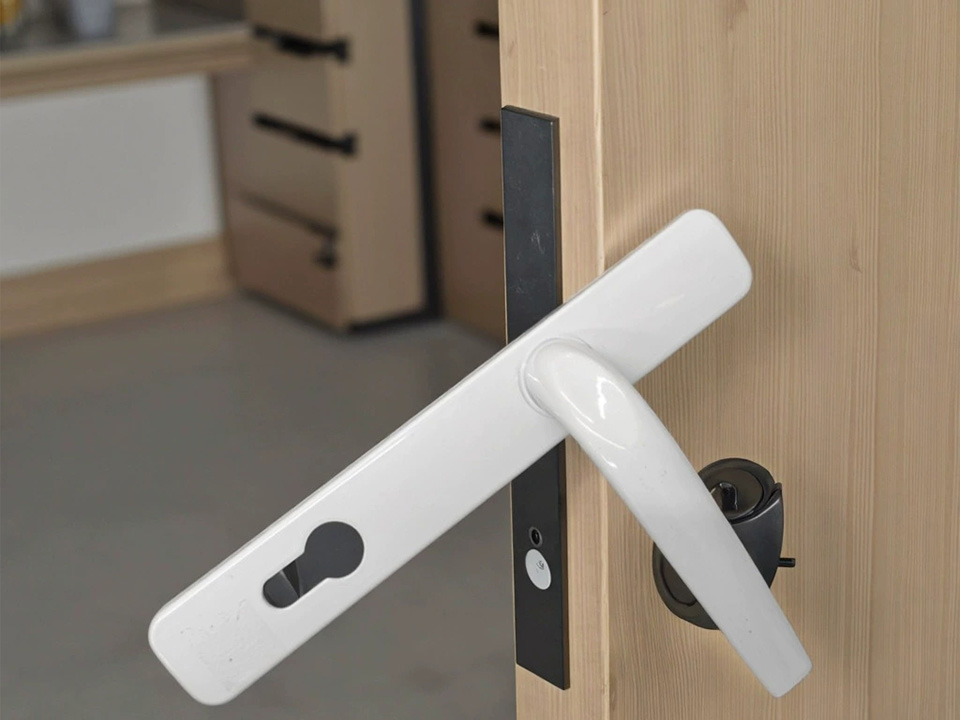
The market has trained buyers to confuse design restraint with quality. That is one of the dirtiest little habits in this sector. Decorative steel door hardware is frequently marketed through words like modern, architectural, premium, slim, minimalist, and refined, yet those labels do not tell you anything useful about spring integrity, latch body design, wear resistance, or fastener stability. They describe the sales pitch, not the hardware.
This matters because a great deal of decorative hardware depends on visual thinness. Thinness can be elegant. It can also be structurally punishing if the engineering beneath it is weak or the installation tolerance is narrow. I have seen plenty of hardware that looked intelligent in a render but felt cheap the second it was operated in real life. You can sense it immediately in the return motion, the key action, or the way the assembly shifts under hand pressure. That kind of product is not sophisticated; it is underbuilt and overphotographed.
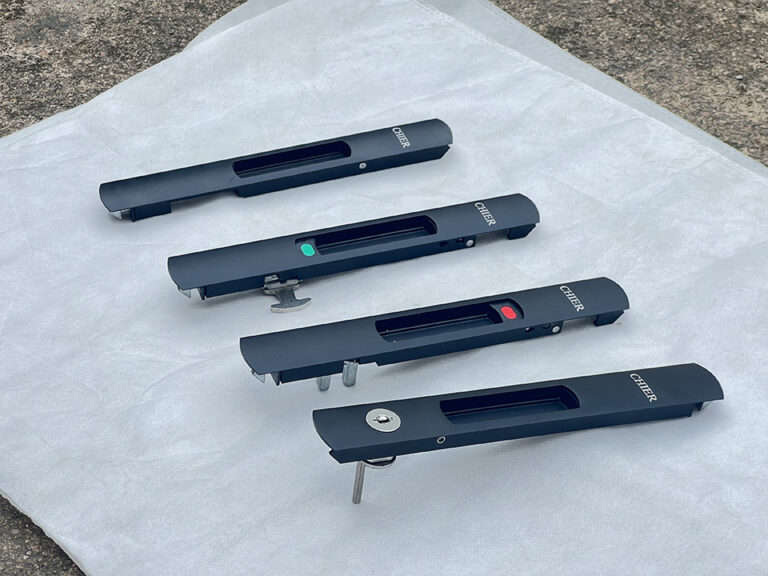
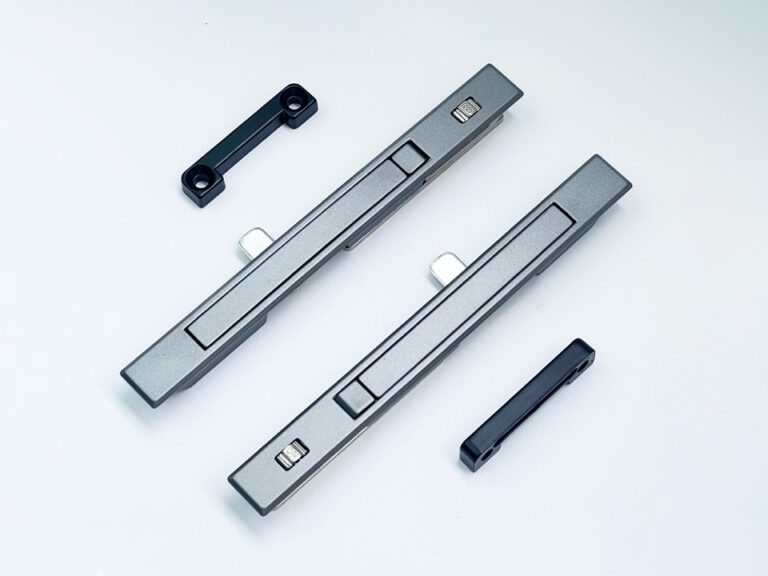
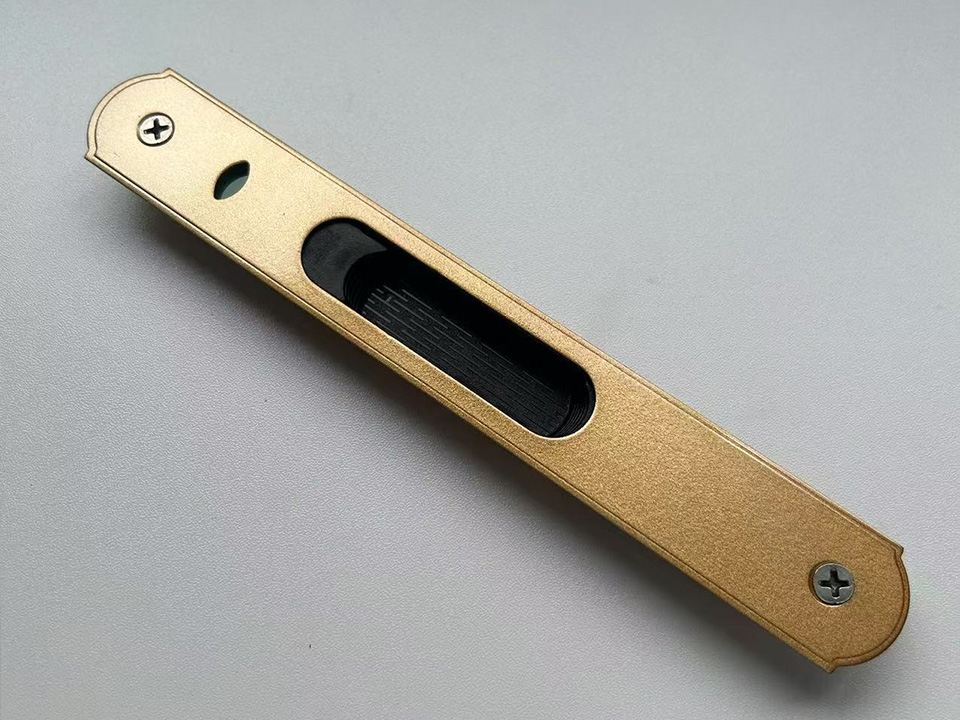
Decorative steel door hardware becomes credible only when the visual decision is supported by sound engineering. That is why integrated forms tend to make more sense than decorative add-ons. If a project wants a flush, minimal appearance for a sliding application, I would rather spec a system where the pull and locking logic are designed together, such as a recessed flush sliding door lock and handle, than combine unrelated components that happen to share a color.
Security door hardware is mechanical discipline, not branding language
One reason I distrust a lot of hardware marketing is that the security claims are usually written to avoid saying anything measurable. The copy will promise strength, confidence, or protection, but it will not explain where the force goes when the opening is attacked, how deeply the latch engages, what happens when the assembly is misaligned, or which component is most likely to fail first after years of service. That is not an accident. Ambiguity helps weak products look versatile.
Real security door hardware should be understandable in plain language. I want to know how the locking body behaves, how the assembly is fixed to the door, whether the interface between handle and lock is stable under repeated use, and whether the product has been designed for the actual door condition rather than a generic catalog category. Weight alone proves very little. A heavy handle attached to an imprecise mechanism is still a weak specification.
That is also where material selection becomes more practical than glamorous. Stainless steel, for example, is not automatically better in every application, but it often gives buyers more forgiveness in humid, high-touch, or corrosion-prone conditions where appearance and security both matter over time. If the use case involves sliding access points, repeated hand contact, or exposure that will punish coatings and base metals, a stainless steel sliding door latch lock is the kind of category I would examine first, not because the phrase “stainless steel” sounds premium, but because the service life logic is easier to defend.
How to choose steel door hardware without getting distracted by surface appeal
The right way to choose steel door hardware is to begin with the operating reality of the door, then narrow the visual options inside that reality. Buyers often reverse that sequence. They start with the finish board, the render, or the brand image, and only later ask whether the hardware will withstand traffic, misuse, misalignment, and maintenance neglect. By then, the wrong emotional decision has already been made.
I usually force the evaluation through a harsher set of questions. What is this opening actually protecting? How many times will it be touched each day? What kind of abuse is most likely: pry attempts, slamming, poor alignment, dirty hands, coastal corrosion, chemical cleaners, careless keys, fast repeated cycles? What visual standard truly matters after occupancy, not just before installation? Those questions expose weak assumptions quickly.
The best steel door hardware for security is rarely the most theatrical. It is usually the hardware whose design anticipates real wear and preserves function under conditions the spec sheet never dramatizes. The locking action stays crisp. The finish degrades predictably rather than catastrophically. The handle does not loosen into embarrassment. The buyer does not need a complicated explanation six months later.
The most common failure points in steel door handles and locks
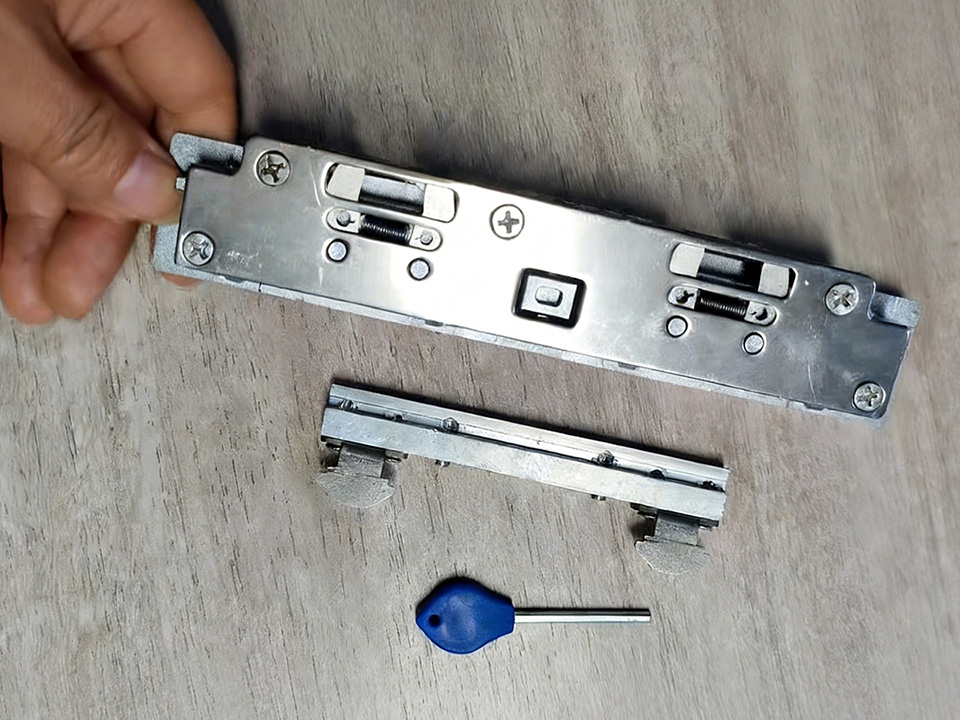
If you spend enough time around real installations, you stop being impressed by headline features and start paying attention to interfaces. Most steel door handles and locks do not fail because the concept was wrong in theory. They fail where components meet: the spindle interface, the spring cassette, the fixing points, the lock-body alignment, the coating edge, the recessed area where oils and abrasion gather first. These are not glamorous details, but they decide whether the hardware ages like a professional product or like a cheap imitation.
This is why profile alone tells you almost nothing. A slim form factor can be excellent in compact or space-sensitive applications, but only when the lock, grip, and installation logic were engineered to suit that geometry. In tight layouts, I would much rather evaluate a slim sliding door handle with lock built for that condition than pretend a standard handle can simply be miniaturized without consequences.
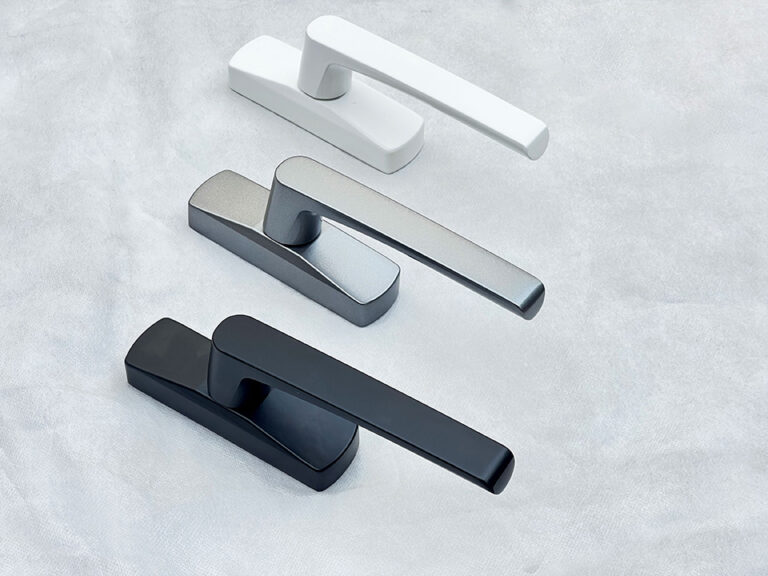
The same applies to finish-driven buying decisions. Matte black remains popular because it signals seriousness and modernity with very little effort, but it can also expose poor coating decisions faster than buyers expect. If a project is committed to that visual language, the smarter move is to keep the design vocabulary coherent with a product such as a matte black lever door handle, while remaining ruthless about the mechanical specification behind it. Color is not performance. It only becomes credible when the product beneath it deserves the attention.
Why sliding and narrow-format systems demand even more discipline
Sliding doors expose a lot of sloppy thinking because they tempt buyers to prioritize clean lines over usable mechanics. Flush appearance is attractive, of course, but once the pull depth is too shallow, the lock action feels awkward, or the body tolerance becomes overly sensitive, the user notices immediately. A poor hinged-door specification can limp along for a while. A poor sliding-door specification becomes irritating almost at once.
That is why I tend to trust products designed around constrained conditions more than “universal” hardware that claims to do everything. For narrow sliding formats, geometry matters too much for generic solutions to stay convincing. A double hook lock for ultra-narrow sliding doors makes far more sense in that context than a broader lockset forced into service because the finish looked right on a sample board.
The same principle applies to specialized access points outside traditional door leaves. When the use case moves toward industrial or cabinet-style security, buyers should stop borrowing residential aesthetics and start respecting the actual duty cycle. In those applications, a more utilitarian system such as an industrial cabinet rotary lock latch is often the more honest answer because it reflects the operating condition instead of trying to disguise it.
What OEM buyers and sourcing teams should demand
A lot of weak hardware survives because buyers do not ask the embarrassing questions early enough. They ask for price, finish options, lead time, packaging, maybe customization, and then assume the core performance has already been settled. I would do the opposite. Before approving a steel door hardware program, I want the uncomfortable details in writing.
I want to know the base material, the finishing method, the expected wear points, the installation tolerance, the logic of the lock-body design, the serviceability of the components, and the intended environment. I want to know what happens after repeated cycles, not just how the hardware looks untouched. And I want to know whether the supplier understands the application or is simply mapping the same decorative language across unrelated products.
This is where disciplined OEM review pays for itself. If a supplier cannot explain the product in operational terms, the aesthetic story becomes irrelevant. Beautiful samples are easy to make. Credible hardware is harder.
A practical comparison for real-world selection
The fastest way to cut through sales language is to compare product categories according to how they perform after installation, not how they are described before purchase.
| Hardware Category | What Buyers Usually Notice First | What Actually Determines Success | Best Fit | Common Buying Error |
|---|---|---|---|---|
| Decorative steel door hardware | Finish, profile, visual minimalism | Surface durability, structural integrity, consistency under repeated touch | High-visibility interiors, branded spaces | Assuming expensive-looking hardware is mechanically refined |
| Security door hardware | “Heavy-duty” presentation, lock presence | Latch engagement, fastening stability, lock-body quality, abuse tolerance | Restricted access, service doors, frequent-use openings | Mistaking weight or thickness for real protection |
| Steel door locksets | Integrated package convenience | Compatibility, serviceability, operational precision, installation tolerance | Repeated standard installations, coordinated openings | Buying by catalog category instead of door condition |
| Slim or recessed sliding systems | Clean appearance, space efficiency | Grip usability, lock integration, retention, sliding-door suitability | Sliding doors, compact openings, flush design language | Sacrificing function to preserve a minimalist silhouette |
| Matte black hardware systems | Contemporary aesthetic, premium visual tone | Coating resilience, edge wear behavior, maintenance realism | Modern interiors, coordinated architectural schemes | Treating color choice as evidence of quality |
The finish issue that buyers underestimate
Finish is not a cosmetic afterthought in steel door hardware. Once the product is visible and handled daily, finish becomes part of the performance story. Every scratch line, wear edge, oil mark, cleaning pattern, and inconsistent sheen affects the perceived quality of the entire opening. If the finish deteriorates badly, users stop trusting the hardware even before it fails mechanically.
That is why I push buyers to define finish expectations with more precision. A project should know whether it cares most about initial visual impact, slow aging, ease of cleaning, resistance to fingerprints, or edge durability. Those are different priorities, and not every finish can satisfy them equally. The mistake is pretending there is a universally premium finish that looks perfect and wears perfectly in every context. There is not.
I would rather see a project specify a finish that ages honestly than chase a trend finish that creates immediate prestige and delayed regret. That applies to black hardware in particular, but really it applies across the board. Aesthetic door hardware design should include a theory of wear. If it does not, then it is not serious design.
What balanced specification looks like in practice
A well-balanced specification usually has a few identifiable traits. The product suits the exact door condition rather than a broad mood. The finish is chosen for both visual fit and maintenance reality. The handle geometry feels intentional in the hand, not just on the elevation. The locking function is precise and dependable. The assembly survives abuse without quickly advertising its weakness through wobble, coating failure, or awkward operation.
Just as importantly, the visual design does not pretend the hardware is purely decorative. The best products acknowledge, through proportion and detailing, that they are working objects. They do not have to look crude. But they should not look dishonest either. There is a difference between refined and fragile, and buyers need to relearn it.
FAQs
What is steel door hardware?
Steel door hardware is the complete set of mechanical and visible components installed on a steel door, including handles, locksets, latches, cylinders, pulls, escutcheons, and fixing elements, all of which must support access control, daily operation, durability, and architectural consistency within the same door system.
In practical terms, steel door hardware sits at the intersection of use, security, and appearance. It is touched constantly, judged visually, and blamed quickly when anything feels loose, cheap, awkward, or unsafe. That is why it should be specified as a performance system, not a decorative accessory.
How do I balance aesthetics and security in door hardware?
Balancing aesthetics and security in door hardware means selecting hardware whose finish, profile, and architectural style fit the project while its lock-body design, fastening method, durability, and resistance to wear or attack remain appropriate for the actual use conditions of the door.
The sequence matters. I always evaluate operational demands first and visual preferences second. Once the hardware is proven suitable for the opening, the design language can be refined inside that performance range instead of being allowed to dictate the specification from the beginning.
What is the best steel door hardware for security?
The best steel door hardware for security is hardware that combines stable locking performance, reliable latch engagement, durable fixing points, appropriate material selection, and long-term resistance to misuse, wear, and environmental stress without sacrificing everyday usability.
That answer is less glamorous than most brochures would like, but it is the honest one. The most secure hardware is not simply the heaviest or most aggressive-looking; it is the one whose engineering remains credible after thousands of cycles and under imperfect real-world conditions.
Are decorative steel door hardware products less secure?
Decorative steel door hardware is not inherently less secure, but it becomes less secure when visual slimness, delicate detailing, or finish-first design choices weaken the lock integration, reduce structural confidence, or create durability problems under regular use.
Some decorative systems are extremely well engineered. The issue is not appearance itself; it is whether the appearance was allowed to override the operating realities of the door. A beautiful product can still be a professional product, but it has to earn that status mechanically.
How do I choose steel door hardware for sliding doors?
Choosing steel door hardware for sliding doors means matching the pull style, lock type, door thickness, recessed depth, and user ergonomics to the actual sliding system so the hardware remains secure, comfortable to use, visually consistent, and mechanically stable over repeated operation.
Sliding applications are far less forgiving than buyers assume. If the recessed form is too shallow, the lock action feels clumsy, or the retention is weak, the user notices immediately. Good sliding hardware solves space constraints without creating new handling problems.
The hard truth buyers need to hear
The steel door hardware market rewards appearances faster than it rewards honesty. That is why so many product selections look intelligent at approval stage and feel questionable after installation. Teams convince themselves they are “balancing” aesthetics and security when what they are actually doing is tolerating ambiguity on the performance side because the design side feels easier to defend in meetings.
I do not think buyers need to become paranoid, but they do need to become harder to impress. A clean profile is not engineering. A fashionable finish is not durability. A premium-looking lockset is not necessarily a secure one. The right question is not whether a product looks strong, modern, or high-end. The right question is whether the product can still make that claim after real use begins.
If you are sourcing steel door hardware now, start with the operating demands, interrogate the mechanical logic, define the finish expectations honestly, and only then decide what style deserves to survive the cut. That is how aesthetics stop being a liability and become what they should have been from the start: the visible expression of real performance.
Choose hardware that can survive scrutiny, not just sampling.