Designing Misuse Tolerant Multi Point Locks for Real Users

I’ve sat through enough hardware reviews to know the ritual by heart: somebody flashes corrosion data, somebody else brags about cycle counts, someone mutters “premium feel,” and almost nobody wants to say the embarrassing part out loud—that a shocking number of multi point locks still depend on perfect behavior from people who are tired, distracted, carrying bags, wrangling kids, or just not interested in memorizing a lock sequence. That’s the flaw.
And that flaw matters.
Because here’s the ugly truth: most locks don’t fail only because of brute force, bad actors, or some Hollywood break-in fantasy. They fail because the product team secretly designed for an imaginary user—careful hands, perfect alignment, clean installation, fresh batteries, zero confusion—and then acted surprised when real residents did what real residents always do, which is improvise.
I frankly believe the industry hides behind the phrase “user error” because it’s cheaper than admitting the mechanism is unforgiving. There, I said it. If your system needs the door to be pulled just so, lifted just so, turned just so, checked just so, and never rushed—then you didn’t design a secure product. You designed a fussy one.
And users know it. Even if they can’t name it.
They feel it in the handle drag. In the mushy spindle return. In that half-latched, maybe-it’s-locked uncertainty that installers call “within tolerance” and homeowners call “annoying.” That gap—between engineering confidence and lived use—is where misuse tolerant lock design stops sounding academic and starts sounding expensive.
Table of Contents
Real risk is not theoretical
But let’s not make this too abstract. Doors are still a frontline issue, and the numbers don’t exactly give me confidence that sloppy lock design is some minor UX problem we can wave away with nicer brochures and darker powder coating.
According to the Bureau of Justice Statistics, U.S. households experienced 13.6 million property victimizations in 2023, and the urban property victimization rate rose from 176.1 to 192.3 per 1,000 households from 2022 to 2023. The burglary/trespassing rate also landed at 13.1 per 1,000 households in 2023. Those numbers tell me something very simple: the opening still matters, and weak assumptions still cost people money.
That’s one problem.
The other one? The hardware business has gotten very comfortable with consolidation, brand stacking, and spec-sheet camouflage. In July 2024, Reuters reported that the U.S. Justice Department accused Assa Abloy of violating terms tied to its $4.3 billion Spectrum Brands hardware acquisition, with the dispute touching brands like Yale, August, Baldwin, EMTEK, and Kwikset, plus a proposed five-year study on smart locks. You don’t get that kind of scrutiny unless door hardware has become more consequential—and more politically sensitive—than the industry likes to admit.
And then there’s the electronic mess. Not theoretical, either. In March 2024, CERT/CC published VU#949046, warning that some Sciener-based locks accepted plaintext Bluetooth Low Energy messages as though they were encrypted, with exploitation tied to firmware-update weaknesses and CVE-2023-7017. So when brands say “smart” like it’s automatically a synonym for “better,” I wince a little. Sometimes it’s better. Sometimes it’s just more brittle.
Misuse tolerance is not softness, it is discipline
Yet the phrase “misuse tolerant” still gets treated like a compromise—as if we’re asking security hardware to be soft, forgiving, maybe a bit dumbed down for the masses. I don’t buy that. Not for a second.
A misuse-tolerant multipoint locking system isn’t weak. It’s honest. It starts with three hard assumptions that any serious manufacturer should accept before the first CAD file is frozen: people skip steps, installers stack tolerances against you without meaning to, and residents don’t separate ergonomics from security in their heads. If the handle feels wrong, they stop trusting the door. If the latch clicks, many assume everything else is engaged. If the app says “connected,” some will believe the lock state whether it’s accurate or not.
That’s the real battlefield.
From my experience, sequence is usually the hidden failure. Not metallurgy. Not coatings. Not anti-drill pins. Sequence. If the user can’t tell whether the top hook, center latch, and bottom shootbolt are actually home, then the product is asking them to guess—and guesswork is poison in residential security. People don’t perform lock-state diagnostics before bedtime. They turn, push, shrug, walk away.
It works. Usually.
That “usually” is where service calls, warranty friction, field returns, and reputation damage start piling up. And yes, I know the industry likes to shove that into “improper use” bins. But that’s an accounting trick, not an engineering insight.
What real users actually tell us
Here’s where the research gets awkward. Good. It should.
The most revealing user-behavior data I found wasn’t some glossy white paper from a vendor trying to sell another hub, another keypad, another “seamless ecosystem.” It was a 2023 USENIX SOUPS study on smart-lock usage, and it showed exactly what any blunt installer or locksmith could’ve told you over coffee: homes aren’t clean security environments. They’re messy access environments. The study found that more than half of participants shared access with people who didn’t live in the home—babysitters, pet sitters, relatives, contractors, cleaners, delivery helpers. That same research also showed that over 82% had a video doorbell installed next to the smart lock, but many hadn’t integrated the systems because setup friction and compatibility headaches got in the way.
That matters more than some teams admit.
Because once a lock moves from “my key, my door” into shared, temporary, revocable, app-mediated access, the design brief changes. Dramatically. Now you’re not just building a gearbox or a latch package; you’re building credential logic, timing logic, fallback logic, alert logic, and—this part gets neglected—confidence logic. The user needs to know what happened, not what the system hopes happened.
And the same research gets even more useful when it gets less flattering. Users said sharing access was difficult for older or technologically challenged individuals. Some systems forced every invited person to download an app and configure it. Others created too many steps, too much confusion, too much digital admin for what should have been a simple entry event. Researchers also documented worries about deadbolt jams, low-battery warnings, invalid-code alerts, and keypad wear exposing commonly used digits. None of that sounds exotic to me. It sounds normal. Which is exactly the point.
The mechanical lesson nobody likes
I’ll say something that annoys a lot of spec-driven product teams: the user doesn’t care about your mechanism the way you care about your mechanism. They care whether the thing makes sense in the hand, in the dark, under stress, while distracted, with groceries, when slightly annoyed, and after six months of wear.
That’s it.
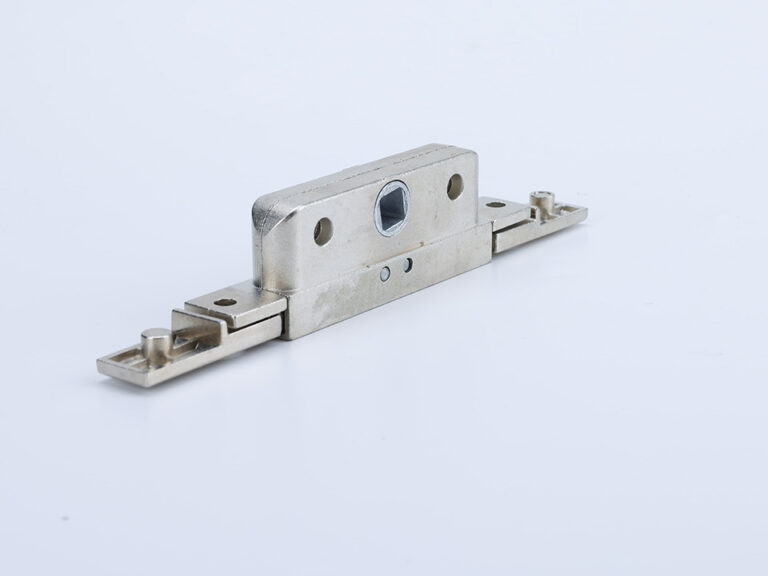
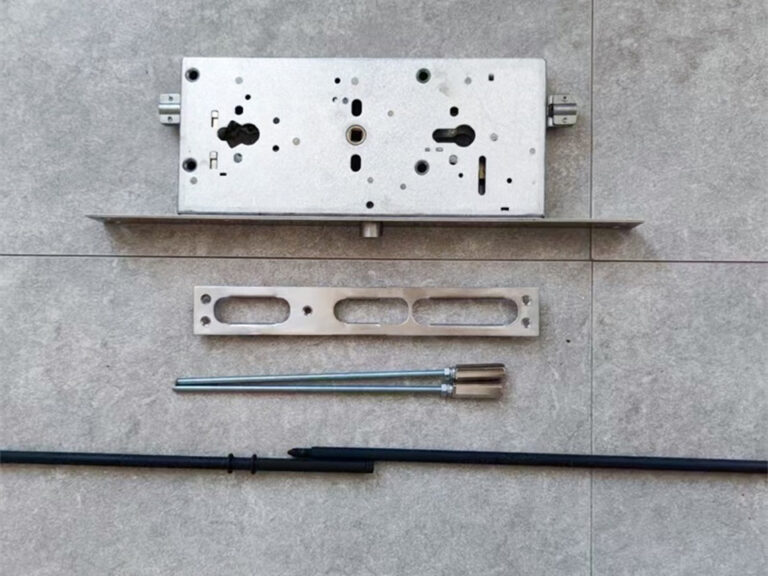
So when I hear manufacturers obsess over mushroom cams, center cases, anti-lift geometry, throw lengths, spindle tolerances, and escutcheon fit while ignoring whether the user can actually understand lock state with one natural interaction, I know they’re optimizing the wrong layer. The mechanism matters, obviously. But the interface to that mechanism—the handle, the lift force, the return feel, the feedback sequence, the partial-engagement warning—that’s where the product lives for the user.
And this is why I keep dragging accessibility into hardware conversations even when people roll their eyes. The ADA standards are not some bureaucratic side note; they’re one of the clearest design sanity checks in the built environment. The standards say accessible door hardware should be operable with one hand, easy to grasp, and not require tight grasping, tight pinching, or wrist twisting. They also place operable hardware no higher than 48 inches (1220 mm) above the finished floor, and they set a 5 lbf (22.2 N) opening-force limit for interior hinged, sliding, or folding doors, though that limit doesn’t apply to retracting latch bolts.
I’m not pretending every residential multi point lock sits under ADA rules. That’s not the point. The point is that ADA thinking is often smarter—more grounded, more human, less vanity-driven—than the decorative door-hardware culture that keeps selling elegant-looking frustration.
Which is why I’d rather see a practical dual-height lever door handle on a real project than another ultra-thin, under-grippable showroom piece that photographs beautifully and performs like a sulking prototype. Same goes for adjacent openings. If you’re already teaching the user one security language at the entry door, why wreck it at the window or cabinet? A sliding window flush lock handle, a keyed crescent window latch lock handle, or a Japanese touch latch lock for doors and windows can make the whole property feel coherent instead of patched together by five disconnected product teams.
The digital layer makes bad mechanical thinking worse
But let me push this a little further, because the industry still splits “mechanical” and “smart” thinking in a way I find frankly outdated. A bad mechanical sequence becomes even worse once you layer on app prompts, battery dependencies, firmware states, BLE handshake issues, credential provisioning, and notification fatigue.
Then it snowballs.
If your residential multi point door lock already depends on careful closure and full engagement to work properly, adding a digital access layer doesn’t automatically improve the experience. Sometimes it just adds another failure stack. Another state to misread. Another moment where the homeowner thinks “locked” means locked when the top and bottom engagement points never actually seated.
NIST’s digital identity guidance gets at this in a way the hardware world should pay attention to: systems need to make correct action easier, incorrect action harder, and recovery straightforward when something goes wrong. NIST also warns that poor usability drives workarounds. And once users start building workarounds—shared permanent codes, ignored battery alerts, half-used access features, mechanical override keys hidden badly—you’ve already lost.
Because security theater is still theater.
The design screen I use
When I look at user-friendly multi point locks, I don’t start with brochure adjectives. I start with failure states. That’s where the truth lives. It’s not glamorous. Good.
Here’s the screen I’d use before signing off on any design headed for actual homes with actual people who are busy, imperfect, occasionally impatient, and not interested in becoming unpaid QA testers for a lock manufacturer.
| Failure mode | What users do | What the lock should do instead | My non-negotiable design bias |
|---|---|---|---|
| Pull-before-lift or partial cycle | Assume the first click means full security | Signal incomplete engagement immediately with unmistakable tactile and visual feedback | No ambiguous mid-state |
| Low dexterity or tired grip | Under-rotate handle or avoid full throw | Reduce force, enlarge usable grip area, and keep motion predictable | Comfort beats ornament |
| Shared access chaos | Over-share codes or hand out one permanent credential | Support granular time windows, roles, and revocation | Temporary means temporary |
| App fatigue | Ignore alerts or never finish setup | Deliver only high-value alerts: jam, low battery, invalid attempts, incomplete lock state | Fewer alerts, better alerts |
| Battery decline | Keep using a slowing lock until it misses full engagement | Warn earlier and preserve a clear manual fallback path | Degrade gracefully |
| Mixed opening types in one home | Relearn every handle and latch behavior | Standardize interaction logic across doors and windows | One property, one mental model |
I didn’t invent those concerns out of thin air. They line up with jam warnings, access-sharing friction, keypad-wear anxiety, exploit exposure in connected locks, and the one-hand, low-friction reality embedded in accessibility guidance. That’s why I keep coming back to the same conclusion: safety in multipoint locking systems isn’t just about resisting attack. It’s about resisting confusion.
Best multi point locks for safety are the ones people cannot half-use
That line sounds blunt because it is blunt.
The “best multi point locks for safety” are not automatically the most expensive ones, the most app-heavy ones, or the ones with the biggest pile of bullet points under a rendered cutaway diagram. I’ve seen plenty of products with gorgeous spec sheets and miserable everyday behavior. That’s not unusual. It’s common.
Here’s the ugly truth: a lock that can be half-used is a lock that will be half-used.
So my bias is simple. I want strong tactile state feedback. I want clearer “not fully engaged” conditions. I want lower-force, more legible handle geometry. I want temporary credentials that expire cleanly. I want jam warnings that appear before the mechanism chews itself to death. And I want the physical package across the property to stop behaving like separate kingdoms.
That could include a black keyed rotary lock latch for industrial cabinets in utility zones, or a slim sliding door handle with lock for cabinets where narrow clearances force different hardware choices. The point isn’t that every opening gets the same product. Of course not. The point is that every opening should share a predictable logic—same mental model, same general feel, same obvious secure state.
Because consistency does security work. Quietly. Constantly.
FAQs
What is a misuse tolerant multi point lock?
A misuse tolerant multi point lock is a door locking system engineered to stay understandable, operable, and secure even when users skip steps, stop mid-cycle, have limited dexterity, or share access with others, so normal human mistakes do not immediately become jams, lockouts, or false security. In practice, that means obvious lock-state feedback, forgiving interaction logic, and hardware that doesn’t demand precision-grip behavior just to achieve full engagement.
Why do multi point locks confuse users?
Multi point locks confuse users when they hide lock state, require strict sequencing, provide weak tactile feedback, and blend security with awkward handle mechanics, which leads many people to assume the door is secure even when one or more engagement points never fully seated. The smart-lock research cited earlier shows the same basic pattern—too many steps, difficult access sharing, and too much setup friction drive people toward shortcuts.
Are multi point locks more secure than single-point locks?
A multi point lock is generally more secure than a single-point lock when the frame, keepers, locking points, handle set, credentials, and user sequence are designed as one coherent system, because force is distributed across multiple engagement locations instead of being concentrated at a single latch point. But I wouldn’t call it safer if users regularly leave it half-engaged or if the digital layer introduces vulnerabilities.
How do you design multi point locks for older adults?
An older-adult-friendly multi point lock is a system with low-force operation, simple sequencing, clear visual and tactile cues, reachable hardware, and access-sharing options that don’t force everyone into a complicated app workflow, so users with arthritis, reduced grip strength, lower vision, or lower technical confidence can still secure the door reliably. In plain terms, that means bigger grip zones, less wrist drama, fewer setup steps, and feedback that doesn’t make people guess.
Stop shipping locks that need excuses
But this is where I land, every time: if your current system needs a dealer explanation, a follow-up call, a how-to sticker, and a support article just so the homeowner can lock the door correctly, the design isn’t refined. It’s undercooked.
And I know that sounds harsh. Fine. It’s still true.
From my experience, the next product revision shouldn’t begin with another mood board or another finish board. It should begin with failure mapping. Handle geometry. Partial-engagement warnings. Role-based temporary access. Early jam alerts. Manual fallback that doesn’t feel like a hidden afterthought. And tighter coherence across the whole opening package—from the main door to the side opening to the utility zone.
Because real users aren’t the problem. They’re the test.
And if the lock can’t survive them, it won’t survive the market.