Integrating Window Hardware in Thermally Broken Door Profiles

A buyer approves a beautiful thermally broken frame section, the factory nods, the hardware catalog looks “compatible enough,” and then the trouble starts: screw pull-out shifts because wall thickness was assumed, not checked; lock bodies foul the polyamide barrier; handle geometry forces ugly routing; drainage paths get pinched; thermal performance gets quietly traded away for assembly convenience. And everybody acts surprised. Why?
Table of Contents
Most compatibility failures are born in hardware sourcing, not design
That sounds backwards, and yes, many engineers hate hearing it, but in the aluminum fenestration trade, especially when we are dealing with thermally broken door profiles, the hardware envelope often dictates what is physically manufacturable, what keeps the thermal barrier intact, and what will still feel solid after 50,000 cycles instead of turning into a call-back machine. I do not care how elegant the CAD section looks if the mortise depth, fixing pattern, and spindle alignment were guessed from a brochure.
Window hardware integration inside door profiles is rarely a plug-and-play exercise. A thermally broken section is not a neutral host. It is a constrained assembly made of inner and outer aluminum shells, a polyamide or equivalent insulating barrier, gasket lines, glazing beads, reinforcement zones, drainage channels, and tolerances that stack against you fast.
So when people ask me how to integrate window hardware in thermally broken door profiles, my answer is blunt: stop shopping by product photo and start buying by interface geometry.
What actually changes when hardware enters a thermal break system
In standard non-thermal sections, the installer or fabricator has more room to improvise because the profile behaves like one continuous metallic body. In thermal break door systems, that continuity is intentionally broken. Usually, we are talking about polyamide strips between inner and outer aluminum shells, often around 14.8 mm to 34 mm in common commercial configurations, though the exact dimension varies by series, wind-load target, and insulation spec.
That one design decision changes nearly everything.
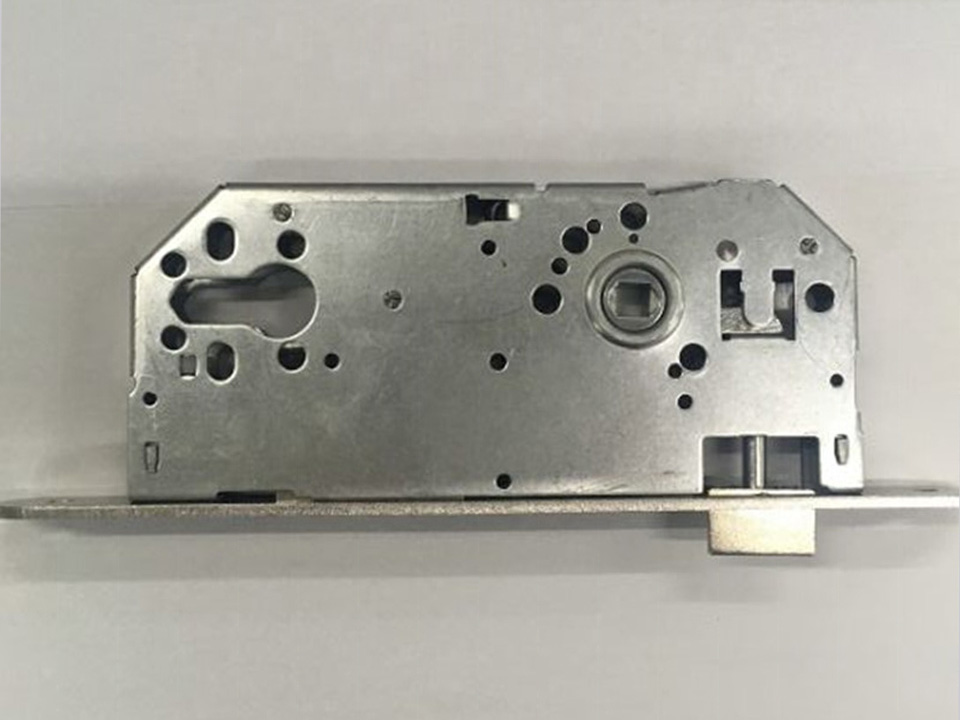
Now your lock case cannot simply “sit where it fits.” Your fastener bite might live on only one aluminum chamber. Your handle spindle path may cross an insulated bridge. Your keeper alignment can drift if the sash and frame sections were not designed as a set. And your thermal numbers can get wrecked if you add metal bridges through the wrong zones.
I have watched teams obsess over Uw values in tender drawings and then erase part of that performance with sloppy thermal break fenestration hardware choices. It happens more than suppliers admit.
A safer buying logic looks like this:
| Hardware Decision Point | What Buyers Usually Check | What They Should Check First | Why It Matters |
|---|---|---|---|
| Lock body selection | Backset and finish | Cavity depth, barrier interference, fixing wall thickness | Prevents routing conflicts and weak anchoring |
| Handle choice | Style and color | Spindle centerline, escutcheon footprint, door stile width | Avoids misalignment and cosmetic compromise |
| Sliding lock/latch | Product photos | Hook throw, receiver depth, keeper adjustability | Ensures actual engagement under movement |
| Casement/friction hardware | Brand name | Slot standard, hinge axis, sash weight, seal compression | Controls long-term operation and air/water tightness |
| Fasteners | Stainless grade | Thread engagement zone and galvanic compatibility | Stops loosening, corrosion, and field hacks |
| Soft-close/damper parts | Closing feel | Available cavity, travel path, serviceability | Prevents binding and maintenance headaches |
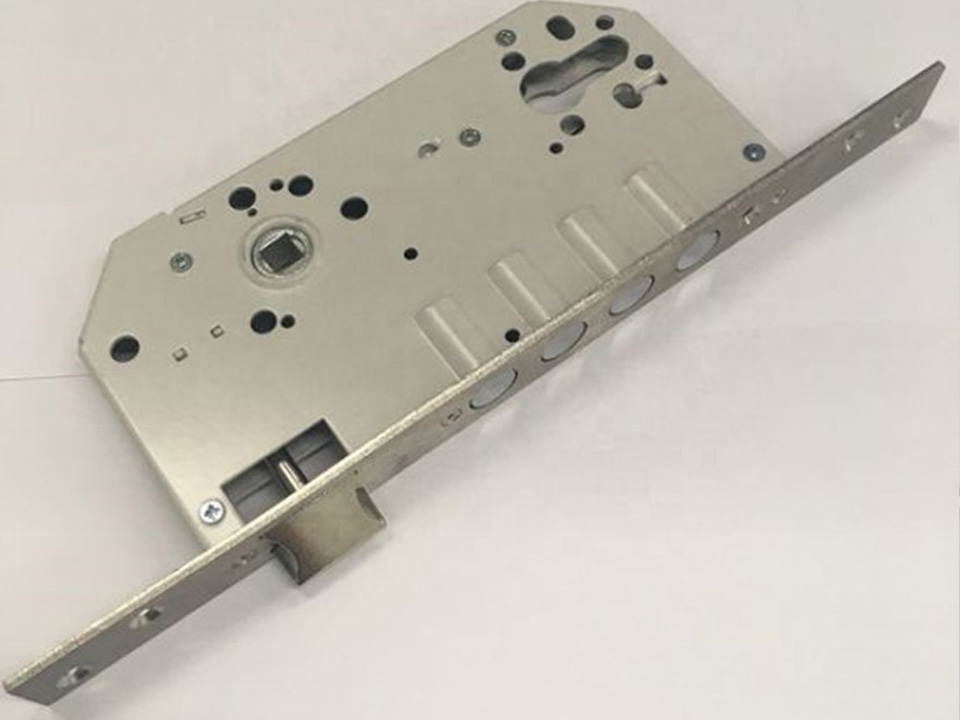
The profiles do not fail alone; the interface fails
They say “thermally broken door profiles” as if that phrase describes one neat product class. It does not. A slim sliding series, a lift-and-slide system, a casement door with window-derived hardware logic, and a narrow-stile swing door can all be thermally broken and still require completely different door profile hardware compatibility decisions.
I always look at five things before I trust a hardware package:
1. Fixing substrate
Where, exactly, does the screw land? Into 1.4 mm aluminum? Into reinforced aluminum? Into a thin accessory wall? Into nothing useful at all?
2. Barrier crossing
Does the hardware body, spindle, rod, or fastener create a conductive bridge through the thermal break? People underprice this problem because it does not show up in a pretty render.
3. Seal pressure path
Hardware changes how the sash closes. That alters compression. Compression alters air leakage, water resistance, and user feel. One bad latch geometry and the whole unit feels cheap.
4. Fabrication burden
Can the profile be routed, punched, and assembled repeatably at scale? I care less about whether one prototype works and more about whether the 800th unit on a Friday afternoon still works.
5. Service access
Can the lock, handle, damper, or friction element be replaced without destroying trim, glazing, or the profile skin? If not, you did not source a system. You sourced a future argument.
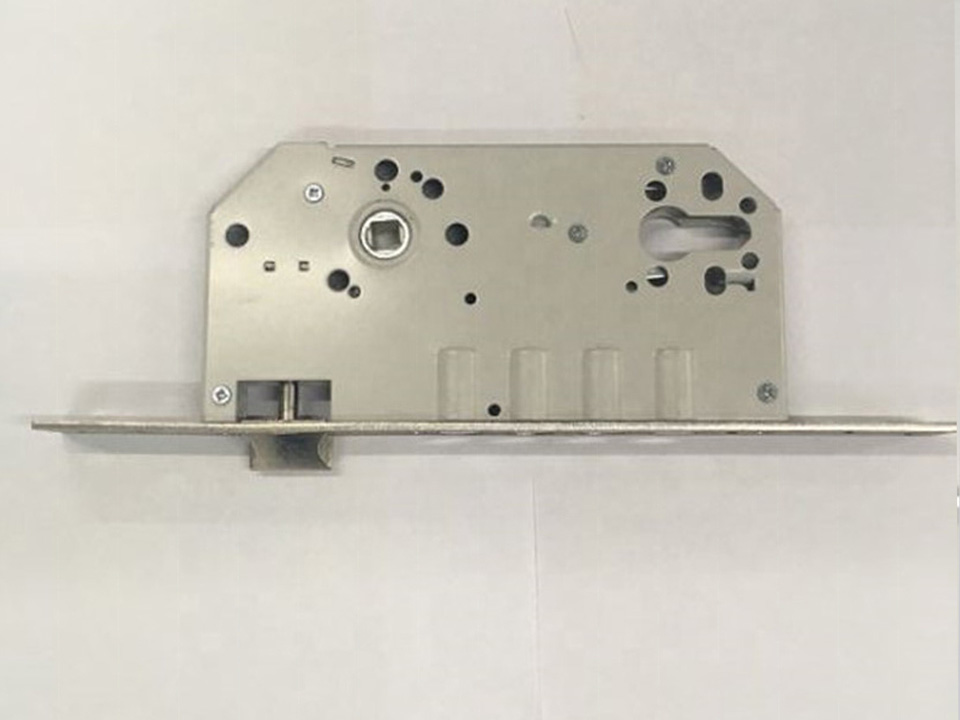
Hardware categories that usually fit best, and where buyers get burned
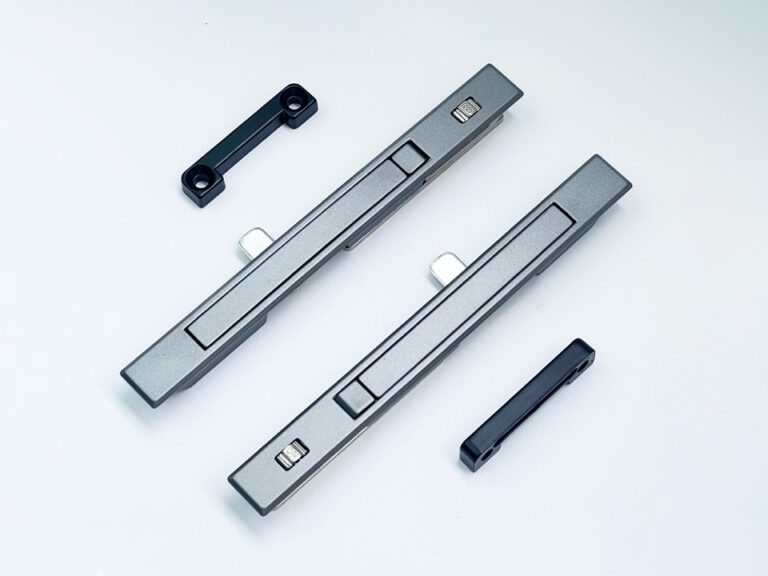
I buy purpose-fit families. That distinction matters. If the profile is a narrow sliding configuration, I want low-projection hardware, predictable fixing centers, and keepers that tolerate real-world deflection. That is why products like this ultra narrow sliding door double hook lock make sense in tight stile conditions where engagement depth and compact geometry matter more than catalog glamour.
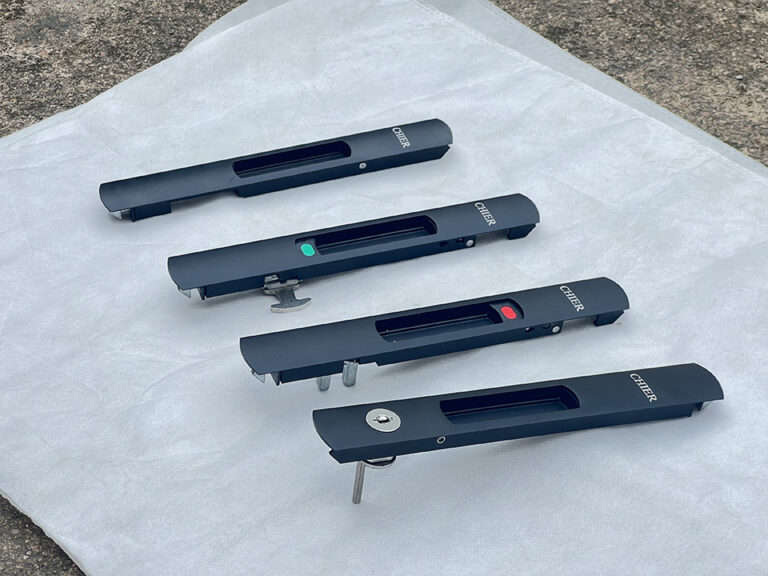
For recessed applications, especially when visual cleanliness matters and proud hardware would interfere with adjacent panels or screens, I would rather specify a recessed flush sliding door lock and handle than force a generic latch body into a profile that never wanted it. Bad sourcing always announces itself at the handle line first.
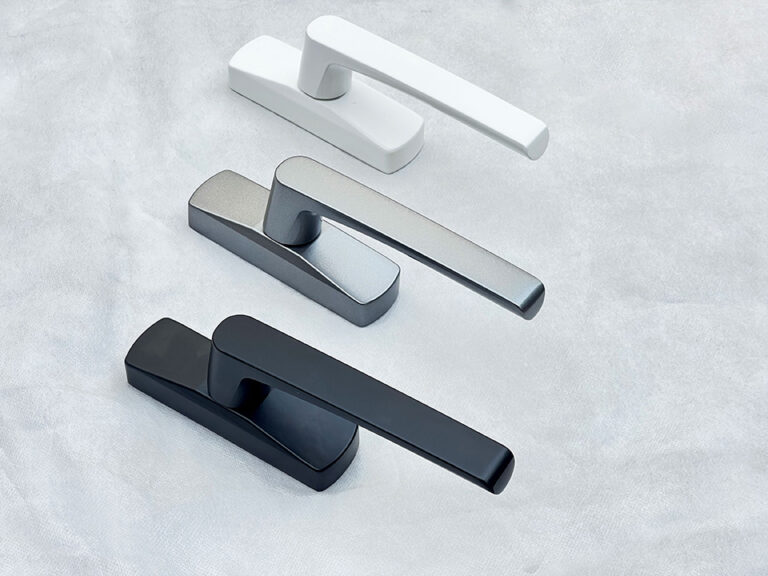
And for projects where user perception is tied to finish and grip quality as much as performance, a matte black lever door handle can work well, but only after checking spindle geometry, rose footprint, and stile width. Finish comes last. Always.
What about mixed window-and-door systems? That is where buyers make the most expensive assumptions. A lot of “window hardware integration” work is really about translating casement or sliding window logic into a door-grade duty cycle. That can be done. But it cannot be done casually.
For sliding window-adjacent formats or lighter secondary openings, a sliding window flush lock handle may fit the visual language and mechanical envelope, while for opening elements that depend on stay geometry and sash control, a stainless window friction stay slot hinge is the kind of component I would review against slot standard, weight class, and arm projection before I sign anything.
And yes, dampers matter. I have seen more “premium” sliding systems embarrassed by cheap closing behavior than by poor thermal numbers. If the profile series has the cavity and service access for it, a soft close damper hardware solution can rescue both perceived quality and hardware life.
Best hardware for thermally broken door systems is usually boring, precise, and slightly overbuilt
The market loves shiny finishes and fashionable handle silhouettes, but the best hardware for thermally broken door systems tends to look almost disappointingly rational: stainless where it counts, tolerances that accommodate fabrication drift without feeling loose, fastener logic that respects chamber geometry, and latch engagement that survives frame movement, seal compression, and user abuse.
Would I rather buy the cheaper “compatible” option? Not when I know what comes next.
Because this is what really costs money in hardware sourcing:
| Failure Mode | What It Looks Like in the Field | Real Cost Driver |
|---|---|---|
| Lock body too deep | Profile routing cut into wrong chamber or barrier-adjacent zone | Scrap, rework, thermal compromise |
| Weak fastener bite | Handle loosens within months | Service visits, reputation loss |
| Misaligned keeper | Door closes poorly or needs slamming | User complaints, site adjustment labor |
| Wrong hinge/stay geometry | Sash sag or uneven gasket pressure | Premature wear, leakage risk |
| Overly delicate finish | Corrosion or coating failure in coastal/industrial air | Replacement hardware, warranty pain |
| Inaccessible service parts | Minor repair becomes major disassembly | High maintenance cost |
My rule is simple: I will pay more for dimensional certainty and a clean interface every single time.
My sourcing checklist before I approve any hardware-package pairing
I keep this brutally practical.
First, get the profile section drawing with real dimensions. Not the marketing PDF. The section drawing.
Second, demand the hardware cut sheet with fixing centers, body depth, projection, spindle size, hook throw, and minimum required substrate thickness.
Third, overlay them. Literally. I do not trust verbal compatibility claims.
Fourth, identify whether the hardware mounts only to the interior shell, only to the exterior shell, or bridges both. That decision affects both performance and fabrication strategy.
Fifth, test a sample assembly. One sample is worth more than twenty email assurances.
Sixth, abuse it. Close it fast. Close it softly. Check seal compression with paper strips. Check play after repeated cycles. Look for interference marks. Those marks tell the truth.
Seventh, review finish and material against exposure class. Interior dry use is one thing. Coastal exposure is another. Mixed-metal contact is its own headache.
And eighth, never let procurement swap a component “like for like” after engineering approval without checking the dimensional envelope again. That single bad habit causes a shocking number of hidden failures.
FAQ
What is window hardware integration in thermally broken door profiles?
Window hardware integration in thermally broken door profiles is the process of adapting locking, hinging, latching, or operating hardware to a door section that contains separated inner and outer aluminum shells linked by an insulating barrier, while preserving structural anchorage, thermal performance, sealing pressure, and service access. After that definition, the practical point is this: the hardware cannot be treated as an accessory. It becomes part of the profile architecture, and one wrong assumption about body depth or fixing location can ruin the whole assembly.
How do I choose hardware sourcing options for thermally broken door profiles?
Hardware sourcing for thermally broken door profiles means selecting suppliers and components based on measured compatibility with the section geometry, substrate thickness, barrier location, duty cycle, corrosion exposure, and fabrication method, rather than choosing by appearance, price, or generic category labels. I start with section drawings and hardware cut sheets, then I compare body depth, fixing centers, keeper geometry, and serviceability. If a supplier cannot provide dimensional clarity, I move on.
What is the best hardware for thermally broken door systems?
The best hardware for thermally broken door systems is hardware that fits the exact chamber geometry, anchors securely without compromising the insulating barrier, maintains correct gasket compression, resists corrosion in the intended environment, and remains serviceable after installation and repeated use. In plain English: boring hardware wins. Precise lock bodies, stable handles, predictable latch engagement, and slightly overbuilt moving parts usually outperform stylish but vague alternatives.
Why is door profile hardware compatibility so often misjudged?
Door profile hardware compatibility is often misjudged because buyers compare nominal categories like “sliding lock” or “door handle” instead of comparing exact dimensions, mounting logic, backset, keeper throw, spindle path, and thermal barrier interference within the actual aluminum section. I have seen teams assume two parts were interchangeable because the faceplate looked similar. That is amateur thinking. Sections do not care about appearances.
Can aluminum thermally broken doors use window-derived hardware?
Aluminum thermally broken doors can use window-derived hardware when load, cycle frequency, fixing geometry, and sealing behavior match the application, but only after checking that the hardware can survive door-scale use and that its mounting logic does not conflict with the thermal break or profile cavity. Sometimes it works beautifully. Sometimes it is a shortcut that ends in sag, slop, and warranty calls. The difference is engineering discipline.
If you are evaluating a new series and want the fastest route to a cleaner spec, start with the hardware envelope, not the catalog beauty shot, and match it to the section before procurement gets involved. That one shift saves more time, money, and embarrassment than most teams want to admit.