포켓 도어 손잡이: 매립형 손잡이 깊이, 가장자리 손잡이 및 패널 여유 공간

3밀리미터가 중요합니다.
포켓 도어는 작업장 테스트에서는 완벽하게 미끄러지듯 움직일 수 있지만, 설치 후에는 손잡이 전면판이 문 표면 밖으로 돌출되어 있거나, 패널이 중심에서 약간 벗어나 있거나, 포켓 개구부가 도면에서 예상한 것보다 좁아서 문이 문틀에 긁히기 시작할 수 있습니다.
왜 이렇게 작은 부품이 이렇게 큰 문제를 일으키는 걸까요?
왜냐하면 포켓 도어 손잡이는 단순히 장식용 부속품이 아닙니다. 이는 문이 움직일 때 필요한 공간의 일부를 구성합니다.
손잡이는 벽 속으로 매립되어도 패널을 가리지 않으면서 편안한 그립감을 제공해야 합니다. 또한 충분한 설치 깊이, 안정적인 고정, 그리고 문이 완전히 열렸을 때 문을 당겨 올릴 수 있는 실용적인 방법이 필요합니다.
저는 업계가 마감 처리에 대해 논의하는 데는 너무 많은 시간을 할애하고, 단면을 면밀히 검토하는 데는 너무 적은 시간을 쓰고 있다고 생각합니다.
브러시드 스테인리스 스틸? 아니면 매트 블랙? 그건 고민할 필요도 없는 문제죠.
어려운 질문들은 전면 패널 뒤에 숨겨져 있습니다:
- 플러시 풀은 문 안쪽으로 얼마나 깊게 들어갈 수 있나요?
- 오목한 부분 뒤쪽에 고정 장치를 지탱하기에 충분한 재질이 있나요?
- 문이 완전히 열렸을 때도 가장자리 당김 장치를 계속 사용할 수 있나요?
- 설치된 하드웨어와 벽면 홈 사이에 얼마나 많은 여유 공간이 남아 있나요?
먼저 그 질문들에 답하세요. 마무리는 나중에 해도 됩니다.
플러시 풀 깊이: 슬라이딩 도어 안에는 실제로 무엇이 들어갈 수 있을까?
플러시 풀 깊이는 매립형 손잡이 어셈블리가 도어 패널 내부에서 차지하는 거리입니다. 적절한 깊이는 문 두께, 하드웨어의 형상, 고정 방식, 그리고 설치를 지탱하는 데 필요한 잔여 자재의 양에 따라 달라집니다.
모든 포켓 도어에 적용할 수 있는 보편적인 최소 또는 최대 홈 깊이는 없습니다.
이 점은 특히 강조할 필요가 있습니다. 하드웨어 카탈로그에서는 호환성을 결정하는 설치 세부 사항을 생략한 채 전체 손잡이 치수만 광고하는 경우가 많기 때문입니다.
그립 깊이는 설치 깊이와 다릅니다
다음과 같은 세 가지 별개의 측정값을 고려해 봅시다:
그립 깊이 오목한 손잡이 내부의 사용 가능한 손가락 공간을 나타냅니다.
본체 깊이 하드웨어가 눈에 보이는 전면부 뒤쪽으로 얼마나 멀리 뻗어 있는지 설명합니다.
장붓 구멍 깊이 문고리를 장착하기 위해 문을 얼마나 깊게 가공해야 하는지를 설명합니다.
이 측정값들은 서로 관련이 있지만, 서로 대체할 수는 없습니다.
손잡이는 그립감이 좋은 표면을 갖추고 있으면서도 예상보다 더 깊은 설치 홈이 필요할 수 있습니다. 반대로, 비교적 얕은 컵형 손잡이는 문에 잘 맞을 수는 있지만 손가락을 넣기 어려울 수 있습니다.
검토 중인 구매자분들께 미닫이문 손잡이 및 매립형 손잡이 옵션, 모델을 승인하기 전에 치수가 표기된 단면도를 요청하는 것이 좋습니다.
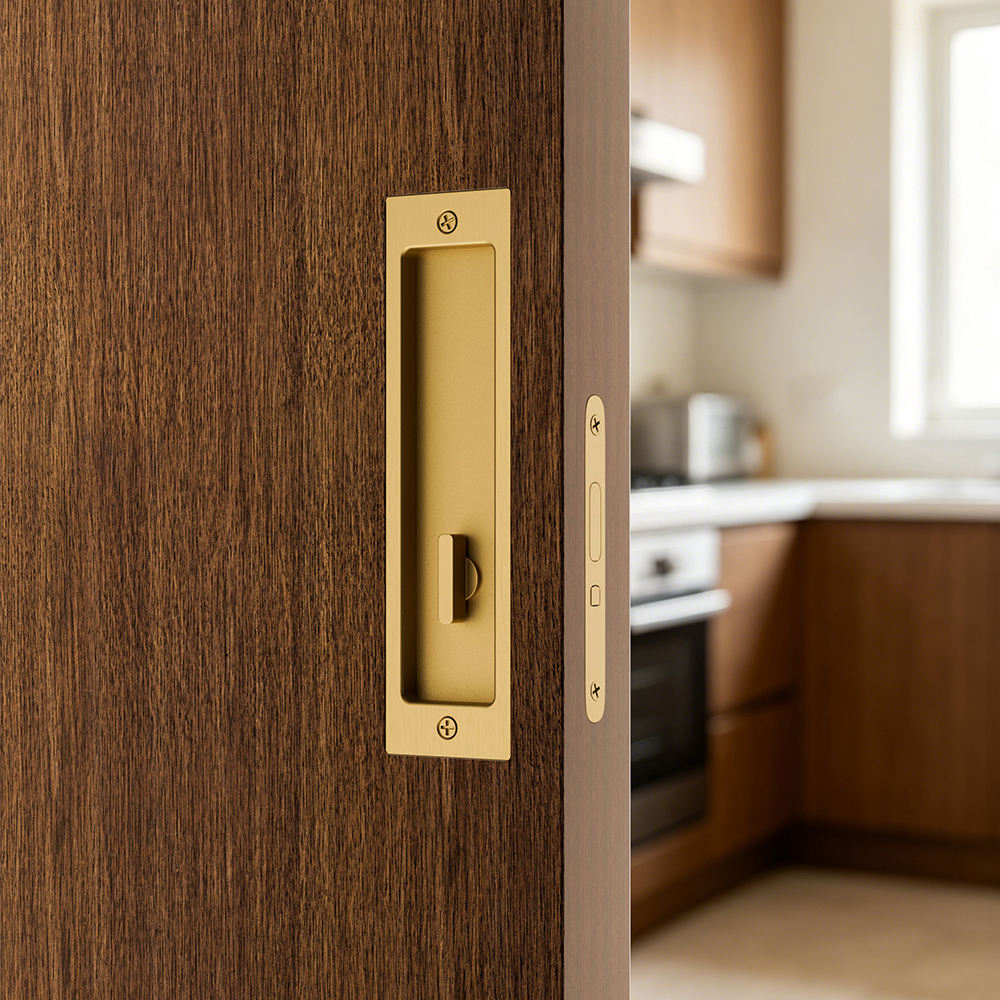
실제 하드웨어 예시: Emtek 직사각형 오프셋 플러시 손잡이
Emtek의 오프셋 포켓이 있는 황동 직사각형 매립형 손잡이, 제품 코드 222350은 유용한 예시를 보여줍니다.
공개된 기술 도면에는 다음과 같이 명시되어 있습니다:
| 차원 | 제조사 사양 |
|---|---|
| 전체 전면 패널 | 2-1/2 × 4인치 (63.5 × 101.6 mm) |
| 내부 포켓 입구 | 1-1/4 × 3인치 (31.75 × 76.2 mm) |
| 표시된 본체 깊이 | 1/2인치 (12.7 mm) |
| 페이스플레이트 투영 세부 사항 | 1/16인치 (약 1.6mm) |
| 후면 차체 치수 | 2-1/8 × 3-5/8 인치 (약 54 × 92.1 mm) |
이 수치는 다음에서 나온 것입니다. Emtek 플러시 풀 공식 기술 도면.
본체 두께 12.7 mm와 전면판 돌출부 약 1.6 mm의 차이를 유의하십시오.
하나는 실내 문 준비 작업에 영향을 미치고, 다른 하나는 외부 여유 공간에 영향을 미칩니다.
둘 다 중요합니다.
또한 Emtek은 이 사양 도면을 드릴링 템플릿으로 직접 사용해서는 안 된다고 경고합니다. 최종 가공은 해당 설치 지침에 따라 수행해야 합니다.
플러시 풀 뒤에는 재료를 얼마나 남겨두어야 할까요?
35mm 두께의 솔리드 코어 문에 서로 반대 방향으로 당기는 두 개의 플러시 손잡이가 설치된다고 가정할 때, 각 손잡이를 설치하려면 12.7mm 깊이의 홈이 필요합니다.
두 오목부가 서로 정면으로 마주보고 있는 경우, 단순화된 잔여 두께는 다음과 같습니다:
35 – 12.7 – 12.7 = 9.6 mm
해당 수치는 승인된 구조적 허용치ではありません.
이는 두 캐비티의 깊이를 반대편 도어 면에서 안쪽으로 측정했을 때, 두 캐비티 사이에 명목상 얼마나 많은 재료가 남게 되는지를 단순히 나타내는 것입니다.
남은 재질이 충분한지는 문의 구조, 나사 위치, 인서트의 형상 및 하드웨어 제조업체의 요구 사항에 따라 달라집니다.
중공 패널의 경우, 장부구가 지지되지 않은 재질까지 관통할 수 있기 때문에 추가적인 문제가 발생합니다.
제 사양 규칙은 간단합니다: 단순히 개별 깊이 치수만을 근거로 서로 상반되는 두 가지 오목형 손잡이를 절대 승인해서는 안 됩니다.
먼저 문 전체 구조와 고정 방법을 확인하십시오.
포켓 도어용 가장자리 손잡이: 숨겨진 문을 여는 데 따르는 문제
포켓 도어 가장자리 손잡이는 미닫이 패널의 앞쪽 수직 가장자리 안쪽이나 그 근처에 설치된 손잡이로, 문 앞면에 부착된 손잡이를 잡기 어려울 때 사용자가 문을 당겨 올릴 수 있게 해줍니다.
이는 플러시 풀과는 다른 문제를 다룹니다.
플러시 풀을 당기면 문이 움직입니다.
가장자리를 당기면 포켓에서 공을 꺼내는 데 도움이 됩니다.
엣지 풀 기하학이 중요한 이유
주로 사용되는 두 가지 설계 방식은 다음과 같습니다:
매립형 손잡이 돌출된 레버 없이도 영구적인 고정 홈을 제공한다.
배포 가능한 에지 풀 필요할 때 펼쳐졌다가 보관 위치로 다시 돌아가는 이동식 탭이나 고리를 사용하십시오.
매립형 설계는 움직이는 부품이 적지만, 손잡이 구멍은 반드시 접근이 가능해야 합니다. 전개형 설계는 메커니즘이 안정적으로 작동한다면, 깊게 매립된 문을 쉽게 열 수 있게 해줍니다.
두 디자인 모두 모든 슬라이딩 도어 조립체에 자동으로 적합한 것은 아닙니다.
CHIER의 측면 프로파일에 리브가 있는 매립형 엣지 풀 슬라이딩 핸들.
이 제품은 길쭉한 직사각형 모양의 고정 홈, 둥글게 마감된 닫힌 끝단, 그리고 홈이 파인 가장자리를 특징으로 합니다. 명시된 용도는 슬라이딩 패널 프로파일 내부의 매립형 설치입니다.
그 마지막 세부 사항이 중요합니다.
프로파일에 장착되는 손잡이는 목재 포켓 도어에 매립된 손잡이와 자동으로 호환되는 것은 아닙니다. 패널 재질, 장착 프로파일, 삽입 깊이, 고정 구조 및 절개부가 일치해야 합니다.
바로 이 점이 일반 제품 설명의 한계가 드러나는 부분입니다.
완전히 열린 자세야말로 진정한 시험대다
벽 속으로 거의 완전히 들어가는 슬라이딩 도어를 상상해 보세요.
설치 상태는 훌륭해 보일지 모릅니다. 하지만 사용자가 손잡이에 손을 뻗을 수 있을까요?
문 손잡이가 문틀 뒤로 숨어버리는 경우, 문은 손이 닿는 가장자리 손잡이에 전적으로 의존하게 될 수 있습니다. 앞쪽 가장자리도 보이지 않게 된다면, 멈춤 위치나 하드웨어 배치를 재검토해야 합니다.
미국 ADA 요건의 적용을 받는 접근 가능한 경로의 경우, 이는 단순한 편의성 문제를 넘어서는 사안입니다.
의 제404.2.7조 2010 ADA 접근성 디자인 표준 완전히 열린 미닫이문의 작동 장치가 양쪽에서 모두 노출되고 사용할 수 있도록 해야 합니다.
교훈은 분명합니다. 필요한 하드웨어가 여전히 사용 가능한지 확인한 후에야 문 개방 폭을 최대로 늘려야 합니다.
엣지 풀이 잠금에 방해가 될 때
선단부에 프라이버시 래치도 포함되어 있는 경우, 또 다른 문제가 발생합니다.
가장자리 당김부, 잠금 케이스, 스트라이크 인터페이스 및 고정 장치는 서로 겹치는 영역을 차지할 수 있습니다.
공급업체가 가장자리 단면 통합 도면을 제출할 때까지는 해당 제작물을 승인하지 않겠습니다.
CHIER의 기사에 따르면 터치식 자물쇠와 매립형 자물쇠의 비교 및 설치 공간 이와 관련된 문제를 다루고 있다. 즉, 외부 투영이 작다고 해서 반드시 내부 메커니즘도 작은 것은 아니라는 점이다.
매끄러운 외관 뒤에는 의외로 덩치가 큰 하드웨어가 숨겨져 있을 수 있습니다.
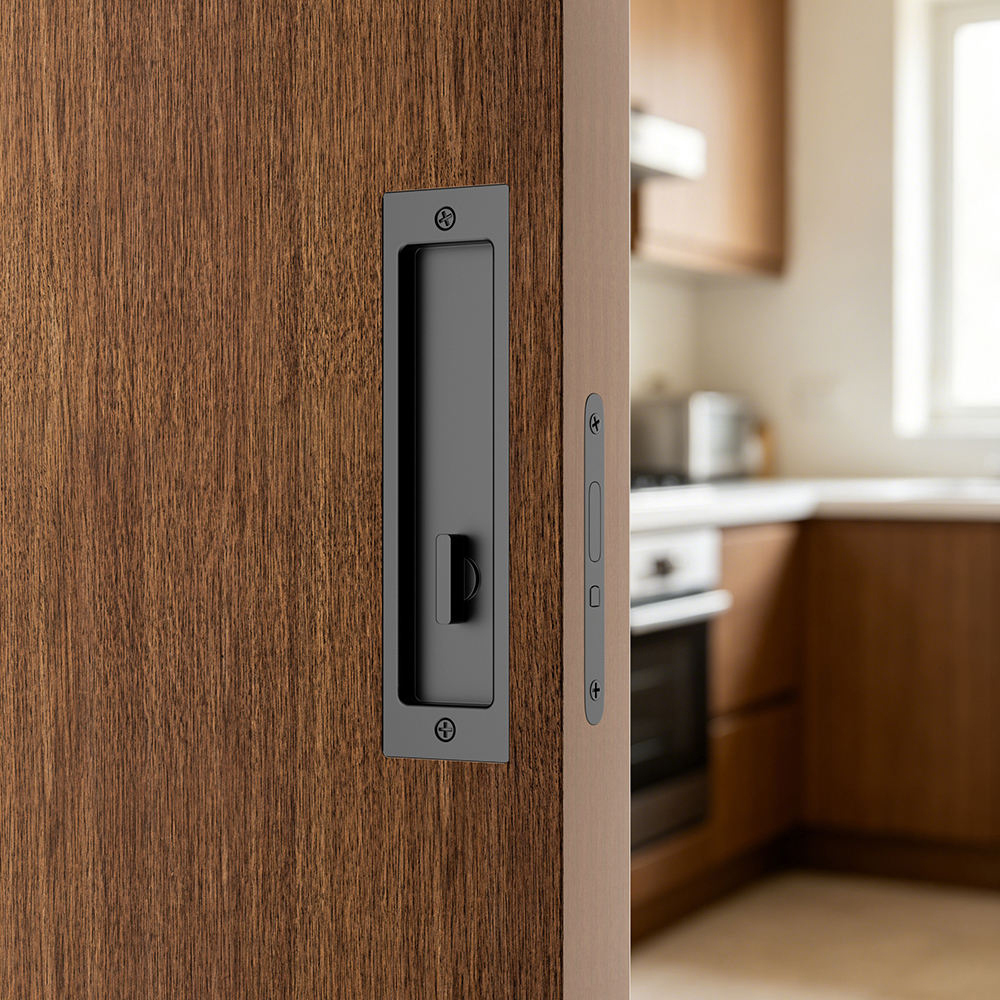
포켓 도어 패널 여유 공간: 작은 돌출부가 큰 문제를 일으키는 이유
Pocket door panel clearance is the available space between the moving door assembly and the surrounding pocket structure during operation.
It must account for more than nominal panel thickness.
The real clearance envelope includes recessed-handle faceplates, screws, door guides, lock components, panel alignment, and movement tolerances.
A Practical Clearance Calculation
Consider a hypothetical pocket-door installation:
- Finished panel thickness: 44 mm
- Unobstructed internal pocket width: 50 mm
- Panel centered in the available space
The total nominal free space is:
50 – 44 = 6 mm
Assuming perfect centering:
6 / 2 = 3 mm per side
Now add a handle faceplate projecting 1.6 mm from one face.
The local clearance at the handle becomes:
3 – 1.6 = 1.4 mm
This is a geometric illustration, not a recommended installation tolerance.
The actual frame manufacturer’s specifications determine the required clearance, allowable door thickness, and permissible hardware projection.
Nevertheless, the calculation exposes the problem.
A faceplate can appear nearly flush while consuming more than half of the nominal clearance on one side.
And that remaining space may disappear if the door shifts laterally.
Which Pocket Door Handle Works Best in Tight Spaces?
| 손잡이 유형 | 주요 장점 | 주요 한계 | Best-fit situation |
|---|---|---|---|
| Round recessed flush pull | Compact design and simple appearance | Limited grip space in some models | Basic residential pocket doors |
| Rectangular flush pull | Larger potential gripping area | Requires accurate mortising | Contemporary interior doors |
| Recessed edge pull | Helps retrieve a concealed panel | Requires accessible leading edge | Doors retracting deeply into pockets |
| Deployable edge pull | Extendable retrieval grip | Additional moving mechanism | Doors with limited exposed edge access |
| Integrated privacy pull | Combines operating and locking functions | Larger or more complex internal preparation | Bathroom and bedroom pocket doors |
For tight clearances, I generally prefer a well-documented recessed pull with minimal external projection and a positive gripping surface.
But the best choice is the one that fits the approved door assembly—not necessarily the thinnest-looking handle.
Three Manufacturer Specifications That Expose Common Buying Mistakes
Real product data tells a more useful story than generic claims about hardware compatibility.
Consider these three documented examples.
1. Johnson Hardware 1500 Series: The Frame Has Its Own Limits
Johnson Hardware’s 153068PF pocket-door frame is specified for:
- Maximum door size: 36 × 80 inches (914 × 2032 mm)
- Maximum door weight: 125 lb (approximately 57 kg)
- Door thickness: 1 to 1-3/4 inches (approximately 25–44 mm)
- Minimum wall framing thickness: 3-1/2 inches (89 mm)
These dimensions are published in the Johnson Hardware 1500 Series specifications.
The important distinction is between supported door thickness and available hardware clearance.
A frame accepting a 44 mm-thick door does not establish that every 44 mm-compatible pull will clear its pocket during operation.
2. Schlage 990: A Pocket-Door Pull With Different Thickness Limits
Schlage’s 990 Pocket Door Pull specifies:
- Supported door thickness: 1-3/8 to 1-1/2 inches (approximately 35–38 mm)
- Required cutout: 1-3/4 × 2-1/4 inches (approximately 44.5 × 57.2 mm)
- Function: Non-locking passage hardware
다음 내용을 참조하십시오. official Schlage 990 product specifications.
Compare those figures with the Johnson frame.
The frame can accommodate a thicker door than the Schlage 990 pull is designed to fit.
That does not mean either product is defective.
It means their compatibility ranges differ.
I consider this one of the most important lessons for buyers sourcing a frame, door panel, and handle from separate suppliers.
A pocket-door frame specification is not a handle compatibility certificate.
3. Emtek: A Flush Faceplate Still Has Measurable Projection
Return to the Emtek rectangular offset pull.
Its 12.7 mm body depth and approximately 1.6 mm projection detail reveal two separate installation considerations: remaining panel material and available external clearance.
Neither can be judged from the front view alone.
The three examples are specification comparisons, not documented field-failure studies or a tested combination of products.
Together, they establish a practical purchasing principle: door-frame dimensions, handle mounting limits, and faceplate geometry must be checked independently before the assembly is approved.
Accessibility and Installation: Two Checks Before Final Approval
Accessibility introduces another performance requirement that decorative hardware catalogs may not address.
에 따라 U.S. Access Board’s guidance for accessible doors and gates, hardware on covered accessible routes must allow one-hand operation without tight grasping, pinching, or wrist twisting.
Relevant ADA provisions also include:
- Operating hardware height: Generally 34–48 inches (865–1220 mm) above finished floor.
- Clear opening width: Generally at least 32 inches (815 mm), with 36 inches required for openings deeper than 24 inches.
- Hardware accessibility: Operating hardware must remain exposed and usable from both sides when sliding doors are fully open.
- Opening force: Generally no more than 5 pounds-force (22.2 N) for manually operated sliding doors covered by the requirement, subject to applicable exceptions.
These requirements apply where the ADA Standards govern the project; they are not universal rules for every private residential door.
A narrow recessed finger slot may look discreet, but its suitability depends on the actual hand movement required.
I would never treat a manufacturer’s description of a handle as “ergonomic” as evidence of ADA compliance.
The Five Measurements I Would Require Before Ordering
For a professional specification or bulk purchase, I would request:
- Finished panel thickness: Including relevant laminates or facing materials.
- Flush pull body and mortise depth: With a confirmed fixing method and remaining structural material.
- Installed faceplate projection: On both sides of the door.
- Pocket and guide clearance: Checked throughout the entire travel range.
- Fully open handle accessibility: Including edge-pull position and minimum clear opening width.
For projects involving multiple hardware variants, CHIER’s OEM/ODM door hardware development services support drawing review, physical sampling, profile compatibility checks, and documented production approvals.
The priority should be validating one complete assembly before repeating it across dozens or hundreds of doors.
자주 묻는 질문
포켓 도어의 플러시 손잡이는 어느 정도 깊이로 설치해야 할까요?
A pocket door flush pull should be recessed to the depth specified for its particular hardware model, providing sufficient finger access while preserving the door’s structural material and allowing the installed assembly to clear the wall pocket; there is no universally acceptable installation depth for all panel types.
For reference, Emtek’s rectangular offset flush pull has a documented 12.7 mm body depth. That is a model-specific dimension, not a general recommendation.
포켓 도어에는 가장자리 손잡이가 필요한가요?
A pocket door edge pull is a gripping feature that allows users to retrieve a sliding panel from its wall cavity when the face-mounted handle becomes difficult to reach; whether one is necessary depends on the door’s fully open position, available gripping surfaces, hardware configuration, and accessibility requirements.
I recommend testing door retrieval from both sides before finalizing the door stop and hardware placement.
포켓 도어 손잡이의 최소 간격은 얼마입니까?
Minimum pocket door handle clearance is the smallest permitted free space between the installed hardware and surrounding pocket components throughout the door’s travel, as determined by the approved frame geometry, panel thickness, faceplate projection, alignment tolerances, and manufacturer’s installation requirements rather than a single measurement applicable to every pocket-door system.
Calculate the available space, then confirm it against the actual system specifications. A nominal clearance calculation alone cannot establish a safe installation.
매립형 포켓 도어 손잡이는 ADA 규정을 준수하나요?
Recessed pocket door handles can satisfy applicable ADA requirements when their operation allows one-handed use without tight grasping, pinching, or wrist twisting, their mounting height falls within the permitted range, and the operating hardware remains accessible from both sides when the sliding door is fully open.
Compliance depends on the complete installed door assembly, not simply the handle’s recessed appearance.
두 개의 플러시 풀을 서로 등을 맞대고 설치할 수 있나요?
Two flush pulls can be installed on opposite faces of a pocket door when the manufacturer’s mounting instructions and the panel construction permit their combined recess depths, fixing arrangements, and cutout positions without weakening the remaining material or interfering with hardware installed elsewhere inside the door.
For hollow-core doors or deep recessed pulls, verify reinforcement requirements before machining.
Your Next Steps: Choose Pocket Door Handles That Actually Fit
The best pocket door handle is not the one that disappears most elegantly into the panel.
It is the one that remains easy to operate, clears the pocket reliably, and fits the approved door construction without modification or guesswork.
Before ordering, confirm three things:
Depth: Does the recessed hardware fit without compromising the panel?
Access: Can the door be operated and retrieved throughout its travel?
Clearance: Will the complete assembly move without contacting the pocket structure?
These are measurable requirements. Treat them that way.
For manufacturers, distributors, architects, and project buyers who need recessed sliding handles or custom low-profile hardware, CHIER provides product sourcing and OEM/ODM development support.
Contact CHIER for a pocket door handle specification review or quotation.
Send your panel thickness, pocket-frame drawing, handle requirements, intended finish, and estimated order quantity.
Specify the geometry first. Approve the sample second. Release production only when the complete assembly fits.