Managing Legacy Balances and Tilt Latches on Aging Windows

Old windows fake it better than most sales reps do, because they’ll glide just well enough to calm an owner, then—without much warning—drop a sash, twist a corner, chew up a shoe, and leave somebody standing there with a “replacement” quote that somehow costs more than the original problem ever deserved. I’ve watched that movie. Too often.
From my experience, the first visible failure is often the wrong one. A window tilt latch cracks, so everyone stares at the plastic. Fine. But that broken latch may just be the body on the floor, not the killer. The real culprit is usually buried in the jamb channel: a tired spiral rod, a cooked block-and-tackle unit, or a constant-force coil that’s long past its useful life and still being asked to carry a sash like it’s 2009. That’s the ugly truth.
Why does the industry skip straight to full replacement so fast?
Because replacement pays. Repair requires somebody to think.
Table of Contents
The part nobody explains: tilt latches do not carry the whole system
Let’s clear the fog first. A tilt latch isn’t the entire mechanism, and I frankly believe half the confusion in aging windows repair comes from people talking about it like it is. It isn’t. It’s a spring-loaded retention component—mounted at the top corners of a tilt-in sash—that lets the sash disengage from the side track hardware so it can pivot inward for cleaning, service, or removal.
That’s it. Important, yes. Magical, no.
Here’s where people get burned: a broken latch is visible, but the balance system is what controls the sash load. So when a sash starts nose-diving, drifting down, binding on one side, or coming back into the frame slightly racked, the latch may only be catching collateral damage. Replace only the latch, ignore the balance, and you’ve basically installed a fresh part into a bad mechanical argument.
Here’s the stripped-down field view—the stuff an installer, maintenance lead, or hardware buyer actually needs:
| Component | What it does | Common failure mode on aging windows | Field symptom | Typical repair priority |
|---|---|---|---|---|
| Tilt latch | Locks sash into jamb shoes and enables tilt-in removal | Broken spring tab, cracked body, worn nose | Sash won’t tilt correctly or won’t re-seat | High |
| Spiral balance | Counterbalances sash weight with torsion | Loss of tension, bent rod, worn tube | Sash slides down or won’t stay open | High |
| Block-and-tackle balance | Uses spring and pulley/cable system | Frayed cord, jammed pulley, spring fatigue | Jerky travel, sash drift, uneven movement | High |
| Constant-force coil balance | Uses stainless coil spring and pivot shoe | Coil fatigue, shoe cracking, cam wear | Sash slams or sits crooked | High |
| Pivot bar | Connects sash to shoe/cam system | Bent or stripped screw holes | Sash disengages on one side | Medium to high |
| Weatherstrip / guides | Stabilizes motion and air seal | Compression set, brittleness, shrinkage | Drag, air leakage, rattle | Medium |
Legacy window balances are where the money is lost
Not “roughly.” Not “close enough.” Not “that looks like the same shoe.” I mean actual dimensions—channel length, sash width, visible stamp codes if you’re lucky enough to still have them, pivot bar offset, shoe profile, and the real sash weight instead of somebody’s guess from across the room.
Here’s where the nonsense starts. A lot of older double-hungs look cross-compatible at a glance, especially once the stickers are gone and the service tags have disappeared, but tiny geometry differences—cam throat, shoe body depth, latch nose length, screw spread—can turn a seemingly correct replacement into a callback factory two weeks later. I’ve seen people call those parts “universal.” I don’t. “Universal” usually means “you’ll be back.”
And that matters because we’re not talking about a tiny niche. The U.S. Census Bureau reported that in 2021 the median age of owned homes was 41 years, and homes built before 1950 made up about 17% of the stock, with owners spending a median of $1,800 a year on upkeep. That’s the repair economy, right there—not theory, not a trend deck, not marketing fluff.
So when people search legacy window balances or window balance replacement, they’re not being academic. They’re trying to stop an old unit from becoming an unnecessary capital project.
When a window tilt latch fails, check these three things before ordering parts
But this is where bad repair habits really show.
Most wrong orders happen because someone removes the broken latch, photographs the face, and never checks the surrounding mechanics. That’s backwards. The latch body matters, sure, but the surrounding geometry matters more.
First, look at the sash corner cutout. That cutout tells you whether the replacement can actually sit correctly and whether the latch nose will engage where it’s supposed to. A few millimeters off? That’s enough to ruin re-engagement.
Second, look at the pivot/shoe relationship. If the pivot bar is bent—or the cam in the shoe is worn—the sash corner rides high, low, or twisted, and then the latch gets blamed for a problem it didn’t create.
Third, watch the balance tension. If the sash slams, drops, or drags hard enough to torque the stile, the latch is taking impact loads it was never built to handle. That’s how “new parts” mysteriously fail again.
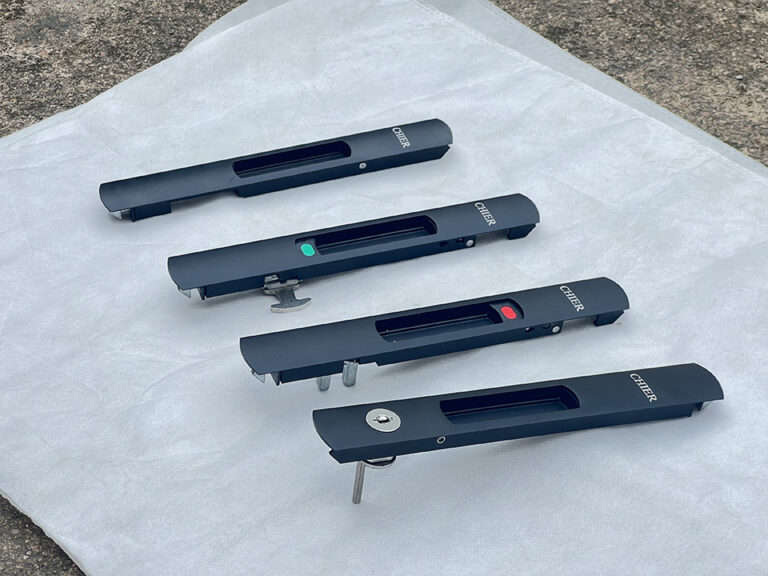
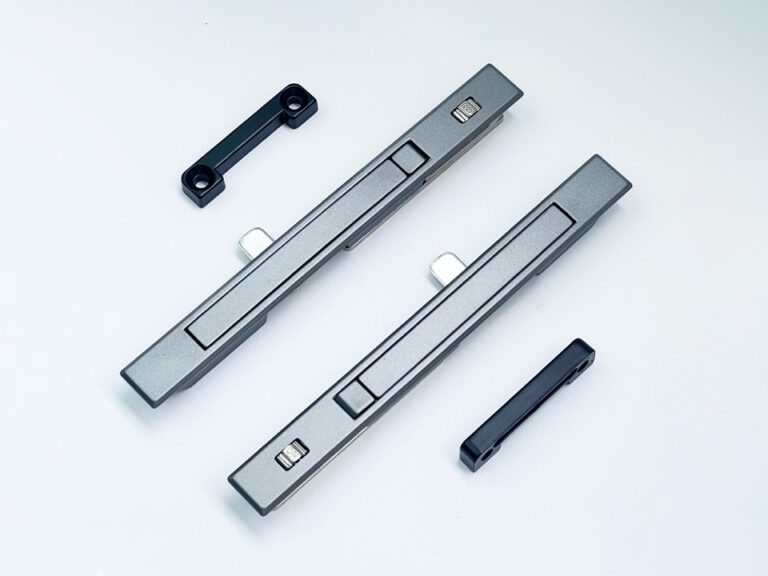
I’ve become picky about adjacent hardware for the same reason. On sliding units, I’d rather match repairs around known system compatibility using sliding window spring latch lock sets or a flush sliding window lock handle than throw miscellaneous catalog parts at the opening and hope the stack-up works out. Hardware families matter. More than people want to admit.
The safety angle nobody should shrug off
This part gets treated like an afterthought, and I think that’s reckless.
Older windows don’t just fail cosmetically. They fail physically—and sometimes dangerously—especially when the unit is in a child-occupied room, a second story, or a pre-1978 house where the painted friction surfaces can release lead dust during repair. The EPA doesn’t mince words on that point: homes built before 1978 are more likely to contain lead-based paint, and renovation or repair activity can contaminate the work zone if dust control isn’t handled correctly. Windows are one of the classic problem areas because the sashes grind through painted channels over and over.
And then there’s fall risk. The CPSC stated in its FY 2023 report that about 9 children die and thousands are injured in falls from windows each year, which is exactly why failed retention hardware, sloppy sash control, and ignored latch problems should not be treated as “minor.”
So yes, I care when a window tilt latch snaps.
But I care even more about what snapped it.
Window balance replacement is not glamorous, but it beats fake “upgrades”
I’ll say something unpopular: most “upgrade” language in the replacement market is cover for diagnostic laziness. If the frame is still square, the IG unit hasn’t blown out, the sill isn’t rotten, and the sash isn’t structurally wrecked, then a balance-and-latch overhaul is often the smarter play. Not flashy. Smarter.
The sequence matters. I use a boring process because boring processes save money:
- Confirm sash weight and travel length.
- Identify the balance family—spiral, block-and-tackle, or coil/constant-force.
- Inspect the pivot bars and shoes for asymmetrical wear.
- Match the window tilt latch by body, screw center, and nose geometry.
- Reinstall, cycle-test, and verify lock-line alignment.
That’s what real window sash balance repair looks like. Not a vibe. Not a product page. Not a salesman saying, “These should fit.”
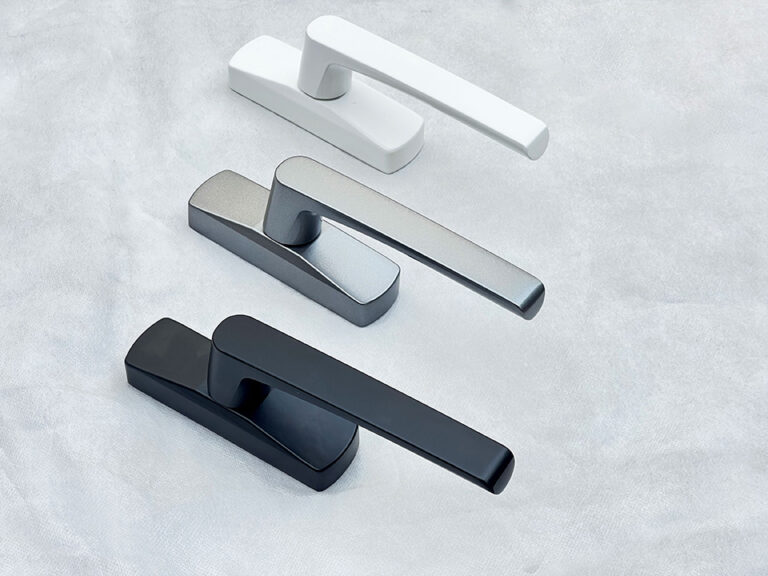
And if the opening package includes other wear points, I’d rather solve them together. I’ve seen good results when balance repairs are paired with compatible perimeter hardware like aluminum window handle locks or a keyed crescent window latch lock handle, especially in mixed-stock properties where “almost matching” parts create more headaches than obsolete ones.
The ugly truth about “best tilt latches for aging windows”
There isn’t one.
There is no universally “best” tilt latch floating above context like some perfect hardware deity. There’s only the right latch for a specific sash profile, wall thickness, track relationship, and duty cycle. That’s less sexy than roundup content, I know. It’s also true.
From my experience, decent replacements tend to share a few traits:
- UV-stable polymer or metal-reinforced construction
- Crisp spring response (not mushy, not sticky)
- Tight dimensional consistency between batches
- Strong screw bosses
- A nose profile that engages without field trimming or weird pressure
Everything else is marketing perfume.
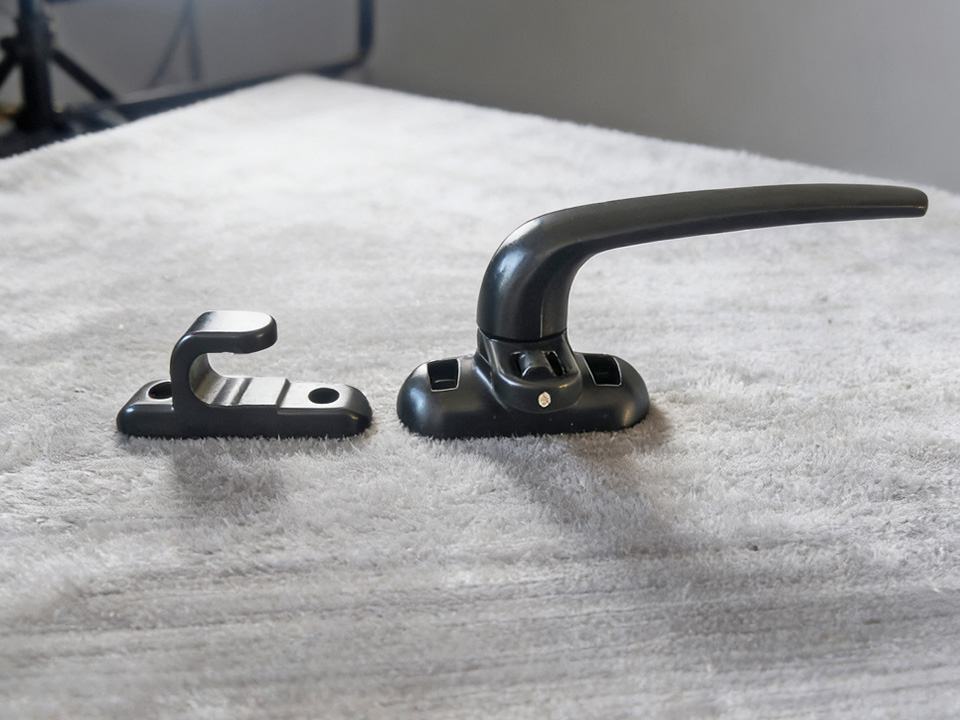
And don’t ignore the ecosystem around the repair. If the building has multiple hardware formats in play—and plenty do—then you should think beyond the latch itself. I’d rather source complementary hardware such as OEM custom Japanese touch latch locks for doors and windows where specialty closure behavior is part of the package, or stainless window friction stay slot hinges when the same project also includes casement openings. One property rarely speaks only one hardware dialect.
Why the repair market is still bigger than many brands admit
Yet this is where a lot of manufacturers still misread the room.
The repair side of the industry isn’t some dusty leftovers department. It’s the core of the real installed base. Harvard’s Joint Center for Housing Studies reported that improvements to owner-occupied homes reached $405 billion in 2023 and stayed well above pre-pandemic levels, even after the remodeling surge cooled. That’s not a rounding error. That’s a full-blown signal.
So when a supplier treats old window hardware replacement like an inconvenience, I notice. And I don’t think owners should reward that attitude. If a company can’t identify a coil series, a pivot shoe type, or a sash interface without trying to push you into a total unit swap, they’re probably not solving your problem—they’re rerouting it into their margin structure.
That’s the business. Strip away the brochure language and it becomes obvious.
How to replace a tilt latch on old windows without making the second mistake
The first mistake is bad diagnosis. The second is brute force.
Don’t yank the sash around just because it’s old. Relieve balance tension correctly, move the sash to the release position, depress both latches, tilt inward carefully, and inspect the pivot bars before you lift the sash free. If it binds, stop right there. Binding usually means the shoes aren’t level, one side is still loaded, or the sash is racked enough to punish the replacement you’re about to install.
When fitting the new latch:
- Clean the corner cavity properly.
- Check the sash stile for hairline cracking.
- Reuse the correct screw size if the threads still hold.
- Don’t overdrive screws into old vinyl.
- Re-seat both corners evenly into the shoes.
- Cycle the sash at least 10 full times.
That last step matters more than people think. A lot of shaky repairs look fine for one cycle. Ten cycles is where the nonsense shows up.
FAQ
What is a window balance?
A window balance is the concealed counterweight mechanism inside a window jamb or sash channel that offsets the weight of the moving sash, allowing the panel to open smoothly, stay at a selected height, and close without dropping, binding, or slamming under gravity.
In plain jobsite terms, it’s the muscle behind the sash. Spiral balances, block-and-tackle units, and coil systems all do the same basic job, but they fail differently—and when they do, people often misread the symptoms and blame the wrong part.
What does a window tilt latch do?
A window tilt latch is a spring-loaded sash component mounted near the top corners of a tilt-in window that engages the jamb shoes or side channels, holds the sash in its operating track, and releases it when you need to tilt the sash inward for cleaning or service.
That means it’s a control-and-retention piece, not the full lifting system. If the sash still travels badly after a latch swap, the balance stack, pivot bar, or shoe geometry probably has unfinished business.
How do I know whether I need window balance replacement or just a new tilt latch?
You need window balance replacement when the sash will not stay open, drops under its own weight, travels unevenly, or slams shut, while a tilt-latch-only repair is more likely when the sash still moves normally but cannot tilt in or re-lock correctly into the jamb system.
The fastest clue is behavior before disassembly. Stable sash travel with bad tilt function usually points to the latch. Unstable travel, side loading, drop-out, or a sash that racks under movement usually means the balance or pivot hardware is part of the mess.
Are aging windows worth repairing?
Aging windows are usually worth repairing when the frame remains square, the glass seal has not failed, the sill structure is sound, and compatible legacy parts still exist, because replacing balances, pivot shoes, and tilt latches often costs far less than a full-frame replacement while preserving the original opening.
I frankly believe too many owners replace serviceable windows because nobody bothered to diagnose them properly. If the frame and sash platform are still honest, repair is often the adult move.
Is it safe to repair old windows yourself?
It can be safe to repair old windows yourself when the sash is stable, the balance tension is understood, and the painted surfaces do not create a lead-dust risk, but older pre-1978 units, high-elevation windows, and heavily loaded balance systems deserve extra caution or certified help.
That’s especially true when the work disturbs painted friction surfaces, cracked vinyl, or loaded spring hardware. A “simple” tilt-latch swap can turn sketchy fast if the sash is heavy and the balance system is already misbehaving.
If your sash is drifting, the window tilt latch is cracked, or the balance ID has vanished into history, don’t let somebody sell certainty where measurement should come first. Pull the dimensions, identify the hardware family, and repair the actual failure chain—not the most visible symptom. That’s how you keep aging windows alive without lighting money on fire.