Specifying Frame Tolerances to Prevent Hardware Binding

I keep seeing teams obsess over lock brands, closer models, black finishes, and handle aesthetics while leaving the opening geometry vague, which is how a perfectly decent hardware set gets blamed for a frame that was never square, never plumb, and never given enough clearance to live a normal life. What did they think would happen?
Here is the hard truth I trust more than the sales pitch: the industry’s own troubleshooting guidance says standard steel door and frame work is built around a nominal 1/8-inch clearance between door and frame, and that when this clearance is not maintained, interference and hardware misalignment follow; SDI also notes rough openings should be at least 3/16 inch larger than the frame on all three sides where cast-in-place frames are not used. That is not a decorative note. That is the whole job.
Table of Contents
Most teams misdiagnose hardware binding
The industry loves blaming the lock. I think that is lazy, because the usual failure pattern is geometric, not mechanical: SDI 122-21 literally organizes common field failures around improper door/frame clearance, door bind against rabbet, hinge bind against stops, twisted frames, frames set out of square, lock fits too tight in strike, and frame-and-door hinge misalignment. When one document has that many ways to say “your opening is wrong,” I pay attention.
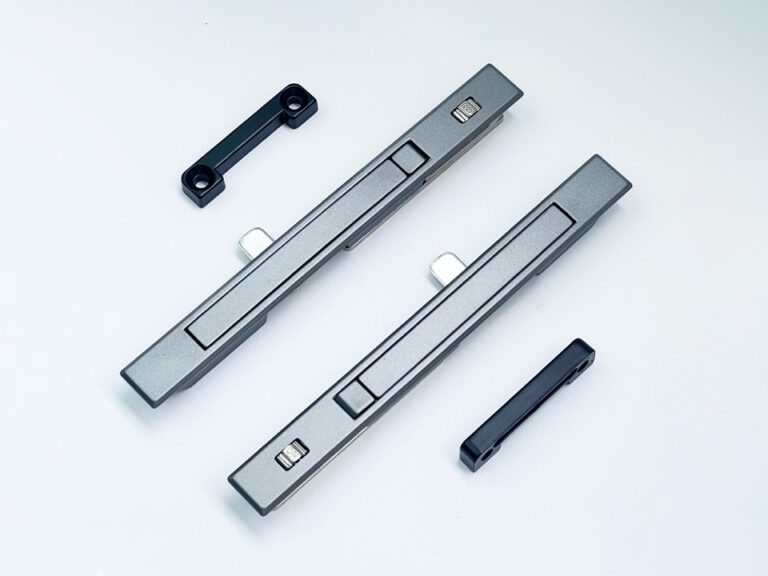
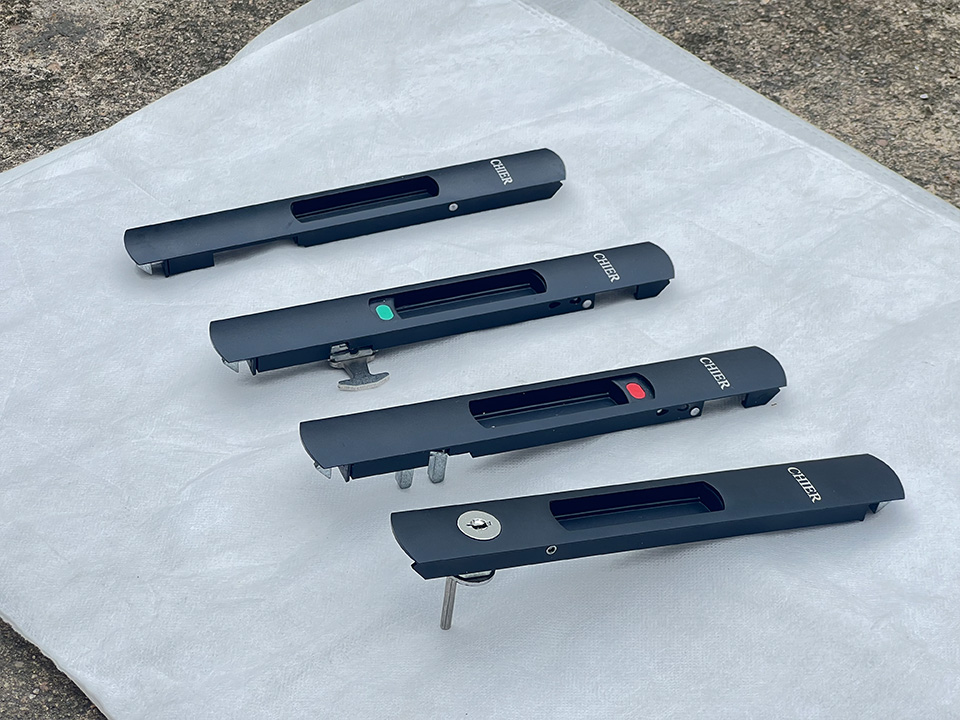
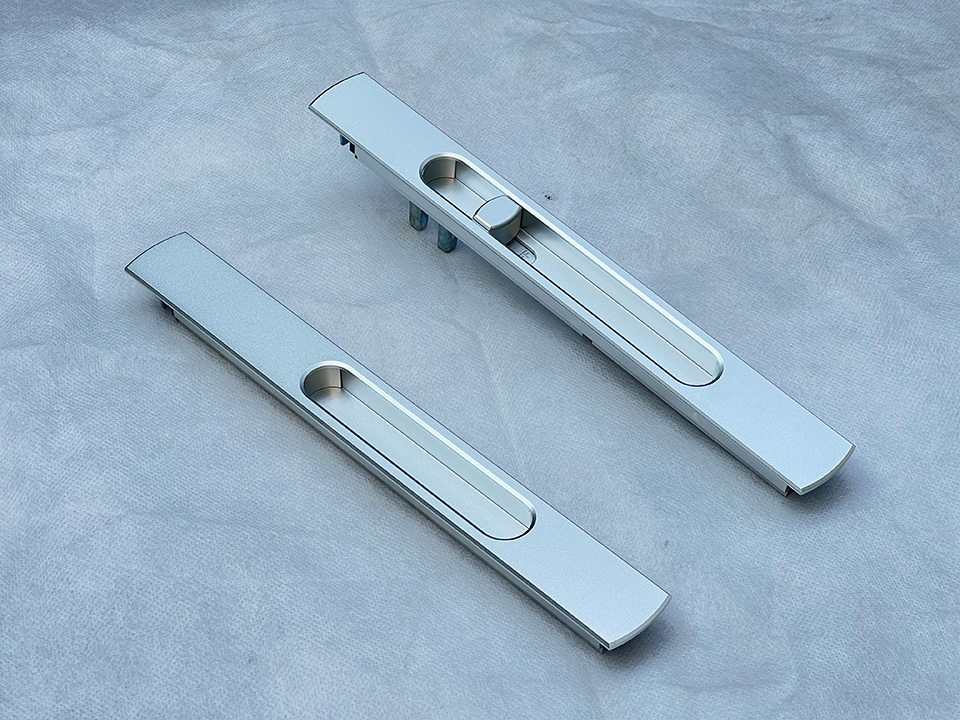
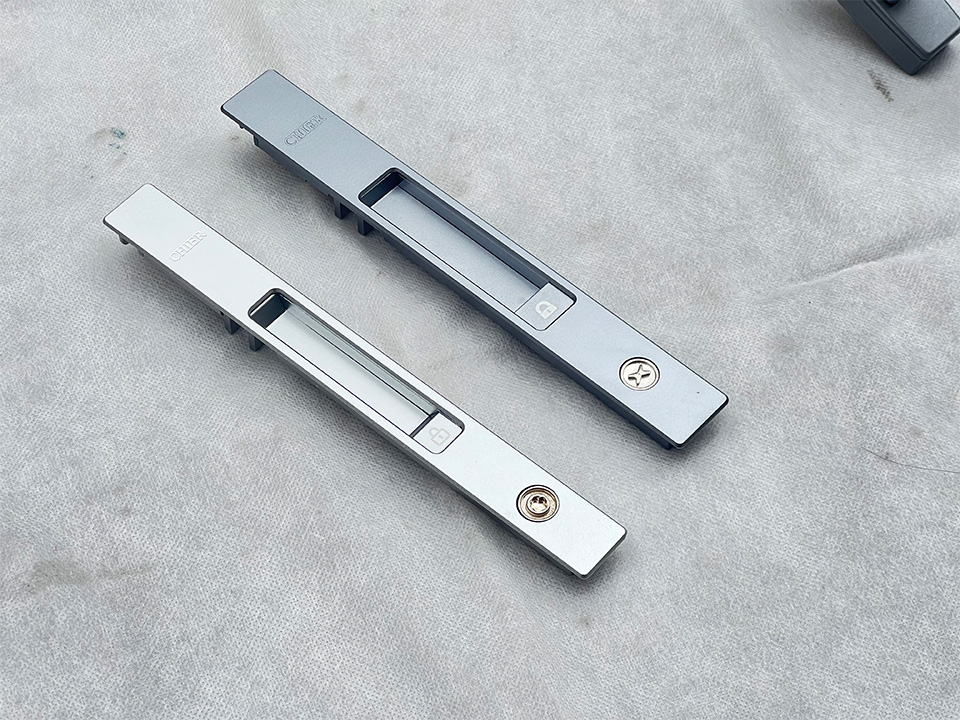
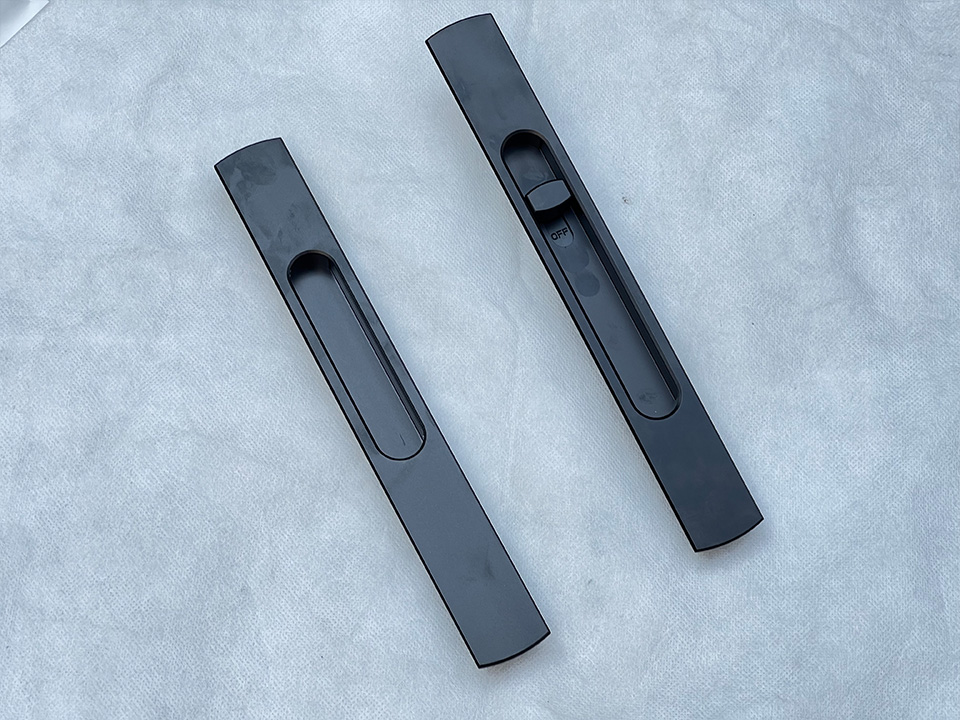
And the same trap shows up in slimmer assemblies, where profile vanity makes people even less willing to leave room for movement. If you are sourcing a double hook lock for an ultra-narrow sliding door or a recessed flush sliding door lock and handle, the opening stack-up gets less forgiving, not more. Pretty hardware does not rescue a bad frame.
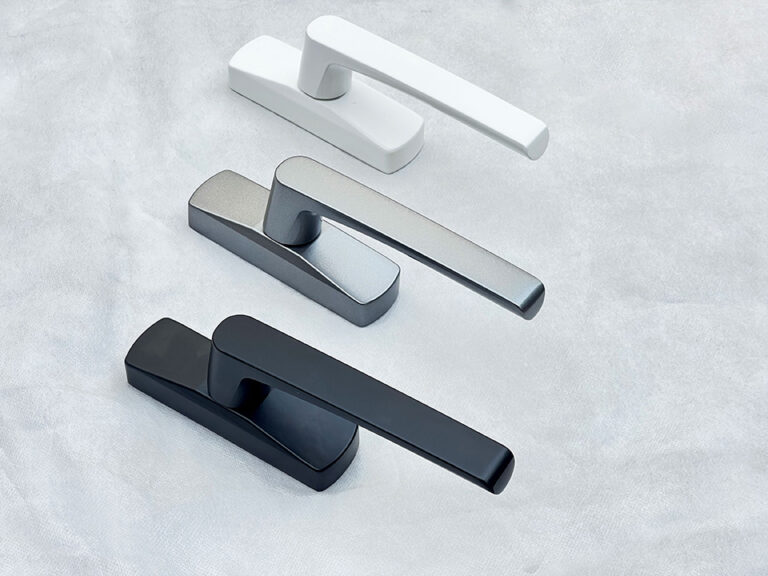
I would say the same for windows. An OEM 180° inward-opening window handle and a custom aluminum window handle lock can feel “tight,” “cheap,” or “off” when the sash or frame is drifting, even though the real offense happened upstream in tolerance control. That is why I treat handles and locks as geometry-sensitive components, not isolated catalog parts.
The numbers that belong in the spec
I would stop writing mushy phrases like “install plumb and true” and start writing numbers that force accountability. For standard steel door work, I want the nominal 1/8-inch door-to-frame clearance named, I want the frame fabricated and installed to SDI/industry tolerances, and I want the accessible opening force checked after the closer is adjusted, because the U.S. Access Board guidance ties accessible doors and gates to a 5 lbf maximum opening force except for fire doors and exterior hinged doors, and it explicitly separates latch retraction force from the opening-force measurement.
Then I get stricter where litigation has already taught the lesson. In the Kobayashi matter, the retrofit language included replacing knobs with levers, reducing level changes and thresholds at entrance and patio doors, widening doorways, reversing swing direction, and even using offset swing-wide hinges to achieve a minimum 31 3/4-inch clear width; in the Bridgewater consent order, the defendants agreed to lever hardware retrofits and to remove door closers on request where entry doors provided less than 12 inches of clear maneuvering space at the latch-side push side. Those are not academic details. They are the dimensions that separate “works” from “we are now paying lawyers and retrofit crews.”
If I were drafting the core sentence today, I would write it this way: hollow metal frames shall comply with SDI manufacturing tolerances, be installed per steel frame erection guidance, maintain nominal 1/8-inch perimeter clearance, preserve required maneuvering clearances, and be field-adjusted for plumb, square, strike alignment, and accessible operating force before punch. That is how you prevent hardware binding without pretending the opener, lockset, or lever caused the first mistake.
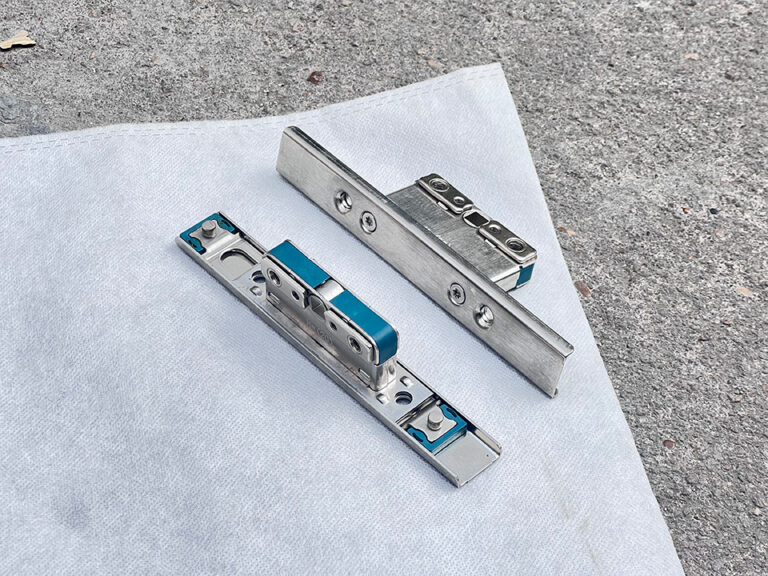
One more unpopular point. Soft-close systems punish sloppy frames because damping hides the first few symptoms and then magnifies the last one. Anyone evaluating soft-close damper hardware for metal sliding doors should understand that damped motion feels premium only when the frame, strike, and panel path were controlled from day one.
Where this turns into cost and liability
The legal pattern is not subtle anymore. In August 2023, the Bridgewater Apartments consent order required retrofits tied directly to entry-door hardware and maneuvering clearances; in the Kobayashi settlement finalized in late 2023 and posted by DOJ in 2024, retrofits included lever hardware, threshold reductions, wider doorways, swing changes, and hinge changes; and on June 18, 2024, the Southern District of New York announced a new Fair Housing Act lawsuit against Toll Brothers, with the U.S. Attorney’s Office saying it was the nineteenth such suit that office had filed over inaccessible housing. If you still think frame tolerance specifications are just shop trivia, you are reading the market wrong.
HUD is not in a forgiving mood either. The 2024 NSPIRE inspection protocol says inspectors are required to evaluate and physically test inspectable items using NSPIRE standards, and it gives doors as an example where different defects such as missing hardware and missing seals are recorded separately. Agencies are telling you, in procedural language, that a non-functioning opening is not a cosmetic issue.
And the money leak is bigger than most estimators admit out loud. Reuters reported in May 2024 that between 2% and 30% of construction expenditure is wasted through rework; once a bad frame detail repeats across a package, the damage is not just a shim and a shrug, it is removals, repainting, adjusted closers, rehung leaves, swing corrections, site labor, owner complaints, and the kind of callback math that eats margin silently.
A practical table for spec writers
This is the compression I use when I want door frame tolerances, hollow metal frame tolerances, and hardware binding language to survive both submittals and field abuse. It is based on SDI troubleshooting, accessibility guidance, and the DOJ retrofit record.
| Failure symptom | What usually caused it | Spec language I would use | Why it matters |
|---|---|---|---|
| Latch-side rub or strike miss | Frame out of square, strike mislocation, door sag | Maintain nominal 1/8-inch perimeter clearance; verify strike alignment after anchoring | Stops false “lock failure” claims |
| Hinge bind | Hinge prep depth, jamb toe-in, bad shimming | Require hinge prep to template tolerances and field shim adjustment before punch | Prevents hinge-side drag and closer overload |
| Door won’t meet accessibility target | Closer overpowered, seal pressure, bad geometry | Verify opening force after final closer adjustment; preserve maneuvering clearance | Protects ADA performance |
| Tight clear width | Wrong leaf/frame combination, wrong swing, bad retrofit logic | Confirm clear opening early; require corrective hinge or swing strategy where needed | Avoids expensive late rework |
| Sliding hardware feels rough | Track or lock geometry fighting the frame | Coordinate frame, track, lock, and handle tolerances as one assembly | Stops premium hardware from feeling defective |
FAQs
What are door frame tolerances?
Door frame tolerances are the allowable dimensional and installation deviations in width, height, plumb, level, face, rabbet, and hardware prep that still let a door leaf swing, latch, seal, and meet accessibility or fire-performance requirements without rubbing, sagging, or forcing the hardware out of alignment. In plain English, they are the limits inside which a frame can still behave like a system instead of a lawsuit.
What is the best door frame clearance to prevent hardware binding?
The clearance most often used to prevent hardware binding in standard steel door work is a nominal 1/8-inch gap between door and frame, paired with correct plumb, square, hinge prep, and strike alignment, because clearance alone does not save a frame that was installed out of geometry. I would not call 1/8 inch “best” in the abstract; I would call it the baseline that only works when the rest of the opening is disciplined.
Why does hardware bind even when the lockset is correct?
Hardware binding happens when the door, frame, hinges, strike, closer, and wall opening stop sharing the same geometry, so the installer feels resistance at the lever or closer even though the real defect is usually sag, twist, toe-in, or a bad prep location. That is why SDI’s troubleshooting sequence spends so much time on frame shape and clearances before it treats the hardware itself as the villain.
Are hollow metal frame tolerances an ADA issue or just a performance issue?
Hollow metal frame tolerances are both an accessibility issue and a performance issue because a door can miss maneuvering space, lose required clear width, or exceed the 5 lbf opening-force target long before the owner notices the more obvious symptoms of rubbing, latch trouble, or hinge noise. The DOJ settlements and Access Board guidance make that painfully clear, and the Toll Brothers case shows regulators are still willing to pursue it in 2024.
Stop buying “good hardware” for bad openings
My advice is blunt: freeze the frame geometry before you fetishize the handle. If you are building a sourcing stack right now, compare the opening logic behind a double hook lock for an ultra-narrow sliding door, a recessed flush sliding door lock and handle, an OEM 180° inward-opening window handle, a custom aluminum window handle lock, and soft-close damper hardware for metal sliding doors only after the door frame tolerances are written in hard numbers. That is how you prevent hardware binding before the punch list starts acting like a crime scene.