Vetting China Based Window Handle Suppliers Professionally

I’ve watched buyers lose six figures over parts that looked fine in sample photos, arrived in neat export cartons, passed the first casual inspection, and then started showing wobble, lock drag, finish inconsistency, or spring fatigue once installers got them into real-world projects where tolerance stack-up suddenly stopped being a theory and turned into chargebacks. It happens. A lot.
Most people shopping for china window handle suppliers aren’t really evaluating factories. They’re evaluating sales behavior—response speed, English fluency, quote formatting, maybe a polished video with nice lighting and some forklifts in motion. None of that tells me whether the supplier can hold spindle fit, manage plating adhesion, sort porosity in die-cast bodies, or stop a bad batch before it disappears into a container.
I frankly believe this industry trains buyers to focus on the wrong signals. Price table. MOQ. Lead time. Surface color. Done. Then, six months later, everyone’s pretending they were “misled” when the real problem was simpler: nobody asked how the thing was actually made, inspected, or reworked when it failed.
Not with brochures. Not with a sample wall. Not with the smiling export manager. I start with how the handle breaks, what the supplier does when it breaks, and whether their paperwork matches what’s happening on the shop floor. That’s where the story usually cracks open.
Table of Contents
The real search intent behind this topic
You don’t type window handle manufacturers China or vetting Chinese window handle suppliers into Google because you want a generic article stuffed with abstract sourcing advice. You type that because you’re already in the funnel—commercially, operationally, maybe even politically—and you need a filter that cuts through the usual noise before a PO turns into a warranty mess.
People looking up how to choose window handle suppliers in China or best China based window handle suppliers usually have a shortlist problem, not an education problem. They’ve got quotes. Maybe samples. Maybe even a “factory audit” that was really just a guided walk past the tidy bits. What they don’t have is conviction. And honestly? Good. They shouldn’t.
Because a supplier can be legitimate, export-active, responsive, and still be a bad bet.
The four things I care about are brutally simple: who owns the business, who controls production, who owns the defect, and who tells the truth when something ugly shows up in batch number three—not batch number one, obviously, because batch one is where everyone behaves.
What I check before I trust any OEM window handle manufacturer China
1. The company identity must match the factory reality
If the website brand, invoice entity, export company, workshop signage, and manufacturing address don’t line up cleanly, I slow the whole process down—fast. I want to know who’s quoting, who’s producing, who’s exporting, and who vanishes when there’s a finish failure after shipment. Different names aren’t automatically a dealbreaker. But unexplained name games? That’s where the nonsense starts.
And no, “we are one group” isn’t an answer.
From my experience, real factories usually have a category fingerprint. You can see it in the SKU mix, the machining logic, even the way they talk about spindle lengths or lock-body fit. Traders and shallow assemblers tend to sound broader, glossier, more flexible in all the wrong ways. They “do everything.” Which, in hardware, usually means they own less than you think.
That’s why I look for concentration, not catalog sprawl.
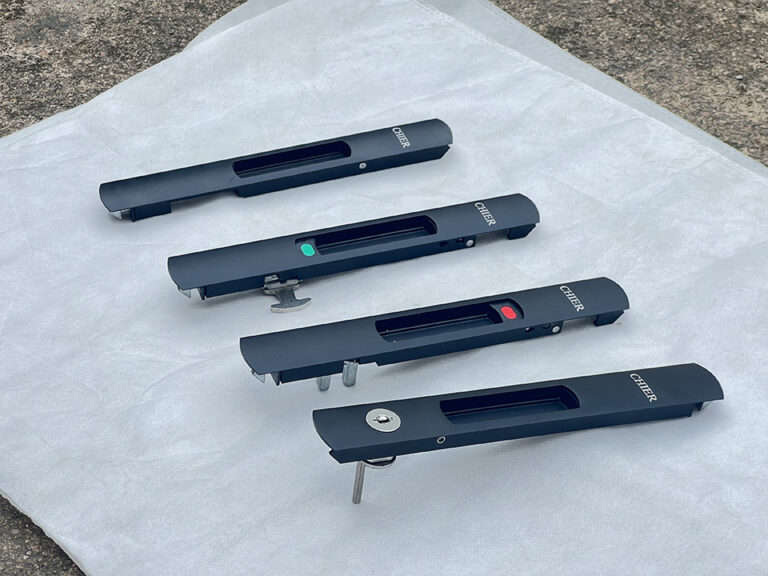
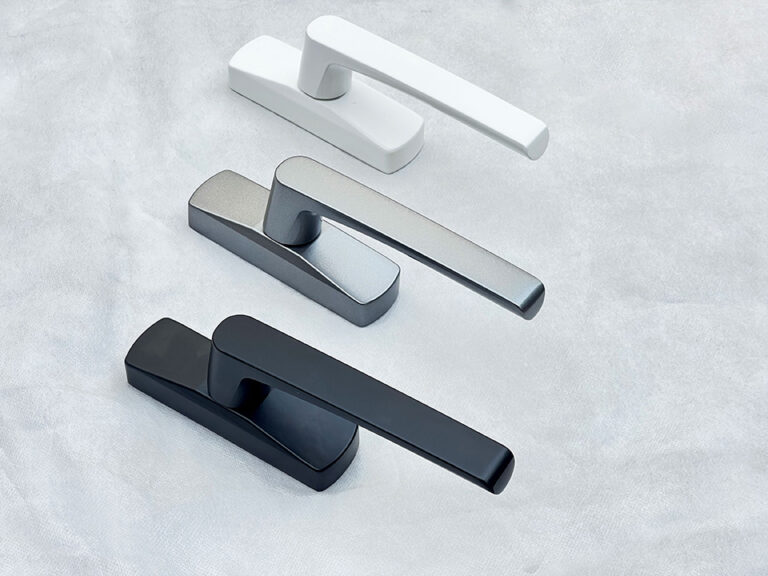
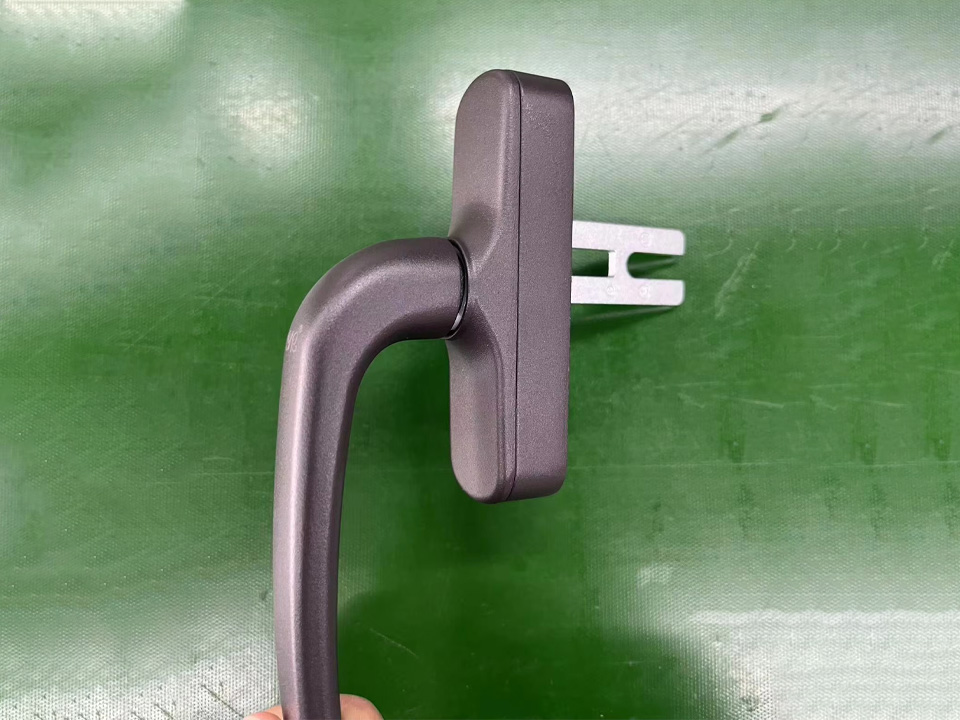
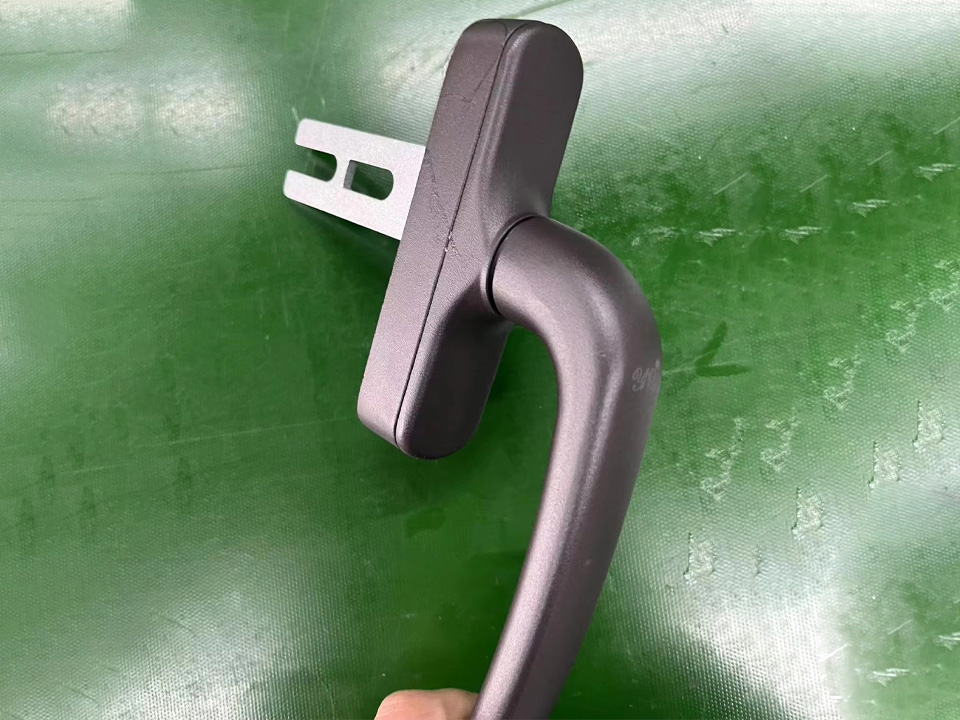
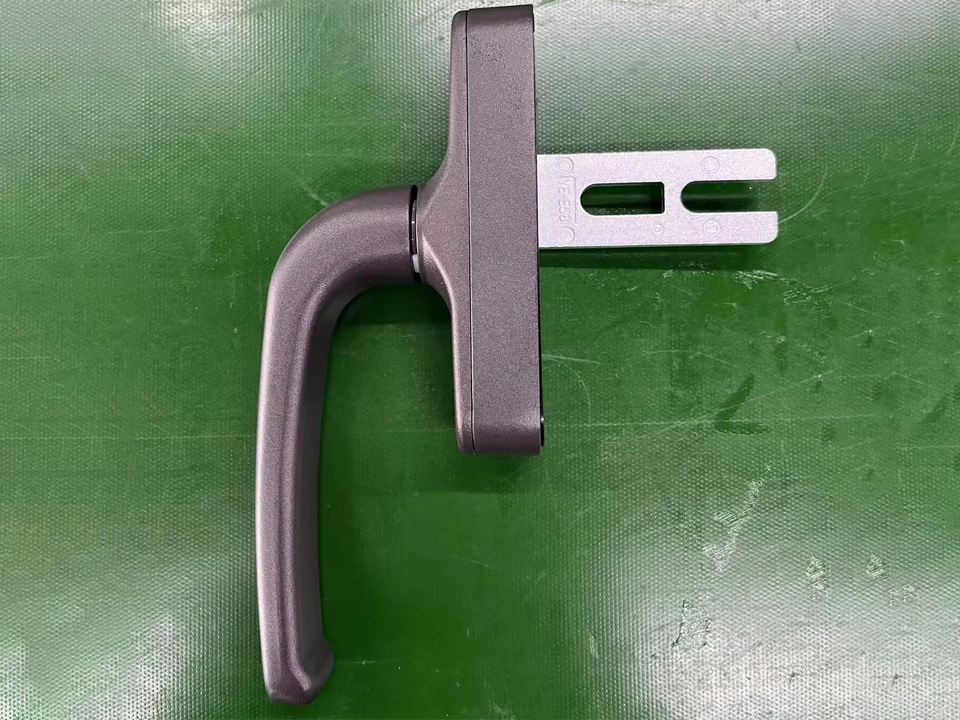
A supplier showing relevant depth through custom aluminum window handle lock OEM production, matte black casement window handles, and OEM keyed aluminum crescent window latch lock handles gives me a much cleaner signal than some “one-stop architectural hardware” pitch that also wants to sell shower hinges, drawer slides, and mystery accessories.
That concentration matters.
2. Materials beat marketing
304 stainless steel? 201? ADC12? Zamak? 6063-T5 aluminum? What’s the hardness range? What’s the coating stack? What’s the claimed salt-spray performance under ISO 9227? What happens to the black finish after repeated hand contact, humid storage, or coastal install conditions? Those questions separate manufacturers from presentation artists.
And yes, I’m being blunt on purpose.
Because this is where buyers get burned by pretty words like “premium metal,” “high-end finish,” or “strong corrosion resistance.” Those phrases mean nothing unless they’re pinned to material certs, incoming inspection, process control, and random verification. If a supplier can’t talk me through pretreatment, powder thickness, anodizing class, passivation, or adhesion testing without sounding like they’re reading from a laminated cheat sheet, I assume they don’t own the process—or don’t understand it deeply enough to protect me.
That’s not harsh. It’s practical.
The adjacent SKUs tell you a lot here too. If the same supplier is showing real capability in China OEM stainless window friction stay slot hinges or custom sliding window flush lock handles, I ask whether they run the same QC mindset across hinge friction, latch engagement, handle body machining, and assembly torque. Good factories don’t just make parts. They repeat discipline.
3. The audit should target process, not furniture
I’ve sat through the kind of “factory visit” that starts with coffee, ends with a gift bag, and somehow never passes the quarantine area, the rework bin, or the actual line where operators are improvising around tooling wear. That’s not an audit. That’s industrial hospitality.
And buyers fall for it because it feels official.
I don’t want the lobby. I want the ugly corners. I want to see incoming inspection stations, die-casting segregation, machining fixtures, torque tools, coating control, defect tagging, calibration dates, batch traceability, and the spot where rejected parts go to die. If the supplier keeps steering me back toward sample displays and framed certificates, I get suspicious—immediately.
A real supplier audit for window handle manufacturers has to answer questions that make people slightly uncomfortable: Who checks incoming material—and against what spec? What were the top three defects in the last 90 days? Which operations are outsourced? How do you segregate cylinder batches? What gets 100% checked? What gets sampled? What happens when coating thickness misses target?
The three risks buyers underestimate
Compliance risk
This part makes people twitch because they’d rather pretend window hardware is too ordinary to attract compliance attention, but that’s lazy thinking, and the trade environment has moved on whether buyers have or not. In fiscal year 2024, U.S. Customs and Border Protection reported stopping 11,778 shipments worth about $1.78 billion under UFLPA enforcement, which should tell any importer that upstream traceability is no longer a nice-to-have side file—it’s part of commercial survival.
And no, I’m not saying your window handle shipment is automatically exposed. I’m saying the old “just get the goods out” mindset is dead, and a buyer who doesn’t understand supplier traceability is playing with fire while calling it procurement.
Audit theater
Even large, sophisticated brands can convince themselves they’ve audited risk when they’ve really audited presentation, which is why the Reuters report from September 2024 about an audit commissioned by Volkswagen for its Xinjiang plant hit me as more than a one-off controversy; Reuters reported that the audit failed to meet key aspects of the international standard the auditor said it had set, and the operational lesson is obvious—soft audits happen at every level.
If that can happen there, it can happen to you.
Restricted-party exposure
And then there’s the compliance failure that doesn’t look dramatic until it lands in enforcement language, which is exactly why the Reuters report in August 2024 on TE Connectivity mattered to me: the company agreed to pay $5.8 million to settle with the U.S. Department of Commerce over 79 export-control violations involving shipments to Chinese entities tied to restricted programs, with the department saying some customers were concealed or disguised.
You don’t need cartoon-villain intent to create exposure. Sloppy controls can do the job just fine.
My working framework for ranking best China based window handle suppliers
I use a weighted scorecard because memory is selective, charm is persuasive, and once a supplier starts sounding “professional,” buyers begin filling in the blanks with optimism instead of evidence. That’s human. Dangerous, too.
Here’s the matrix I actually trust.
| Evaluation Area | What I look for | Red Flag | Weight |
|---|---|---|---|
| Legal & ownership clarity | Matching entity names, licenses, factory address, export records | Invoice company differs from operating company without explanation | 15% |
| Product specialization | Repeated competence in window handles, locks, hinges, related hardware | “We make everything” catalog | 15% |
| Material control | Alloy certs, hardness checks, coating specs, salt spray records | Vague material language like “high quality metal” | 15% |
| Process control | SOPs, in-line inspection, calibration, traceability | Only final inspection, no in-process data | 20% |
| Outsourcing exposure | Transparent list of outsourced steps | Hidden subcontracting | 10% |
| Engineering response | Drawings, tolerance discussion, DFMA suggestions | Sales-only answers | 10% |
| Quality history | NCR logs, defect trend, CAPA discipline | No usable records | 10% |
| Commercial stability | Payment terms, lead-time realism, tooling ownership terms | Aggressive deposit demand, fuzzy tooling clauses | 5% |
But if a supplier is weak on material control and process control, I don’t care if they shaved eight cents off the quote. Eight cents is not strategy. It’s bait.
What I ask in the first call
I don’t do warm-up questions.
I ask the stuff that forces a factory—or a trader pretending to be one—to reveal its operating depth almost by accident: Which parts are made in-house? Which parts are outsourced? What spindle tolerance do you hold? What finish test are you willing to commit to in writing? What’s your cycle-life standard? Who owns the mold if I pay tooling? Can you ring-fence our keyed-alike setup from your standard production?
Then I wait.
A serious OEM window handle manufacturer China usually answers with specifics—measurements, workflow, tolerances, process notes, maybe even photos. A weak one starts talking in mist: “high quality,” “experienced team,” “strict QC,” “many years export.” That language tells me almost nothing except that I should keep digging.
A practical sourcing path that actually works
Most buyers do this backwards.
They request samples first, feel reassured because the sample looks good, negotiate price second, and only then start wondering who actually made the thing, who controls repeatability, and whether the “factory” on the website is just the most photogenic node in a subcontracting chain. By that point, they’re emotionally invested. Bad position.
First, document screen. Then live video verification. Then drawing review. Then targeted audit. Then sample and lab check. Then pilot order. Then contract. That order strips out a lot of nonsense before you spend time approving beautifully made samples that may never represent mass production.
And category fit matters more than buyers admit.
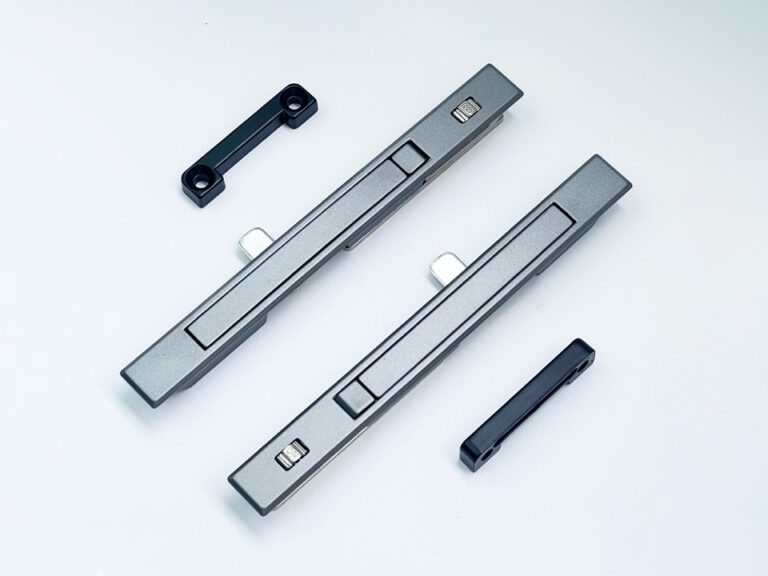
If your demand leans sliding systems, I’d rather see live evidence in wholesale sliding window spring latch lock sets and custom recessed flush sliding door lock and handle programs than hear a broad claim that the supplier “also does windows.” In hardware, adjacency beats generality.
Price traps in china window handle sourcing
A low quote can make intelligent people act strangely.
I’ve seen buyers celebrate a handle dropping from $1.36 to $1.18 like they’d outsmarted the market, only to spend ten times that savings on repacking, replacement, field complaints, or endless email chains about why batch two doesn’t match the approved sample in gloss, spring force, lock feel, or screw alignment. Tiny savings. Expensive lessons.
And yes, some factories know this.
They know many buyers will never test fatigue properly, never verify coating thickness, never measure spindle tolerance across enough units, and never compare a pilot lot to the hand-picked sample that sold the deal. So the quote gets sharp, the PO gets won, and the slippage hides in the grey zone—until installers start using phrases like “stiff,” “loose,” “gritty,” or “doesn’t line up.”
That’s when the pain starts.
I’d pay more for repeatability on a keyed crescent latch, lock-body alignment, black matte finish consistency, coastal-use performance, and screw retention than save a few cents on paper. Because in this trade, cheap isn’t always cheap—it’s often deferred damage.
FAQs
How do I verify whether china window handle suppliers are actual factories or just trading companies?
The fastest way to verify a China-based window handle supplier is to compare its legal entity, manufacturing address, export documents, workshop evidence, related SKU depth, and process records to confirm that the company quoting you is the company controlling production, inspection, and shipment.
After that, I ask for live video from the floor—not glossy promo footage. Show me work orders, assembly benches, raw material storage, rejected parts, and packaging flow. A trader can usually talk smoothly. What they struggle with is operational detail under pressure.
What tests matter most when vetting Chinese window handle suppliers?
The most important tests when vetting Chinese window handle suppliers are material verification, dimensional inspection, cycle-life testing, corrosion testing, lock-function testing, and coating adhesion checks, because those directly predict field failure in casement, sliding, and keyed window-handle applications.
I’d add one more point that buyers often miss: test against the actual use case. A beautiful handle for inland residential projects may perform very differently in high-humidity coastal installs, especially once finish chemistry, spring tension, and fastener quality start interacting in the real world.
What is the biggest mistake buyers make during supplier audit for window handle manufacturers?
The biggest mistake in a supplier audit for window handle manufacturers is treating the audit like a showroom visit instead of a process investigation, which means buyers leave with polished impressions but without proof of traceability, outsourcing controls, defect history, or production discipline.
From my experience, the best clues are rarely staged. They’re hidden in calibration stickers, quarantine tagging, defect logs, operator instructions, and the answer to a simple question: “What happened the last time a batch failed spec?” That answer tells you who you’re really dealing with.
How many suppliers should I compare before choosing the best china based window handle suppliers?
The right comparison set is usually three to five qualified suppliers, because that is enough to expose abnormal pricing, unrealistic lead times, inconsistent technical claims, and major process differences without turning your sourcing exercise into endless quote collection with no decision framework.
More than that usually becomes noise. Too many options create fake confidence—like you’ve done deep market work—when in reality you’re just widening the pile of PDFs. I’d rather interrogate four serious candidates than skim ten mediocre ones.
Conclusion
The best china window handle suppliers are rarely the ones trying hardest to impress you. They’re the ones that stay calm when you ask uncomfortable questions, produce records without drama, explain process limits honestly, and don’t treat every request for proof like a personal insult.
So if you’re screening window hardware suppliers China right now, don’t build your shortlist around polish. Build it around evidence—material control, process discipline, traceability, and category fit. Everything else is just sales lacquer, and that stuff always wears off first.