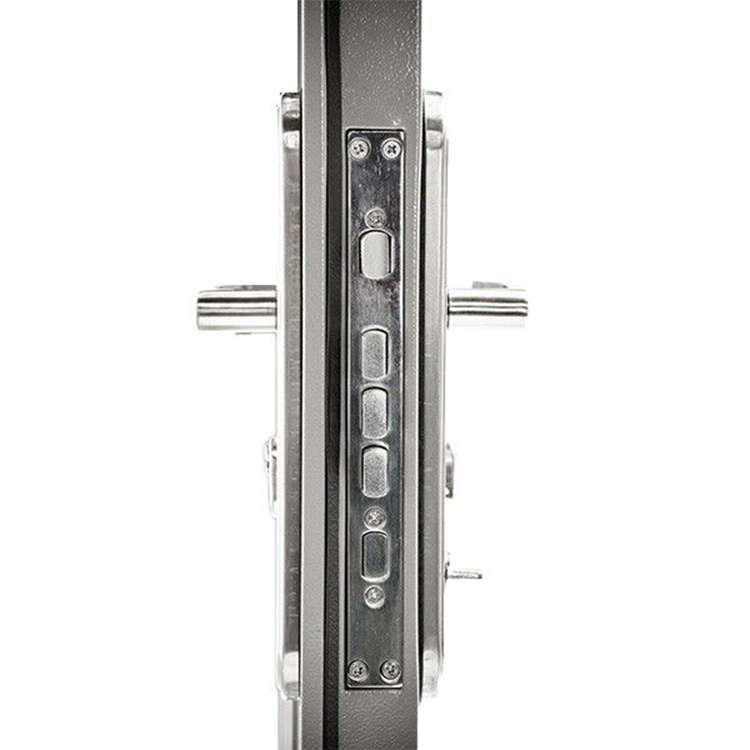
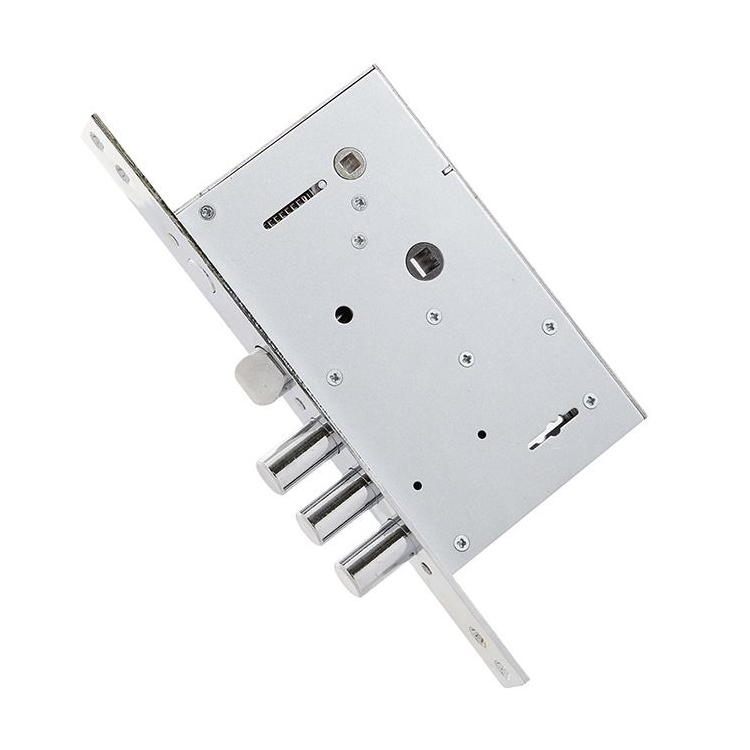
Looking for hardware solutions that meet European / American standards?
Use this guided inquiry modal to move from a generic quote form to a clearer technical conversation. Buyers can choose whether they need pricing, CAD / 3D files, or OEM / ODM support before sharing contact details.
Compatibility-first design across door / window systems
Repeatable production with clear inspection checkpoints
Documentation and change control for long-running programs
Responsive engineering support for fit and field feedback
Most locks lie. A multi-point lock can look polished in a submittal, survive a showroom demo, and still die early because the real fight is not the faceplate but the stack beneath it: keeper alignment, rod drag, chloride exposure, coating build, fastener chemistry, and how the slab moves after six wet months, one hot season, and a contractor who thinks “close enough” is a tolerance. What did you expect?
I’ll say the rude part. Too much of the industry still treats “climate-ready” as a sales adjective when it should be a specification discipline. That is why I would send any serious reader first to the site’s hardware compliance guide for aluminum windows and doors, then straight into frame tolerances that prevent hardware binding, because climate failure often starts as a geometry failure wearing a corrosion costume.
Table of Contents
Global is not a geography word. It is a liability word.
Weather got louder. And the numbers are no longer niche talking points: NOAA’s billion-dollar disaster database says the U.S. logged 27 weather and climate disasters worth at least $1 billion in 2024, AMPP’s corrosion economics work still estimates global corrosion losses at US$2.5 trillion, or 3.4% of global GDP, and Reuters reported that construction rework can burn between 2% and 30% of project spend. That is not background noise. That is your margin evaporating in public.
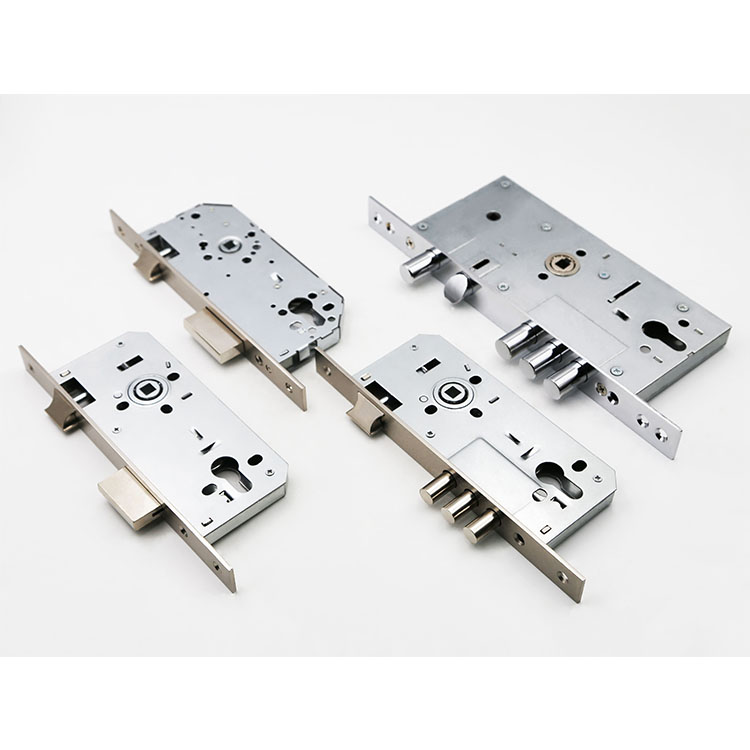
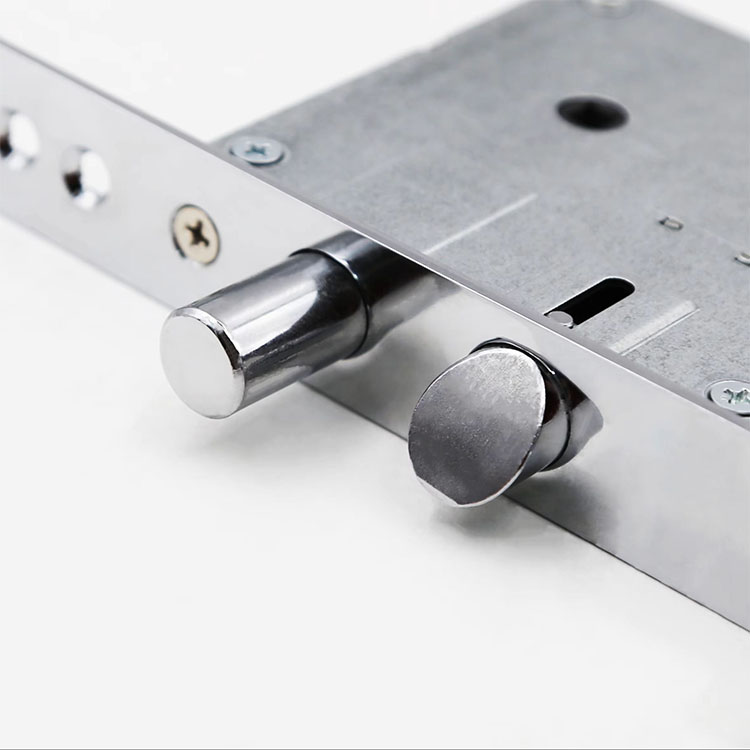
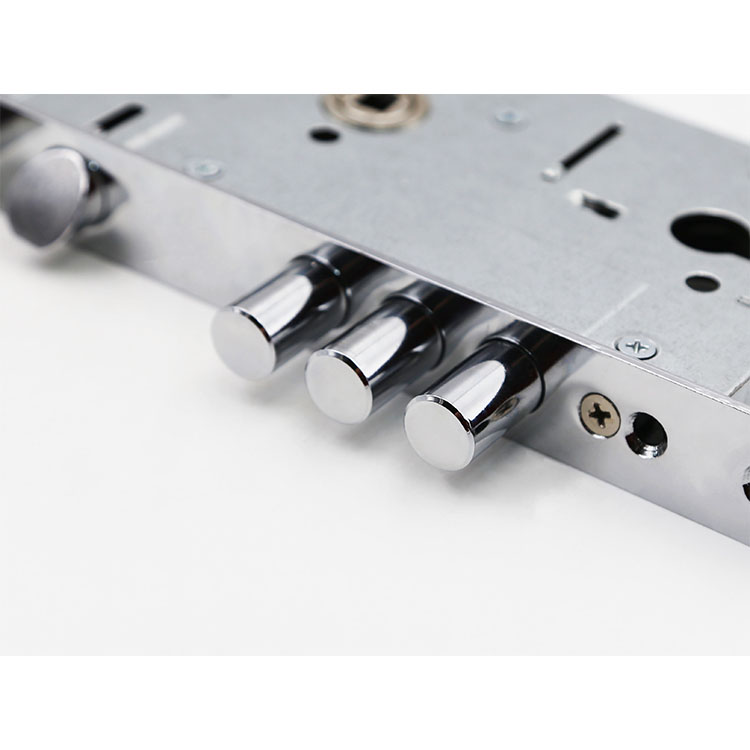
And here is the hard truth I have seen again and again: a “global project” is not impressive because it spans Dubai, Miami, Rotterdam, and Melbourne. It matters because each site punishes laziness differently. Salt will embarrass a weak coating system. Freeze-thaw will expose sloppy compression. Wind-driven rain will expose fake sealing. If you want the commercial layer too, fine—link readers into multi-point lock systems. But do not pretend the category page alone answers the engineering question.
Stop specifying for the catalog photo
Cosmetics sell. A lock package can pass the sniff test in a boardroom, photograph beautifully in matte black, and still be a warranty fight because the real spec never named the stainless grade, never defined the coating stack, never checked mixed-metal interfaces, and never forced anyone to think about chloride ions, film build, or edge coverage. I have watched teams spend more time debating swatch tone than debating whether the fastener pairing is setting up a corrosion cell. That is malpractice dressed as taste. The site’s piece on finish and corrosion prevention in window hardware belongs in this conversation for exactly that reason.
And geometry still beats branding. The industry loves to blame the handle, the gearbox, the installer, the user, or the weather; but when a door is out of square, when keeper offset drifts, or when the slab is fighting the frame, even good multi-point hardware starts getting called “cheap.” I trust frame tolerances that prevent hardware binding more than I trust most glossy hardware brochures, because ugly millimeters decide the job long before the sales copy shows up.
Corrosion is chemistry, not marketing
Salt does not care. If your weather-resistant door hardware strategy boils down to “use stainless” without naming 304 or 316, checking the fasteners, and matching the rest of the assembly, you have not written a strategy. You have written a wish.
Compression is performance, not feel
Here is another industry habit I dislike: people judge a multi-point lock by the handle feel in a sample room instead of by full-height gasket compression after installation. That is backwards. DOE guidance on windows says heat gain and heat loss through windows account for 25%–30% of residential heating and cooling energy use, which is exactly why I care about even pull, seal consistency, and whether the slab actually seats the way the energy model assumes it will. Smooth operation is nice. Repeatable compression is money.
The data the industry keeps trying not to read
Codes are boring. And boring is where projects either survive or bleed.
FEMA’s Local Officials Guide for Coastal Construction is blunt: windows and doors can fail if they are not strong enough to resist wind pressures from a high-wind event. FEMA’s Hurricane Michael mitigation report went further and discussed designing an interior vestibule envelope to deal with wind and rain intrusion when an exterior door fails. Meanwhile, ANSI/BHMA A156.37-2025 lays out performance requirements for multipoint locks, and FEMA’s code compilations continue tying windborne-debris protection to ASTM E1886 and ASTM E1996. That is the paper trail. Ignore it, and the climate-ready claim is theater.
Project condition
What usually kills the lock package
What I would write into the spec
Evidence I would demand
Cold continental exposure
Seasonal movement, poor seal compression, stiff actuation
Adjustable keepers, verified full-height compression, serviceable gearbox, defined lubrication window
Cycle testing plus installation and adjustment method
I built that table the way I wish more schedules were written: plain, annoying, and hard to wiggle out of. Why? Because vague specifications are how weak multipoint locking systems keep getting sold into conditions they were never built to survive.
Case files the sales deck never puts on page one
Recalls matter. In November 2023, the CPSC recall for MI Windows and Doors sliding glass doors covered about 1,900 units and warned consumers to avoid areas near the doors during hurricane conditions; one month later, the CPSC recall for Pella Architect Series casement windows covered about 12,000 units because the sash could detach from the frame and fall. Different products. Same lesson. Opening systems fail in the real world, not just in lab slides.
And FEMA has been warning the market for years. If your exterior door or glazed opening cannot keep resisting wind pressure, or if the surrounding geometry and protection strategy are weak, the damage does not stay politely at the hardware line item. It spreads inward—water, air, callbacks, claims, reputation. So when I hear someone ask for the “best multi-point locks for coastal projects,” I usually translate that into a better question: best according to which exposure, which assembly, which standard, and which maintenance reality?
How I would specify climate-ready multi-point locks on a real project
No shortcuts. I would define exposure first, not finish first; I would lock down geometry before arguing about aesthetics; I would require assembly-level evidence before believing any “tested” claim; and I would force service-part identification into the package before the first unit ships. That means corrosion-resistant door locks with named material grades, keeper and rod logic that can be adjusted on site, test language that matches the code path, and hardware that still makes sense when a distracted user closes the door badly on a wet Tuesday.
But I would also refuse one common industry trick: stuffing every climate problem into the lock itself. A multi-point lock is not a magic wand. It cannot rescue a twisted frame, a dead weatherseal, a sloppy threshold transition, or a procurement team that swapped the gearbox after approval because the cheaper supplier had prettier catalog photography. The lock can only preserve good geometry. It cannot invent it.
FAQs
What are climate-ready multi-point locks?
Climate-ready multi-point locks are locking systems engineered to maintain seal compression, corrosion resistance, smooth operation, and door alignment across cold, coastal, humid, or high-wind conditions by combining multiple locking points with defined materials, coating systems, tolerances, and project-specific qualification evidence through the full service life of the opening. That is the real definition. Not “powder-coated.” Not “premium finish.” Not “marine style.”
Are multi-point locks better for coastal projects?
Multi-point locks are usually better for coastal projects when the full hardware set, keepers, fasteners, and mating metals are specified for chloride exposure, because they spread closing force along the slab, improve weather-seal compression, and reduce the weak single-point loading that cheaper latch packages tend to create over time. But I would still reject them fast if the spec is vague on finish stack, fastener chemistry, or serviceability.
How do I specify multi-point locks for global projects?
To specify multi-point locks for global projects, define the exposure class, wind and water path, door geometry, stainless or coated material stack, fastener pairing, test evidence, and service-part traceability at the assembly level, then block substitutions that alter rods, keepers, gearboxes, or finishes without formal re-review. That is slower up front. It is cheaper later.
What test standards matter for hurricane-rated multi-point lock systems?
The standards that matter for hurricane-rated multi-point lock systems are the ones tied to the built opening, because durability, impact resistance, cyclic pressure behavior, and security are not proved by a loose lock sample but by tested hardware and tested assemblies performing together under defined loads and debris conditions. For that reason, I would keep ANSI/BHMA A156.37-2025 in the lock conversation and ASTM E1886/E1996 in the opening-protection conversation, without confusing one for the other.
When should a project avoid multi-point locks?
A project should avoid multi-point locks when the frame geometry is unstable, the maintenance plan is nonexistent, the user path needs simpler egress logic, or the budget only covers cosmetic corrosion resistance, because a badly supported multi-point system is just an expensive method for distributing failure to more locations. That answer annoys sales teams. It is still the honest one.