Looking for hardware solutions that meet European / American standards?
Use this guided inquiry modal to move from a generic quote form to a clearer technical conversation. Buyers can choose whether they need pricing, CAD / 3D files, or OEM / ODM support before sharing contact details.
Compatibility-first design across door / window systems
Repeatable production with clear inspection checkpoints
Documentation and change control for long-running programs
Responsive engineering support for fit and field feedback
Appropriate gliding systems for concealed takes care of are systems with sufficient profile depth, stable overview control, suitable lock geometry, and foreseeable operating pressure to let the handle sit flush without weakening the panel or making the door annoying to make use of.
That sounds straightforward.
It is not.
I would place it by doing this: concealed takes care of do not “fit” a moving door system even if the handle vanishes into the surface area; they fit only when the track, panel density, lock body, caretaker, pull depth, soft-close path, and user grasp all endure the same illustration testimonial. What good is a clean face if the individual needs to claw the door open?
Right here is the difficult truth: the very best prospects are typically top-hung interior sliding systems, bottom-rolling light weight aluminum sliding door systems, lift-slide systems with purpose-built flush pulls, pocket door systems, and coplanar closet or wardrobe moving systems. The worst candidates are ultra-thin panels, unsteady base guides, inexpensive hollow-core doors, and any kind of system where the vendor can not provide you body depth, dealing with centers, draw clearance, and lockcase drawings.
For sourcing groups, Chier’s Windows And Door Takes Care Of category is the right internal location to begin because it already reveals the spread purchasers tend to underestimate: gliding lock manages, recessed flush moving door lock-and-handle products, lift-slide deals with, slim sliding deals with, and OEM/private-label variants. The classification details 31 deal with items and consists of recessed flush gliding door lock-and-handle options, which makes it contextually relevant for this subject.
Table of Contents
Why Hidden Manages Subject Weak Gliding Door Equipments
Concealed deals with are callous due to the fact that they remove the margin that revealed equipment normally provides you.
A normal pull take care of can cheat. It forecasts exterior, offers the hand leverage, conceals mild panel flex, and typically forgives careless positioning. A recessed manage does the opposite; it asks the individual to pull from inside a pocket, usually with less finger depth, much less take advantage of, and much less resistance for friction in the moving system.
That is the catch.
If the sliding track is harsh, the recessed take care of obtains condemned. If the roller elevation is inconsistent, the concealed pull feels inexpensive. If the lock hook misses out on the caretaker by 1.5 mm, the customer calls it a handle problem. It usually is not. It is a system trouble using a take care of costume.
This is why I like connecting the discussion to hardware combination in thermally busted door profiles. The same logic applies: hardware has to be picked by gauged compatibility with chamber geometry, substrate density, obstacle place, duty cycle, corrosion exposure, and manufacture technique, not by product photo. Chier’s own technical advice says the equipment envelope commonly determines what is manufacturable and what still feels solid after 50,000 cycles.
Which Moving Door Solutions Really Collaborate With Concealed Handles?
Moving system type
Viability for hidden handles
Ideal concealed take care of kind
Key risk
My judgment
Top-hung interior moving systems
High
Recessed pull, flush pull, side draw
Door persuade if bottom overview is weak
Great for clean interior dividers
Bottom-rolling aluminum moving door systems
High
Recessed lock pull, flush hook lock take care of
Roller friction makes shallow pulls feel negative
Solid selection when rollers are confirmed
Lift-slide door systems
Tool to high
Purpose-built lift-slide flush pull
Running force might surpass comfy hold
Use only with examined lift hardware
Pocket door systems
High
Side pull plus flush face pull
Manage pocket collision inside wall cavity
Superb when tooth cavity clearance is managed
Coplanar closet or closet systems
High
Slim recessed pull, integrated lock draw
Thin panels might lack screw attack
Best for furniture and light architectural usage
Telescopic sliding systems
Medium
Inconspicuous recessed pull
Several panels increase tolerance errors
Test before scaling
Frameless glass sliding systems
Low to medium
Sticky or clamp-mounted recessed pull
Limited mortise deepness and glass safety and security restraints
Prevent unless the system is created for it
Inexpensive bypass track systems
Low
Standard flush cup pull
Rattle, totter, bad alignment
Unworthy hiding the deal with
The strongest answer is not “use concealed manages on gliding systems.” The more powerful solution is this: utilize concealed takes care of on moving systems where the door motion is currently very easy prior to the deal with is installed.
That is non-negotiable.
The Solutions I Would Accept Initial
Bottom-Rolling Light Weight Aluminum Gliding Door Systems
Bottom-rolling light weight aluminum systems are usually the most safe starting point for recessed deal with moving doors since the load is brought at the sill, the panel can be structurally mounted, and the lock body can usually live inside an upright stile.
Yet there is a catch.
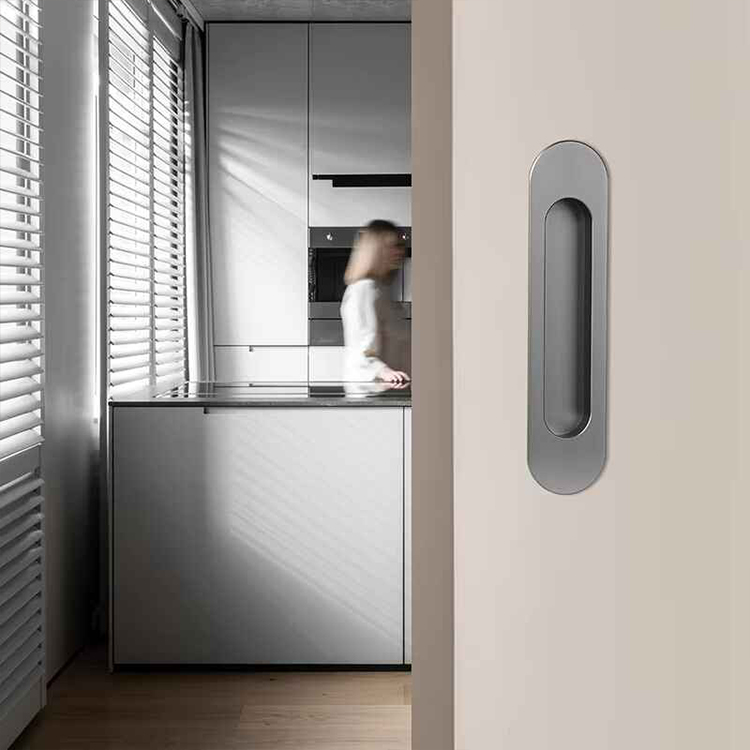
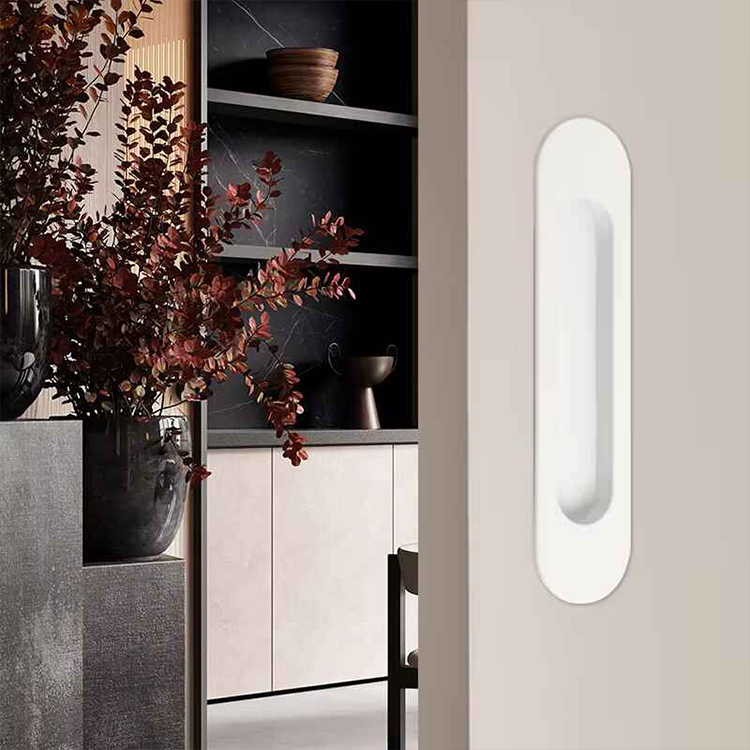
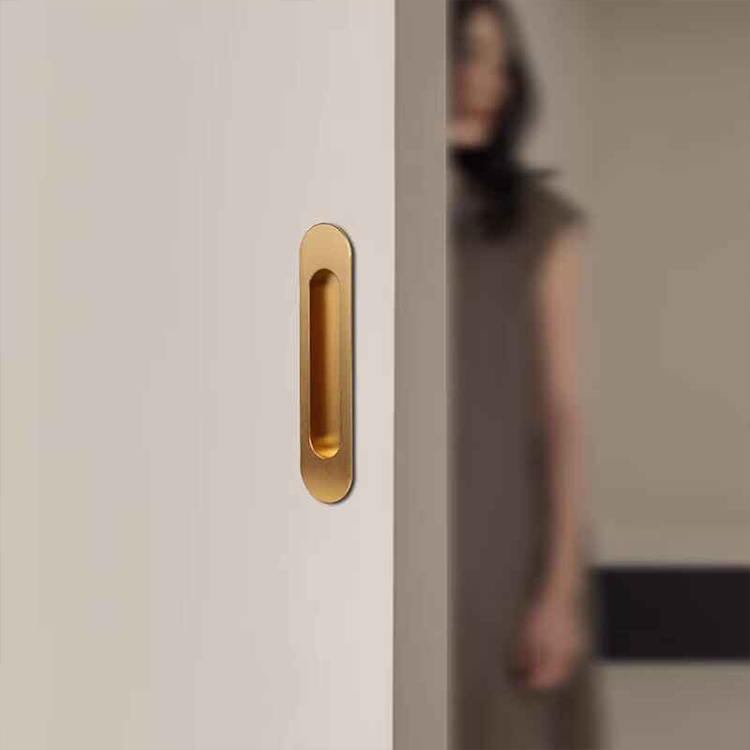
If the roller plan is inadequate, a hidden handle makes the issue louder. A customer with a superficial grip pocket can not deal with sticky rollers permanently. Therefore, I would certainly match this system with a recessed sliding door pull lock handle only after checking pull deepness, finger clearance, hook involvement, caretaker placement, and installment resistance. Chier explains that recessed product as a small lock handle for gliding doors and windows, constructed for a clean flush look, stable grip, and daily feature.
A clean face offers the door. A negative roller returns it.
Top-Hung Inside Sliding Equipments
Top-hung systems function well with concealed pulls because the flooring remains clean and the panel can be assisted without a huge lower track. They are particularly beneficial for resorts, workplaces, household partitions, and design-led interiors where noticeable deal with projection ruins the line.
Still, do not get charming about it.
The bottom overview matters. If the door swings, the user’s hand spins inside the recessed pull. That produces the exact sensation concealed hardware is supposed to stay clear of: breakable, awkward, unfinished.
Pocket Door Systems
Pocket doors are natural companions for concealed deals with due to the fact that exposed hardware can hit the wall surface cavity or quit the door from disappearing fully. A face-mounted flush pull plus an edge pull is generally the best pairing.
Small information. Huge repercussion.
If the edge pull is too little, users dig at the door. If the face pull is too deep, it might ram the pocket clearance. If the lock body is not collaborated, the door comes to be pretty yet dumb. And yes, I have a strong opinion below: most pocket door issues begin before installment, inside the drawing that no one troubled to assess.
Lift-Slide Systems
Lift-slide doors can collaborate with concealed handles, yet just when the operating mechanism is crafted for low-effort motion. These are larger systems. They commonly involve bigger glass panels, stronger seals, and extra mechanical load.
That issues due to the fact that access guidelines do not care that the door looks pricey.
The 2010 ADA Criteria for Accessible Design say operable components have to be useful with one hand, should not need iron hand, pinching, or wrist turning, and must not require more than 5 lbf, or 22.2 N, of pressure to turn on. That is not a styling choice; it is the kind of guideline that can turn a “minimal” take care of right into a liability in public or industrial settings.
Coplanar Wardrobe and Cabinet Sliding Systems
For closets, cabinets, and light interior panels, concealed deals with typically make superb sense. The panels are lighter, the traveling is much shorter, and the aesthetic benefit is obvious.
Yet slim panels exist.
A 16 mm or 18 mm board may not leave much space for screw engagement, lock integration, or repeated pull loading. This is where a custom slim moving door take care of with lock makes sense only when the placing messages, lock cylinder, surface, and panel building are treated as one package. Chier settings that product for cupboard doors, closet sliders, and window or door panels where low-profile look and OEM/ODM repeatability issue.
The Hidden Equipment Stack: Handle, Lock, Damper, and Guide
A hidden handle gliding door system is not one element. It is a stack.
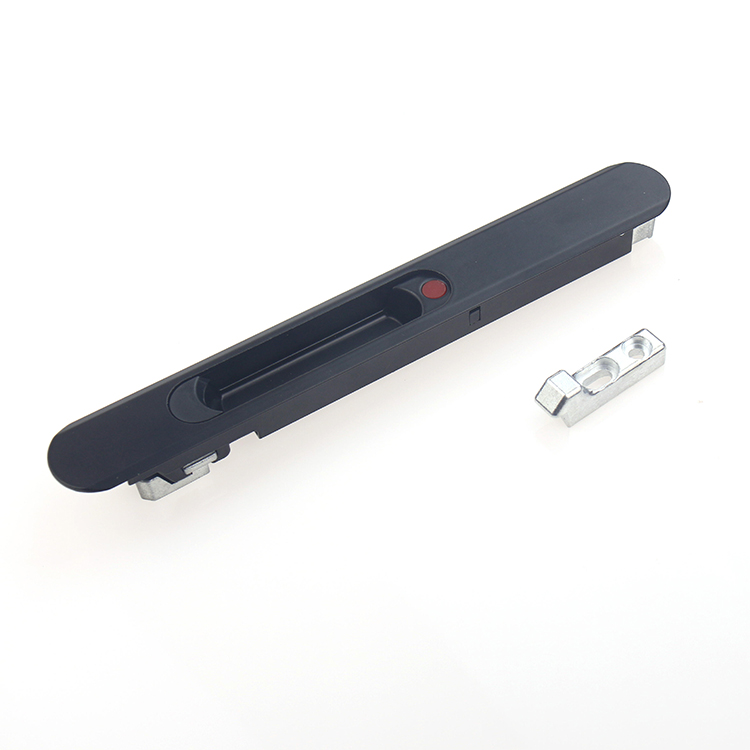
For security-focused aluminum gliding systems, a double hook narrow gliding door flush lock is a much more significant option than a decorative flush pull because the hook engagement provides the panel a defined securing point. Chier defines this narrow flush lock as a slim recessed layout for modern-day doors and windows, with smooth operation and protected locking for OEM, ODM, and wholesale jobs.
For quiet-close needs, particularly in resort areas, costs apartment or condos, senior housing, and high-frequency industrial interiors, the covert handle need to be matched with steel moving door soft close damper equipment. Chier’s damper web page frames the product around reducing slamming noise, improving closure feel, and integrating right into residential or industrial gliding tasks.
And after that there is screening.
The ANSI/BHMA A156.14 moving and hinged door hardware criterion covers requirements including cycle tests, abuse, sturdiness fixed tons, level of smoothness, fixed rubbing, kinetic rubbing, and finish tests for light to extremely heavy doors. That checklist is exactly why I mistrust “sample-room approval” when the sample has never ever been checked inside the real door system.
The Conformity Trap: Hidden Deals With Can Fail Also When They Look Great
Right here is the uneasy part: hidden manages can produce ease of access threat.
The trouble is not concealment itself. The trouble is bad procedure. A recessed pull that needs pinching, fingertip hooking, wrist twisting, or high opening pressure may be inappropriate in easily accessible courses, public structures, hospitality jobs, medical care facilities, senior housing, and numerous business insides.
This is not concept.
In the DOJ’s Florence Region, South Carolina ADA settlement, a number of doors were pointed out because knob hardware required iron hand, squeezing, or wrist twisting; the remedy required equipment that was very easy to realize with one hand, with lever-operated, push-type, and U-shaped manages named as acceptable layouts. The same file also referrals limits such as 5 extra pounds of force for interior doors and limit limitations for sliding doors.
So ask the unsightly inquiry early: can an individual with limited grasp run this hidden manage without combating the door?
If the answer is no, the system is not ideal. I do not care how elegant the making appearances.
The Price Pressure No One Wants to Put in the Specification Sheet
Aluminum moving door systems are obtaining pressed by material volatility, which issues for concealed take care of decisions because surprise hardware typically needs far better machining, tighter resistances, cleaner anodizing, stronger lock bodies, and more regulated setting up.
In January 2026, Reuters reported on united state aluminum price stress, noting that united state physical shipment premiums had actually pushed all-in aluminum pricing over $5,000 per statistics bunch, while main metal imports were down 14% in the very first ten months of 2025 and in-country supply had actually avoided 750,000 lots to below 300,000 heaps.
That is not abstract economics. It strikes the costs of materials.
When expenses increase, manufacturing facilities are attracted to slim wall surfaces, simplify coatings, reduce machining time, downgrade rollers, or accept looser resistances. Concealed take care of gliding systems penalize each of those faster ways. A visible deal with might make it through a less costly extrusion. A recessed handle may not.
My Practical Option Regulation for Concealed Manage Moving Door Equipments
I would certainly authorize a hidden take care of sliding system just after four checks.
First, the gliding activity must be light before the take care of is installed. Second, the profile should have enough depth for the recessed body, lockcase, screws, and caretaker. Third, the take care of have to be operable without squeezing or wrist turning. Fourth, the supplier has to give illustrations, not simply images.
Photos sell. Illustrations safeguard.
For OEM customers, the Lock Boxes and Gearboxes area is a valuable inner buddy to this topic due to the fact that concealed takes care of frequently fail at the lock user interface, not at the noticeable pull. Chier’s classification consists of an ultra-narrow sliding door double-hook lock and a stainless-steel sliding door latch lock, both tied to moving door and window systems.
If you are developing a full gliding program, not one SKU, attach the manage page, lock page, damper web page, and profile-integration page before authorizing anything.
Frequently asked questions
What gliding systems appropriate for hidden takes care of?
Gliding systems appropriate for concealed manages are systems with steady panel advice, adequate stile or panel deepness, low operating force, suitable lock hardware, and space for recessed pulls without damaging the door structure. The very best fits are bottom-rolling light weight aluminum sliders, top-hung interior sliders, pocket doors, lift-slide doors, and coplanar cabinet systems.
In technique, I would begin with aluminum-framed Sliding Door Systems because they generally provide you better profile control than low-cost hollow panels. However I would certainly still demand illustrations for mortise depth, screw setting, lockcase clearance, keeper placement, and soft-close traveling prior to authorizing production.
Are handleless moving door systems the same as concealed deal with systems?
Handleless sliding door systems are moving doors developed to hide, recess, or visually reduce operating equipment, while hidden deal with systems particularly make use of flush pulls, recessed pulls, edge pulls, or incorporated lock takes care of to keep the door face clean. The two terms overlap, but they are not always the same.
Some “handleless” doors utilize push-to-open or edge-grip geometry. Others still utilize a true recessed handle. For architectural moving doors, I choose saying “hidden handle moving door system” due to the fact that it forces the provider to specify the real operating approach.
Can flush pull deals with service heavy moving doors?
Flush pull takes care of can work with hefty gliding doors just when the roller system, track, guide, damper, and lock device keep operating force reduced sufficient for comfy one-hand use. Heavy panels need more than a clean recessed pull; they require crafted activity, solid lock engagement, and foreseeable alignment.
This is where numerous premium-looking systems stop working. A hefty door with a shallow pull pocket can really feel aggressive in everyday use. For lift-slide or huge light weight aluminum patio doors, I would certainly not approve the hidden pull until the full setting up has actually been examined under genuine panel weight.
What is the biggest error when choosing sliding door hardware for hidden handles?
The biggest mistake is picking gliding door hardware for concealed manages by look rather than interface geometry, running force, and lock compatibility. A concealed manage must be inspected versus panel density, track rubbing, lock body depth, keeper setting, guide stability, damper clearance, and user grasp before it enters into the system.
A magazine picture can not show resistance stack-up. It can not show whether the lock hook lands easily after 20,000 cycles. It can disappoint whether the customer’s fingers have enough purchase. That work happens in drawings, models, and test settings up.
Are recessed take care of sliding doors secure for industrial tasks?
Recessed handle gliding doors can be secure for business projects when they meet availability expectations, use sturdy examined hardware, prevent pinch-heavy procedure, and remain very easy to operate with one hand. The handle shape, pressure requirement, lock behavior, limit problem, and shutting control all issue more than the minimalist look.
For hotels, offices, centers, public buildings, and senior living jobs, I would be specifically conventional. A hidden pull that calls for fingertip pinching may be a layout responsibility. A flush pull with adequate grip deepness, regulated sliding force, and certified latch procedure is the much safer route.
Your Next Steps: Validate the Take Care Of Inside the Sliding System Before You Acquire
Do not authorize a concealed manage from a picture.
Send out the account drawing. Send out the panel weight. Send out the track area. Send out the lock need. Send out the target audience. Request handle deepness, fixing centers, lockcase compatibility, keeper resistance, coating choices, cycle-test presumptions, and sample validation inside the real Sliding Door Solutions you intend to sell.
If you are sourcing for an OEM, distributor, or task pipe, begin with Chier’s Windows And Door Manages, after that match the deal with selection with Lock Boxes and Gearboxes and Doors And Window Accessories prior to production. The concealed deal with is not decoration. It is the individual’s everyday contact point with the whole moving system.