Looking for hardware solutions that meet European / American standards?
Use this guided inquiry modal to move from a generic quote form to a clearer technical conversation. Buyers can choose whether they need pricing, CAD / 3D files, or OEM / ODM support before sharing contact details.
Compatibility-first design across door / window systems
Repeatable production with clear inspection checkpoints
Documentation and change control for long-running programs
Responsive engineering support for fit and field feedback
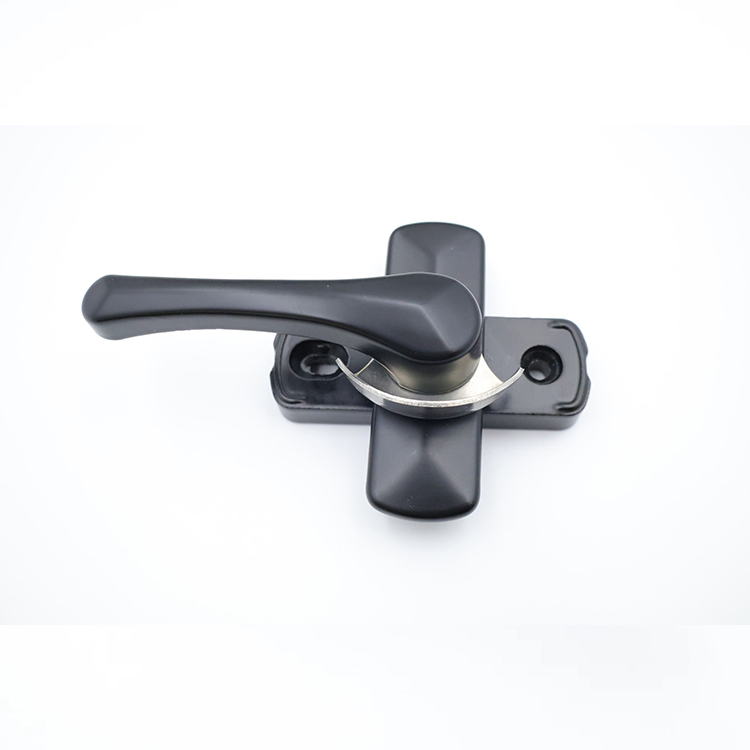
A crescent window lock is a compact sash-locking device that uses a rotating crescent-shaped cam, sweep, or hook to engage a keeper and hold a window closed. It is most commonly fitted to horizontal sliding windows, vertical sash windows, and selected aluminum or uPVC window systems.
Small hardware matters.
Because this lock sits at the exact point where the sash, meeting rail, keeper, screws, weatherstripping, and user force interact, a dimensional error of barely 1 mm can turn an apparently solid component into a stiff, noisy, under-engaged liability.
Why, then, do buyers still compare these locks mainly by color and unit price?
My view is blunt: the crescent-shaped handle is the least interesting part of the assembly. What matters is how far the cam travels, where it meets the keeper, how deeply the screws bite into the profile, and whether the user can reach full engagement without forcing the sash.
A Crescent Window Lock Is a Cam-and-Keeper System
The operating principle is mechanical rather than mysterious. When the user rotates the handle, the cam sweeps across or behind a fixed keeper. That movement converts hand rotation into pull-in force, drawing the movable sash toward the meeting rail or frame.
The lock therefore performs three jobs:
It holds the sash in the closed position.
It resists casual or unauthorized opening.
It helps position the sash against its weatherstripping.
That third job is routinely ignored. It should not be.
A crescent lock does not generate thermal performance by itself, but correct cam engagement can help maintain contact between the sash and an EPDM, TPE, silicone, foam, or brush-pile seal. Poor engagement can leave the window looking closed while a narrow leakage path remains at the meeting rail.
But more pull is not automatically better. Excessive compression can bend a keeper, increase handle force, loosen screws, deform a profile, or train occupants to leave the lock partially engaged because full operation feels unpleasant.
Crescent Window Lock Parts That Actually Control Performance
Most crescent window locks contain only a handful of visible components. Yet those parts form a load path, and every interface can fail.
Crescent Window Lock Part
Primary Function
Common Failure Mode
What Buyers Should Check
Lock body or base
Supports the mechanism and transfers force into the sash
Base flexing, cracking, loose mounting
Footprint, material, wall thickness and flatness
Operating handle
Gives the user leverage to rotate the cam
Excessive play, poor grip, incomplete rotation
Handle length, clearance and tactile stop
Crescent cam, sweep or hook
Engages the keeper and produces pull-in force
Shallow engagement, scraping or wear
Cam throw, thickness, profile and contact path
Pivot pin or spindle
Controls cam rotation
Wobble, wear, binding or pullout
Pin material, fit and retained movement
Keeper or strike
Receives the cam and transfers load into the opposite sash or frame
Bending, shifting or edge-only contact
Height, offset, ramp angle and reinforcement
Mounting screws
Secure the lock and keeper
Stripping, loosening or pulling through thin material
Screw diameter, length, grade and substrate depth
Key cylinder, when fitted
Restricts operation to an authorized keyholder
Cylinder seizure, weak retention or key breakage
Key system, cylinder material and replacement control
Coating or finish
Protects the substrate and controls appearance
Corrosion, blistering, scratching or dimensional buildup
Pretreatment, finish thickness and exposure class
The keeper deserves more attention than it gets. A thick lock body attached to a weak, poorly supported keeper is not a secure system. It is a strong-looking component connected to a weak point.
The same applies to screws. In an aluminum frame, the installer must confirm that the fastener enters meaningful wall thickness, a screw boss, or another reinforced area. In a uPVC profile, the fixing position may need to align with steel reinforcement behind the polymer wall.
Otherwise, the screws are fastening the lock to decoration.
Types of Crescent Window Locks
There is no single global naming system for crescent locks. Suppliers may use terms such as crescent sash lock, sweep lock, cam lock, rotary latch, or window sash lock for overlapping products.
That creates confusion. I prefer to classify them by operating geometry, access control, mounting method, and window application.
Standard Non-Keyed Crescent Sash Lock
This is the familiar rotating lock used on residential sliding or double-hung windows. Turning the handle sweeps the cam into the keeper.
It is simple, economical, and easy to operate. It is also frequently overestimated. A basic non-keyed lock provides closure and some resistance to opening, but its real security depends on keeper engagement, screw retention, sash stiffness, and the complete window assembly.
Keyed Crescent Window Lock
A keyed model adds a cylinder or locking element that prevents the operating handle from rotating without the correct key. It is often specified for rental properties, offices, schools, hotels, storefronts, and windows where access control matters.
A product such as an OEM keyed aluminum crescent window latch shows the typical combination of an aluminum body, rotary crescent action, keyed control, and sliding-window application.
Keyed does not mean attack-proof. It means key-controlled.
And that distinction matters.
Hooked or Deep-Engagement Crescent Lock
Some locks use a more pronounced hook profile rather than a shallow sweep. The objective is to increase mechanical engagement around or behind the keeper.
This geometry can improve sash retention, but only when there is adequate back clearance. A deep hook that collides with a gasket, drainage rib, screen track, or frame wall will bind before reaching its locked position.
Offset or Stepped Crescent Lock
Offset locks are used when the lock body and keeper sit on surfaces with different heights. The cam, base, or keeper geometry compensates for the step between the two profiles.
These are especially relevant when replacing hardware on older windows. Two locks may look identical from the front yet have different keeper offsets, cam heights, or sweep paths.
That is why “universal replacement lock” is a phrase I distrust.
Low-Profile Crescent Lock
A low-profile design reduces projection into the room or across the meeting rail. It may be selected for narrow aluminum profiles, screens, blinds, or applications where clearance is limited.
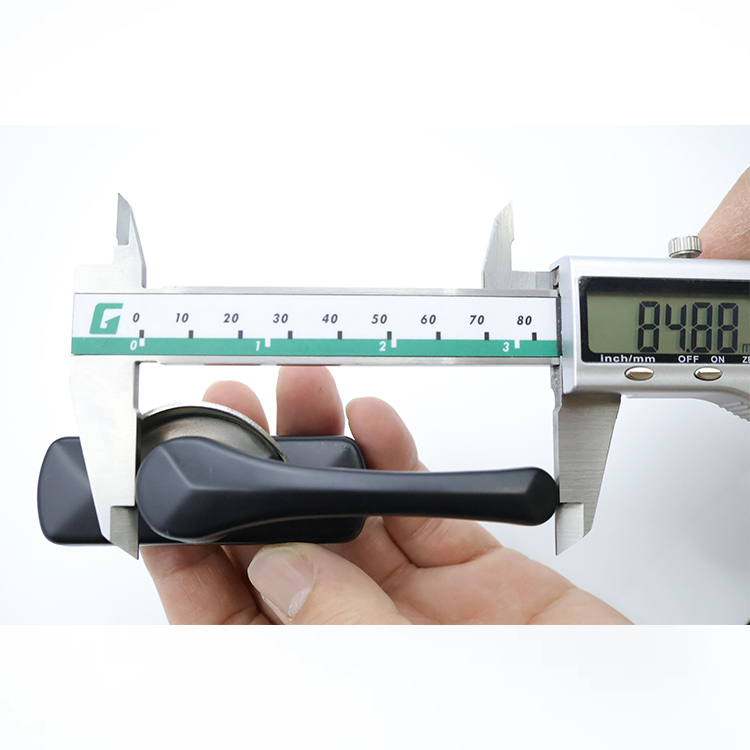
The trade-off is leverage. A shorter or thinner handle may demand greater user force, particularly when the gasket is compressed or the sash is slightly misaligned.
Integrated Handle-and-Latch Designs
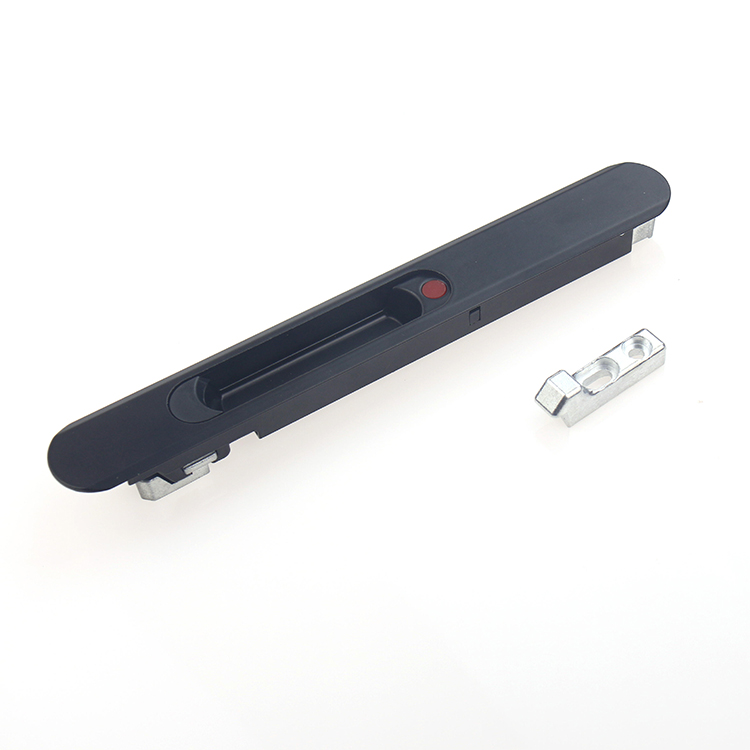
Some sliding-window products integrate the handle and locking function into a single recessed or surface-mounted unit. These may be marketed beside crescent locks even when their internal mechanism is a spring latch, hook latch, or flush pull.
They belong to the same purchasing conversation, but they are not automatically true crescent locks. Buyers comparing them should review the wider crescent locks and window latches range by mechanism rather than assuming every product performs the same job.
Crescent Lock Types and Best Applications
Lock Type
Typical Application
Main Advantage
Main Specification Risk
Non-keyed rotary crescent lock
Residential sliding and sash windows
Fast, intuitive operation
Weak or shallow keeper engagement
Keyed crescent lock
Rentals, offices, schools and commercial rooms
Controlled operation
Lost keys and false security assumptions
Deep-hook crescent lock
Windows requiring greater sash retention
Stronger mechanical capture
Insufficient back clearance
Offset or stepped lock
Replacement and non-flush profiles
Compensates for profile height differences
Incorrect keeper offset
Low-profile lock
Slim aluminum frames and restricted-clearance openings
Compact appearance
Reduced leverage and difficult operation
Integrated handle-latch unit
Modern sliding windows and doors
Fewer visible components
Harder field replacement
Adjustable-keeper system
OEM window production with controlled tolerances
Easier alignment during setup
Adjustment drifting after installation
The best type depends on the window, not the sales photograph.
For a residential horizontal slider, a standard non-keyed model may be entirely appropriate. For a hotel or school, controlled access may justify a keyed lock. For an OEM aluminum window program, an adjustable keeper and documented cam geometry may matter more than whether the handle is black, white, or silver.
How Does a Crescent Window Lock Work?
The operating sequence has four stages.
1. The Handle Rotates the Cam
The user turns the handle around a pivot pin. The cam follows an arc determined by its radius, thickness, offset, and spindle position.
2. The Cam Contacts the Keeper
The front edge of the cam reaches the keeper. A properly designed ramp allows the parts to meet smoothly even when minor production or installation variation exists.
3. The Cam Draws the Sash Inward
As rotation continues, the cam moves across or behind the keeper and creates lateral pull-in force. This brings the sash into its final closed position and may compress the weather seal.
4. The Handle Reaches a Positive Stop
The user should feel a clear end position. A vague or springy finish can indicate incomplete engagement, excessive pivot clearance, a moving keeper, or a sash that is fighting the lock.
Simple, right?
Not really. The mechanism may be simple, but the tolerance stack includes the profile, coating, screw holes, sash overlap, keeper position, gasket thickness, frame installation, and hardware wear.
For example, an aluminum window program may combine a 6063-T5 profile, a powder-coated surface in the approximate 60–100 μm range, an EPDM gasket, stainless fasteners, and a separate keeper. Each layer affects the final location of the cam relative to the keeper. These figures are examples, not universal specifications, but they show why a lock that worked on an unfinished prototype can bind after production finishing.
Fit Is More Important Than Appearance
When selecting or replacing a sliding window crescent lock, I would measure at least the following:
Lock-body footprint
Center-to-center screw spacing
Keeper screw spacing
Keeper height and offset
Cam throw
Cam thickness
Sash overlap
Back clearance
Handing or operating direction
Profile wall thickness
Reinforcement location
Finish thickness
Locked and unlocked handle clearance
Do not measure only the old screw holes.
A replacement lock may fit those holes while placing its cam 2 mm too high, 1 mm too far forward, or several degrees away from the original contact path. The result can be shallow engagement, sash lift, scraping, false locking, or a handle that stops before reaching its designed position.
The detailed guide to matching crescent locks with window frame profiles recommends checking the screw centers, keeper height, sash overlap, cam throw, back clearance, reinforcement, and complete lock-and-keeper relationship before approving a replacement or production sample.
That is the hard truth about replacement hardware: “looks close” is not an engineering measurement.
Where Crescent Window Locks Are Used
Horizontal Sliding Windows
This is one of the most common applications. The lock is typically mounted at the meeting rails, with the body on one sash and the keeper on the other.
The main concerns are rail alignment, sash overlap, keeper offset, roller condition, and whether locking action pulls the two rails together without lifting either sash.
Vertical Sash and Double-Hung Windows
On vertical sash windows, the lock is normally positioned at the meeting rail. Rotating the crescent or sweep holds the upper and lower sash together.
Misaligned meeting rails can leave the cam contacting only the keeper edge. In older timber windows, paint buildup and frame movement can also change the engagement position.
Aluminum Window Systems
Aluminum profiles provide clean mounting surfaces but can have thin walls, narrow screw bosses, drainage channels, screen tracks, and tight back-clearance limits.
A lock intended for aluminum windows should be reviewed against the extrusion drawing. Guessing from an exterior photograph is not enough.
uPVC Windows
Selected sliding or sash-style uPVC windows use surface-mounted crescent or cam locks. Fixing strength depends heavily on whether the screws reach reinforcement or an engineered fixing zone.
Installing into the outer polymer wall alone can produce a lock that feels secure on day one and loosens under repeated use.
Timber Windows
Timber provides substantial screw bite when sound, but old wood may be split, softened, over-drilled, or hidden beneath multiple paint layers. Replacement work should include inspection of the substrate, not merely installation of larger screws.
Rental and Commercial Properties
Keyed crescent locks can help property managers control window operation in hotels, offices, schools, and multi-unit housing. But keys create another management system: duplication, emergency access, handover records, lost-key replacement, and occupant training.
The hardware may be inexpensive. Administration is not.
A Crescent Lock Is Not a Child-Safety Device
This point needs to be stated without hedging: a normal crescent sash lock is designed to secure a closed window. It is not automatically a window opening control device, fall-prevention guard, or certified child-safety product.
The current ASTM F2090-25 specification establishes installation, safety, performance, and labeling requirements for releasable window fall-prevention devices intended to address accidental falls involving children five years old and younger. A standard crescent lock should not be marketed as meeting that function unless it was designed and tested accordingly.
The U.S. Consumer Product Safety Commission recommends limiting window openings to no more than 4 inches where young children are present and warns that insect screens are not fall-prevention barriers. Emergency escape requirements must also be considered before adding stops or guards.
A lock holds a closed sash. A fall-prevention device controls an open one.
Different job. Different evidence.
What Fifty Years of New York Data Tells Us
New York City provides a rare real-world safety case study. Its window-guard law began in 1976 after hundreds of children were reportedly falling from windows each year; 24 children died in that year alone.
According to the city’s April 15, 2026 review of 50 years of window-safety regulation, reported falls declined by more than 50% within three years of the law’s implementation. In 2025, the city recorded four child window falls and no fatalities.
That is not evidence that every window needs the same device. It is evidence that purpose-designed controls, installation requirements, enforcement, and occupant education can produce measurable results.
And it exposes a bad habit in the hardware industry: using the words lock, restrictor, guard, and safety latch as though they were interchangeable.
They are not.
The 91,000-Unit Warning About Component Claims
On February 26, 2026, the CPSC announced the recall of approximately 91,000 Andersen window opening control devices used with 100 Series casement windows. The agency reported that the devices could break or detach following accidental or other impact, allowing the window to open and creating fall and serious-injury hazards.
The Andersen opening-control-device recall involved a different product category from an ordinary crescent lock, but the lesson applies directly: a component’s label means little when its attachment, impact resistance, installation, and interaction with the complete window are not controlled.
This is why I reject unsupported claims such as “high security,” “child safe,” or “anti-theft” on a component data sheet.
Show the test scope.
Show the installation.
Show the failure mode.
Is a Crescent Window Lock Secure?
A properly matched crescent lock can improve resistance to unauthorized opening, particularly when the cam captures a reinforced keeper and the screws are anchored into adequate material.
But a single lock should not be confused with tested window security.
The active ASTM building-standards catalog identifies ASTM F588-26, Standard Test Methods for Measuring the Forced Entry Resistance of Window Assemblies, Excluding Glazing Impact. The wording matters: it evaluates window assemblies, not a loose lock photographed on a white background.
Earlier F588 documentation explains that the method addresses attempts by unskilled or opportunistic burglars and does not evaluate forced entry through glazing impact. In practical terms, even a strong crescent sash lock cannot compensate for weak glazing retention, flexible sashes, removable beads, thin frames, exposed fasteners, or another vulnerable opening point.
Security is systemic.
Anyone selling an isolated crescent lock as proof of complete-window forced-entry performance is selling confidence without enough evidence.
Egress Can Override Your Locking Preference
Bedrooms and other spaces may rely on windows for emergency escape and rescue. Hardware added to those openings must not create an unlawful or confusing release sequence.
The International Residential Code’s Section R310.1 on emergency escape and rescue openings requires qualifying openings to lead directly to a public way, yard, or court meeting the stated conditions. Local editions and amendments determine the exact applicable requirements.
A keyed window lock may be attractive to a property manager but unacceptable in an escape route when a key, tool, or special knowledge would delay opening under the applicable code.
We need both, but we should never pretend they are the same requirement.
How to Choose the Best Crescent Window Lock for Sliding Windows
The best crescent window lock for sliding windows is not necessarily the thickest, heaviest, or most expensive model. It is the one that fits the exact profile and continues to engage reliably after finishing, installation, cycling, temperature movement, gasket aging, and normal user abuse.
Start With the Window Profile
Obtain the frame or sash cross-section. Mark the mounting face, screw boss, drainage rib, screen track, keeper position, sash overlap, and moving clearances.
Without that drawing, the lock selection is partly guesswork.
Treat the Lock and Keeper as One Product
Do not mix a new lock with an old keeper merely because the cam appears to reach it. Contact location, ramp angle, thickness, hardness, and screw pattern all affect performance.
Approve them as a matched set.
Demand an Engagement Drawing
The supplier should be able to show the locked and unlocked cam positions relative to the keeper. Ask for:
Cam travel angle
Effective pull-in distance
Minimum engagement depth
Keeper position tolerance
Required back clearance
Maximum recommended operating force
A front-view rendering cannot answer those questions.
Test the Real Sash
Install the lock on the production-intent profile with the actual coating, gasket, screws, keeper, rollers, and sash weight.
Then test it again after cycling.
I would rather see a modest lock survive 10,000 representative operations than an impressive sample survive ten careful showroom demonstrations.
Check Corrosion Exposure
Indoor residential use, bathroom condensation, coastal chloride exposure, industrial cleaning chemicals, and exterior commercial use are not the same environment.
Ask for the base material, pretreatment, coating system, fastener grade, cylinder material, and corrosion-test method. “Weather resistant” is not a test result.
Review Replacement Logistics
A proprietary lock can create a service problem when the original supplier changes the cam, screw centers, finish, or keeper without maintaining backward compatibility.
For long-running OEM programs, request revision control, part identification, packaging labels, and service-stock commitments. The technical download center for crescent locks and window latches identifies drawings, manuals, CAD packs, and packaging specifications as core buyer documents.
The Industry’s Uncomfortable Truth
The cheapest crescent window lock is rarely the cheapest installed outcome.
A small saving at the component level can create sash-adjustment labor, field complaints, air-leakage investigations, stripped screw repairs, replacement shipments, tenant callouts, and warranty arguments that cost many times the original hardware price.
And the lock is usually blamed last.
Installers blame the profile. Profile suppliers blame fabrication. Fabricators blame the gasket. Purchasing blames the hardware vendor. The hardware vendor blames installation.
Meanwhile, the cam is barely touching the keeper.
My rule is simple: never approve a crescent lock from a photograph, never approve a keeper separately from its lock, and never accept a security or safety claim that does not identify the tested assembly, standard, configuration, and installation method.
Boring documentation wins.
FAQs
What is a crescent window lock?
A crescent window lock is a compact sash-locking device that uses a rotating crescent-shaped cam, sweep, or hook to engage a keeper, draw the movable sash toward the meeting rail or frame, and hold the window closed; it is most common on horizontal sliders, vertical sash windows, and selected aluminum or uPVC systems.
Unlike a multipoint lock, it normally controls one engagement location. Its effectiveness depends on the relationship among the cam, keeper, sash, frame, screws, weatherstripping, and installation tolerances.
How does a crescent window lock work?
A crescent window lock works by rotating its handle around a pivot so the cam travels behind or across a keeper, converting hand motion into lateral pull-in force that aligns the sash, compresses weatherstripping, and resists casual opening; correct keeper height, cam throw, and screw placement determine whether that motion is smooth or weak.
The handle should reach a clear locked position without scraping, lifting the sash, or requiring excessive force. Stiffness usually points to misalignment, excessive compression, sash movement, or inadequate cam clearance.
What are the main crescent window lock parts?
The main crescent window lock parts are the lock body, operating handle, rotating cam or hook, pivot pin, keeper or strike, mounting screws, and—on keyed models—the cylinder, plug, and retaining components; each part must match the window profile because visible shape alone does not prove mechanical compatibility.
The keeper and screws are frequently the weak links. A durable cam cannot provide reliable engagement when the keeper bends or the fasteners are installed into thin, unsupported profile material.
Is a crescent window lock secure?
A crescent window lock can improve window security when its cam fully engages a reinforced keeper and the complete sash assembly resists manipulation, but it should not be treated as proof of forced-entry resistance, child fall prevention, or code compliance unless the finished window system has been tested and approved for those specific claims.
For higher-risk applications, evaluate the entire window assembly, including glazing retention, sash stiffness, frame construction, fasteners, reinforcement, secondary locks, and installation method.
What is the best crescent window lock for sliding windows?
The best crescent window lock for sliding windows is the model whose screw centers, keeper offset, cam throw, back clearance, sash overlap, finish, corrosion resistance, and operating force match the actual frame profile, while providing full engagement without lifting the sash, scraping the track, or demanding excessive hand force.
A keyed model may be appropriate for controlled-access properties, while a non-keyed lock may be better for normal residential operation or an opening used for emergency escape. The application decides.
Are crescent sash locks and window sash locks the same?
A crescent sash lock and a window sash lock often refer to the same general hardware family, but “window sash lock” is the broader term and may include sweep locks, cam locks, spring latches, keyed latches, and other mechanisms that do not use a crescent-shaped rotating element.
Always compare the mechanism and engagement geometry rather than relying on the product name. Supplier terminology varies considerably between markets.
Can a crescent window lock prevent a child from opening a window?
A standard crescent window lock is not automatically a child-resistant or fall-prevention device because it normally secures a fully closed sash rather than controlling the permitted opening distance; products intended for child fall prevention require purpose-specific design, installation, release behavior, labeling, and testing under standards such as ASTM F2090.
Use approved window guards, opening-control devices, or stops where required, while preserving emergency escape functions and following local building and housing regulations.
Specify the Lock as a System, Not a Shape
Before approving a crescent window lock, send the supplier the profile drawing, screw centers, keeper dimensions, sash overlap, finish requirement, exposure conditions, target market, estimated annual volume, and any security, egress, or fall-prevention obligations.
Then request the engagement drawing, material specification, corrosion evidence, cycle-test method, production tolerances, controlled sample, and service-part plan.
Do not ask for “the same lock as this photo.”
Browse the available crescent locks and window latches, compare the geometry against your actual window profile, and submit the full technical package for OEM, replacement, or project evaluation.