Looking for hardware solutions that meet European / American standards?
Use this guided inquiry modal to move from a generic quote form to a clearer technical conversation. Buyers can choose whether they need pricing, CAD / 3D files, or OEM / ODM support before sharing contact details.
Compatibility-first design across door / window systems
Repeatable production with clear inspection checkpoints
Documentation and change control for long-running programs
Responsive engineering support for fit and field feedback
Before I compare hook counts, cylinder brands, finishes, or price, I freeze the aluminum profile cavity, door height, gasket stack, threshold, handle geometry, egress duty, climate exposure, and the exact standard the complete doorset must pass.
Why would anyone select the lock before understanding the door it has to fit?
Yet that is how many projects are handled. A buyer finds a visually convincing multi-point lock, asks whether it is available in black, negotiates the unit price, and only later discovers that the backset collides with the thermal break, the faceplate is too wide, or the upper hook lands inside a profile joint.
The hard truth is simple: the best multi-point lock for aluminum doors is not a universal product. It is a matched mechanical system.
A Multi-Point Lock Must Be Selected as Part of the Doorset
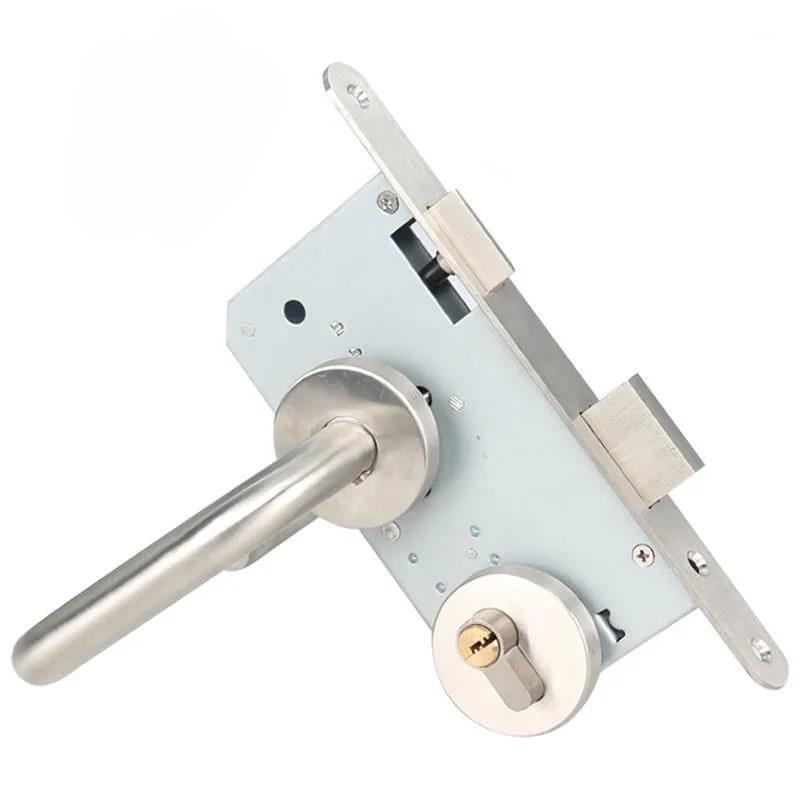
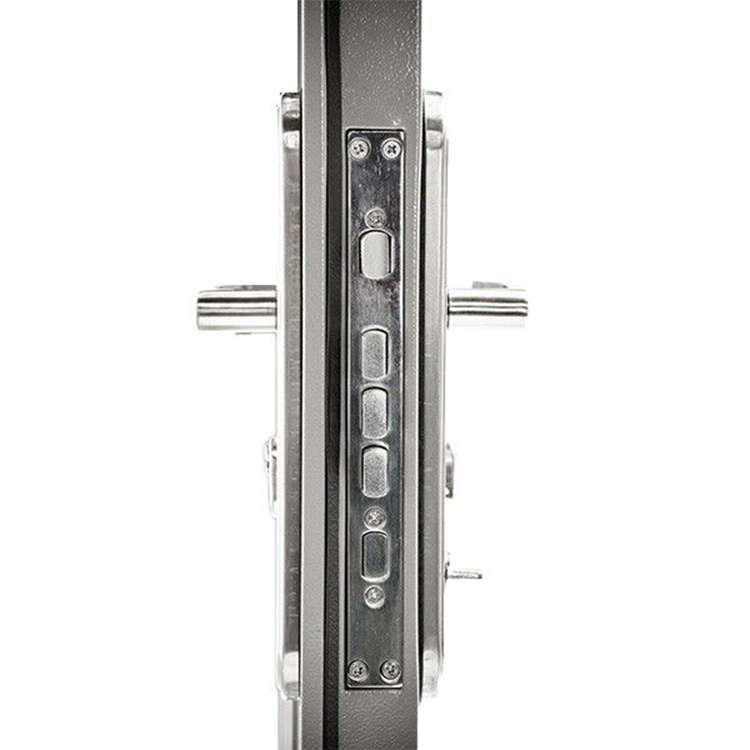
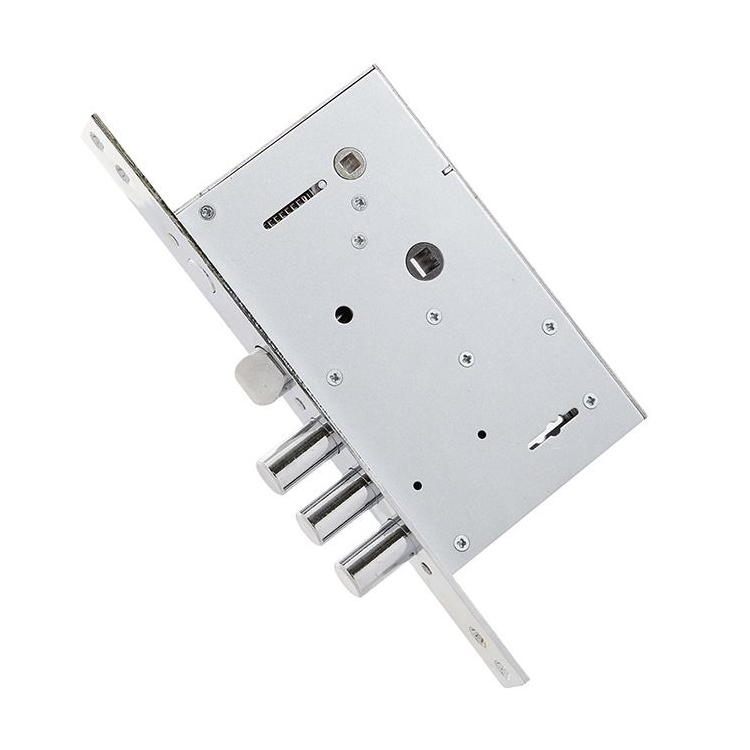
A multipoint door lock uses one operating action to engage several locking elements along the door edge. Depending on the design, those elements may include hooks, rollers, deadbolts, tongues, mushrooms, or top-and-bottom shoot bolts.
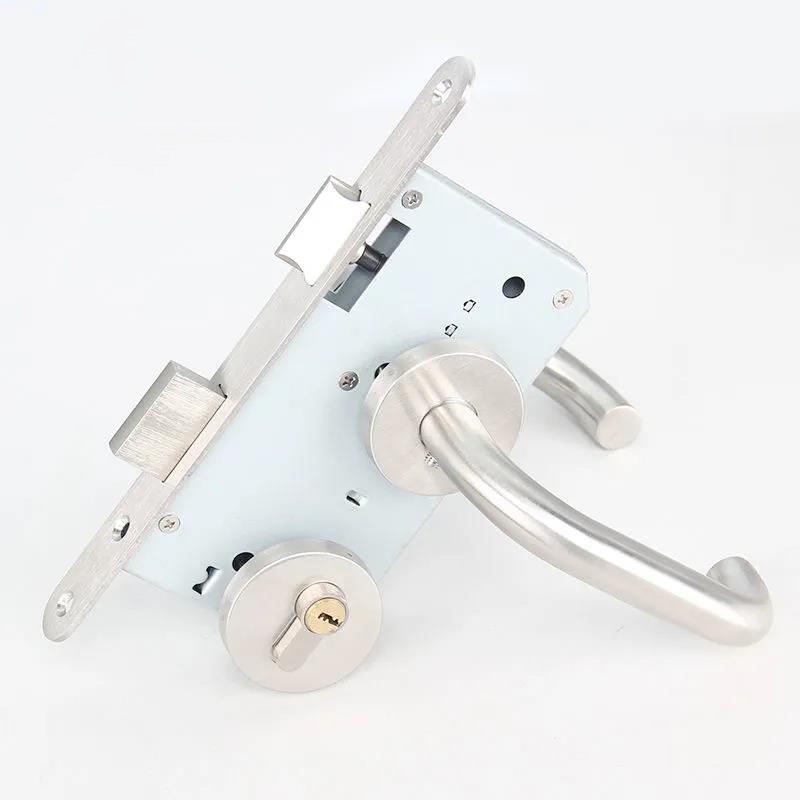
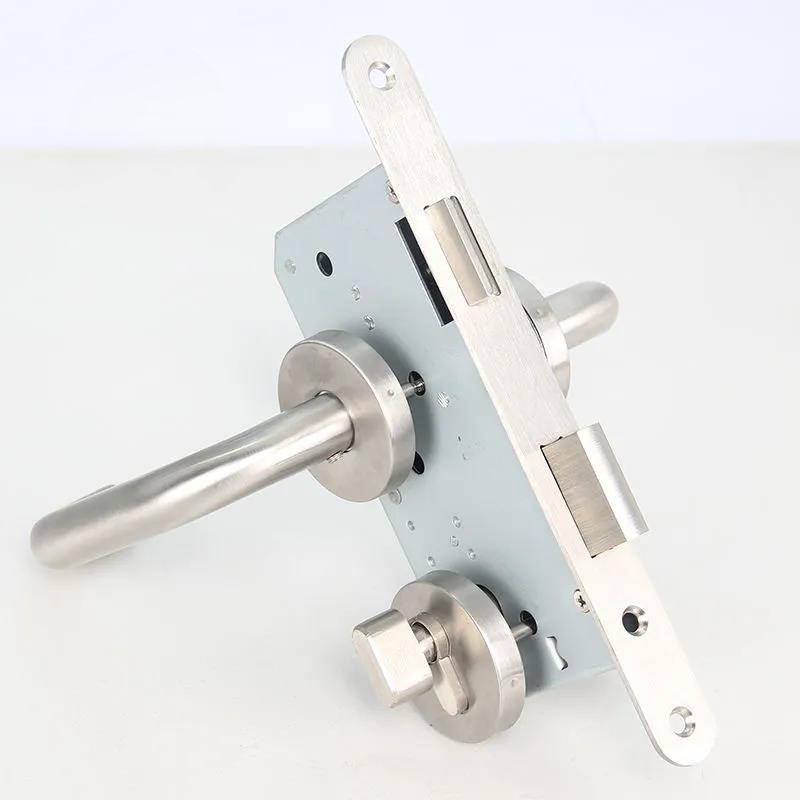
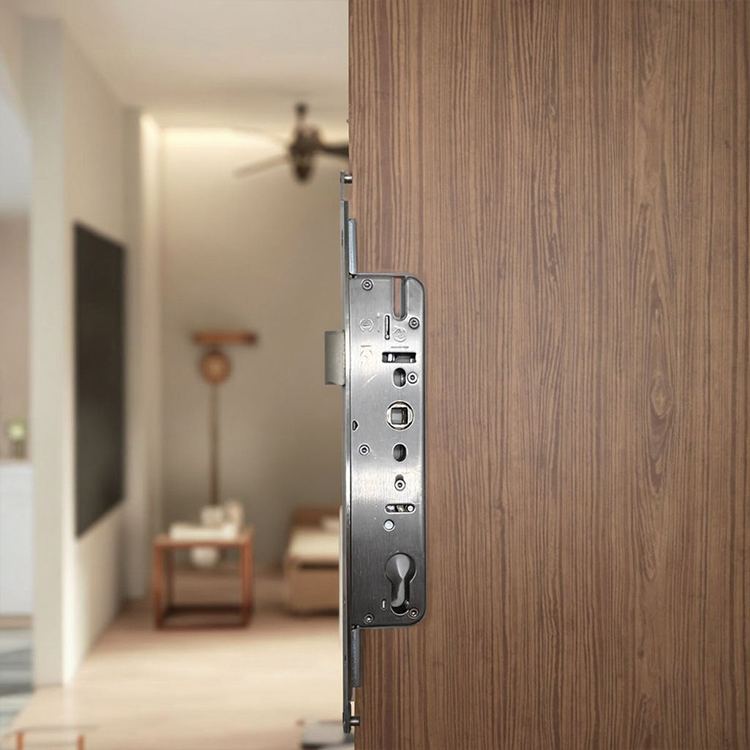
The central gearbox transfers movement from the handle, key cylinder, thumbturn, or motor to those remote locking points. That means the lock strip, gearbox, handle, cylinder, keeps, fasteners, hinges, profile, and weather seals are mechanically connected whether the purchasing department acknowledges it or not.
This is why I begin with the complete entrance doorset instead of an isolated lock photograph. The site’s broader guide to multi-point lock systems engineering follows the same system-level approach: profile dimensions, operating logic, keeps, compression, and installation must work together.
There is also a regulatory reason to think this way. England’s Approved Document Q states that easily accessible doorsets serving new dwellings should be secure doorsets and points to tested designs, including PAS 24:2012 in the 2015 edition. It does not say that buying a strong lock body automatically creates a secure door.
That distinction matters. A strong hook entering a keeper fixed with weak screws into thin aluminum is not a strong security point. It is theater with better plating.
Table of Contents
Freeze the Aluminum Profile Dimensions Before Requesting a Quote
Every serious RFQ should start with a dimensioned profile drawing or a physical section sample. A supplier cannot reliably select an aluminum door lock from the outside width of the stile alone.
The following numbers control fit.
Selection Parameter
Common Examples, Not Universal Sizes
What It Controls
Backset
25, 30, 35, 40 or 45 mm
Gearbox position inside the profile
PZ center
85 or 92 mm
Distance between handle spindle and cylinder center
Faceplate width
16, 20 or 24 mm
Fit inside the door-edge hardware groove
Spindle size
Often 8 mm
Handle-to-gearbox connection
Cylinder format
Euro profile, oval or market-specific
Key operation, security and trim compatibility
Lock strip length
Matched to door height
Position of upper and lower locking points
Door thickness
Project-specific
Cylinder length, screw length and handle fit
Keeper offset
Profile-specific
Engagement depth and gasket compression
These dimensions are common catalog examples, not a substitute for measuring the actual aluminum extrusion.
Backset Is More Than a Catalog Number
Backset is normally measured from the faceplate edge to the operating centerline of the gearbox. But the nominal number tells only part of the story.
I also check:
Available cavity depth behind the faceplate
Thermal-break location
Glass pocket and glazing-bead clearance
Reinforcement position
Cylinder projection
Handle backplate width
Screw paths
Drainage channels
A 35 mm backset may fit one narrow stile and destroy another. The outside appearance can be nearly identical while the internal extrusion is completely different.
PZ, Spindle and Handle Geometry Must Match
PZ is the center-to-center measurement between the handle spindle and the cylinder. An 85 mm handle set does not become compatible with a 92 mm lock because the backplate covers the holes.
Close is wrong.
The spindle must also enter the gearbox follower deeply enough to transfer torque without bottoming out or engaging only a few millimeters. Screw centers, backplate width, handing, lever return, cylinder projection, and handle movement all matter.
Do not order by “three-point” or “five-point” alone. Record the exact vertical position of every locking element from a fixed datum, usually the handle center or bottom of the door leaf.
For a 2,100 mm entrance door, a three-point arrangement may provide reasonable distribution. For a 2,700 mm architectural door exposed to wind, temperature movement, and panel bow, the same spacing may leave long uncontrolled sections near the head or threshold.
More points are not automatically better. Better spacing is better.
Select Locking Points by Failure Mode, Not Marketing Count
Different locking elements solve different problems. I rarely approve a design until the supplier explains why each point exists.
Locking Element
Main Function
Best Use
Common Weakness
Roller cam
Gasket compression and smooth closing
Weather-sealed residential doors
Limited resistance to separation
Mushroom cam
Compression plus improved retention
Tilt-turn and selected door systems
Needs precise keeper geometry
Hook bolt
Resists pulling and prying separation
Aluminum entrance and patio doors
High force if the keeper is misaligned
Deadbolt
Direct security engagement
Central or reinforced locking zones
Concentrated load at one location
Round bolt
Positive frame engagement
Commercial or reinforced profiles
Requires accurate machining
Shoot bolt
Secures head or threshold
Tall doors and inactive leaves
Dirt, drainage and alignment sensitivity
Rollers Control Compression
Roller cams pull the leaf toward the gasket and can compensate for small installation variations when paired with adjustable keeps. They are useful for air and water control, but I would not describe a roller-only system as equivalent to a hook-and-deadbolt security system.
That distinction is often buried in sales language.
Hooks Resist Door-to-Frame Separation
Hooks engage behind the keeper and oppose the direction commonly created by levering or pulling the door leaf away from the frame. They are especially useful in narrow aluminum sections where simple latch engagement may provide limited anti-separation resistance.
But a hook is only as good as its keeper, fasteners, engagement depth, and surrounding profile wall.
Shoot Bolts Help Control Tall Doors
Top and bottom shoot bolts can restrain long leaves, double-door systems, and doors exposed to pressure differences. They also introduce maintenance risks: threshold contamination, drainage conflict, seasonal movement, and incomplete engagement.
I use them when the assembly needs them, not because “five-point” looks stronger in a brochure.
Three-Point Versus Five-Point Locking Systems
A 3-point locking system usually includes a central locking position plus one point above and one below. A five-point system adds further engagement locations, which can improve pressure distribution or restraint on taller doors.
But here is my unpopular opinion: a well-spaced three-point lock with properly reinforced keeps is often better than a five-point lock forced into the wrong profile.
A five-point system may add:
More machining operations
More keepers requiring adjustment
Higher handle torque
Greater sensitivity to door sag
More friction during seasonal movement
More components that can be installed incorrectly
For a standard-height residential entrance door, three properly selected points may be enough. For a tall commercial aluminum door, a coastal villa entrance, or a panel with significant thermal movement, four or five points may be justified.
The choice should come from load paths, door dimensions, gasket behavior, and test results—not a counting contest.
Demand Evidence for the Complete Multi-Point Locking System
The current BS EN 15685:2024 specifically covers characteristics and test methods for mechanically operated multipoint locks and their locking plates. It was published by BSI on January 31, 2025.
That wording matters: locks and their locking plates.
I would ask a supplier for evidence covering the coordinated configuration, not a generic certificate for an unrelated single-point mortise lock. At minimum, request:
Evidence Required
What to Verify
Test standard and edition
For example, EN 15685:2024 rather than a withdrawn or unrelated document
Tested configuration
Gearbox, extensions, hooks, bolts and locking plates
Door material and profile
Aluminum, steel, timber or composite
Cycle count
Number of complete operating cycles and applied load
Operating force
Before and after durability testing
Corrosion classification
Base metal, coating and test method
Security test
Attack method, grade and complete assembly details
Fire or smoke suitability
Only when the specific doorset requires it
Report owner
Manufacturer, applicant and production source
Model traceability
Exact model, drawing revision and component codes
For perspective, ANSI/BHMA A156.13-2022 requires Grade 1 mortise locks to withstand 1,000,000 operating cycles with a 10-pound load. That standard is not a substitute for EN 15685 multipoint testing, but it shows how demanding commercial durability evidence can become.
Never let a supplier merge unrelated reports into one vague statement such as “tested to European and American standards.” Ask which model passed which test in which configuration.
Choose the Operating Logic Around the User
The lock must fit human behavior, not the behavior imagined in a laboratory.
Lift-to-Lock Systems
The user lifts the handle to extend the locking points and then turns the key or thumbturn to secure the gearbox.
Advantages include simple mechanics and familiar residential operation. The weakness is equally obvious: users may close the door without lifting the handle, leaving only the center latch engaged.
Key-Driven Systems
Turning the key drives the locking points. This can produce clear locking logic, but cylinder torque and user effort must be checked carefully, especially when several hooks are working against compressed seals.
Automatic Multipoint Locks
Automatic systems engage selected points when the door closes. They reduce reliance on users remembering to lift a lever and can improve everyday sealing consistency.
But automatic does not mean maintenance-free. Trigger alignment, latch release, door closer behavior, emergency egress, power conditions, and manual override still need review.
Motorized Systems
Motorized locks can support access control, audit trails, intercoms, building management systems, and automatic locking. They also add wiring, control logic, failure modes, commissioning work, and replacement-part dependency.
For many entrance doors, a strong mechanical system with restrained electronic assistance is the sensible choice. Adding software to poor geometry only creates a more expensive service call.
Commercial Aluminum Door Locks Must Respect Accessibility and Egress
Entrance security can never be designed in isolation from lawful exit and accessible operation.
Under the 2010 ADA Standards, operable parts must be usable with one hand, without tight grasping, pinching, or twisting of the wrist, and generally require no more than 5 lbf, or 22.2 N, of activation force. The separate opening-force rules include exceptions for exterior hinged doors, but the operating hardware itself still requires careful review.
This is not theoretical. In a federal settlement order filed on February 23, 2026, Case 1:25-cv-00496-JPO, the United States identified knob hardware at a cottage entrance that required tight grasping and twisting. The hardware was replaced to conform to the 2010 Standards. The same document recorded a 1-inch threshold where the applicable maximum was ½ inch.
That case is a useful warning for commercial aluminum entrance doors. A lock can be secure, beautifully machined, and still be unacceptable because the user interface or surrounding entrance geometry creates an access barrier.
For public, institutional, hospitality, healthcare, multifamily, and commercial doors, confirm:
One-motion versus multi-motion egress requirements
Lever or push hardware compatibility
Panic or emergency exit device requirements
Fire-door restrictions
Access-control release logic
Fail-safe or fail-secure behavior
Manual override
Local code and authority requirements
Do not approve a commercial lock solely from a residential product catalog.
Gasket Compression Is Part of Lock Selection
A multi-point lock can improve sealing because it pulls the door leaf toward the frame at several locations instead of applying force only at the central latch.
But compression must be controlled.
Too little engagement leaves gaps. Too much engagement raises handle torque, damages seals, bends components, accelerates gearbox wear, and encourages users to slam or force the door.
The U.S. Department of Energy notes in its air-sealing guidance that outside air leakage wastes energy and recommends sealing and weatherstripping exterior openings. A multi-point lock supports that work only when the door, frame, threshold, gasket, and keep positions are coordinated.
The guide on using multi-point locks for air-tightness targets explains the same limitation: locking hardware can distribute closure pressure, but it cannot repair a warped slab, damaged weatherseal, or badly installed frame.
I prefer adjustable keeps where the project can support them. They allow installers to tune engagement after the door settles, provided the adjustment range is controlled and documented.
Specify Corrosion Resistance for the Actual Exposure
“Suitable for outdoor use” tells me almost nothing.
An entrance door 20 kilometers inland does not face the same exposure as a seafront hotel, swimming-pool enclosure, industrial site, or winter road-salt zone. The base metal, coating system, fasteners, hooks, springs, gearbox internals, and keepers may all behave differently.
For normal sheltered conditions, zinc-plated steel may be adequate when the coating is consistent and cut edges are protected. For aggressive chloride exposure, AISI 304 or AISI 316 stainless steel components, compatible fasteners, drainage, isolation between dissimilar metals, and a proven coating system deserve consideration.
Ask for the exact test:
ISO 9227 neutral salt spray or another stated method
240, 480 or 720 hours, where relevant
Acceptance criteria after exposure
Red rust versus white corrosion limits
Whether the complete assembly or only a flat coupon was tested
Whether the lock was operated again after corrosion exposure
Salt-spray hours are not a direct prediction of field service life. They are comparative evidence under controlled conditions.
The detailed guide to climate-ready multi-point locks covers seasonal movement, low-temperature operation, corrosion, and keeper adjustment in more depth.
The Gearbox and Keeps Usually Decide Whether the Lock Survives
Buyers often focus on the visible hook shape. I focus on the gearbox.
The gearbox follower, cam, springs, gears, rivets, coupling points, lockcase material, lubrication, and internal clearances convert user torque into movement across the full strip. When the keeps are misaligned, the gearbox absorbs the punishment.
Extensions that can be assembled in the wrong orientation
Plastic parts used in high-load transmission areas without test evidence
Keepers with inadequate adjustment range
Small screws loaded directly into thin aluminum walls
No lubrication or maintenance instructions
No spare gearbox replacement route
A strong lock strip with an unreliable gearbox is still an unreliable lock.
A Practical Selection Workflow
1. Define the Door
Record the opening type, leaf height, leaf width, weight, swing direction, handing, profile series, threshold, gasket type, glass specification, closer, hinges, and expected daily traffic.
2. Define the Market
State the destination country, project type, security requirement, accessibility rules, fire or smoke requirements, corrosion exposure, and required test standard.
3. Freeze the Interface Dimensions
Confirm backset, PZ center, faceplate width, spindle, cylinder, handle screws, gearbox envelope, lock strip length, and exact locking-point coordinates.
4. Choose the Point Functions
Decide where compression rollers, hooks, bolts, or shoot bolts are needed. Every point should solve a specific sealing, alignment, security, or structural problem.
5. Review the Entire Hardware Package
Check the handle, cylinder, gearbox, extensions, keeps, fasteners, hinges, door closer, access-control equipment, and emergency operation as one bill of materials.
6. Test the Real Assembly
Build a representative aluminum doorset. Cycle it under realistic load, intentionally introduce controlled misalignment, inspect operating force, verify locking engagement, expose the relevant materials to corrosion testing, and repeat the functional checks.
No spreadsheet replaces this step.
FAQs
What is a multi-point lock for an aluminum entrance door?
A multi-point lock for an aluminum entrance door is a coordinated locking assembly in which one handle, key, or actuator drives two or more hooks, bolts, rollers, or shoot bolts along the door edge, distributing closure and restraint across the frame instead of relying on one central latch.
It can improve sealing, alignment control, and attack resistance when the profile, keeps, fasteners, handle, cylinder, hinges, and frame anchorage are designed as a complete doorset.
Is a 3-point locking system enough for an aluminum door?
A 3-point locking system is a multi-point arrangement with a central lock and two additional locking locations, usually positioned above and below the gearbox, and it is sufficient only when the door height, profile stiffness, gasket pressure, wind exposure, and tested doorset performance support that configuration.
Standard-height residential doors may perform well with three properly placed points. Tall, heavy, exposed, or high-security entrance doors may need additional points or different locking-element types.
What backset should I choose for a narrow stile multipoint lock?
The correct backset is the horizontal distance from the faceplate edge to the centerline of the spindle or key operating axis, and it must match the aluminum profile cavity, cylinder position, handle clearance, reinforcement, and machining template rather than being selected from a generic size chart.
Common narrow-stile examples include 25, 30, 35, 40, and 45 mm, but the profile drawing must decide the final size.
Are multi-point locks more secure than single-point locks?
A multi-point lock can improve resistance to prying and distribute holding force more evenly, but it is not automatically more secure because the cylinder, gearbox, keepers, fasteners, aluminum wall thickness, glass retention, frame anchorage, installation, and complete doorset test result still determine real attack performance.
The number of points is only one variable. Verified engagement, reinforcement, tested assembly performance, and installation quality matter more than the catalog headline.
What information should I send to a multi-point lock supplier?
A professional supplier quotation should be based on the door profile drawing, opening type, door height and weight, handing, backset, PZ center, faceplate width, spindle, cylinder, locking-point positions, handle operation, finish, climate exposure, target standard, annual volume, packaging, and sample approval requirements.
Send a DWG, DXF, STEP, PDF section drawing, or physical profile sample whenever possible. Photos without dimensions are useful for orientation but are not enough for engineering approval.
Send the Door Profile Before You Select the Lock
Do not start the RFQ with, “We need a five-point black lock.”
Start with the aluminum profile drawing, entrance-door dimensions, operating method, target market, test requirements, climate exposure, expected cycle demand, and planned handle and cylinder.
Then make the supplier prove that the gearbox fits, the locking points land in reinforced zones, the keeps can be adjusted, the operating force remains acceptable, and the tested configuration matches the product being quoted.
For an engineering review, sample plan, technical drawing, or OEM quotation, send your aluminum door specifications to CHIER. A useful RFQ should identify the door first and the lock second.