Looking for hardware solutions that meet European / American standards?
Use this guided inquiry modal to move from a generic quote form to a clearer technical conversation. Buyers can choose whether they need pricing, CAD / 3D files, or OEM / ODM support before sharing contact details.
Compatibility-first design across door / window systems
Repeatable production with clear inspection checkpoints
Documentation and change control for long-running programs
Responsive engineering support for fit and field feedback
A multi-point locking system is only as reliable as the vertical and horizontal relationship between every hook, roller, shoot bolt, latch, deadbolt, and matching keeper, because each locking point must enter cleanly, seat to its specified depth, and transfer load into the frame without forcing the gearbox to compensate for installation error.
Why would anyone approve the lock before approving the strike map?
Yet that is exactly what happens in door-hardware procurement. Buyers compare faceplate finishes, hook counts, cylinders, handles, and unit prices. The strike plates become a cheap line item added at the end.
That thinking is backward.
A strike plate is not packaging hardware. It is the fixed half of the locking mechanism. Install the wrong one and even a well-made multi-point lock can become hard to operate, weak under load, noisy in service, and unreliable after seasonal frame movement.
My rule is blunt: if the supplier cannot provide the matching strike dimensions, adjustment range, engagement depth, and profile requirements, the lock has not been fully specified.
The Strike Plate Is Part of the Locking System
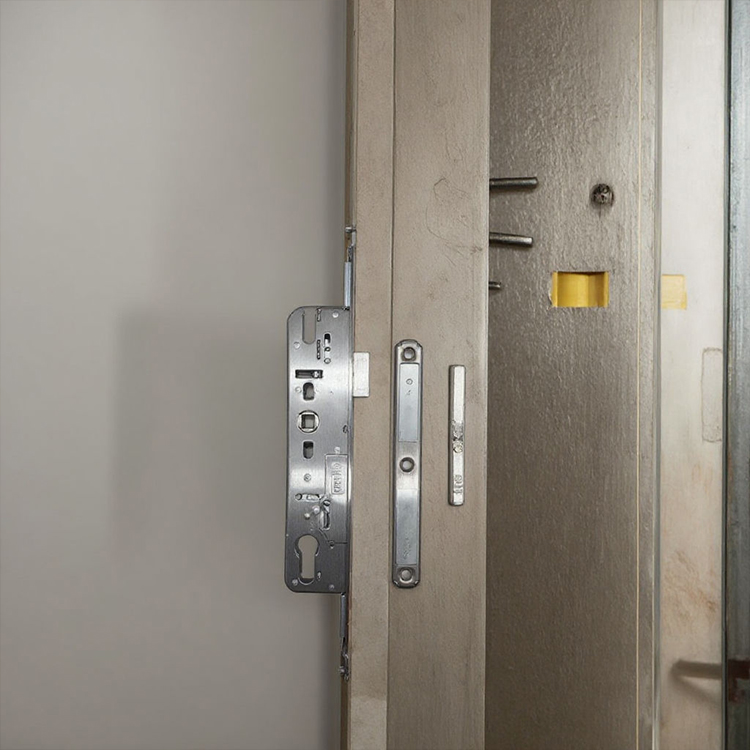
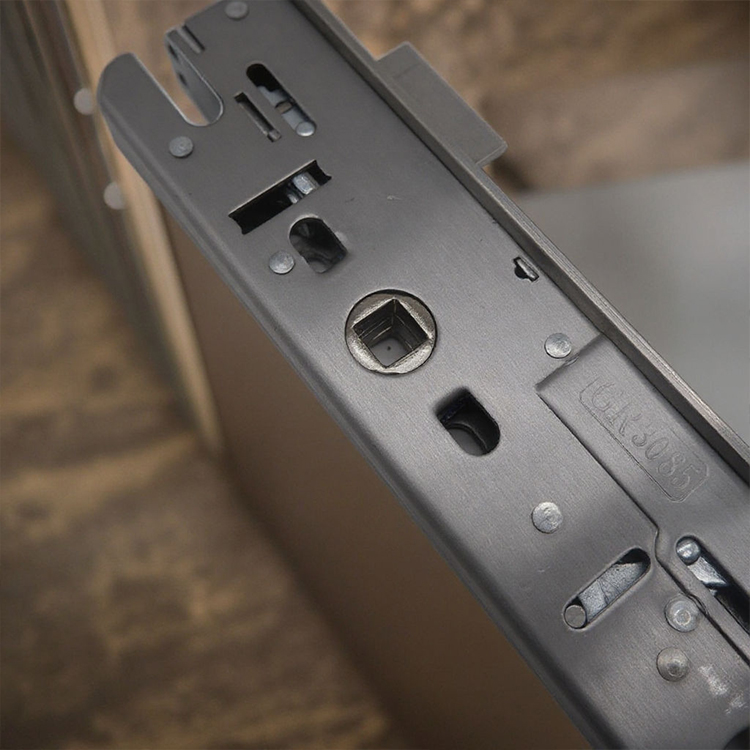
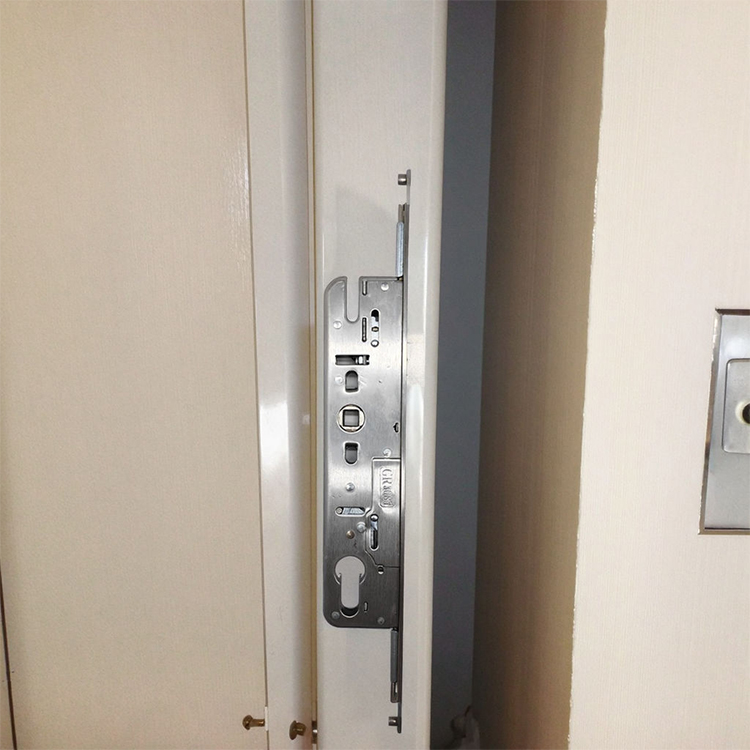
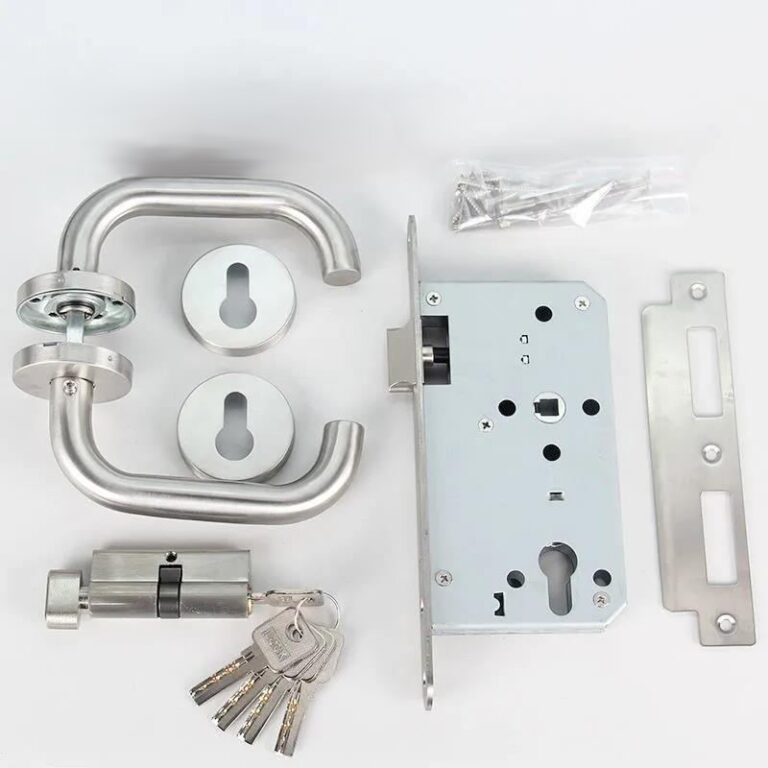
A conventional single-point latch gives an installer one receiving position to manage. A multipoint locking system may have three, five, or more engagement positions distributed along the door edge.
Each point has a different job.
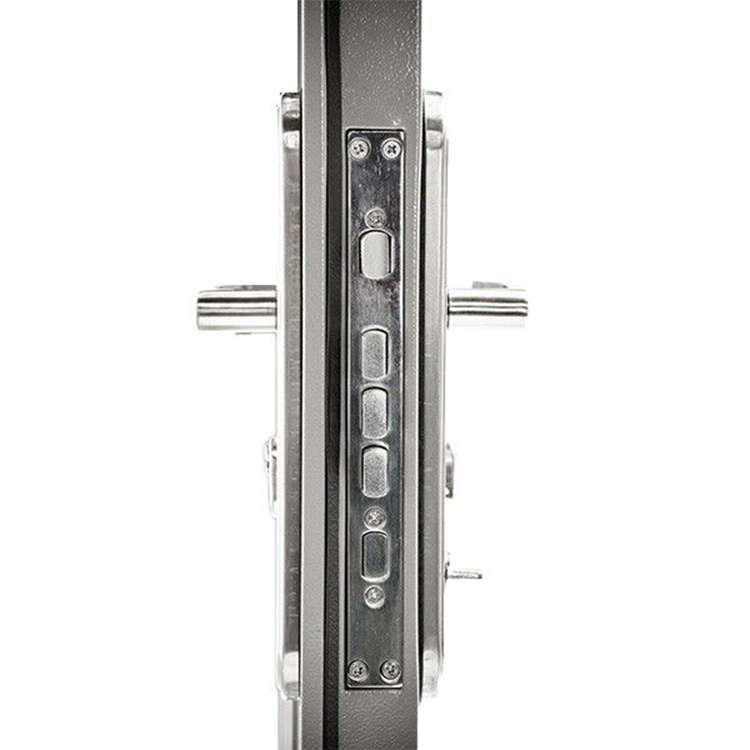
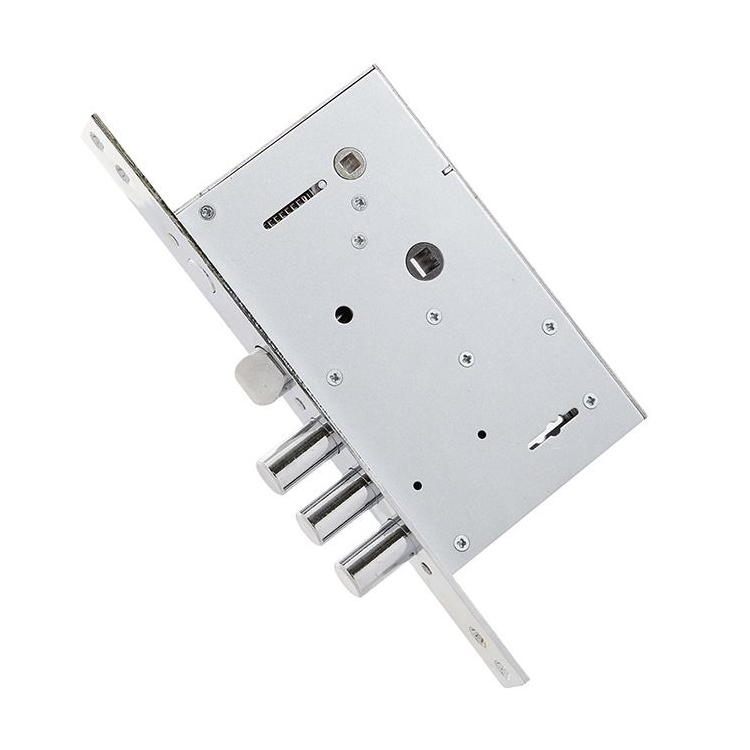
The center latch may hold the door closed during normal use. Hooks may resist separation between the leaf and frame. Rollers may pull the door against an EPDM or TPE gasket. Top and bottom shoot bolts may control movement at the corners. The deadbolt may provide the primary locked position.
Every one of those components needs the correct door lock keep.
The keeper opening must match:
The vertical centerline of the locking point
The bolt, hook, roller, or latch shape
The projected throw and engagement depth
The door profile and frame cavity
The required pull-in or compression distance
The fastening and reinforcement arrangement
The adjustment direction and adjustment range
The corrosion and exposure classification
This is why I treat multi-point lock systems engineering as assembly engineering rather than lock selection. The central gearbox, rods, locking points, strikes, hinges, frame, seals, and fasteners all participate in the same load path.
The 2025 edition of ANSI/BHMA A156.37 for Multipoint Locks reinforces that point by evaluating multipoint locks through operational, cycle, strength, and security testing. A catalog photograph cannot answer any of those performance questions.
Table of Contents
What Fails When the Strike Plates Do Not Match
Wrong strike plates rarely produce one dramatic failure on installation day. The damage usually arrives as a chain of smaller problems.
That is worse.
A failed component gets replaced. A poorly matched system creates months of callbacks, adjustments, complaints, disputed warranties, and quiet damage to the door brand.
The hooks hit instead of entering
A hook bolt normally travels outward and then pulls into its keeper. If the keeper pocket is too high, too low, too shallow, or shaped for a different hook, the hook strikes the edge rather than entering the receiving space.
The user feels resistance at the handle.
Then comes the bad behavior. The user lifts harder. The installer enlarges the opening with a grinder. The fabricator blames the lock. The lock supplier blames the door. Eventually, a precision mechanism is operating through a hand-cut slot with uncertain engagement.
That is not installation. It is improvisation.
The gearbox becomes an alignment tool
The gearbox should transmit controlled handle or key movement to the locking points. It should not drag a misaligned door into position.
When keepers are incorrectly placed, the gearbox, spindle, handle, rods, connectors, and hook pivots absorb loads that should never have reached them. A handle that feels heavy may not indicate a weak gearbox. It may indicate that the gearbox is being forced to overcome a bad strike line.
FSChier’s analysis of lockcases and gearboxes in door lock systems makes the same engineering distinction: replacing a gearbox without checking hinge drop, keeper alignment, gasket pressure, rods, and frame geometry can leave the actual fault untouched.
The door appears locked without full engagement
This one worries me most.
A handle can reach its final position while one or more locking points have only partial engagement. The user hears a click. The cylinder turns. The door looks secure.
But the upper hook may be sitting on the keeper lip, the lower roller may barely overlap its plate, and the center deadbolt may not have reached its intended depth.
More locking points do not automatically produce more security. Five partially engaged points can be less dependable than three correctly engineered ones.
The FBI’s 2024 national crime release covered more than 14 million reported offenses submitted by over 16,000 agencies representing 95.6% of the U.S. population. That data does not identify the best strike plate, but it gives buyers a reason to reject unsupported “high-security” language and demand evidence at the actual frame interface.
Seal compression becomes uneven
Multi-point locks are often selected to pull tall exterior doors evenly into their weather seals. That benefit disappears when the strike plates create inconsistent pull-in.
One roller may over-compress the gasket. Another may not touch it. The top corner may whistle under wind pressure while the center of the door feels excessively tight.
The U.S. Department of Energy states that exterior doors can contribute significantly to air leakage and that the frame must be square enough for the door to seal tightly and operate properly. In other words, the lock cannot rescue bad frame geometry, and the strikes cannot be positioned by guesswork.
A door that needs two hands and a shoulder push is not “secure.” It is badly tuned.
The U.S. Access Board states that accessible door and gate hardware must operate with no more than 5 lbf, equivalent to 22.2 N, while the opening-force measurement itself is taken after latches and other holding devices are disengaged. Over-tight keepers and excessive gasket compression can therefore create more than a comfort complaint; they may interfere with accessibility and egress requirements.
And let us be honest. If users must fight the handle, some will stop engaging the multi-point function altogether.
What security value does a five-point lock provide when occupants regularly leave four points disengaged?
Strike Plate Compatibility: The Failure Matrix Buyers Need
The following table shows how strike errors appear in real use and what buyers should require before approving a multipoint door lock package.
Fastener length, material, reinforcement, and screw-bite requirements
Wrong faceplate geometry
Keeper does not sit flat on the profile
Twisting, unstable alignment, cosmetic gaps
Profile-specific faceplate drawing
Mixed revisions
Replacement part looks similar but does not align
Unpredictable engagement and field rework
Revision-controlled lock and strike part numbers
The phrase “universal strike plate” deserves suspicion. Universal for which hook? Which profile wall? Which frame cavity? Which gasket compression? Which locking-strip revision?
Universal often means the buyer has inherited the engineering work.
How to Match Strike Plates to Multi-Point Locks
Correct matching begins before the door reaches the installation site. It should begin when the opening, extrusion, lock strip, and hardware bill of materials are still being reviewed.
Freeze the lock and strike geometry together
Do not approve a lock by product name alone.
The technical package should identify:
Lock model and revision
Door handing
Faceplate length and width
Backset
PZ or handle-to-cylinder center distance
Spindle size
Latch and deadbolt position
Hook, roller, mushroom cam, and shoot-bolt locations
Projected throw
Matching keeper part numbers
Keeper pocket dimensions
Adjustment range
Frame reference datum
Fastener specification
Reinforcement requirement
For aluminum systems, the extrusion drawing matters as much as the lock drawing. A narrow-stile frame with limited screw purchase cannot be treated like a reinforced steel or timber frame. FSChier’s guide to engineering reliable multi-point locks for aluminum doors explains why profile depth, keeper placement, screw purchase, gasket compression, and hinge geometry need to be reviewed together.
Use fixed datums, not accumulated measurements
A common installation mistake is measuring each strike from the previous strike. Small errors then accumulate down the height of the frame.
Use a fixed reference point.
Depending on the system, that may be the centerline of the handle spindle, the bottom of the lock faceplate, the finished floor level, or a defined frame-machining datum. Every keeper position should trace back to that same reference.
And record the tolerance.
“Approximately aligned” is not a tolerance. “Adjust on site” is not a tolerance. The acceptable vertical, horizontal, and depth variation must come from the lock and door-system manufacturer.
Test engagement before applying full seal pressure
During prototyping, test the mechanical engagement with manageable gasket resistance before using aggressive seal compression to hide alignment errors.
I would verify the sequence in this order:
Confirm that the door hangs square and closes without the lock pulling it into position.
Confirm that every locking point enters its keeper without rubbing.
Confirm full hook, bolt, roller, or shoot-bolt travel.
Adjust pull-in and gasket compression gradually.
Measure operating force or torque.
Cycle the door repeatedly.
Recheck engagement marks, fastener movement, and gasket contact.
Repeat after temperature or exposure conditioning when the project requires it.
A correctly installed lock should feel controlled, not loose. But it should not feel like exercise equipment.
Inspect the contact marks
One of the cheapest diagnostic methods is also one of the most useful: inspect the contact pattern.
Temporary marking compound, removable tape, machinist dye, or another controlled marking method can reveal whether a hook is contacting the keeper edge, whether a roller is pulling against the intended ramp, or whether a deadbolt is touching the bottom of its pocket.
The pattern should confirm full, repeatable engagement. It should not show that the locking point is machining its own path through the keeper.
Validate the complete door assembly
Security, fire resistance, accessibility, wind performance, and air leakage are generally assembly-level concerns.
UL’s Doors, Windows and Related Hardware Application Guide explains that certified opening systems include doors, frames, hardware, and related components used for fire, smoke, egress, and windstorm applications. Substituting an apparently similar strike into a listed or tested opening can therefore create a compliance question, not merely a fitment problem.
The approved bill of materials matters.
So do revision controls. A supplier may update a hook profile, change a rod position, alter the strike pocket, or revise the adjustment screw. Unless lock and strike revisions remain linked, a reorder can introduce a mismatch even when the cartons carry familiar product names.
The Procurement Questions That Expose Weak Suppliers
I would not ask a supplier, “Does this strike plate fit?”
That question invites a one-word answer.
I would ask:
Which exact lock revisions use this keeper?
The response should include part numbers, handing, profile applications, and revision compatibility. “Suitable for multipoint locks” is not enough.
What is the full engagement depth?
Ask for the intended engagement range, not merely the keeper opening size. The locking point must enter, move through its designed path, and remain engaged under the applicable load.
How much adjustment is available?
Some keepers provide lateral, depth, or vertical adjustment. Others are fixed. Adjustment can help manage production variation, but it should never be used to excuse uncontrolled fabrication.
Where do the fasteners terminate?
A polished stainless steel keeper fixed into a thin, unsupported profile wall is not a strong security detail. Buyers should know the screw diameter, screw length, substrate, reinforcement, minimum edge distance, and expected pull-out resistance.
What happens after frame movement?
Doors move. Hinges settle. Timber changes moisture content. Aluminum expands and contracts. Gaskets take compression set.
The supplier should explain whether adjustment remains available after installation and how technicians can restore alignment without grinding the frame or replacing the entire lock strip.
Has the lock been tested with these strikes?
The answer should identify the tested configuration. A lock tested with one keeper design does not automatically carry the same performance when paired with a different pocket shape, reinforcement method, or fastening arrangement.
For custom product programs, this documentation should be controlled through an OEM/ODM door hardware development process that links drawings, samples, approvals, revisions, packaging, and reorder specifications.
FAQs
What are multi-point lock strike plates?
Multi-point lock strike plates are frame-mounted receiving components positioned to accept each latch, hook, roller, deadbolt, or shoot bolt in a multipoint locking system, controlling engagement depth, pull-in force, alignment, and load transfer between the moving door leaf and the fixed frame.
They may also be called keepers, door lock keeps, receiver plates, or locking-point strikes. Their dimensions must match the corresponding lock components and the door-frame profile.
How do I match strike plates to a multi-point lock?
To match strike plates to a multi-point lock, verify the exact lock model and revision, locking-point positions, hook or bolt geometry, projected throw, keeper pocket depth, adjustment range, door handing, frame profile, fastening method, and manufacturer-approved part numbers before machining or installation begins.
The safest method is to use a dimensioned lock-and-strike drawing based on one fixed datum and then validate the combination on a complete sample door.
Can the wrong strike plate damage a multipoint locking system?
The wrong strike plate can damage a multipoint locking system by forcing hooks, rollers, bolts, rods, handles, and the central gearbox to overcome misalignment or excessive seal pressure, producing high operating force, partial engagement, metal wear, loose fasteners, bent components, and premature transmission failure.
A stiff handle should therefore trigger an alignment inspection before anyone replaces or lubricates the gearbox.
What are the best strike plates for multi-point locks?
The best strike plates for multi-point locks are the manufacturer-approved keepers that match the precise locking-point geometry, frame profile, engagement depth, adjustment requirement, corrosion exposure, reinforcement method, fasteners, security target, and tested door configuration rather than merely sharing a similar length or appearance.
There is no universally “best” keeper. The correct choice depends on the complete opening and the specific lock revision.
Does strike plate compatibility affect door security?
Strike plate compatibility affects door security because every hook, bolt, latch, or roller must engage deeply and transfer force into a stable, reinforced section of the frame; partial engagement, oversized pockets, weak screws, or incorrectly positioned keeps can reduce resistance to prying, spreading, impact, and repeated movement.
Point count alone is not proof of security. Verified engagement and frame load transfer matter more.
Can strike plates affect air leakage around a door?
Strike plates can affect air leakage by determining how evenly the locking points pull the door leaf against its weather seals; excessive pull-in can over-compress gaskets and increase handle force, while insufficient or uneven pull-in can leave gaps, rattling corners, and leakage paths around the perimeter.
Strike adjustment must therefore balance seal compression with smooth, repeatable operation.
What should be checked during multipoint lock installation?
During multipoint lock installation, technicians should check door and frame squareness, hinge alignment, locking-point centerlines, keeper depth, full bolt or hook travel, gasket compression, operating force, fastener anchorage, contact marks, cylinder operation, and repeated locking cycles before declaring the opening complete.
The gearbox should operate the locking points. It should not be used to pull a badly fitted door into alignment.
Approve the Strike Map Before Approving the Lock
Here is my final position.
Do not purchase multi-point locks as isolated metal strips. Purchase a documented locking system that includes the correct strikes, profile interface, fasteners, adjustment method, installation tolerances, revision controls, and test configuration.
Before releasing your next order, send the supplier:
Door and frame drawings
Profile sections
Lock and handle positions
Door size and weight
Gasket details
Target market
Security and compliance requirements
Corrosion exposure
Expected cycle demand
Required strike adjustment
Annual order volume
Then request the complete lock-and-strike drawing, approved part-number matrix, sample assembly, engagement inspection criteria, and revision-controlled bill of materials.
Do that before tooling. Before machining. Before volume production.
Because once the wrong strike pockets have been cut into hundreds of finished frames, compatibility is no longer an engineering question.