Looking for hardware solutions that meet European / American standards?
Use this guided inquiry modal to move from a generic quote form to a clearer technical conversation. Buyers can choose whether they need pricing, CAD / 3D files, or OEM / ODM support before sharing contact details.
Compatibility-first design across door / window systems
Repeatable production with clear inspection checkpoints
Documentation and change control for long-running programs
Responsive engineering support for fit and field feedback
Most multi point lock failures are engineered in on day one
Pretty locks fail.
I have watched too many teams blame the handle, blame the installer, blame “user misuse,” and even blame the weather, when the real problem was already baked into the opening: a narrow stile profile with weak screw purchase, a keeper line that never matched the closing arc, a euro-profile cylinder lock chosen for catalog familiarity instead of interface fit, and a threshold detail that turned the whole aluminum door multi point lock package into an argument with physics. Want the hard truth? The lock rarely dies first. The geometry does.
A reliable multipoint locking system for an aluminum door is not a lockcase plus handle plus wishful thinking; it is a mechanical chain in which door mass, hinge axis offset, stile depth, reinforcement thickness, rod straightness, keeper placement, gasket compression, closer force, and user behavior all have to stay in tolerance at the same time, through heat, cold, dust, slam cycles, and maintenance neglect. And when one link goes soft, the whole “premium” story falls apart. Why do buyers still shop it like a decorative accessory?
The narrow stile problem nobody likes to price honestly
Slim profiles look sharp. They also punish lazy engineering.
A narrow stile lock in a storefront or residential aluminum leaf gives you less forgiveness for screw pull-out, less room for rod guidance, tighter keeper positioning, and far less patience for sloppy mortise prep. I usually begin by asking for six numbers before I approve anything: leaf height, leaf width, finished door mass, profile wall thickness, backset envelope, and expected daily cycles. If I do not have those, I am not “specifying.” I am guessing.
The gearbox is not the hero
Transmission matters more.
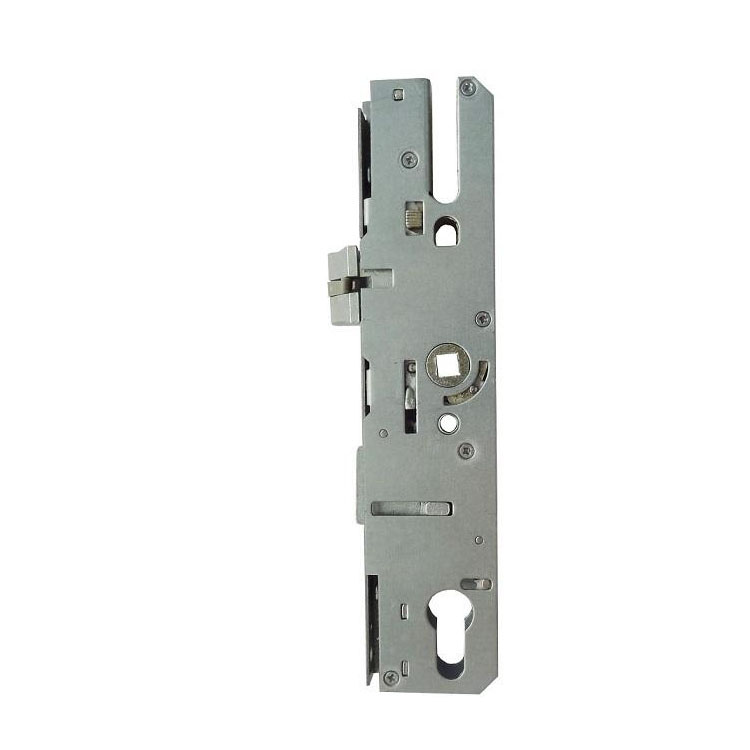
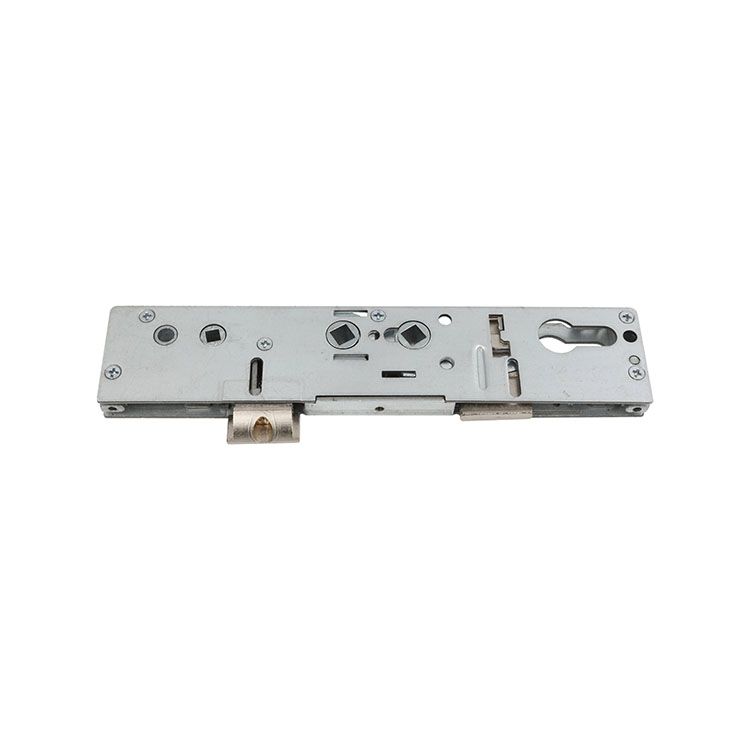
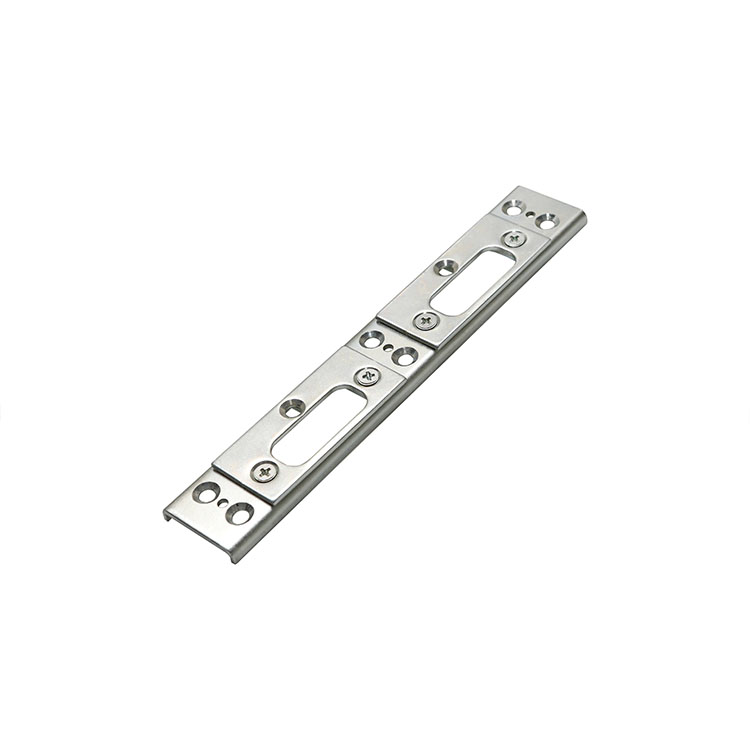
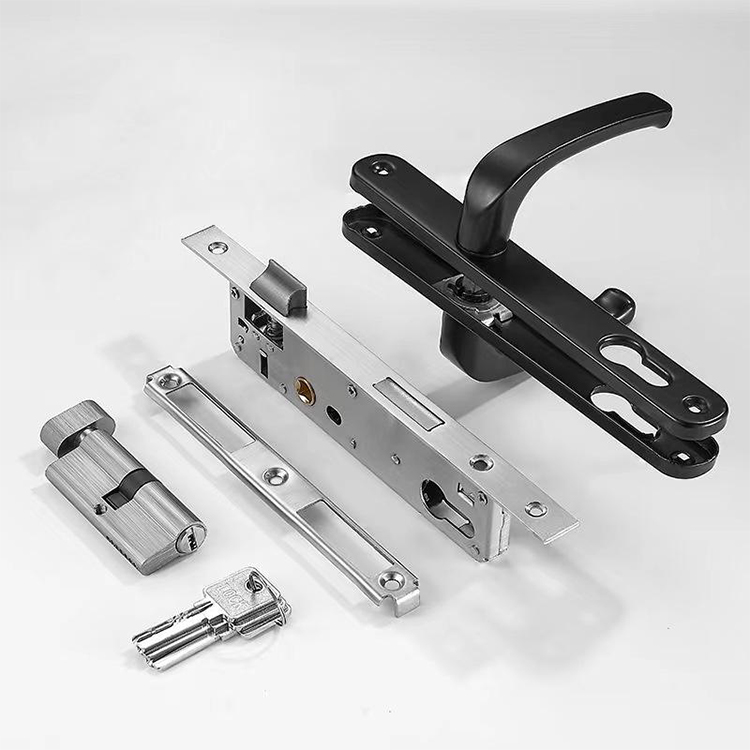
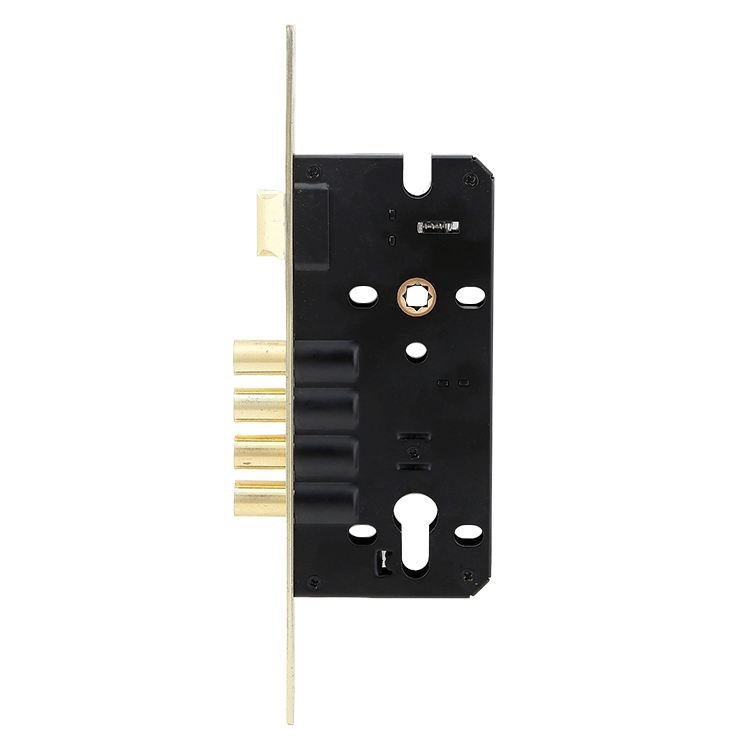
Most multi point lock systems fail in the boring middle: the gearbox tooth form, follower play, spring return consistency, rod coupling, and the way the system behaves when a user half-lifts, slams, or reverses the handle mid-stroke. That is why I prefer a system mindset over one-part obsession. A mortise lock for aluminum door work can be excellent, but only when the mortise body, drive strip, keepers, handle spindle, and cylinder cam are treated as one tested assembly instead of five purchased parts forced into a temporary marriage.
The specification stack I would actually approve
Boring works.
I do not start with “best.” I start with survivability. For a commercial or high-use aluminum swing door, these are the starting points I would write into the first engineering review before project-specific testing begins.
Element
My starting position
Why I care
Locking points
3 points minimum on standard-height leaves; 4 points when height, wind load, or seal compression rises
A single latch on a tall aluminum leaf invites bow, leakage, and keeper abuse
Faceplate / strip material
304 stainless for standard exterior exposure; 316 or isolated protected assemblies near chloride-heavy coasts
Surface corrosion is ugly; hidden corrosion is expensive
Gasket logic
Continuous EPDM or equivalent with even compression, not heroic compression
Too much drag kills operability faster than too little marketing
Keeper reinforcement
Reinforced fastening zone, checked against actual profile wall thickness and screw engagement
Soft substrate makes “lock failure” look mysterious
Cylinder choice
Euro-profile cylinder only when cam throw, security grade, and service access are confirmed
The wrong cam timing can sabotage an otherwise good system
Handle force target
Keep operability sane before the closer does the final work
A lock that needs body weight to operate will be abused
Corrosion control
Isolate dissimilar metals, protect cut edges, seal or coat exposed aluminum intelligently
Galvanic damage starts quietly and invoices loudly
Test plan
Cycle, misalignment, salt exposure, and misuse checks on the full assembly
Coupons lie; assemblies confess
I also split visible and working materials on purpose. Let the architect obsess over finish on the escutcheon and lever if they must. I care more about the working core: rod guides, springs, followers, connecting screws, keepers, and the surfaces that actually carry the load.
Reliability dies in three places
Slowly. Then suddenly.
Most unreliable aluminum door multi point lock jobs collapse in one of three zones: the interface, the environment, or the code review. The worst projects hit all three.
Interface failure comes first
Millimeters eat margins.
If the door lands low, the rods arrive late. If the rods arrive late, the handle force spikes. If the handle force spikes, users start yanking. If users start yanking, the gearbox wears, the keepers bruise, and somebody writes “defective lock” in the warranty email. That is why the best companion read on this site is still Specifying Frame Tolerances to Prevent Hardware Binding. I agree with its premise completely: freeze geometry before you romanticize hardware.
Corrosion failure is slower, nastier, and more political
Salt wins.
The corrosion conversation gets dumb fast because people keep reducing it to finish color, when the real engineering fight is metal pairing, drainage, cut-edge protection, coating integrity, and where moisture sits after year two. NIST notes that sealed anodic coatings of aluminum oxide improve corrosion resistance and are highly resistant to atmospheric and salt-water attack, but that only helps when the anodizing is real, sealed properly, and not undercut by bad fastener pairing or exposed damage. The U.S. Whole Building Design Guide is even blunter in coastal settings: avoid dissimilar metals, avoid direct aluminum-to-concrete contact, and isolate mixed-metal interfaces to prevent galvanic cells. I have seen one cheap screw destroy an otherwise decent system. Was the lock bad, or was the spec dishonest?
In June 2024, the U.S. Department of Justice sued Toll Brothers and related entities over accessibility failures, and the complaint spelled out exactly the sort of details hardware teams love to treat as “someone else’s problem,” including excessively high thresholds and other inaccessible entrance conditions. The Access Board’s ADA guidance is plain: thresholds in new construction are generally limited to 1/2 inch, and operable parts must be usable with one hand without tight grasping, pinching, twisting, or more than 5 lbf of force. I do not care how secure a multi point lock is on paper if the installed opening becomes a compliance trap in real use. Would you rather catch that in a drawing review or in a lawsuit?
Energy, air leakage, and lock engineering now belong in the same meeting
This changed.
A few years ago, teams could still pretend the lockset was separate from envelope performance. That excuse is getting weaker. PNNL’s 2025 analysis of the 2024 IECC shows tighter prescriptive air leakage expectations, including a shift from 5.0 ACH50 to 4.0 ACH50 in climate zones 0-2 and from 3.0 ACH50 to 2.5 ACH50 in climate zones 6-8, with added cost implications that are not massive compared with the price of sloppy field correction. That matters because a multi point lock can improve perimeter compression consistency, but it cannot rescue a warped slab, bad threshold, or wandering keeper line. Compression is a system result, not a catalog promise.
If I were engineering this from scratch for a real aluminum swing door program, not a marketing deck, I would move in this order.
First, define abuse
I want door mass, opening frequency, expected user type, closer class, exposure zone, cylinder format, and maintenance assumptions before I bless a single part number. A school entry, a multifamily corridor door, and a villa terrace door do not deserve the same multipoint locking system, even if they share the same phrase in the purchase order.
They will half-lift the handle. They will drag the door against the closer. They will lock it with seal pressure still fighting back. They will ignore maintenance. So I prefer hardware that gives clear state feedback, survives partial cycles, and does not require delicate wrist behavior just to achieve full engagement. That is one reason I rate designing misuse-tolerant multi point locks for real users as a smart secondary internal link for this article even if it sits one click outside the exact title match.
Fourth, separate security language from engineering reality
I dislike the phrase “best multipoint lock for aluminum doors” because it usually means “the one someone wants to sell me.” Best for what? A 2,100 mm balcony door in a dry inland market? A coastal façade with chloride exposure? A high-cycle commercial entry with a closer, panic expectations, and cleaning chemicals hitting the threshold every night? Ask a better question and you get a better lock.
FAQs
What is a multi point lock for an aluminum door?
A multi point lock for an aluminum door is a locking system that secures the door leaf to the frame at two or more locations, usually through a central gearbox driving rods, hooks, bolts, or rollers, so the slab closes with more even force, better alignment, and stronger perimeter control than a single latch. In practice, that means better seal compression, better resistance to bowing, and fewer excuses when the opening is engineered properly.
How does a multipoint locking system work?
A multipoint locking system works by using the handle or key cylinder to drive a central transmission that moves additional locking elements up and down the door edge, engaging multiple keepers in sequence so the door is pulled into the frame more evenly than a single latch can manage alone. The smart part is not the number of points. It is whether those points land cleanly, at the right force, on the right geometry.
What is the best multipoint lock for aluminum doors?
The best multipoint lock for aluminum doors is the full tested assembly whose gearbox, rods, keepers, cylinder, handle, fasteners, corrosion package, and profile interface match the exact aluminum system, duty cycle, code requirements, and climate exposure of the project instead of merely looking premium in a hardware catalog. I do not buy the “best” claim unless the supplier can show me the tested opening logic and the service logic.
Can I retrofit a mortise lock for aluminum door work into a multi-point setup?
A retrofit from a single mortise lock for aluminum door use into a multi-point setup is a conversion in which the existing preparation is modified or replaced so a central lock body can drive multiple engagement points, but it only works when profile geometry, keeper space, reinforcement, and door straightness are still good enough to accept the added system loads. I would retrofit only after checking stile depth, screw purchase, strike line, and whether the door is already fighting the frame.
How do I install a multipoint lock on an aluminum door?
Installing a multipoint lock on an aluminum door means machining the correct mortise and faceplate envelope, aligning the gearbox and drive strip, setting the handle spindle and euro-profile cylinder lock correctly, locating every keeper to the real closing path of the leaf, and then tuning compression so the lock engages cleanly without abusive operating force. The dangerous myth is that installation is just cutting and screwing in parts. It is not. It is controlled alignment work, and bad installation can make a good lock look fraudulent in one afternoon.