Looking for hardware solutions that meet European / American standards?
Use this guided inquiry modal to move from a generic quote form to a clearer technical conversation. Buyers can choose whether they need pricing, CAD / 3D files, or OEM / ODM support before sharing contact details.
Compatibility-first design across door / window systems
Repeatable production with clear inspection checkpoints
Documentation and change control for long-running programs
Responsive engineering support for fit and field feedback
In aluminum fenestration, the future of the multi-point lock system will be decided less by pretty handles and more by four pressures that are getting meaner every year: tighter energy targets, harder security testing, harsher climate exposure, and a growing market refusal to accept hardware that looks premium on a sample board but goes soft once tolerances drift, seals age, or users behave like actual humans. Why are so many brands still acting as if this is a styling contest?
I have watched this industry do the same silly thing for years. We talk about locks as if they are isolated parts, then we act shocked when the real failure shows up in keeper alignment, sash deflection, thermal-break geometry, rod drag, or bad egress logic. So let me say the rude part early: the future aluminum door lock is not a prettier latch. It is a better-controlled system.
According to the U.S. Department of Energy, heat gain and heat loss through windows account for 25% to 30% of residential heating and cooling energy use, while the NFRC label keeps reminding buyers that fenestration is judged by measured numbers such as U-Factor, not by sales adjectives; that is why I no longer treat a multi-point locking system as a security accessory in aluminum fenestration, but as a closure-pressure device that decides whether the sash meets the gasket honestly or just kisses it for show. (The Department of Energy’s Energy.gov)
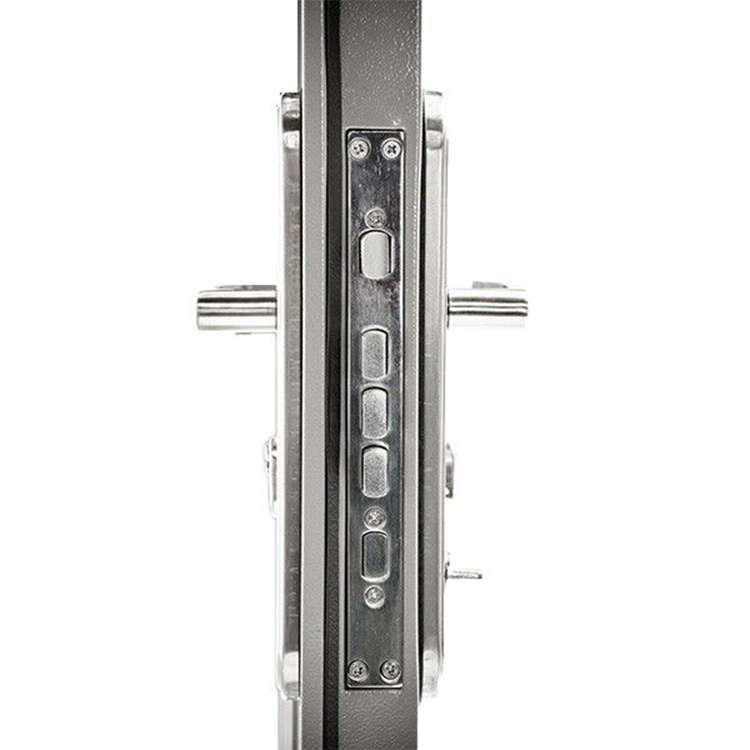
And aluminum makes this more unforgiving. In thermally broken profiles, the hardware is working around separated inner and outer aluminum shells tied together by a polyamide or similar insulating barrier, plus drainage paths, gasket lines, and tight chamber geometry, which means a sloppy lock body or bad keeper relationship can wreck sealing pressure long before anybody blames the right part. If the lock cannot pull evenly across a thermally broken section, what exactly are we paying for? (Foshan Chier)
My blunt view is this: the future aluminum window locking system will sell first on air control and only second on romance. Buyers are going to care whether the closing force stays even in January, whether the sash sits flat after transport, and whether the opening still feels clean after a season of dust, salt, and abuse. That is why I think multi-point locks for energy and air-tightness targets and hardware integration in thermally broken door profiles are not side topics at all. They are the main event. (Foshan Chier)
Security is moving from glossy claims to assembly proof
Tests matter now.
ASTM’s current building standards list F588-17(2023) for forced-entry resistance of window assemblies, F842-17(2023) for sliding door assemblies, and E2395-21(2025) for voluntary security performance of window and door assemblies with glazing impact, while BHMA’s A156.37-2025 multipoint-lock standard spells out the adult stuff marketers like to mumble past: operational tests, security tests, corrosion evaluation to ASTM B117, a Grade 1 one-million-cycle durability test, and a 1,350-pound bolt-strength test with all latching points engaged. Why would any serious buyer still accept “premium feel” as evidence? (ASTM International | ASTM)
The better case study is older and tougher than most new sales decks. In a natural-experiment study on built-in security, researchers found that a Dutch building-code change requiring better built-in security reduced burglary risk in newly built homes by 26%, with practitioners estimating the added cost of burglary-proof windows and doors at about €430 per home, or less than 0.2% of the average house price. That is the sort of arithmetic that makes cheap single-point complacency look foolish. (PopCenter)
And the British evidence is even less polite. The official Secured by Design Homes 2023 guide, backed by the UK Police Service and referenced by building-control routes in England, Scotland, and Wales, says its advice has been proven to reduce crime opportunity, while a University of Huddersfield review cites Glasgow results where total housebreaking fell by 61% after modernization to Secured by Design standards. No, that does not mean a multi-point lock alone did the miracle. It means built-in physical security keeps winning when it is treated as a system instead of a catalog line. (Wandsworth Borough Council)
Where the next fight will be won
Pressure
What lazy specs still do
What serious specs will do
Air tightness
Treat the lock as decorative hardware
Specify closure pressure, keeper adjustment, and gasket compression as one package
Forced-entry resistance
Ask for “security hardware” in the abstract
Demand assembly-level evidence tied to ASTM and BHMA paths
Separate intrusion resistance from lawful escape and one-hand operation
Duty cycle
Buy by sample feel
Audit torque growth, wear surfaces, and cycle honesty
Smart features
Bolt software onto weak mechanics
Make the digital layer subordinate to a mechanically sound lockset
Smart multi-point locks will grow, but not the way marketing promised
I am not anti-smart.
I am anti-stupid, and a lot of smart-lock talk in this trade is still stupid because it assumes the digital layer can compensate for a mediocre mechanical stack, even though Reuters reported in 2022 that millions of digital locks worldwide were exposed to remote opening risk through a Bluetooth weakness, and Reuters also reported in January 2025 that the White House introduced the Cyber Trust Mark to rate connected-device security against NIST-based criteria, which tells me one thing very clearly: connected hardware is now judged twice, once for mechanics and once for cyber hygiene. That second audit is not going away. (Reuters)
So yes, I expect the smart multi-point lock to grow. But I do not think the winners will be app-first toys. I think the winners will be mechanically serious systems with automatic multi-point locking, clear lock-state feedback, sane credential logic, and a graceful fallback when power, signal, or software gets moody. The digital layer should assist the hardware. It should never become the excuse for weak hardware.
The official security people are already pointing there. The UK’s National Protective Security Authority guidance tells teams to consider auto-engage slam locks and multi-point locking systems with a deadlock and at least two hook bolts for resistance against forced entry, which is a lot closer to the future I believe in than another phone screen pretending to be engineering. (国家保护安全局)
Safety will punish lazy hardware faster than fashion ever will
Window falls matter.
The U.S. Consumer Product Safety Commission said in April 2026 that an estimated 5,600 children aged 12 and under were treated in emergency departments in 2024 after falling from a window, about one in three cases required hospitalization, and CPSC is aware of at least 25 deaths among children 12 and under between 2021 and 2023; that is why I think the future aluminum window locking system will have to do two jobs at once, resisting unwanted entry while still supporting obvious, lawful, low-confusion operation where egress and child safety demand it. How many buyers are still pretending those are separate departments? (U.S. Consumer Product Safety Commission)
This is exactly why window hardware compliance and egress rules belongs beside security content, not somewhere off in a compliance graveyard. A multi-point lock system that is secure but fussy, overcomplicated, or dependent on special knowledge is not sophisticated. It is a lawsuit with nice packaging. (Foshan Chier)
And this is where aluminum complicates life. Slim sightlines, Euro-groove compatibility demands, mixed-material interfaces, and thermal-break sections give us elegant openings, but they also give us less room for mechanical sloppiness. I have no patience left for teams that want a minimalist aluminum door lock and then act offended when the real engineering lives in boring things like body depth, spindle fit, hook projection, fixing centers, and opening force.
The future belongs to boring hardware
That is my bet.
By 2028, the multi-point door hardware that wins in aluminum fenestration will not be the loudest. It will be the hardware that keeps compression stable, survives cycle abuse, respects egress, tolerates climate, and shows real test evidence. I would bet on 316 where chlorides are nasty, on simpler force paths over clever linkage theater, on better keeper adjustability, on honest transmission parts, and on climate-ready multi-point locks for cold and coastal projects plus multi-point locks for high-cycle duty as the more useful reading path than another generic “best lock” roundup. (Foshan Chier)
So here is the hard truth I would leave on every specifier’s desk: the future of the multi-point lock system in aluminum fenestration is not smarter marketing. It is better closure physics, better materials, better proof, and less tolerance for nonsense.
FAQs
What is a multi-point lock system?
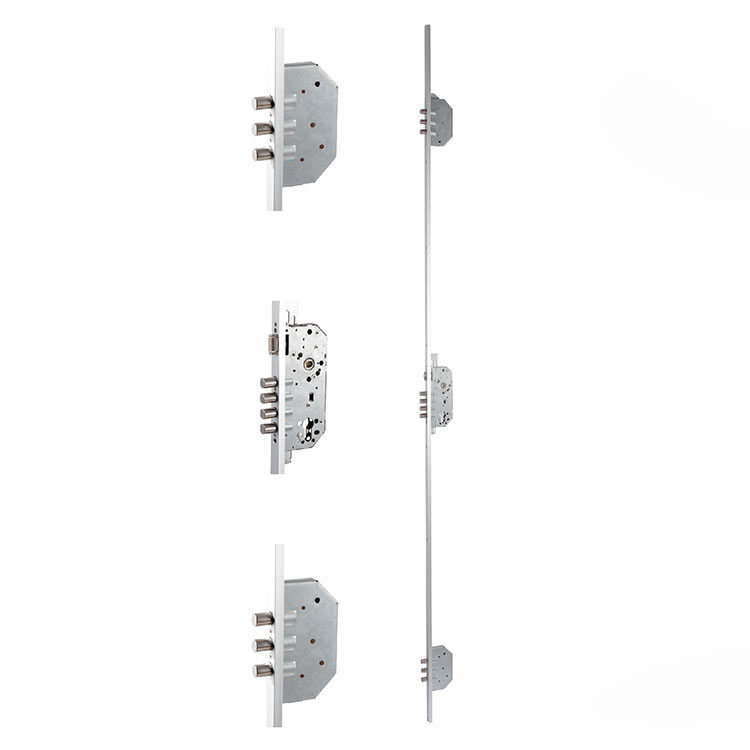
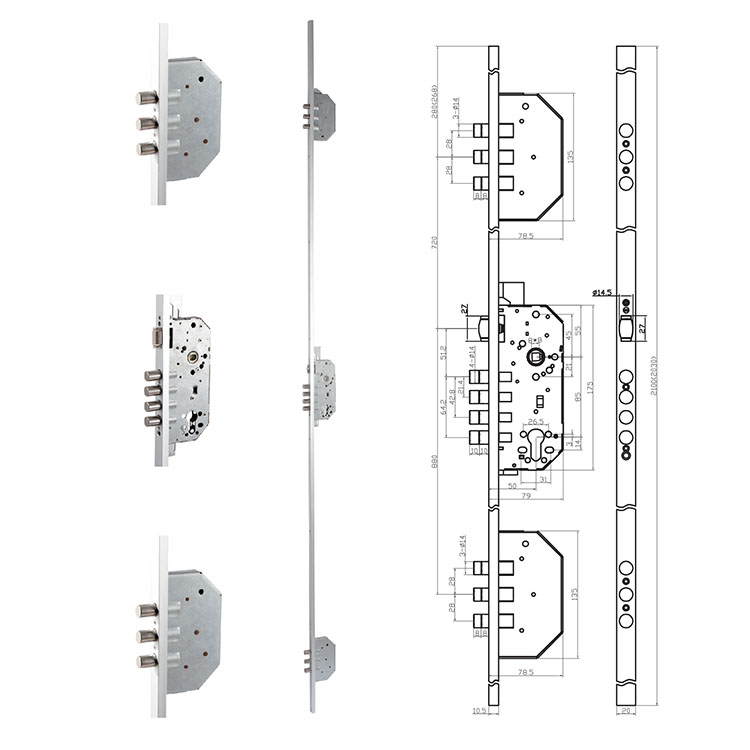
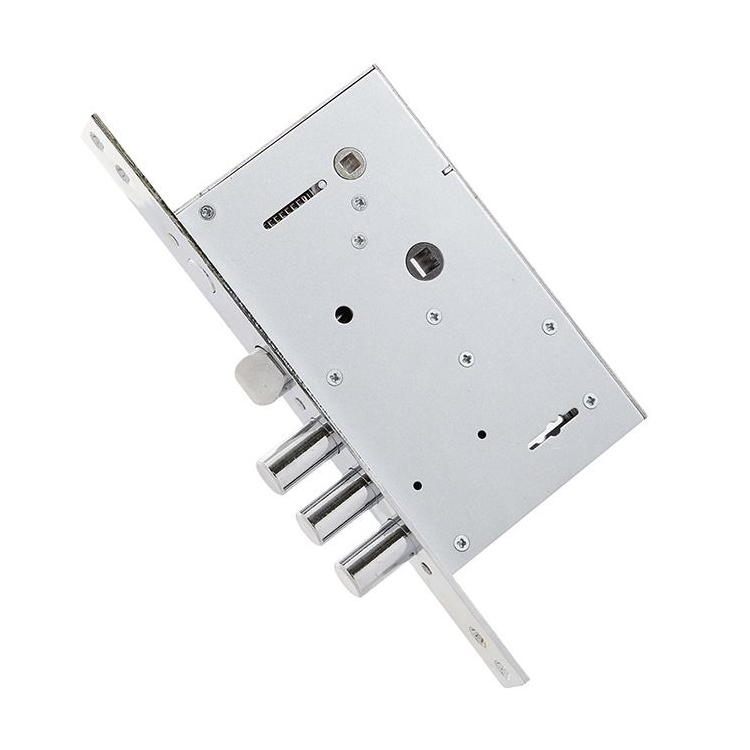
A multi-point lock system is a door or window locking mechanism that secures the leaf or sash at several positions along the frame through one operating action, usually by using a central gearbox to drive hooks, rollers, bolts, or cams so sealing pressure and resistance are distributed more evenly than with a single latch. It is the difference between center-only engagement and full-edge control.
Are multi-point locking systems better for aluminum doors?
A multi-point locking system is generally better for aluminum doors when the profile geometry, keepers, hinges, gasket stack, and operating logic are designed together, because aluminum systems often use slim sections and tight tolerances that benefit from distributed closure force rather than one stressed latch point. I would still reject a bad multi-point system over a well-sorted single point.
What is the best multi-point locking system for aluminum doors?
The best multi-point locking system for aluminum doors is the one whose full assembly matches the exact profile, Euro-groove or hardware interface, climate exposure, egress path, duty cycle, and test route of the project, instead of the one with the flashiest handle or the noisiest smart features. In practice, “best” is a spec question, not a catalog adjective.
Do smart multi-point locks belong in aluminum fenestration?
A smart multi-point lock belongs in aluminum fenestration only when its electronic layer sits on top of a mechanically strong base, preserves safe operation during signal or power problems, and adds traceable value such as audit trails, managed access, or controlled auto-engagement without making lawful opening harder. I trust restrained digital help. I do not trust gimmicks.
Can a Euro-groove lock for aluminum doors improve performance?
A Euro-groove lock for aluminum doors can improve performance when it gives the fabricator a stable, well-matched hardware interface that supports correct locking-point layout, consistent handle transmission, and repeatable gasket compression across the profile family, rather than forcing awkward adaptation or loose tolerances into a slim aluminum section. But geometry still rules. Always.
Your Next Step
Do this now.
Take one live aluminum door or window program and audit it like an adult: trace the profile geometry, confirm the interface standard, review the lock body and keeper relationship, check the climate exposure, verify the egress story, ask for the actual test path, and then cycle the opening until the sales language starts sweating. If your current multi-point lock system cannot answer those questions in plain English and hard numbers, it is already behind.
And if you are building a stronger content or product path on this topic, keep the reader journey tight: start with compliance, move to air-tightness, then climate, then thermal-break compatibility, then duty cycle. That is how serious buyers think. It should be how serious sites think too.