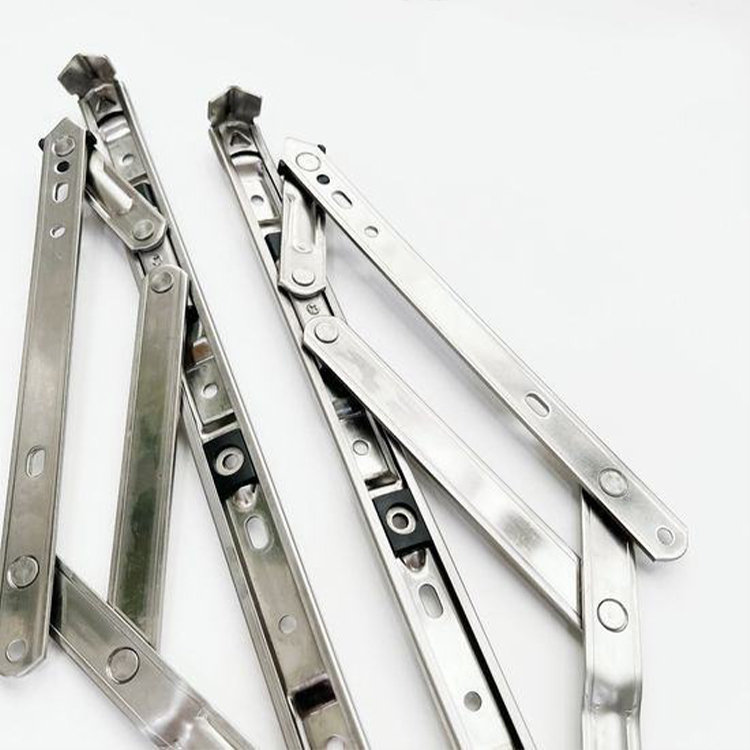
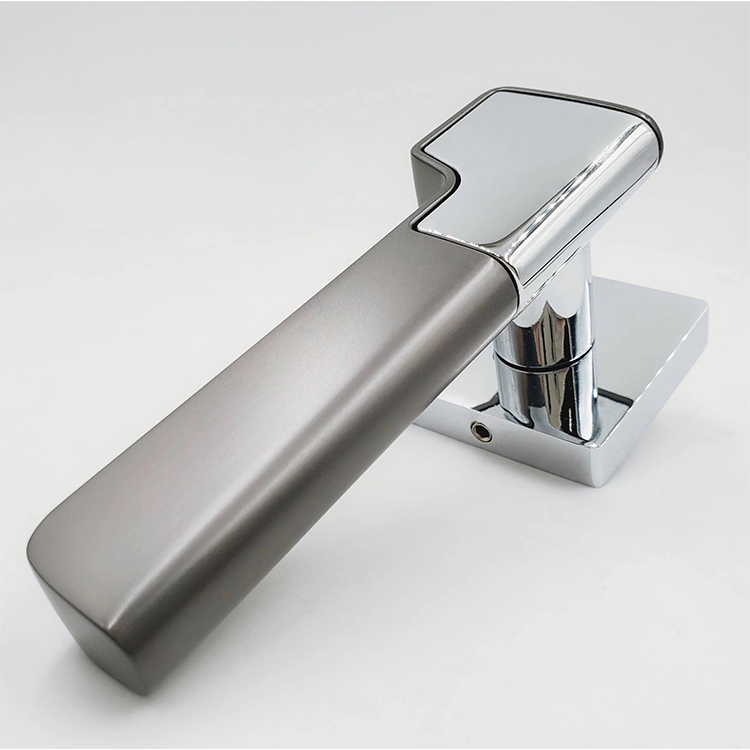
Looking for hardware solutions that meet European / American standards?
Use this guided inquiry modal to move from a generic quote form to a clearer technical conversation. Buyers can choose whether they need pricing, CAD / 3D files, or OEM / ODM support before sharing contact details.
Compatibility-first design across door / window systems
Repeatable production with clear inspection checkpoints
Documentation and change control for long-running programs
Responsive engineering support for fit and field feedback
I have watched too many buying teams congratulate themselves for shaving 3% off a unit quote, only to hand that “win” back through coating failures, missed delivery windows, wrong fasteners, frozen replacement parts, and the kind of compliance fog that looks harmless until the first claim lands on legal’s desk. Why do smart people keep pretending a low quote is the same thing as a low-risk supply chain?
Here is my hard truth: global buyers do not really buy hardware. We buy future behavior. We buy the supplier’s reaction when zinc prices jump, when a profile changes by 0.8 mm, when a buyer asks for 316 instead of 304, when a customs code gets ugly, and when the second production run needs to match the first one instead of merely resembling it. That is the real test of a long-term hardware partner.
And no, I do not mean “partner” in the lazy trade-show sense.
Table of Contents
The word buyers use is partner. The thing they really want is control.
A long-term hardware partner is not just a factory that can machine, cast, stamp, coat, and pack parts at scale; it is a supplier system that can hold drawings, hold tolerances, hold documentation, hold replacement-part continuity, and hold its nerve when the market gets mean. I trust boring suppliers more than charming ones. Charming suppliers usually leave a better first impression. Boring suppliers usually leave a better five-year margin profile.
I’ll say it more bluntly. A global hardware supplier that cannot explain tooling ownership, PCN discipline, AQL rules, traceability, finish stack, and spare-part continuity is not offering a partnership. It is offering future improvisation.
The six tests serious buyers run before they commit
Buyers rarely say these things out loud in the first meeting. We think them. Then we build the shortlist around them.
What the buyer asks
What the buyer really means
What I would demand before approval
“What’s your best price?”
Can you stay commercially sane when freight, metal, and duty math change?
Landed-cost model, Incoterms, carton density, tariff exposure, and a written re-quote rule
“Can you do OEM?”
Will you protect my drawings, tooling, and revision history?
Are you truly in control of production, or are you guessing from a sales desk?
Capacity plan, sub-supplier visibility, backup machine logic, and reorder window
“Can you support after-sales?”
Will I still get the right keeper, spindle, spring, or latch 24 months later?
Spare-part matrix, visual part ID pack, continuity promise, and supersession rules
This is where most RFQs go soft. Teams talk about unit price and “quality” as if those words mean anything without numbers attached. They do not. I want torque ranges in N·m, coating thickness in μm, life-cycle targets like 25,000 or 50,000 cycles, stainless grades written into the pack, and replacement logic defined before the first shipment leaves port.
Global buyers got a brutal refresher on logistics risk over the last two years. In UNCTAD’s Review of Maritime Transport 2024, ship capacity crossing the Gulf of Aden was down 76% by mid-2024, tonnage through the Suez Canal was down 70%, and arrivals around the Cape of Good Hope jumped 89%. Then the cost story got uglier again: Reuters reported on April 2, 2026 that the U.S. reworked Section 232 treatment for many metal derivatives, with 25% duties on many covered products and a new 15% weight threshold for exemptions. That is not noise. That is why good buyers ask a hardware sourcing partner about routing, customs classification, and fallback production before they ask about color cards.
And the market behavior is changing fast. In Reuters’ April 6, 2026 report on Agilian Technology, the manufacturer said U.S. clients hoarded ahead of tariffs, then froze orders and pushed for production outside China. Read that again. Buyers were not merely negotiating on price. They were demanding optionality. A reliable hardware manufacturing partner now needs redundancy, not just capacity.
Climate pressure is just as unforgiving. According to NOAA’s 2024 disaster summary, the U.S. saw 27 billion-dollar weather and climate disasters in 2024, causing about $182.7 billion in losses. That is why I have very little patience for vague phrases like “marine grade” or “outdoor capable.” In real buying meetings, I want 304 versus 316 spelled out, dissimilar-metal interfaces disclosed, Cr(VI) avoidance discussed where relevant, and the finish logic tied to the actual exposure class instead of a sales adjective.
Case files kill the fantasy faster than any sales deck
Recalls teach.
The CPSC recall for Pella Architect Series casement windows covered about 12,000 units after the agency said the sash could detach from the frame and fall. That is the part glossy supplier decks never say plainly enough: once retention, fit, or movement goes wrong in the field, the market stops arguing about unit cost and starts counting exposure, labor, and reputation damage.
Compliance failures are no softer. In June 2024, the U.S. Department of Justice case against Toll Brothers alleged failures to design and construct residential properties with required accessibility features. Different project type, same ugly lesson: once openings, clearances, and operation move from “close enough” to legally actionable, the argument is no longer commercial. It is forensic. That is why serious enterprise hardware vendors do not treat compliance paperwork as a decorative appendix.
So yes, I judge a hardware supplier partly by what it fears. If it fears paperwork, that is good. If it fears traceability gaps, even better. If it fears the sentence “show me the tested assembly and revision history,” now we’re getting somewhere.
What a real long-term hardware partner proves before the PO gets serious
First, engineering discipline.
I want a partner that can read a profile section and tell me, before we waste six weeks, whether the spindle path is wrong, whether the keeper stack will drift, whether the lock case bridges a thermal break, and whether the fixing substrate is fantasy. That is why a good article path here also includes visual part ID guides for window and door hardware teams. Mature buyers care about service life, yes. But we also care about replacement certainty. Wrong-part chaos destroys margin in a quieter way than recalls, which is probably why people underestimate it.
Second, evidence discipline.
Not “we passed testing.” I hate that sentence. Passed what? In which market? On what assembly? With what hardware family, what handing, what operator logic, what limits? A buyer looking for the best hardware partner for global buyers is really looking for a supplier that can survive rude questions without hiding behind generic CE or “international standard” language.
Third, commercial discipline.
I do not trust a factory that can quote quickly but cannot model reorder stability, MOQ changes, mixed-SKU cartons, or duty-sensitive substitutions. Fast quoting is nice. Controlled quoting is better.
Fourth, behavioral discipline.
This one gets ignored because it is awkward. I watch how a supplier reacts when I challenge the sample, ask for a material declaration, request a control plan, or push for a backup-source conversation. Defensive suppliers create expensive programs. Calm suppliers create scalable ones.
The partner global buyers keep is the one that makes switching possible
This sounds backward. It isn’t.
The best long-term hardware partner is often the one that leaves you least hostage. I know that sounds unfriendly, but professionals know it is true. I want documented tooling ownership, exportable drawings, controlled BOMs, alternate-material approval logic, and enough process visibility that I could qualify a second source without rebuilding the planet. Why? Because dependency does not create loyalty. It creates pricing power for the wrong side.
That is the insider point many buyers learn late: the most valuable hardware sourcing partner is not the one who says “trust us” most often. It is the one who behaves as if you should never have to.
FAQs
What is a long-term hardware partner?
A long-term hardware partner is a supplier that can repeatedly deliver the same hardware family across multiple production cycles while maintaining drawing control, material consistency, compliance evidence, finish performance, spare-parts continuity, and commercial stability for the buyer’s target markets and service obligations. In my book, anything less is a vendor with better branding.
What do global buyers look for in a hardware supplier?
Global buyers look for a hardware supplier that combines cost discipline with documented engineering control, market-specific compliance, corrosion and durability logic, stable lead times, traceable revisions, and dependable after-sales support so the buyer is not forced to absorb hidden risk after installation or during replenishment. Price matters, sure. But predictable behavior matters more.
How do you choose a long-term hardware partner without getting fooled by a low quote?
Choosing a long-term hardware partner means comparing suppliers on total risk exposure, not just ex-works pricing, by auditing BOM control, capacity truth, validation records, substitution rules, service-part continuity, and the supplier’s ability to support the same assembly under changing freight, tariff, and regulatory conditions. I would always run a second spreadsheet. The first one flatters the cheapest quote.
Why is compliance proof more important than product claims in global hardware sourcing?
Compliance proof is more important than product claims because hardware is sold as a component but judged as part of a full opening assembly, which means unsupported claims on safety, accessibility, corrosion resistance, or operability can turn into recalls, rejected submittals, warranty disputes, or legal exposure once the hardware is installed. Claims sell samples. Proof survives courtrooms.
Stop Buying Sample Boxes and Start Buying Control
Here is the move I would make next.
Take one hardware family that actually matters to your margin — a casement handle line, a multi-point lock package, a hinge set, a gearbox family, something real — and force every shortlisted supplier to answer the same six questions: Who owns the tooling? What changed in the last revision? What are the exact materials? What assembly has this been validated in? What happens when the part is needed again in 24 months? And what is the backup plan when freight, tariffs, or sub-suppliers go sideways?
Then read your own site like a buyer, not like a marketer. Route them from sourcing strategy to OEM/ODM structure, then into compliance, corrosion, geometry, and part identification. That path is where trust is built. Not in a slogan. Not in a hero image. In proof.
That is how global buyers choose a reliable hardware manufacturing partner. And frankly, that is how we should have been buying all along.