Looking for hardware solutions that meet European / American standards?
Use this guided inquiry modal to move from a generic quote form to a clearer technical conversation. Buyers can choose whether they need pricing, CAD / 3D files, or OEM / ODM support before sharing contact details.
Compatibility-first design across door / window systems
Repeatable production with clear inspection checkpoints
Documentation and change control for long-running programs
Responsive engineering support for fit and field feedback
They look impressive on a sample board, survive a polite lab demo, and then start dragging, half-latching, or chewing through keepers the minute a real commercial door sees Monday-morning traffic, bad alignment, over-tight seals, and users who yank first and think later.
Sound harsh?
I think the hardware trade has earned that tone. I have sat through enough product reviews to know the script: someone says “premium feel,” someone else says “security,” and almost nobody wants to talk about the ugly middle where commercial doors actually live, which is abuse, misalignment, maintenance neglect, and thousands upon thousands of cycles.
And that middle is where a multipoint lock either becomes a system or a callback.
Table of Contents
The callback economy behind every “premium” lock
Here is the hard truth.
A commercial multipoint lock does not usually die because a thief defeated it; it dies because the designer treated the lock body, handle, hinges, seals, closer, frame stiffness, and keeper geometry as separate line items instead of one working mechanism.
Why do so many teams still spec them like decorative trim?
The safety angle is not theoretical, either. The CPSC older-adult injury report estimated that adults 65 and older sustained 488,600 emergency-department-treated injuries involving doors and windows during 2017–2021, or about 97,700 per year. That number is not a commercial-only figure, and I will not pretend otherwise, but it is a loud reminder that doors are not benign objects just because architects draw them as clean rectangles.
I read that number the same way I read most door hardware failures: as evidence that the industry keeps underestimating repetitive, ordinary human contact. People push with carts. They pull from bad angles. They over-rotate levers. They let the closer do the last inch. They lean on the handle while the gasket is still under load. That is real use. Design for anything softer, and your “best multipoint lock for commercial doors” is just marketing copy with fasteners.
If you are serious about how to design a multipoint lock for high-cycle commercial use, start by defining abuse in numbers before you sketch a single cam, hook, roller, or gearbox tooth: opening width, door mass, hinge axis offset, closer size, seal compression load, user profile, climate band, and expected cycles per day.
What counts as high-cycle?
My opinion is simple. At roughly 50,000 cycles, you are past the hobby stage. At 200,000 cycles, your friction story had better be honest. Past 500,000 cycles, every weak spring decision, every sloppy tolerance assumption, and every cheap plated part begins to show its face.
And yes, accessibility belongs in the design phase, not in the legal clean-up phase. The 2010 ADA Standards for Accessible Design state that operable parts must work with one hand, must not require tight grasping, pinching, or twisting of the wrist, and must require no more than 5 lbf / 22.2 N to activate. That is not stylistic advice. It is a design limit. The enforcement history is blunt too: the AmericInn by Wyndham settlement cited an interior hinged door measured at 12 pounds and flagged a connecting door deadbolt that required tight pinching and twisting, while the Sheraton Atlantic City settlement called out entry doors with excessive opening force and hardware that required tight grasping, pinching, and twisting.
So when I hear somebody pitch a Grade 1 multipoint lock but the lever effort spikes when the gasket loads up, I stop listening. Grade labels, where they apply, do not rescue bad human factors.
What I define before locking geometry
I define four things first.
The first is force path. A multi-point locking system should pull or engage along a clean, repeatable path. The second is misalignment budget. Commercial doors sag, frames move, anchors relax, and installers improvise. The third is service reality. If a keeper cannot be adjusted quickly and clearly, the field will “solve” the issue with grinding, shimming, or blame. The fourth is failure mode. I want the lock to get noisy or stiff before it gets unsafe.
That is not romance. It is survival.
The mechanical stack that separates good locks from expensive lessons
Most breakdowns are boring.
And boring is good, because it means the causes are traceable: too much seal drag, poor keeper lead-in, undersized follower geometry, lazy spring selection, zinc parts doing steel work, or a lockbox and handle pack that were never truly matched.
Why keep pretending otherwise?
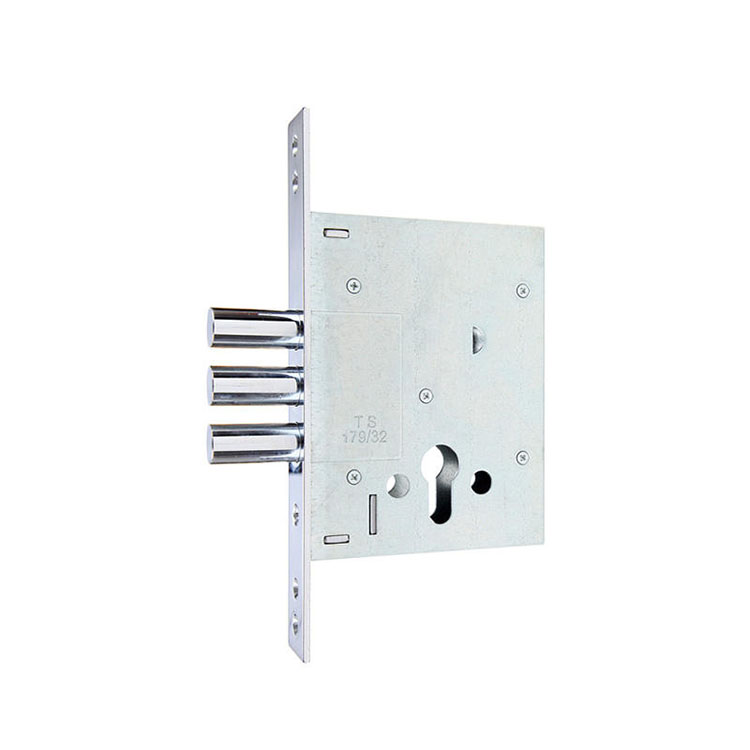
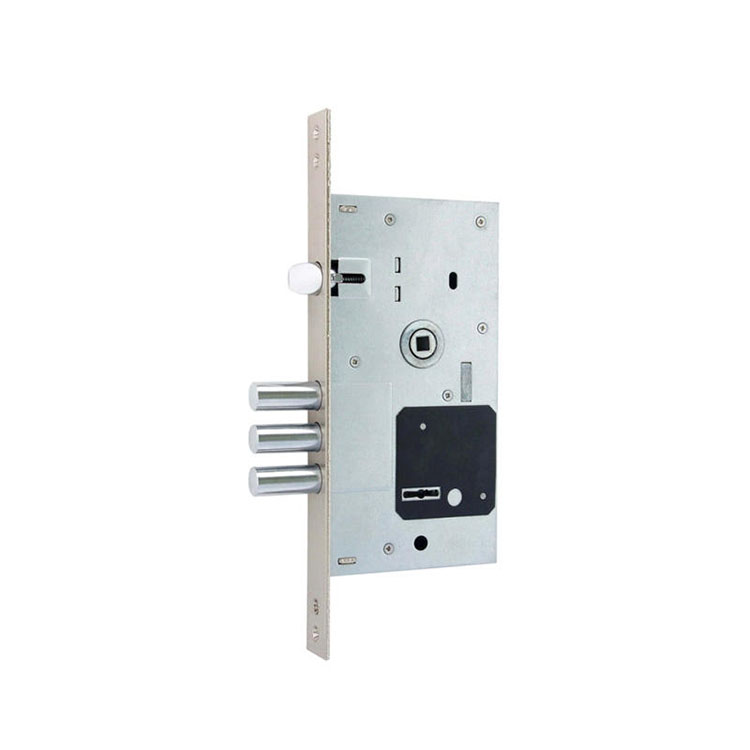
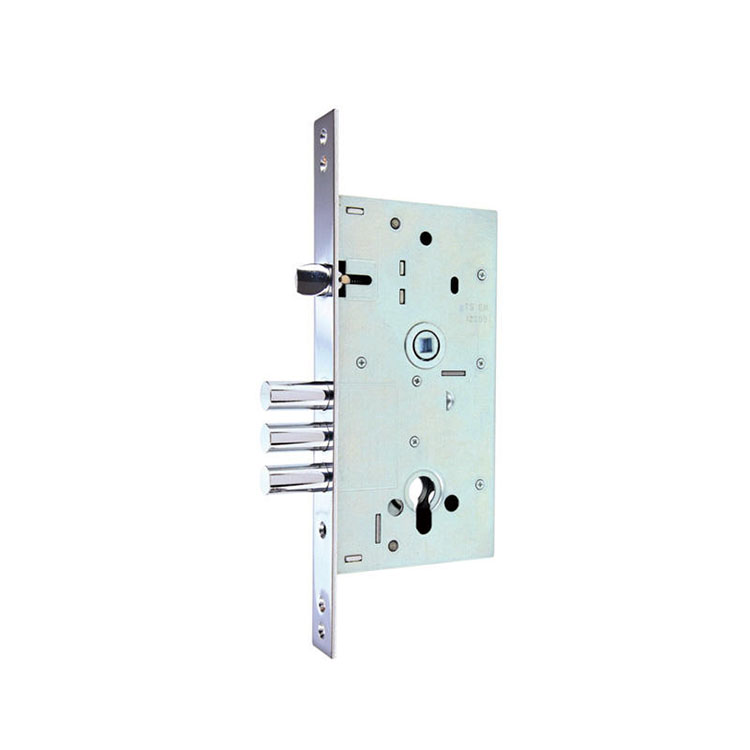
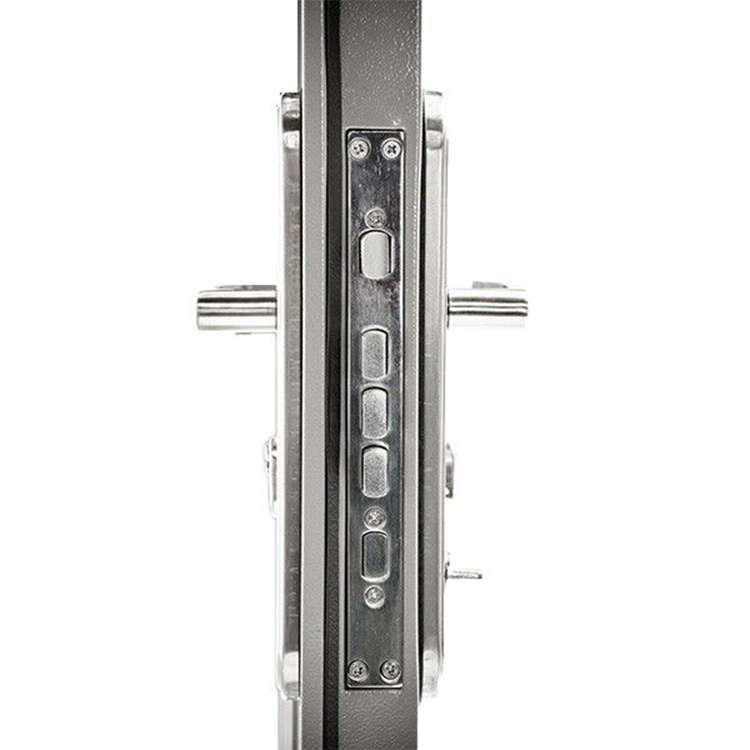
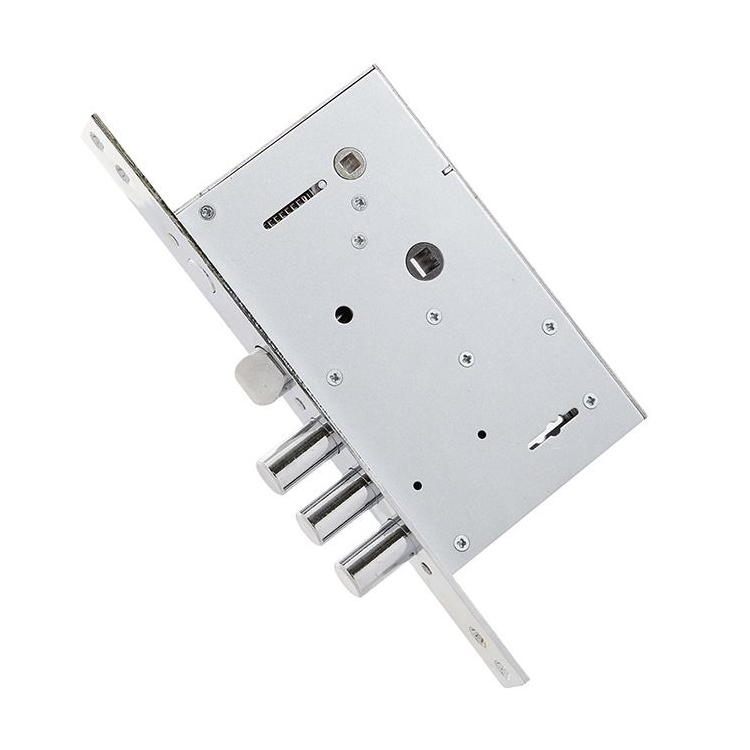
A 3-point lock can work beautifully in commercial use, but only when the center transmission, top and bottom linkages, lever return, and keeper engagement were designed as one package. Too many so-called commercial systems are just center-latch thinking with two extra trouble spots added for decoration.
Here is the comparison I actually care about:
Design variable
Lazy spec
What I would spec for high-cycle duty
Why it matters
Locking architecture
Add more points and hope
Use the fewest points that achieve compression, security, and stability
Every extra moving interface is another wear site
Lock body material mix
Die-cast everywhere
Case-hardened or proven wear surfaces at cams, followers, and high-load contacts
Soft parts polish, deform, then bind
Keeper design
Fixed keeper, tight tolerance
Adjustable keeper with forgiving lead-in and visible field setup
Commercial doors drift; fixed systems punish drift
Handle return
Light spring, showroom feel
Return force sized for gasket load and repeated abuse
Half-return handles create false-latch events
Seal strategy
Maximum compression everywhere
Targeted, measurable compression with real closing-force budget
Over-compression makes “security” feel like failure
Corrosion package
Pretty finish on visible trim
Full-system material and finish discipline, especially hidden parts
Hidden corrosion kills motion long before users notice
I also do not trust “cycle tested” unless I know the setup. Was the door perfectly aligned? Were seals fresh? Did the assembly see temperature swing, dirt load, and minor frame drift? Or did it live its whole test life in a clean rig that never once behaved like a loading-dock vestibule or a narrow-stile aluminum entry?
That is why I would pair this article with FS Chier’s broader read on the future of multi-point lock systems in aluminum fenestration. It pushes the same point I keep making: the winners are not the loudest locks, but the ones with stable compression, honest materials, and proof that survives real alignment drift.
Why storefront multipoint lock jobs fail at the frame first
Frames matter more.
A storefront multipoint lock on a narrow-stile aluminum door is a different animal from a thick timber leaf with generous screw depth and forgiving geometry, yet buyers keep mixing assumptions between them as if metal section depth, anchor pattern, and thermal movement were minor details.
Minor to whom?
In commercial aluminum work, the lock usually gets blamed for sins that began in the frame. I see the same chain over and over: profile flex, thermal movement, closer overcontrol, gasket overcompression, hinge wear, then keeper misalignment, then handle abuse, then a service call, then a replacement lock that fails for exactly the same reason six months later.
That is why the air-tightness conversation matters. A NIST study on airflow through entry doors in a modeled DOE medium office building found that adding a vestibule reduced infiltration through the entrance by 23% and cut whole-building heating and cooling energy use by 1.4% annually. I am not claiming a lock gives you that exact number; I am saying the study proves that entrance leakage is real money, and the lock is part of the closure-pressure story whether designers like it or not.
So I spec keeper adjustability. I spec visible installation datums. I spec tolerance notes that installers can actually follow. I spec enough section stiffness that the hardware does not end up compensating for a frame problem it never had the leverage to solve. And on thermally broken doors, I treat interface details like a first-order issue, not an afterthought, which is exactly why integrating hardware in thermally broken door profiles belongs in this internal link set.
Compliance is where the adults enter the room
This part gets ignored.
Everyone likes talking about security. Fewer people like talking about egress, accessibility, operating force, listing integrity, and inspection discipline, because that is where brochure language goes to die.
And that is where I start.
If your opening lives anywhere near fire-door obligations, you do not get to freestyle prep details. NFPA’s fire door guidance states that NFPA 80 requires inspection and testing immediately after installation and at least annually after that. That should change how you think about field serviceability, prep accuracy, hardware compatibility, and whether your lock can be maintained without turning the opening into a paperwork problem.
I will go further: if your multipoint assembly depends on perfect user choreography to latch correctly, it is not commercial-grade in any serious sense. I do not care how attractive the trim is. I care whether the leaf closes, engages, releases, and repeats that behavior after seal compression changes, after hinge wear, after custodial abuse, and after three years of people hitting it with shoulders, carts, and impatience.
That is also why I am skeptical of casual “commercial door hardware” claims. In real projects, durability is not a noun. It is a stack: geometry, metallurgy, surface treatment, adjustability, compliance, and documentation.
The material choices nobody wants to argue about early enough
Hidden parts fail first.
Visible trim gets all the photography, but hidden springs, followers, hooks, rivets, stamped links, and lock boxes decide whether a multipoint lock ages gracefully or turns into a sticky liability.
Who pays for that mistake?
Usually the buyer. Then the installer. Then the brand.
For inland, moderate-duty work, I can live with disciplined coated systems and smart cost control. For chloride-heavy, wet, or temperature-violent projects, I want better corrosion logic, better drainage, better fastener compatibility, and less faith in decorative finishes. That is why a serious spec conversation often ends up touching 304 vs 316 stainless, zinc die-cast limitations, low-friction polymer interfaces like POM or PA66-GF, and actual finish-build data instead of showroom adjectives. If your lock box is protected but the linkage pins, springs, or screws are the weak link, you did not buy corrosion resistance. You bought a delay.
FAQs
What is a multipoint lock for high-cycle commercial use?
A multipoint lock for high-cycle commercial use is a multi-latch door system engineered to survive repeated daily operation by distributing closing force across several engagement points, maintaining handle effort within accessible limits, and tolerating sag, seal drag, misuse, and maintenance gaps without binding or partial engagement. In plain terms, it is a lock designed for real buildings, not polite test rigs.
How many cycles should a commercial multipoint lock survive?
A commercial multipoint lock should survive a cycle count that matches the opening’s actual traffic profile, seal load, and abuse pattern, which means serious specifications usually start around tens of thousands of cycles and become meaningfully commercial once the assembly is validated well beyond light-duty residential assumptions. My rule is simple: if the door is public-facing, do not spec like it is a guest bedroom.
Is a 3-point lock enough for a commercial door?
A 3-point lock is enough for a commercial door only when the center case, top and bottom engagement, keeper geometry, hinge set, closer force, and frame stiffness are designed as one package, because three locking points alone do not fix bad alignment, excess seal drag, or weak transmission parts. Three points can be elegant. Three bad points are just three ways to fail.
What is the best multipoint lock for commercial doors?
The best multipoint lock for commercial doors is the one whose full assembly matches the door profile, frame stiffness, handle geometry, accessibility targets, climate exposure, service conditions, and compliance route of the project, rather than the one with the flashiest trim or the broadest marketing claims. I do not buy “best” as a catalog word. I buy it as a system result.
Because that is the real dividing line. Not cheap versus premium. Not local versus imported. Not even single-point versus multi-point. The dividing line is whether your lock was designed for traffic, misuse, drift, and evidence, or for a brochure photo.