Looking for hardware solutions that meet European / American standards?
Use this guided inquiry modal to move from a generic quote form to a clearer technical conversation. Buyers can choose whether they need pricing, CAD / 3D files, or OEM / ODM support before sharing contact details.
Compatibility-first design across door / window systems
Repeatable production with clear inspection checkpoints
Documentation and change control for long-running programs
Responsive engineering support for fit and field feedback
A handle described as “stainless steel” can still pit beside the sea, a cheap aluminum casting can crack around its fixing boss, and a well-engineered zinc alloy handle can outlast both when it is installed indoors and protected by a controlled coating system.
So which material is actually best?
Here is my blunt answer: there is no universal winner, but there are plenty of wrong choices.
Aluminum is usually the best option when low weight, larger part geometry, anodizing, powder coating, and visual compatibility with aluminum profiles matter. Zinc alloy excels when buyers need precise die-cast shapes, thin sections, smooth plating, and a heavy, premium-feeling handle at a controlled price. Stainless steel earns its higher cost when the hardware faces heavy use, impact, abrasion, humidity, cleaning chemicals, or airborne chlorides.
But stainless steel is not magic. Zinc alloy is not automatically cheap. And aluminum is not automatically weak.
The alloy grade, casting quality, component geometry, finish, fasteners, drainage, and maintenance plan matter more than the broad material label stamped on a quotation.
The Blunt Verdict: Which Material Should You Choose?
For most professional door and window hardware programs, I would make the first selection this way:
Choose aluminum for lightweight window handles, large pull handles, slim-profile hardware, color-matched architectural systems, and applications where reducing sash or panel mass matters.
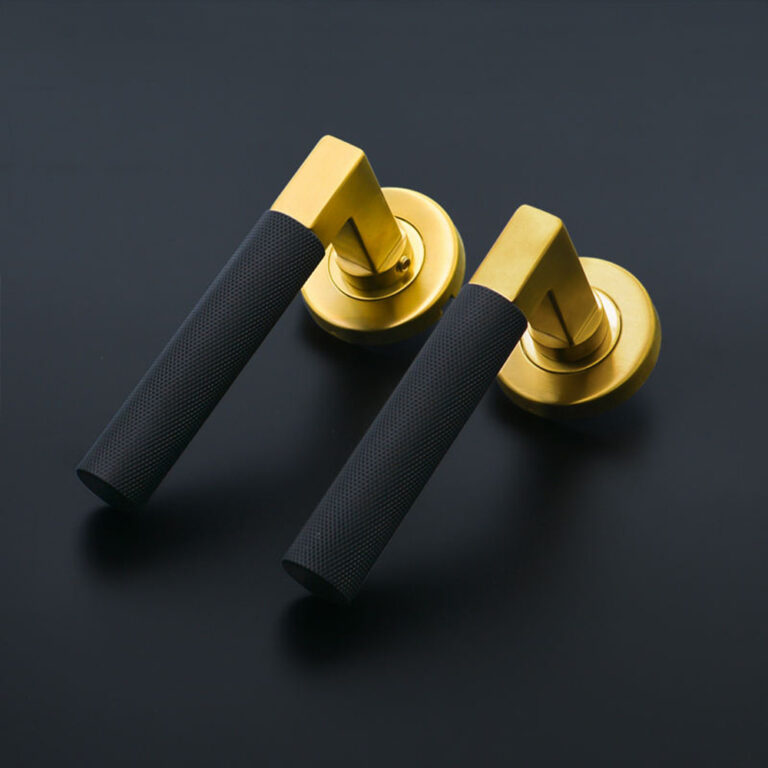
Choose zinc alloy for detailed lever handles, lock bodies, decorative escutcheons, knobs, compact mechanisms, and plated interior hardware.
Choose 316 stainless steel for exposed coastal hardware, high-contact commercial applications, wet areas, and components where abrasion can remove an applied coating.
Choose a mixed-material assembly when the product has several jobs. An aluminum handle body, stainless steel spindle, steel spring, zinc gearbox, and polymer isolation washer may perform better than a one-material design.
That final option is often the smartest. Yet buyers regularly reject it because “all stainless” sounds easier to market.
I think that is backward.
A door handle is not a metal sample. It is a mechanical assembly exposed to torque, sweat, cleaning agents, vibration, temperature swings, installation errors, seal compression, and sometimes salt. The best material for door and window hardware is the one assigned to the right load and environment—not the one with the strongest sales language.
Door Hardware Material Comparison: The Numbers That Matter
The table below compares common material families used in handles, locks, hinges, pull plates, escutcheons, keepers, gearboxes, and related hardware.
Factor
Aluminum Alloy
Zinc Alloy
Stainless Steel
Common hardware grades
A380, ADC12, 6061-T6, 6063-T6
Zamak 3/ZnAl4, Zamak 5/ZnAl4Cu1
304, 304L, 316, 316L
Main alloy system
Al-Si-Cu or Al-Mg-Si
About 96% Zn and 4% Al, with controlled Mg and Cu
Fe-Cr-Ni; 316 also contains about 2–3% Mo
Approximate density
2.7 g/cm³
6.6–6.7 g/cm³
7.9–8.0 g/cm³
Weight of a 100 cm³ part
About 270 g
About 660–670 g
About 790–800 g
Casting detail
Good to very good
Excellent
Usually machined, forged, stamped, or investment cast
Common finishes
Powder coat, anodizing, paint, plating
Electroplating, powder coat, paint, chromate systems
Brushed, polished, bead-blasted, passivated, PVD
Corrosion behavior
Good when alloy and finish suit the environment
Highly dependent on coating integrity and exposure
Strong, but grade, surface finish, chlorides, and crevices matter
These are typical material-family values rather than guaranteed product properties. The International Zinc Association identifies Zamak 3—also called Alloy 3, ZnAl4, ZP3, and ZDC2—as the most widely used zinc alloy in North America because of its castability, dimensional stability, and finishing performance. NIST data also show that common stainless steels are roughly three times as dense as aluminum alloys, while offering substantially higher strength in many forms.
Aluminum Door and Window Hardware: Light, Flexible, and Easy to Mis-Specify
Aluminum wins the weight argument.
Using the approximate densities above, a geometrically identical stainless steel handle body may weigh nearly three times as much as an aluminum one. That difference affects long pull handles, large sliding panels, shipping weight, installer handling, and the inertia felt during repeated opening.
For die-cast hardware, A380 and ADC12 are common starting points because they fill complex molds and support large production volumes. For machined or extruded parts, 6061-T6 and 6063-T6 are more familiar choices. The two groups should not be treated as interchangeable.
Die-cast aluminum can produce economical shapes, but poor process control creates porosity, cold shuts, weak fixing bosses, distorted backplates, and inconsistent coating adhesion. An attractive sample does not prove that the internal wall thickness or screw engagement will survive production.
That matters.
I would reject any aluminum handle specification that states only “aluminum alloy.” A serious drawing should identify the grade or accepted equivalent, casting method, minimum wall sections, threaded insert strategy, surface preparation, coating system, and allowable cosmetic defects.
NIST’s conservatory study found that low-copper 6061-T6 and copper-free 6063-T6 offered suitable corrosion behavior for the evaluated architectural environment, while copper-rich 2xxx-series alloys were less desirable despite their higher strength. That is a useful reminder: the strongest aluminum alloy on a data sheet is not always the best exterior alloy. NIST’s corrosion study of the United States Botanic Garden Conservatory provides the full case analysis.
Zinc Alloy Door Hardware: Better Than Its Reputation, Worse Than Its Marketing
Zinc alloy is the industry’s favorite material to misunderstand.
Zamak 3 is not random “pot metal.” It is a controlled zinc-aluminum alloy family. Zamak 5 adds about 1% copper, increasing hardness, strength, and creep performance while reducing some ductility. The International Zinc Association also lists high-fluidity zinc alloys capable of filling sections below 0.45 mm under suitable casting conditions.
That casting ability has real commercial value. Zinc can reproduce tight radii, logos, ribs, internal stops, concealed cavities, and detailed decorative surfaces with less machining than many stainless designs.
It also feels substantial.
A zinc handle is roughly two and a half times as dense as an aluminum handle of the same volume. Brands often use that extra mass to create the hand feel customers associate with expensive hardware. The customer feels weight. The buyer sees a manageable unit price.
What could go wrong?
Plenty.
Most finished zinc hardware depends on a surface system. Nickel-chrome plating, electrophoretic coating, powder coating, paint, or another barrier separates the zinc-rich substrate from moisture and salts. Once pores, scratches, sharp edges, thin coating zones, or poorly prepared surfaces expose the base alloy, white corrosion products can appear.
And a plated zinc handle is still zinc alloy. Chrome-colored does not mean stainless steel.
Zinc alloy also deserves caution where parts carry sustained loads at elevated temperatures. Creep behavior differs by alloy, geometry, temperature, and service time. I am comfortable with zinc for a properly engineered handle shell or gearbox body. I am much less comfortable with vague zinc parts being asked to perform the work of a hardened spindle, heavily loaded hinge pin, or thin structural fastener.
Stainless Steel Door Hardware: Strong, Durable, and Not Invincible
Stainless steel is the safest default only when the grade and exposure are known.
Type 304 is widely used in general architectural and interior hardware. It provides good corrosion resistance in many inland environments and tolerates abrasion better than a painted base metal because its corrosion behavior comes from the alloy itself rather than solely from an applied topcoat.
Type 316 adds molybdenum—commonly about 2–3%—to improve resistance to chloride-driven pitting and crevice corrosion. The International Molybdenum Association explains that molybdenum has a particularly strong effect on stainless steel’s resistance to pitting and crevice attack in chloride-containing solutions. Its stainless steel grade guidance is far more useful than the phrase “marine grade” on a product page.
Still, 316 can stain or pit.
Salt deposits, rough grinding marks, sheltered crevices, contaminated fabrication tools, poor weld cleaning, and a lack of routine washing can defeat the expected performance. NIST has documented the susceptibility of 300-series stainless steels to chloride stress-corrosion cracking, pitting, and crevice corrosion under the wrong combination of stress and halide exposure.
Then there is galling. Stainless-on-stainless threaded or sliding contact can seize under pressure, especially without suitable tolerances, lubrication, surface treatment, or grade pairing.
The hard truth is simple: “stainless” describes an alloy family, not an unlimited warranty.
Corrosion Is a System Failure, Not Just a Material Failure
Corrosion needs conditions.
NIST describes three elements that support electrochemical attack: anodic and cathodic reaction sites, an electrically conductive path, and an electrolyte containing dissolved ions. Remove one of those conditions and the corrosion rate may fall sharply.
That is why drainage holes, isolation washers, sealants, backplate geometry, fastener selection, coating coverage, and cleaning access can matter as much as changing from 304 to 316.
The 60-Year Conservatory Case Buyers Should Study
The United States Botanic Garden Conservatory provides a useful real-world case.
NIST reported that the original structure had operated for about 60 years, but its most severe corrosion appeared where moisture collected for extended periods. In atmospheric exposure studies cited by the report, sheltered aluminum specimens suffered more than twice the corrosion attack of unsheltered specimens after four years because salts and debris accumulated instead of being washed away by rain.
Read that again.
The sheltered metal performed worse.
This directly applies to door and window hardware. Salt can collect behind a handle rose, under a keeper, inside a recessed pull, around an unsealed fixing, or beneath the covered track of a friction stay. A shiny exposed face may remain clean while the concealed joint corrodes.
So I do not accept “exterior grade” without seeing the joint design.
Stainless Fasteners in Aluminum Frames Need Engineering
Stainless steel is cathodic to aluminum in many wet galvanic couples. When the two metals touch and an electrolyte is present, the aluminum can become the sacrificial side of the pair.
NIST’s guidance notes that stainless fasteners can be used with aluminum, but the exposed aluminum area should remain much larger than the exposed stainless area; the report cites a greater-than-10-to-1 area relationship for the evaluated structure. It also warns against using small aluminum fasteners to hold a large stainless component, because the critical aluminum fastener can corrode rapidly.
For door and window hardware, that means I would check:
The size ratio between dissimilar exposed metals
Whether nylon, EPDM, polymer coating, sealant, or another barrier isolates them
Whether rainwater can remain in the joint
Whether installation scratches remove the protective finish
Whether stainless swarf or steel-tool contamination remains on the surface
Whether fasteners penetrate a thermal break or water path
A stainless screw does not automatically improve an aluminum assembly. Sometimes it only moves the corrosion problem into the profile.
Salt Spray Hours Are Not Service-Life Years
Salt spray testing is useful. Salt spray storytelling is not.
The current ASTM B117 standard defines the apparatus, procedure, and conditions used to maintain a salt-fog environment. ASTM explicitly states that B117 does not prescribe the product’s specimen type, exposure period, or interpretation of results.
ISO 9227:2022 takes a similar position. The method is particularly useful for finding coating discontinuities such as pores and defects, but the product specification still needs to define duration and evaluation criteria.
Therefore, “passed 500 hours” is incomplete.
Passed what?
Was the sample an untouched decorative face or a fully assembled handle? Were cut edges exposed? Were fixing holes included? Was the coating scribed? Did the buyer reject white corrosion, red rust, blistering, loss of adhesion, pitting, or only complete mechanical failure?
For a practical breakdown of those questions, review CHIER’s salt spray testing guide for door and window handles. A real purchase specification must name the substrate, finish, test method, hours, sample condition, failure zones, and acceptance criteria—not just a large number.
Best Material for Door and Window Hardware by Application
The application decides.
A buyer choosing hardware for a hotel bathroom, a coastal villa, an inland apartment, and a high-traffic shopping center should not receive the same material answer.
Casement and Awning Window Handles
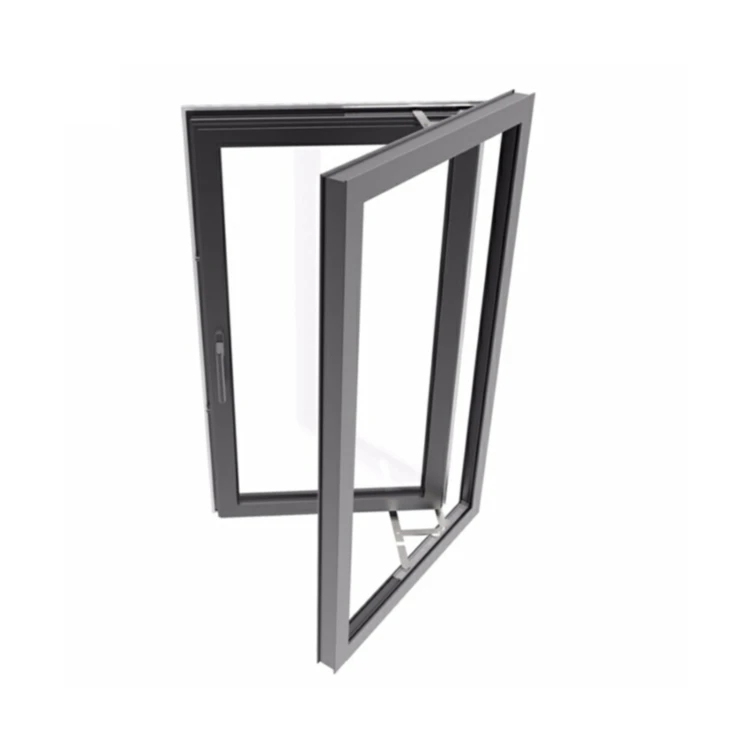
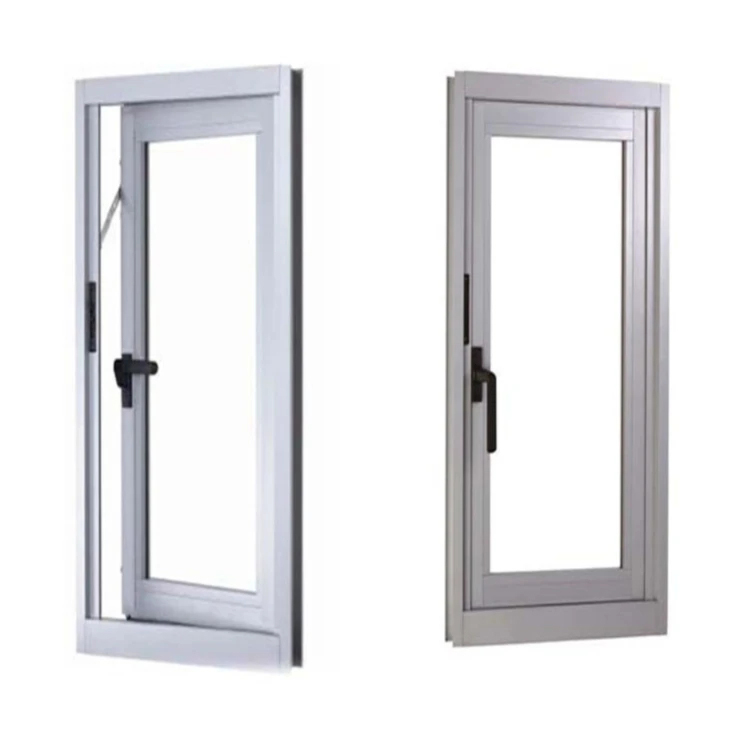
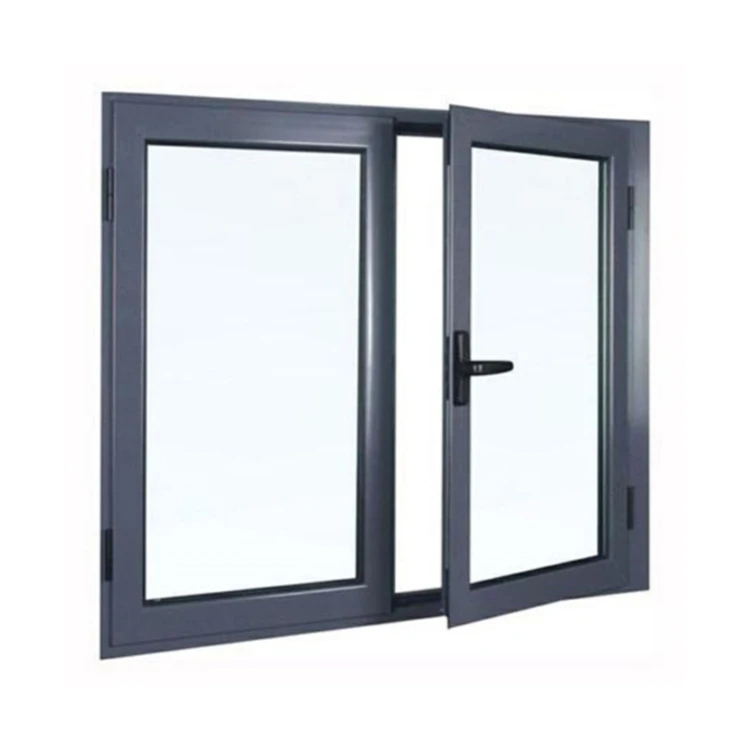
Aluminum is often the most balanced choice for casement and awning handles because it keeps mass low, accepts architectural finishes, and visually matches narrow aluminum profiles. Zinc alloy is attractive when the handle requires a compact, detailed casting or a heavy premium feel.
For protected residential interiors, both can work well.
For exposed coastal windows, I would require much more: documented alloy, a controlled finish, stainless internal load parts where appropriate, drainage around the base, isolated fasteners, and assembly-level corrosion testing. Buyers comparing shapes and operating formats can review the available OEM door and window handles before fixing the material specification.
Sliding Door Pulls and Recessed Handles
Long pull handles favor aluminum because stainless becomes heavy and zinc can become impractical in large solid volumes. Recessed pulls are different. Zinc alloy’s casting accuracy can make sense for compact finger pockets, integrated latch geometry, and concealed fixing features.
But recessed hardware traps dirt and moisture.
That pushes the decision back toward drainage, coating coverage, back-surface protection, and access for cleaning. On an oceanfront sliding door, exposed 316 stainless or a proven coated-aluminum assembly usually makes more sense than decorative plated zinc.
Hinges and Friction Stays
Hinges carry load. Handles transmit force. They should not be specified by the same logic.
Stainless steel is often justified for hinge tracks, pins, links, and exposed high-wear surfaces. Aluminum hinge bodies may suit lower-load or profile-specific applications, but the bearing design, fasteners, leaf thickness, sash mass, and cycle target must be verified.
And no, a thicker hinge is not automatically a stronger hinge.
Buyers should compare the material with the actual opening type and load path across the door and window hinge range, rather than ordering by finish and overall length alone.
Multi-Point Locks and Gearboxes
A reliable multipoint system is almost always a mixed-material product.
The visible handle could be aluminum, zinc alloy, or stainless steel. The spindle may be steel or stainless. The gearbox housing may use zinc alloy or coated steel. Springs need their own fatigue and corrosion logic. Faceplates, rods, hooks, rollers, and keepers each face different loads.
One alloy cannot optimize every part.
The better approach is to review the material map alongside force, alignment, gasket compression, travel, and corrosion exposure. CHIER’s guide to designing a reliable multi-point lock system for aluminum doors explains why the whole lock-and-frame assembly matters more than the number of locking points.
Coastal and Poolside Hardware
For directly exposed coastal hardware, I would begin with 316 or 316L stainless steel for wear surfaces and external components, then verify whether the chloride level, cleaning frequency, surface finish, crevice geometry, and distance from the shoreline demand something stronger.
304 is frequently oversold here.
For coated aluminum, require a marine-suitable pretreatment and finish specification, not merely a color name. For zinc alloy, I would limit use to protected components unless assembly testing proves the complete finish system.
Poolside conditions deserve the same caution. Chlorides do not care whether they came from seawater, pool chemicals, cleaning agents, or repeated wet hands.
The Lowest Unit Price Is Often the Most Expensive Decision
A $1 saving disappears quickly when a handle requires two technician visits, replacement shipping, distributor credit, and damage to the window brand’s reputation.
Raw-material supply also deserves attention. The USGS 2025 List of Critical Minerals includes aluminum, chromium, nickel, and zinc—the core elements behind all three material families discussed here. USGS tracks more than 90 minerals across 180 countries, while its Mineral Commodity Summaries 2026, published on February 6, 2026, summarizes 2025 industry conditions.
I read that as a procurement warning, not a price forecast.
Do not approve a three-year program without rules covering equivalent grades, recycled content where relevant, material verification, finish changes, supplier notification, sample reapproval, and ownership of revised drawings.
Otherwise, the original sample becomes a memory while production quietly changes underneath it.
How I Would Specify the Material Before Approving Production
A professional material specification should answer at least eight questions.
1. What Is the Exact Alloy?
Write Zamak 3, Zamak 5, A380, ADC12, 6063-T6, 304, or 316—not “zinc,” “aluminum,” or “stainless.”
Include the governing standard or an agreed composition range.
2. How Is the Part Manufactured?
Die casting, extrusion, stamping, forging, investment casting, machining, and metal-injection molding produce different structures, defects, tolerances, and costs.
The same alloy name does not produce the same part.
3. Which Areas Carry the Load?
Mark spindle sockets, fixing bosses, hinge pins, screw threads, keeper contacts, spring seats, and other force-bearing zones on the drawing.
Then review material and minimum section thickness at those locations.
4. What Is the Complete Finish System?
“Matte black” is a color description.
The specification should state cleaning, conversion or pretreatment, primer where applicable, powder or plating layers, target thickness, curing controls, gloss range, texture, color tolerance, adhesion method, and corrosion requirement.
5. What Happens at Dissimilar-Metal Interfaces?
Map every point where aluminum, zinc, stainless steel, carbon steel, brass, or copper alloy touches another metal.
Define isolation, sealant, coating, washers, sleeves, drainage, and fastener material.
6. Which Tests Represent the Real Product?
Use finished assemblies, not only flat witness coupons.
Depending on the product, the validation plan may include operating cycles, torque, pull-out, impact, coating adhesion, abrasion, dimensional aging, salt spray, humidity, temperature cycling, lock alignment, and loaded-door testing.
7. What Counts as Failure?
Define it.
A test report should state whether failure means visible corrosion, coating blistering, white zinc products, red rust, pitting, color change, loss of adhesion, excessive handle play, operating-force increase, fracture, or inability to lock.
8. How Will Production Be Controlled?
Require incoming-material checks, first-article approval, coating-thickness records, dimensional inspection, functional sampling, lot traceability, change control, and retained reference samples.
For custom programs, bring those controls into the OEM/ODM door and window hardware process before tooling release. Correcting an alloy, mounting interface, or finish system after mass production is slow, expensive, and politically messy.
FAQs
Which Material Is Best for Door and Window Hardware?
The best material for door and window hardware is the alloy-and-finish combination that matches the opening’s load, cycle rate, climate, maintenance, appearance, and budget: aluminum for low weight and finish flexibility, zinc alloy for detailed economical castings, and 316 stainless steel for exposed, wet, abrasive, or chloride-heavy service.
For many products, a mixed-material assembly performs better. I would not approve a specification until the material assigned to each component matches its actual mechanical and environmental job.
Is Zinc Alloy Better Than Aluminum for Door Handles?
Zinc alloy is better than aluminum when a door handle needs thin walls, sharp casting detail, a substantial hand feel, compact internal geometry, or economical plating, while aluminum is better when low mass, larger component size, anodizing, powder coating, and compatibility with slim aluminum profiles matter more than dense casting precision.
The finish system often decides the long-term result. A high-quality zinc casting with controlled plating can beat a porous aluminum casting with poor pretreatment, and the reverse is equally true.
Is Stainless Steel Better Than Zinc Alloy for Door Handles?
Stainless steel is better than zinc alloy for door handles exposed to abrasion, heavy public use, wet cleaning, coastal air, or repeated coating damage because its corrosion resistance comes from the alloy itself, while zinc generally depends more heavily on an intact plating or coating system to protect the underlying substrate.
Zinc remains a strong choice for decorative interior handles, detailed castings, and protected mechanisms. Paying for stainless where the exposure does not justify it can add weight and cost without solving a real problem.
Is 316 Stainless Steel Necessary for Coastal Hardware?
316 stainless steel is generally the better starting point for coastal door and window hardware because its 2–3% molybdenum content improves resistance to chloride-driven pitting and crevice corrosion compared with 304, although poor drainage, rough finishes, salt deposits, fabrication contamination, and galvanic contact can still cause staining or localized attack.
Direct marine splash, sheltered salt accumulation, and infrequent cleaning may require further analysis. Grade selection should follow the actual exposure, not the project’s distance from the sea alone.
How Long Does Zinc Alloy Door Hardware Last?
Zinc alloy door hardware can last many years indoors or in protected exterior locations when the Zamak grade, wall thickness, plating or coating, drainage, installation, and maintenance are controlled, but no honest supplier can predict its service life from the words “zinc alloy” or a salt-spray-hour claim alone.
Service life changes with humidity, chloride deposits, coating damage, hand contact, cleaning chemicals, temperature, casting quality, and load. Ask for evidence from the finished assembly and the intended environment.
How Many Salt Spray Hours Should Door Hardware Pass?
Salt spray hours are a comparative corrosion-screening target, not a direct warranty period, because ASTM B117 and ISO 9227 define controlled test environments but leave product-specific exposure time, specimen condition, and pass-fail interpretation to the buyer’s specification, so 500 test hours do not represent 500 days or years outdoors.
Set the duration after defining the substrate, finish, application, market, exposure, and failure criteria. A detailed 240-hour requirement can be more useful than a vague 1,000-hour claim.
How Can Buyers Verify the Hardware Material?
A buyer can verify door and window hardware material by requiring a grade declaration, certificate of conformity, X-ray fluorescence or optical emission analysis where appropriate, coating-thickness data, and destructive section checks, because appearance, magnet response, surface color, and product weight can suggest a material but cannot reliably prove the alloy.
Testing should match the risk. A decorative interior handle may need basic incoming verification, while a long-running coastal or commercial program may justify periodic independent composition testing and retained lot samples.
Stop Buying by Material Name—Send the Real Specification
Do not ask a supplier, “Which material is best?”
Send the opening type, profile drawing, sash or panel weight, fixing centers, spindle or fork dimensions, hand direction, operating cycle target, installation environment, corrosion requirement, finish target, annual quantity, packaging conditions, and applicable market standards.
Then ask for a material recommendation tied to evidence.
For a new door and window hardware program, review the available handle, hinge, lock, and accessory options, then submit the project through CHIER’s OEM/ODM hardware development program. Request an alloy declaration, interface review, finished sample, corrosion plan, functional test proposal, and production inspection checklist before approving tooling or placing a volume order.