Looking for hardware solutions that meet European / American standards?
Use this guided inquiry modal to move from a generic quote form to a clearer technical conversation. Buyers can choose whether they need pricing, CAD / 3D files, or OEM / ODM support before sharing contact details.
Compatibility-first design across door / window systems
Repeatable production with clear inspection checkpoints
Documentation and change control for long-running programs
Responsive engineering support for fit and field feedback
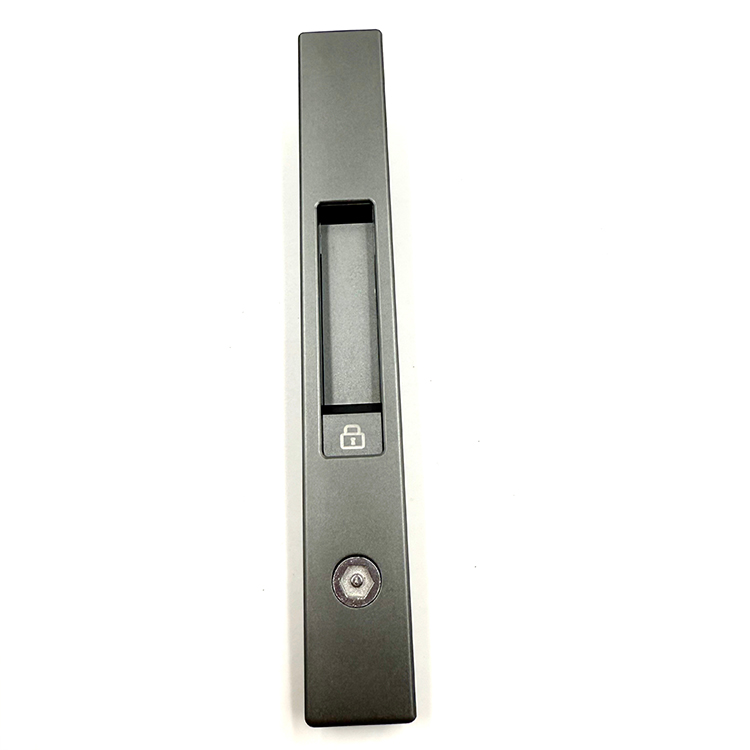
A touch lock is a compact mechanism that holds, releases, ejects, or mechanically secures a panel when the user presses the panel face or a recessed actuator. It allows designers to remove projecting knobs and handles while keeping a sliding door, window sash, access panel, or pocket door operable.
That definition needs a warning.
Names cause trouble.
Because manufacturers use “touch lock,” “touch latch,” “push latch,” and “push-to-open latch” for several mechanically different products, two catalog parts carrying almost identical names may perform completely different jobs once installed in an aluminum profile or sliding-panel system.
So what are you actually buying?
A basic touch latch usually holds a panel closed and releases it after another push. A pocket door touch latch pushes a recessed panel far enough out of the wall to be gripped. A recessed touch lock may operate a hook that engages a keeper. Only the last configuration should normally be treated as a genuine locking mechanism, and even then, its security level depends on the hook, keeper, housing, fasteners, profile, and test evidence.
That distinction is not pedantic. It is the difference between a useful operating feature and a false security claim.
A Touch Latch Is Not Automatically a Security Lock
The hardware trade is loose with terminology. I am not.
A touch latch is normally a spring-loaded catch that changes state when pressed. Sugatsune’s technical overview of catches and latches describes a touch latch as a spring-loaded mechanism that holds a cabinet or drawer closed and releases it when pressure is applied. The mechanism removes the need for a conventional knob or handle.
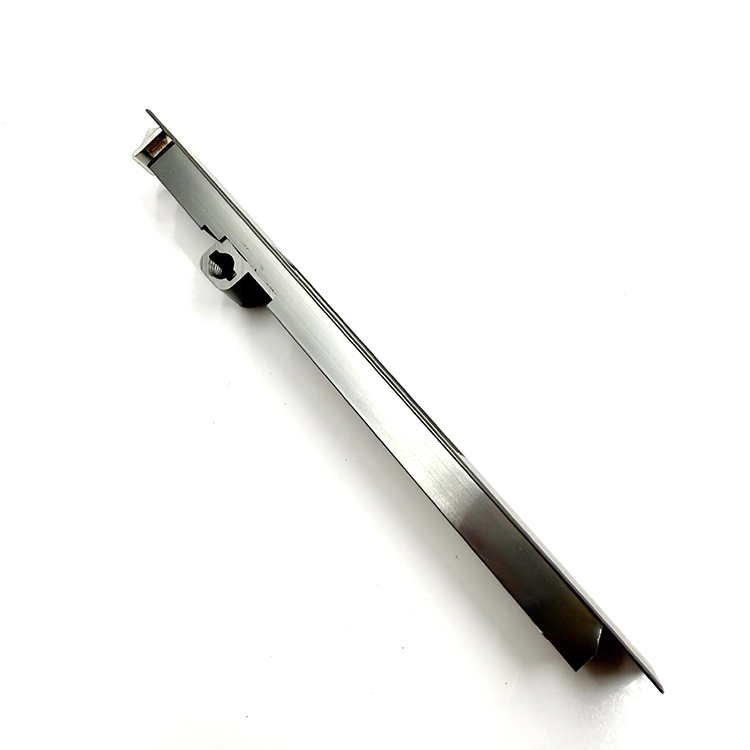
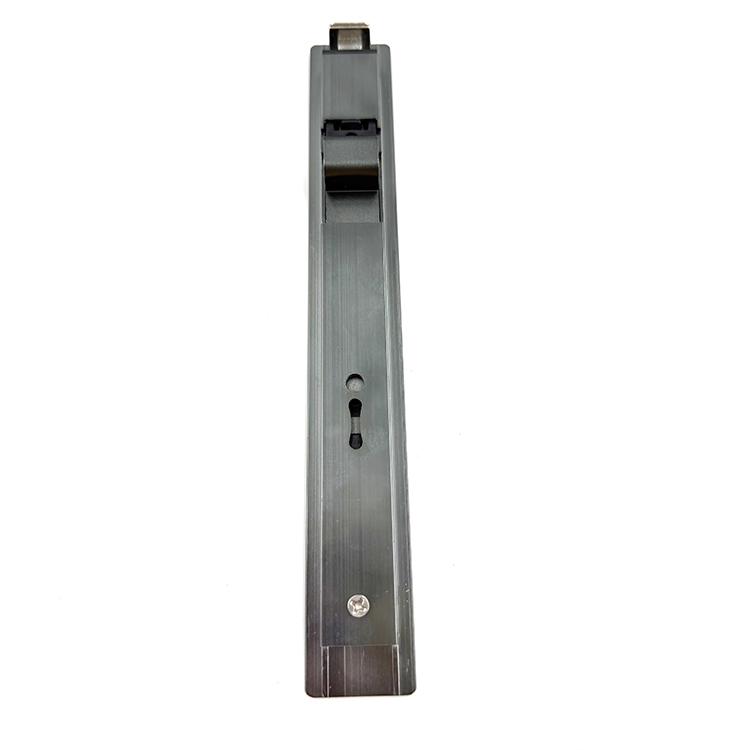
A touch lock, by contrast, may include positive mechanical engagement. For example, CHIER’s recessed touch lock with a crescent hook and metal keeper combines a flush finger pull, touch control, projecting hook, and separate keeper. The hook path and keeper position determine whether the panel actually locks or merely appears closed.
Here is the hard truth: a magnet is not a deadbolt, and a spring catch is not an access-control device.
If a specification requires resistance to forced opening, wind load, vibration, transport shock, child access, or unauthorized entry, “touch latch” is not enough information. The buyer needs retention-force data, hook geometry, fastener details, cycle results, material declarations, and the intended security classification.
The four functions hidden behind one name
Most products sold under touch-lock language perform one or more of these functions:
Retention: The mechanism keeps the panel seated against the frame.
Release: A second press disengages the catch.
Ejection: A spring plunger pushes the panel outward for finger access.
Locking: A hook, bolt, pawl, or cam positively engages a keeper.
A low-cost push latch mechanism may provide the first three. It may provide no meaningful fourth function at all.
That is why I would never approve a part from a catalog photograph alone.
How Does a Touch Latch Work?
A mechanical touch latch uses a spring, plunger, indexing cam, and catch interface to alternate between a retained position and a released position.
Press once, and the plunger travels inward. The internal cam indexes into its holding position, while the catch or magnetic strike keeps the panel closed. Press again, and the cam indexes out. The stored spring energy extends the plunger, separating the panel from the frame.
Simple enough?
Not quite. The mechanism only works when five movements happen in the correct order:
1. The panel reaches the activation point
The user pushes the panel toward the frame. The panel must travel far enough to move the latch through its required stroke.
A nominal gap is not the same as usable travel. Gaskets compress. Aluminum extrusions vary. Fasteners shift. Powder coating adds thickness. Track debris raises rolling resistance.
If the design offers 3.0 mm of theoretical movement but production variation consumes 1.5 mm, the latch may sit on the edge of engagement.
2. The internal cam changes state
Many push-to-engage mechanisms use an indexing cam or heart-shaped cam track. Each full press changes the plunger between extended and retracted states.
Partial travel is the enemy. A half-pressed mechanism may fail to index, chatter between positions, or leave the panel apparently shut without full retention.
3. The catch holds the panel
The holding element may be mechanical, magnetic, or both.
A magnetic touch latch typically uses a permanent magnet and steel strike plate. A mechanical version may use a pawl, hook, clip, roller, or spring-loaded catch. Magnetic designs tolerate some positional variation, but they can lose practical holding performance when the air gap grows, the strike sits at an angle, or contamination collects around the contact area.
4. The release spring overcomes system resistance
Once released, the spring must overcome:
Track friction
Brush-seal drag
Gasket compression
Panel inertia
Misalignment
Soft-close preload
The magnetic attraction of the catch
This is where attractive prototypes become unreliable products. A latch may eject a bare 4 kg test panel on a clean bench yet fail after the complete assembly receives glazing, seals, decorative trim, and a damper.
5. The panel moves far enough to grip
For a cabinet door, a few millimetres may be sufficient. A recessed pocket door presents a harder problem because the user needs enough exposed edge to grasp and pull.
Helaform’s pocket door touch latch example uses a drilled 20–22 mm installation hole and pushes the door outward from the wall pocket after the edge is pressed. The company also reports more than one million cycles on its own test device. That is a manufacturer-reported endurance demonstration, not a universal result for every pocket door, panel mass, track, or installation.
The mechanism matters. The surrounding system matters more.
Touch Lock, Push-to-Open Latch, or Magnetic Catch?
The following table separates products that marketing departments often group together.
Mechanism
What happens when pressed
Positive locking?
Best-fit application
Common failure mode
Mechanical touch latch
An indexing cam alternates between held and released positions
A spring ejector releases while a magnet and strike provide retention
No
Lightweight panels needing quiet, simple closure
Excessive air gap or weak strike alignment
Pocket door touch latch
A spring-loaded actuator pushes a concealed door edge out of its pocket
No
Interior pocket doors and concealed sliding panels
Spring cannot overcome track or seal resistance
Push-to-close catch
The panel engages when pushed shut; release may require pulling or a separate actuator
No
Equipment covers and service panels
Confused with a push-to-open mechanism
Recessed hook touch lock
A touch control moves a hook into or out of a keeper
Potentially
Slim aluminum sliding doors, windows, and framed panels
Hook and keeper do not align under tolerance
Sliding bolt or keyed lock
A deliberate actuator projects a bolt, hook, or multiple locking points
Yes, depending on design and testing
Security-sensitive sliding doors and windows
High operating force or weak frame anchorage
A push-to-open latch is the right answer when the goal is a clean surface and easy access.
It is the wrong answer when the design brief says “secure the opening.”
For security-sensitive applications, buyers should compare touch-operated hardware with conventional sliding locks and other window-and-door lock options rather than treating every push mechanism as interchangeable.
What Engineers Should Specify Before Ordering
The best touch latch for sliding panels is not the model with the strongest spring or the largest magnet. It is the model whose operating envelope matches the complete assembly.
I would put the following information in the RFQ before discussing finish colors.
Panel and track data
State the complete panel mass, not the unglazed frame weight.
Record:
Panel width, height, and thickness
Total moving mass in kilograms
Vertical or horizontal travel
Top-hung, bottom-rolling, or guided configuration
Measured breakaway force
Measured running force
Brush, bulb, or compression-seal resistance
Track material and roller type
Pocket depth or available edge exposure
Maximum allowable panel projection after release
A 12 kg pocket door and a 45 kg glazed sliding panel are not the same application because both move sideways.
Latch geometry
Specify the dimensions that decide engagement:
Body length, width, and depth
Mounting-hole centres
Plunger stroke
Required overtravel
Ejection travel
Hook projection
Backset
Keeper opening
Keeper offset
Panel-to-frame gap
Allowed lateral and vertical misalignment
Handing and operating direction
CHIER’s touch-lock and sliding-lock technical file section identifies dimension drawings, interface drawings, model specifications, and available CAD or installation files as core selection documents. Those files matter more than a product name.
Force values
Ask the supplier to distinguish four different forces:
Activation force: Force needed to index or actuate the mechanism
Retention force: Force resisted before the catch releases or separates
Ejection force: Outward force available after release
Operating force: Force the user experiences in the complete panel assembly
These values are often blurred together. They should not be.
For accessible elements covered by the 2010 ADA Standards, operable parts must work with one hand, without tight grasping, pinching, or wrist twisting, and require no more than 5 lbf, or 22.2 N, of activation force. Door and gate handles, pulls, latches, and locks are specifically directed to the operability requirements in Section 309.4. Designers still need to confirm which provisions apply to the particular project and jurisdiction. Review the official 2010 ADA Standards rather than relying on a supplier’s “ADA-friendly” label.
Materials and environment
The latch housing may be zinc alloy, steel, stainless steel, PA66 nylon, or POM. POM, also called polyoxymethylene, has a repeating –CH₂O– structure and is frequently selected for low-friction precision components. Stainless components may be described as SUS304 or EN 1.4301, but the designation alone does not prove outdoor suitability.
Ask about:
Base material
Spring material
Heat treatment
Coating thickness
Corrosion test method and duration
UV exposure
Operating-temperature range
Lubricant type
Compatibility with cleaning chemicals
Galvanic contact between dissimilar metals
A black finish tells you almost nothing about corrosion performance.
Durability evidence
The current ANSI/BHMA A156.9-2026 Cabinet Hardware overview covers operational, cyclical, and strength testing for nearly 100 types of cabinet hardware, including catches and tracks with guides for sliding panels. BHMA gives 100,000 cycles for a Grade 1 hinge and a 75 lbf strength example for pulls, illustrating why test type and acceptance criteria must be named rather than replaced by “heavy duty.”
Do not accept “cycle tested” without asking:
How many cycles?
At what panel mass?
At what operating speed?
With what mounting substrate?
At what temperature?
Was the test performed dry or lubricated?
What counted as failure?
Was retention force measured before and after testing?
Was the complete panel tested or only the latch body?
One million unloaded bench cycles can be less useful than 50,000 representative cycles on the actual assembly.
Hinged cabinet doors usually approach their latch along a predictable arc. Sliding panels do not.
A sliding panel can arrive with lateral momentum, roller play, profile twist, seal drag, and changing alignment across its travel. The latch may need to manage closing energy while also finding a narrow keeper opening.
That is a demanding combination.
Alignment changes under real load
An empty aluminum frame may align perfectly during sampling. Add insulated glass, and the panel can settle. Add temperature change, and the extrusion expands. Add worn rollers, and the hook enters the keeper low.
A hook touching the keeper is not the same as a hook engaging it.
The buyer should check engagement with the panel:
Unloaded and fully assembled
At both ends of dimensional tolerance
After cycle testing
After roller adjustment
Under inward and outward hand pressure
At low and high operating temperatures
With realistic seal compression
Closing energy can damage the mechanism
A touch latch should not be asked to act as a door stop.
Heavy or fast-moving panels can hammer the latch body, deform the keeper, loosen fasteners, or force the indexing cam beyond its intended travel. A separate stop or damper should absorb closing energy before the latch reaches its final operating position.
CHIER’s guide to sliding door dampers and controlled closing explains how a damper absorbs energy near the end of travel. Pairing controlled motion with a touch latch can improve closure consistency, but the damper’s pull-in force must not prevent the latch from releasing and ejecting the panel.
This sounds obvious. It is routinely missed.
Glass-panel safety is a system issue
A touch latch does not make a glass sliding panel safe. Glass type, edge protection, stops, track control, impact behaviour, and installation all remain separate design responsibilities.
In a CPSC architectural-glazing review, staff identified 430 reported breakage incidents and 98 fatalities from 1978 through 2014. Sliding glass doors accounted for 36 of the 430 reported incidents, or 8%. Using NEISS data, staff also estimated about 420,000 emergency-department-treated architectural-glazing injuries from 1991 through 2013, with 96% of reviewed cases involving lacerations. These figures concern glazing breakage, not touch-latch failures, but they show why hardware must be evaluated as part of the complete panel system. Read the CPSC architectural glazing report.
Minimalist hardware does not excuse minimalist engineering.
Installation Errors That Make Good Hardware Look Bad
Many field failures blamed on the touch latch begin with machining or installation.
The latch is too deep
If the body sits below its intended datum, the panel cannot provide enough overtravel to index the cam. The user presses harder, the panel flexes, and the mechanism still does not change state.
The keeper is positioned from the drawing, not the assembled panel
Drawings establish the starting point. Final keeper position should reflect actual panel geometry, gasket compression, roller adjustment, and installed gap.
The fasteners cannot resist repeated impact
Thin aluminum walls may need threaded inserts, reinforcement plates, or another defined fastening method. A screw that survives initial assembly may loosen after thousands of closing impacts.
The mechanism is installed near a dirty track
Dust, metal swarf, plaster, and construction debris can raise sliding resistance enough to defeat the ejection spring. Clean-room testing hides this problem.
The finger-access strategy was never tested
A touch latch may release correctly while leaving only 2 mm of exposed edge. Technically open. Practically useless.
Where more positive grip is needed, a recessed edge-pull sliding handle may be more dependable than increasing spring force. A small flush pull is sometimes better engineering than a supposedly invisible mechanism.
A Practical Approval Test for a Sliding Panel Latch
Before approving production, I would require a fixture that reproduces the actual panel, track, seals, keeper, mounting material, and closing speed.
Then I would run this sequence:
Measure initial activation, retention, release, and ejection forces.
Test engagement at minimum, nominal, and maximum panel gaps.
Introduce the allowed vertical and lateral misalignment.
Cycle the complete assembly to the agreed endurance target.
Repeat force measurements at defined intervals.
Inspect the spring, cam, hook, keeper, mounting holes, and fasteners.
Add representative dust or contamination where the application warrants it.
Test after low- and high-temperature conditioning.
Check failure behaviour: does the panel remain closed, release unexpectedly, or jam?
Confirm that a user can grip and move the released panel without pinching fingers.
Keep the results with the approved drawing revision and golden sample. For custom projects, CHIER’s OEM and ODM hardware-development process calls for reviewing travel, retention, mounting method, profile interfaces, samples, and repeated operation before production.
The attractive sample is not the specification. The measured system is.
FAQs
What is a touch lock?
A touch lock is a compact mechanical or magnetic device that changes between held and released states when a user presses the panel or actuator, allowing a sliding panel to remain flush, pop outward for gripping, or engage a hook and keeper without relying on a projecting handle.
The term does not guarantee security. Confirm whether the product is a spring catch, magnetic touch latch, pocket-door ejector, or positive hook lock.
How does a touch latch work?
A touch latch works by using a spring-loaded plunger and indexing cam that alternates between retained and released positions after successive presses, while a mechanical catch or magnet holds the panel closed and the stored spring force pushes it outward when the mechanism releases.
Reliable operation depends on full activation stroke, adequate overtravel, low system friction, correct strike alignment, and enough ejection travel for the user to grasp the panel.
Is a touch latch the same as a push-to-open latch?
A touch latch and a push-to-open latch usually describe the same basic press-to-release function, but manufacturers may use either term for magnetic catches, mechanical indexing latches, spring ejectors, or combined devices, so the product drawing and operating sequence must define what the name alone cannot.
Also check whether “push-to-close” has been substituted. A push-to-close catch may engage when the panel shuts but require an entirely different action to open.
Can a touch latch lock a sliding door securely?
A touch latch can hold a sliding door closed, but it provides meaningful security only when the design includes positive mechanical engagement—such as a hook, bolt, or pawl—supported by a correctly positioned keeper, adequate fasteners, a resistant frame, and test evidence for the expected load.
A magnet-only or spring-catch product should normally be treated as a convenience latch, not a burglar-resistant lock.
What is the best touch latch for sliding panels?
The best touch latch for sliding panels is the mechanism whose activation stroke, retention force, ejection travel, mounting depth, cycle rating, environmental resistance, and keeper tolerance match the finished panel’s mass, track friction, seal drag, user requirements, and available profile space.
Do not choose by spring strength alone. Stronger ejection can increase closing effort, panel rebound, noise, fastener load, and wear.
Can a pocket door touch latch be used with soft-close hardware?
A pocket door touch latch can work with soft-close hardware when the damper completes its pull-in action without consuming the movement needed to index the latch, and when the latch’s release spring can overcome the damper preload, track resistance, seals, and panel inertia during ejection.
Test the two devices together. Separate component tests cannot reveal force conflicts between the latch and damper.
Specify the Mechanism Before Requesting a Price
Do not send an inquiry that says only, “We need a touch lock.”
Send the panel drawing, profile section, total moving mass, opening direction, track type, available recess depth, required ejection distance, hook or catch function, keeper position, finish, cycle target, corrosion requirement, order volume, and photographs of any existing hardware.
Then request a dimensioned drawing and fitted sample.
For a touch latch, pocket-door mechanism, recessed hook lock, or complete sliding-panel hardware program, contact CHIER for a compatibility and drawing review before tooling or volume production. A ten-minute interface check is cheaper than discovering that the panel closes beautifully but cannot open.