Looking for hardware solutions that meet European / American standards?
Use this guided inquiry modal to move from a generic quote form to a clearer technical conversation. Buyers can choose whether they need pricing, CAD / 3D files, or OEM / ODM support before sharing contact details.
Compatibility-first design across door / window systems
Repeatable production with clear inspection checkpoints
Documentation and change control for long-running programs
Responsive engineering support for fit and field feedback
A touch lock and a flush lock are often marketed as competing products, but that framing hides the engineering truth: one term usually describes how the user actuates the mechanism, while the other describes how the hardware sits within the panel or aluminum profile.
So why compare them as equals?
Because buyers do it every day. They see two low-profile products, compare the faceplates, request a price, and discover after sampling that one needs a deeper cavity, a different keeper position, or more finger clearance than the extrusion can provide.
Here is my blunt answer:
Choose a touch lock when fast push operation, compact visible hardware, and frequent light-duty use matter most. Choose a flush lock when projection, adjacent-panel clearance, concealed appearance, or an integrated pulling surface matters most.
But there is an important catch. A touch lock can also be flush-mounted. The categories overlap.
That single point changes the entire buying process.
Touch Lock vs Flush Lock: The Real Difference
A touch lock is primarily defined by operation. The user presses a touch pad, button, or sprung body to engage or release the mechanism. CHIER describes its touch-lock family as compact push mechanisms developed around travel, retention, mounting method, and repeated operation. Its Japanese-style model uses a press-to-engage and press-to-release action for sliding doors, windows, cabinets, and light-duty panels.
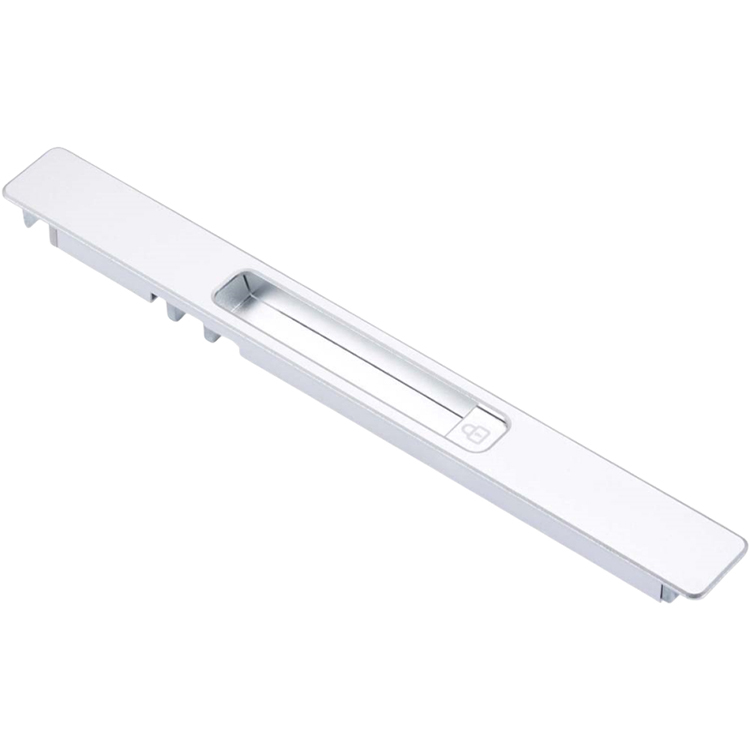
A flush lock is primarily defined by physical profile. Its face, pull, or operating surface sits level with—or recessed into—the sash or panel. A flush lock may use a lever, hook, thumbturn, key cylinder, push pad, deployable pull, or another actuator.
That distinction matters.
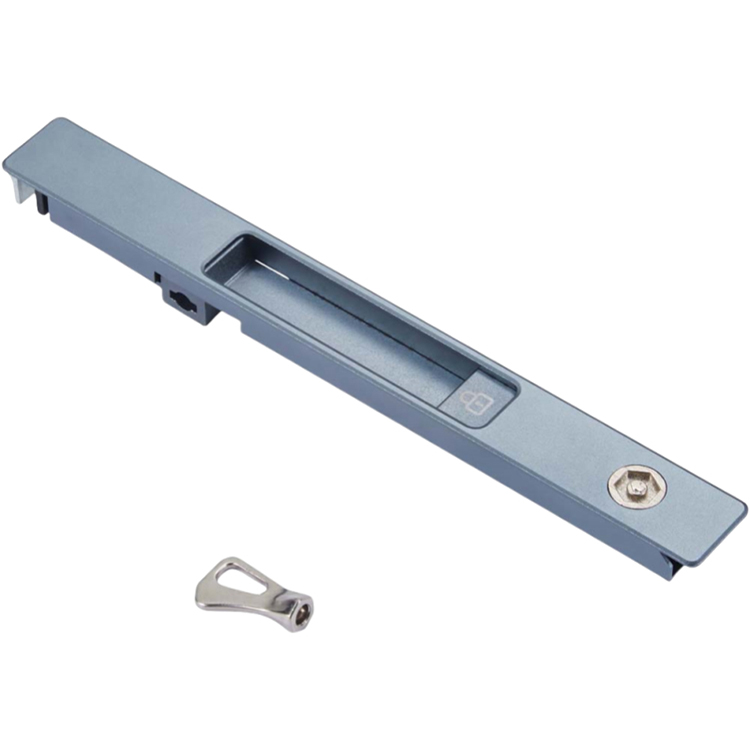
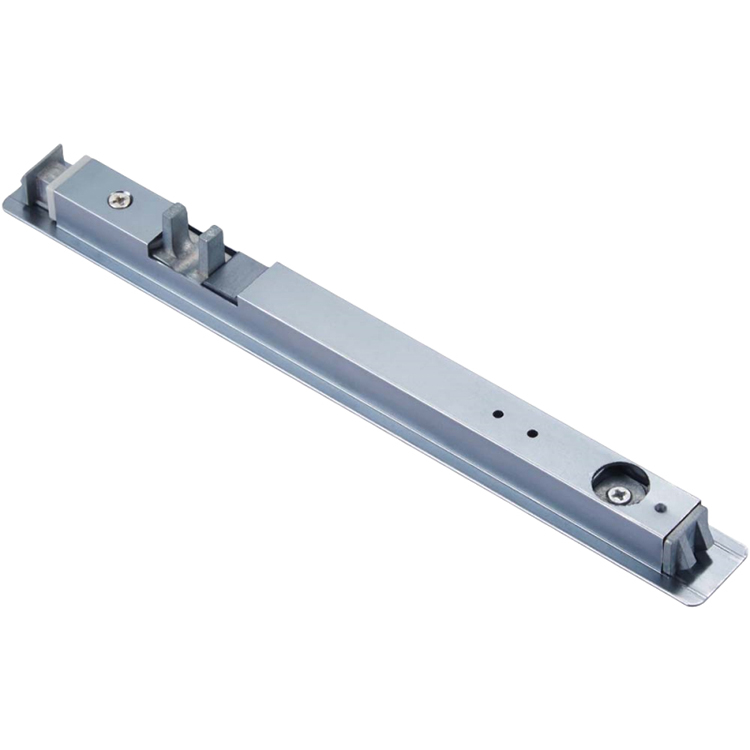
The Dark Gray Recessed Touch Lock with Long Flush Pull is both a touch lock and a flush-style product. It combines a touch pad, an elongated recessed pull, a separate hex-socket actuator, and an in-profile mechanism. The product page specifically tells buyers to verify faceplate size, recess opening, lock-case depth, backset, handing, actuator position, and keeper arrangement.
So “touch lock vs flush lock” is not like comparing steel with aluminum.
It is closer to comparing an operating method with an installation geometry.
Side-by-Side Comparison
The following comparison reflects the operating and installation patterns found across CHIER’s touch-lock, recessed-pull, and sliding-window lock products. Exact dimensions must still come from the approved drawing and physical sample.
Decision Factor
Touch Lock
Flush Lock
What the Buyer Must Verify
Primary definition
Push or touch actuation
Low-projection or recessed installation
Do not assume the names describe the same design feature
Typical operation
Press to engage; press again or use a secondary actuator to release
Pull, lever, thumbturn, key, hook, button, or deployable handle
Operating sequence, travel, release method, and lock indication
Visible projection
Usually low, but product-dependent
Normally minimal or fully recessed
Adjacent sash, wall pocket, insect screen, curtain, and frame clearance
Hidden profile demand
Can be compact, though integrated models may still require a deep lock case
Often needs a machined pocket or longer in-profile cavity
Lock-case depth, wall thickness, screw bite, and drainage paths
User grip
Fast fingertip or palm input
May offer a recessed grip or deployable pull
Hand clearance, glove use, accessibility, and panel mass
Installation work
Bracket mounting, drilling, or profile preparation
Frequently requires accurate routing, milling, or punching
Cutout tolerance, deburring, coating damage, and keeper alignment
Prototype testing under real installation conditions
Security potential
Depends on the connected latch, bolt, or hook
Depends on the connected latch, bolt, or hook
Bolt geometry, keeper strength, anti-lift control, fasteners, and sash stiffness
The hard truth is that the visible faceplate tells you very little about long-term performance.
The rear mechanism does.
How Touch Lock Operation Changes the User Experience
A basic touch lock uses a spring-loaded or cam-linked mechanism. Pressing the actuator moves the latch into a retained position; another press releases it. That is why touch locks feel fast and intuitive on frequently used windows, cabinets, storage panels, and lightweight sliders.
The Japanese touch latch lock for doors and windows is a clear example. Its press-to-engage, press-to-release action is intended for smooth daily use, while its mounting bracket helps maintain alignment.
Fast. Clean. Familiar.
But a convenient press action can become unreliable when the sash is twisted, the keeper is offset, the spring has weak return force, or the installer uses the lock to pull a heavy panel into alignment.
I would reject any touch lock specification that does not answer these questions:
What is the actuator travel in millimetres?
Is there a positive visual or tactile locked indication?
What happens when the keeper is misaligned by 1 mm?
Can vibration or panel impact release the retained mechanism?
Is the touch component only a latch, or does it operate a security hook or bolt?
What cycle target has been tested?
Can the spring or internal cartridge be replaced?
A touch lock is not automatically a security lock. Sometimes it is simply a convenient retaining latch wearing a smart-looking faceplate.
That is not an insult. It is a classification issue.
Why Flush Locks Save Clearance but Consume Hidden Space
Flush locks solve a different problem: projection.
When sliding leaves overlap, enter a wall pocket, pass close to an insect screen, or move beside another panel, a protruding lever can stop the entire system from working. A recessed pull or flush faceplate preserves that moving clearance.
Additional clearance for a folding or deployable pull
Better protection against water and debris entering the recess
That is why I dislike the phrase “space-saving lock” when it appears without a sectional drawing.
It saves external space.
It may consume far more internal space.
CHIER’s guide on custom extrusions versus catalog profiles makes the same engineering point from another angle: changing lock-body depth by only 2.5 mm can create interference with the wall structure, pull cavity, or downstream hardware package.
Two and a half millimetres sounds trivial.
Inside a narrow aluminum stile, it is not.
Which Lock Is Best for Narrow Profiles?
The best lock for narrow profiles is not necessarily the smallest lock in the catalogue. It is the model that leaves enough metal around the cutout, provides reliable fastener engagement, aligns with the keeper, and clears every adjacent component.
A narrow faceplate can hide a bulky rear mechanism.
A wide faceplate can cover a shallow, well-supported mechanism.
Judge the section, not the photograph.
For a narrow-profile review, I would request a dimensioned drawing showing at least:
Faceplate width and length
Lock-case depth and thickness
Backset or actuator centreline
Required cutout size
Minimum profile wall thickness
Screw size, thread engagement, and fixing position
Keeper depth and lateral offset
Actuator or latch travel
Handing and operating direction
Clearance to glass, glazing bead, gasket, drainage channel, and adjacent sash
The buyer should also provide the profile cross-section, installation orientation, sash mass in kilograms, expected operating cycles, finish specification, and target market.
No cross-section?
No approval.
CHIER’s OEM and ODM hardware development program asks buyers to coordinate lock travel, retention, mounting method, profile space, and keeper engagement before tooling and production. That is the correct order.
Use Cases: Where Each Lock Actually Makes Sense
Aluminum Sliding Windows
For a light or medium sliding window, a touch lock can provide quick daily operation with little visible projection. It works best when the sash closes consistently and the lock does not need to drag a distorted frame into position.
A flush lock becomes more attractive when the sash overlaps another panel, when visual minimalism matters, or when users need a recessed pull as part of the same unit.
But do not confuse closing convenience with fall protection.
The U.S. Consumer Product Safety Commission reported in April 2026 that an estimated 5,600 children aged 12 and under received emergency-department treatment after falling from windows in 2024. About one in three required hospitalization, and CPSC knew of at least 25 child deaths from window falls between 2021 and 2023. The agency recommends guards or stops; an ordinary touch lock or flush lock should not be presented as a substitute. See the CPSC Window Safety Week data.
Slim Sliding Doors
For slim aluminum sliding doors, profile depth normally decides the result.
A compact touch lock may fit a shallow cavity, but only when the push mechanism, keeper, and fasteners remain supported. A flush lock may provide better passing clearance, yet its recessed pull or lock case can conflict with the glazing pocket or reinforcement.
For exterior sliders, I would prioritize hook engagement, anti-lift control, keeper strength, and sash retention before discussing touch pads or finishes.
Government security guidance from Northern Ireland recommends checking movement at each opening corner of a window. If the corners move, it advises fitting suitable locks at each opening corner rather than assuming one central lock will control the sash. That is practical evidence that frame stiffness and lock placement matter as much as the lock name. Read the government guidance on securing doors and windows.
Pocket Doors and Overlapping Panels
Flush locks win here.
A protruding handle can strike the pocket, scrape the frame, stop the door before full opening, or collide with the neighboring leaf. A recessed pull keeps the operating surface inside the panel envelope.
For heavier panels, however, check whether the recessed grip gives enough purchase. A shallow finger cup that works on a 20 kg interior panel may feel miserable on a large glazed leaf with high seal or roller resistance.
Pretty hardware does not move heavy doors by magic.
Cabinets and Light-Duty Access Panels
Touch locks are often the cleaner choice for cabinets, wardrobes, inspection covers, and light access panels. The press action removes the need for a permanent pull and supports an uninterrupted face.
Still, define whether the product is meant to retain, latch, or secure.
Those are different jobs.
Accessible Commercial Openings
A touch pad may appear easier to operate than a recessed pull, but appearance is not proof of accessibility.
For covered operable parts, the 2010 ADA Standards for Accessible Design require one-hand operation without tight grasping, pinching, or wrist twisting and set a maximum activating force of 5 lbf, or 22.2 N. The Standards also set a 5 lbf maximum for pushing or pulling sliding and folding doors, while clarifying that this opening-force rule does not include the force used to retract latch bolts or disengage holding devices. Project-specific code review remains necessary.
And enforcement is not theoretical.
A U.S. Department of Justice settlement involving the City of Omaha documented doors requiring 8, 10, 12, and even 15 pounds of force, with corrective work requiring them to meet the 5-pound limit. The agreement also identified lever-operated mechanisms, push-type mechanisms, and U-shaped handles as acceptable examples where easy one-hand operation was required. See the DOJ settlement requirements.
My opinion? Never approve recessed hardware for an accessible route from a rendering. Test it with real users and a force gauge.
Flush Lock Installation: Where Good Products Get Ruined
Flush lock installation is unforgiving because the finished appearance exposes every positional error.
A cutout that is too large can leave the faceplate unsupported. A cutout that is too small can twist the lock case when the screws are tightened. A keeper shifted sideways can make users slam the sash or force the actuator.
Then the supplier gets blamed.
Sometimes fairly. Sometimes not.
Before installation, confirm:
The machining drawing revision
Front and rear orientation
Left-hand or right-hand operation
Lock-case and pull-pocket depth
Fastener type and tightening torque
Edge distance around drilled holes
Glass and glazing-bead clearance
Keeper position with the sash fully seated
Coating allowance on machined edges
Drainage and water paths
Finished-panel flatness
Final operating force
For coastal or humid projects, specify material and finish performance rather than accepting phrases such as “corrosion resistant.” Ask for the test method, exposure duration, acceptance criteria, substrate, coating system, and post-test functional inspection.
A lock that still looks black after salt exposure but no longer releases smoothly has failed.
My Selection Rule
Here is the fastest responsible way to decide:
Choose a touch lock when:
The opening is used frequently
Push-to-engage operation is desirable
The panel is light or medium duty
Visible hardware must remain compact
A permanent pulling handle is unnecessary
The profile supports the mechanism without weak fixing points
Choose a flush lock when:
Protruding hardware would interfere with panel travel
The door enters a pocket
Two sliding leaves pass closely
A clean architectural face is required
A recessed or deployable pull is needed
The profile has enough internal volume for the lock case and cutout
Choose neither until further engineering review when:
The opening is an exterior security door
The sash is heavy
The profile drawing is unavailable
Child fall protection is part of the requirement
Accessible operation must be certified
The supplier cannot provide rear-mechanism dimensions
The keeper and anti-lift details remain undefined
The label does not protect the building.
The assembly does.
FAQs
What is the difference between a touch lock and a flush lock?
A touch lock is defined mainly by its push or touch actuation, while a flush lock is defined mainly by its low-profile installation, where the visible hardware sits level with or recessed into the sash, panel, or frame; therefore, the terms describe different design dimensions and can overlap in one product.
A recessed touch lock can belong to both categories. Compare operation, lock-case dimensions, keeper geometry, and profile preparation instead of relying on the product name.
Which lock is best for narrow profiles?
The best lock for a narrow aluminum profile is the model whose lock-case depth, faceplate width, backset, mounting points, actuator travel, and keeper geometry fit the extrusion without weakening the walls, colliding with adjacent sashes, or forcing unreliable screw engagement; the marketing label alone cannot answer this.
Request a sectional drawing and physical sample. “Slim” and “low profile” are sales descriptions, not dimensional approvals.
How does touch lock operation work?
Touch lock operation uses a spring, cam, latch, or linked mechanism activated by pressing a pad or body, typically with one press to engage and another to release, although some touch-lock products combine that input with a recessed pull, separate actuator, hook, or keyed locking element.
Confirm whether the touch component merely retains the panel or operates a security bolt. The two functions should never be treated as equivalent.
Is a flush lock more secure than a touch lock?
A flush lock does not automatically provide more security; it only describes a low-projection installation, while actual resistance depends on the bolt or hook design, keeper engagement, anti-lift control, sash stiffness, fastener anchorage, material strength, tolerances, and whether the complete door or window assembly was tested.
A weak latch can sit inside an elegant flush faceplate. For exterior openings, review the complete locking system rather than the visible handle.
What does flush lock installation require?
Flush lock installation is the process of machining and aligning the sash or panel so the faceplate, recessed pull, lock case, actuator, fasteners, and keeper fit at the specified depth and position without distorting the profile, obstructing drainage, reducing screw bite, or causing latch friction.
The approved machining drawing should control production. Installers should not copy a cutout from a visually similar lock.
When should I choose a touch lock instead of a flush lock?
A touch lock is usually better for frequent, light-duty operation when fast push-to-engage use and compact visible hardware matter, while a flush lock is usually better when panel clearance, pocket-door travel, overlapping leaves, clean sightlines, or a usable pull for moving a heavier sash takes priority.
When both benefits are required, consider a recessed touch-lock design—but verify its hidden lock-case volume before committing to the extrusion.
Get the Profile Reviewed Before You Order
Do not place a production order from a front-view photograph.
Send the supplier your aluminum profile cross-section, machining limits, sash weight, opening direction, keeper position, finish requirement, annual quantity, target market, and expected cycle performance. Ask for a dimensioned front-and-rear drawing, an installation sample, and a written statement of what the lock is designed to do.
For a touch lock vs flush lock decision, that engineering review is worth more than another round of catalogue comparisons.
Submit your profile and application details through CHIER’s OEM/ODM hardware development service and request a compatibility review before tooling, machining, or bulk production.