Looking for hardware solutions that meet European / American standards?
Use this guided inquiry modal to move from a generic quote form to a clearer technical conversation. Buyers can choose whether they need pricing, CAD / 3D files, or OEM / ODM support before sharing contact details.
Compatibility-first design across door / window systems
Repeatable production with clear inspection checkpoints
Documentation and change control for long-running programs
Responsive engineering support for fit and field feedback
I have watched buyers approve hardware because the handle felt smooth on a sample sash, even though the real variables were sitting somewhere else entirely—in keeper alignment, gearbox drag, spindle fit, rod straightness, coating build, stainless grade, sash weight, and the quiet little tolerances that decide whether a system still works after 200,000 cycles instead of 2,000. Why are we still pretending a showroom demo predicts field life?
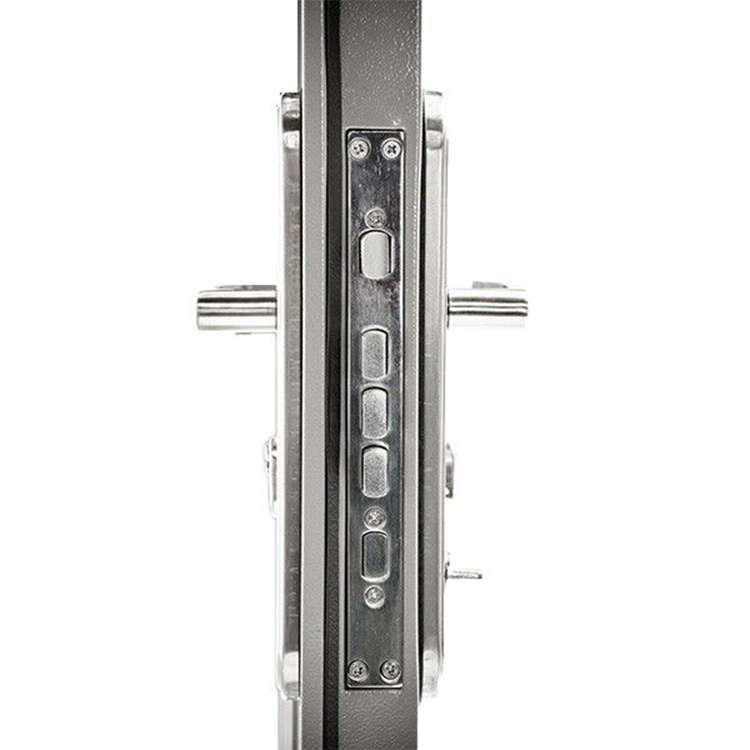
A multipoint locking mechanism only looks sophisticated when the sash, frame, keepers, and rods stay in the same conversation, because the moment diagonal drift, bow, sag, or sloppy prep enters the frame, the fanciest multi-point window locks start behaving like cheap single latches with a nicer faceplate. Want the unglamorous truth? Millimeters eat margins.
That is why I push specifiers toward boring questions. What is the actual keeper adjustment range? What is the spindle tolerance? What torque does the handle need after the opening settles? What happens when the top point lands late? A lot of teams skip those questions and jump straight to finish color and handle shape, which is exactly backwards. BHMA’s ANSI/BHMA A156.37-2025 does not care how premium the lock feels; it cares about operation, durability, strength, and security under defined tests.
Espagnolette window locks deserve a blunt note here. I still think they are perfectly viable for many slim-profile casement and awning applications, but only when rod travel, cam engagement, and keeper alignment are kept brutally honest. A bad espagnolette setup is not “slightly off.” It is a callback factory. The same goes for any casement window lock sold as a premium unit without proof that the transmission parts and frame prep stay stable in production.
The design factors that separate serious hardware from expensive callbacks
I keep this matrix simple because the industry already has too many decorative checklists.
I built that table the way I wish more procurement meetings worked: no poetry, no excuses, no fake certainty. It lines up with the BHMA multipoint-lock test framework, FGIA’s certification model, and DOE guidance that windows account for 25%–30% of residential heating and cooling energy use, which means compression quality is not a side issue; it is money.
And yes, compression matters more than most teams admit. I have seen buyers fixate on whether a handle feels “tight” while ignoring whether the locking points actually pull the sash evenly into the weather seal, which is the difference between a system that stays quiet and one that leaks air, leaks water, and starts getting blamed on “installation.” But what is hardware design if not applied hypocrisy management?
Standards are where the adults show up
Tests matter.
If a supplier cannot map a multi-point window lock to ANSI/BHMA A156.37-2025, I assume the brochure is doing most of the work. BHMA says the standard covers operational tests, cycle tests, strength tests, and security tests; its public summary even spells out numbers buyers should stop ignoring, including a Grade 1 one-million-cycle durability test, a 1,350-pound bolt-strength test with all latching points engaged, and corrosion evaluation through ASTM B117 salt spray. That is the kind of boring detail that keeps me interested.
The second filter is assembly proof. FGIA’s AAMA Gold Label Certification Program has existed since 1962 as a third-party product performance program, and FGIA’s NAFS overview points specifiers to the current material-neutral standard, AAMA/WDMA/CSA 101/I.S.2/A440, for windows, doors, and skylights. My opinion is simple: if your “best multi-point window locking system” claim is not attached to an actual assembly path, it is sales copy, not engineering.
On April 7, 2026, the U.S. Consumer Product Safety Commission said an estimated 5,600 children age 12 and under were treated in emergency departments in 2024 after falling from windows, about one in three required hospitalization, and CPSC is aware of at least 25 deaths between 2021 and 2023. So when somebody tells me child-safety limiters, restrictors, or controlled opening logic are secondary details, I tune out. They are not secondary. They are design inputs.
The recall file is uglier than the catalog file. In November 2023, CPSC said MI Windows and Doors recalled certain 1615 and 1617 sliding glass doors, plus Window World 4000 and 8000 Series units because the glass could separate from the frame during hurricane conditions; about 1,900 units were involved, sold from April 2018 through March 2023, with prices ranging from $2,000 to $7,000. One month later, CPSC said Pella recalled Architect Series casement windows because the sash could detach from the frame and fall; about 12,000 units were involved, with some units sold for up to $10,000 per window. Different failure mode, same lesson: openings fail in assemblies, not in slogans.
Weather is getting louder too. NOAA says the U.S. had 27 billion-dollar weather and climate disasters in 2024, causing $182.7 billion in losses, and FEMA’s wind-resilience guidance warns that door and window failure can increase internal pressures and worsen building damage. So no, I do not treat corrosion resistance, impact logic, and retained alignment as “nice upgrades” for coastal or storm-prone work. I treat them as the difference between a product family and a liability file.
What I would spec before I signed anything
No shortcuts.
First, I would lock down geometry before I argued about aesthetics, and I would keep sending teams back to the frame-tolerance guidance until they stop acting surprised that poor clearances create “hardware problems.” Second, I would demand that the lock boxes and gearboxes conversation be explicit, because most early-life complaints are transmission complaints wearing cosmetic makeup. Third, I would ask whether the chosen system still makes sense for the actual opening type—casement, tilt-turn, sliding, or awning window locking system—not for the pretty render.
Then I would get mean. I would ask for the exact stainless grade, exact fastener pairing, exact coating stack, exact cycling evidence, exact handle torque, exact BOM freeze, and exact rule for substitutions. I would also force a plain-language review of misuse behavior, because the misuse-tolerant multi-point lock design guide is right about one thing too many suppliers hate hearing: “user error” is often just design arrogance with a nicer label.
And I would never approve a system based on the phrase “best multi-point window locking system.” Best for what? A narrow aluminum casement in a dry inland market? A chloride-heavy coastal façade with 316 expectations? A rental project where users will slam it, rush it, and never read a manual? Ask a better question and the hardware usually gets better with it.
FAQs
How does a multi-point window lock work?
A multi-point window lock is a window locking system that secures the sash at two or more locations through one operating action, usually by turning a handle that drives a central gearbox, rods, cams, hooks, or mushroom points so the entire edge engages keepers and compresses the weather seal in sequence.
That is the clean definition. My practical version is harsher: if the handle movement does not produce predictable engagement, even compression, and low-confusion operation in the real frame, the mechanism may be technically multipoint and still be badly designed.
What is a multipoint locking mechanism?
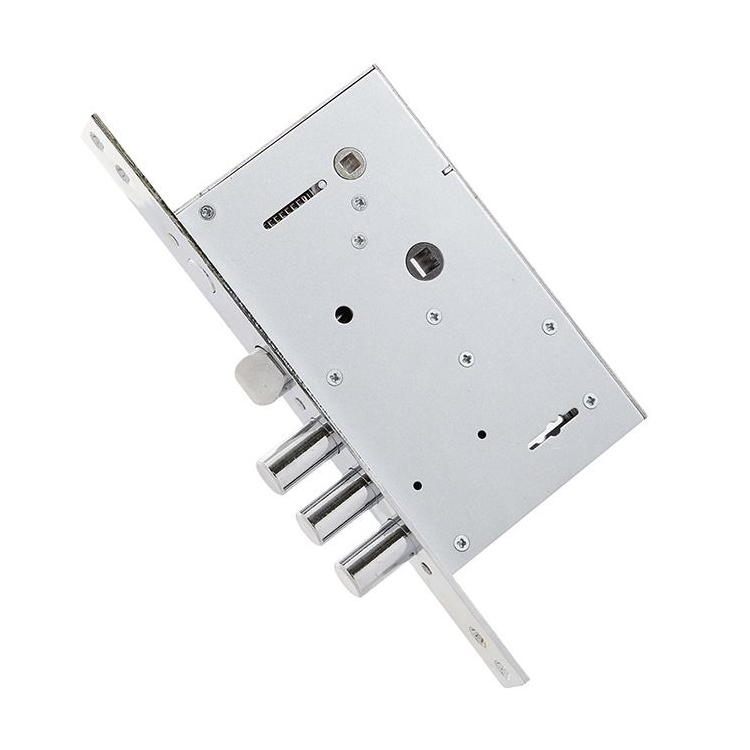
A multipoint locking mechanism is the internal transmission arrangement—gearbox, spindle interface, rods, extensions, and locking elements—that converts one user input into several locking actions along the sash or panel, increasing compression, resistance, and stability compared with a single latch located only at the center or one corner.
That is why I obsess over transmission parts. Buyers love visible hardware; failures usually start in the invisible chain that carries motion from the handle to the outer locking points.
Are espagnolette window locks still a smart choice for casement windows?
Espagnolette window locks are still a valid choice for many casement window lock applications because they use a handle-driven rod system to engage multiple points along the sash, but their success depends heavily on straight rod travel, keeper accuracy, sash stiffness, and profile geometry rather than on the espagnolette concept alone.
I still use them mentally as a serious option, especially in slim aluminum profiles. But I stop trusting them the second a team gets casual about tolerances or assumes the rods will “find their way” in production.
What is the best multi-point window locking system?
The best multi-point window locking system is the one whose full assembly has the right operating logic, locking-point layout, material stack, test evidence, and compliance path for the exact window type, climate exposure, user behavior, and maintenance reality of the project rather than the one with the loudest premium claim.
That answer annoys people who want a brand shortcut. I do not care. Hardware is not wine. It does not improve because the brochure sounds expensive.
Your Next Step
Stop guessing.
Pull one current window program off the shelf and audit it like an adult: verify the sash and frame tolerances, trace the gearbox and rod stack, match the locking logic to the actual opening type, confirm the compliance path, and ask whether the system still works for distracted humans, not ideal lab users. If your team cannot answer those questions in plain language, your “window security hardware” strategy is weaker than it looks.