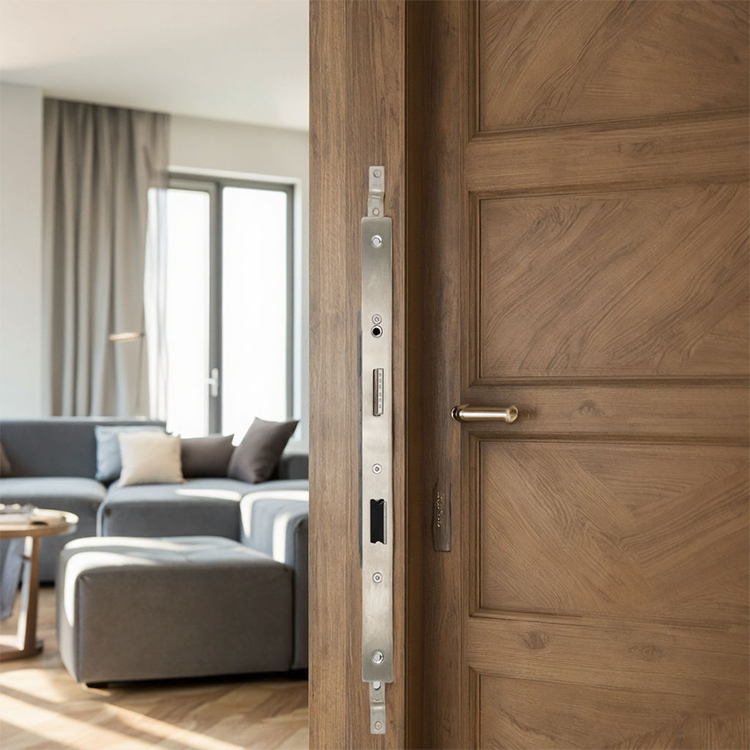
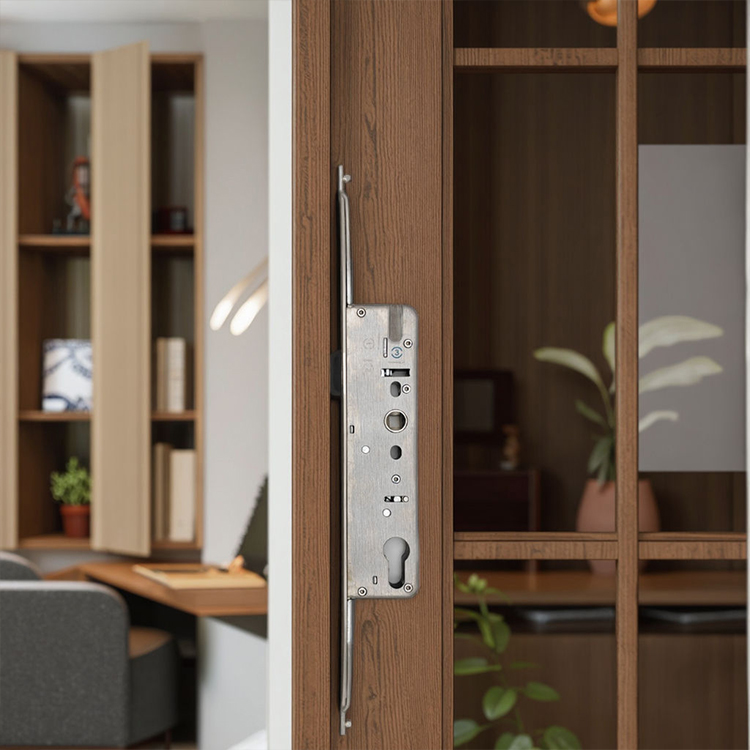
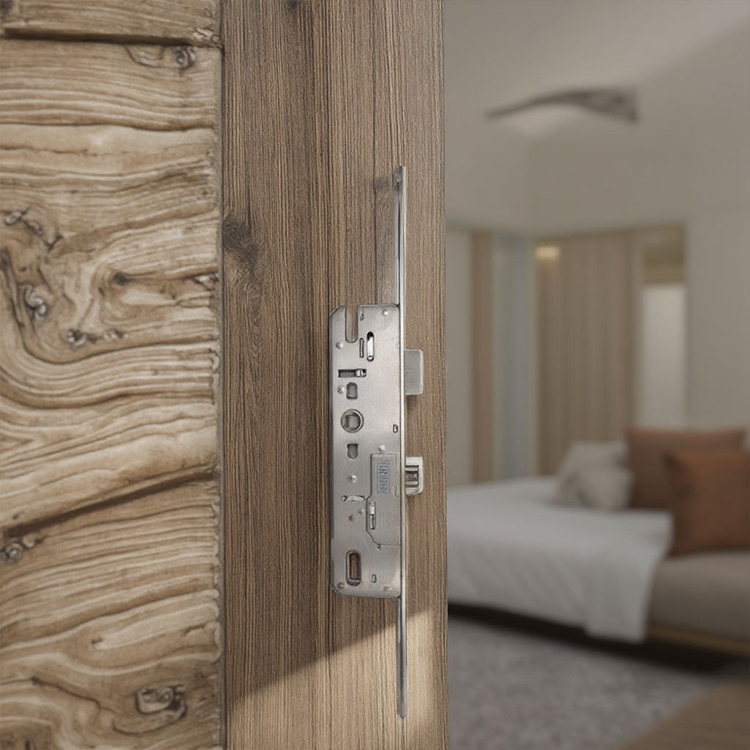
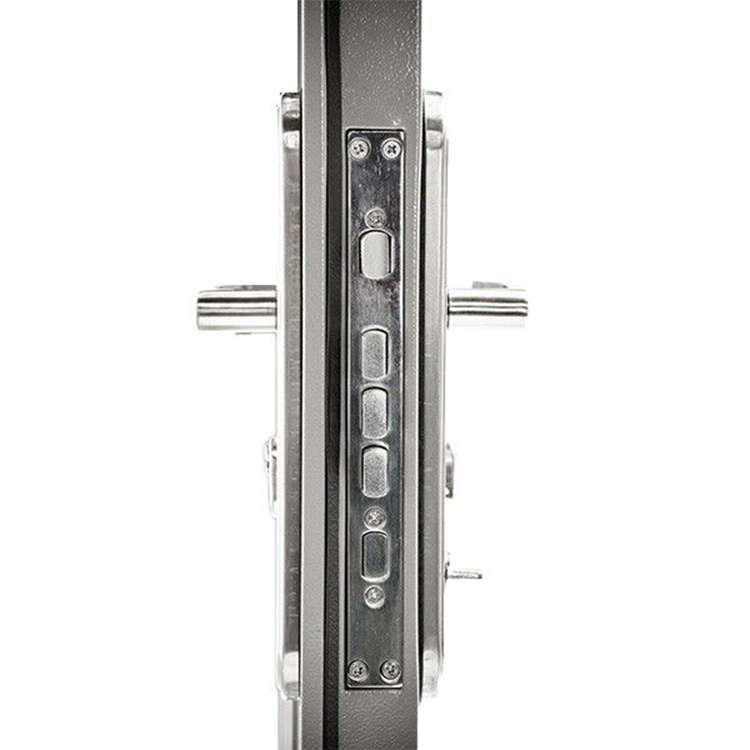
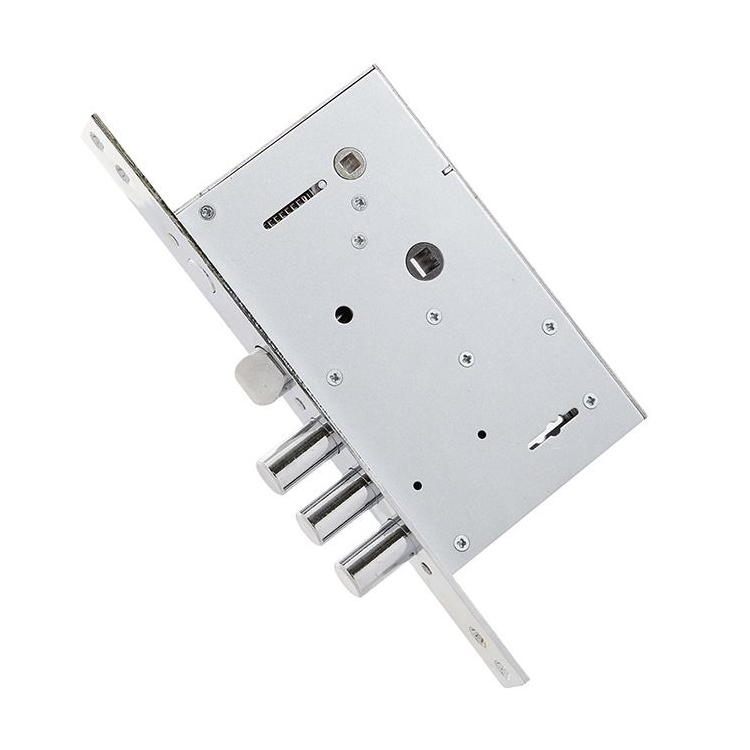
Looking for hardware solutions that meet European / American standards?
Use this guided inquiry modal to move from a generic quote form to a clearer technical conversation. Buyers can choose whether they need pricing, CAD / 3D files, or OEM / ODM support before sharing contact details.
Compatibility-first design across door / window systems
Repeatable production with clear inspection checkpoints
Documentation and change control for long-running programs
Responsive engineering support for fit and field feedback
Premium Hardware Fails Quietly Before It Fails Publicly
Bad specs travel.
I have seen premium door and window brands spend months arguing over handle color, logo depth, carton artwork, and showroom photography while the real failure was already sitting inside the door edge: a gearbox with the wrong travel, a faceplate that fought the profile groove, or a keeper layout that assumed installation perfection in a world full of tired contractors.
So what actually makes Multi-Point Lock Solutions premium?
Not shine. Not weight alone. Not a supplier saying “European style” in a quotation email. A real customized locking solution starts with the door or window system itself: profile depth, sash weight, gasket compression, cylinder position, lock travel, operating force, corrosion zone, security standard, packaging method, and reorder control.
That is the hard truth. Premium brands do not need “more locking points.” They need the right locking points, placed where the system can carry force without twisting the sash, abusing the handle, or turning field adjustment into unpaid labor.
For buyers building a serious program, I would start by reviewing the available multi-point lock systems only after mapping the door or window platform. Then I would cross-check gearboxes, handles, keeps, and documentation before approving a single tool.
Table of Contents
The Real Search Intent Behind Multi-Point Lock Solutions
The person searching “how to customize multi-point lock solutions for premium door and window brands” is usually not a homeowner fixing one broken patio door.
They are likely a product manager, sourcing director, importer, aluminum system house, fenestration brand, or OEM buyer trying to reduce field complaints while keeping the product line visually clean. That means the intent is mixed: informational at the top, commercial in the middle, and quietly transactional by the end.
They want proof.
They want to know whether a supplier can handle custom multi-point locking systems across aluminum doors, uPVC windows, timber-aluminum hybrids, lift-slide doors, casement windows, and premium residential projects without turning every variant into a chaotic SKU problem.
Here is my unpopular opinion: most “premium door lock solutions” are not defeated by burglars first. They are defeated by tolerance stack-up, poor material pairing, cheap screws, weak surface treatment, and factories that cannot reproduce the golden sample six months later.
The security market is not shrinking into irrelevance either. According to the FBI’s 2024 reported crime release, more than 14 million criminal offenses were reported into the U.S. crime data system for 2024, while Reuters reported that U.S. property crime fell 8.1% and burglaries fell 8.6% in 2024. Lower burglary rates do not remove the buyer’s fear; they raise the standard for brands that claim engineered safety.
Start With the Door Profile, Not the Lock Catalog
A multipoint locking system is a mechanical chain. Break one link and the whole brand looks cheap.
The door profile decides more than buyers admit. Frame depth affects lockcase size. Groove width affects faceplate selection. Sash height affects locking point spacing. Gasket compression affects handle force. Threshold design affects bottom shoot bolt logic. Cylinder position affects PZ measurement. Hinge behavior affects keeper alignment.
And yet, what do many RFQs say?
“Send price for multipoint lock.”
That sentence is almost useless. A serious RFQ for door and window hardware solutions should include the door profile drawing, sash size range, opening type, backset, faceplate width, handle height, PZ center, lock travel, cylinder type, expected cycle requirement, finish exposure, target market, packaging rules, and annual volume band.
For brands working with sliding or narrow aluminum systems, the lock boxes and gearboxes category matters because the gearbox is not just a box. It is the transmission. If the gearbox ratio, spring return, spindle engagement, or hook throw does not match the user experience you want, the lock may technically close while still feeling like a second-rate product.
The Specification Stack I Would Demand Before Sampling
Customizing Locking Points: More Metal Is Not More Security
More points can help. They can also make a door worse.
A 2.4-meter aluminum door with top, center, and bottom engagement may benefit from hooks and compression points that reduce bow and improve sealing. But a poorly placed top bolt can punish installers. A bottom point can collect debris. A mushroom cam can feel elegant on a window but underperform if the keep geometry is sloppy. A hook can resist separation but create ugly operating force if the keeper is misaligned by a few millimeters.
The question is not “how many locking points?”
The better question is: where does the door actually deform under load, and where can the frame accept force without becoming the weak part of the system?
For window multi-point locks, I usually want locking points near vulnerable corners, especially on casement or tilt-turn systems where sash flex and pry leverage matter. For premium doors, I want the center gearbox and the top/bottom points to behave as one controlled mechanism, not as separate pieces pretending to be a system.
BSI lists BS EN 15685:2024 as the standard for building hardware covering multipoint locks, latches, and locking plates, with product descriptors including locks, latches, locking plates, safety requirements, and testing methods. That tells us where the adult conversation begins: product claims need test language, not brochure adjectives. BSI’s EN 15685:2024 listing is a useful reference point for buyers building EU-facing programs.
The Handle Is a Witness, Not a Decoration
Pretty handles lie.
The handle is where the customer discovers whether the lock engineering was honest. If the user has to lift hard, pull the door inward, force the lever, or jiggle the key, the brand loses trust long before a formal warranty claim arrives.
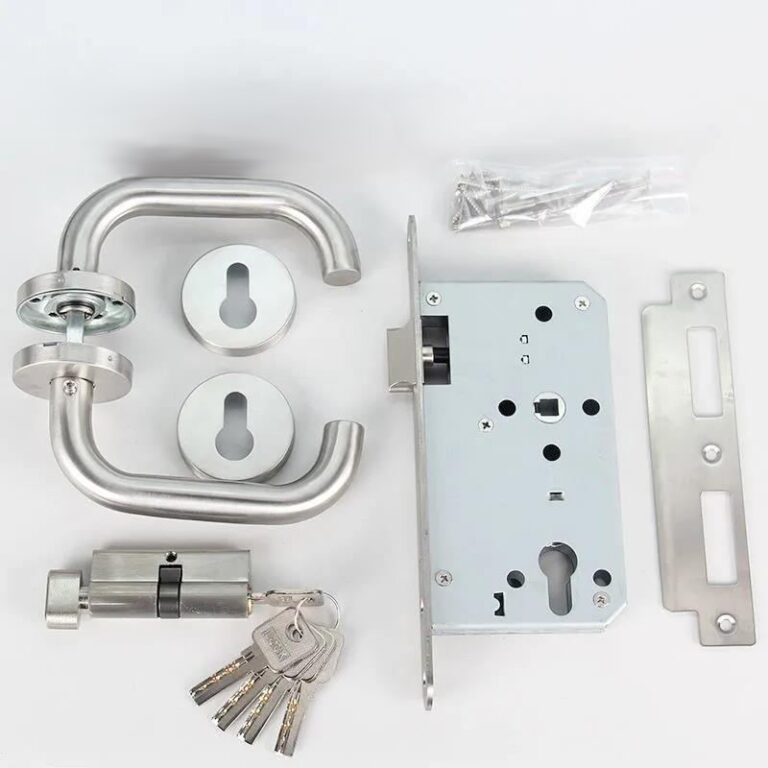
That is why custom premium door lock solutions must include the handle decision early. PZ measurement, spindle size, screw centers, handle handing, lever return, spring strength, backplate width, and finish durability all feed into the lock system. Chier’s guide on choosing door handles for multi-point lock systems gets this right: handle selection should follow lock geometry, not showroom taste.
For premium lines, I would test handle feel in three states:
Door Open
This isolates gearbox and lock strip behavior. If the system feels stiff when open, the lock hardware itself is already suspicious.
Door Closed Without Full Compression
This reveals early alignment problems between keeps, rollers, hooks, and frame geometry.
Door Closed Under Real Gasket Load
This is the only state that matters to the customer. Air sealing, weather resistance, and security must not turn the handle into a gym exercise.
Materials, Coatings, and the Salt-Spray Trap
Black hardware is seductive. It also exposes weak process control fast.
A matte black handle, zinc-plated steel keep, aluminum profile, stainless fastener, and coastal project environment can become a chemistry lesson the brand never wanted. Chlorides, galvanic pairing, coating thickness, edge coverage, and cleaning chemicals all matter. I do not trust vague phrases like “anti-rust finish.” I want substrate, coating system, thickness range, test method, acceptance criteria, and maintenance notes.
ASTM B117 is often used as a salt spray reference, but ASTM itself warns that salt spray data should not be treated as a simple prediction of natural outdoor performance. In plain English: passing a chamber test is useful, but it is not a magic guarantee for Florida, Dubai, Okinawa, or coastal Spain. Use ASTM B117 as one data point, then validate against your real exposure category and warranty promise.
This is where premium brands separate themselves. They do not approve a finish board and hope. They connect finish selection to market exposure, cleaning rules, packaging abrasion, installation handling, and spare-part availability.
OEM and ODM Customization: Know What You Own
There is a business trap hiding inside custom development.
If you bring the drawing, own the design, and ask the factory to manufacture it, you are running an OEM program. If the factory adapts a platform, engineers variants, and produces under your brand, you are closer to ODM. Neither model is automatically better. But pretending they are the same is how brands lose IP clarity, revision discipline, and margin.
For door and window brands, the OEM/ODM process should define who owns drawings, who controls tooling, who approves engineering changes, how samples are frozen, how batch traceability works, and how replacement parts stay compatible after year three.
Here is the part nobody likes to say out loud: your supplier’s documentation discipline is part of your product. If the factory cannot provide drawings, CTQ dimension reports, inspection records, packaging specs, and change-control logs, then the product is not truly premium. It is just polished.
The lock industry is also not immune to regulatory pressure. The U.S. Department of Justice announced a settlement over ASSA ABLOY’s proposed $4.3 billion acquisition of Spectrum Brands’ hardware division, requiring divestitures tied to premium mechanical and smart lock assets. The Federal Register filing shows how seriously regulators treat competition, pricing, innovation, and control in the door hardware market.
Compliance Claims Can Become Legal Risk
I am blunt about this because private-label brands often get sloppy.
If a brand sells into the United States and makes origin claims, safety claims, tested-performance claims, or security claims, the wording must match evidence. “Made in USA,” “tested to,” “complies with,” “designed for,” and “meets” are not interchangeable phrases. They carry different levels of proof.
The FTC says an unqualified Made in USA claim requires that the product be “all or virtually all” made in the United States, including final assembly, significant processing, and essentially all components. The agency also states that online and mail-order materials can fall under the labeling rule when they use a seal, mark, tag, or stamp. For importers and private-label hardware brands, the FTC’s Made in USA guidance is worth reading before marketing language goes live.
And enforcement is not theoretical. Reuters reported in July 2025 that the FTC pressed Amazon and Walmart to police deceptive Made in USA claims from third-party sellers and cited $15.8 million in judgments from 11 Made in USA enforcement actions between 2021 and 2024. That should scare any hardware brand using patriotic wording without a clean bill of materials. Reuters covered the FTC warning letters in detail.
What a Serious Custom Multi-Point Lock Program Should Include
I would not approve a custom multipoint locking system unless the supplier can support the following workflow.
1. Application Mapping
Define whether the system is for aluminum doors, uPVC doors, timber doors, lift-slide doors, casement windows, tilt-turn windows, or commercial high-cycle openings. Each one has different load paths, user expectations, and failure modes.
2. Mechanical Architecture
Choose the lockcase, gearbox, faceplate, hooks, rollers, bolts, mushrooms, corner drives, keeps, cylinders, and handle interface as one assembly. Do not let different purchasing teams source them as disconnected parts.
3. Measurement Freeze
Freeze backset, PZ, spindle, screw centers, faceplate width, lock length, keeper position, locking-point throw, and handle height before tooling.
4. Prototype Fitment
Install the sample into the real profile, not a convenient test board. Test open, closed, compressed, misaligned, cold, hot, and after repeated cycling.
5. Documentation Pack
Use the download center to organize CAD/BIM files, technical drawings, installation guidance, certificates, declarations, and packaging specs. Serious buyers reduce email chaos by forcing documents into a repeatable review path.
6. Pilot Run
Run a small batch before mass production. Check CTQ dimensions, coating consistency, gearbox feel, lock travel, packaging damage, label accuracy, and assembly time.
7. Change Control
Every revision needs a reason, date, drawing update, sample approval, and inventory transition plan. Silent changes are poison.
The Customization Matrix for Premium Door and Window Brands
Forced-entry and assembly-level test planning where applicable
ASTM F588/F842 reference plan, installation notes
Test the assembly, not just the lock
My Field Rule: Design for the Complaint You Never Want to Receive
The best multipoint locking system for premium doors is boring in use. It closes cleanly. It locks without drama. It resists forced movement. It survives cleaning, shipping, installation abuse, and seasonal expansion. It remains serviceable when a distributor needs spare parts in year five.
That sounds simple.
It is not.
The best multi-point locks for door and window brands are usually the result of disciplined engineering rather than heroic invention. I want fewer surprises, fewer uncontrolled variants, fewer mystery finishes, fewer undocumented substitutions, and fewer catalog promises. Premium is not the opposite of practical. Premium is practical with proof.
If you are building a product line, do not ask the supplier only for unit price. Ask for the system map. Ask for the drawings. Ask for the testing logic. Ask for the revision-control process. Ask what happens when the handle, gearbox, keep, and profile disagree with each other.
That answer tells you more than the quote.
FAQs
What are Multi-Point Lock Solutions?
Multi-Point Lock Solutions are engineered door or window locking assemblies that secure the sash or door leaf at several points through a central gearbox, faceplate, hooks, rollers, bolts, keeps, cylinders, and compatible handles designed to work together under real installation, security, and durability conditions.
In practice, they are not single locks. They are controlled mechanical systems. For premium brands, customization means matching the full assembly to the exact profile, market, compliance target, user feel, finish exposure, and production process.
How do you customize multi-point locking systems for premium doors?
You customize multi-point locking systems for premium doors by defining the door profile, backset, PZ measurement, spindle size, lock travel, locking-point type, keeper layout, handle operation, corrosion package, compliance target, packaging method, and production-control plan before approving samples or tooling.
My hard rule is simple: never customize from a catalog image. Start from the door section drawing, then build the lock system around geometry, compression, security expectation, and service life.
What is the difference between window multi-point locks and door multi-point locks?
Window multi-point locks usually control sash compression, corner security, ventilation behavior, and pry resistance through cams, mushrooms, shoot bolts, or espagnolette-style mechanisms, while door multi-point locks typically manage larger loads through gearboxes, hooks, rollers, deadbolts, cylinders, handles, and full-height engagement points.
The design logic overlaps, but the forces are different. Windows punish poor corner placement and bad sash alignment. Doors punish weak gearboxes, stiff handles, poor keep positioning, and sloppy installation tolerance.
Are custom multi-point lock solutions worth it for door and window brands?
Custom multi-point lock solutions are worth it when the brand needs consistent fit, lower warranty risk, stronger security positioning, better handle feel, controlled finishes, private-label packaging, compliance-ready documentation, and long-term reorder stability across multiple door or window product lines.
They are not worth it if the buyer only wants cosmetic changes. Customization should solve engineering and business problems: fewer returns, fewer field adjustments, cleaner SKUs, clearer documentation, and a better customer experience.
What information should I send before requesting a customized locking solution?
You should send the door or window profile drawing, opening type, sash or panel size range, material, backset, PZ center, spindle size, faceplate requirement, handle style, cylinder type, target market, expected annual volume, finish exposure, compliance needs, and any existing sample or failure history.
A vague RFQ gets a vague quotation. A serious technical package lets the supplier check geometry, tooling risk, test scope, packaging needs, and whether the project should be OEM, ODM, or a modified standard platform.
Your Next Steps
If you are building or upgrading a premium door and window product line, stop treating the lock as a late-stage accessory.
Send the profile drawing, target market, annual volume range, finish requirement, compliance expectation, and any current failure complaint to the engineering team. Then compare the proposed lock body, gearbox, handle, keep, coating, packaging, and documentation as one system—not six separate purchases.