Looking for hardware solutions that meet European / American standards?
Use this guided inquiry modal to move from a generic quote form to a clearer technical conversation. Buyers can choose whether they need pricing, CAD / 3D files, or OEM / ODM support before sharing contact details.
Compatibility-first design across door / window systems
Repeatable production with clear inspection checkpoints
Documentation and change control for long-running programs
Responsive engineering support for fit and field feedback
The Uncomfortable Truth About Black Aluminum Handles
Finish tells lies.
I have watched black aluminum handles look perfect under showroom LEDs and then turn patchy after one summer of UV exposure, salty air, sweaty hands, cement dust, and the wrong cleaner sprayed by a subcontractor who had no idea what anodized aluminum even meant. Why are we still approving “matte black” as if it were a technical specification?
Black aluminum handles are not fragile by default. The metal has real advantages. A NIST-hosted ASM aluminum alloy chapter notes that aluminum has a density of about 2.7 g/cm³ and forms a protective aluminum oxide film, Al₂O₃, that helps resist progressive oxidation. But that does not mean black finishes are immune to abrasion, chemical attack, poor sealing, or lazy sourcing language.
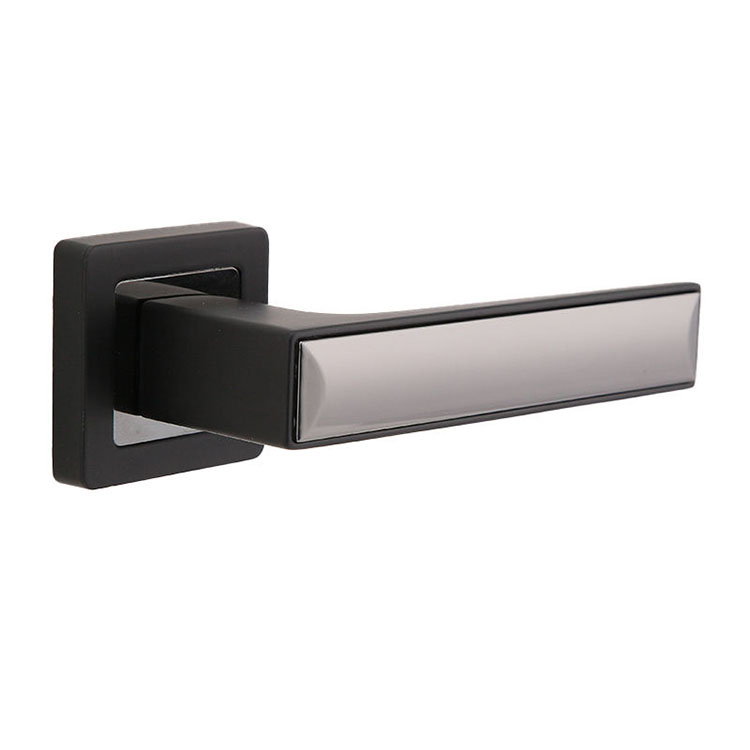
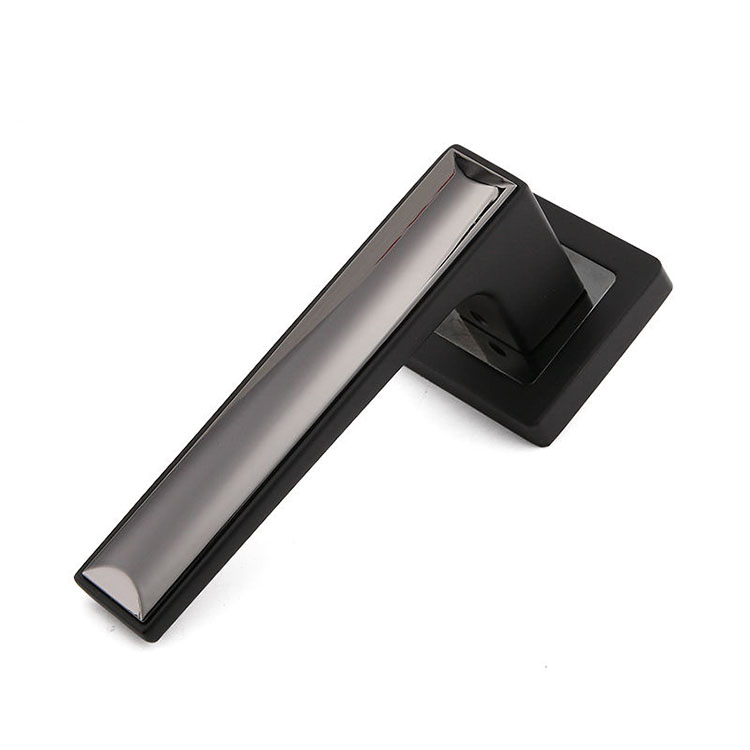
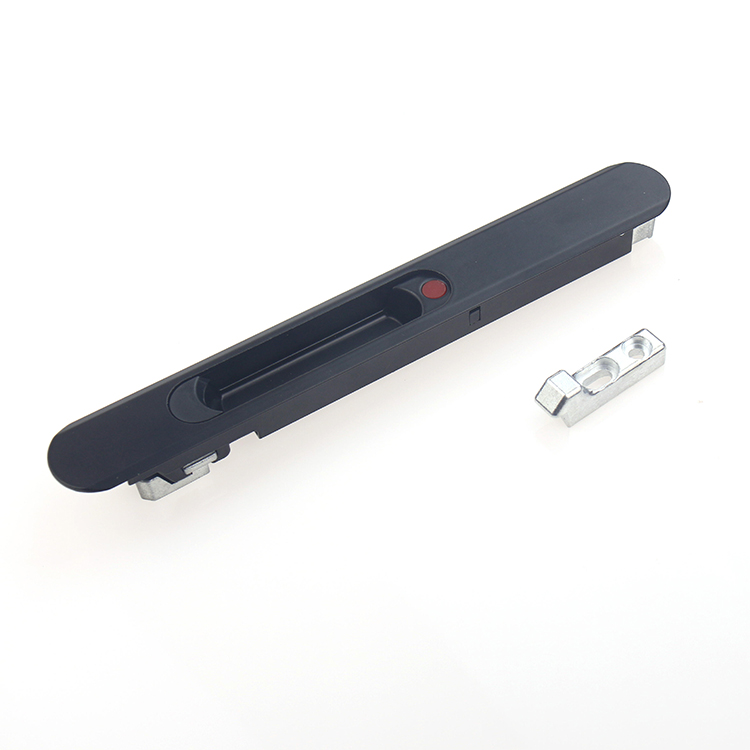
If you are specifying or buying black aluminum handles for doors, windows, casement systems, or sliding systems, start with the actual hardware family. On this site, I would begin with the black aluminum handle product range and then compare it against the wider door and window handles catalog before deciding whether the problem is finish grade, handle geometry, or maintenance discipline.
Table of Contents
Fading Is Usually a Specification Failure, Not a Color Problem
Black shows abuse faster than silver. That is not an opinion; it is what every warranty desk quietly knows.
The real issue is that buyers use loose phrases like “black anodized,” “black powder coated,” “outdoor black,” or “scratch resistant black aluminum handles” without asking for coating thickness, pretreatment method, seal quality, salt-spray assumptions, UV exposure logic, or cleaning limits. That is not sourcing. That is gambling with better stationery.
According to FGIA’s February 2026 AAMA 611-26 update, AAMA 611 covers anodized finishes produced by batch or continuous coil processes and describes test procedures and requirements for architectural-quality aluminum oxide coatings. The same notice lists the document price at $25 for members and $70 for non-members, which is cheap compared with one failed container of black handles.
For anodized architectural aluminum, Class I and Class II are not decorative adjectives. The Construction Specifier summarizes the common thickness distinction: Class I anodic coating is 18 µm, or 0.7 mil, and above; Class II is 10–18 µm, or 0.4–0.7 mil. Class I is typically the safer call for exterior exposure, salt spray, and heavy use.
My Hard Rule for Finish Approval
I do not approve black aluminum handles from a beauty photo.
I want the alloy, process route, finish type, coating thickness target, sealing method, fastener material, salt-spray reference, UV/weathering reference, cleaning limits, packaging method, and batch traceability. For window programs, Chier’s material selection guide for aluminum window handles makes the same point in a blunt way: “aluminum alloy” alone is not a material spec.
If the supplier cannot tell you whether the handle is extruded 6063, machined 6061, die-cast aluminum alloy, or a mixed assembly with stainless spindle and screws, I would slow the purchase order down immediately.
Scratching Starts Before the Customer Touches the Handle
Scratches rarely begin in normal use.
They start in cartons, on job sites, during glazing, during door-hanging, during cleaning, during protective-film removal, and during that lovely moment when someone uses a utility knife near a matte black lever because the schedule is already late.
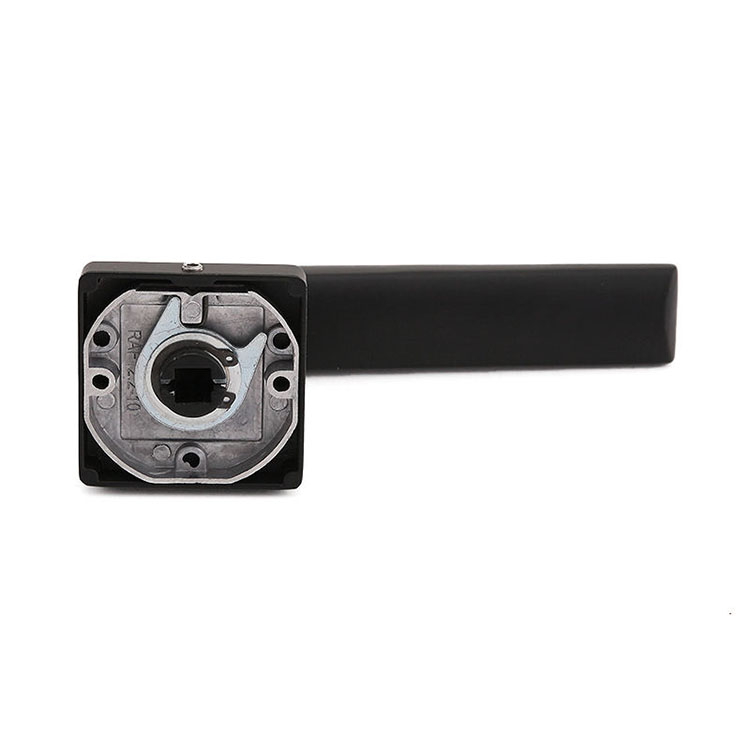
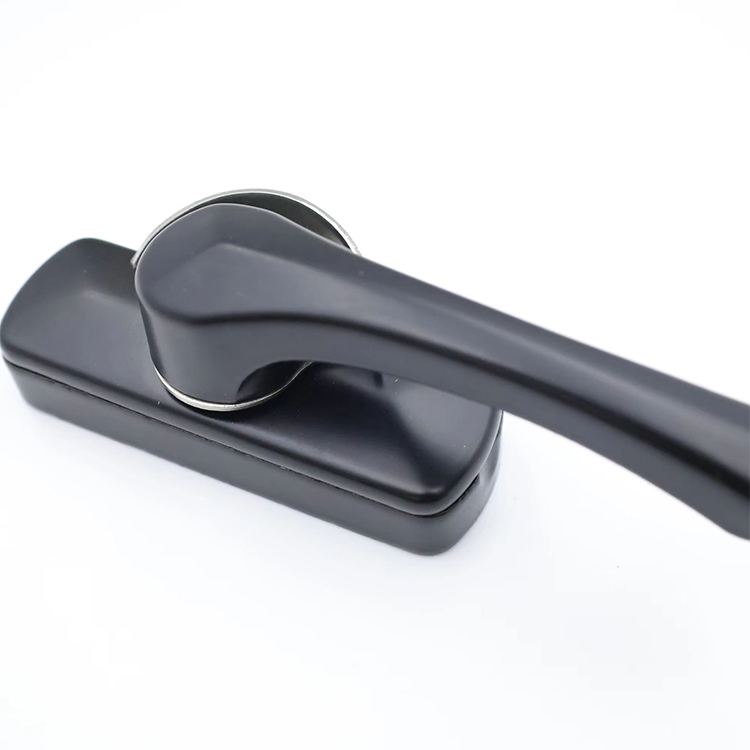
On a practical level, preventing scratches on black aluminum handles means controlling three stages: factory finish quality, transport and installation protection, and daily cleaning behavior. The Black Aluminum Casement Window Lock Handle Private Label OEM page describes a matte black finish with a slim lever and solid base; that kind of clean surface only stays clean if the packaging and install sequence protect the visible touch zone. The same logic applies to a slim black aluminum casement window handle lock used in modern doors and casement windows.
Do not let installers remove protective sleeves too early. Do not stack handles metal-to-metal. Do not clean with gritty towels. Do not use steel wool. Do not use a blade to remove tape residue near the escutcheon. Obvious? Yes. Commonly ignored? Also yes.
The Cleaner Is Often the Culprit
Most fading complaints are not really fading. They are chemical dulling, staining, residue burn, or uneven gloss change.
The AAMA 609 & 610 cleaning and maintenance guide warns against aggressive alkaline or acid cleaners on aluminum finishes and specifically says not to use cleaners containing trisodium phosphate, phosphoric acid, hydrochloric acid, hydrofluoric acid, fluorides, or similar compounds on anodized aluminum surfaces. It also says mild soap and water should be tried first.
That advice matches AAF’s anodised aluminium care guidance, which says aluminum and its alloys are generally corrosion resistant in the pH 5–8 range, while strong alkaline or acid substances and additives containing chloride, fluoride, or sulphate can attack the oxide layer. Their guidance also recommends warm water, pH-neutral detergent, non-abrasive sponge or brush, and a thorough clean-water rinse.
The Cleaning Routine I Actually Trust
Use warm water. Add a pH-neutral detergent. Wipe with microfiber or a soft sponge. Rinse fully. Dry with a clean cloth.
That’s it.
For black anodized aluminum handles care, do not chase “stronger” unless you have identified the soil. Grease, cement haze, silicone residue, coastal salt, sunscreen, disinfectant, and construction dust are not the same problem. Treating them with one harsh cleaner is how facilities teams create their own finish damage.
Failure Modes: What Buyers Blame vs. What Actually Happened
Visible Problem on Black Aluminum Handles
What People Usually Blame
What Usually Happened
Prevention Rule
Uneven fading
“Bad black color”
UV exposure plus weak coating grade or poor dye sealing
Specify AAMA-relevant finish evidence and exterior exposure assumptions
White chalky residue
“Oxidation”
Cleaner residue, salt deposit, cement dust, or alkaline contamination
Rinse immediately and ban aggressive cleaners near handles
Fine hairline scratches
“Customer abuse”
Gritty rag, metal tools, rings, keys, poor packaging, or job-site handling
Use protective sleeves, soft cleaning tools, and install-stage inspection
Glossy rubbed patches
“Cheap aluminum”
Abrasive rubbing changed the surface texture
Do not scrub matte black finishes with abrasive pads unless approved by supplier
Pitting near screw area
“Coating defect”
Trapped moisture, galvanic mismatch, chloride exposure, or damaged screw boss finish
Use compatible fasteners, drainage-aware design, and protected fixing points
Finish peel or adhesion loss
“Bad paint”
Poor pretreatment, contamination before coating, or wrong coating system
Demand pretreatment details, adhesion testing assumptions, and batch records
The Safety Angle Nobody Wants to Put in the Finish Meeting
A handle is not just a decorative lever.
For window systems, the handle is the user’s physical signal that the sash is closed, locked, vented, or unsafe. The U.S. Consumer Product Safety Commission reported that an estimated 5,600 children aged 12 and under were treated in emergency departments in 2024 after falling from windows, and about one in three required hospitalization, according to its 2026 Window Safety Week release. That does not mean a black aluminum handle alone prevents falls. It means bad hardware feedback belongs in the risk conversation.
This is why I like connecting finish choices with system compatibility. If the handle is part of a locking package, read the door handles for multi-point lock systems guide before pretending color is the main decision. A black handle that looks sharp but fights the gearbox, loosens at the spindle, or gives poor closing feedback is not premium hardware. It is a future complaint with a nice first impression.
How to Protect Black Aluminum Handles in Real Projects
1. Specify the Finish Before You Approve the Sample
Ask whether the finish is anodized, powder coated, wet painted, electrophoretic coated, or a hybrid system. Ask whether it is designed for interior, sheltered exterior, coastal exterior, high-touch commercial, or hospitality use.
A sample board is not enough. A supplier can make one beautiful sample and still ship inconsistent production.
2. Treat Matte Black as a High-Touch Finish
Matte black hides fingerprints better than gloss black, but it can show polishing marks, rub spots, and uneven cleaning faster. Use microfiber. Avoid circular aggressive rubbing. Clean with consistent stroke direction when needed.
For black aluminum door handles maintenance in hotels, schools, clinics, and retail spaces, I would put the cleaning rule in the facility manual: pH-neutral detergent, no bleach-heavy spray drift, no acid bathroom cleaner overspray, no unknown degreaser.
3. Control Installation Damage
Keep handles wrapped until late-stage installation. Inspect after glazing, sealant work, plastering, masonry cleaning, and final cleaning. Cement and mortar contamination can be brutal on anodized surfaces if ignored; AAMA maintenance guidance says mortar, cement, and other alkaline materials can quickly corrode anodic coatings if allowed to dry on metal.
4. Match Fasteners to Exposure
A premium black aluminum handle with cheap plated screws is a bad joke. In coastal or humid projects, stainless fasteners and controlled contact points matter. Otherwise, corrosion staining near the screw boss can make the handle look like the finish failed when the real failure was the assembly stack.
5. Buy From a Supplier Who Talks Like an Engineer
I have a bias here, and I will admit it: I trust suppliers who ask annoying technical questions before quoting. Door profile? Sash size? Spindle spec? PZ? Screw centers? Finish exposure? Annual volume? Packaging? Market? Warranty target?
That is why I would use Chier’s OEM/ODM hardware program for any custom black aluminum handle project where finish repeatability, packaging, fitment, and documentation matter. The page describes DFM, tolerance strategy, variant planning, inspection records, CTQ dimensional reports, traceability labels, and change-control logs—exactly the kind of boring paperwork that keeps black hardware from becoming a warranty fight.
FAQs
How do you prevent black aluminum handles from fading?
Black aluminum handles fade because UV exposure, cleaning chemistry, salt contamination, hand oils, poor pretreatment, thin anodic film, or weak powder coating gradually changes the surface appearance, especially on south-facing doors, coastal windows, and high-touch commercial entrances where heat and abrasion repeat every day.
To prevent it, specify the correct finish grade before ordering, clean with pH-neutral detergent, rinse thoroughly, avoid harsh chemicals, and document maintenance intervals. For exterior black anodized aluminum handles, I would rather see Class I anodizing logic or a proven exterior coating system than a vague “durable black finish” claim.
What is the best cleaner for black aluminum handles?
The best cleaner for black aluminum handles is a pH-neutral detergent used with warm water, a microfiber cloth, and a full clean-water rinse, because aggressive alkaline, acid, chloride, fluoride, sulphate, abrasive, and solvent-heavy cleaners can stain, dull, or chemically attack anodized and coated aluminum finishes.
Do not use oven cleaner, strong degreaser, acidic masonry cleaner, bleach-heavy spray drift, steel wool, sandpaper, or mystery janitorial concentrate. Test any new cleaner on a hidden area first.
How do you prevent scratches on black aluminum handles?
You prevent scratches on black aluminum handles by controlling contact, cleaning with non-abrasive materials, specifying harder finish systems, protecting the handle during installation, and avoiding metal tools, rings, keys, gritty rags, and aggressive pads that cut through the visible surface faster than normal hand wear.
The biggest mistake is waiting until handover to inspect scratches. Check the handles after unpacking, after installation, after nearby construction cleaning, and before final acceptance.
What does black anodized aluminum handles care involve?
Black anodized aluminum handle care means preserving the anodic aluminum oxide layer, usually Al₂O₃, by using mild cleaning, immediate rinsing after contaminants, controlled storage before installation, and finish specifications matched to exposure rather than relying on the word “anodized” as a blanket durability promise.
Anodizing is not paint. It is a controlled oxide layer, and black color depends on the anodizing, dyeing, and sealing process. Poor sealing or the wrong cleaning routine can still create discoloration.
Are scratch resistant black aluminum handles really scratch proof?
Scratch resistant black aluminum handles are handles built with a suitable alloy, clean pretreatment, properly sealed anodizing or high-performance coating, compatible fasteners, protected packaging, and field maintenance instructions, so the finish resists daily abrasion instead of looking good only during sample approval.
No black aluminum handle is scratch proof. Keys, rings, tools, sand, cement dust, and abrasive cloth can mark almost anything. The honest goal is controlled resistance, not magic.
How often should black aluminum door handles be cleaned?
Black aluminum door handles should be cleaned at least quarterly in ordinary interior or sheltered exterior use and more often in coastal, industrial, hospitality, school, hospital, and retail settings where salt, sunscreen, disinfectant residue, grit, and repeated touching build up quickly.
For coastal projects, I would make monthly rinsing realistic during salt-heavy seasons. For high-traffic commercial doors, weekly light cleaning may be cheaper than restoring a stained finish later.
Your Next Step
If you are sourcing black aluminum handles, stop asking only for price and photos. Send the supplier your drawing, application, exposure condition, finish expectation, annual quantity, packaging needs, and maintenance assumptions.