Looking for hardware solutions that meet European / American standards?
Use this guided inquiry modal to move from a generic quote form to a clearer technical conversation. Buyers can choose whether they need pricing, CAD / 3D files, or OEM / ODM support before sharing contact details.
Compatibility-first design across door / window systems
Repeatable production with clear inspection checkpoints
Documentation and change control for long-running programs
Responsive engineering support for fit and field feedback
The Finish Is the Sales Trick, Not the Specification
But when a buyer judges window handles mainly by matte black, brushed nickel, satin chrome, dark bronze, anodized silver, or powder-coated texture, they are usually skipping the engineering questions that decide whether the handle still feels solid after 20,000 cycles, still locks cleanly after gasket compression changes, and still resists corrosion when the building sits near salt air, pool chemicals, cleaning agents, or winter condensation. So why do so many professional buyers still treat the finish board like evidence?
I’ll say the unfashionable thing: a beautiful finish can hide a weak handle. It can hide thin die-cast walls. It can hide loose spindle tolerance. It can hide lazy spring return. It can hide a screw pack that should never have been approved for the frame.
The market loves photographs. I prefer failure modes.
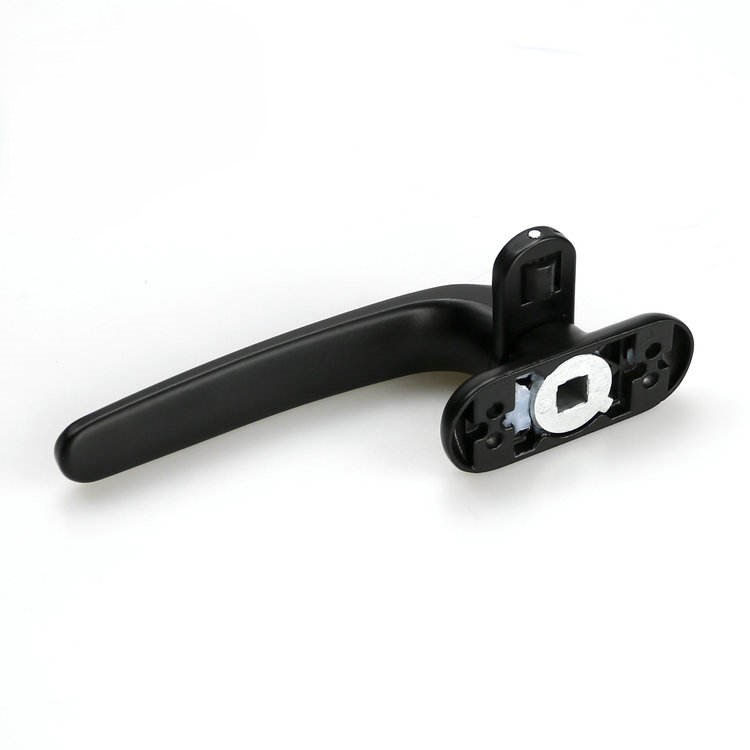
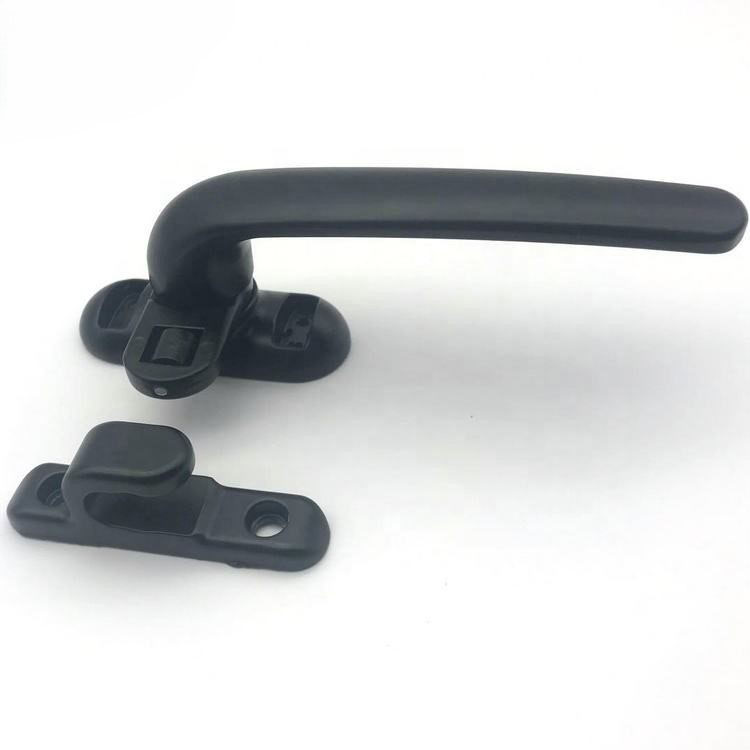
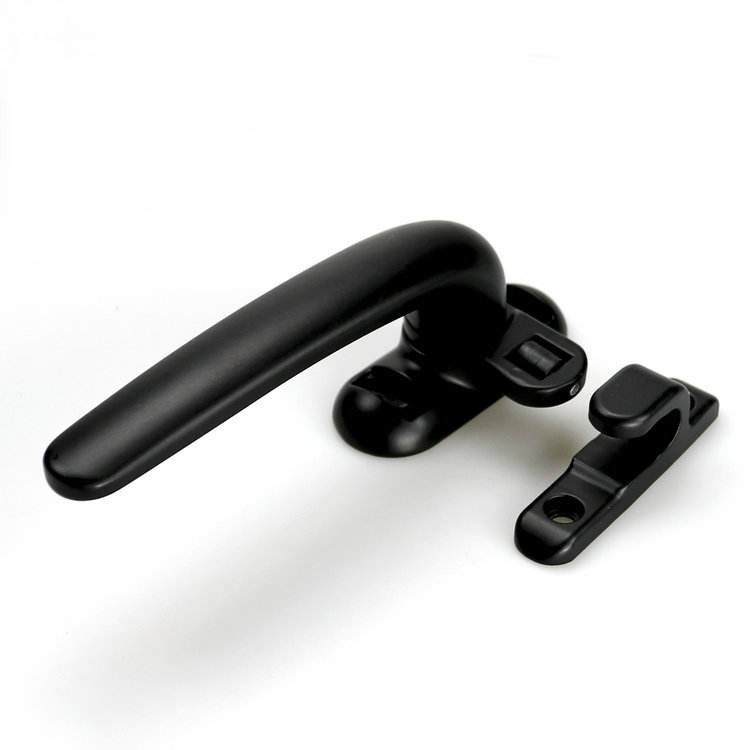
That is why I would start any serious review with the full door and window handles collection and then move quickly into Chier’s guide on modern window handles for aluminum systems, because the real question is not “does this finish match the frame?” The real question is “does this handle belong to the system?”
Table of Contents
What Actually Breaks First: Material, Geometry, Force, and Locking Logic
Cheap hardware rarely admits it is cheap. It shows up in tiny ways first: a lever that sags 1.5 mm lower than the sample, a spindle that rattles under finger pressure, a base plate that flexes when the gasket bites, or a painted surface that looks premium until the first aggressive cleaning cycle.
I care about substrate before shine.
For aluminum window handles, the material story often starts with ADC12 die-cast aluminum, 6063-T5 extruded aluminum, 6061-T6 machined aluminum, zinc alloy/Zamak, 304 stainless steel, or 316 stainless steel. Each can work. Each can fail. The difference is whether the manufacturer has matched the material, wall thickness, fixing method, spring system, spindle interface, and finish stack to the actual opening type.
Here is the hard truth: the best window handles are rarely the fanciest ones. They are the ones whose performance still makes sense after installation tolerances, user abuse, thermal movement, and repeated locking pressure have done their dirty work.
The U.S. Access Board’s ADA standard for operable parts says controls should be usable with one hand, without tight grasping, pinching, or wrist twisting, and with a maximum activation force of 5 pounds, or 22.2 N; even when a specific window product is outside that exact clause, the benchmark is a useful warning against pretty handles that punish the hand.
A Buyer’s Table: Finish Alone vs Real Window Handle Quality
Poor sourcing turns a good sample into a bad production run
This is why a finish-first conversation is usually a weak conversation. It starts with taste and ends with warranty.
For buyers building a real product line, I would pair handle selection with Chier’s article on window hardware design for daily comfort because comfort, force, and state clarity are not decorative extras. They are how users decide whether the window is “good” without ever reading the spec sheet.
Finish Chemistry Has a Short Memory
Black hides sins.
And matte black, in particular, has become the industry’s favorite disguise: it makes cheap geometry look architectural, makes ordinary castings look intentional, and gives a sales team something emotionally easy to sell while the buyer forgets to ask whether the coating is polyester powder coat, fluoropolymer/PVDF, anodizing, electrophoretic coating, PVD, or simple paint over lazy pretreatment. Isn’t that convenient?
I do not hate black window handles. I hate black-window-handle thinking.
A serious finish review should ask for the finish system, not just the color name. Is the pretreatment chromate-free? Is the powder coat rated for exterior exposure? What is the target film thickness: 60–80 μm, 80–100 μm, or something else? Has the supplier tested adhesion after cross-hatch cutting? What happens under neutral salt spray, acetic acid salt spray, alkaline cleaner, sunscreen residue, hand oil, or repeated wet-dry cycling?
And then comes the part buyers dislike: fasteners. A 316 stainless screw inside a coastal assembly may matter more than the visible lever finish. A zinc-plated screw hiding under a premium black cap can become the first corrosion point, and corrosion does not respect your mood board.
For high-volume or private-label programs, I would move this discussion into an OEM/ODM hardware program before approving samples, because finish consistency across 5,000 units is a different problem from finish beauty on one sample.
Security Is Not a Color
Here is where the marketing gets dangerous: “secure window handle” is often used as if a lock cylinder, a black finish, or a heavier lever automatically means better protection. No. That is not how window handle security works.
Security is a system.
A window handle can only support security when it works with the sash, frame, reinforcement, lock body, gearbox, espagnolette, keepers, screws, hinge side, glass specification, and installation detail. If the handle transmits force poorly, the locking points do not engage cleanly. If the keeper alignment is sloppy, the user may think the window is locked when it is barely seated. If the spindle fit is loose, tactile feedback becomes theater.
The FBI’s 2024 reported-crime release covered more than 14 million criminal offenses from agencies covering 95.6% of the U.S. population, while Reuters’ summary of the same national report noted that property crime fell 8.1% and burglary fell 8.6%; that decline is good news, but it does not excuse weak physical security at the opening.
In April 2026, the U.S. Consumer Product Safety Commission reported an estimated 5,600 children aged 12 and under were treated in emergency departments in 2024 after falling out of a window, with about one in three requiring hospitalization, and at least 25 deaths among children 12 and under linked to window falls between 2021 and 2023.
That data should make the hardware industry less casual. A handle is not a child guard. A screen is not a fall barrier. A beautiful window does not become safe because the lever looks expensive.
But window handles still matter because they shape user behavior. A handle that gives poor feedback can leave a sash partly secured. A stiff handle can encourage users not to engage the lock fully. A confusing tilt-and-turn handle can create state ambiguity: locked, tilted, open, mis-operated. And in real buildings, especially apartments, schools, hotels, care settings, and dense residential projects, state clarity is not a nice extra. It is safety behavior translated into hardware.
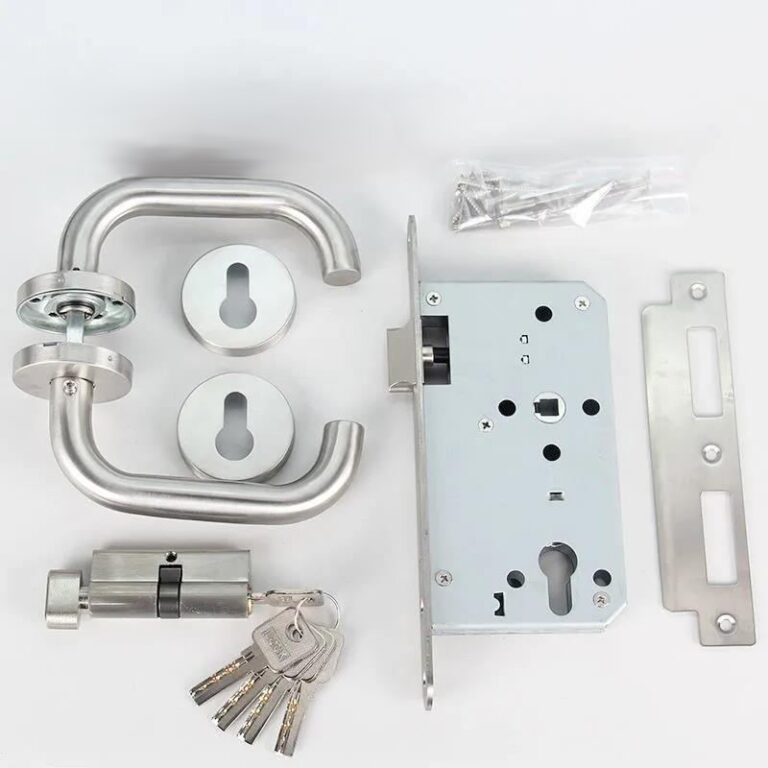
This is where I would send a buyer to the Download Center for drawings, cut-outs, certificates, and technical files instead of letting them approve a product from a rendered image. If the handle is going into a live building, the paperwork needs to be as serious as the finish.
My Specification Rule: Make the Handle Earn Its Place
I would not approve window handles until the supplier answers these questions clearly:
What is the substrate: ADC12, 6063-T5, 6061-T6, Zamak, 304 stainless, or 316 stainless?
What is the lever length, spindle size, fixing hole distance, base thickness, and wall thickness?
What finish system is used, and what pretreatment supports it?
What cycle test, salt-spray exposure, adhesion test, and torque test has the part passed?
What opening type is it designed for: casement, awning, sliding, tilt-turn, hopper, or lift-slide?
What lock body, gearbox, keeper, and gasket compression range does it support?
Can the user identify the lock state by feel and position?
Can the handle be operated with low force by real users, not just the product manager?
Are screws, springs, spindles, caps, and cylinders matched for the same environment?
What changes between sample and mass production?
That last question matters most. The sample lies politely. Production tells the truth.
If the answer is vague, I would not “wait and see.” I would compare the program against Chier’s piece on sourcing premium vs budget window systems because price pressure is exactly where finish-first decisions become expensive later.
The Uncomfortable Verdict on Window Handle Finishes
Window handle finishes are not irrelevant. They matter for architecture, branding, corrosion resistance, cleaning behavior, perceived value, and user acceptance.
But finish is not the product.
A handle with a beautiful coating and poor geometry is still a poor handle. A handle with a premium finish and sloppy spindle tolerance is still a future callback. A handle with a luxury color and weak locking feedback is still a risk. And a handle that looks perfect on a board but fails inside the actual sash-frame-lock system is not premium hardware. It is decoration with a warranty tail.
So here is my rule: judge window handles by the installed experience, not the sample finish. Material first. Geometry second. Locking logic third. Finish after that. And only after that should anyone start talking about whether matte black, graphite, bronze, silver, or champagne looks best against the frame.
FAQs
What is the most important factor when choosing window handles?
The most important factor when choosing window handles is whether the handle matches the window system’s material, opening type, locking mechanism, operating force, corrosion exposure, and expected cycle life, because the finish only tells you how the handle looks, not how it performs after installation. A strong specification should connect the handle to the sash, frame, gasket, gearbox, keeper, and user behavior.
Are matte black window handles less durable than other finishes?
Matte black window handles are not automatically less durable, but they fail quickly when the coating system, pretreatment, film thickness, substrate, cleaning exposure, and corrosion environment are poorly matched to the project. A qualified powder-coated or anodized black finish can perform well, while a cheap black coating over weak metal can become a warranty problem.
How do I judge window handle quality before buying?
Window handle quality should be judged by material grade, wall thickness, spindle fit, screw retention, lever geometry, spring return, locking feedback, cycle testing, corrosion resistance, and documentation tied to the exact window type. I would also ask for drawings, torque data, finish specifications, sample-control rules, and confirmation that production will match the approved sample.
Do window handle materials matter more than finish?
Window handle materials often matter more than finish because the substrate controls strength, thread holding, impact behavior, machining precision, corrosion risk, and long-term tactile feel. The finish can improve surface protection and appearance, but it cannot fully compensate for poor casting, thin sections, weak fasteners, loose tolerances, or a badly matched locking system.
What are the best window handles for security?
The best window handles for security are handles that work as part of a tested window assembly with reliable spindle engagement, strong fixing points, compatible lock transmission, accurate keeper alignment, and clear locked-state feedback. A locking handle alone does not prove security, because the frame, sash, reinforcement, glazing, hinges, gearbox, and installation all affect resistance.
How should I compare durable window handles from different suppliers?
Durable window handles should be compared using the same window type, same operating load, same finish exposure, same locking system, and same production evidence, not by catalog photos or color names. Ask each supplier for material data, finish process, cycle-test results, corrosion-test assumptions, tolerances, drawings, packing method, and change-control rules before comparing price.
Final Thoughts: Stop Buying Finish, Start Buying Proof
The next time a supplier shows you window handles, do not start with the color card. Start with the drawing. Ask for the material. Ask for the spindle tolerance. Ask what happens after 20,000 operations. Ask which lock body it was designed to drive. Ask whether the finish has been tested for the climate where the window will live.
Then request the evidence.
Review the door and window handles, compare the technical logic in Chier’s modern aluminum window handle guide, and send the real project details through the OEM/ODM program before approving a handle that only looks good. Your finish sample will not answer the warranty call. Your specification will.