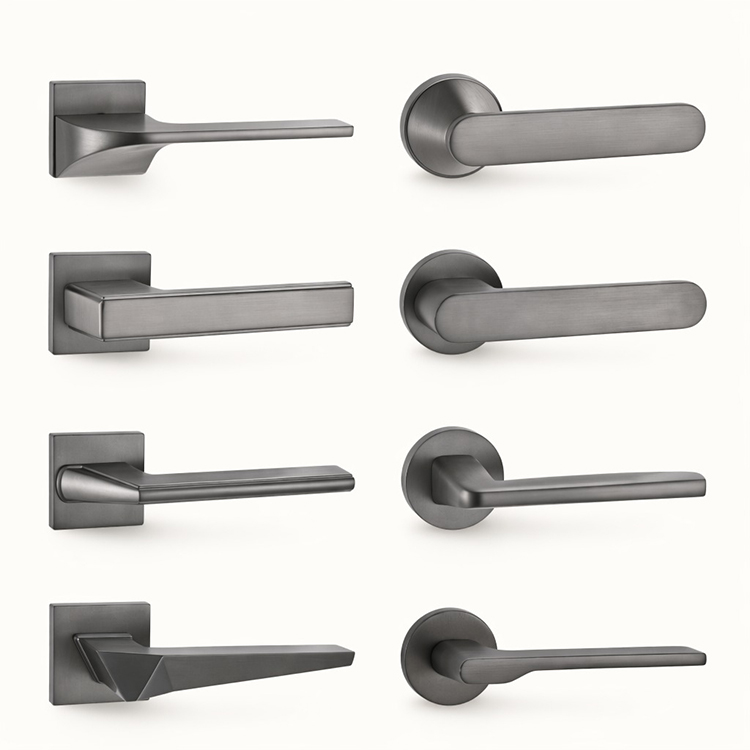
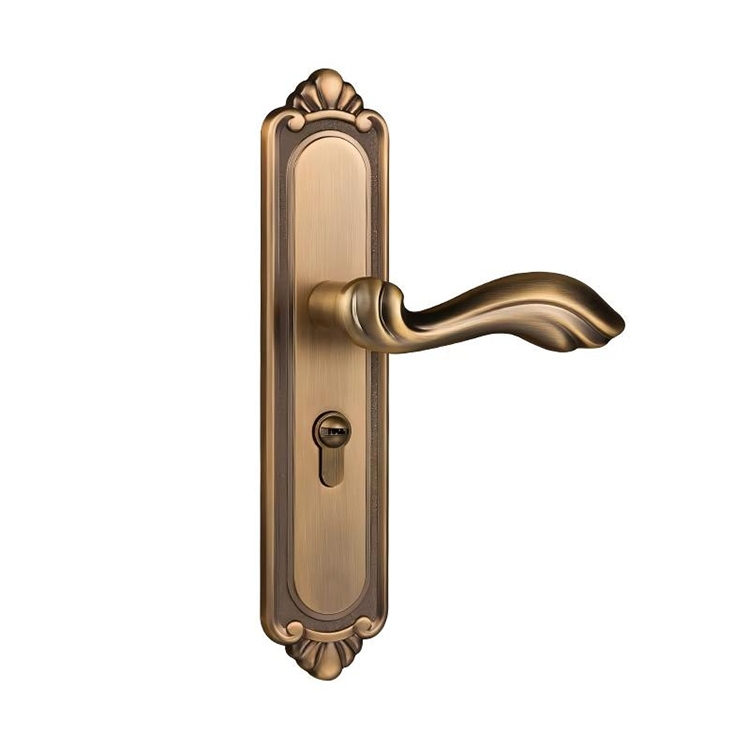
Looking for hardware solutions that meet European / American standards?
Use this guided inquiry modal to move from a generic quote form to a clearer technical conversation. Buyers can choose whether they need pricing, CAD / 3D files, or OEM / ODM support before sharing contact details.
Compatibility-first design across door / window systems
Repeatable production with clear inspection checkpoints
Documentation and change control for long-running programs
Responsive engineering support for fit and field feedback
A key lock box looks simple: metal housing, code mechanism, compartment, done.
It isn’t that simple.
When I compare a push-button key lock box with a rotary-dial mechanical key lock box, I don’t start by counting buttons or asking which front panel looks tougher; I start with the failure modes—how users enter the code, how the mechanism behaves after thousands of operations, how exposed controls react to dirt and weather, how the box is mounted, and what happens when somebody attacks the housing instead of guessing the combination.
Why obsess over code complexity while ignoring four screws holding the entire box to a wall?
That’s the uncomfortable part of this product category. Buyers routinely compare interfaces while burglars, maintenance crews, property managers, and real users interact with the entire assembly.
For anyone specifying a mechanical key lock box, here’s my position upfront: push-button models usually win on speed and low-light usability; four-dial models usually win on transparent code sequencing and simple reset logic. Neither automatically wins on security.
The box construction does.
Push-Button vs Rotary-Dial Key Lock Box: The Short Answer
If frequent access and fast code entry matter most, I generally favor a push button key lock box. If you want an ordered four-digit combination, familiar operation, and straightforward code management, a rotary dial key lock box—usually four independently rotating number wheels—is often the cleaner solution.
But that’s only the interface decision.
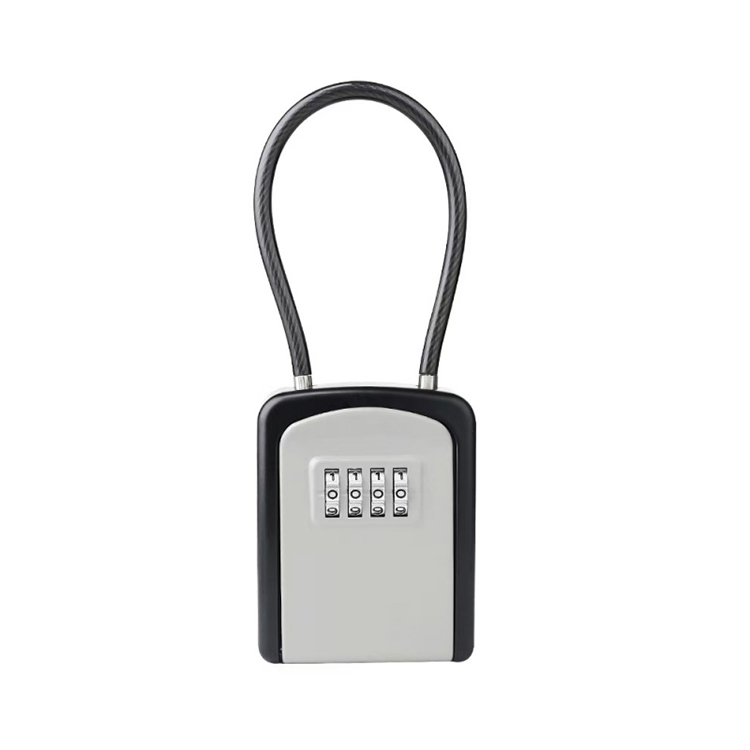
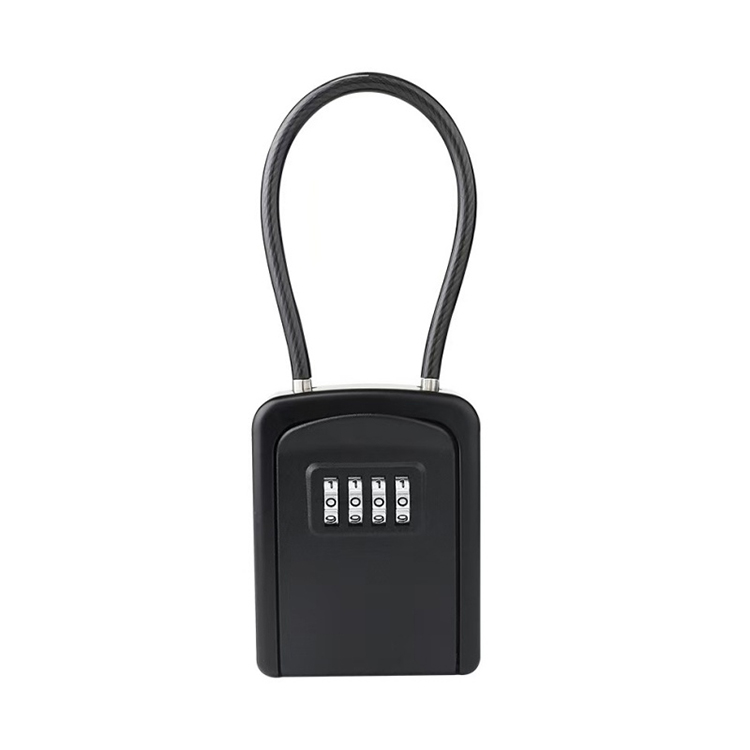
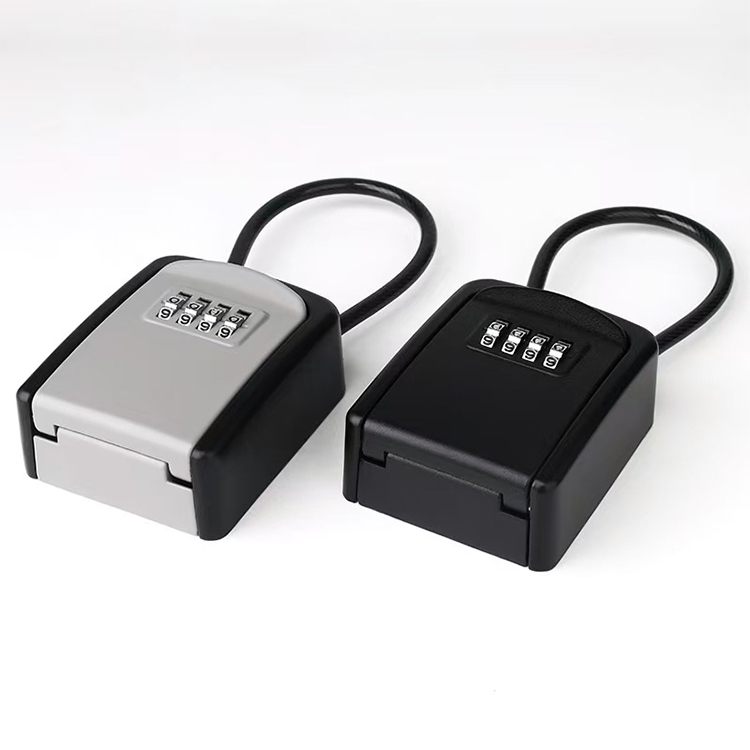
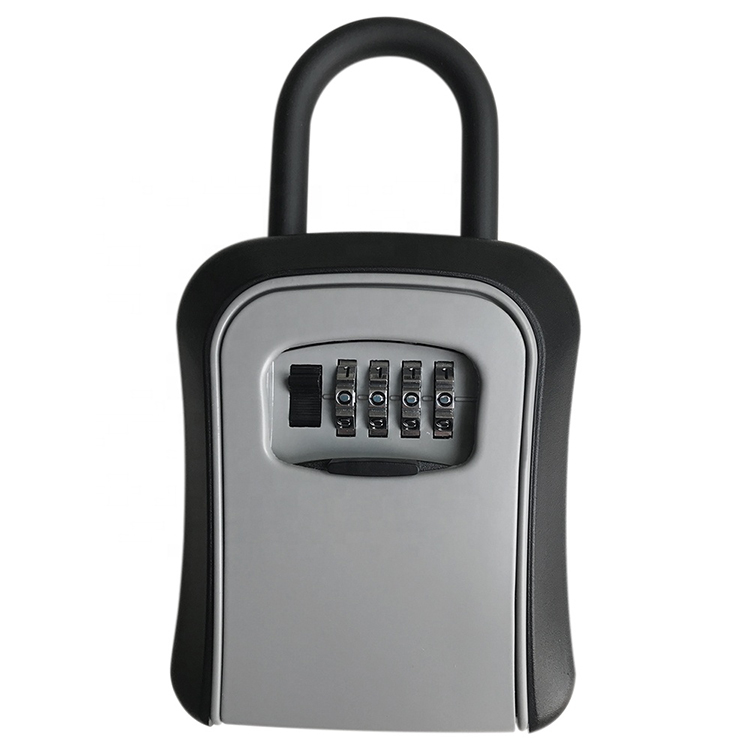
A buyer evaluating CHIER’s broader range of mechanical key lock boxes will find wall-mounted, portable, over-the-door, push-button, and four-dial configurations. Those mounting and construction differences can matter as much as the code mechanism itself.
Here’s the comparison I would use before approving a sample.
Factor
Push-Button Mechanical Key Lock Box
Rotary-Dial / Four-Dial Key Lock Box
Typical input
Individual mechanical buttons
3-4 rotating numeric wheels
Entry speed
Usually faster
Usually slower
Ordered code
Depends on mechanism
Normally yes
Typical four-dial theoretical states
Not applicable
10,000 for 0000-9999
Traditional button-code behavior
Some designs accept selected buttons regardless of order
Each wheel position matters
Gloves / limited dexterity
Often easier with large buttons
Small wheels can be harder
Low-light use
Easier by touch on some designs
Numbers normally need to be seen
Accidental code observation
Finger movement can reveal selected buttons
Dial positions may be visible while entering
Reset process
Mechanism-specific
Usually simple wheel reset procedure
Weather sensitivity
Buttons, springs, cover and internal mechanism need protection
Push-button operation reduces fine finger movement.
That’s the appeal.
A user opens the weather cover, presses several large mechanical buttons, operates the release knob or lever, and gets the key. A model such as CHIER’s over-the-door push-button key lock box uses a numbered button panel, separate controls, a turn knob, and an enclosed storage compartment, while its hanging installation differs substantially from a conventional wall-mounted box.
That interface makes sense where access happens repeatedly.
Think maintenance technicians. Care workers. Property staff. Contractors arriving with gloves on. Someone standing outside at 2:00 a.m. trying to enter a code without balancing a phone flashlight against a door.
Push. Turn. Open.
That’s hard to beat.
The Push-Button Code-Space Problem Is More Nuanced Than It Looks
Numbers can mislead.
Many traditional mechanical push-button key safes don’t treat a code like a smartphone PIN in which 1-2-3-4 differs from 4-3-2-1; instead, selected buttons can function as a set, meaning code order may not add additional combinations, although newer mechanisms can use different architectures and substantially expand the available code space.
Would you know that from looking at the keypad?
The Key Safe Company states that traditional mechanical push-button designs may accept code digits in any order, and its published figures range from up to 1,024 combinations for some Classic products to 4,096 for C500/P500 models. Its newer ark Tamo mechanism is advertised at more than 9.7 million combinations, showing why you cannot judge every push-button mechanism by the same mathematical model. Its explanation of mechanical push-button code behavior is worth reading.
This is where buyers make a bad shortcut.
They hear “push button,” assume ten buttons means a ten-digit PIN system, and compare it mentally with an electronic keypad.
Wrong comparison.
Ask the manufacturer exactly how the mechanical code logic works.
Why Four-Dial Key Lock Boxes Remain Popular
Four rotating wheels are brutally easy to understand.
Each dial normally offers digits 0-9. Four independently positioned wheels therefore create 10 × 10 × 10 × 10 = 10,000 theoretical states, from 0000 through 9999.
A current Brink’s four-dial wall-mounted model likewise uses four resettable wheels and an aluminum housing, illustrating how common this architecture remains in mainstream lock boxes. Brink’s describes its current four-dial design here.
Ten Thousand Codes Does Not Mean Ten Thousand Attempts
This distinction matters.
A theoretical combination count measures credential space. It doesn’t measure how long the enclosure survives a screwdriver, pry bar, hammer, saw, drill, or attack on the mounting points.
I would rather buy a well-tested box with a smaller code space than a flimsy 10,000-code box fixed to weak masonry.
Every time.
Security engineers already understand this principle at the system level. The UK’s National Protective Security Authority notes that the effectiveness of locking hardware depends on the hardware and structure around it; a strong lock fitted to weak or poorly installed supporting hardware cannot deliver the expected protection. The NPSA’s lock-selection guidance makes that point explicitly.
The same logic belongs in key lock box purchasing.
The Real Attack Surface Is the Whole Key Safe Box
Here is the industry’s hard truth: criminals don’t have to play by the operating instructions.
They can attack the cover.
They can attack the hinge.
They can attack the mounting screws.
They can attack the release mechanism.
Or they can remove the entire key safe box and work on it elsewhere.
We have recent evidence.
On February 6, 2026, Staffordshire Police reported several incidents around Stoke-on-Trent involving key safes. In one case a key safe had been accessed before entry to a property; in another, suspects reportedly removed the entire unit from the wall. Police advised residents to consider removing keys or moving boxes away from obvious positions near doors. Read the Staffordshire Police warning.
Then, on May 8, 2026, Staffordshire Police reported another case in Newcastle-under-Lyme in which suspects forced entry to a key safe before entering a home and stealing two cars. The police report describes the incident directly.
Those cases don’t prove that every lock box is weak.
They prove something more useful: the threat isn’t limited to code guessing.
Installation Can Cancel Out Good Hardware
A mechanical key safe box should be treated like a small security container.
Mount it to weak material and you’ve created a removable security container.
Mount it next to the door at eye level and you’ve advertised where the key lives.
Use inappropriate screws and the attacker may never have to defeat the combination mechanism.
Thurrock Council’s crime-prevention guidance, reflecting Essex Police advice, recommends properly fixing key safes into solid material such as brick or concrete and choosing products with appropriate security approval. Its key-safe installation guidance is unusually practical.
So when somebody asks me whether a push-button or dial lock is “more secure,” my first response is another question:
Secure against what?
Guessing?
Weather?
Casual tampering?
Tool attack?
Removal from the wall?
Those are different engineering problems.
Attack Resistance Beats Marketing Arithmetic
One of the more useful reference points in this category is LPS 1175, a physical-security testing framework used for attack-resistant products.
I pay attention to that because it evaluates something code-count marketing doesn’t: resistance to physical attack under defined conditions.
For example, published information for the push-button ark Tamo reports an LPS 1175 Issue 8 A10 rating and more than 9.7 million possible combinations, while the C500 family has also been offered with LPS 1175 certification at lower attack-resistance levels depending on version.
The point isn’t that everyone needs one of those particular models.
The lesson is broader.
Ask for test evidence.
Not adjectives.
Not “heavy duty.”
Not “premium zinc alloy.”
Not a photograph of somebody swinging a hammer.
Evidence.
CHIER itself makes the same distinction on its quality control and hardware testing page: test plans should identify the model, installation condition, load or torque, cycle or exposure period, sample quantity, and pass/fail criteria. Its process also calls out repeated-operation testing for looseness, sticking, wear and loss of function rather than treating one generic test statement as proof for every hardware product.
That’s the right procurement mindset.
Push Buttons vs Dials in Real Use
Security isn’t the only variable.
Humans have to operate these things.
And humans are messy.
They forget codes. Wear gloves. Arrive at night. Turn a dial one position too far. Press a wrong button. Leave the dials showing the combination. Fail to scramble them afterward.
For Frequent Access, I Prefer Push Buttons
Push-button boxes make sense where users enter several times per day.
Larger controls reduce fine motor requirements, particularly when compared with compact numeric wheels. Users can often operate them more quickly, and tactile button positioning can help in poor lighting.
That’s the practical win.
But designers need to test button return, contamination, spring behavior, reset procedures and repeated cycling. A sticky button isn’t an aesthetic defect; it can become an access failure.
For Occasional Access, Four Dials Stay Competitive
A four-dial combination key lock box makes sense when access is occasional and users already understand numeric-wheel locks.
The operator sees four positions.
The sequence is unambiguous.
Resetting is usually straightforward.
And because 4827 and 7284 represent different dial arrangements, the interface naturally preserves sequence.
But small wheels have drawbacks. Cold fingers hate them. Gloves make them worse. Dirt collects in recesses. Poorly protected wheels can become stiff.
A design with a proper shutter or protective cover deserves extra attention outdoors.
For Elderly or Emergency Access, Ergonomics Can Beat Raw Code Count
This is where spec-sheet buyers sometimes lose touch with the user.
If a person can’t enter the combination reliably, your “more secure” box may simply lock authorized people out.
Push-button designs with large controls can therefore make sense for emergency access, home-care coordination, maintenance and similar use cases—but product selection still needs to account for the exact user’s mobility and dexterity.
No universal winner exists.
Mechanical Lock Boxes Still Have One Major Advantage: No Power Stack
A purely mechanical key lock box needs no battery, Wi-Fi network, Bluetooth pairing, cloud account, mobile application, firmware update, charging schedule, or subscription.
That’s boring.
I like boring.
For a remote property, construction site, vacation rental backup, utility cabinet area, maintenance entrance or secondary access point, removing the electrical failure chain can be valuable.
But mechanical does not mean maintenance-free.
Outdoor boxes still face water, airborne dirt, freeze-thaw cycles, salt exposure, corrosion and physical wear. A product destined for coastal use deserves a different material and finish discussion from one mounted inside a dry apartment corridor.
This is where buyers sourcing customized products should use OEM/ODM hardware development to define housing material, mounting style, finish, compartment dimensions, code layout, packaging and validation requirements instead of selecting from appearance alone.
A Better Way to Specify the Best Mechanical Key Lock Box
If I were writing a purchasing specification, I wouldn’t write:
Four-digit black lock box, weatherproof, heavy duty.
That tells a supplier almost nothing.
I’d define the actual requirements.
1. Define the Threat
Is the box protecting a low-value spare key inside a controlled building, or a front-door key that gives direct access to a residence?
Those are not equivalent applications.
2. Define User Frequency
Ten openings per year?
Ten per day?
Usage frequency changes the importance of button feel, dial wear, cycle life and reset reliability.
3. Define the Code Policy
Ask:
How many unique combinations are actually available?
Does input order matter?
Can digits repeat?
How is the code changed?
Can users accidentally leave the mechanism in a partially open state?
Is there any override mechanism?
What happens after an incorrect attempt?
“10 buttons” is not a specification.
4. Define Mounting
Wall-fixed, shackle, hanging loop, or over-door?
This changes the attack surface considerably.
CHIER’s own product range illustrates the distinction: its lock box category includes fixed wall boxes, portable models and over-the-door configurations rather than treating “key lock box” as one mechanical architecture.
5. Define Environmental Exposure
Specify temperature, rainfall exposure, salt exposure, dust, expected UV exposure and drainage expectations where relevant.
Don’t write “outdoor.”
That’s lazy engineering.
6. Define Verification
Ask for drawings, material information, functional samples and appropriate test evidence.
For project sourcing, CHIER’s technical hardware download resources identify model specifications, dimension/interface drawings, lock-box files and available CAD/3D or installation documentation as part of product review.
What Crime-Prevention Research Says About the Bigger System
A key lock box is one layer.
Not the whole defense.
The College of Policing summarizes research showing that physical security works best as a combination of measures rather than a single device. Its review cites analysis in which Secured by Design-standard developments were associated with a 53% reduction in the likelihood of burglary victimization in the meta-analysis discussed on its situational crime-prevention page. The College of Policing summary is available here.
That number matters because it pulls us out of product tunnel vision.
A strong key safe attached beside a weak door doesn’t create a strong entrance.
Neither does a premium deadbolt with an exposed spare key.
Security is cumulative.
The FBI’s 2024 Reported Crimes in the Nation dataset, released August 5, 2025, contained information on more than 14 million reported criminal offenses from over 16,000 participating agencies, covering 95.6% of the U.S. population. It isn’t a lock-box-specific dataset, but it reminds us that access security belongs inside a much larger property-crime problem, not in an isolated gadget category. See the FBI’s 2024 crime-data release.
So, Which Type Should You Buy?
Here’s my decision rule.
Choose a push button key lock box when:
Users need fast, repeated access.
Larger tactile controls matter.
Low-light operation is common.
Users may wear gloves.
The exact mechanism provides an acceptable combination architecture.
You can validate physical construction and mounting separately.
Choose a rotary dial key lock box when:
An ordered numeric combination is desirable.
Access frequency is moderate or low.
Users are familiar with four-wheel locks.
Compact mechanical simplicity matters.
You want a visually obvious scramble state after closing.
The dials have sufficient weather protection for the installation.
And choose neither purely because a supplier prints “10,000 combinations” or “high security” on the carton.
That’s not engineering.
That’s packaging copy.
FAQs
Are push-button key lock boxes more secure than rotary-dial lock boxes?
A push-button key lock box is not inherently more secure than a rotary-dial key lock box because real security depends on code architecture, enclosure strength, locking geometry, mounting resistance, material thickness, installation quality, and tested resistance to physical attack rather than on whether users press buttons or rotate numeric wheels.
Some push-button mechanisms have relatively limited unordered combination sets, while newer systems can offer millions of combinations. Four-wheel dial designs commonly provide 10,000 theoretical numeric states. Neither figure tells you how well the box survives forced removal or tool attack.
How do mechanical key lock boxes work?
A mechanical key lock box stores one or more keys inside a locked enclosure and releases its door only after a user mechanically enters the correct combination through buttons, rotating number wheels, or another coded interface, allowing controlled key sharing without batteries, electronics, wireless connectivity, apps, or a separate physical access key.
The entered code mechanically aligns or releases internal blocking components. Depending on the design, the user then moves a slider, lever, knob or door release to open the storage compartment.
How many combinations does a four-dial key lock box have?
A standard four-dial key lock box using four independent wheels numbered 0 through 9 has 10,000 theoretical combinations, because each of the four positions has ten possible values and 10 × 10 × 10 × 10 equals 10,000 possible states ranging from 0000 through 9999.
That mathematical count assumes all combinations are permitted. Users should still avoid obvious codes such as 0000, 1234, repeated digits tied to an address, or easily guessed dates.
What is the best mechanical key lock box for outdoor use?
The best mechanical key lock box for outdoor use is a properly mounted, weather-protected model whose enclosure, code mechanism, fasteners, finish, drainage, corrosion resistance, operating temperature, and physical attack performance have been selected and tested for the actual installation rather than a product chosen simply because its packaging says “weatherproof.”
For exposed locations, I would specifically evaluate a protective cover, recessed controls, corrosion-resistant materials, drainage, mounting substrate, screw specification and evidence from relevant environmental or attack testing.
Is a key safe box safe enough for a house key?
A key safe box can be appropriate for storing a house key when the product has suitable attack resistance, is installed according to its tested mounting method on a strong substrate, uses a well-managed code, and is positioned so it does not create an obvious, easily removable access point beside the protected door.
Recent police reports show why that qualification matters: criminals have attacked and removed key safes to obtain keys. Treat the box as part of the building’s access-control system, not as a decorative accessory.
Should I choose a wall-mounted or portable key lock box?
A wall-mounted key lock box is normally better for a permanent controlled-access point, while a portable or shackle-mounted box is better when temporary placement and relocation matter; the security tradeoff is that removable mounting can introduce another attack path, so installation method should be evaluated alongside the combination mechanism.
For permanent residential or commercial use, I generally prefer a properly engineered fixed installation where the substrate and fasteners can be specified. For temporary contractor, rental or mobile access, portability may outweigh that advantage.
Final Thoughts: Choose the Failure Mode You Can Control
Push buttons are faster.
Four dials are familiar.
Neither answer is enough.
If you’re comparing a push-button vs rotary-dial mechanical key lock box for a real product program, don’t ask only which interface customers prefer. Ask how many combinations the mechanism truly provides, whether sequence matters, how the lock behaves after repeated cycles, how the controls survive contamination, how the enclosure resists prying, and what holds the box to the building.
Then test it.
If you’re sourcing a key lock box for distribution, private label, property access, hardware retail, or OEM integration, review CHIER’s mechanical lock box range and compare the mounting method, usable internal space, code system, protective cover and reset procedure before selecting a model.
For a custom program, send CHIER your target dimensions, mounting method, intended key capacity, finish, logo requirements, annual volume, packaging specification and required testing through the OEM/ODM hardware development service.