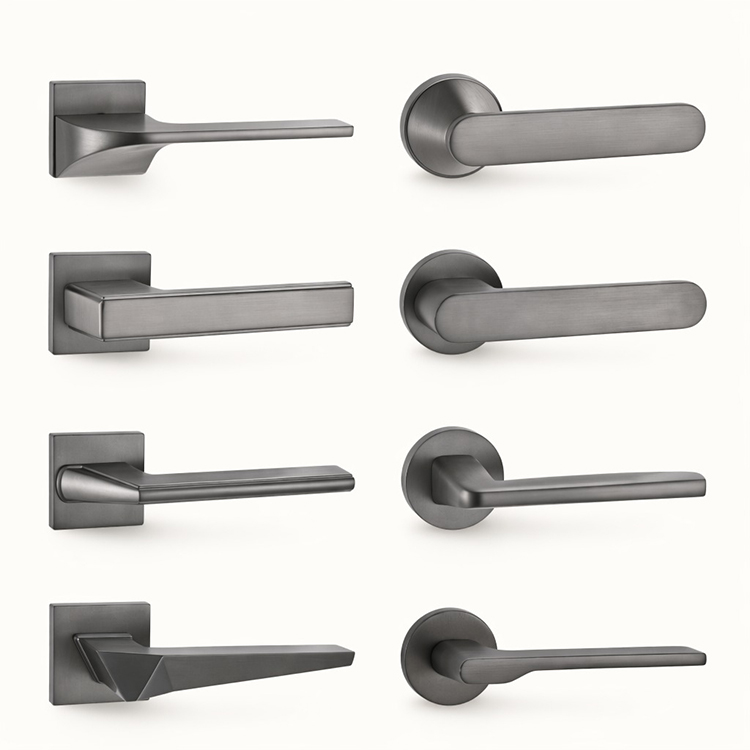
Looking for hardware solutions that meet European / American standards?
Use this guided inquiry modal to move from a generic quote form to a clearer technical conversation. Buyers can choose whether they need pricing, CAD / 3D files, or OEM / ODM support before sharing contact details.
Compatibility-first design across door / window systems
Repeatable production with clear inspection checkpoints
Documentation and change control for long-running programs
Responsive engineering support for fit and field feedback
Five hundred bad handles are a procurement failure.
Small errors compound.
When a bulk project moves from a polished approval sample to hundreds or thousands of installed units, tiny differences in spindle length, fixing position, coating thickness, latch resistance, fastener engagement, profile geometry, or assembly sequence can turn an apparently acceptable handle into a building-wide defect program.
And who usually discovers it?
The installer.
That is far too late.
I do not consider a door handle “approved” because it looks good on a conference-room table. For a serious commercial project, the handle has to work as part of an assembly: handle, spindle, rose or backplate, fasteners, door profile, lock body, latch, keeper, gasket compression, handing, and installation condition.
That distinction matters because many common door handle problems are not really handle problems at all. They are interface problems that appear at the handle.
For buyers sourcing OEM door handles and window handles, that changes the entire quality-control strategy. CHIER’s own sourcing workflow, for example, links handles to profile geometry, mounting methods, spindle configuration, locking interfaces, finish requirements, sampling, and repeat production rather than treating the handle as an isolated component.
Why Door Handle Problems Multiply in Bulk Projects
Bulk procurement creates an uncomfortable mathematical reality: a small defect rate stops being small when the quantity gets large.
Imagine an order of 20,000 handle sets. Even a hypothetical 1% failure rate means 200 affected sets.
Now add sorting.
Then replacement stock.
Then installer call-backs.
Then repacking.
Then freight.
Then the awkward conversation with the customer whose building is already occupied.
This is why I dislike purchasing decisions built almost entirely around FOB unit price. A handle that saves $0.40 at purchase but creates repeated field replacements is not cheaper hardware.
It is deferred cost.
1. Loose Handles and Wobbling Levers
A loose lever is one of the most common door handle issues because several independent errors can produce exactly the same symptom.
Possible causes include:
insufficient screw engagement;
incorrect fastener length;
weak threads;
poor insert retention;
oversized mounting holes;
loose spindle-to-handle connection;
inadequate set-screw engagement;
dimensional drift in the backplate;
installer over-torque or under-torque;
door material that does not provide the expected fixing strength.
This is why “tighten the screw” is often a bad diagnosis.
If 60 handles in the same project loosen after similar service periods, I would stop blaming installers and start looking for a repeatable mechanical cause.
For bulk projects, mounting centers, hole positions, spindle or fork dimensions, lock travel, handing, and profile fit belong in the CTQ—critical-to-quality—plan. CHIER’s door handle quality control and testing process specifically identifies these interfaces as dimensional checks that should be tied to the approved drawing, sample, mating hardware, and production revision.
2. Lever Sag and Poor Return
You press the handle.
It works.
But it does not return fully horizontal.
That is not merely ugly.
Lever sag can come from spring weakness, internal friction, spindle misalignment, excessive lock resistance, poor assembly, component wear, or a handle and lock body that were never properly matched.
And there is a nasty sourcing trap here: a handle can return perfectly when tested by itself and perform badly after installation on the real lock.
That is why isolated bench testing has limits.
My rule is simple: test the assembly.
If the production handle will operate a particular mortise lock, multipoint mechanism, latch, gearbox, or door profile, at least part of the validation program should reproduce that interface.
3. Spindle and Lock-Interface Mismatch
This failure is painfully preventable.
Yet it keeps happening.
A square spindle can be dimensionally correct on paper and still create problems because its usable engagement length, tolerance stack, handle depth, lock follower geometry, door thickness, or installation position differs from the approved assembly.
Common symptoms include:
excess handle play;
incomplete latch retraction;
difficult rotation;
handle binding;
reduced spindle engagement;
premature wear;
lock operation that varies from door to door.
Multipoint systems make interface control even more sensitive because handle movement may be transmitting force through a larger locking mechanism.
For projects containing handles, locks, hinges, latches, and associated parts, a door and window hardware checklist by opening type helps prevent the classic procurement mistake of approving every component independently while nobody verifies whether the complete opening actually works together.
4. Latch Binding and Excessive Operating Force
This one deserves more attention than it gets.
A customer may report that “the handle is stiff,” when the real problem could be latch geometry, door alignment, gasket compression, strike position, lock-body resistance, door sag, machining error, or excessive preload.
In accessible U.S. applications, operating force is not just a comfort issue. The U.S. Access Board states that compliant door and gate hardware must allow one-hand operation, avoid tight grasping, pinching, or wrist twisting, and operate with a maximum force of 5 lbf. The operating hardware is generally required to be 34 to 48 inches above the floor or ground. The U.S. Access Board’s door and gate guidance also notes that lever-shaped handles accommodate a broad range of users.
That makes a hard-to-turn lever more than an irritating warranty ticket.
Depending on the building and jurisdiction, it can become a compliance issue.
5. Finish Variation Between Production Batches
The first sample is matte black.
Production is also “matte black.”
Except one carton looks charcoal, another slightly blue, and replacement stock ordered eight months later looks different again.
Welcome to finish control.
Visible hardware makes color variation brutally obvious because identical handles are often installed repeatedly down the same corridor, hotel floor, apartment block, office level, or retail program.
The buyer therefore needs more than a color name.
The quality agreement may need to define:
substrate;
pretreatment;
coating system;
reference sample;
gloss expectations;
texture;
acceptable visual zones;
viewing conditions;
scratch and pinhole limits;
batch identification;
approval method for future reorders.
I would also keep a controlled finish reference rather than relying only on photographs. Cameras, displays, lighting, and compression make digital color comparison unreliable.
6. Corrosion That Appears After Installation
Salt-spray numbers are abused in hardware sourcing.
A lot.
ISO 9227:2022 covers neutral salt spray and related artificial-atmosphere corrosion tests, but ISO itself warns that the standard does not prescribe the exposure period or interpretation criteria for a particular product. It also describes salt spray as useful for identifying defects and discontinuities in coatings rather than as a simple prediction of real-world service life. See the ISO 9227:2022 overview.
So a supplier saying “passed salt spray” tells me almost nothing.
Which method?
How many hours?
Which substrate?
Which coating?
Was the specimen assembled?
Were edges damaged before exposure?
What constituted failure?
What model and production batch was tested?
Those questions matter far more.
For a coastal hotel, swimming-pool facility, marine-adjacent apartment project, or humid commercial building, corrosion evaluation should be tied to the actual substrate and finish system. A NaCl-based NSS chamber result can help compare coating quality, but it should not be presented as a magical conversion from “hours in chamber” to “years outdoors.”
The Failure Matrix Procurement Teams Should Build Before Production
Here is the type of table I would want in the approval file before releasing a large door handle order.
Verify fastener, thread, hole and spindle interfaces
Torque/function sample inspection
Lever sag
Spring weakness, lock resistance, assembly friction
Handle does not return horizontally
Test handle with intended lock
Cycle and return-action check
Latch not fully retracting
Spindle/interface mismatch
Door catches during opening
Validate complete handle-lock-door stack
Functional assembly test
Difficult operation
Alignment, gasket load, latch resistance
High user effort
Measure operating force/torque
Defined pass/fail operating target
Finish mismatch
Poor color/process control
Different shades between doors
Approve physical finish reference
Lot-to-reference visual inspection
Early corrosion
Weak coating or pretreatment
Blistering, oxidation, peeling
Define corrosion method and acceptance criteria
Review model-specific test evidence
Wrong handing
SKU or packing error
Handle cannot be installed correctly
Freeze handed SKU coding
Carton/label verification
Missing hardware
Packing/BOM control failure
Installer cannot complete assembly
Approved BOM and packing sample
Carton audit
Wrong spindle or screws
Version-control failure
Installation delays or poor engagement
Lock accessory dimensions in BOM
Incoming and final pack-out check
Repeat-order mismatch
Uncontrolled design revision
New stock differs from installed stock
Revision and golden-sample control
Verify current drawing before release
The point is not to create paperwork for its own sake.
The point is ownership.
When nobody owns spindle length, finish reference, screw specification, packaging configuration, or lock compatibility, those details migrate between sales messages, drawings, sample comments, WhatsApp screenshots, purchase orders, and someone’s memory.
That is how bulk door hardware projects go wrong.
Real-World Evidence: Hardware Failure Can Become a Safety and Legal Problem
Procurement teams sometimes treat door hardware as low-risk because each individual component is inexpensive compared with the door, façade, or building.
The evidence says otherwise.
A $450 Lockset Can Still Fail
On December 12, 2018, the U.S. Consumer Product Safety Commission announced a recall involving about 13,500 Stanley Commercial Hardware Grade 1 mortise lever locksets in the United States, plus approximately 800 in Canada and 200 in Mexico.
The affected QMS/QME 100 Series products included privacy, passage, entry, classroom, apartment, storeroom, institutional, and other functions.
The problem?
The lockset could fail to open.
CPSC classified it as an entrapment hazard because occupants could be unable to leave in an emergency. The agency reported eight latch-failure incidents, and the products had sold for roughly $450 to $650 each between December 2013 and June 2018. Read the CPSC recall notice.
Expensive hardware fails too.
That case is worth remembering whenever someone assumes premium pricing eliminates validation work.
Accessibility Mistakes Can Trigger Large Retrofit Programs
In United States v. DKCD, Inc. d/b/a Renaissance Development, a federal consent order entered in 2009 covered 12 multifamily developments with more than 800 covered dwelling units in Louisville, Kentucky.
Among the required corrections: replace inaccessible knob hardware with lever hardware.
The defendants were also required to pay $255,000 to compensate victims and a further $25,000 civil penalty to the U.S. government. The U.S. Department of Justice case summary documents the retrofit and financial terms.
Door hardware was not the only defect in that case.
But that is exactly the point.
A specification mistake at the hardware level becomes part of a much larger building-level liability problem.
Durability Claims Need a Defined Test Standard
“Commercial grade” is marketing language unless somebody defines what it means.
ANSI/BHMA standards give buyers a more useful vocabulary.
For example, BHMA’s overview of ANSI/BHMA A156.13-2022 states that a Grade 1 mortise lock must complete 1,000,000 opening-and-closing cycles with a 10-pound load applied. It also gives a maximum operating torque of 28 in-lbf for lever-operated locks under the referenced performance framework. BHMA’s A156.13-2022 technical summary explains those requirements.
For bored and preassembled locks and latches, ANSI/BHMA A156.2-2022 includes cycle, strength, operational, material, finish, and dimensional testing.
Does every private-label handle project need a one-million-cycle Grade 1 program?
No.
But every serious project needs a defined performance target.
“Good quality” is not one.
How to Prevent Door Handle Failures Before Mass Production
Prevention is not complicated conceptually.
Execution is harder.
Step 1: Freeze the Application Before You Ask for the Price
The supplier should know what the handle is operating.
At minimum, define:
door type;
door material;
profile section;
door thickness;
lock type;
spindle or drive interface;
handing;
mounting centers;
fixing method;
target market;
finish;
use environment;
order quantity;
expected SKU mix.
A quotation based only on a product photograph and target price is not engineering.
It is guessing with a spreadsheet.
Step 2: Build One Controlled Specification
There should be one approved reference set.
Not six.
For custom programs, I would expect the file to include some combination of:
current drawing revision;
approved physical sample;
BOM;
material specification;
spindle specification;
screw and fastener specification;
finish reference;
lock-interface information;
packaging standard;
labeling;
inspection criteria;
functional test requirements.
CHIER’s OEM/ODM door handle development process follows the same general principle: compatibility, function, finish, packaging, inspection requirements, and revision ownership are aligned before a program moves from sample approval into repeat orders. Its production-reference guidance calls for controlled drawings, approved samples, BOM information, finish references, packaging specifications, and inspection requirements.
That is the right direction.
Because the golden sample without the drawing is incomplete.
And the drawing without the sample can also be incomplete.
Step 3: Test the Handle on the Real Door System
I am suspicious of perfect bench samples.
The test fixture should reproduce as much of the real installation as economically practical.
For a lever handle, that may include:
actual lock body;
correct spindle;
intended door thickness;
production screws;
actual profile or representative mounting section;
keeper or strike;
realistic gasket compression;
correct installation orientation.
Operate it repeatedly.
Check return.
Check latch retraction.
Check looseness.
Check noise.
Check interference.
Then remove it and inspect wear surfaces.
What changed?
That question often exposes more than another cosmetic inspection.
Step 4: Define CTQ Dimensions
Do not inspect every dimension with equal intensity.
That wastes time.
Identify the dimensions that can actually stop installation or function.
Typical CTQs can include:
fixing centers;
spindle dimensions;
base geometry;
screw-hole locations;
functional travel;
backplate alignment;
lock-interface position;
handing features;
clearance to frame or panel;
fastener engagement.
The exact list depends on the product.
This is where an engineering-led factory audit of door handle production becomes more useful than walking through a workshop taking photographs. CHIER’s factory-tour documentation focuses on tracing the selected product through forming, machining, drilling, tapping, finishing, assembly, functional checks, inspection, and pack-out against an approved reference.
That is what buyers should inspect: the control chain.
Not the lobby.
Step 5: Approve a Production Sample, Not Just a Prototype
Tooling samples can lie.
Not intentionally.
They simply may have received extraordinary attention.
An engineer may hand-adjust them. A technician may polish them individually. The best coating batch may be selected. Assemblies may be built slowly.
Bulk production does not live in that world.
So before full release, I want a trial-production batch made through the intended process route with the intended components, finish process, assembly method, inspection points, packaging, labels, and operator instructions.
Then inspect that batch.
If the trial batch cannot reproduce the approval standard, scaling output will not improve it.
Step 6: Control Incoming, In-Process, and Final Inspection
Final inspection cannot repair a weak process.
It can only discover the damage.
A serious control plan catches problems earlier.
Incoming inspection can target material and bought-out components.
First-article inspection establishes the production baseline.
In-process inspection watches characteristics that can drift during machining, drilling, tapping, finishing, or assembly.
Final inspection verifies appearance, operation, CTQ dimensions, quantity, labeling, and pack-out.
CHIER describes this same staged approach in its quality control system for door handles, including first-article approval, in-process inspection, finish evaluation, cycle-life checks, traceability, nonconformance control, and production-revision management.
The hard truth?
You cannot inspect quality into a bad design.
Step 7: Protect the Project From Silent Changes
This is one of my biggest concerns with long-running hardware programs.
Order one is correct.
Order two is correct.
Then a supplier changes a spring.
Or screw.
Or subcontract coating source.
Or zinc-alloy composition.
Or packaging insert.
Or machining fixture.
Maybe the change seems minor.
Maybe it is cheaper.
Maybe nobody tells the buyer because the external appearance is unchanged.
Then performance shifts.
Change control must therefore cover any material, supplier, tooling, finish, component, drawing, or packaging change capable of affecting the approved result.
Revision numbers matter.
Batch numbers matter.
Dates matter.
Traceability matters.
Especially when the installed project contains 5,000 identical-looking handles and only one production lot starts failing.
What Are the Best Door Handles for Commercial Projects?
There is no universal “best door handle.”
I would distrust anyone who says there is.
The best door handles for commercial projects are the products whose construction, performance class, operating force, finish system, lock interface, fixing method, service environment, accessibility requirements, replacement strategy, and manufacturing controls match the actual building.
A Grade 1 mortise lever suitable for a high-traffic institutional corridor solves a different problem from an aluminum lever handle for a residential sliding system.
And both solve different problems from hardware on an accessible apartment entrance.
Before comparing quotations, I would score suppliers on five things:
Compatibility evidence: Can they review the profile, lock, mounting dimensions, spindle, and handing?
Performance evidence: Can they identify the actual test method, specimen, date, target, and result?
Production control: Can the approved sample and drawing be reproduced at scale?
Change control: Will repeat orders remain tied to the approved version?
Failure response: Can the supplier trace, contain, analyze, and correct a problem by batch?
Unit price comes after that.
Not before.
FAQs
What are the most common door handle problems in bulk projects?
The most common door handle problems in bulk projects are loose fixings, spindle or lock-interface mismatch, lever sag, latch binding, inconsistent surface finish, corrosion, incorrect handing, and dimensional drift between approved samples and production batches, especially when buyers approve appearance without validating the complete door, profile, lock, fastener, and installation stack.
The pattern matters more than the individual symptom. One loose handle may be installation error; repeated loosening across the same SKU or batch points toward a specification, process, component, or interface problem that should be investigated systematically.
How can door handle failures be prevented before mass production?
Door handle failures are best prevented by freezing the complete application specification, testing samples with their intended locks and profiles, defining CTQ dimensions, approving a controlled production sample, documenting the BOM and finish reference, setting measurable functional acceptance criteria, and maintaining batch traceability and revision control through every repeat order.
The biggest mistake is treating sample approval as the end of engineering work. It should be an approval gate before trial production, where the supplier proves that ordinary manufacturing processes can reproduce the agreed result.
What are the best door handles for commercial projects?
The best door handles for commercial projects are handles matched to the actual traffic level, lock mechanism, door construction, accessibility requirements, corrosion environment, finish expectation, maintenance strategy, and applicable performance standard rather than products selected only by appearance, catalog description, unit price, or an unsupported claim such as “heavy duty.”
For high-use commercial locksets, ANSI/BHMA grades provide a useful durability reference. For accessible U.S. applications, operating geometry and force also need attention because the Access Board sets specific requirements for compliant door hardware.
How should door handles be tested before a bulk order?
Door handles should be tested before a bulk order through dimensional inspection, fitment verification, operating-force or torque checks, return-action evaluation, static-strength testing where applicable, repeated-cycle testing, finish inspection, corrosion testing when specified, and complete assembly trials using the intended spindle, lock, fasteners, door profile, and installation configuration.
The test report should identify the model, specimen condition, method, sample quantity, duration or cycle count, acceptance criteria, date, and result. A PDF saying “PASS” without tying the tested specimen to the purchased SKU has limited procurement value.
Does passing a salt-spray test prove a door handle will not corrode?
Passing a salt-spray test means the tested specimen met a defined acceptance criterion after exposure under a specified artificial corrosion method; it does not prove an exact outdoor service life because ISO 9227 does not prescribe universal exposure periods or convert chamber hours into years of field performance for finished door hardware.
That distinction is important. Salt spray can expose coating discontinuities, pores, damage, or process variation, but buyers still need to define substrate, pretreatment, finish system, test duration, sample condition, and failure criteria for the specific project.
Your Next Step: Stop Buying the Sample and Start Buying the Process
Bulk door handle quality is not determined by the nicest sample on the salesperson’s desk.
It is determined by what happens to unit 4,781.
Will its mounting centers match?
Will its spindle engage correctly?
Will its lever return?
Will its coating match unit 17?
Will its screws be the correct length?
Will the carton contain the same hardware approved six months earlier?
And if something fails, can the supplier trace which batch changed?
That is the standard professional buyers should demand.
If you are preparing a bulk door hardware project, freeze the profile, lock interface, dimensions, finish, quantity, test expectations, packaging, and target market before comparing final prices. Then ask the manufacturer to explain exactly how those requirements will survive sampling, production, inspection, and repeat orders.