Looking for hardware solutions that meet European / American standards?
Use this guided inquiry modal to move from a generic quote form to a clearer technical conversation. Buyers can choose whether they need pricing, CAD / 3D files, or OEM / ODM support before sharing contact details.
Compatibility-first design across door / window systems
Repeatable production with clear inspection checkpoints
Documentation and change control for long-running programs
Responsive engineering support for fit and field feedback
A commercial door handle in a quiet private office has an easy life. The same handle on a hospital corridor, school entrance, hotel lobby, apartment common area, airport facility, or busy retail door does not.
That distinction matters.
A handle operated 1,500 times per day would see roughly 547,500 operations in one year. That is a hypothetical traffic calculation, not a test rating, but it exposes the problem with buying commercial door handles from a catalog photograph and a material description.
Specs beat slogans.
When I review a high-traffic hardware requirement, I care far less about claims such as “premium,” “heavy duty,” or “commercial quality” than I do about cycle-test evidence, operating torque, return performance, mounting geometry, finish resistance, lock compatibility, accessibility, spare-parts strategy, and whether the supplier can tie every one of those details to the exact production model being quoted.
Why would a serious buyer accept anything less?
High-Traffic Door Handles Need a Measurable Duty Rating
The phrase heavy duty door handles sounds useful until you ask a supplier to define “heavy duty.”
Then things get uncomfortable.
A product may have a thick lever and a substantial-looking rose yet still rely on a weak spring cassette, loose spindle interface, poorly supported fixing system, or lock case that was never designed for relentless operation. High-traffic performance comes from the complete operating assembly, not visual mass.
For North American projects, ANSI/BHMA performance standards give buyers something far more useful than marketing language. Under ANSI/BHMA A156.2-2022, Grade 1 bored and preassembled locks are subjected to 1,000,000 opening-and-closing cycles with a 10-pound axial load, while lever-operated locks are required to operate at a maximum torque of 28 in-lbf in the test described by BHMA.
The same million-cycle benchmark appears in ANSI/BHMA A156.13-2022 for Grade 1 mortise locks, again with a 10-pound load.
My purchasing rule is simple: do not write “heavy duty” when you can write a test standard, grade, cycle requirement, and evidence requirement.
And do not assume that one tested component validates another.
If a supplier has tested one lockset to one million cycles, that does not automatically prove that a different lever, spindle, spring cassette, escutcheon, coating, or multipoint gearbox will survive the same duty. Ask what exact configuration was tested.
What Buyers Should Put in a Commercial Door Handle Specification
A useful specification tells the supplier what must survive, what must fit, how performance will be verified, and what evidence must accompany approval.
Here is the framework I would use.
Specification Item
What the Buyer Should Define
Why It Matters
Application
Hospital, school, hotel, office, retail, multifamily, public building, etc.
Traffic, cleaning, security, and abuse levels differ
Estimated duty
Expected openings per day/year and required design life
Converts “high traffic” into a measurable requirement
Performance standard
Applicable ANSI/BHMA, EN, project, or local standard
Prevents vague “commercial grade” claims
Cycle requirement
Required number of tested operating cycles
Establishes durability evidence
Handle type
Lever, pull, lever/pad, recessed, panic interface, etc.
Determines operation and accessibility
Operating force/torque
Maximum allowable operating resistance
Poor ergonomics often exposes lock or alignment problems
Accessibility
Applicable ADA/local accessibility criteria
Prevents an expensive compliance problem
Base material
Stainless steel, aluminum alloy, zinc alloy, or specified combination
Material selection affects strength, corrosion, mass, and cost
Finish
Exact finish code, process, gloss, color tolerance, approved master
“Matte black” is not a technical finish specification
Finish testing
Salt spray, abrasion, chemical, UV, or other required test
High-touch hardware is repeatedly cleaned and worn
Springs, spindles, screws, roses, lock bodies or replacement handles
Reduces long-term maintenance cost
Notice what is missing: adjectives.
“Strong.” “Premium.” “Long-lasting.”
Those words do not belong in a professional RFQ unless somebody defines how they will be measured.
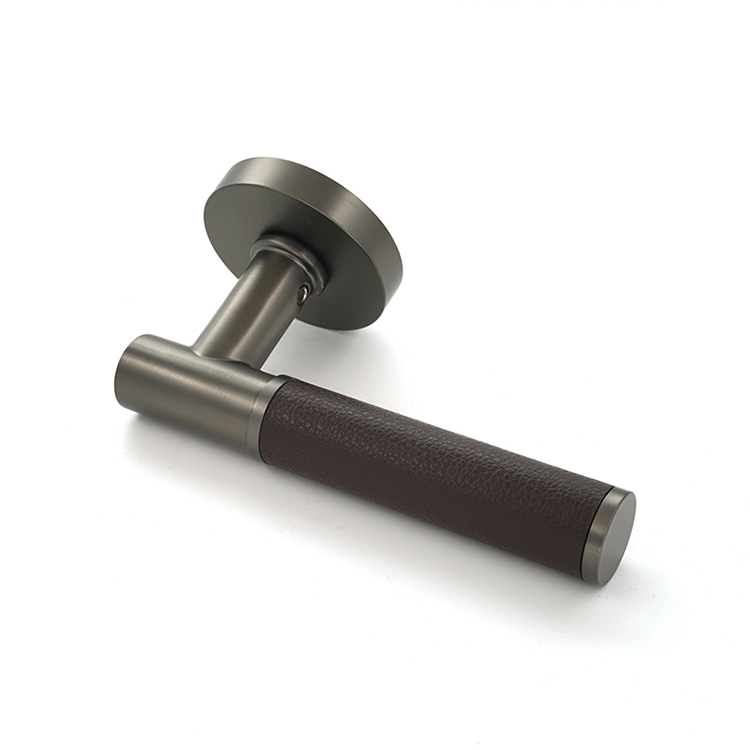
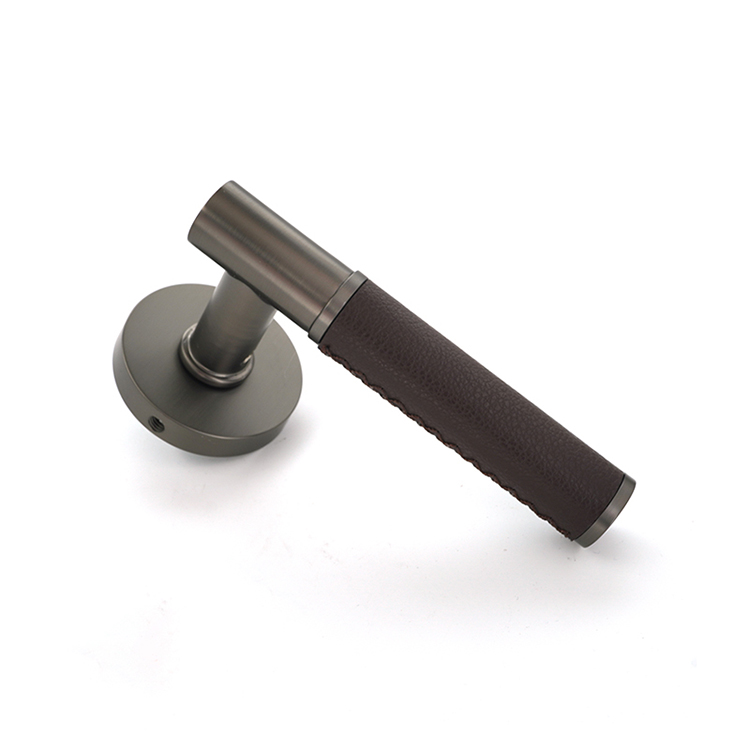
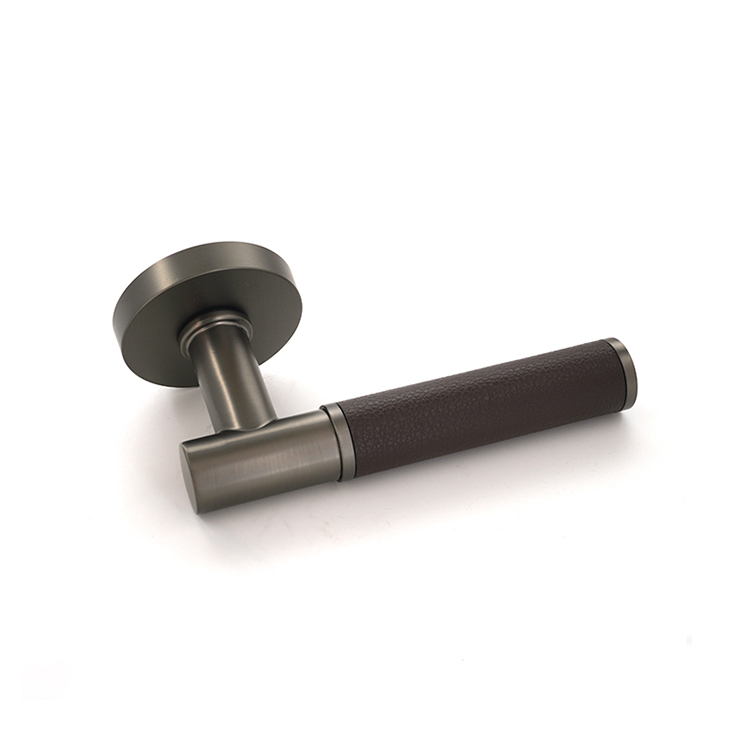
Buyers evaluating different constructions can start by reviewing available OEM door and window handles and then convert the selected geometry into a controlled technical specification rather than ordering from appearance alone. CHIER’s current product range includes lever, pull, locking, sliding, and other handle configurations intended for door and window systems.
ADA Accessibility Can Turn a Small Hardware Error Into a Building Problem
This is where cheap decisions become expensive.
Under the U.S. Department of Justice’s 2010 ADA Standards for Accessible Design, Section 404.2.7 requires handles, pulls, latches, locks, and other operable door hardware to comply with Section 309.4. Operable hardware is generally positioned 34 inches (865 mm) minimum to 48 inches (1220 mm) maximum above the finished floor or ground.
The U.S. Access Board further explains that accessible door and gate controls must permit one-hand operation without tight grasping, pinching, or twisting of the wrist.
That is one reason commercial lever handles dominate accessible applications. A round knob may look perfectly normal in a catalog yet demand exactly the type of wrist action accessibility rules are designed to avoid.
This is not theoretical compliance trivia.
In a 2016 U.S. Department of Justice voluntary compliance agreement involving Vinarc LLC and an office building in Falls Church, Virginia, a complaint alleged that replacement door lock hardware installed during renovations was positioned too close to the finished floor and therefore failed to comply with ADA requirements. It is an enforcement example rather than a judicial precedent, but for buyers the lesson is more useful than the label: newly purchased hardware can create a compliance defect instead of correcting one.
Accessibility has to enter the specification before the purchase order.
Not after installation.
The Handle, Lock, Spindle, Door and Frame Are One Mechanical System
One of the industry’s more expensive habits is treating the visible handle as an isolated component.
It isn’t.
Push a lever down and force travels through the lever hub, spring arrangement, spindle, follower and latch or lock mechanism. On multipoint systems, the operating sequence may also involve a gearbox, rods, hooks, rollers, deadbolts, keeps, gasket compression, and considerably more resistance than a simple tubular latch.
So when a high traffic door handle starts drooping, sticking, or becoming difficult to operate, the visible handle may be the victim rather than the cause.
I would specify at least:
spindle cross-section and exact usable length;
spindle material and configuration;
fixing-hole centres;
rose or backplate dimensions;
door thickness range;
lever rotation;
sprung or unsprung construction;
lock-case follower dimensions;
cylinder/PZ centres where applicable;
handing;
lock function;
fastener type and engagement depth;
allowable lever free play;
return-position tolerance.
For multipoint applications, CHIER’s guide to choosing door handles for multi-point lock systems is useful because it puts PZ measurement, spindle size, screw centres, handing, backplate dimensions, and lock behaviour ahead of cosmetic selection.
That ordering is correct.
Finish comes later.
If a buyer tells me, “We need a matte-black commercial lever handle,” I still do not know enough to source it. I need the door profile, lock interface, function, traffic target, accessibility requirement, exposure, mounting geometry, and test expectation.
Otherwise we are shopping for furniture, not specifying architectural door hardware.
Finish Durability Matters More on High-Touch Doors
A beautiful finish sample proves almost nothing about service life.
One month of human hands, rings, keys, sweat, cleaning chemicals, disinfectants, UV exposure, humidity, and abrasive wiping can reveal weaknesses that a presentation sample never showed.
ANSI/BHMA A156.18-2020 Materials and Finishes addresses builders-hardware finish evaluation, including salt-spray corrosion testing and tests related to wear, chemicals and ultraviolet exposure. BHMA specifically notes that salt-spray evaluation looks for issues such as corrosion, staining, and blistering.
But here is the mistake I see in weak RFQs: the buyer writes only “matte black.”
Matte black what?
Powder coat? Electrophoretic coating? PVD? Painted finish? Anodized aluminum? Blackened stainless? Over which substrate? What pretreatment? What acceptance sample? What color tolerance? What corrosion requirement?
Those questions decide whether hundreds of handles still match after installation.
For a serious project, specify the base material and finish process separately. Then define the applicable test method, exposure requirement, appearance acceptance criteria, and approved finish master.
High-Traffic Buildings Also Create a Cleaning Problem
Door handles are touch points.
That sounds obvious, but it changes the engineering brief for hospitals, clinics, care facilities, schools, airports, hotels, gyms, and other buildings where cleaning happens repeatedly throughout the day.
The U.S. Centers for Disease Control and Prevention identifies door handles as high-touch surfaces in healthcare cleaning guidance. CDC also advises facilities to consider how often surfaces are touched and notes that high-traffic areas may warrant more frequent cleaning or disinfection.
Do not make unsupported “antimicrobial” claims your first line of defense.
I would rather see documented resistance to the cleaning agents actually used by the facility.
If the maintenance team routinely uses alcohol-based cleaners, quaternary ammonium compounds, sodium hypochlorite solutions, hydrogen-peroxide products, or another specified chemistry, the buyer should tell the hardware supplier what exposure needs to be considered and request appropriate compatibility evidence.
The finish and cleaning chemistry have to coexist.
“Stainless Steel” Is Not a Complete Specification
Neither is “aluminum.”
Neither is “zinc alloy.”
Material names alone say surprisingly little about whether a particular commercial door handle is suitable for a high-cycle project because geometry, alloy, wall thickness, casting quality, machining, spring design, fasteners, spindle engagement, coating system, and lock resistance all influence field performance.
For corrosion-prone applications, the exact grade matters.
For coated hardware, substrate preparation matters.
For lever stability, the hub and spring design matter.
For narrow aluminum profiles, mounting geometry may matter more than raw lever strength.
For retrofit projects, a 2 mm error in fixing centres can matter more than a dramatic difference in advertised tensile strength because the “stronger” product may simply not fit the prepared door.
This is why I prefer drawings first.
CHIER’s technical drawing and CAD download resources describe model-specific information such as mounting centres, base dimensions, spindle or fork information, handing, materials, finishes, and hardware interfaces as part of technical evaluation.
Those are the details a buyer should freeze before volume production.
Ask for Evidence From the Exact Production Configuration
Here is where procurement teams can save themselves months of arguments.
Do not ask:
“Do you have test reports?”
Ask:
“Please provide the test report applicable to model X, revision B, using this lever, this lock body, this spindle configuration, this finish, and this test standard.”
Tiny difference. Huge result.
A laboratory report is useful only when you can establish what was actually tested. A certificate for another product family, another substrate, another finish, or an earlier construction revision may tell you little about the parts being shipped.
For high traffic door handles, my pre-production evidence package would normally request:
controlled product drawing;
bill-of-material or material declaration where appropriate;
applicable cycle-test report;
relevant accessibility information;
finish specification and applicable test evidence;
dimensional inspection criteria;
approved golden sample;
lock/handle compatibility confirmation;
installation requirements;
packaging specification;
change-control procedure;
lot or production traceability.
For custom projects, the same logic should extend through OEM/ODM door hardware development: mounting centres, spindle or fork configuration, handing, lock interfaces, finish approvals, and production release need to be tied together before mass production.
And yes, I would verify the factory too.
A glossy factory video is not enough. A useful audit follows the selected product through incoming material, forming or machining, surface finishing, assembly, functional inspection, final inspection, labeling, and packing while checking which operations are performed internally and which are outsourced.
CHIER’s door handle factory audit and production-control process describes this product-specific approach, including critical-to-quality checks, drawing revisions, finish references, inspection records, assembly checks, and packing controls.
That is the level of evidence a commercial buyer should request.
Best Door Handles for High-Traffic Areas: What Actually Wins
There is no universal “best” handle.
There is a best-specified handle for a defined opening.
For a heavily used accessible office or institutional door, I would generally favor a properly tested commercial lever configuration over a knob because the lever can satisfy one-hand accessibility requirements while distributing user force effectively. But even that statement comes with conditions: the lock, spindle, spring system, fasteners, door preparation, closer, hinges, and installation still need to work together.
For exposed entrances, corrosion and finish resistance move higher on the list.
For hospitals, cleanability and chemical exposure matter more.
For schools, impact, abuse, fastening security, and replaceable parts deserve attention.
For hotels and multifamily properties, finish consistency, quiet return, serviceability, keying/access-control coordination, and long-term replacement availability become significant.
For narrow-stile aluminum doors, physical packaging space can decide everything.
For multipoint doors, lock geometry dominates.
There is no magic material.
That is why anyone researching how to choose commercial door handles should start with the opening, not the catalog.
A Specification I Would Send Before Requesting a Quote
For a high-traffic commercial lever handle, a buyer’s project brief could look like this:
Application: High-traffic commercial interior entrance Door Type: Hinged aluminum/steel/timber door, project-specific Traffic Target: State estimated daily operations and required service-life target Handle Type: Commercial lever handle Lock Function: Define latch/mortise/bored/multipoint/access-control interface Performance Standard: Applicable ANSI/BHMA, EN, local or project standard Cycle Requirement: State required cycle rating and request exact-model test evidence Accessibility: Verify applicable ADA/local accessibility requirements Operating Requirement: Define acceptable lever torque/force where applicable Door Thickness: Specify minimum and maximum Spindle: Specify section, length, material and configuration Fixing Centres: State dimensions with tolerance Handing: LH/RH/LHR/RHR or reversible as applicable Lever Return: Specify sprung/unsprung system and return acceptance Material: Define substrate/alloy/grade where required Finish: Process + color reference + gloss + approved master Corrosion/Finish Test: Define required standard and acceptance criteria Cleaning Exposure: Identify required chemical compatibility where applicable Sample Approval: Signed drawing plus approved golden sample Inspection: Critical dimensions + function + finish + packaging checks Traceability: Lot identification and drawing revision required Spare Parts: Define replacement handle/spindle/spring/fastener strategy Change Control: No material, tooling, component, finish, or process change without approval
That is a specification.
“Heavy-duty black lever handle, good quality” is not.
FAQs
What are the best commercial door handles for high-traffic buildings?
The best commercial door handles for high-traffic buildings are handles whose complete operating assemblies have documented cycle durability, controlled operating force, suitable accessibility geometry, proven lock and spindle compatibility, appropriate finish resistance, secure mounting, and replaceable service components matched to the actual door, environment, user population, and expected daily traffic.
In many accessible commercial applications, lever handles are preferable to round knobs because they can be operated without tight grasping or wrist twisting. Buyers should still verify the applicable code, test standard, lock configuration, door preparation, cycle requirement, and finish rather than selecting by handle style alone.
How do I choose commercial door handles for heavy daily use?
Choosing commercial door handles for heavy daily use means converting expected traffic into measurable requirements for cycle life, operating resistance, mounting strength, lever return, lock compatibility, finish durability, accessibility, cleaning exposure, installation geometry, replacement parts, and test documentation instead of relying on supplier labels such as “heavy duty” or “commercial grade.”
Start by identifying the exact opening and estimating operations per day. Then choose the applicable performance standard and request evidence from the same handle-and-lock configuration you intend to purchase.
What ANSI/BHMA grade should I specify for high-traffic door hardware?
For demanding high-traffic applications, buyers commonly evaluate Grade 1 hardware where the applicable ANSI/BHMA product standard provides that classification, but the correct specification must identify the exact hardware category and standard because cycle, strength, security, operational, and finish requirements vary between bored locks, mortise locks, closers, exits, and other components.
For example, ANSI/BHMA A156.2-2022 specifies a one-million-cycle durability test for Grade 1 bored and preassembled locks, while A156.13-2022 uses a one-million-cycle example for Grade 1 mortise locks. Do not transfer a rating from one hardware category to another.
Are commercial lever handles automatically ADA compliant?
Commercial lever handles are not automatically ADA compliant simply because they use a lever; accessibility depends on the installed hardware’s operability, mounting position, required grasping or wrist movement, operating characteristics, door configuration, and other applicable provisions, so buyers should verify the complete opening against the governing accessibility standard rather than approving a handle by appearance.
Under the 2010 ADA Standards, operable door hardware generally must be positioned 34 to 48 inches above the finished floor and comply with the operability requirements referenced by Section 404.2.7.
What should I ask a commercial door handle manufacturer before ordering?
Before ordering commercial door handles, ask the manufacturer to confirm the exact model drawing, material, finish process, spindle and fixing dimensions, door-thickness range, lock compatibility, handing, cycle-test evidence, accessibility requirements, finish testing, sample-approval method, inspection criteria, production traceability, packaging, spare-parts availability, and procedure for controlling engineering or material changes.
Then compare the answers against the approved sample and purchase specification. If a supplier cannot connect its claims to a controlled model, drawing revision, test method, and acceptance criterion, I would not treat those claims as procurement evidence.
Specify the Hardware Before You Negotiate the Price
A cheaper handle that creates callbacks, loose levers, finish complaints, inaccessible openings, replacement problems, or gearbox failures is not inexpensive hardware. It is a deferred invoice.
So start with evidence.
Define the opening. Define the traffic. Define the lock interface. Set the cycle target. Confirm accessibility. Control the finish. State the cleaning environment. Freeze the dimensions. Approve a golden sample. Require traceable inspection records.
Then ask for the price.
If you are sourcing commercial door handles, heavy duty door handles, commercial lever handles, or related architectural door hardware for a repeat project, use CHIER’s window and door hardware design resources to define the application and technical requirements before moving into sampling and production.
Send the supplier your door profile or drawing, lock information, mounting dimensions, target finish, estimated annual volume, applicable standard, expected traffic, and test requirements.