Looking for hardware solutions that meet European / American standards?
Use this guided inquiry modal to move from a generic quote form to a clearer technical conversation. Buyers can choose whether they need pricing, CAD / 3D files, or OEM / ODM support before sharing contact details.
Compatibility-first design across door / window systems
Repeatable production with clear inspection checkpoints
Documentation and change control for long-running programs
Responsive engineering support for fit and field feedback
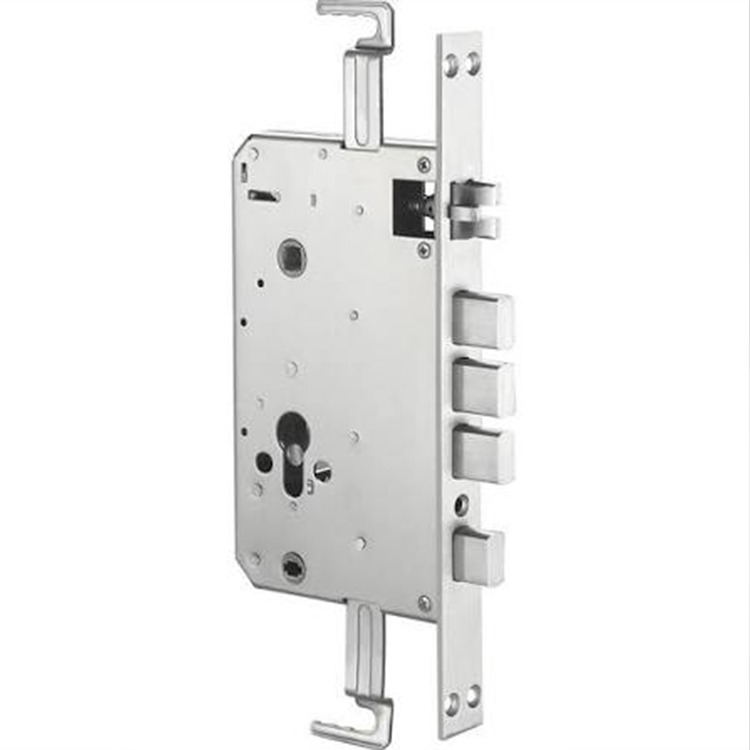
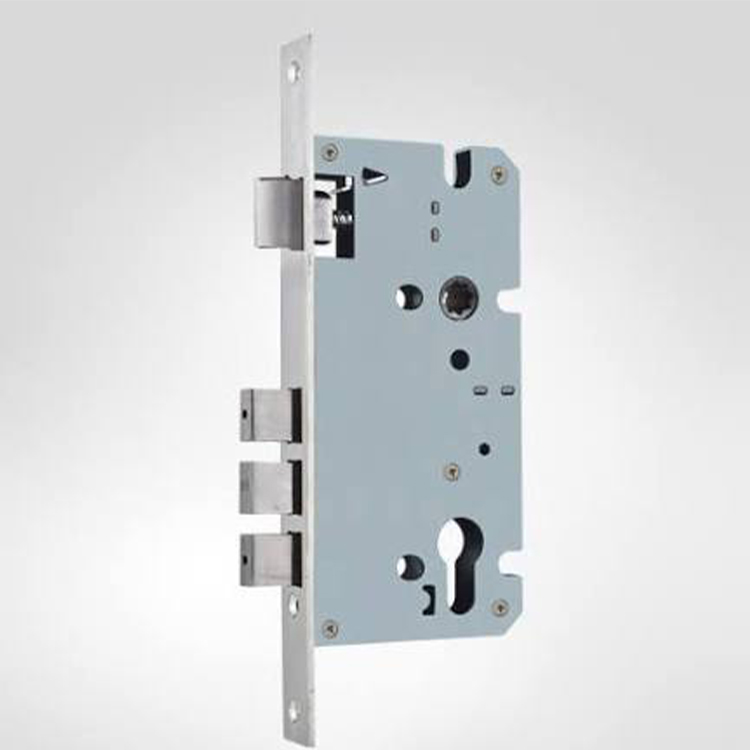
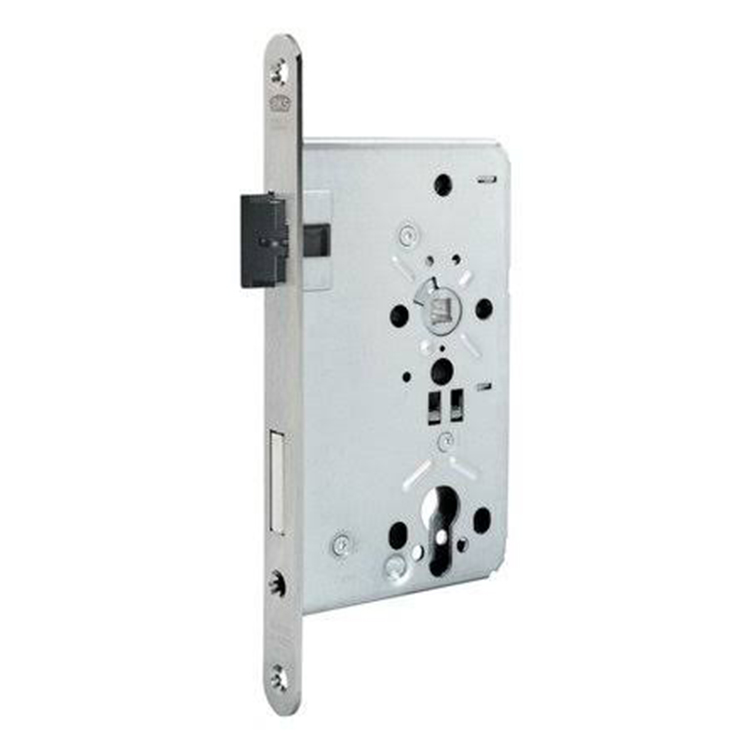
A multipoint lock replacement can mean changing one relatively compact gearbox in the middle of the door, or pulling out the entire faceplate assembly with its connecting rods, hooks, rollers, bolts, extensions, and central case, and confusing those two jobs is how a cheap repair becomes an expensive repeat call.
So which one actually needs replacing?
My rule is simple: replace the failed part only when you can prove the failure is isolated. Replace the complete strip when the rest of the mechanism has become part of the problem.
That sounds obvious. In practice, it gets ignored all the time.
The Real Decision: Failed Gearbox or Failed Locking System?
The gearbox is the transmission.
Inside most mechanically operated multipoint systems, the spindle and/or cylinder drives a central lockcase or gearbox. That movement is transferred vertically through the strip to hooks, rollers, mushrooms, shoot bolts, deadbolts, or other remote locking points. CHIER’s guide to how multipoint door locks work breaks down this relationship between the gearbox, faceplate, keepers, and locking points.
The complete strip is the system carrying that movement.
That distinction matters because a damaged gearbox can exist inside an otherwise serviceable strip. But the opposite is also true: installers sometimes replace the gearbox while leaving behind bent connecting rods, seized hooks, distorted faceplates, corroded extensions, or badly aligned keepers that caused the first gearbox to fail.
Then the new gearbox gets blamed.
Wrong suspect.
A gearbox-only replacement makes sense when:
The gearbox is positively identified as the failed component.
Hooks, rollers, bolts, and extensions move freely.
The faceplate is straight and undamaged.
Connecting rods are not distorted or excessively worn.
Gearbox-to-strip connections match exactly.
Backset, PZ centres, spindle size, case dimensions, and fixing locations match.
The door and keepers have already been checked for alignment.
The replacement component is approved for that specific system or application.
A complete multipoint lock replacement makes more sense when:
More than one part of the strip is damaged.
A hook or roller is seized.
Rod travel is uneven.
The faceplate is bent, cracked, badly corroded, or modified.
Gearbox and strip connectors cannot be matched confidently.
The original lock has been discontinued and the replacement gearbox is only an approximate fit.
Previous gearbox replacements have failed repeatedly.
The lock is part of a doorset with specific security, fire, or project-performance requirements.
Changing the entire assembly produces a cleaner, documented replacement path.
Cheap parts aren’t cheap if they have to be fitted twice.
Gearbox-Only Replacement: When It Actually Makes Sense
A gearbox-only repair can be the right answer.
I would consider it first when the customer or installer can operate the strip manually after the failed gearbox is removed and every remote locking point moves without binding. That tells us something important: the transmission may have failed while the rest of the mechanical chain remains usable.
But identification has to be exact.
Consider a common-looking specification such as:
35 mm backset
92 mm PZ
8 mm square spindle
16 mm faceplate
Those numbers are not a universal multipoint lock standard. Two gearboxes can share all four and still differ in case depth, deadbolt position, screw centres, connector geometry, handing, follower design, or vertical drive travel.
Close isn’t enough.
CHIER’s multipoint lock measurement guide is therefore more useful than trying to identify a replacement from one front-facing photograph. Backset, PZ, faceplate geometry, spindle, case dimensions, and locking-point positions should be recorded before ordering.
The open-door test catches many false gearbox diagnoses
Before removing anything, operate the mechanism with the door fully open.
Smooth when open, stiff when closed?
I become suspicious of the door and frame before the gearbox.
A sagging sash, tight gasket compression, shifted keeper, bowed frame, or hinge problem can load several locking points simultaneously. The resulting resistance travels back through the rods and lands at the gearbox. The user feels a stiff lever and assumes the gears are failing.
Sometimes they eventually do fail.
But they were the victim, not the original cause.
The door sag versus lock failure diagnostic explains this split in more detail: smooth open-door operation combined with stiff closed-door operation points toward frame-side resistance, while stiffness in both conditions gives the gearbox or linked mechanism more reason to be suspected.
Sometimes replacing only the gearbox is penny-wise repair work.
If the complete strip has already spent years operating under high friction, poor alignment, contamination, corrosion, or excessive handle force, a shiny new gearbox does not make those old components young again. It simply becomes the strongest new component attached to the same worn mechanical chain.
Why gamble?
Replace the full strip when wear has spread
Look closely at the locking points.
A hook that hesitates, a roller that travels late, a rod that bows under load, or an extension connection with obvious play changes the load reaching the gearbox. One bad locking point can make the handle feel heavy; several can destroy a replacement gearbox surprisingly quickly.
Faceplate condition matters too.
Flat, U-rail, and profile-specific lock strips are not interchangeable simply because they fit approximately inside the door edge. CHIER’s guide to multipoint lock faceplate types explains why width, section shape, profile seating, and fixing geometry must be treated as functional dimensions rather than cosmetic details.
Obsolete locks change the calculation
This is where repair economics gets ugly.
An obsolete multipoint system may have a usable gearbox equivalent but no exact strip-compatible replacement. Or the reverse: a modern replacement strip may exist, but its locking-point positions no longer line up with the old keeps.
A technician can sometimes adapt a system.
That does not mean adaptation is automatically the best engineering choice.
Once fabrication, keeper relocation, connector modification, extra labour, uncertain spare-part supply, and return-call risk are included, a complete multipoint lock replacement can become the cheaper long-term decision even when its purchase price is higher.
Gearbox vs Full Strip: Cost, Risk, and Serviceability
Current UK trade guidance makes the price difference easier to understand.
The Master Locksmiths Association’s 2026 locksmith pricing guide lists uPVC gearbox repair from about £85, while a complete replacement multipoint strip alone is estimated at roughly £76 to £263+ before labour. Its separate guidance puts some replacement gearbox jobs around £175–£335 including labour, depending on model and circumstances. These are estimates, not fixed national tariffs.
That spread explains why diagnosis matters more than the parts invoice.
Decision Factor
Gearbox-Only Replacement
Complete Multipoint Lock Strip
Initial parts scope
Lower
Higher
Labour
Often lower if access and compatibility are straightforward
Usually higher because full strip removal, fitting, and keeper checks are involved
Best use case
Confirmed isolated gearbox failure
Distributed wear, obsolete system, damaged strip, or uncertain compatibility
Compatibility risk
High if gearbox-to-strip interface is poorly identified
High if locking-point and keeper positions differ
Reuse of old components
Most of the strip remains
Minimal
Risk of hidden wear remaining
Higher
Lower when the replacement assembly is correctly specified
Keeper adjustment
May still be required
Frequently required or at least verified
Documentation
Exact gearbox dimensions needed
Full strip specification needed
Long-term repair confidence
Strong only when remaining mechanism is healthy
Usually stronger when the original system is broadly worn
My preference
Repair narrowly when evidence supports it
Replace broadly when uncertainty is already expensive
The cheapest quotation is therefore not necessarily the cheapest outcome.
And neither is the most expensive.
Diagnose the Failure Before Ordering Anything
Here is the sequence I would use.
1. Operate the lock with the door open
Watch every locking point.
Does the lever move freely? Do all hooks extend together? Does one roller stop halfway? Is the travel smooth or does it jump?
Listen as well.
Grinding, cracking, sharp clicking, or a repeatable hard stop deserves attention.
2. Compare open-door and closed-door operation
This one test eliminates a lot of bad assumptions.
If resistance appears mainly when the door enters the frame, inspect:
Hinge position
Door sag
Keeper alignment
Gasket compression
Threshold contact
Frame bow
Lock-side clearance
Do that before buying a gearbox.
3. Remove the handle and inspect the spindle
A worn or incorrectly sized spindle can imitate gearbox trouble.
Common European multipoint systems often use an 8 mm square spindle, but “often” is not “always.” Measure the actual part.
Check whether the spindle is straight, fully engaged, worn at the edges, or being clamped by overtightened handle fixings.
4. Record the lock specification
Photograph everything before removal.
Then record:
Manufacturer
Model or stamped code
Backset
PZ centres
Faceplate width
Faceplate profile
Spindle size
Case height
Case depth
Screw centres
Overall strip length
Hook positions
Roller positions
Deadbolt position
Extension-strip connections
Handing
Door material: uPVC, composite, timber, or aluminium
For procurement teams, CHIER’s technical download and drawing center specifically asks buyers to confirm the model, application, profile, mounting dimensions, spindle or fork configuration, lock interface, and current document revision before machining or procurement.
5. Inspect the keeps
The frame tells stories.
Polished metal, chipped coatings, elongated screw holes, impact marks, or wear concentrated on one edge of several keepers can reveal where the door has been fighting the lock.
Don’t immediately move every keeper.
If five keepers all show impact on the same relative edge, moving five keepers may only disguise one dropped door.
Security Makes This More Than a Repair-Cost Question
There is a reason I dislike casual parts substitution on security doors.
The lock is not working alone.
The UK’s National Protective Security Authority updated its high-risk residential guidance in June 2026 and recommends, among other suitable arrangements, multipoint locking systems incorporating a deadlock and at least two hook bolts. That does not mean every residential door needs exactly that configuration, but it illustrates how security guidance evaluates locking geometry as a system rather than treating the central gearbox as the entire defence. Read the NPSA guidance.
Recent crime data also gives the discussion some scale.
The Office for National Statistics reported 223,456 police-recorded burglary offences in England and Wales for the year ending March 2026, down 9% from the previous year. Earlier CSEW data for the year ending December 2025 estimated around 327,000 domestic burglary incidents, a 22% decrease from roughly 422,000 a year earlier. Falling burglary does not make incomplete lock engagement acceptable. See the latest ONS crime release.
Security has to work mechanically.
Not on paper.
PAS 24 and Replacement Hardware: Watch the System Boundary
This point causes confusion.
PAS 24 performance belongs to the tested doorset configuration, not automatically to every component carrying a security label.
ERA, for example, publishes specifications for its SureFire Classic 2 Hook multipoint lock showing more than 50,000 endurance cycles, BS EN 1670 Grade 4 corrosion resistance at 240 hours, and PAS 24 performance as part of a compliant doorset. That final phrase matters. See ERA’s technical specification.
A replacement gearbox might function perfectly and still differ from the configuration under which a particular doorset was tested.
So I would never promise that an arbitrary compatible-looking replacement “maintains PAS 24” without checking the doorset manufacturer’s certification scope, approved hardware schedule, or other applicable documentation.
That is the harder industry truth: physical compatibility and compliance compatibility are different questions.
You need answers to both.
The Best Multipoint Lock Replacement Is the One You Can Identify Again
Professional buyers should think one order ahead.
Suppose a distributor replaces 200 failed gearboxes across an installed door range. The repair works. Six years later, the same system needs another service batch.
Can anyone still identify what was fitted?
No revision record. No drawing. No gearbox code. No strip configuration. No approved sample.
Now everyone starts photographing old locks again.
That is avoidable.
For replacement programs, I would record at minimum:
Existing lock identification
Replacement manufacturer and model
Drawing revision
Door profile
Backset and PZ
Locking-point layout
Faceplate profile
Keeper configuration
Spindle
Cylinder relationship
Approval date
Applicable test or project requirements
Installation notes
Approved sample or reference unit
Boring paperwork?
Yes.
Also cheaper than reverse-engineering your own replacement program every few years.
Where Gearbox-Only Repairs Commonly Go Wrong
The replacement gearbox “almost” fits
That’s the classic warning.
Technicians enlarge a fixing hole, grind an edge, alter a connector, or force the case behind the strip because the major dimensions appear correct.
I don’t like it.
A gearbox is transferring load. Changing its fixing or connector relationship without understanding the force path is not the same thing as fitting an approved interchangeable component.
The old strip is already binding
This one destroys new parts.
Installers replace a cracked follower or worn gear train but never test the remote hooks individually.
The new gearbox then has to overcome the same drag that damaged the original.
Failure repeats.
The door remains misaligned
The repair feels beautiful with the door open.
Then it is closed.
The user has to yank the handle upward again because two hooks are striking their keeps. The installer has repaired the symptom and reinstalled the cause.
The wrong faceplate is forced into the profile
A 16 mm number on a drawing does not tell you the entire faceplate geometry.
Profile-specific rails, edge folds, U-channels, fixing positions, end shapes, and lock-body offsets can matter just as much.
Nobody records the replacement
Six months later, someone orders the old part number again.
I’ve seen enough specification workflows to reject that approach on principle: a replacement that cannot be traced becomes tomorrow’s identification problem.
A Practical Decision Rule for Installers and Buyers
Here is the short version.
Choose gearbox-only replacement when:
The diagnosis is isolated, the strip is mechanically healthy, exact compatibility is documented, alignment is correct, and the replacement does not create a compliance or specification conflict.
Wear extends through the system, locking points bind, the faceplate or rods are damaged, the old lock is obsolete, interfaces are uncertain, the repair history is poor, or a complete documented replacement gives you a cleaner engineering result.
And sometimes there is a third answer.
Fix the door first.
A perfectly good multipoint lock installed in a badly aligned sash will eventually become a bad multipoint lock.
FAQs
When should I replace only the multipoint lock gearbox?
You should replace only the gearbox when the failure is clearly isolated to the central transmission, the existing faceplate and remote locking points are straight and free-moving, the gearbox interface matches exactly, and the door operates without frame-induced resistance once alignment has been corrected.
After that diagnosis, confirm backset, PZ, spindle, case dimensions, fixing centres, connector geometry, handing, and deadbolt position. Do not buy by photograph alone. A similar-looking gearbox can fit the handle area yet drive the strip incorrectly.
When should I replace the complete multipoint lock strip?
You should replace the complete multipoint lock strip when the problem extends beyond the gearbox, when rods, hooks, rollers, faceplate sections, or connectors are worn or damaged, when the original specification cannot be matched confidently, or when repeated gearbox failures point to a wider mechanical or compatibility problem.
Complete replacement is also worth considering when the lock is obsolete and future gearbox availability is uncertain. For commercial or OEM programs, standardizing the full mechanism can simplify parts control, technical documentation, keeper matching, and future service.
Is a gearbox-only replacement less secure?
A gearbox-only replacement is not automatically less secure, provided the new gearbox is the correct approved or manufacturer-compatible unit, every locking point achieves full travel, the door and keeps are aligned, and any doorset certification or project specification still permits that exact hardware configuration after repair.
The danger is assuming that mechanical fit proves security equivalence. It doesn’t. On security-rated doors, verify the original doorset specification and approved hardware because standards such as PAS 24 assess system performance rather than rewarding a component simply for fitting inside the door.
How do I identify the correct multipoint lock replacement?
The most reliable way to identify a multipoint lock is to record the backset, PZ or handle-to-cylinder centres, faceplate width and profile, spindle size, case dimensions, locking-point types and positions, overall strip length, handing, and any stamped brand, model, or production code before ordering.
Take photographs with a ruler or scale visible, but use measurements rather than photographs as the final specification. If the original model is discontinued, compare replacement drawings and locking-point positions before assuming the old keepers can remain in place.
Does a stiff door handle mean the gearbox has failed?
A stiff handle does not automatically mean the gearbox has failed, because a dropped door, misaligned keeps, excessive gasket compression, a bent faceplate, damaged remote locking point, incorrect spindle, or overtightened handle screws can all load the same mechanism and create nearly identical symptoms at the lever.
Test the system with the door open. If operation becomes dramatically easier, inspect alignment before condemning the gearbox. If stiffness, grinding, lost motion, or incomplete travel remains with the door open, an internal gearbox or linked-strip fault becomes much more likely.
Your Next Step: Diagnose the System Before You Buy the Part
Do not send a supplier one blurry gearbox photo and ask, “Do you have this?”
Send evidence.
Record the backset, PZ, spindle, faceplate profile, gearbox case dimensions, locking-point positions, overall strip length, door material, existing markings, and photographs of the complete mechanism. If the failure appears only when the door closes, include photos of the keepers and door gaps too.