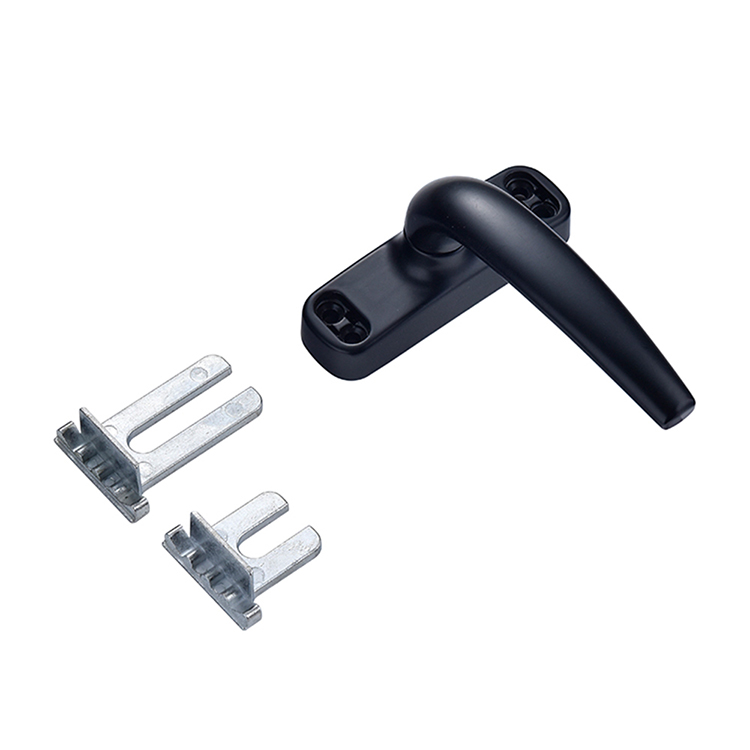
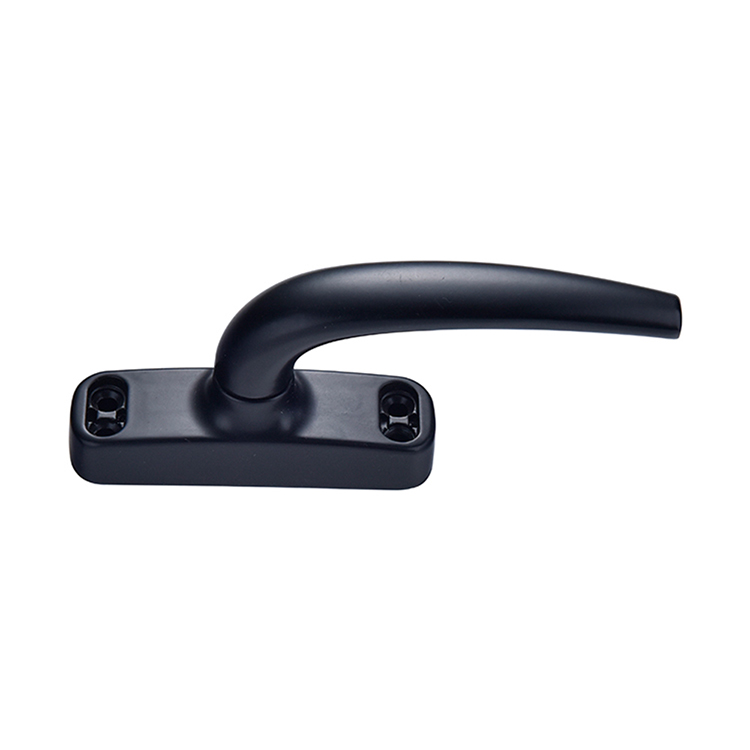
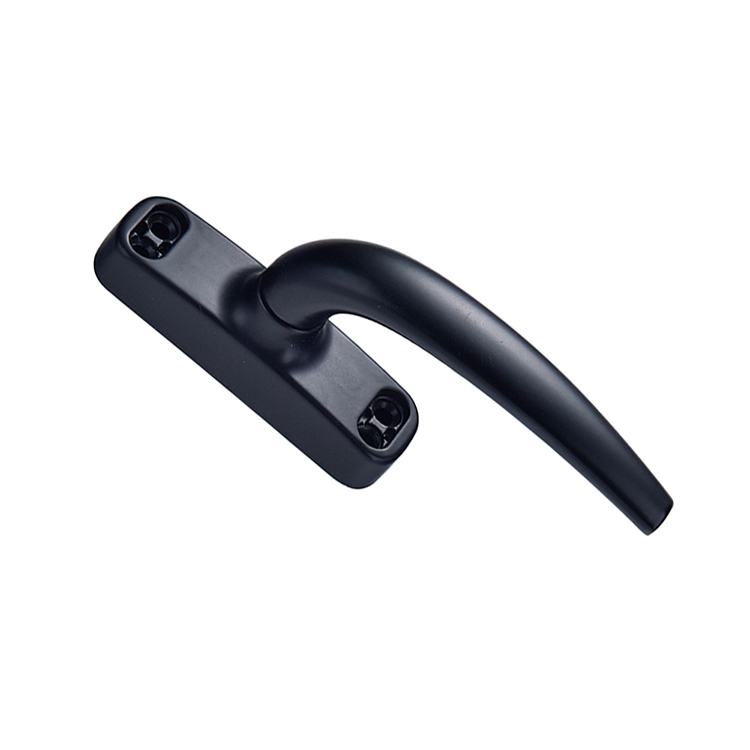
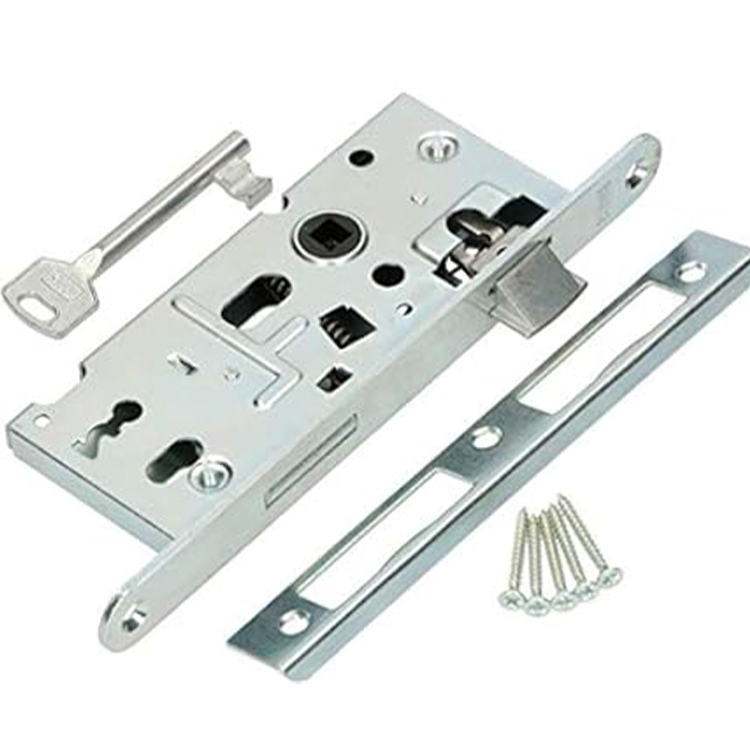
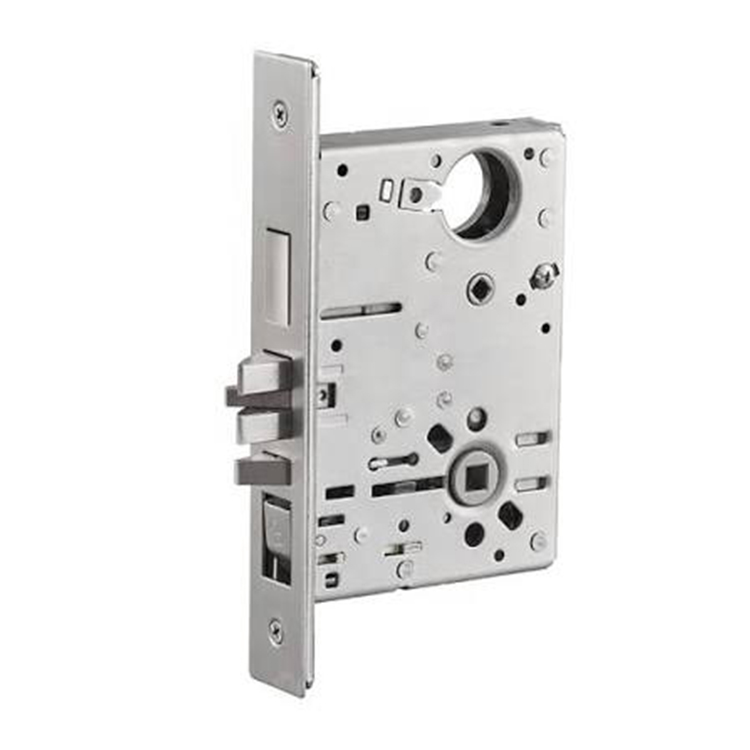
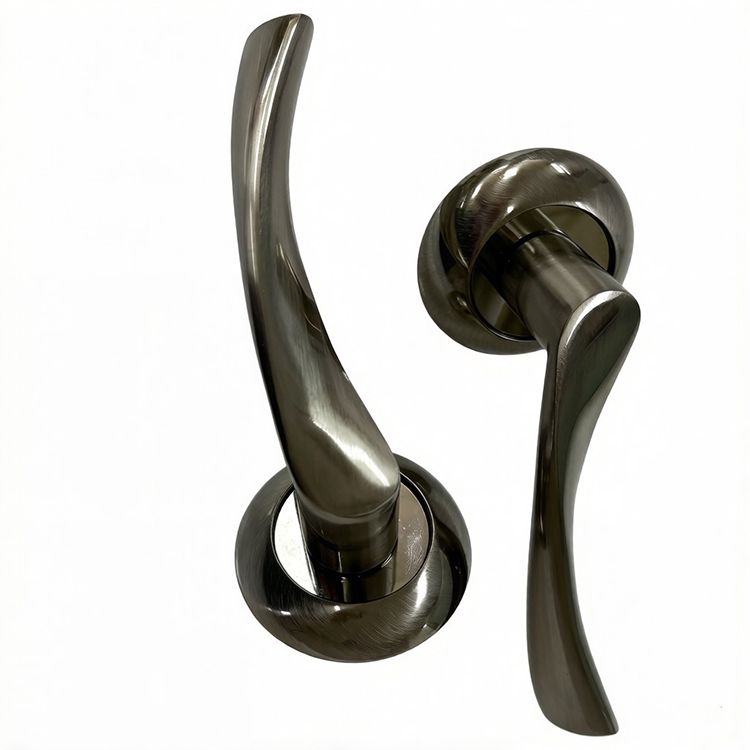
Looking for hardware solutions that meet European / American standards?
Use this guided inquiry modal to move from a generic quote form to a clearer technical conversation. Buyers can choose whether they need pricing, CAD / 3D files, or OEM / ODM support before sharing contact details.
Compatibility-first design across door / window systems
Repeatable production with clear inspection checkpoints
Documentation and change control for long-running programs
Responsive engineering support for fit and field feedback
A window handle may look like the simplest component in the assembly, yet the angle of that lever controls a mechanical chain running through the spindle, gearbox follower, internal drive components, espagnolette rods, cams, rollers, mushrooms, corner drives, and sometimes an entire tilt-and-turn hardware circuit.
So why do people diagnose gearbox failures by looking only at the handle?
I think that is one of the weaker habits in window-hardware troubleshooting.
The handle is the input. The window gearbox is the transmission. And the final locking points are the output.
If those three stages are not synchronized, the window can appear closed while the mechanism is only partly engaged. It can feel locked while a roller is sitting short of its keeper. Or the user can keep applying force because the handle has not reached its expected detent.
That last situation is where expensive damage starts.
What the Window Gearbox Actually Does When the Handle Turns
In an espagnolette or multipoint window system, rotating the handle normally turns a spindle or another drive interface connected to a follower inside the gearbox.
The gearbox converts that rotary input into movement elsewhere in the hardware.
Depending on the system, that output may move:
Espagnolette rods
Mushroom cams
Roller cams
Shoot bolts
Corner drives
Tilt-and-turn linkages
Sash-lifting or anti-mishandling components
This is why buyers should not select a handle independently from its operating mechanism. CHIER’s range of window handles for spindle-drive and other operable sash systems has to be considered together with the lock interface, available travel, mounting geometry, and opening type.
A central gearbox effectively sits between the user’s hand and every remote locking point.
That principle is also visible in CHIER’s diagnostic guide on gearbox replacement versus complete multipoint lock replacement, where the gearbox is treated as the transmission and the connected strip as the mechanism carrying that movement through the system.
The spindle is only the beginning
Imagine a handle rotating through 90°.
At the handle, the movement looks simple. Inside the mechanism, however, that angular movement must become a controlled amount of linear travel.
The gearbox has to move the linked hardware far enough that each locking element reaches its intended position, but not so far that components bottom out against stops, keepers, or internal gearbox limits.
That relationship matters more than appearance.
A polished handle attached to the wrong gearbox is still the wrong system.
Rotation angle and output travel are not interchangeable specifications
This is an important distinction.
A supplier may tell you that a handle rotates through 90° or 180°. That does not automatically tell you how many millimeters the locking rods travel, what sequence the locking points follow, or whether the gearbox is compatible with your sash hardware.
The correct engineering question is:
What does the gearbox output do throughout that rotation?
For professional sourcing, I would want a drawing or physical sample that confirms the spindle or fork interface, operating angle, stop positions, output travel, and mating hardware before approving production. CHIER’s technical download and drawing center is the more sensible place to start than trying to reverse-engineer those relationships from product photographs.
How 0°, 90°, and 180° Handle Positions Change Gearbox Operation
There is no universal rule saying every window must use the same absolute handle orientation.
That matters.
Still, many common espagnolette and tilt-and-turn systems use clearly separated operating positions, often spaced approximately 90° apart. In a conventional tilt-and-turn arrangement, for example, the lever may move between closed, turn-open, and tilt positions.
The exact sequence must always be confirmed for the actual system.
Typical handle-position logic
Handle Reference Position
Typical Mechanical State
Typical Gearbox / Hardware Action
What Can Go Wrong
0° reference / lever down
Closed or locked on many systems
Locking elements move into keeper engagement and sash compression is established
Incomplete rotation may leave cams only partly engaged
Around 45°
Transitional position, normally not an intended resting point
Gearbox and rods are between defined end states
Partial engagement, ambiguous locking state, increased sensitivity to load
90° / lever horizontal
Unlocked or turn-open on many systems
Cams or locking points retract sufficiently to release the sash
Incorrect travel can leave one or more points dragging
90° detent
Positive user-feedback position
Handle mechanism or hardware holds a defined operating angle
Weak detent can make the operating state unclear
180° / lever up
Tilt position on many tilt-and-turn systems
Hardware changes from turn mode to tilt mode through linked corner and scissor components
Incorrect sequencing can produce mishandling or partial mode engagement
Those angles are references, not promises.
Anyone specifying an OEM system should verify the actual motion diagram rather than copy these values into a drawing blindly.
Detent Positions Are More Than a Satisfying Click
People underestimate detents because they feel like an ergonomic feature.
They are not merely ergonomic.
A detent is a defined position where the handle gives tactile resistance or positive retention, helping the operator recognize that the mechanism has reached an intended state.
That may be created in the handle itself or elsewhere in the hardware design.
And this distinction matters: the handle detent and the gearbox end position are related, but they are not automatically the same thing.
A good detent tells the user when to stop
Suppose the hardware is designed around a 90° unlocked position.
The user rotates the lever.
Resistance rises slightly.
The lever reaches horizontal.
Click.
That feedback says: this is a position, not merely an angle encountered on the way to somewhere else.
Without clear feedback, users tend to do one of two things: stop early or push too far.
Neither is desirable.
BSI’s current BS EN 13126-3:2023 specifically covers requirements and testing for the durability, strength, security, and functionality of handles used primarily with Tilt-and-Turn, Tilt-First, and Turn-Only hardware. That is a useful reminder that handle behavior is a performance issue, not an appearance-only specification. See the BS EN 13126-3:2023 scope from BSI.
A detent cannot repair a bad gearbox relationship
This is where specifications go wrong.
A strong 90° click does not prove that the espagnolette gearbox has reached full travel.
The handle might be correct while:
The spindle engagement is inadequate
The gearbox has the wrong drive geometry
The rod travel is incorrect
A corner drive is mismatched
A mushroom cam contacts its keeper too early
The sash has dropped
The gasket is generating excessive compression resistance
A locking point is binding
The click can feel perfect.
The lock can still be wrong.
Partial Handle Rotation Is the Failure Mode Buyers Should Take More Seriously
Half-engagement is ugly.
If a handle is routinely left between designed detent positions, the gearbox can also remain between its intended operating states.
The result depends on the mechanism, but partially moved hardware can leave cams or rods neither fully released nor fully seated.
Now close the sash.
The user feels resistance.
Instead of investigating it, they push harder.
That extra torque returns through the spindle into the gearbox.
And suddenly what began as an alignment problem becomes a broken mechanism.
Why forcing the handle is such a bad diagnostic method
My rule is simple: if a window handle suddenly needs substantially more force, do not use a stronger hand as the repair tool.
Test the system.
Operate the hardware with the sash open, where the locking points are not entering the frame keepers.
If operation is smooth while open but stiff when the sash is closed, I would investigate sash position, keeper alignment, gasket compression, hinge condition, and frame geometry before blaming the gearbox.
CHIER applies the same general diagnostic logic when comparing gearbox faults with wider locking-system problems: resistance that appears mainly when the sash or door enters the frame points strongly toward frame-side loading rather than an automatically failed central gearbox.
But if the gearbox remains rough, skips, jams, loses motion, or refuses to complete its travel when unloaded, internal wear becomes a much more plausible suspect.
The Difference Between Espagnolette and Tilt-and-Turn Gearbox Logic
Not every window gearbox is doing the same job.
That sounds obvious.
Procurement mistakes suggest otherwise.
Espagnolette gearbox operation
A conventional espagnolette gearbox primarily translates handle rotation into longitudinal movement of the locking strip or rods.
Those rods move locking elements into and out of their keepers.
The system is relatively straightforward conceptually:
Handle → spindle → gearbox → linear rod movement → cams → keepers
But the geometry still has to match.
A wrong drive distance can mean insufficient engagement at one end or mechanical over-travel at the other.
If you’re comparing lock families rather than individual components, CHIER’s window and door lock range provides useful context around different locking interfaces instead of treating every small central case as interchangeable.
Tilt-and-turn operation
Tilt-and-turn hardware adds another layer.
Now the handle is not simply commanding locked versus unlocked.
It may be selecting between distinct sash functions.
In a common operating sequence:
Lever down: closed
Lever horizontal: turn-open
Lever up: tilt
Tilt-first systems can use a different sequence.
That is why I dislike specification sheets that merely state “180° handle” with no functional diagram.
It tells me almost nothing.
The hardware must coordinate locking points, corner drives, tilt components, scissor stays, and anti-mishandling features as the handle changes position.
A well-designed system changes state deliberately.
A poorly matched one changes state ambiguously.
Why Intermediate Positions Can Produce Disproportionate Wear
Wear is not always caused by thousands of normal operating cycles.
Sometimes the damaging events are the abnormal ones.
Consider a locking cam that should clear its keeper before the sash moves.
If insufficient handle rotation leaves that cam partly extended, opening the sash can drag metal against metal.
Repeat it 20 times.
Then 200.
The damage will not necessarily appear where the user feels it.
You might see:
Polished edges on keepers
Scraped coatings
Deformed cams
Excessive spindle play
Increasing handle torque
Lost motion before the rods move
A handle that no longer reaches its detent
Gear teeth or follower components eventually failing
The visible symptom arrives late.
This is why CHIER’s quality-control and testing process matters more to me than a showroom demonstration. A sample should not merely rotate smoothly in someone’s hand; it should be evaluated as part of the intended interface and operating system.
Safety Data Makes Reliable Window States More Than a Mechanical Detail
I would not claim that every window accident has anything to do with a gearbox. That would be irresponsible.
But reliable hardware positions matter because windows are safety-related building components.
On April 7, 2026, the U.S. Consumer Product Safety Commission reported that an estimated 5,600 children aged 12 and under were treated in U.S. emergency departments in 2024 after falling from windows, with roughly one in three requiring hospitalization. CPSC also reported at least 25 deaths between 2021 and 2023 among children aged 12 and under from window falls. Read the CPSC Window Safety Week data.
Those figures are not statistics about failed gearboxes.
They are evidence that an operable window’s physical state can carry serious consequences.
UK guidance makes the issue even more concrete. The Health and Safety Executive states that where vulnerable people face a fall risk in health and social care premises, relevant window openings should be restricted to 100 mm or less, and the restrictor should require a special tool or key to disengage. See HSE guidance on falls from windows.
And there is a real incident behind some of that regulatory attention. A UK Department of Health and Social Care alert published on January 28, 2013 recorded a patient death following a fall from a second-floor hospital window and warned about restrictors that could be forced beyond the intended 100 mm limitation. Read EFA/2013/002 on GOV.UK.
Again, that was a restrictor case, not an espagnolette gearbox case.
But the engineering lesson is relevant: a defined window position has to exist mechanically, not merely visually.
What I Would Check Before Approving a Handle and Gearbox Combination
I would not approve a combination because both components accept the same spindle.
That is only one interface.
For an OEM, replacement, or system-manufacturing project, I would document:
Handle operating angle
Required detent positions
Detent torque or tactile behavior
Spindle or fork dimensions
Spindle engagement depth
Gearbox follower orientation
Input rotation range
Gearbox output travel
Direction of rod movement
Locking-point starting positions
Locking-point final positions
Keeper geometry
Required gasket compression
Sash clearance
Tilt/turn mode sequence where applicable
Anti-mishandling behavior
Loaded and unloaded operating force
End-stop behavior
Durability-test requirement
Applicable market standard and test evidence
That is the specification.
“Black handle, 90-degree turn, fits uPVC” is not a specification.
For custom systems, CHIER’s OEM/ODM window hardware development process is built around confirming profile geometry, spindle or fork interfaces, operating function, mating hardware, drawings, samples, and approval criteria before repeat production.
That is the right order.
Interface first. Finish later.
How to Diagnose a Window Gearbox That Does Not Reach Its Detent Position
A handle refusing to reach 0°, 90°, or 180° does not automatically mean the handle is faulty.
Work through the load path.
1. Test the handle with the sash open
If the handle reaches every position normally with the sash open but becomes stiff after closing, the frame-side interface deserves attention.
Check the keepers.
Check sash drop.
Check gasket compression.
Do not order a gearbox yet.
2. Watch every locking point
Rotate the handle slowly and watch the cams, mushrooms, rods, or bolts.
They should move in a coordinated and repeatable way.
One point stopping early is evidence.
Use it.
3. Look at the handle detent separately
Disconnecting the handle, where appropriate and safe, can help establish whether the poor detent comes from the handle mechanism or resistance farther downstream.
A sharp detent with the handle removed but poor positioning when assembled points away from a purely cosmetic handle problem.
4. Check spindle engagement
Too little engagement can produce lost motion.
The wrong spindle section can prevent correct drive.
An excessively long or poorly seated spindle can also create assembly problems.
Measure it.
5. Inspect gearbox motion without frame load
If permitted by the hardware design, isolate the gearbox and linked strip from keeper resistance.
Grinding, sticking, intermittent movement, cracking sounds, or obvious backlash under unloaded operation deserves further investigation.
6. Stop forcing it
This is the cheap step.
And somehow it gets ignored most often.
FAQs
How does a window gearbox work?
A window gearbox is the central transmission that converts rotary movement from the handle and spindle into controlled movement of espagnolette rods, cams, hooks, or other locking elements, so the angular position of the handle determines how far those connected components travel and which intended operating state the sash reaches.
In a basic espagnolette system, the relationship is mainly rotary-to-linear. In tilt-and-turn hardware, that same input can also coordinate multiple operating modes. The gearbox therefore has to match the handle rotation, spindle interface, output travel, locking strip, and keeper arrangement.
What are window handle detent positions?
Window handle detent positions are defined tactile stops that help the user place the lever in intended operating states, often at approximately 90-degree intervals, reducing the likelihood of leaving the gearbox between functional positions where cams, rods, or mode-selection components may otherwise remain only partly engaged.
A detent does not necessarily prove the gearbox has completed its required output travel. That should be validated as a system. If the handle reaches its click before the hardware reaches full engagement, the components are mismatched or incorrectly adjusted.
Can stopping a window handle halfway damage the gearbox?
Stopping a window handle halfway can contribute to gearbox or locking-system damage when the intermediate position leaves cams, rods, or other components partially engaged and the sash is then opened, closed, or forced against its keepers, transferring abnormal resistance back through the spindle and into the gearbox.
One accidental half-position does not automatically destroy a mechanism. Repeated partial engagement is the bigger concern. Inspect the system if the handle regularly stops between detents or needs abnormal force to reach its final position.
Does a stiff uPVC window handle mean the gearbox is broken?
A stiff uPVC window handle does not automatically mean the gearbox is broken, because sash drop, keeper misalignment, excessive gasket compression, incorrect spindle engagement, damaged locking points, hinge movement, or frame distortion can all increase operating resistance and make a healthy gearbox feel defective at the handle.
Operate the mechanism with the sash open. If it becomes dramatically easier, alignment is a stronger suspect. If it remains rough or incomplete without keeper load, the gearbox or connected locking hardware deserves closer inspection.
What handle positions are used on tilt-and-turn windows?
Tilt-and-turn window handle positions are distinct operating commands that typically correspond to closed, turn-open, and tilt functions, commonly arranged across approximately 0°, 90°, and 180° of movement, although the exact orientation and sequence depend on whether the hardware is conventional tilt-and-turn, tilt-first, handed, or manufacturer-specific.
Do not specify the system solely by those three angles. Confirm the actual manufacturer’s operating diagram, gearbox travel, corner-drive relationship, scissor-stay sequence, anti-mishandling function, and required detent positions.
How do I choose the correct window gearbox for a handle?
The correct window gearbox is one whose spindle or drive interface, rotation direction, input angle, output travel, mounting dimensions, locking-strip connection, operating sequence, and intended sash hardware all match the handle and window system, rather than one selected simply because its case dimensions or square spindle appear similar.
For replacement work, record existing markings and dimensions before ordering. For production programs, compare technical drawings and validate the mechanism on the actual profile. The CHIER technical resource center can be used to request model-specific drawings and compatibility information.
Your Next Step: Test the Complete Handle-to-Gearbox System
Do not approve a window handle by rotating it on a desk.
Install it on the intended profile.
Connect the actual gearbox.
Run every detent position.
Measure the resulting locking travel.
Then repeat the test with the sash entering its real keepers and gasket compression.