Looking for hardware solutions that meet European / American standards?
Use this guided inquiry modal to move from a generic quote form to a clearer technical conversation. Buyers can choose whether they need pricing, CAD / 3D files, or OEM / ODM support before sharing contact details.
Compatibility-first design across door / window systems
Repeatable production with clear inspection checkpoints
Documentation and change control for long-running programs
Responsive engineering support for fit and field feedback
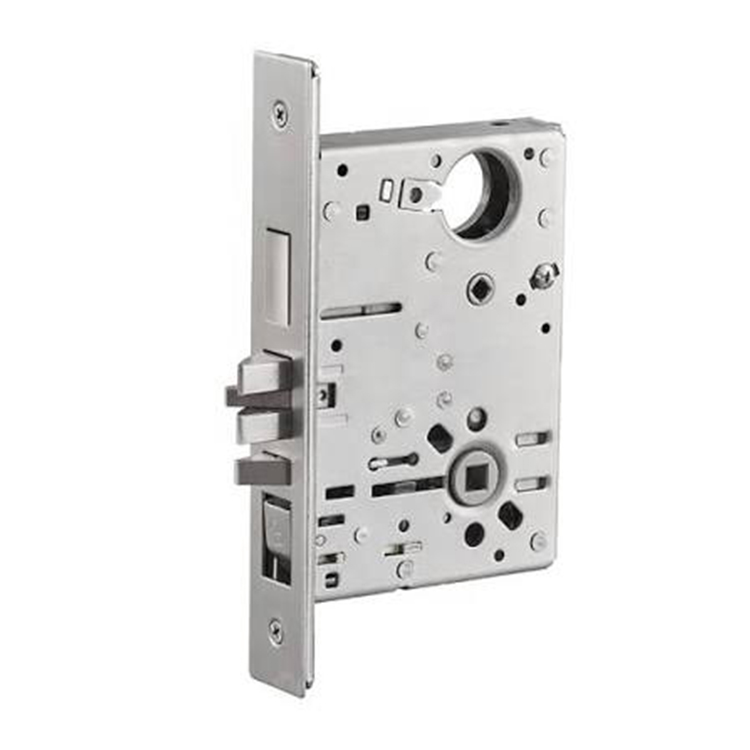
A multipoint lock can have the right number of hooks, the right cylinder format and an impressive security claim, yet still be completely wrong for a door because the faceplate, gearbox depth, fixing structure, keeps, handle geometry and profile cavity were designed around another construction system.
So why are multipoint locks still sold as though the door material were a secondary detail?
It isn’t.
The same basic multipoint locking system can secure aluminum, uPVC and timber doors, but that doesn’t make the hardware interchangeable. Aluminum extrusions constrain the lock inside a relatively narrow engineered cavity. uPVC introduces chambers, reinforcement and profile-dependent fixing zones. Timber provides more machining freedom, but moisture movement and stile geometry create another set of problems.
That’s the distinction buyers need to understand before comparing prices.
And there is a second issue. Security standards generally evaluate a doorset, not an isolated strip of metal. England’s Approved Document Q, for example, deals with doors and windows that must resist physical attack while being sufficiently robust and fitted with appropriate hardware. In other words, installing an impressive lock into a badly matched door construction doesn’t magically produce a secure assembly.
A Multipoint Lock Is an Interface System, Not Just a Long Lock
When I evaluate multipoint lock compatibility, I wouldn’t start by asking, “How many locking points does it have?”
That question comes later.
I would start with the interface.
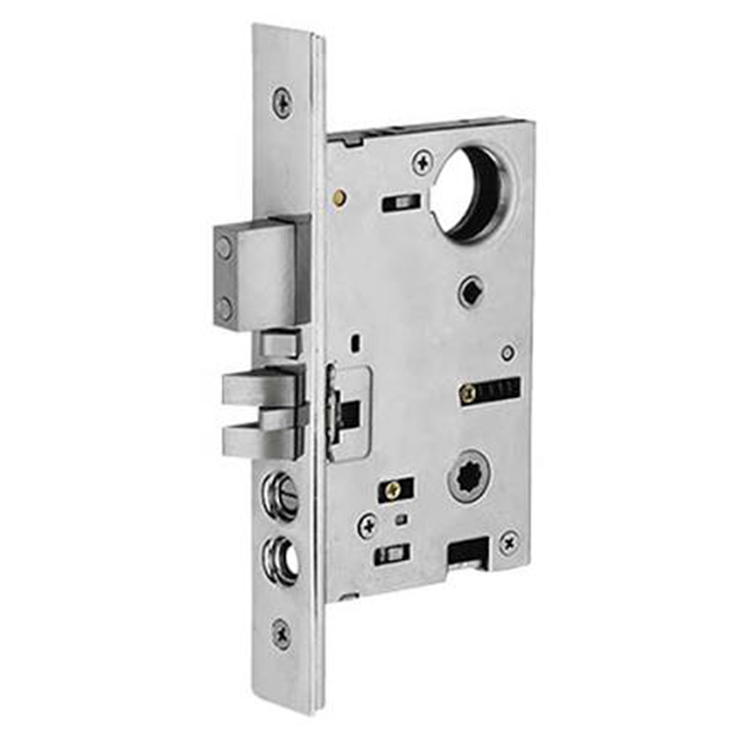
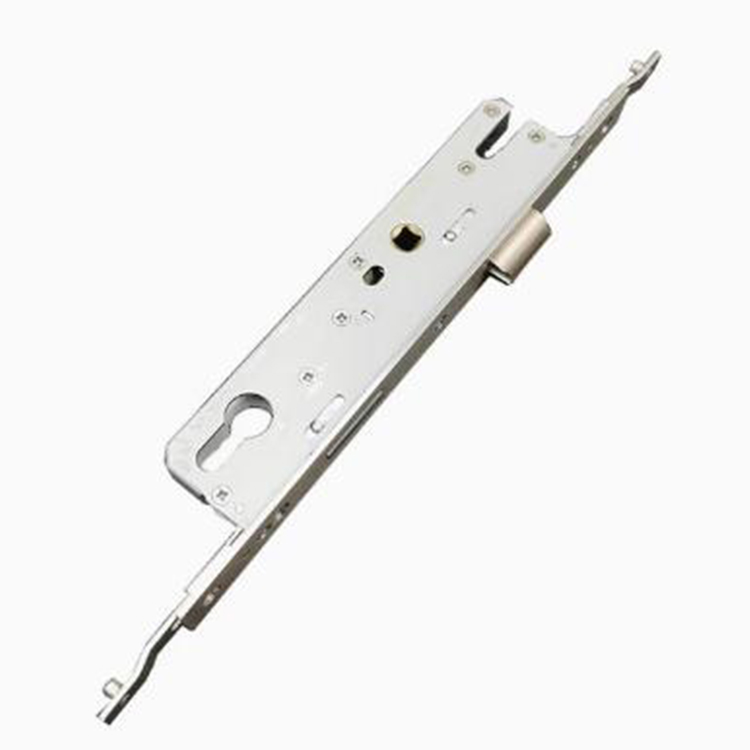
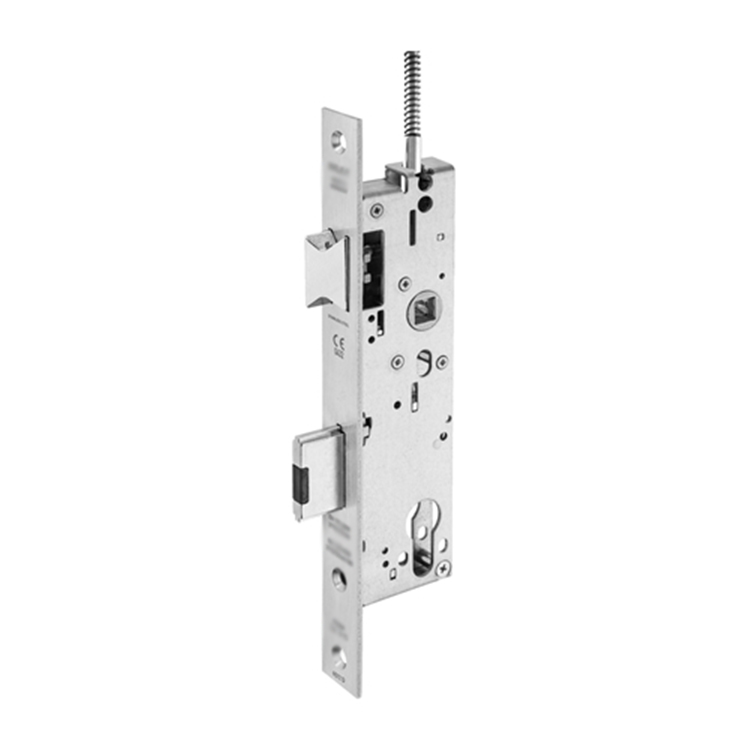
CHIER’s current multipoint door lock range identifies the basic variables buyers should be matching: backset, handle-to-cylinder center distance, faceplate dimensions, spindle follower, locking-point positions and keeper layout. Those aren’t catalog trivia. They determine whether the lock can physically operate inside the intended door.
Consider one apparently simple measurement: handle and cylinder centers. An ASSA ABLOY technical catalog includes aluminum-framed lock configurations specified around 92 mm centers and an 8 mm follower. Those numbers don’t make 92/8 a universal standard; they show exactly why a buyer cannot approve hardware from a photograph.
A few millimeters matter.
And the center distance isn’t even the whole story.
The mechanical interface normally includes the gearbox envelope, backset, faceplate width and shape, follower geometry, cylinder position, operating direction, top and bottom extensions, locking-point locations, hook or bolt throw, keeper geometry, screw locations and the relationship between all of those parts and the door profile.
This is why I consider “same overall length” one of the least useful compatibility claims in multipoint lock sourcing.
Two 2,000 mm lock strips can be mechanically unrelated.
Aluminum, uPVC and Timber Doors Create Three Different Mechanical Problems
The biggest mistake is treating the door material as a finish choice. It changes how loads pass from the lock into the leaf and from the locking points into the frame.
Aluminum doors: the profile dictates the lock
Aluminum doors are unforgiving.
The lock generally has to coexist with an extrusion that already contains walls, chambers, reinforcement features, glazing zones, gasket seats and, in thermally broken systems, thermal-barrier geometry. You cannot simply remove material wherever a larger gearbox happens to need space.
That makes backset and gearbox depth especially sensitive.
Narrow-stile aluminum profiles may require compact gearboxes and relatively narrow faceplates. The fixing screws also need something meaningful to engage with; putting a screw into a thin wall and assuming the resulting joint behaves like a solid timber fixing is bad engineering.
Keeper geometry becomes equally profile-specific. A hook can extend perfectly from the lock and still fail to engage correctly if the keeper sits several millimeters too far inward, outward, upward or downward.
Compression matters too.
A locking point isn’t only restraining forced movement. Depending on the doorset design, it may also pull the leaf into the gasket system. Too little engagement can produce weak compression or rattling. Too much can make the handle unpleasantly heavy and increase stress inside the gearbox.
For buyers working specifically with extruded systems, CHIER’s broader window and door lock range makes the right procurement point: profile drawings, keeper arrangements and interface dimensions belong in the matching process before an order is released.
uPVC doors: reinforcement changes the real fixing interface
uPVC creates a different problem.
The visible profile is polymer, but the load-bearing story doesn’t stop at the visible plastic. Multi-chamber construction, reinforcement position, wall thickness, glazing configuration and existing machining determine where a lock can sit and how reliably its associated hardware can be fixed.
That’s why uPVC multipoint door locks are particularly dangerous to source by appearance.
Two faceplates may look almost identical on a workbench. Install them and the differences emerge: the gearbox can collide with an internal profile feature, the hooks can miss existing keeps, the screw positions may not correspond with useful reinforcement, or the handle and cylinder centers can shift relative to an existing door furniture set.
Then somebody reaches for a drill.
That isn’t compatibility. That’s improvisation.
Replacement work is even less forgiving because the existing machining already defines much of the interface. If the old lock has disappeared from the supply chain, I would measure the entire system before trying to choose an “equivalent”: overall strip geometry, center case, backset, PZ/centers, faceplate, locking-point positions and types, spindle and keeps.
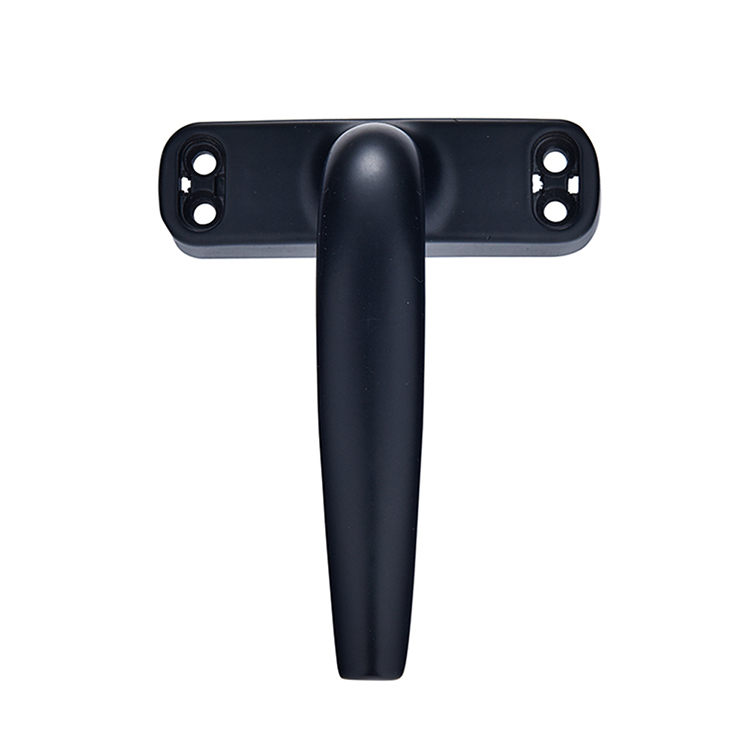
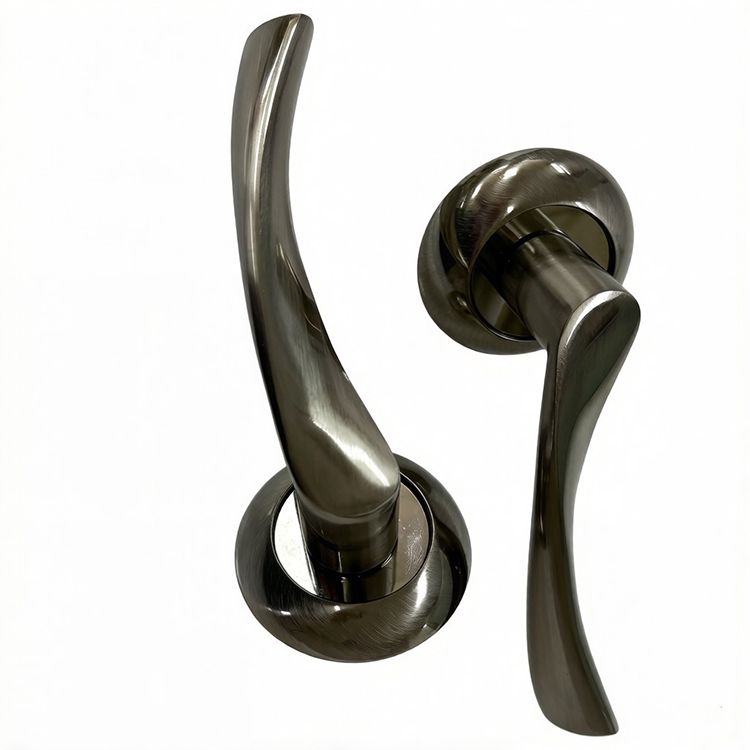
And don’t forget the handle. CHIER’s door handle range explicitly calls out door thickness, fixing centers, spindle connection, handing and lock arrangement as selection variables. A compatible lock with an incompatible handle is still an incompatible door system.
Timber doors: easier to machine, harder to freeze in one dimension
Timber gives a fabricator something aluminum and uPVC usually don’t: substantial material that can be routed, mortised and locally modified.
That freedom can be deceptive.
Wood moves.
The USDA Forest Products Laboratory describes wood as hygroscopic and notes that moisture exchange with surrounding air affects dimensional stability. Its engineering guidance explains that below the fiber-saturation region, wood can swell as it gains bound moisture and shrink as it loses it.
That matters directly to timber door multipoint locks.
If the door changes dimension or distorts seasonally, the relationship between hook and keeper can change with it. A system adjusted beautifully in a dry workshop may become considerably less forgiving after installation in a different humidity environment.
That doesn’t make timber inferior. It means the tolerance strategy is different.
A timber specification should consider mortise depth, remaining stile material, screw holding, keeper fixing, edge distances, expected door movement, coating and moisture control alongside normal lock geometry. The USDA’s fastening guidance also emphasizes that fastening design in wood should account for strength properties and dimensional changes associated with moisture.
The hard truth is simple: timber gives you machining freedom, not permission to ignore movement.
Multipoint Lock Compatibility: What Actually Changes?
Here is the comparison I would put in front of an engineering or purchasing team before anyone argues about price.
Polymer plus internal reinforcement must be considered
Screws fix into wood substrate
Weak fastening or distorted lock strip
Keeper interface
Highly dependent on frame extrusion
Dependent on frame profile and reinforcement
Keeper can be mortised into frame
Hook/bolt misses or binds
Door movement
Thermal/profile movement must be considered
Profile, reinforcement and installation movement matter
Moisture-driven shrinkage/swelling is significant
Rising operating force or incomplete engagement
Handle interface
PZ/centers, spindle and fixing holes must match
Existing handle geometry is often a replacement constraint
More freedom on new fabrication
Handle fits visually but won’t operate lock
Production modification
Limited after extrusion/profile design is fixed
Limited by profile chambers and reinforcement
Relatively flexible through routing
Expensive field rework
Best procurement input
Profile section + hardware drawing
Profile section + existing lock measurements
Door/stile section + machining drawing
Supplier guesses from photographs
Notice what’s missing from the table?
“Number of points.”
Of course the locking-point count matters. But five poorly aligned points can create five sources of friction.
A three-point system engineered around its profile can be more useful than a five-point assembly forced into the wrong interface. Winkhaus even markets its Thunderbolt as a five-point system designed with increased installation tolerances, which is telling: established manufacturers aren’t only thinking about point count; they’re thinking about whether those points will engage reliably in a real doorset.
Security Evidence Is About the Doorset, Not the Marketing Photo
This is where procurement discussions often become uncomfortable.
But a collection of aggressive-looking components doesn’t prove system performance.
The UK’s National Protective Security Authority describes PAS 24:2022 as enhanced security performance requirements for doorsets and windows intended to resist attack. That word—doorset—matters. NPSA’s forced-entry standards guidance places PAS 24 in the context of complete forced-entry performance rather than decorative component claims.
And the real-world security problem hasn’t vanished.
The Office for National Statistics reported approximately 327,000 domestic burglary incidents in England and Wales in the year ending December 2025. That was a 22% decrease from approximately 422,000 a year earlier, which is good news, but 327,000 incidents hardly makes door security academic. Police-recorded burglary, including residential and non-residential offences, stood at 224,518 offences, down 12%.
So I wouldn’t approve a supposedly “high-security” multipoint lock because the supplier says it has four hooks.
Show me the application.
Show me the profile.
Show me the keepers.
Show me the tested assembly.
Operating Force Is an Interface Problem Too
Security isn’t the only performance issue.
A multipoint locking system that requires excessive force every time somebody operates the handle is not well engineered simply because it eventually locks.
Winkhaus provides an interesting real-world example with its autoLock AV4. In its AV4 end-user testing program, the company says multiple locking solutions were fitted into doors taken from the same manufacturing batch and built with identical hardware, allowing the locking solution itself to be compared more consistently. Participants included users experiencing difficult door operation and a landlord familiar with lock and keep adjustments.
A caveat matters here: this is manufacturer-published evidence, not an independent peer-reviewed study. I wouldn’t present it as one.
But the engineering lesson is useful.
Small differences in locking geometry, engagement and tolerance can materially affect how a door feels in use.
This becomes particularly relevant when a fabricator changes from one multipoint lock supplier to another while keeping the existing profile, gasket, handle and keeper assumptions. A nominally equivalent gearbox can change the system’s behavior.
Equivalent on paper isn’t enough.
Corrosion Can Turn a Correct Interface Into a Bad One
Then there is exposure.
An exterior aluminum door near a coast, a timber entrance exposed to driving rain and a sheltered uPVC apartment door don’t create the same environmental demand.
Lock strips, screws, springs, gear components, hooks, rollers and keeps may involve several metallic materials and coatings. So corrosion performance should be part of the hardware specification rather than a vague promise that something is “weather resistant.”
ISO 9227:2022 defines neutral salt spray (NSS), acetic acid salt spray (AASS) and copper-accelerated acetic acid salt spray (CASS) procedures used to assess corrosion resistance of metallic materials and protective coatings. In simple chemical terms, NSS testing uses a NaCl-based salt environment, but ISO itself warns that these methods aren’t intended to predict long-term real-world corrosion life.
That’s an important distinction.
A supplier saying “salt spray tested” tells me almost nothing unless the documentation identifies the method, specimen, exposure period, acceptance criteria and tested finish.
At the time of writing in August 2026, ISO’s own listing describes ISO 9227:2022 as a 23-page, fifth-edition standard, published in November 2022, and lists the main document at CHF 135. The price isn’t the point; traceability is. A line in a sales sheet is not a laboratory report.
For supplier evaluation, CHIER’s quality control and testing information is therefore more relevant when used as the start of a documentation conversation: buyers should connect the actual model, finish, test method and production revision rather than assume a generic test claim covers every SKU.
How I Would Specify Multipoint Locks Before Sampling
Don’t send a supplier a door photograph and ask for the “best multipoint lock.”
Send data.
At minimum, I would put the following into the RFQ or technical review:
Door material and exact profile system — aluminum extrusion reference, uPVC profile section or timber stile construction.
Backset — measured from the relevant faceplate reference to the spindle/gearbox operating center according to the lock drawing.
Handle-to-cylinder centers/PZ — don’t assume the existing handle can move.
Follower and spindle size — including any split-spindle or special operating requirement.
Faceplate geometry — width, thickness, edge form, rail form and fixing-hole pattern.
Gearbox envelope — full case depth, width and any projections that could interfere with the profile.
Locking-point positions — measured from a fixed datum, with hook, roller, bolt or shootbolt type clearly identified.
Keeper geometry and frame relationship — because lock-side measurements alone prove only half of the interface.
Door handing and operation sequence — lever-operated, key-operated, automatic or motorized.
Gasket and compression requirement — especially where locking points are also controlling weather sealing.
Environment and finish — interior, exterior, coastal, industrial or other exposure.
Required security/compliance route — such as PAS 24:2022+A1:2024 where relevant to the intended market or project.
Drawings and revision numbers — freeze the approved geometry before mass production.
This is also where documentation saves money. CHIER’s technical download center separates initial catalogs from model-specific specifications, dimension drawings, installation references and CAD/3D information, while warning buyers to confirm the latest product revision before tooling, machining, installation or procurement. That’s exactly the discipline a profile-dependent lock needs.
Sampling should follow.
Not precede it.
And a sample should be tested in the intended door and frame configuration, not just operated twenty times in somebody’s hand.
FAQs
What is the main difference between multipoint locks for aluminum, uPVC and timber doors?
The main difference is the mechanical interface between the multipoint lock and the door construction: aluminum locks must fit engineered extrusion cavities, uPVC locks must work around chambers and reinforcement, while timber locks are installed into machinable wood but must tolerate moisture-related dimensional movement and different fastening conditions.
That means the same locking concept—gearbox plus linked hooks, rollers or bolts—can require very different faceplates, backsets, gearbox dimensions, fixing positions and keeps. Door material should therefore be identified before selecting the lock, not after.
Are multipoint locks interchangeable between uPVC and aluminum doors?
Multipoint locks for uPVC and aluminum doors are not automatically interchangeable because matching overall length or locking-point count does not guarantee that the gearbox, backset, faceplate, handle centers, screw positions, hook locations and frame keepers will match the profile into which the lock must be installed.
Some hardware families can support several profile systems through different variants or keepers. But that compatibility needs to be demonstrated with drawings or physical fitment. I would never treat “suitable for aluminum/uPVC” as sufficient engineering information on its own.
How do I check multipoint lock compatibility before ordering?
Multipoint lock compatibility is checked by comparing the door profile and frame with the lock’s backset, center distance, spindle follower, gearbox envelope, faceplate dimensions, locking-point locations, keeper layout, handing and operating method, then validating the selected configuration in an actual representative doorset before volume production.
For replacement work, preserve the old lock and record dimensions before disposal. For OEM projects, send the supplier a profile cross-section plus 2D or 3D hardware data. CHIER’s OEM/ODM hardware development process is the more sensible route when a standard catalog configuration cannot be proven against the intended profile.
What is the best multipoint lock for uPVC, aluminum and timber doors?
The best multipoint lock is the system whose gearbox, faceplate, locking points, keeps, handle interface, fixing method, corrosion protection and operating tolerances match the actual door construction and required performance standard; there is no single lock configuration that is inherently best for every aluminum, uPVC and timber door.
I would rank verified fit, smooth operation, repeatable keeper engagement and assembly-level test evidence above point count. A five-point lock that binds after installation is not an upgrade. It is a warranty claim waiting to happen.
Do more locking points make a multipoint door lock more secure?
More locking points can distribute restraint along the door edge, but the number of points alone does not determine security because each hook, roller or bolt depends on correct keeper engagement, frame strength, fixing quality, door stiffness, cylinder protection and the performance of the complete tested doorset.
This is why PAS 24 and similar security routes matter more than catalog arithmetic. Three correctly engineered locking points can perform their intended job; five badly positioned ones can create operating resistance without delivering proportional security.
Your Next Steps: Freeze the Interface Before You Buy the Lock
Here is the procurement rule I would use: never approve multipoint locks from appearance, overall strip length or locking-point count alone.
Start with the door.
For an aluminum system, send the extrusion section and frame/keeper interface. For uPVC, include the profile chambers, reinforcement and existing machining. For timber, provide stile dimensions, mortise requirements and the environmental conditions the door will see.
Then freeze the backset, PZ/center distance, spindle, gearbox envelope, faceplate, locking-point coordinates, keeper geometry and operating method.
Only after that should price become the main conversation.
If you’re sourcing a new program rather than replacing a single field lock, review CHIER’s multipoint door lock options, request the relevant drawings through the technical document center, and submit your profile or application through the OEM/ODM engineering route before committing to tooling or volume production.
Because the expensive mistake isn’t usually buying the wrong lock.
It’s discovering that it’s wrong after the doors have already been machined.