Looking for hardware solutions that meet European / American standards?
Use this guided inquiry modal to move from a generic quote form to a clearer technical conversation. Buyers can choose whether they need pricing, CAD / 3D files, or OEM / ODM support before sharing contact details.
Compatibility-first design across door / window systems
Repeatable production with clear inspection checkpoints
Documentation and change control for long-running programs
Responsive engineering support for fit and field feedback
Although buyers often focus on the gearbox, hook count or cylinder position, the multipoint lock faceplate controls how the entire mechanism sits inside the door edge, where the locking elements travel and whether the strip remains straight under repeated operating loads.
Why gamble?
I will be blunt: a multipoint door lock faceplate that is “almost right” is normally wrong. A 2 mm width difference, an unrecorded 6 mm return or one misplaced fixing hole can turn a sensible replacement into a bent strip, a stiff handle and a warranty argument.
The faceplate is not packaging for the gearbox. It is part of the mechanism.
The Faceplate Does More Than Cover the Door Edge
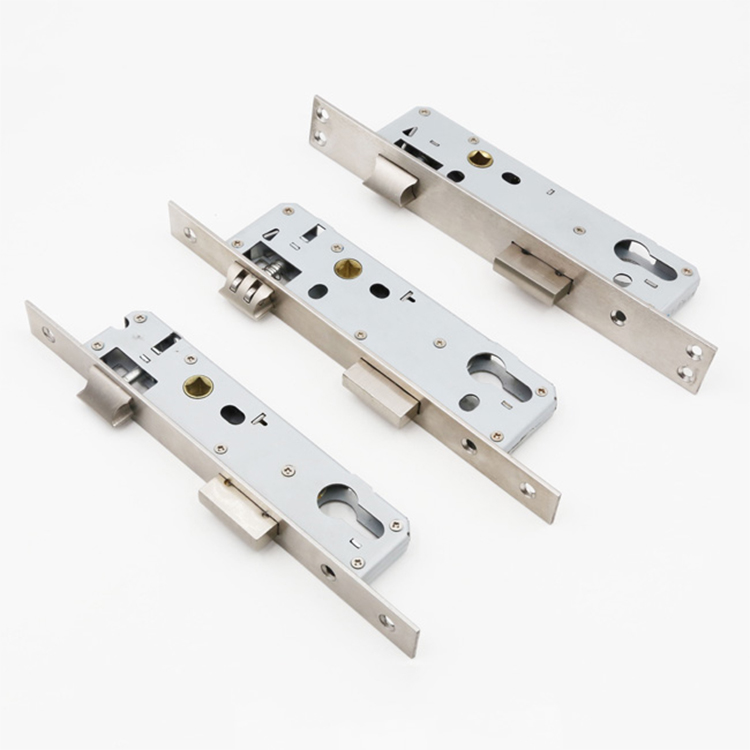
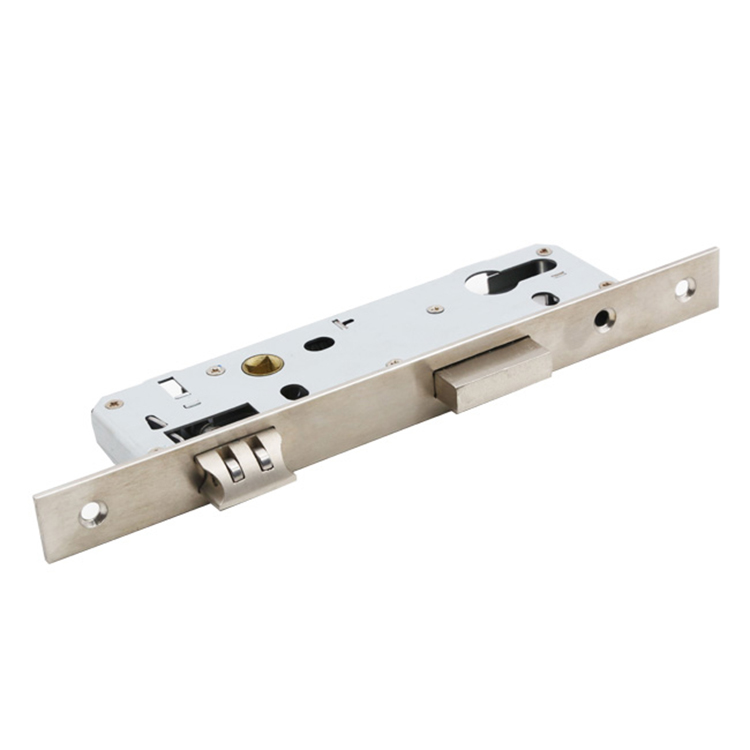
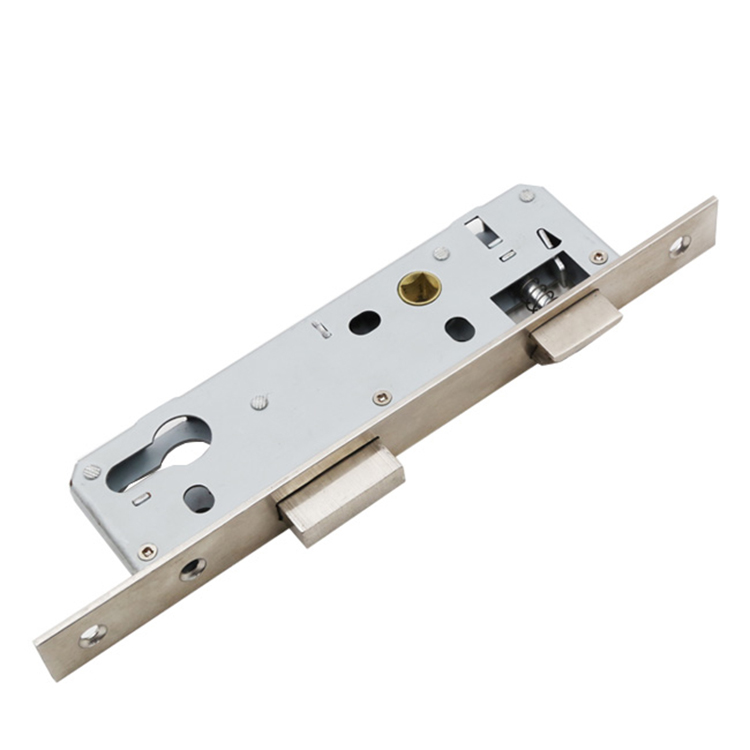
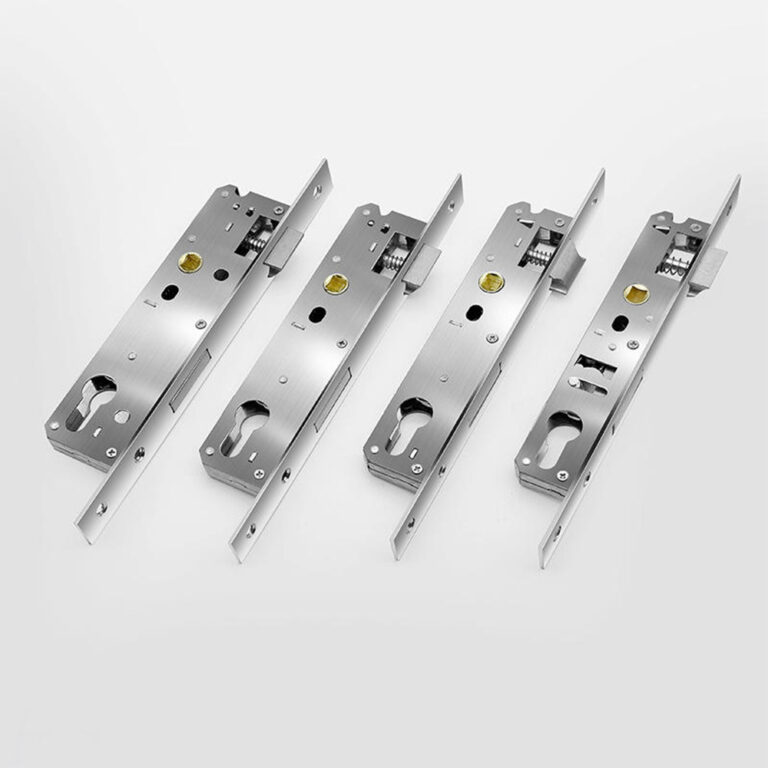
A multipoint lock faceplate is the long metal rail visible along the closing edge of a door. It carries or locates the central gearbox, hooks, rollers, mushroom cams, deadbolts, extensions and fixing screws.
It also establishes several mechanical relationships:
The gearbox position inside the door profile
The backset measured from the rail to the spindle centre
The alignment of hooks, rollers and bolts with their frame keepers
The depth at which the lock sits in the routed channel
The straightness of the linked operating strip
The clearance between the lock, reinforcement and weather seals
That is why I do not identify a lock from the gearbox photograph alone. CHIER’s guide on how to measure a multipoint door lock requires the faceplate width, length, thickness and shape alongside the backset, PZ centres, spindle size and locking-point positions. Two locks can share the same 35 mm backset and 92 mm PZ measurement while using completely different rails.
The hard truth?
Marketplace listings encourage shallow comparisons because shallow comparisons sell parts quickly. But the door does not care what the listing title says. The door only accepts the correct geometry.
Flat, U-Rail and Profile-Specific Faceplates Compared
The three labels are useful, but one of them is routinely misunderstood.
A flat faceplate and a U-rail faceplate describe physical cross-sections. “Profile-specific” usually describes compatibility with a particular door extrusion, groove, reinforcement arrangement or keeper system. In other words, a profile-specific faceplate may itself be flat, U-shaped, stepped or otherwise formed.
That distinction matters.
Faceplate type
Physical form
Manufacturer size examples
Typical application logic
Common mismatch
Flat faceplate
Straight, planar metal strip without folded side returns
16 × 2.5 mm, 16 × 3 mm, 20 × 2.5 mm, 24 × 2.5 mm and 24 × 3 mm
Used where the door edge has a flat routed seat or compatible hardware groove
Correct width but wrong thickness, gearbox depth or screw pattern
U-rail faceplate
Front web with two folded returns forming a shallow channel
U22 × 6 mm and U24 × 6 mm are documented examples
Used where the door profile is prepared to accept a channel-shaped rail
Return depth prevents the strip sitting flush or shifts the gearbox position
Profile-specific faceplate
A rail configured for a named or dimensioned door profile
No universal size; drawing-controlled
Used when the profile groove, reinforcement, keepers or machining require a dedicated interface
Buyer matches only the visible width and ignores the profile section
GU lists both flat and U-faceplates for its SECURY multipoint systems, including the dimensions shown above. SIEGENIA publishes an even wider range, from 16 mm flat faceplates to a 10 × 30 × 10 mm U-profile faceplate. These are manufacturer examples, not universal standards.
Flat Faceplate Multipoint Locks
A flat faceplate multipoint lock uses a straight strip that rests against a flat or suitably routed door edge.
Simple shape. Not simple selection.
Flat faceplates are commonly offered in widths such as 16 mm, 20 mm and 24 mm, but width does not identify the lock. Thickness, end treatment, fixing-hole positions, overall length and gearbox relationship still vary by product family.
A flat rail usually makes measurement easier because the visible front surface gives you a clear datum. It can also be easier to clean, crop or integrate into certain timber and composite door preparations.
But buyers overestimate interchangeability. A 16 mm flat faceplate from one lock family does not automatically replace every other 16 mm rail. The hooks may sit 40 mm higher. The spindle may be wrong. The linkage may travel in the opposite direction.
Looks deceive.
U-Rail and U-Faceplate Multipoint Locks
A U-rail faceplate has a central front section and two folded side legs. The rail wraps partly around the prepared door edge or nests into a matching channel.
When recording a U-faceplate multipoint lock, I would specify at least four values:
Front width
Return depth
Material thickness
Overall external width
Do not write “24 mm U-rail” and stop there. A specification such as 24 mm front × 6 mm return × 1.5 mm material thickness tells a supplier what actually exists.
And measure both returns.
Door profiles get damaged, rails get distorted and installers occasionally bend one side to make a poor match appear acceptable. That is not adaptation. It is evidence that the part does not fit.
ASSA ABLOY documentation also warns that, in one lock range, selecting a U-shaped faceplate shortens the effective backset by 1 mm. One millimetre sounds trivial until the spindle, cylinder preparation and gearbox cavity no longer share the same centreline.
Profile-Specific Lock Faceplates
Here is my controversial view: profile-specific should not be treated as a third faceplate shape.
It is a compatibility class.
A profile-specific lock faceplate is designed or selected around a particular aluminium, uPVC, timber or composite door section. The controlling features may include:
Groove width and depth
Reinforcement position
Thermal-break location
Gasket clearance
Screw anchorage
Gearbox cavity depth
Rail end geometry
Keeper offsets
Handle and cylinder preparation
The visible faceplate may look ordinary. The hidden relationship is not.
This is where a door-profile section becomes more valuable than ten product photographs. For an OEM programme, the OEM/ODM hardware development process should review the backset, centres, faceplate, locking points and gearbox interface as one door-system specification rather than as isolated purchasing fields.
How to Identify a Multipoint Lock Faceplate Without Guessing
The reliable method is measurement plus documentation.
Not branding alone. Not colour. Not the number of hooks.
Start with the door open and test the lock before removing it. If the handle moves smoothly while the door is open but becomes stiff when closed, keeper alignment, hinge drop or gasket pressure may be loading the mechanism. Replacing the faceplate and lock strip without correcting that pressure will punish the new hardware as well.
Then remove the mechanism and record the following.
Measure the Faceplate Cross-Section
For a flat faceplate, record:
Overall width
Material thickness
Overall length
Square, rounded or radiused ends
Fixing-hole positions
For a U-rail faceplate, add:
Front-web width
Left and right return depths
Internal channel width
External channel width
Corner radius or fold shape
Use callipers for the cross-section. A tape measure is too forgiving when the possible choices differ by 1 or 2 mm.
Record the Lock Geometry
A supplier also needs:
Backset
PZ or handle-to-cylinder centres
Spindle follower size
Gearbox height, depth and thickness
Handle fixing centres
Locking-point types
Distance from the spindle to each locking point
Hook or bolt projection
Overall strip length
Top and bottom extension details
Left-hand, right-hand or reversible operation
CHIER’s current multipoint door lock range instructs buyers to match locks by backset, handle-to-cylinder distance, faceplate dimensions, spindle follower, locking-point positions and keeper layout. That is a much safer identification method than ordering by door material or hook count.
Photograph the Whole Assembly
Take separate photographs of:
The full faceplate beside a steel rule
The gearbox front and rear
Every hook, roller and bolt
The top and bottom rail ends
Every stamped number or logo
The frame keepers
The door-profile channel
One close-up is not enough.
And do not photograph a two-metre strip at an angle from across the workshop. Perspective distortion makes locking-point positions nearly useless. Photograph the rail square-on in overlapping sections, with a fixed measurement datum visible.
Security Evidence: What Faceplates Can and Cannot Prove
A thicker or more elaborate faceplate does not automatically create a secure door.
Security comes from the assembled doorset: slab, frame, reinforcement, hinges, cylinder, handle, gearbox, locking points, faceplate, keepers, glazing and installation. The faceplate helps maintain the geometry, but it cannot rescue weak keepers, loose screws or a flexible frame.
The UK government’s Approved Document Q covers doors and windows intended to resist physical attack in new dwellings. Its guidance focuses on robust doorsets fitted with appropriate hardware, while Appendix B identifies multipoint systems meeting PAS 3621, PAS 8621 or PAS 10621 for certain bespoke timber entrance doors.
Notice the wording: doorset.
Not faceplate.
This matters because marketers love attaching a security standard to whichever component appears in the photograph. PAS 24 evaluates enhanced security performance at doorset or window level; it is not permission to mix unrelated rails, gearboxes and keepers and then claim the original tested performance.
The broader evidence supports system-level security. A 2024 meta-analysis reported by the College of Policing Crime Reduction Toolkit found burglary at properties meeting Secured by Design standards was 53% lower than at properties not meeting those standards. That does not prove a particular faceplate caused the reduction. It does show why coordinated, tested security specifications beat isolated hardware claims.
A Tilburg University study of Dutch built-in security regulation found that the regulatory change reduced annual burglary in new homes from 1.1% to 0.8%, a 26% reduction. Again, the lesson is not “buy a U-rail.” The lesson is that security performs better when it is designed into the building rather than patched onto it later.
The risk has not disappeared. The Office for National Statistics estimated 327,000 domestic burglary incidents in England and Wales for the year ending December 2025, despite a reported 22% year-on-year fall. A declining total is welcome, but it is not an excuse for vague specifications.
Choosing the Best Multipoint Lock Faceplate for uPVC Doors
There is no universally best multipoint lock faceplate for uPVC doors.
That answer may disappoint retail copywriters. It is still the honest answer.
The best option is the one matching the profile and complete lock system. Flat faceplates are used on many uPVC systems, while U-rail designs suit profiles prepared for a channel-shaped rail. Neither shape automatically provides greater burglary resistance.
Use this decision order:
For a Direct Replacement
Match the original:
Faceplate shape
Width and thickness
U-rail return depth
Backset and PZ
Gearbox dimensions
Locking-point positions
Keepers
Operation sequence
Do not convert from U-rail to flat because the flat version is cheaper or available sooner. Conversion is acceptable only when the manufacturer’s drawing or a validated sample confirms every affected interface.
For a New Door System
Start with the profile section, not a product photograph.
Select the gearbox cavity, faceplate seat, reinforcement, handle preparation and keepers together. Review the complete mechanism described in how multipoint door locks work before freezing the extrusion, machining file or door-routing programme.
This sequencing saves money because late hardware changes often affect far more than the lock. They can force changes to CNC programmes, reinforcement punching, keeper positions, handle holes, packaging and replacement-part records.
For OEM or Repeated Purchasing
Control the faceplate through a revision-approved drawing.
The drawing should include:
Cross-sectional view
Material and finish
Straightness tolerance
Overall length
Hole positions
Gearbox datum
Locking-point datums
Marking requirements
Approved sample reference
Drawing revision
Then connect those values to incoming and final inspection. CHIER’s quality-control and hardware testing process is structured around approved requirements, inspection points and project-specific documentation rather than visual similarity alone.
My opinion is firm: if a supplier cannot provide a controlled faceplate drawing for a repeat-production lock programme, the buyer does not have a specification. The buyer has a sample and a hope.
FAQs
What is a multipoint lock faceplate?
A multipoint lock faceplate is the long metal strip fixed along a door’s closing edge that supports the central gearbox, guides linked hooks, rollers or bolts, and provides the mounting interface between the locking mechanism and the prepared channel in a uPVC, aluminium, timber or composite door.
It must match the door preparation, gearbox position and keeper layout. Faceplate width alone is not enough to identify a replacement.
What is the difference between a flat faceplate and a U-rail faceplate?
A flat faceplate is a straight planar strip, while a U-rail faceplate has a front web with folded side returns that form a channel; the difference changes the required door-edge preparation, rail stiffness, visible coverage, effective backset and whether the lock can sit flush inside a particular profile.
Record the U-rail’s front width, return depth and material thickness separately. Do not describe it with one width measurement.
How do I identify a multipoint lock faceplate?
To identify a multipoint lock faceplate, record its overall length, front width, material thickness, cross-sectional shape, U-rail return depth, screw-hole pattern, gearbox position, backset, PZ centres, spindle size, locking-point locations, brand markings and the exact geometry of the door profile and frame keeps.
Photograph the full mechanism beside a measuring rule and include both sides of the gearbox. A logo or hook count is not a complete identification.
What is the best multipoint lock faceplate for uPVC doors?
The best multipoint lock faceplate for a uPVC door is the faceplate that exactly matches the door profile, gearbox, backset, PZ centres, locking-point positions, keepers and tested doorset configuration, because neither a flat strip nor a U-rail is automatically safer, stronger or easier to replace in every uPVC system.
For replacement work, copy the original geometry. For new production, validate the faceplate against the profile drawing and assembled door sample.
Can I replace a U-rail faceplate with a flat faceplate?
A U-rail faceplate should be replaced with a flat faceplate only when a dimensioned manufacturer drawing or validated sample confirms that the door channel, effective backset, gearbox position, screw pattern, locking-point alignment, weather-seal clearance and keepers remain compatible after the change, without improvised packing, bending or forced installation.
Absent that evidence, use the same faceplate type as the original. A fabricated spacer does not automatically reproduce the strength or alignment of the specified rail.
Send the Right Specification, Not a Guess
Before ordering a multipoint lock faceplate, remove the mechanism safely, measure every interface in millimetres and photograph the strip, gearbox, locking points, keepers and door profile.
For replacement sourcing, send the original dimensions and full assembly photographs. For an OEM programme, send the profile section, target backset, PZ centres, faceplate cross-section, locking-point layout, annual quantity, finish and testing requirements.