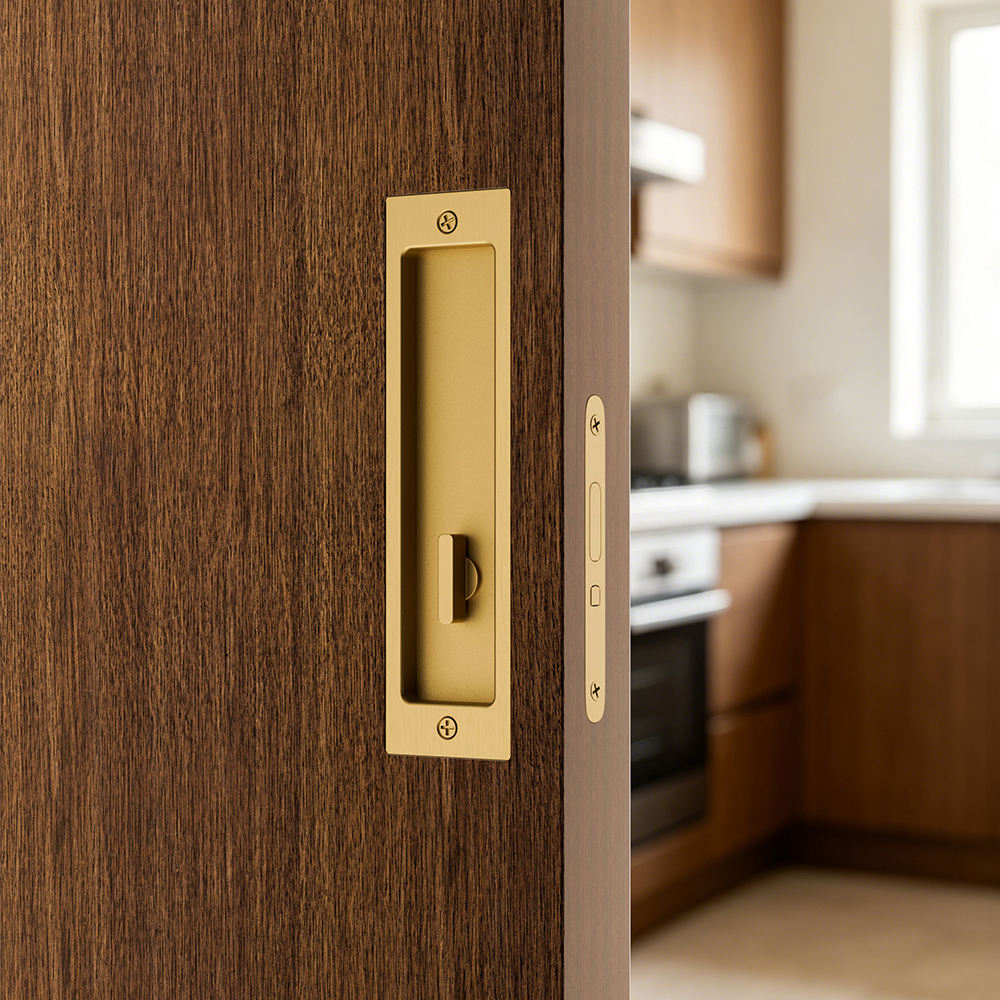
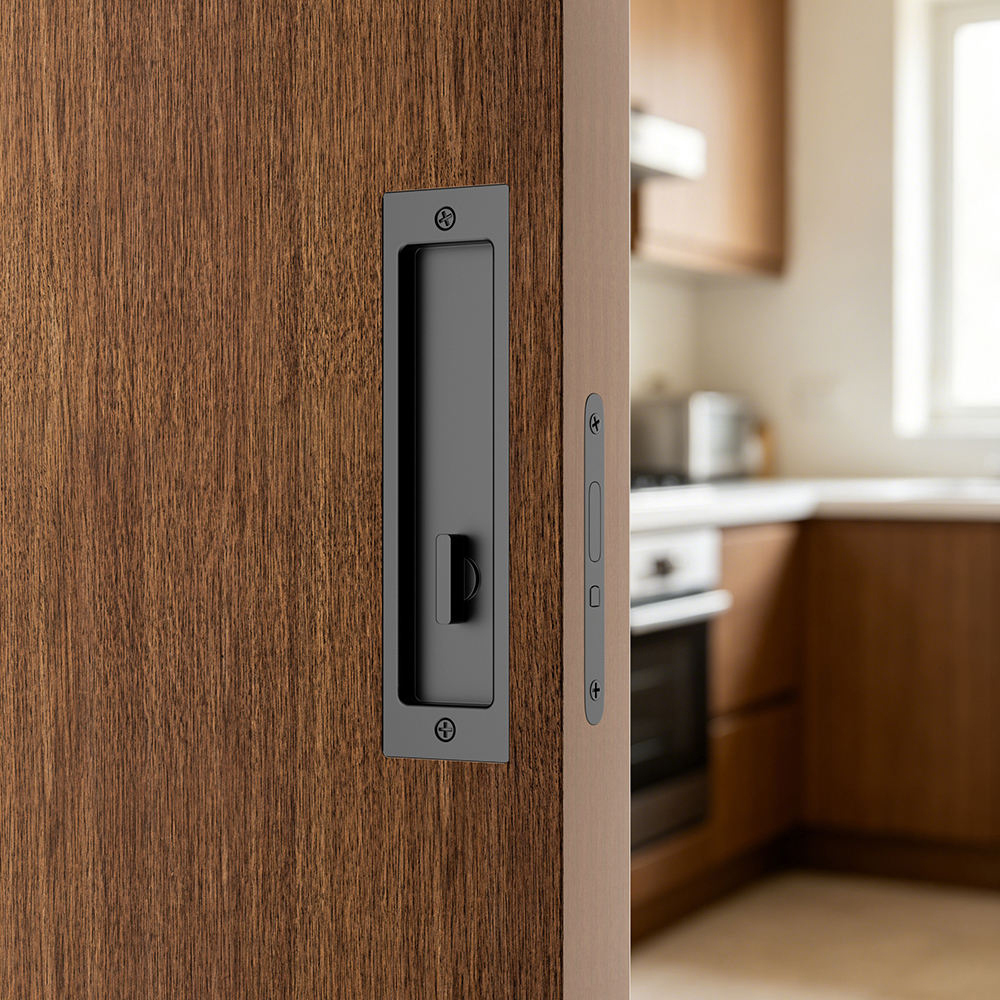
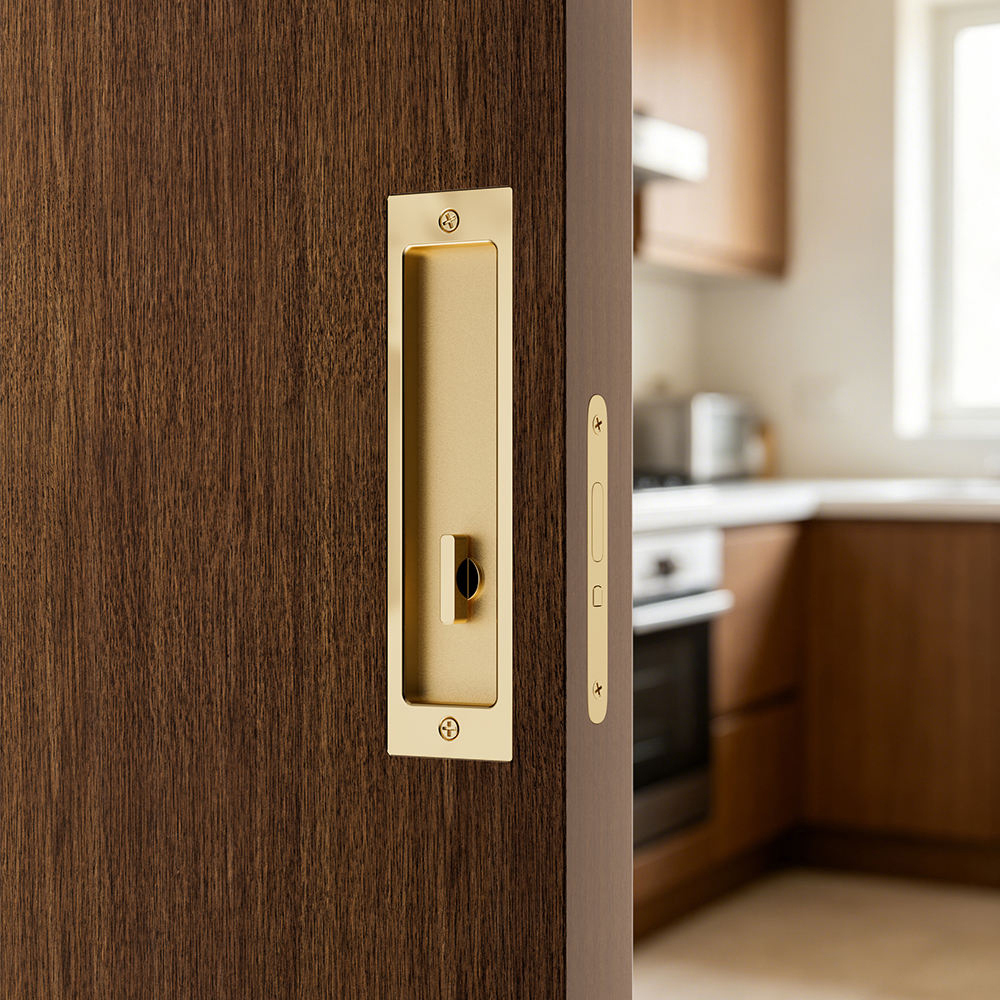
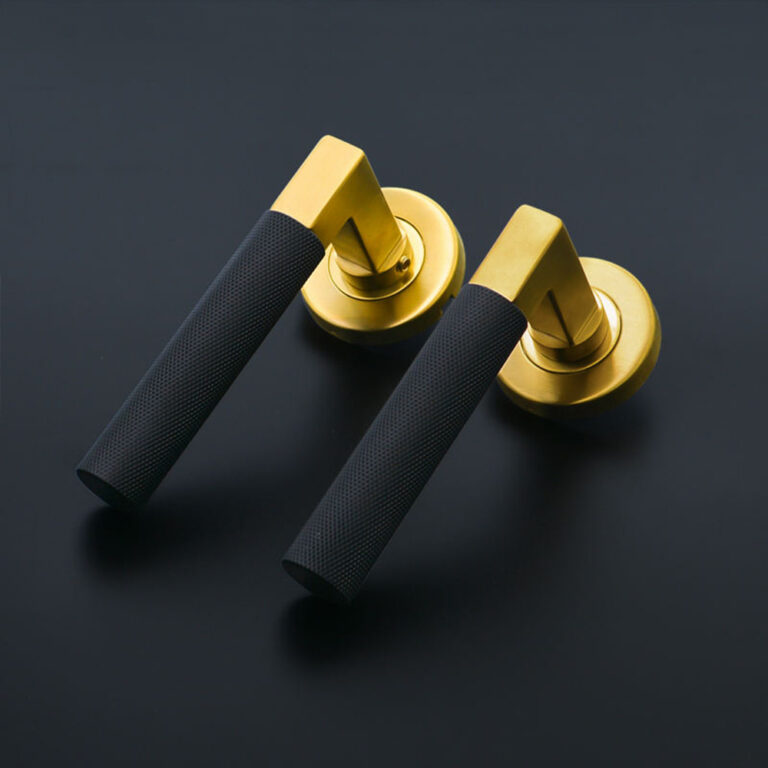
Looking for hardware solutions that meet European / American standards?
Use this guided inquiry modal to move from a generic quote form to a clearer technical conversation. Buyers can choose whether they need pricing, CAD / 3D files, or OEM / ODM support before sharing contact details.
Compatibility-first design across door / window systems
Repeatable production with clear inspection checkpoints
Documentation and change control for long-running programs
Responsive engineering support for fit and field feedback
A pocket door may glide perfectly during a workshop test, yet begin scraping after installation because the handle faceplate projects beyond the door surface, the panel sits slightly off-center, or the pocket opening is narrower than the drawing assumed.
Why does such a small component cause such an expensive problem?
Because pocket door handles are not simply decorative hardware. They form part of the door’s moving clearance envelope.
A handle must provide a comfortable grip without obstructing the panel as it disappears into the wall. It also needs sufficient installation depth, reliable mounting, and a usable way to retrieve the door when fully open.
I believe the industry spends too much time discussing finishes and too little time examining cross-sections.
Brushed stainless steel or matte black? That’s an easy decision.
The difficult questions are hidden behind the faceplate:
How deep can the flush pull extend into the door?
Is there enough material behind the recess to support its fixings?
Will an edge pull remain accessible when the door is fully open?
How much clearance remains between the installed hardware and the wall pocket?
Answer those questions first. The finish can wait.
Flush Pull Depth: What Actually Fits Inside a Pocket Door?
Flush pull depth is the distance a recessed handle assembly occupies inside the door panel. The correct depth depends on door thickness, hardware geometry, fixing method, and the remaining material required to support the installation.
There is no universal minimum or maximum recess depth suitable for every pocket door.
And that’s worth emphasizing, because hardware catalogs frequently advertise overall handle dimensions while omitting the installation details that determine compatibility.
Grip Depth Is Not the Same as Installation Depth
Consider three separate measurements:
Grip depth describes the usable finger space inside the recessed handle.
Body depth describes how far the hardware extends behind its visible face.
Mortise depth describes how deeply the door must be machined to receive the hardware.
These measurements are related, but they are not interchangeable.
A pull can have a comfortable gripping surface while requiring a deeper installation cavity than expected. Conversely, a relatively shallow cup may fit the door but provide poor finger access.
Notice the distinction between the 12.7 mm body depth and the approximately 1.6 mm faceplate projection.
One affects the interior door preparation. The other affects the exterior clearance.
Both matter.
Emtek also warns that this specification drawing must not be used directly as a drilling template. Final machining should follow the applicable installation instructions.
How Much Material Should Remain Behind a Flush Pull?
Suppose a 35 mm solid-core door receives two opposing flush pulls, each requiring a 12.7 mm-deep recess.
If both recesses align directly opposite one another, the simplified remaining thickness is:
35 – 12.7 – 12.7 = 9.6 mm
That figure is not an approved structural allowance.
It simply identifies how much nominal material would remain between the two cavities if their depths were measured inward from opposite door faces.
Whether that remaining material is adequate depends on the door’s construction, screw locations, insert geometry, and hardware manufacturer’s requirements.
A hollow-core panel creates additional complications because the mortise may penetrate unsupported material.
My specification rule is straightforward: never approve two opposing recessed pulls based solely on their individual depth dimensions.
Check the complete door section and fixing method first.
Pocket Door Edge Pulls: The Problem of Retrieving a Hidden Door
A pocket door edge pull is a handle installed in or near the leading vertical edge of a sliding panel, allowing users to retrieve the door when its face-mounted pulls become difficult to access.
It addresses a different problem from the flush pull.
A flush pull moves the door.
An edge pull helps recover it from the pocket.
Why Edge-Pull Geometry Matters
Two common designs are used:
Recessed edge pulls provide a permanent gripping cavity without a projecting lever.
Deployable edge pulls use a movable tab or hook that extends when needed and returns to a stored position.
A recessed design has fewer moving components, but its grip opening must remain accessible. A deployable design can make retrieving a deeply recessed door easier, provided its mechanism operates reliably.
Neither design is automatically suitable for every pocket-door assembly.
The product uses an elongated rectangular gripping pocket, a rounded closed end, and ribbed edges. Its stated application is recessed installation in sliding-panel profiles.
That last detail matters.
A profile-mounted pull is not automatically interchangeable with a mortised timber pocket-door pull. The panel material, receiving profile, insertion depth, retaining geometry, and cutout must match.
This is precisely where generic product descriptions fall short.
The Fully Open Position Is the Real Test
Imagine a pocket door that retracts almost completely into the wall.
The installation may look excellent. But can a user reach the handle?
If the face pull disappears behind the jamb, the door may depend entirely on an accessible edge pull. If the leading edge also disappears, the stop position or hardware arrangement needs reconsideration.
For accessible routes covered by U.S. ADA requirements, this is more than a convenience issue.
Section 404.2.7 of the 2010 ADA Standards for Accessible Design requires operating hardware on fully open sliding doors to remain exposed and usable from both sides.
The lesson is clear: maximize door opening only after confirming that the required hardware remains usable.
When an Edge Pull Interferes With a Lock
A separate challenge appears when the leading edge also contains a privacy latch.
The edge pull, lock case, strike interface, and fasteners may occupy overlapping areas.
I would not approve the preparation until the supplier provides a combined edge-section drawing.
The frame can accommodate a thicker door than the Schlage 990 pull is designed to fit.
That does not mean either product is defective.
It means their compatibility ranges differ.
I consider this one of the most important lessons for buyers sourcing a frame, door panel, and handle from separate suppliers.
A pocket-door frame specification is not a handle compatibility certificate.
3. Emtek: A Flush Faceplate Still Has Measurable Projection
Return to the Emtek rectangular offset pull.
Its 12.7 mm body depth and approximately 1.6 mm projection detail reveal two separate installation considerations: remaining panel material and available external clearance.
Neither can be judged from the front view alone.
The three examples are specification comparisons, not documented field-failure studies or a tested combination of products.
Together, they establish a practical purchasing principle: door-frame dimensions, handle mounting limits, and faceplate geometry must be checked independently before the assembly is approved.
Accessibility and Installation: Two Checks Before Final Approval
Accessibility introduces another performance requirement that decorative hardware catalogs may not address.
Clear opening width: Generally at least 32 inches (815 mm), with 36 inches required for openings deeper than 24 inches.
Hardware accessibility: Operating hardware must remain exposed and usable from both sides when sliding doors are fully open.
Opening force: Generally no more than 5 pounds-force (22.2 N) for manually operated sliding doors covered by the requirement, subject to applicable exceptions.
These requirements apply where the ADA Standards govern the project; they are not universal rules for every private residential door.
A narrow recessed finger slot may look discreet, but its suitability depends on the actual hand movement required.
I would never treat a manufacturer’s description of a handle as “ergonomic” as evidence of ADA compliance.
The Five Measurements I Would Require Before Ordering
For a professional specification or bulk purchase, I would request:
Finished panel thickness: Including relevant laminates or facing materials.
Flush pull body and mortise depth: With a confirmed fixing method and remaining structural material.
Installed faceplate projection: On both sides of the door.
Pocket and guide clearance: Checked throughout the entire travel range.
Fully open handle accessibility: Including edge-pull position and minimum clear opening width.
For projects involving multiple hardware variants, CHIER’s OEM/ODM door hardware development services support drawing review, physical sampling, profile compatibility checks, and documented production approvals.
The priority should be validating one complete assembly before repeating it across dozens or hundreds of doors.
FAQs
How deep should a pocket door flush pull be?
A pocket door flush pull should be recessed to the depth specified for its particular hardware model, providing sufficient finger access while preserving the door’s structural material and allowing the installed assembly to clear the wall pocket; there is no universally acceptable installation depth for all panel types.
For reference, Emtek’s rectangular offset flush pull has a documented 12.7 mm body depth. That is a model-specific dimension, not a general recommendation.
Do pocket doors need edge pulls?
A pocket door edge pull is a gripping feature that allows users to retrieve a sliding panel from its wall cavity when the face-mounted handle becomes difficult to reach; whether one is necessary depends on the door’s fully open position, available gripping surfaces, hardware configuration, and accessibility requirements.
I recommend testing door retrieval from both sides before finalizing the door stop and hardware placement.
What is the minimum clearance for pocket door handles?
Minimum pocket door handle clearance is the smallest permitted free space between the installed hardware and surrounding pocket components throughout the door’s travel, as determined by the approved frame geometry, panel thickness, faceplate projection, alignment tolerances, and manufacturer’s installation requirements rather than a single measurement applicable to every pocket-door system.
Calculate the available space, then confirm it against the actual system specifications. A nominal clearance calculation alone cannot establish a safe installation.
Are recessed pocket door handles ADA-compliant?
Recessed pocket door handles can satisfy applicable ADA requirements when their operation allows one-handed use without tight grasping, pinching, or wrist twisting, their mounting height falls within the permitted range, and the operating hardware remains accessible from both sides when the sliding door is fully open.
Compliance depends on the complete installed door assembly, not simply the handle’s recessed appearance.
Can two flush pulls be installed back-to-back?
Two flush pulls can be installed on opposite faces of a pocket door when the manufacturer’s mounting instructions and the panel construction permit their combined recess depths, fixing arrangements, and cutout positions without weakening the remaining material or interfering with hardware installed elsewhere inside the door.
For hollow-core doors or deep recessed pulls, verify reinforcement requirements before machining.
Your Next Steps: Choose Pocket Door Handles That Actually Fit
The best pocket door handle is not the one that disappears most elegantly into the panel.
It is the one that remains easy to operate, clears the pocket reliably, and fits the approved door construction without modification or guesswork.
Before ordering, confirm three things:
Depth: Does the recessed hardware fit without compromising the panel?
Access: Can the door be operated and retrieved throughout its travel?
Clearance: Will the complete assembly move without contacting the pocket structure?
These are measurable requirements. Treat them that way.
For manufacturers, distributors, architects, and project buyers who need recessed sliding handles or custom low-profile hardware, CHIER provides product sourcing and OEM/ODM development support.