Looking for hardware solutions that meet European / American standards?
Use this guided inquiry modal to move from a generic quote form to a clearer technical conversation. Buyers can choose whether they need pricing, CAD / 3D files, or OEM / ODM support before sharing contact details.
Compatibility-first design across door / window systems
Repeatable production with clear inspection checkpoints
Documentation and change control for long-running programs
Responsive engineering support for fit and field feedback
I’ve watched product teams romanticize custom extrusions because a CAD model looked elegant at 11:40 p.m., then act shocked when the die quote, MOQ, tolerance drift, and secondary machining bill show up together and eat the margin they thought they had already “won” on paper. Why does this keep happening?
Here’s my blunt view: most buyers should start with catalog extrusion profiles and earn the right to go custom only after the volume model, assembly logic, and hardware sourcing strategy survive contact with reality. Not theory. Reality.
Table of Contents
The question is not design freedom. It is economic discipline
They are a bet that the extra die cost, validation work, and supplier coordination will be repaid by lower assembly labor, fewer purchased components, tighter fit, better appearance, or some combination of all four over a long enough production run. If you cannot point to those savings in a spreadsheet, you are not making a design decision. You are making an expensive emotional decision.
And yes, this matters more in 2026 than many sourcing managers want to admit. Reuters reported in July 2024 that Norsk Hydro was dealing with weaker demand in European residential construction, slower automotive extrusion activity, and aluminum around $2,326 per ton, far below the early-2022 peak near $3,500 per ton, which tells you a hard truth: demand cycles move, pricing moves, and your custom profile thesis can age badly if the market turns against your forecast.
I approve it when the profile itself removes pain that catalog parts cannot remove without ugly workarounds: fastener count, weldment complexity, alignment failures, water management, cable routing, thermal separation, or integrated hardware mounting. That is where custom aluminum extrusion design starts paying rent.
Use catalog profiles when speed matters more than elegance
If your product is still proving demand, catalog profiles usually win because they cut the number of unknowns at the exact moment your commercial team should be reducing them, not multiplying them. You get faster prototyping, established tolerances, known availability, and less die risk. You also avoid the classic trap of over-engineering a section before the lockset, damper, roller, or handle geometry is even frozen.
I see this constantly in architectural and light-industrial hardware. Teams obsess over a bespoke frame section, then realize later the lock body depth changed by 2.5 mm, the flush pull interferes with the wall thickness, or the soft-close cavity needs more room than the original channel allowed. Suddenly the “optimized” extrusion is not optimized at all.
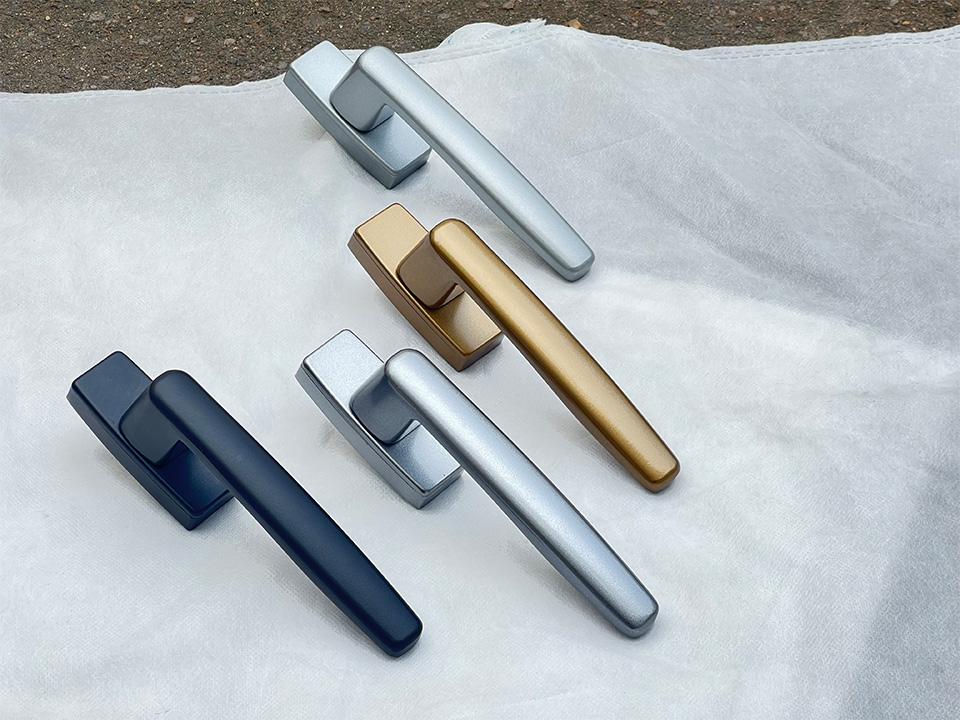
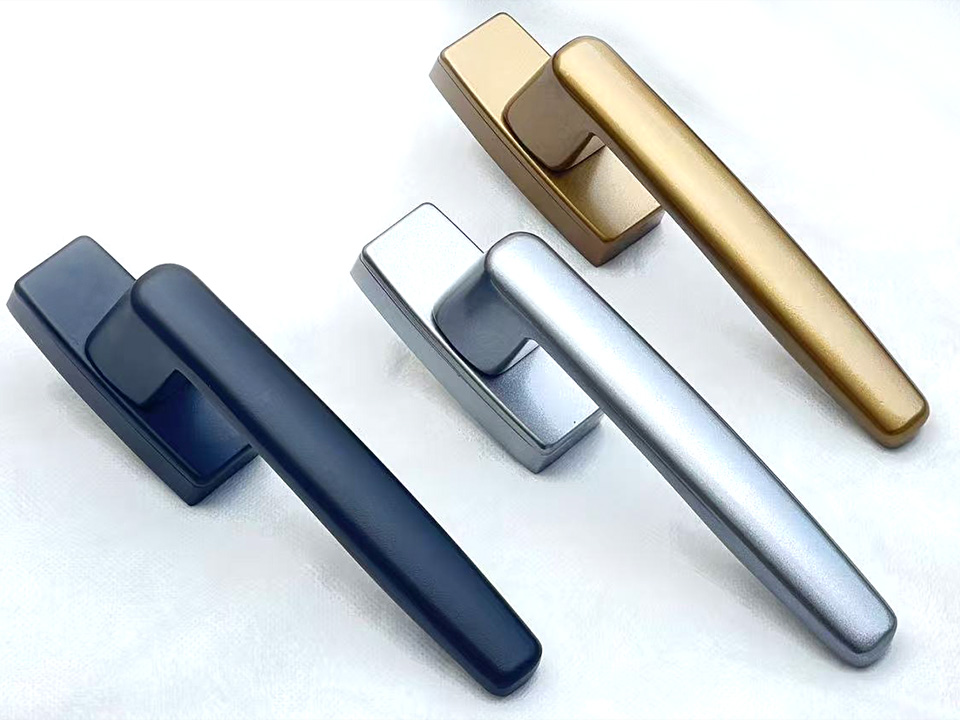
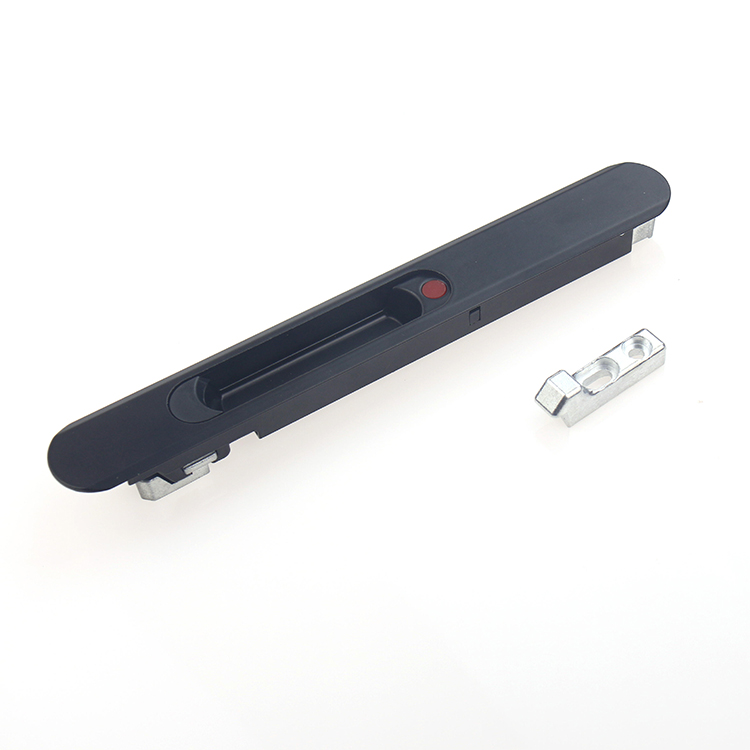
That is why I would rather prove the interface stack first with off-the-shelf sections and real hardware. If your downstream hardware package is still moving, keep the extrusion conservative. For example, if you are still deciding between a slim handle package and a deeper recessed lock body, I’d rather validate with a recessed flush sliding door lock and handle or a slim sliding door handle with lock before I lock myself into a custom wall structure I may regret.
Design custom extrusions when assembly cost is the real enemy
A custom extrusion starts making sense when it collapses multiple operations into one profile: screw boss integration, gasket retention, concealed wire path, drainage feature, anti-rattle rib, clip pocket, or hardware mount geometry. In other words, when the section itself becomes a manufacturing tool.
That is especially true in hardware sourcing programs where the extrusion is not a decorative stick of metal but the backbone of a system. Think narrow sliding doors, soft-close assemblies, or lock-ready channels that need repeatable alignment over long runs. In those cases, the profile can eliminate drilling steps, bracketry, weldments, and field-adjustment drama.
I’ve seen custom profiles work best in three cases:
1. The profile eliminates at least two secondary operations
If your section removes CNC milling, bracket installation, or manual shimming, I start listening.
Not “our sales team feels good.” Real. Forecast-backed. Purchase-order-adjacent.
And here is the harder truth. A lot of “custom extrusion” projects are actually hardware integration problems disguised as section-design problems.
The hidden cost nobody prices correctly
Tolerance stack-up.
People love to discuss die cost because it is visible. Fewer people want to discuss tolerance accumulation across the extrusion, machining, finish thickness, gasket compression, roller bracket adjustment, and lock engagement because that conversation is ugly and technical and exposes weak engineering habits. But that is where projects go sideways.
NIST’s long-standing manufacturing guidance on coatings and close tolerances says the obvious part out loud: tighter tolerance requirements can drive cost sharply higher, and blanket assumptions are dangerous because performance depends on the exact substrate and process conditions.
That is not academic trivia. It is the bill.
If your custom profile only works when every wall, groove, and mating surface is “perfect,” it is probably not ready for production. I trust designs that tolerate ordinary manufacturing variation. I distrust designs that need heroics.
What the market data really suggests
You also need demand stability, supply resilience, and a credible reason that your profile should exist instead of a modified standard shape. Reuters noted in September 2024 that China’s primary aluminum output rose 4.9% year over year in the first seven months of 2024, reaching an annualized run rate of 43.5 million tons in July. That is a supply-side reminder that the metal market itself can stay fluid even while your individual project economics get tighter.
Meanwhile, U.S.-Mexico policy moves in July 2024 targeted tariff circumvention in steel and aluminum trade, another sign that sourcing risk is not abstract paperwork but a live variable in cross-border procurement.
So what do I take from that?
I take this: custom extrusion decisions should be made with procurement, not in spite of procurement. The die may be yours, but the supply chain still gets a vote.
Start with a catalog profile during EVT or early pilot production. Mount the real hardware. Abuse the sample. Track where installers swear, where locks misalign, where dampers drag, where handles flex, where machining time grows, where scrap appears. Then redesign only the pain that survives testing.
That hybrid method beats the fantasy of “getting it perfect up front” because it turns guesses into evidence. I prefer a profile redesign triggered by measured failure modes, not by aesthetic ambition.
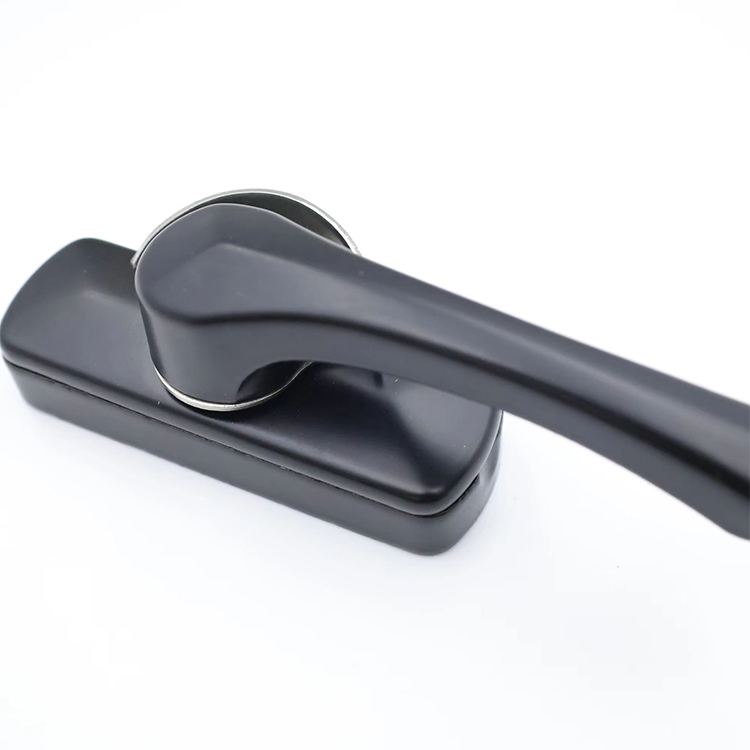
And yes, this is where hardware sourcing gets sharper. If your profile must support a lockset geometry, handle depth, or sash interface that keeps changing, the better investment may be standardizing the hardware family first. A clean example is aligning extrusion strategy with compatible components such as a custom aluminum window handle lock solution or a stainless sliding door latch lock before committing to a die that assumes the hardware spec will never move again.
That assumption is usually wrong.
My rule of thumb after too many sourcing postmortems
If the custom profile does not remove enough purchased parts, enough labor minutes, or enough quality escapes to repay itself within a sensible production horizon, keep it standard. A prettier cross-section is not a business model.
And one more thing. Buyers often underestimate how often “best extrusion profile for manufacturing” really means “best system for manufacturing.” The profile, finish, hardware, packaging, freight density, and field service burden are linked. Break that chain anywhere and your elegant section becomes a procurement headache.
FAQs
What is the difference between a custom extrusion and a catalog profile?
A custom extrusion is a profile made with a dedicated die to match a product’s exact geometry, while a catalog profile is a pre-existing standard section available in common dimensions and alloys for immediate sourcing and faster validation. In plain English, one buys you freedom; the other buys you speed and lower risk.
I use catalog extrusion profiles when the design is still moving, because the hidden cost of being “special” too early is usually rework, not innovation. Custom comes later, after interface dimensions, target volume, and downstream hardware have stopped drifting.
When should I use custom extrusions instead of standard extrusion profiles?
You should use custom extrusions when the new section reduces total system cost by integrating features that eliminate machining, brackets, fasteners, or alignment failures across a production run large enough to recover die and qualification costs. That is the economic threshold, not personal preference.
My own test is ugly but effective: show me the labor minutes removed, the parts count reduced, the scrap rate improved, or the installation variability cut. If nobody can show that, the custom section is probably a vanity project.
How do I choose extrusion profiles for manufacturing efficiency?
Choosing extrusion profiles for manufacturing efficiency means selecting the section that delivers the lowest total landed cost after tooling, machining, finishing, hardware fit, assembly labor, scrap, and logistics are counted together rather than treated as separate silos. That full-stack view is where smart sourcing beats pretty CAD.
I usually start with the assembly map. Then I look at wall thickness, fastening logic, hardware clearance, finish buildup, and tolerance stack-up. The profile that makes production boring is often the right one.
Are custom aluminum extrusion designs better for hardware integration?
Custom aluminum extrusion designs are better for hardware integration when the hardware geometry is stable and the profile can be engineered to accept locks, dampers, guides, or handles directly without adapters, shims, or secondary machining. The value comes from repeatability, not novelty.
This matters most in narrow-frame doors, windows, and sliding systems. If the lock engagement, damper pocket, and handle depth are known, custom sections can clean up assembly dramatically. If they are still changing, custom can trap you.
Is hardware sourcing affected by the extrusion decision?
Hardware sourcing is directly affected by the extrusion decision because profile geometry controls cavity space, fastener access, lock body clearance, mounting surfaces, finishing compatibility, and tolerance behavior across the final assembly. The extrusion is not separate from the hardware plan; it is the hardware plan’s host structure.
That is why I hate seeing sourcing teams brought in late. By then, somebody has already drawn a beautiful section that cannot easily accept the actual components the market can supply at a sane price.
If you’re evaluating whether your next product should stay with catalog extrusion profiles or move to a custom section, treat the extrusion and hardware package as one commercial system. Build around the parts that must work together, then force the numbers to defend the design. That discipline is where margins survive.