Looking for hardware solutions that meet European / American standards?
Use this guided inquiry modal to move from a generic quote form to a clearer technical conversation. Buyers can choose whether they need pricing, CAD / 3D files, or OEM / ODM support before sharing contact details.
Compatibility-first design across door / window systems
Repeatable production with clear inspection checkpoints
Documentation and change control for long-running programs
Responsive engineering support for fit and field feedback
I’ve seen a spec sheet look airtight in the tender phase, polished enough to calm procurement, neat enough to satisfy architects, and still blow up months later because somebody treated coastal exposure like a cosmetic issue instead of a materials problem—then the callbacks started, the latch bodies bloomed red, the rollers chattered, and everyone suddenly wanted a “root-cause analysis.” Too late.
But that’s the part people in this trade still dance around: most coastal hardware failures aren’t mysterious. They’re cheap decisions wearing expensive packaging. I frankly believe the industry hides behind finish names, vague corrosion claims, and showroom language because the raw truth is uglier—if you choose the wrong substrate near salt, you’re not buying hardware, you’re pre-ordering complaints.
Table of Contents
The coastal hardware myth that keeps costing people money
Here’s the ugly truth: “stainless is premium, coated steel is budget” is not a strategy. That’s retail talk. Coastal hardware lives or dies on chloride load, maintenance reality, geometry, drainage, edge damage, install quality, and whether the part sits in the blast zone or in some semi-sheltered pocket where people pretend the sea air somehow doesn’t count. And coastal exposure is not hypothetical background noise. NOAA said in its 2024 outlook that U.S. coasts were still expected to see a median of 4 to 8 high-tide flood days from May 2024 to April 2025, and NOAA also notes recurrent high-tide flooding damages infrastructure over time. More wetting. More drying. More salt residue left behind after the water disappears. That’s how hardware gets cooked slowly. NOAA’s 2024 outlook and the agency’s broader high-tide flooding guidance don’t read like marketing copy because they aren’t marketing copy.
From my experience, the mistake is always the same. Buyers think they’re comparing products. They’re really comparing failure curves.
Stainless vs coated steel in coastal areas is not an even argument
Coated steel doesn’t. Not really. It survives until the coating system gets nicked, chipped, undercut, over-bent, poorly cured, or scuffed during install by a guy who’s rushing through a punch list with the wrong driver bit and zero patience—which, if we’re being honest, is not exactly a rare jobsite event.
FHWA notes stainless steel is defined by chromium content above roughly 10.5%, and its corrosion mechanism is fundamentally different from weathering or ordinary carbon steels. That matters because the passive film on stainless isn’t decorative fluff; it’s the thing doing the defensive work. Coated steel, on the other hand, is depending on surface integrity and process discipline. Pretreatment. Build thickness. Edge coverage. Cure. Handling. Storage. Fastener detail. One weak link, and the whole “rust-resistant” sales pitch starts to feel like stand-up comedy.
And yet—I’m not going to pretend coated steel is fake or worthless. That would be lazy. It has a lane. Hidden brackets. Lower-risk internals. Controlled spaces. Parts you can swap without ripping apart a finished opening. Fine. Use it there. But don’t let anyone sell you coated steel for exposed, high-touch, hard-to-replace coastal hardware just because the sample board looked clean under showroom lights.
What I trust, what I side-eye, and what I don’t buy at all
I trust stainless on exposed hinges, friction stays, lock cases, strikes, rollers, and latch assemblies that live in salt air day after day.
I trust coated steel when the part is sheltered, accessible, cheap to replace, and honestly described.
I don’t trust fluffy phrases like “marine finish,” “outdoor grade,” or “anti-rust coating” when there’s no alloy disclosure, no coating stack info, and no meaningful test context.
The chemistry behind the brochure language
Chromium matters. Chlorides matter more.
People outside the trade love broad labels. “Stainless” sounds settled. It isn’t. FHWA has long warned that chloride-rich environments favor localized attack, especially pitting and crevice corrosion. And NIST’s work is even less forgiving: in harsh coastal and tidal conditions, 300-series stainless can still pit, and Type 316 generally performs better than Type 304 under the same conditions. That’s the sentence too many suppliers rush past because it wrecks the convenient fiction that all stainless grades belong in the same bucket.
So when somebody says, “It’s stainless,” my first reaction isn’t relief. It’s suspicion. Which stainless? 201? 304? 316? 316L? Because if the answer gets fuzzy, the spec is already wobbling. Type 304 can be acceptable in lighter coastal exposure—I’m not denying that. But 316 or 316L gives you a better cushion when chlorides hang around, cleaning gets skipped, and crevices hold moisture like a grudge.
And crevices always matter.
Worse, mixed-metal assemblies muddy the water fast. A decent visible body mated to weak pins, springs, screws, or hidden steel inserts is how hardware earns a polished look and a short life at the same time. I’ve seen that trick before.
What buyers think they’re saving—and what they usually aren’t
Yes, stainless costs more upfront. No, that doesn’t make coated steel “economical” by default. Raw material exposure is part of the story, and USGS reported in its 2024 commodity summaries that stainless and alloy steels plus nickel-containing alloys account for more than 85% of domestic nickel consumption, while chromium material consumption in the United States was estimated at about $830 million in 2023, down 44% from 2022. Then Reuters, in February 2024, reported analysts expected weak demand to weigh on base metals through 2024 while nickel markets were wrestling with oversupply pressure. So yes, alloy economics shift. Markets wobble. Fabrication costs move. USGS nickel data, USGS chromium data, and Reuters’ 2024 metals survey all help explain why stainless isn’t cheap.
Hardware buyers still make a rookie mistake: they price the unit and ignore the event. I don’t. I price the failure event. Removal labor. Refit. Tenant disruption. Water ingress risk. Missed handover. Reputation hit. Freight. Admin time. The whole mess. A cheap lock that dies in 18 months on a beachfront project is not a cheap lock. It’s a deferred invoice with attitude.
The comparison buyers should actually use
Decision Factor
Stainless Steel
Coated Steel
First cost
Higher
Lower
Chloride resistance
Stronger, especially 316/316L
Depends on coating integrity
Damage tolerance
Better after scratches or edge wear
Weakens sharply when coating is breached
Best use case
Exposed coastal hardware, high-touch components, hard-to-replace parts
Sheltered or concealed parts, lower-risk applications
Maintenance dependence
Moderate
High
Failure mode
Often slower, localized pitting/crevice attack
Often starts at chips, cut edges, fastener points
Lifecycle value near surf
Usually better
Often worse unless exposure is mild
Where I’d spec stainless first—and not apologize for it
On exterior windows facing salt air, I’d rather overbuild the moving parts than explain later why the sash is dragging like it aged ten years in one monsoon cycle. That’s why stainless window friction stays for coastal casements make sense in exposed applications. Friction stays live hard lives: grit, repetitive motion, trapped moisture, deferred cleaning, and bad alignment. That’s not theory. That’s Tuesday.
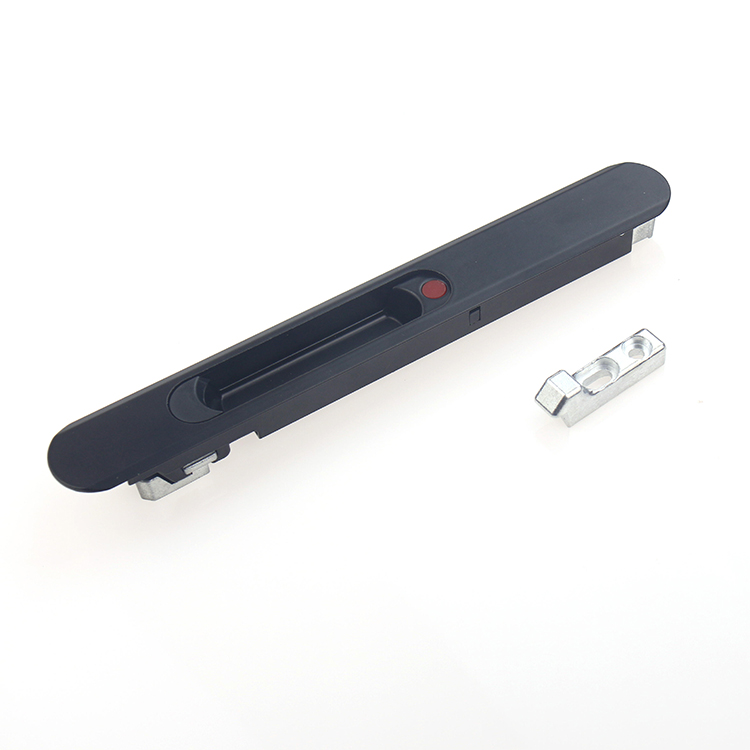
Same story on sliding systems. The lock body always looks fine in the sample phase. Then the seaside install starts accumulating residue, the keeper alignment tightens, the mechanism gets sticky, and suddenly the lockset is “not smooth anymore.” I’d push toward a stainless steel sliding door latch lock for exposed coastal sliders long before I’d trust a coated body with vulnerable edges and optimistic claims.
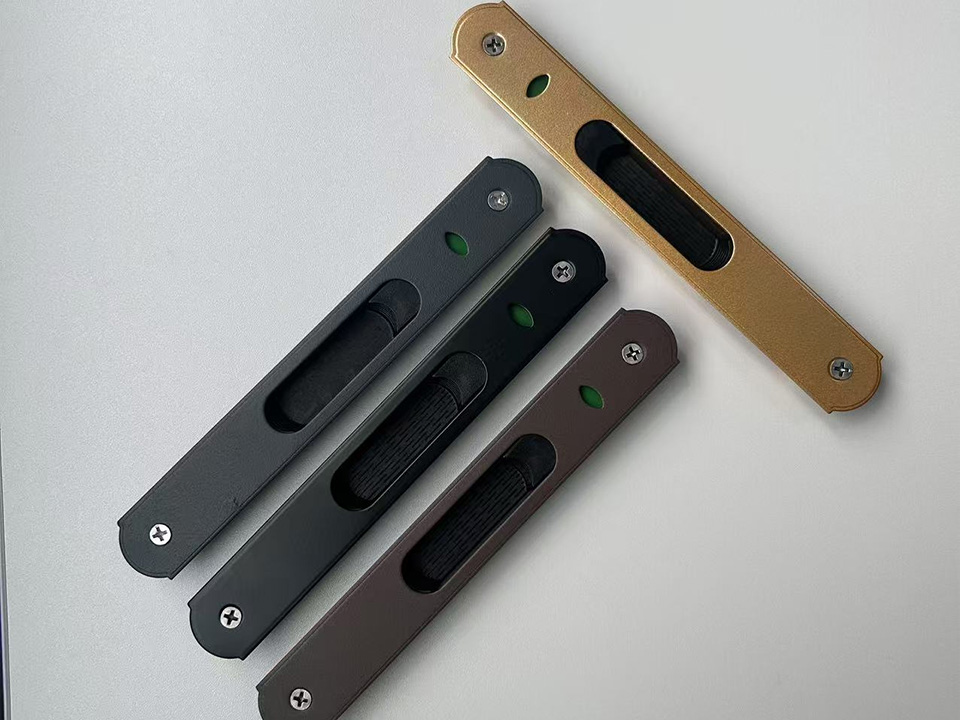
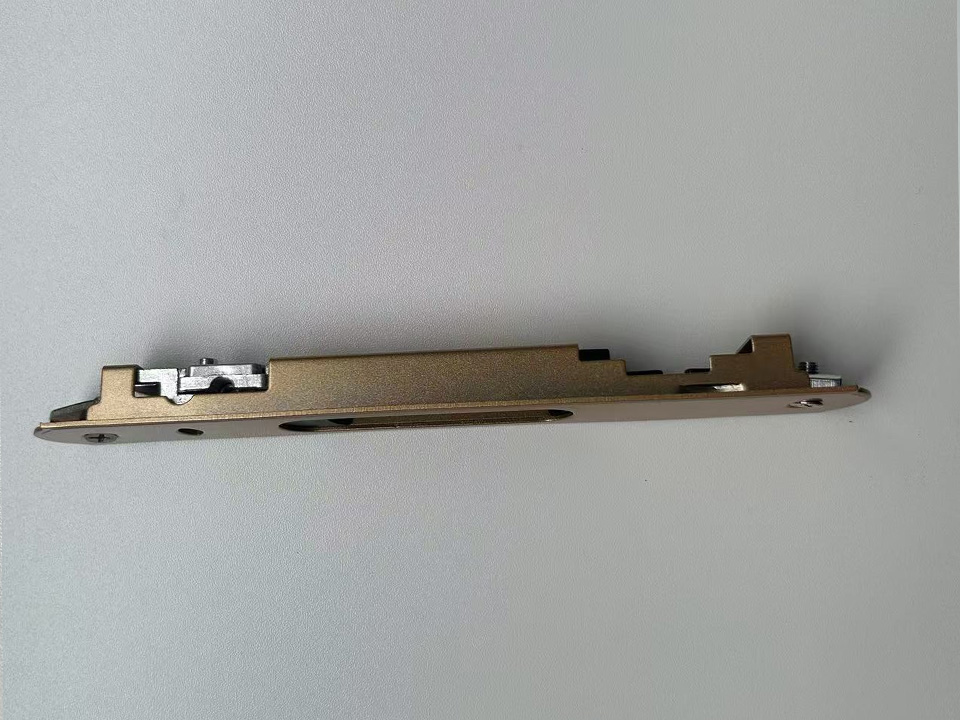
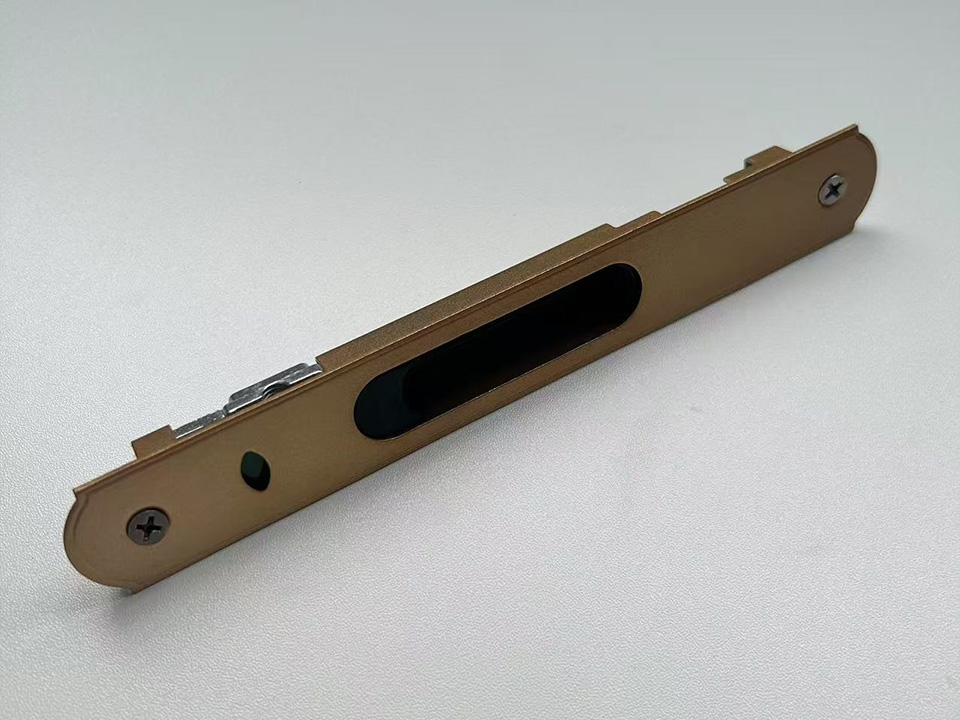
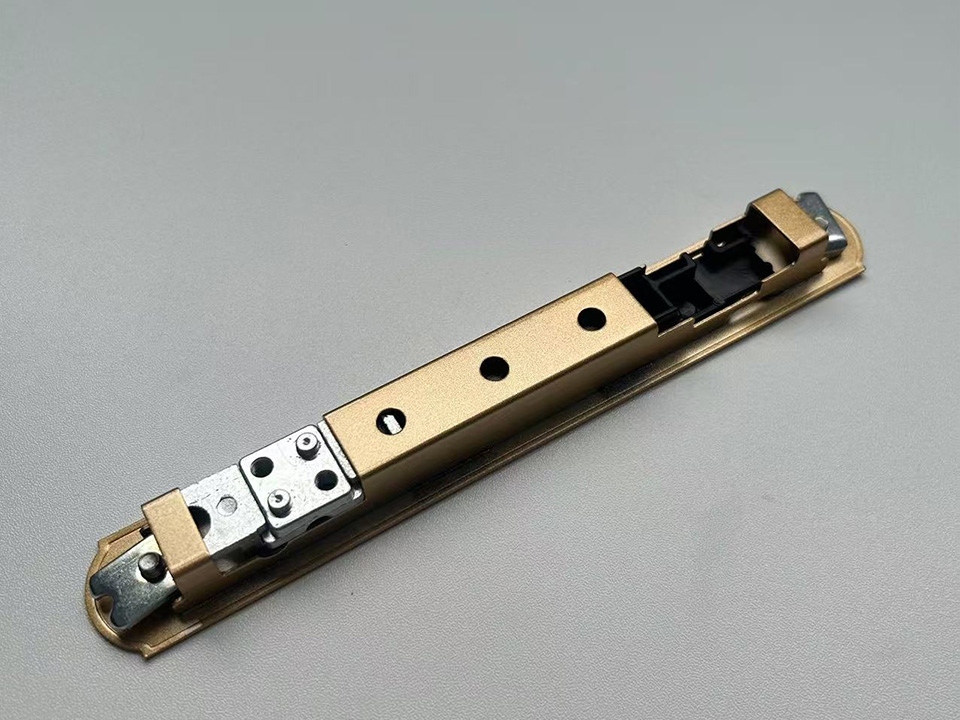
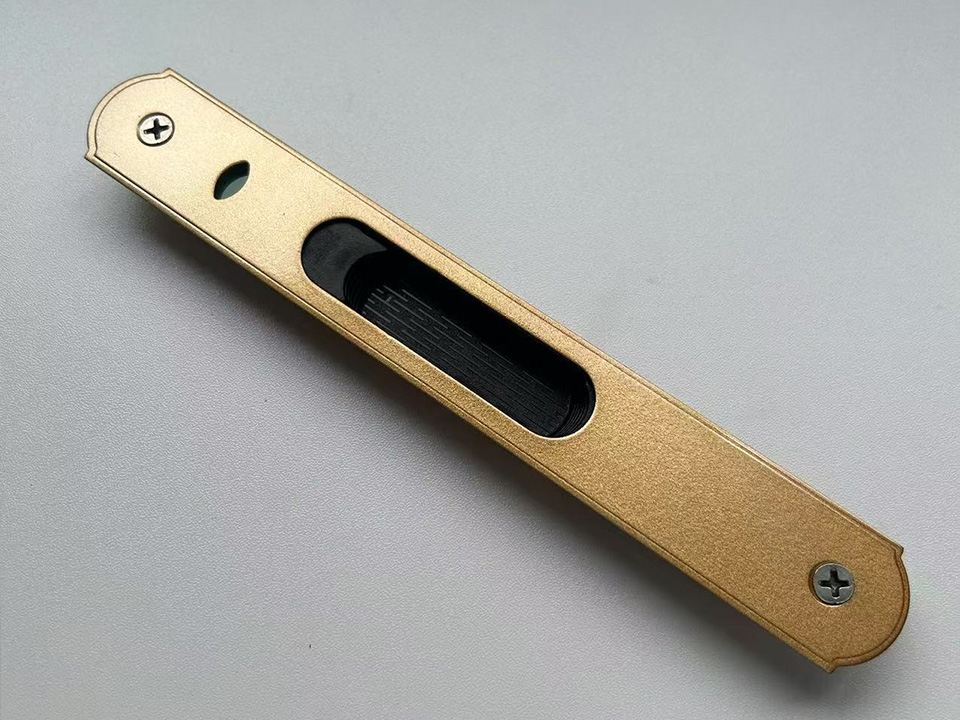
For recessed systems, buyers often obsess over style lines and flush detailing, then ignore the hardware cavity where condensation and chloride residue can quietly sit and chew through working components. A flush sliding door lock and handle set only earns its keep if the hidden mechanics can survive what the architecture is asking them to do.
Windows, latches, and the half-truth of visible materials
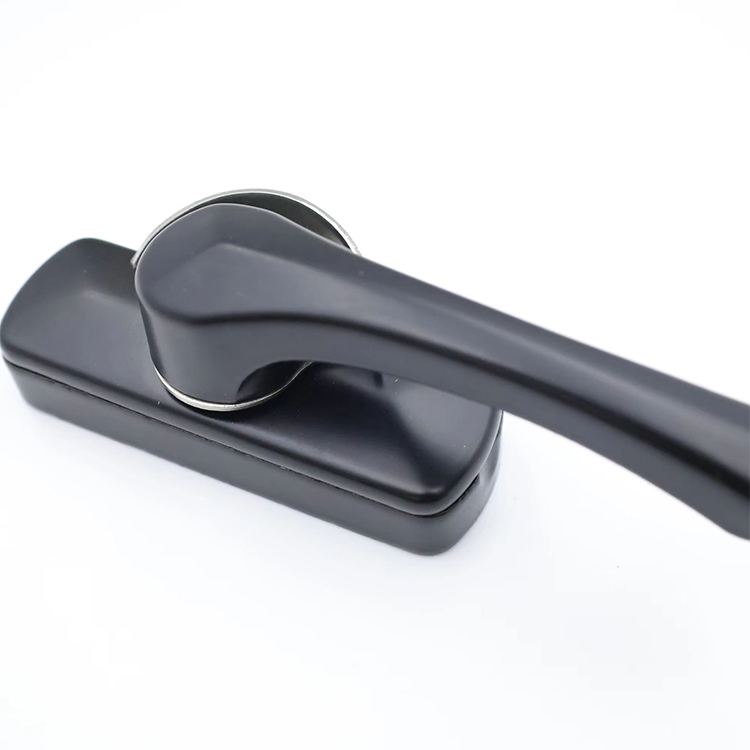
But visible aluminum throws people off. They see an aluminum face and assume the whole assembly is naturally coastal-safe. Not so. Not even close. If you’re using a keyed aluminum crescent window latch lock handle or a custom aluminum window handle lock, I’d inspect the pins, springs, screws, cams, and concealed subcomponents before I signed off.
Because hidden steel is where the betrayal usually starts.
And for utility cabinets, service zones, pool plant rooms, coastal rooftops, or marine-adjacent maintenance spaces, I don’t care how sleek the visible cap looks if the guts are flimsy. That’s why I’d review assemblies like a rotary lock latch for industrial cabinets or soft-close damper hardware for sliding doors as full systems. Faceplate vanity means nothing if the cam, spindle, spring pack, or damper rod is the sacrificial weak spot.
Hidden parts are often the first parts to rot
Concealed doesn’t mean safe.
Actually, concealed often means worse. Moisture gets trapped. Salt stays parked. Cleaning never reaches it. Drainage is poor. The little cavity behind the escutcheon or inside the lock case becomes its own salty microclimate. And then people act surprised when the pretty outside survives longer than the mechanism doing the real work.
I’m never surprised.
The questions I ask when I want the sales pitch to stop
Seriously. Ask the kind of questions that make a supplier stop reading from the brochure and start talking like an engineer. This is the fastest way to figure out whether you’re dealing with a real manufacturer, a trader with a clean PDF, or a brand that outsourced the hard thinking years ago.
The checklist I actually use
What is the exact alloy—201, 304, 316, or 316L?
If it’s coated steel, what’s the substrate and what’s the coating system?
What salt-spray standard was used, and for how long? ASTM B117 is common, but hours alone don’t equal field life.
Were the cut edges, fastener penetrations, and formed corners part of the test logic?
Are the screws, springs, pins, and strikes in the same corrosion class as the visible body?
Is there any mixed-metal contact, and if yes, how is it isolated?
What failed first in real field returns over the last 24 months?
Because once you ask what actually dies first, the fluffy language disappears. Suddenly they’re talking about spring fatigue, tea staining, blistering, crevice bloom, seized followers, edge creep, and lockcase contamination. Good. Now we’re getting somewhere.
The part people don’t expect me to say: coated steel still has a place
I’m not anti-coated steel.
I’m anti-laziness. Big difference. There are jobs where coated steel is absolutely the smarter move—semi-sheltered coastal developments, interior-adjacent zones, low-touch communal applications, short-cycle commercial fit-outs, and parts you can replace without turning the install into surgery.
But I still apply a hard filter. Three conditions. Credible coating. Sensible geometry. Easy replacement path.
Miss one of those and the savings get weird fast.
A beautifully coated part with water-trap geometry? Trouble. A modestly exposed part with good coating but impossible replacement access? Also trouble. A low-cost component with poor edge treatment but high handling frequency? That one’s just waiting to embarrass someone.
FAQs
Is stainless steel always better than coated steel for coastal hardware?
Stainless steel is usually the safer choice for coastal hardware because it resists chloride attack through a self-repairing passive chromium-oxide film, while coated steel depends on an intact surface barrier that can fail at scratches, cut edges, corners, or fastener penetrations under salt-laden wet-dry cycles.
Not always, though. If the part is sheltered, low-risk, cheap to replace, and honestly engineered, coated steel can still be the right move. But I wouldn’t use that exception as an excuse to get cute on exposed hardware.
What stainless grade is best for coastal environments?
For coastal environments, Type 316 or 316L stainless is generally the better answer because its molybdenum addition improves resistance to pitting and crevice corrosion in chloride-rich conditions, while Type 304 can perform acceptably in lighter exposure but gives you less margin when salt deposition and retained moisture rise.
That said, grade alone doesn’t save you. Surface finish, drainage, weld quality, and mixed-metal contact still decide whether the real-world performance matches the catalog promise.
How do I know if coated steel hardware is good enough near the ocean?
Coated steel hardware is good enough near the ocean only when the exposure is limited, the coating system is documented, the vulnerable edges and penetrations are protected, and the assembly can tolerate maintenance and eventual replacement without major labor or access cost.
From my experience, the fastest reality check is simple: ask what happens after the first chip. If the answer is vague, the product isn’t coastal-ready. It’s just attractively described.
Why does coastal hardware fail faster than inland hardware?
Coastal hardware fails faster because airborne chlorides, condensation, UV exposure, and repeated wet-dry cycles concentrate salts on metal surfaces, accelerate coating breakdown, and promote localized corrosion such as pitting and crevice attack, especially in joints, recesses, fastener seats, and poorly drained cavities.
The inland buyer thinks in rain events. The coastal buyer has to think in residue, retention, and overlooked cavities. That’s a different game entirely.
Your next move if you are specifying coastal hardware
Stop buying adjectives.
Ask for alloy callouts. Ask for coating stack details. Ask what failed in the field. Ask what the hidden parts are made of. Ask whether the screws match the body. Ask whether the lockcase internals were built for chloride exposure—or just dressed for it.
If the hardware is exposed, heavily handled, structurally meaningful, or painful to replace, I’d lean stainless and make the supplier prove the grade. If the component is sheltered and lower-risk, coated steel can work—but only when the system is honest, the geometry is sane, and the maintenance assumptions aren’t fantasy.
I’ll put it bluntly: in coastal hardware, stainless isn’t indulgence. A lot of the time, it’s just the invoice you either pay upfront—or pay later with extra zeros attached.