Looking for hardware solutions that meet European / American standards?
Use this guided inquiry modal to move from a generic quote form to a clearer technical conversation. Buyers can choose whether they need pricing, CAD / 3D files, or OEM / ODM support before sharing contact details.
Compatibility-first design across door / window systems
Repeatable production with clear inspection checkpoints
Documentation and change control for long-running programs
Responsive engineering support for fit and field feedback
On a sample board, almost any polished latch can look competent, yet once it meets a real sash—with profile tolerances, worn rollers, gasket compression, corrosion exposure, hurried installers, and users who slam instead of operate—the application difference becomes painfully obvious.
So why does the industry still buy window hardware by silhouette?
My answer is not diplomatic: too many specifications treat the latch as decoration added after the window has already been designed. That is backwards. The hardware determines whether the sash closes consistently, whether the meeting rails pull together, whether a user can verify the locked state, and whether the assembly remains usable after thousands of cycles.
A crescent lock may be the right answer. A spring latch may be better. A flush sash lock may be the only sensible choice. But the name on the catalog page is not the specification.
The Naming Problem: A Crescent Lock Is a Type, “Window Latch” Is a Category
The fastest way to understand crescent lock vs window latch selection is to separate the specific mechanism from the broad product family.
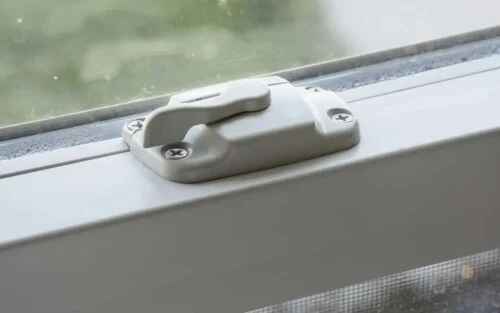
A crescent lock is a rotating sash fastener. Its curved cam, hook, or sweep engages a keeper mounted on the opposing sash or frame. As the user turns the lever, the cam does more than block movement: a well-matched design can pull the meeting rails together and create a more positive closed position.
A window latch is the umbrella term. It can describe crescent locks, spring latches, thumb latches, flush latches, push-button latches, sliding-panel catches, keyed sash locks, or integrated handle-and-lock assemblies. Some window latches merely retain a sash. Others add compression. Some restrict access with a key. Others are built for quick, repetitive ventilation.
That distinction matters.
“Lock” and “latch” are also used loosely in commercial catalogs. A part sold as a window lock may have no cylinder, no key, and no tested security rating. A latch may still resist casual opening very well. I do not trust the label. I trust the mechanism, the keeper engagement, the fastener substrate, and the tested assembly.
A crescent lock works by rotating a curved cam into a keeper. The cam path converts hand rotation into lateral engagement and, depending on the geometry, a small amount of sash pull-in. The important variables are cam throw, keeper height, keeper setback, sash overlap, screw-center spacing, and clearance behind the rotating body.
Get one wrong and the symptoms appear quickly: scraping, incomplete rotation, false locking, sash lift, loose meeting rails, or excessive operating force.
The ugly version still “looks installed.” It just does not work properly.
What window latches do differently
Other types of window locks and latches solve different problems:
A spring latch offers fast, automatic engagement when the sash reaches its closed position.
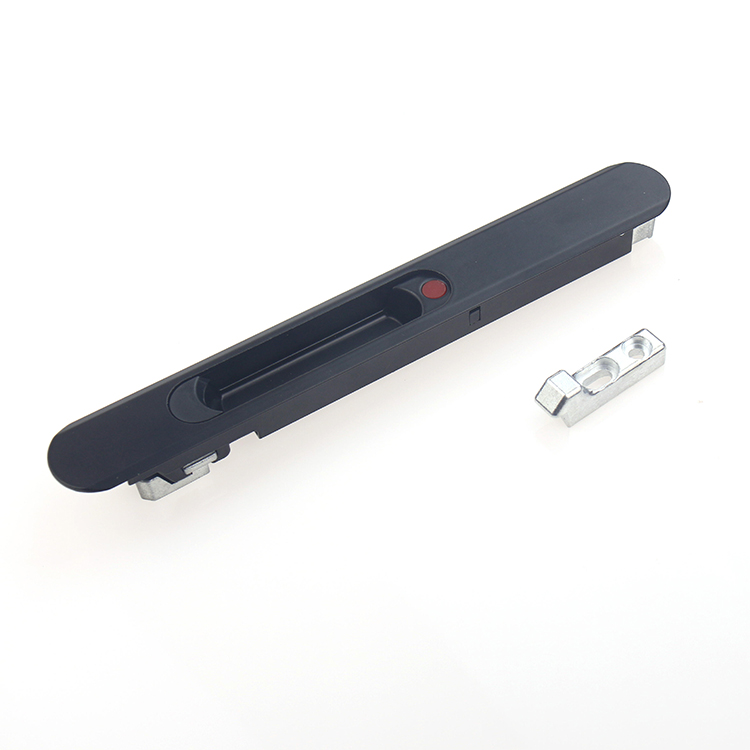
A flush sash lock keeps hardware below or near the surface, useful where projection interferes with screens, curtains, transport, or a narrow aluminum profile.
A thumb latch favors simple one-handed operation.
A keyed latch adds controlled access but also introduces key management and egress questions.
A multi-point mechanism locks at several locations and is usually better suited to casement, tilt-turn, larger, or higher-performance units than a single crescent cam.
The mechanism should follow the window movement. Not the other way around.
Table of Contents
Crescent Lock vs Window Latch at a Glance
Selection Factor
Crescent Lock
General Window Latch
Basic mechanism
Rotating curved cam, hook, or sweep engages a keeper
Double-hung, single-hung, horizontal sliding, compact aluminum sash systems
Sliding, hung, casement, awning, hopper, projected, and specialty windows
Closing action
Often provides retention plus limited pull-in or compression
May retain, snap shut, restrict, compress, or lock depending on design
User feedback
Visible lever position and rotational “locked” feel
Varies from automatic spring engagement to concealed or keyed operation
Profile demand
Needs accurate keeper height, cam throw, sash overlap, and back clearance
Depends on latch family; some tolerate movement better than others
Retrofit suitability
Good only when footprint and geometry match the existing sash
Broader replacement options, including surface, flush, track, and spring designs
Security potential
Useful against casual opening when the full assembly is sound
Ranges from light retention to keyed or multi-point control
Best use
Two meeting members need compact cam engagement and a positive closed position
The application calls for automatic latching, low projection, key control, special motion, or another operating priority
Main failure mode
Misaligned keeper, shallow cam engagement, weak screws, sash drop
Wrong latch family, weak substrate, spring fatigue, poor strike alignment, user confusion
Fall-prevention status
Not automatically a fall-prevention device
Not automatically a fall-prevention device
Here is the hard truth: two components can share the same mounting footprint and still be functionally incompatible. A 1 mm to 2 mm change in keeper height, cam offset, or sash position can turn smooth engagement into metal-on-metal drag. That is why the frame-profile matching process for crescent locks should happen before tooling approval, not after the first container arrives.
Application Differences by Window Type
Double-hung and single-hung windows: crescent locks usually make sense
Hung windows are the classic crescent-lock application because the upper and lower sash meet at a rail. A rotating cam can catch a keeper on the opposing rail, discourage sash separation, and help pull the meeting surfaces into alignment.
But “usually” is doing real work here.
If the sash has dropped, the rails are bowed, the pile weatherstrip is over-compressed, or the keeper is mounted into thin unsupported material, the crescent lock becomes a lever users must force. That extra force accelerates looseness at the screws and wear at the cam face. The lock gets blamed. The system caused it.
For hung-window programs, I would specify:
Lock and keeper as one matched set.
Measured sash overlap at nominal and worst-case tolerances.
Screw engagement into a defined boss, reinforcement, or verified wall thickness.
A clear locked-state position visible from normal standing height.
Operation testing after thermal cycling, not only on a room-temperature sample.
The best window sash hardware is boring in the right way. It closes the same on unit 5 and unit 5,000.
Horizontal sliding windows: choose between cam pull-in and fast latching
Sliding windows create a different decision. A crescent lock can work well at the interlock or meeting stile when the sash needs controlled pull-in. Yet a spring latch or flush sliding lock may be better where users open the window repeatedly, where projection must stay low, or where the panel geometry does not provide a clean keeper relationship.
For a slim aluminum slider, a sliding window sash lock with a flush pull can combine gripping and locking functions while reducing surface projection. That does not make it universally better. It makes it better for a specific profile and user sequence.
The best window latch for sliding windows depends on six questions:
Does the moving panel need compression or only retention?
Can the panel be lifted out of the track even when latched?
Is the latch reachable from outside through a damaged or removed screen?
Will curtains, blinds, or insect screens conflict with a projecting lever?
Does the frame provide enough material for the screws?
Is the window opened daily, occasionally, or almost never?
A crescent lock addresses meeting-stile engagement. It does not automatically solve track lift-out, weak glazing, frame flex, or poor fastener anchorage.
That limitation is not a defect. Pretending otherwise is.
Casement and awning windows: a crescent lock is often the wrong mechanism
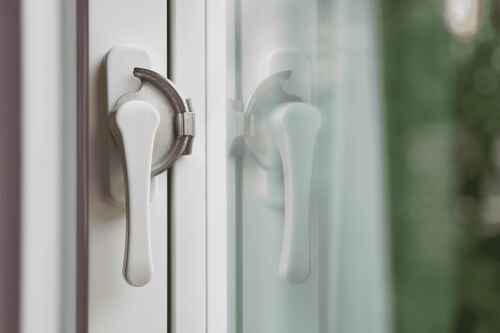
Casement and awning windows move perpendicular to the glazing plane and commonly need a handle, operator, and locking sequence that draws the sash against perimeter seals. A single crescent cam at one point may not provide the compression distribution required by a tall sash, a wind-exposed façade, or a high-performance gasket system.
This is where integrated handles, espagnolette-style rods, or multi-point locking mechanisms become more logical. The window is asking for distributed closure, not a decorative sweep lock borrowed from a slider.
Could a small projected vent use a compact cam latch? Yes. But I would not call every rotating cam a crescent lock, and I would not approve one without checking load path, seal compression, hinge behavior, and operating force across the sash.
Commercial and architectural aluminum profiles expose the weakness of generic hardware selection. Extrusion walls may be thin. Screw bosses may be offset. Drainage ribs, gasket legs, screen tracks, and reinforcement webs can occupy the exact volume a rotating cam needs.
A lock body that fits the face can still collide behind the face.
For these systems, the RFQ should include a profile section, not just a photograph. I want the meeting-stile drawing, wall thickness, screw boss location, keeper plane, sash overlap, back clearance, finish exposure, and target market. Without those, “compatible” is sales language.
And yes, finish matters. Coastal chloride exposure, cleaning chemicals, trapped moisture, and dissimilar-metal contact can attack the spring pocket or fastener interface long before the visible face looks damaged. The site’s guide to preventing corrosion and defective window-hardware finishes is the right companion piece for buyers who think matte black is a material specification. It is not.
Rental, school, hotel, and managed buildings: key control changes the application
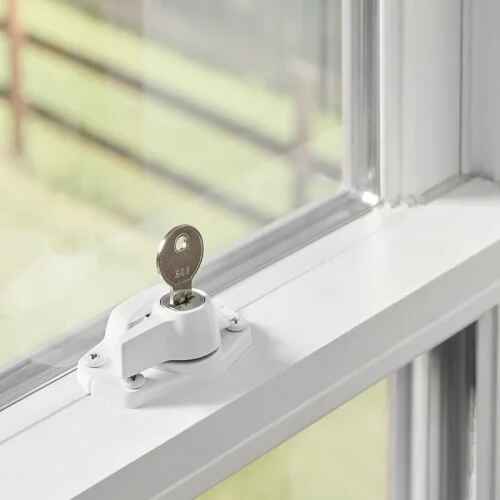
A keyed crescent lock or keyed sash latch can make sense where opening must be controlled by staff, landlords, or responsible adults. The benefit is not mysterious strength. It is access discipline.
But key control creates a new failure mode: the key is missing when somebody needs the opening.
That is why the application guide for keyed window locks correctly centers the decision on room use, user behavior, emergency escape, and frame condition. I agree with that approach. A key cylinder cannot repair stripped screws, a cracked keeper, or a sash that lifts out of its track.
Security, Fall Prevention, and Emergency Escape Are Different Jobs
This is where marketing language becomes dangerous.
A normal crescent lock is closure hardware. A keyed latch is access-control hardware. A tested window opening control device, guard, or fall-prevention screen is safety hardware. An emergency escape opening is part of a life-safety route. Those functions can overlap, but they are not interchangeable.
Security must be judged at assembly level
The current ASTM F588-26 forced-entry test method evaluates a window assembly’s ability to restrain, delay, or frustrate forced entry by unskilled or opportunistic burglars, excluding impact against the glazing itself.
That wording matters. The test concerns the assembly: sash, frame, hardware, fasteners, and related components. A thick crescent lock installed into weak material does not create a strong window. Nor does a keyed cylinder make ordinary glass resistant to impact.
My rule is blunt: never market one latch as proof of whole-window security unless the relevant assembly has been evaluated to the claimed requirement.
An estimated 5,600 children aged 12 and under were treated in U.S. emergency departments in 2024 after falling from windows.
About one in three required hospitalization.
CPSC knew of at least 25 deaths among children 12 and under from 2021 through 2023.
80% of those fatalities occurred from May through October.
CPSC advises window stops that limit opening to no more than 4 inches, and it warns never to rely on insect screens.
Read that again.
A crescent lock can keep a properly closed sash shut. It does not control an intentionally opened ventilation gap. It does not become a guard because a salesperson adds “child safety” to the product title.
ASTM F2090-25 establishes installation, safety, performance, and labeling requirements for window fall-prevention devices, including window opening control devices, guards, and fall-prevention screens used on operable windows, including certain emergency escape and rescue openings. The standard also states that partial compliance is not enough for a compliance claim.
That is the line buyers must respect.
New York’s window-guard record is a real-world case study
New York City’s experience shows why purpose-built safety devices matter. In 2026, the city marked 50 years of its window-guard law and reported that fatal falls among children aged 10 or younger dropped 50% within three years of implementation; in 2025, the city recorded four reported window falls and no fatalities. The city also requires approved guards or limiting devices in covered multi-unit housing where a child aged 10 or younger lives, except at emergency exits. See the NYC Health 50-year window-safety report.
The legal duty is not theoretical. In Juarez v. Wavecrest Management Team Ltd., the New York Court of Appeals discussed the city’s window-guard regime, including the landlord’s annual notice obligation and the inspection duty triggered when a tenant does not return the notice.
The lesson is not “buy more locks.” The lesson is to specify the device that performs the legally and technically defined job.
Egress can reverse the decision
Keyed window latches, permanent stops, and guards can create serious problems when installed on an opening intended for emergency escape or rescue. Local code, building use, floor level, operating force, release sequence, and the authority having jurisdiction all matter.
So ask the uncomfortable question early: must this window be opened quickly from inside during a fire?
If the answer is yes, the hardware decision cannot be made by procurement alone.
What I Would Put in the Hardware Specification
A product photo is not enough. A finish chip is not enough. “Standard size” is not enough.
For crescent locks and other window latches, I would require the supplier and window-system owner to agree on the following data before mass production:
1. Exact application
Name the window type: single-hung, double-hung, horizontal slider, casement, awning, hopper, projected, or specialty. State whether the hardware is for new production, retrofit, repair stock, rental turnover, or an institutional program.
2. Interface dimensions
Record lock footprint, screw centers, keeper footprint, keeper height, keeper setback, cam throw, sash overlap, back clearance, and any left-hand or right-hand requirement. Use the actual extrusion or timber profile drawing.
No guessing.
3. Fastener and substrate
Define screw diameter, thread form, penetration depth, substrate material, boss thickness, reinforcement, and torque window. “Two screws included” tells me almost nothing.
4. Operating behavior
Set measurable expectations for rotation angle, latch force, locked-state feedback, free play, automatic engagement where applicable, and performance after repeated cycling. Test on windows at tolerance extremes, not only the golden sample.
5. Environment and finish
State interior or exterior exposure, coastal distance where relevant, cleaning chemicals, expected condensation, color, gloss range, coating system, substrate alloy, and corrosion-test method. A generic request for “500-hour salt spray” without defining acceptance criteria can produce beautiful paperwork and useless parts.
6. Safety and compliance claim
Write down what is actually being claimed: basic closure, keyed access control, forced-entry performance, opening limitation, fall prevention, or egress compatibility. Then identify the applicable standard, test report, market, and authority having jurisdiction.
7. Traceability
Require batch identification, approved drawings, control samples, inspection criteria, change notification, and a process for field complaints. Small hardware creates large warranty arguments when nobody can trace what changed.
For current product families and OEM discussion, the natural next step is to review the crescent locks and window latches range against the window profile rather than selecting from appearance alone.
Common Selection Mistakes I Would Reject
“The holes line up, so it fits”
No. Matching screw centers prove only that two holes occupy similar positions. They do not prove that the cam reaches the keeper, clears the frame, pulls the sash correctly, or lands in a strong substrate.
“Keyed means high security”
Not necessarily. Keying controls operation. Security still depends on the body, keeper, screws, frame, glazing, sash retention, and installation.
“The latch closes, so the window is sealed”
Also no. A latch can reach its closed position while the sash remains uneven, the gasket is under-compressed, or one corner sits proud. Closure position and performance are related, not identical.
“One universal latch will reduce inventory”
It may reduce SKU count and increase field labor, shimming, redrilling, returns, and warranty claims. Universal parts are useful in repair work when compromises are understood. They are a poor excuse for avoiding OEM fit validation.
“A standard latch is enough for child safety”
That statement should stop an approval meeting. Child-fall risk calls for a purpose-built and properly selected system—often guards, opening-control devices, stops, supervision, furniture placement, and a compliant escape plan—not wishful labeling.
FAQs
What is the difference between a crescent lock and a window latch?
A crescent lock is a specific rotating cam-style sash fastener, while a window latch is the broader category covering spring latches, thumb latches, flush locks, keyed catches, and other mechanisms that retain, restrict, compress, or secure an operable window in residential, commercial, and institutional applications.
Crescent locks are most common where two sash members meet and a cam can engage a keeper. Other window latches may be better when the design needs automatic engagement, low projection, key control, or distributed locking.
How does a crescent lock work?
A crescent lock works by rotating a curved cam, hook, or sweep into a keeper mounted on the opposing sash or frame, converting hand movement into mechanical engagement and sometimes limited pull-in compression that aligns meeting rails, resists casual opening, and gives the user a visible locked position.
When those dimensions are wrong, the lever may still turn but the lock can scrape, bind, lift the sash, or create shallow engagement that only appears secure.
Is a crescent lock the same as a window sash lock?
A crescent lock can be a window sash lock because “sash lock” describes the broader function of securing a movable sash to another sash or to the frame, whereas “crescent lock” describes a particular curved rotating-cam design used where compact engagement and positive closure feedback are required.
Flush sliding locks, spring catches, keyed sash fasteners, and multi-point systems all sit outside the narrow crescent-lock definition even though sellers may mix the terms.
What is the best window latch for sliding windows?
The best window latch for a sliding window is the mechanism that matches the panel profile, keeper position, screw substrate, operating frequency, projection limit, lift-out risk, security target, and ventilation behavior while remaining easy to operate across production tolerances, seasonal movement, and expected service wear.
I would use a crescent lock when controlled cam engagement and meeting-stile pull-in are useful. I would favor a flush or spring design when projection, speed, or repetitive operation matters more.
Can window latches prevent children from falling?
Standard window latches do not automatically qualify as child-fall prevention devices because they are generally designed to hold a fully closed sash, not to control a safe ventilation opening or meet the release, strength, installation, labeling, and emergency-use requirements applied to purpose-built fall-prevention hardware.
A latch can support the safety strategy by keeping the window closed, but it should never replace the device, supervision, furniture placement, and escape planning required for the actual application.
Are keyed window locks better than standard window latches?
Keyed window locks are better when the application needs controlled operation, restricted access, or tamper resistance, while standard latches are often better for ordinary residential ventilation where fast, intuitive use matters and users must open or close the window without locating, storing, or managing a separate key.
Before specifying a key, check whether the window is part of an emergency escape route and decide who controls, stores, duplicates, and replaces the key.
Specify the Window First, Then Choose the Hardware
Do not send a supplier one front-view photo and ask for “the same latch.”
Send the sash profile, keeper geometry, screw centers, wall thickness, overlap, back clearance, operating sequence, exposure class, safety claim, target market, annual volume, and acceptance test. Then ask for a matched drawing and physical samples installed on the real window.
That is the work.
For OEM, ODM, wholesale, or replacement programs, review the available crescent locks and window latches, identify the actual application, and request an engineering fit review before approving production. The right hardware should not merely close on the first day. It should remain understandable, repeatable, and defensible when the window is old, the weather is bad, and the warranty claim lands on your desk.