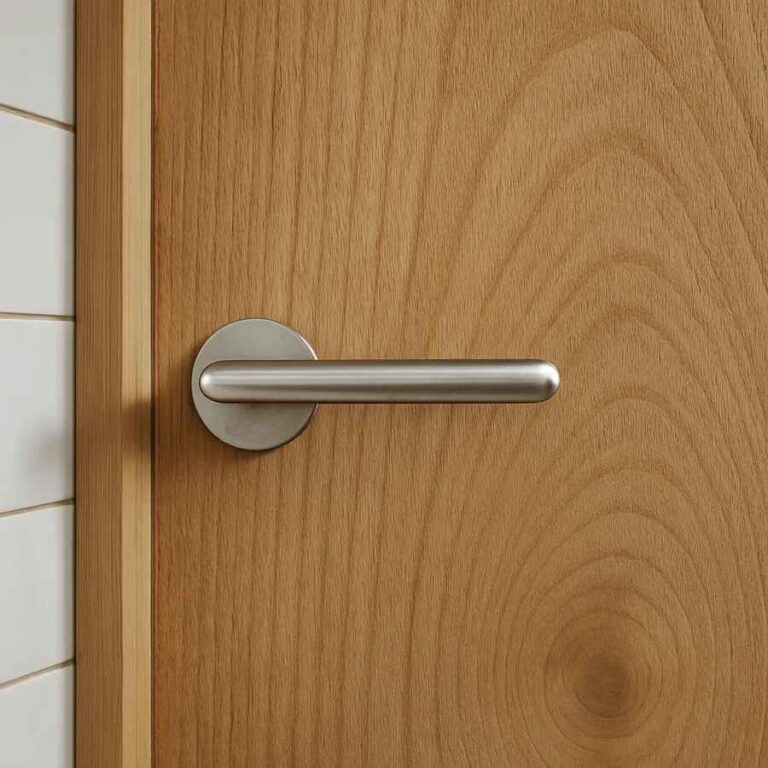
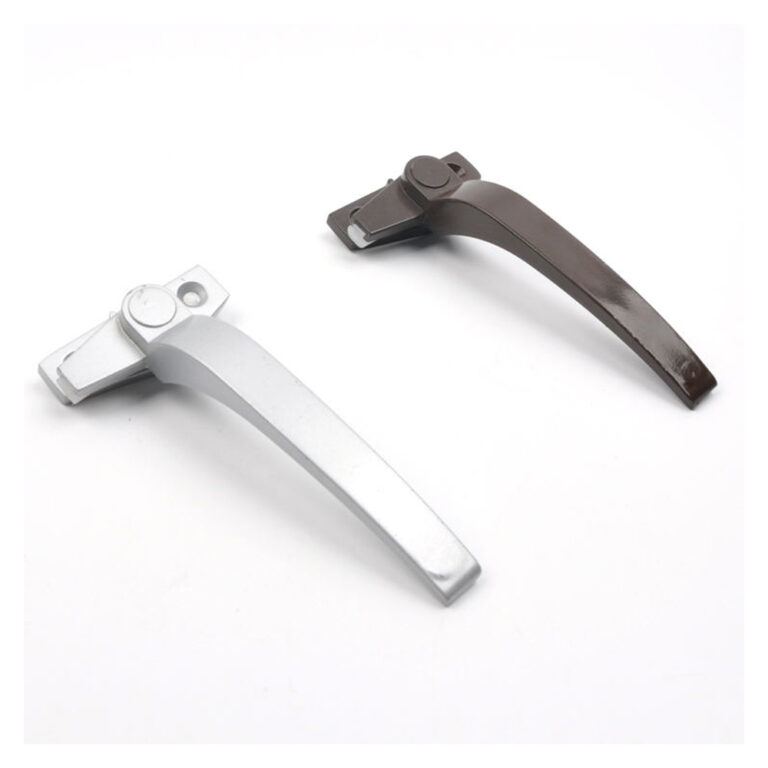
Skorzystaj z tego trybu kierowanego zapytania, aby przejść od ogólnego formularza wyceny do bardziej przejrzystej rozmowy technicznej. Kupujący mogą wybrać, czy potrzebują wyceny, plików CAD / 3D, czy wsparcia OEM / ODM przed udostępnieniem danych kontaktowych.
Konstrukcja zapewniająca kompatybilność systemów drzwi i okien
Powtarzalna produkcja z wyraźnymi punktami kontrolnymi
Dokumentacja i kontrola zmian dla długotrwałych programów
Responsywne wsparcie inżynieryjne w zakresie dopasowania i opinii w terenie
A window handle can have the right lever, finish, fixing centres and spindle section, and still be the wrong part because the spindle length is off. The spindle carries rotation from the lever into the gearbox, so its length decides two things at once. It sets how deeply the drive engages the gearbox socket, and it determines whether the handle base can sit tight on the sash. A spindle that is too short risks partial engagement and an unreliable lock. A spindle that is too long can reach the bottom of the socket before the base seats. That leaves a rocking handle or screws that are forcing the part into position. This guide explains how each failure develops, why “it fits” is not a specification, and what importers, OEM buyers and window fabricators should confirm before approving a length.
What Does Spindle Length Control in a Window Handle?
Spindle length controls drive engagement depth and base seating. The usable length is a window, not a single number. The spindle must be long enough for full engagement in the gearbox socket. It must also be short enough that it does not bottom out before the handle base is clamped against the sash.
In an espagnolette (espag) or tilt-and-turn system, rotating the handle turns a spindle connected to a follower inside the gearbox. The gearbox then converts that rotation into movement of the locking rods, cams and rollers. Any play, stall or partial engagement at the spindle is passed straight into that chain.
Three dimensions interact:
Seating-face-to-socket distance. The gap between the sash surface where the base sits and the entrance of the gearbox square socket. It depends on the profile wall, any cover or packer, and the gearbox position.
Socket depth. How far a spindle can travel before it hits an internal stop or the far side of the cavity.
Spindle projection. The length measured from the rear face of the handle base to the tip.
The square section is better standardised than the length. The HOPPE explanation of EN 13126-3 and DIN 18267 states that EN 13126 sets no requirements for handle dimensions. It gives a 7 mm square spindle and a 43 mm screw fixing distance as examples of values defined in DIN 18267. The EN 13126-3:2023 scope covers durability, strength, security and functionality of handles. Neither document tells a buyer which spindle length a given window system needs. The buyer or the window manufacturer must specify it.
What Happens When a Window Handle Spindle Is Too Short?
A spindle that is too short engages the gearbox socket only partly, or not at all. Retail guidance says the lock may fail to engage properly when the spindle is too short. The more serious problem is partial engagement, because it often passes a quick check on the bench.
Typical failure modes (engineering reasoning, not measured failure rates):
Intermittent drive. The lever turns the spindle, but the spindle’s square edges grip only the edge of the socket. Drive can be lost under load, for example when a gasket is compressed at closing.
Edge wear. A shallow engagement concentrates torque on a small contact area. Rounded spindle corners or a worn socket then increase play, and the lever starts to feel loose.
Handle looseness. With shallow retention, repeated operation can work the handle loose. The symptom looks like loose screws, but the cause is geometry.
Incomplete lock travel. The handle looks closed, but the gearbox may not have completed its stroke. On tilt-and-turn hardware, this can disturb the intended 90° and 180° handle positions and the operating sequence.
A badly short spindle is easy to catch, because the window often will not lock. The marginal shortfall is the version that passes a quick check and reaches installation.
What Happens When a Window Handle Spindle Is Too Long?
Bottoming out. The spindle tip meets an internal stop, and the base remains a few millimetres off the sash surface. Tightening the screws pulls the base down against that stop. The screws, the base and the spindle then carry a load the design never intended.
Rocking or stiff handle. Either the base sits proud and rocks, or the clamped spindle binds in the socket and makes the lever stiff. Operating resistance has other causes too, including keeper misalignment and sash drop, so length is one item on a diagnostic list, not the only one. CHIER’s rotation and detent guide notes that an excessively long or poorly seated spindle can also create assembly problems.
Cover and base misfit. Where the base is meant to seat flush, a gap behind it exposes the fixing holes and stops covers or support lugs from locating properly. This is one reason to read spindle length together with the base dimensions, rosette size and support lugs.
Interference on the far side. On paired or through-sash installations, an overlong spindle may foul the opposite handle or face.
A practical field check: if the lever becomes easier to turn when its fixing screws are slightly loosened, check spindle length and mounting geometry before blaming the gearbox.
Is “It Engages and Locks” a Good Enough Test?
No. A handle that engages and locks has passed a minimum test only. A working sample can still hide two conditions. One is marginal engagement that will wear out early. The other is a spindle bottoming out against an internal stop, with the screws holding it in tension.
For OEM and distributor programmes, a more defensible approach is to take the engagement window from the gearbox drawing. Then choose a length inside it, with margin at both ends. Choosing the longer length “to be safe” moves the risk from engagement to bottoming out. Choosing the shorter length “to avoid interference” moves it the other way.
An illustrative example (invented numbers, not a real system): assume the distance from the sash surface to the socket entrance is 22 mm, and the socket is 16 mm deep. The spindle can then travel 38 mm from the seating face before it hits the stop.
A 30 mm spindle engages about 8 mm, which is thin.
A 36 mm spindle engages about 14 mm with 2 mm of clearance.
A 40 mm spindle reaches the stop 2 mm early, so the base cannot seat.
Only one of the three is correct, and a visual inspection would not separate them.
How Can Buyers Resolve Spindle Length? Options Compared
The right method depends on whether the buyer supplies one fixed window system or sells into mixed replacement jobs. The table compares the main approaches qualitatively. It does not give measured performance data.
Approach
How length is resolved
Best suited to
Główne ryzyko
What to verify with the supplier
Dedicated fixed-length spindle
One length drawn for one profile and gearbox
OEM or system programmes with a fixed gearbox
More SKUs when length is multiplied by handing, finish and lock function
Length tolerance, measurement datum, sample fit on the actual sash
Multi-spindle pack
Installer selects from several spindles supplied with the handle
Distributors covering many replacement jobs
Loose parts, installer decision, no defined fit for a given system
Which lengths are included, how spindles are retained, fitting instructions
Length-adjustable spring spindle
Spindle telescopes within a fixed range
Programmes with modest variation in profile depth
Limited range, brand-specific design, higher part complexity
Adjustment range, play at both ends of the range, availability for OEM supply
Field cutting of a long spindle
Installer trims to length
Emergency repair only
Burrs, uneven ends, damaged square section, no quality record
Not recommended as a supply specification
Custom length made to drawing
Supplier produces the handle at the required length
Systems where no standard length matches
New SKU, sampling cycle, possible minimum order per length
MOQ per length, sample lead time, drawing approval process
On adjustable spindles, HOPPE says its VarioFit spindle bridges profile thicknesses of up to 10 mm using a spring in the handle neck. It also says this reduces the number of variants compared with fixed spindle lengths. That is a manufacturer claim about its own design. It shows the trade-off clearly: adjustability reduces SKU count, but only inside a defined range.
A multi-spindle pack is not automatically the better option either. It suits a distributor who covers many replacement jobs with one part, but it hands the length decision to the installer. For a fixed system, a dedicated handle with a drawn length removes that decision and gives the quality team one dimension to inspect. The comparison of cam, espag, fork and spindle-drive casement handle types is a good place to confirm the interface before the length is frozen. A fork-drive or cockspur handle has no spindle length to specify at all.
How to Measure and Verify Spindle Length Before Ordering
Start with the drive interface, then take the measurements in a consistent order. The window hardware measuring guide recommends measuring from the tip of the square spindle to the handle backplate surface and confirming the section with calipers. It adds that 7 mm square is the most common section for uPVC, while older or bespoke gearboxes may use 6 mm or 8 mm.
Confirm the interface. Spindle, fork, cam or spur. Only the first has a spindle length.
Measure the working handle. Record the projection from the rear face of the base to the tip, and the square section with calipers. If the handle has been replaced before, its length may already be wrong. Treat it as a reference, not as proof.
Check the gearbox side. Obtain the gearbox drawing, or measure the seating-face-to-socket distance and socket depth on an open sash. For tilt-and-turn systems, record the gearbox brand and the handle position sequence.
Fit the sample with the screws fully tightened. The base should seat flush with no gap. The lever should travel through every position and stop, with the sash open and again with the sash closed.
Test the loosened-screw response. If operation changes when the screws are backed off slightly, suspect bottoming out.
For paired handles on opposite faces of a sash, the length must also span the profile thickness between the two bases. The dual-sided window lever handle set with square spindle is an example of this layout. Its product page asks buyers to confirm base dimensions, mounting centres, spindle section and length, lever rotation and profile thickness before selection.
Which Quality Checks Should Cover Spindle Length?
Spindle length should be an inspected dimension, not a catalogue description. Reasonable checks to agree with a supplier include:
Projection length measured from a defined datum (the rear face of the base), with the tolerance stated on the drawing.
Section size and squareness. An undersized or rounded section creates play even at the right length.
Spindle-to-base alignment. An angled spindle changes effective engagement and binds in the socket.
Fit and function on a reference sash and gearbox, completed before bulk production.
Retention. Whether the spindle is fixed in the handle neck or loose, and how it is protected in transit.
These are suggested inspection items, not requirements of a specific standard. Handle durability and strength testing is a separate subject. The standard covers it for the handles it applies to, but it does not decide the spindle length.
What Should Buyers Specify Before Requesting a Quote?
A front-view photograph of a handle cannot define a spindle length. Before sending an RFQ, collect:
Drive interface and spindle section, measured with calipers, not estimated.
Required spindle length, datum and acceptable tolerance. Alternatively, send the gearbox drawing so the supplier can propose one.
Sash cross-section and profile thickness, particularly for through-sash or paired handles.
Gearbox brand, model and handle position sequence, especially for tilt-and-turn windows.
Fixing centres, base outline and handing, since the base interacts with spindle seating.
Order quantity per length variant, because every additional length adds a SKU to production and inventory.
Finish, packaging and sample requirements, including whether spindles ship fitted or loose.
Rynek docelowy, so the supplier can check whether local gearbox conventions apply.
Buyers can browse the zakres uchwytów okiennych by opening type, base dimensions, fixing centres, operating interface and handing. They can then send a drawing or sample for dimensional review and sample fitting before production is released.
Często zadawane pytania
What is the correct spindle length for a window handle?
There is no universal length. The correct length gives full engagement in the gearbox socket without bottoming out before the base seats. It depends on the profile, gearbox position and handle design, so measure the working installation or request the gearbox drawing.
Can a window handle spindle be too long?
Yes. An overlong spindle can reach an internal stop before the handle base seats. The handle may then rock, sit off the sash, or feel stiff once the screws are tightened, even though the window still locks.
Is a longer spindle safer than a shorter one?
Not necessarily. A longer spindle guarantees engagement but risks bottoming out, loaded screws and a gap behind the base. A shorter one avoids interference but may give shallow engagement and wear. Choose a length inside the measured engagement window.
Jak zmierzyć długość trzpienia klamki okiennej?
Remove the handle and measure the square spindle from the rear face of the handle base to its tip, using a steel rule or calipers. Also measure the square section. Use the result as a reference, then confirm it against the gearbox depth.
Is a 7 mm square spindle the same as a standard spindle length?
No. A 7 mm square spindle and 43 mm fixing centres are common reference values, given as examples in DIN 18267. They describe section and screw spacing, not length. Spindle length still varies with profile and gearbox.
Are multi-spindle or adjustable-spindle handles better for distributors?
They can reduce SKU counts and cover varied replacement jobs. Multi-spindle packs depend on the installer choosing correctly, and adjustable spindles only cover a limited range. For a fixed OEM system, a dedicated length is usually easier to inspect.
What should be included in an RFQ for a spindle-drive window handle?
Include the spindle section and length, measurement datum, tolerance, sash profile thickness, gearbox brand, fixing centres, handing, handle position sequence, finish, quantity per variant and sample requirements. A drawing or physical sample is more reliable than a front-view photo.