Skorzystaj z tego trybu kierowanego zapytania, aby przejść od ogólnego formularza wyceny do bardziej przejrzystej rozmowy technicznej. Kupujący mogą wybrać, czy potrzebują wyceny, plików CAD / 3D, czy wsparcia OEM / ODM przed udostępnieniem danych kontaktowych.
Konstrukcja zapewniająca kompatybilność systemów drzwi i okien
Powtarzalna produkcja z wyraźnymi punktami kontrolnymi
Dokumentacja i kontrola zmian dla długotrwałych programów
Responsywne wsparcie inżynieryjne w zakresie dopasowania i opinii w terenie
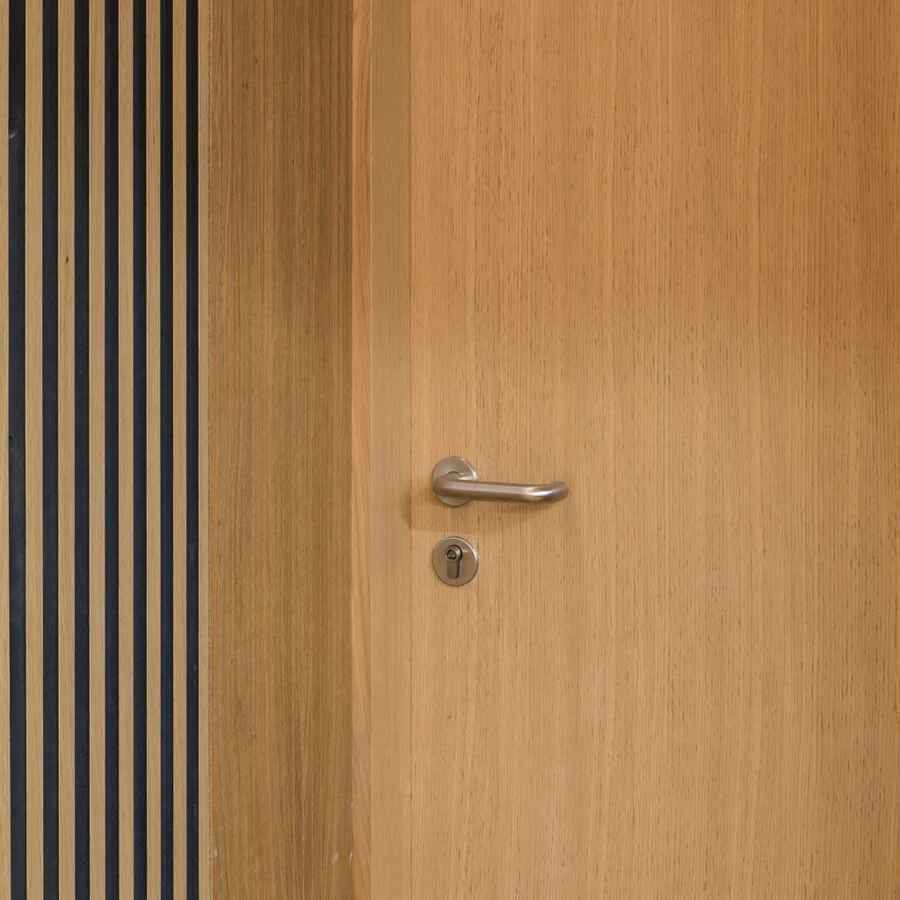
A lever handle rotates on a spindle to retract a latch. A pull handle is a fixed grip that moves the door but does not, by itself, operate a latch. That difference decides most specification outcomes. Use a lever where the handle must release a latch on a hinged door and the opening must be easy to operate with one hand. Use a pull where the door is moved by a fixed grip and latching, locking or sliding action is handled by a separate component. Most real projects mix the two: a pull outside, a lever inside, or a pull on a sliding panel with a hook lock behind it.
For OEM buyers, importers and door-system fabricators, the risk is not choosing the wrong shape. It is approving a handle without checking the latch, fixings, clearance and exposure it has to work with.
What Is the Difference Between a Lever Handle and a Pull Handle?
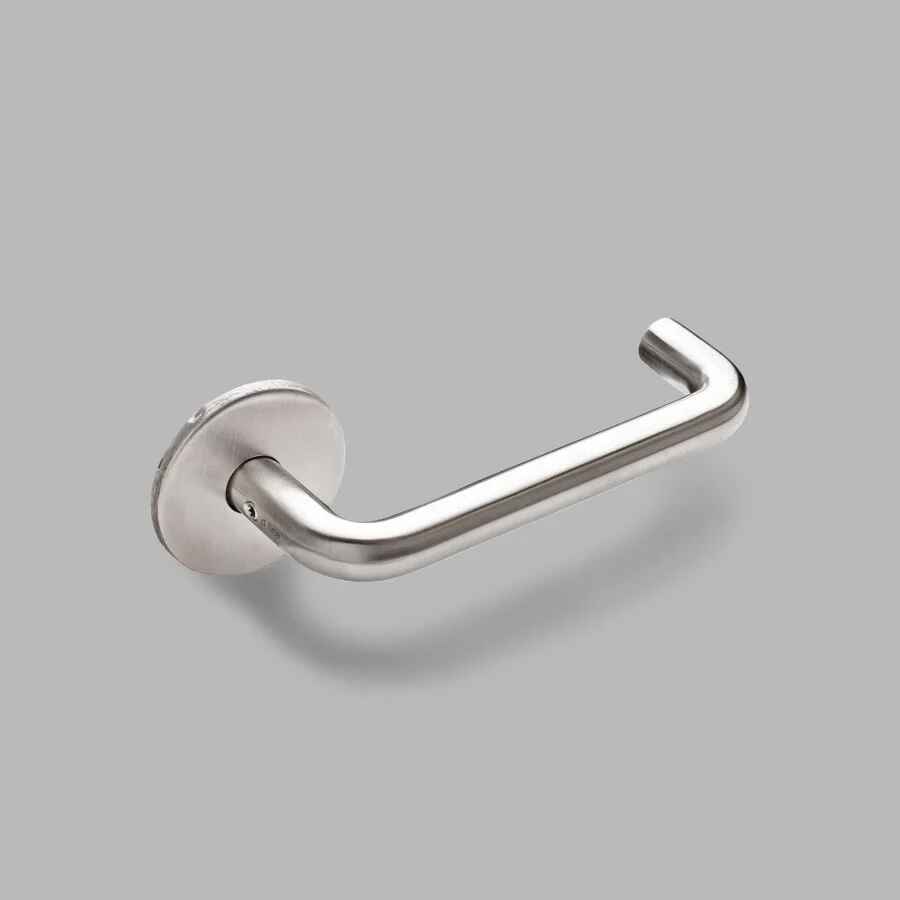
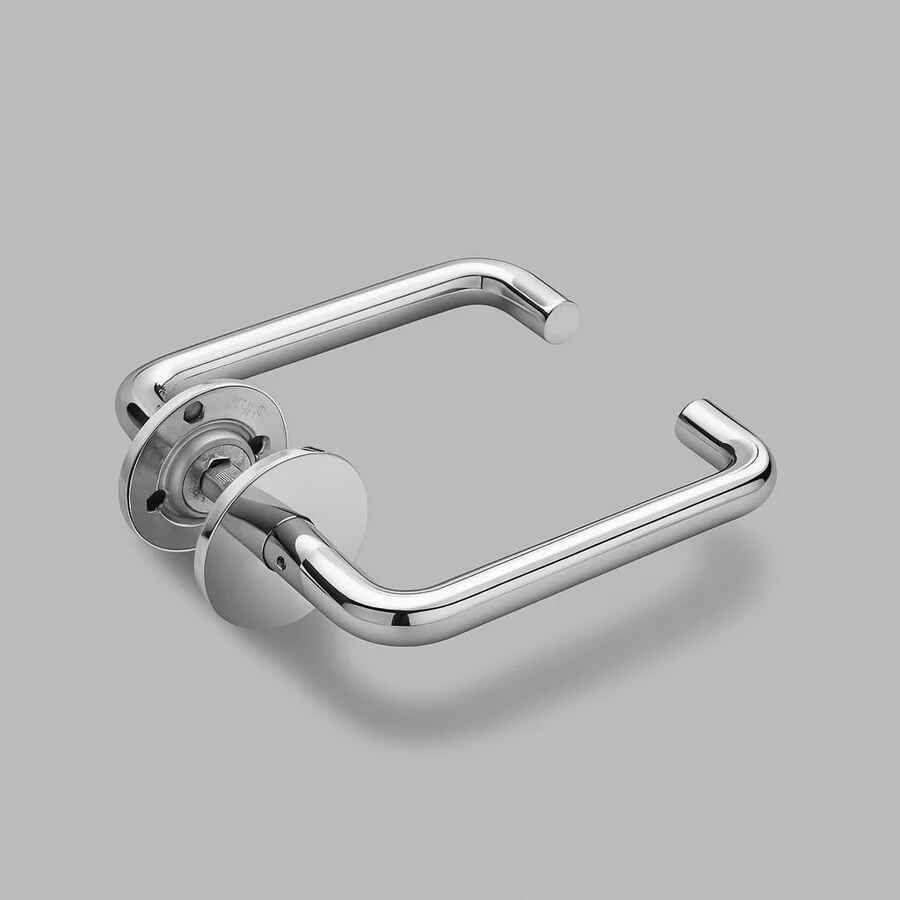
A lever handle is a pivoting arm connected through a spindle to a latch or lock case. Pressing it down retracts the latch. Most designs return to rest through a spring, either in the handle, in the lock, or shared between them.
A pull handle is a rigid bar, grip or recessed cup fixed to the door face. It carries pulling and pushing loads directly into the door leaf. It usually has no spindle, no rotation and no return spring. Because it does not retract a latch, something else has to: a thumb latch, a key cylinder, a multipoint lock, a roller catch or a hook lock.
Standards reflect this split.
BS EN 1906 specifies test methods and requirements for spindle and fastening elements, operating torques, free play, durability, static strength and corrosion resistance for sprung and unsprung lever handles and knobs
, and per BSI’s description of BS EN 1906, it applies only to handles and knobs that operate a latch or lock. A plain fixed pull is not what that standard is built around. A buyer who wants a tested pull needs to define the load case in the project specification rather than assume a lever-handle certificate transfers.
Lever Handle vs Pull Handle by Door Application
The table below is a starting point, not a rule set. Entries are qualitative recommendations based on how each handle type works. None of them replaces the project specification, local code or the lock manufacturer’s data.
Door application
Usually better fit
Dlaczego
What to verify first
Interior passage or privacy door
Lever
Operates the latch directly; one-hand use
Spindle length, backset, return type
Hinged entrance with single-point lock
Pull outside, lever inside, or lever both sides
Depends on how the outside latch is released
Which part retracts the latch from outside
Hinged entrance with multipoint lock
Lever or lever-pad set; pull only with a defined operating element
Gearbox needs a handle drive or key operation
Backset, PZ on each side, spindle follower
Glazed or aluminium-framed double doors
Pull, often with push plate or lever on one leaf
Fixed grip suits push-pull traffic
Fixing method, profile width, hand clearance
Przesuwne drzwi tarasowe
Recessed or surface pull with separate lock
No latch rotation needed
Panel overlap, screen and frame clearance
Drzwi chowane w ścianie
Flush or edge pull
Handle must not project into the pocket
Pull depth, faceplate projection, retrieval when open
Otwarcie obiektu komercyjnego o dużym natężeniu ruchu
Lever or pull specified by tested duty
Cycle life depends on the assembly
Standard, grade, cycle evidence for the exact model
On a standard bedroom, office or corridor door, the lever is the practical default because the same component releases the latch. A pull alone leaves nothing to hold the door closed unless a roller catch or magnetic catch is added. Pulls make sense on interior doors that do not need to latch, such as cupboard-style doors, double leaves held by a bolt, or doors that stay open.
Entrance doors
Entrance doors are where the two types are most often paired. A pull on the outside gives a firm grip on heavy leaves. A lever on the inside gives a simple exit action. Some retail and manufacturer guides describe this hybrid as a common arrangement, though that is a design convention, not a measured market statistic.
The compatibility question is what the outside pull connects to. On a hinged door, the outside may be key-operated, thumb-operated or fitted with a lever-pad set. Lever-pad sets can use different PZ values on each side, so a buyer needs both centres recorded. The Lista kontrolna zgodności klamek i zamków lists backset, PZ, spindle, fixing centres, handing and return type as separate fields for exactly this reason.
Sliding and pocket doors
Sliding panels rarely need a lever. They need a grip that clears the next panel. A lever on a sliding door can strike the frame or an insect screen, while a long surface pull can collide with an overlapping panel. Pocket doors push this further, because the handle sits inside the moving panel’s travel path.
where sliding doors are in the fully open position, operating hardware must be exposed and usable from both sides
. That is why edge pulls matter on accessible pocket doors.
Accessible and public buildings
Neither type is automatically compliant. The U.S. Access Board’s guide to doors and gates says door hardware must allow one-hand operation, avoid tight grasping, pinching or wrist twisting, operate with 5 lbf maximum, and sit 34 to 48 inches above the floor or ground. It identifies lever-shaped handles and U-shaped pulls as designs that accommodate the greatest range of users. It also recommends at least 1½ inches of knuckle clearance for bars and pulls. Whether these rules apply depends on the project, the building type and the jurisdiction.
The Real Decision: What Retracts the Latch, and Where Does the Load Go?
The common framing is style: levers are traditional, pulls are modern. For procurement, that framing hides the two questions that cause field problems.
First, what releases the latch? A pull handle on a hinged door pushes the question onto another component. If that component is a key cylinder, the user needs a key to open the door. That may be acceptable on an entrance but not in a corridor. If it is a multipoint gearbox, a handle drive or key still has to operate it. A buyer comparing a lever set and a pull set is often comparing two different lock architectures.
Second, where does the load go? A lever transmits torque through the spindle into the lock follower. Its typical failure modes are droop, free play and loosening screws. A pull transmits pulling and pushing force straight into the door leaf through its fixings. On a heavy door, a wind-loaded exterior door or a busy double door, the force acts at the grip, away from the fixings, and can work them loose over time. A bar that looks substantial can still be poorly supported if the fixing method does not match the door construction.
This does not mean pulls are weaker or levers more reliable. It means a heavier-looking handle is not proof of a better one. A short lever on a well-matched lock can outlast a large pull with undersized fixings in a thin-skinned door. The right check is the full assembly, tested in the door it will be installed in.
Five Factors That Decide Suitability
1. Latch interface and return behaviour
For levers, the spindle, backset, PZ, fixing centres, handing and return type must all agree with the lock. A heavy lever on an unsprung handle paired with a light lock spring can pass a bench check and still droop after installation. For pulls, confirm what the latching component is and that its operating element is reachable and usable from both sides.
Verify with the supplier: the lock model, the return type, and whether the pair has been tested together.
2. Projection, swing envelope and hand space
A lever sweeps an arc when pressed. A pull stays still but projects further and needs finger space behind it. Both can fail near a frame, screen or adjacent panel. The article on door handle projection and clearance near frames, screens and adjacent panels treats clearance as a system envelope that includes the hand, not one catalogue dimension. In practice, record projection at rest and at maximum operation, then check the closest obstruction at worst-case tolerance.
Verify with the supplier: installed projection, lever travel, and finger space behind a pull.
3. Fixing method and door construction
Lever sets commonly clamp through the door with bolts or screws into fixing posts. Pulls may use through-bolts, blind studs or other fixings depending on the door. Door material, skin thickness, core type and profile geometry limit what can be used.
Verify with the supplier: the door thickness range, fixing length, any backing or reinforcement needed, and whether the fixing method has been checked on a door section like yours.
4. Exposure and finish
An exterior handle faces rain, UV, condensation and sometimes salt-bearing air. An interior one usually does not. CHIER’s comparison of exterior and interior door handles notes that a corrosion-resistant lever tip says little about springs, screws, spindles and base plates. The same applies to pulls, where fixing screws and mounting studs sit in joints that can trap moisture.
Verify with the supplier: the substrate, finish system, test method, and whether testing was done on the assembled product.
5. Duty cycle and traffic
A handle operated 1,500 times a day sees about 547,500 operations a year. That is a hypothetical figure used in CHIER’s guide to door handles for high-traffic buildings, not a test rating. Cycle ratings help, but they attach to specific products.
, and lever-operated locks must open with a maximum torque of 28 in-lbf. That standard concerns locks and latches. It does not certify a separate pull handle or a different lever and spindle combination, so ask for evidence tied to the exact configuration being quoted.
Verify with the supplier: the test standard, the grade, and which exact model and configuration was tested.
Lever Handle vs Pull Handle: Trade-Offs Buyers Should Weigh
Wymiar
Klamka dźwigniowa
Uchwyt do pociągania
Latch operation
Direct, via spindle
Indirect; needs a separate latch or lock
Moving parts
Spindle, spring, rose; wear and droop risk
Usually none in the handle itself
Variants to control
Handing, backset, PZ, spindle, return type
Centre-to-centre length, fixing pattern, door thickness
Loosening through-fixings, finger or knuckle interference, scratches
Clearance risk
Swing arc near frames and screens
Projection and hand space near panels
Dostępność
Suitable when force, height and grip meet the rules
Suitable when grip shape and knuckle space meet the rules
Best conditions
Hinged doors with latches
Sliding, pocket, double, glazed and push-pull doors
The table describes general design behaviour, not measured field data. Cost is deliberately absent. Neither type is consistently cheaper, because the price of a handle set depends on material, finish, fixing system, test evidence and how many variants the order carries. A lever program multiplies stock keeping units through handing and lock interfaces. A pull program multiplies them through length, centres and door thickness.
Common Specification Mistakes
Choosing by catalogue photograph. Two products can look alike and differ in spindle, return spring and fixing centres.
Assuming a pull needs no latch review. The latch or lock behind it still has to match the door and the operating direction.
Checking clearance only with the door standing still. Interference often appears mid-travel or with a hand on the grip.
Applying an interior specification to an exterior door. A handle in a sheltered entrance still sees humidity and temperature change.
Treating one certificate as covering the pair. A handle test and a lock test are separate documents.
Ignoring handing and viewpoint. Export orders should state handing from a defined side.
Over-specifying corrosion resistance where mechanical life matters more. A busy interior door can wear hardware faster than weather does.
What Should Buyers Specify Before Requesting a Quote?
A quote based on “black lever handle” or “stainless pull handle” will return a price, but not necessarily for the right product. Send these items together:
Opening type and operation: hinged, sliding, pocket, double or folding; inward or outward opening; one-way or two-way traffic.
Door data: material, profile drawing or section, thickness range, panel weight, glazing.
Latch or lock: manufacturer and model, multipoint or single-point, cylinder format, photographs of both sides.
Handle interface: for levers, spindle section and length, backset, PZ on each side, fixing centres, handing and return type. For pulls, centre-to-centre length, fixing method and projection limit.
Clearance data: distance to frame, screen or adjacent panel, and the hand space you need.
Environment: interior, sheltered exterior, unsheltered exterior or coastal; finish requirement and test method.
Compliance: target market, accessibility rules and any security or fire requirement.
Duty and evidence: expected daily cycles, required test standard and sample approval method.
Commercial terms: quantity per variant, packaging, labelling and delivery schedule.
Once the handle type is settled, check that it fits the rest of the hardware schedule. The Lista kontrolna okuć drzwiowych i okiennych według rodzaju otwierania lays out which components typically accompany each opening. Hinges, locks, keepers and closers can then be specified alongside the handle rather than after it.
Before volume release, ask for an installed sample on a door section like yours. Operate it through full travel, with the lock engaged and released, and record any contact or free play. A sample approved by eye establishes appearance, not repeatability.
Często zadawane pytania
Is a lever handle or a pull handle better for an entrance door?
Neither is better in every case. A pull gives a firm grip on heavy leaves, but a latch or lock must still release the door. A lever releases the latch directly. Many entrances use a pull outside and a lever inside.
Can a pull handle replace a lever handle on a hinged door?
Only if another component retracts the latch. A fixed pull does not rotate a spindle, so the door needs a thumb latch, cylinder, multipoint drive or catch. Confirm the lock model, operating direction and compatibility before replacing a lever.
Which handle type suits sliding and pocket doors?
Pull-style handles, usually recessed or flush, suit sliding and pocket doors because they avoid latch rotation and keep projection low. Check pull depth, faceplate projection and panel clearance throughout travel, plus access to the door when fully open.
Are lever handles required for accessibility?
No. U.S. Access Board guidance names lever-shaped handles and U-shaped pulls as designs usable with a loose grip or closed fist. Hardware must still meet one-hand operation, force and height requirements where the ADA Standards apply to the project.
Does a lever handle test certificate also cover a pull handle?
No. BS EN 1906 covers lever handles and knobs that operate latches or locks. A fixed pull has a different load case, so buyers should specify pull-and-push loads, fixing method and acceptance criteria separately.
What should I check before ordering lever handles in bulk?
Check lock model, backset, PZ on each side, spindle section and length, door thickness range, fixing centres, handing and return type. Then test an assembled sample on a door section at both ends of the thickness range before approving production.