Looking for hardware solutions that meet European / American standards?
Use this guided inquiry modal to move from a generic quote form to a clearer technical conversation. Buyers can choose whether they need pricing, CAD / 3D files, or OEM / ODM support before sharing contact details.
Compatibility-first design across door / window systems
Repeatable production with clear inspection checkpoints
Documentation and change control for long-running programs
Responsive engineering support for fit and field feedback
The Small Part That Decides Whether a Window Feels Cheap or Serious
Small parts lie.
When a buyer treats an integrated window lock and handle as a cosmetic SKU instead of a mechanical decision tied to sash geometry, spindle length, keeper alignment, coating chemistry, screw pull-out resistance, and long-term service access, the mistake often waits until after installation before it becomes visible as wobble, rattle, corrosion, or a lock that “technically works” but feels dead in the hand.
So why do so many RFQs still begin with color?
I’ll say the unpopular thing first: integrated window lock and handle designs are not automatically better. They are cleaner. They are easier to sell. They reduce visual clutter. But in the wrong window system, they can become an expensive little liability wearing a matte black finish.
The market loves neat hardware. Developers want slim sightlines. Homeowners want one-hand operation. OEM buyers want fewer part numbers. That is why integrated window lock handles keep showing up in aluminum casement windows, tilt-turn systems, sliding panels, balcony doors, and private-label hardware catalogs.
But security hardware is not furniture trim. According to the FBI’s 2024 national crime data summary, estimated property crime fell 8.1% and burglary fell 8.6% in 2024, but that still left an estimated 5,986,400 property crime offenses in the United States that year, according to the FBI UCR Summary of Reported Crimes in the Nation, 2024. That is the context. Buyers are not just choosing a handle. They are choosing a point of trust.
Table of Contents
What Integrated Window Lock and Handle Designs Actually Mean
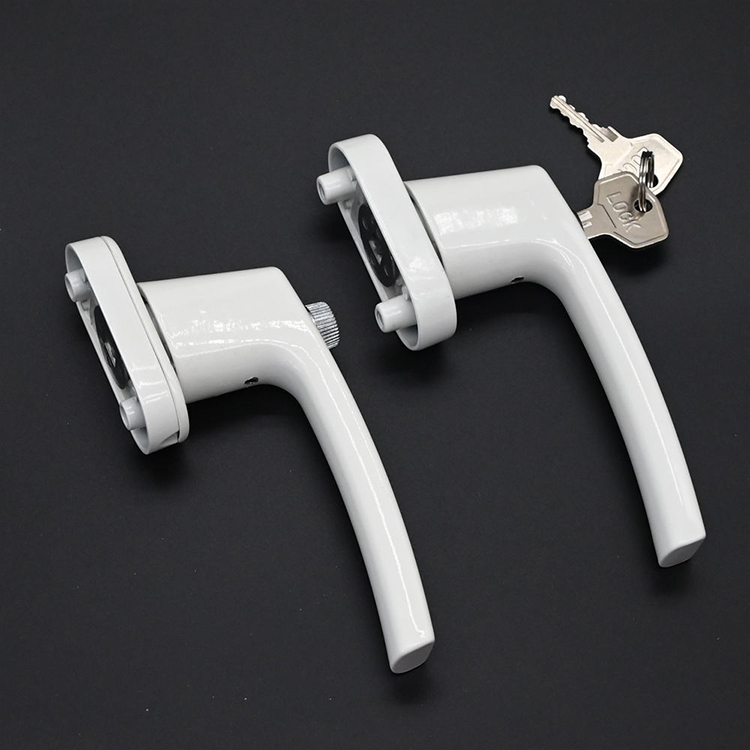
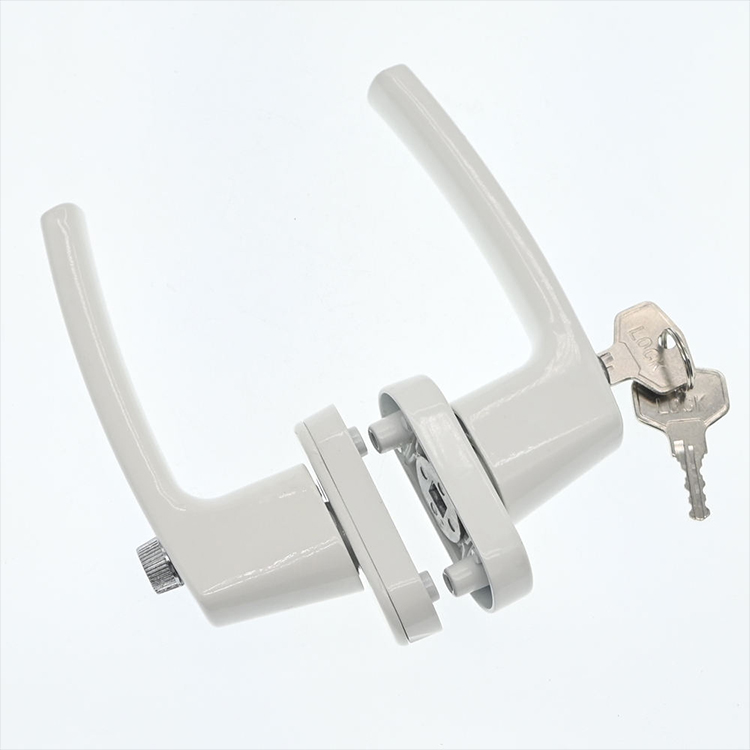
An integrated window lock and handle design combines the operating handle and the locking function into one visible hardware assembly. Instead of using a separate pull handle and independent latch, the user turns, pushes, lifts, or rotates one handle to operate both movement and locking.
That sounds simple. It is not.
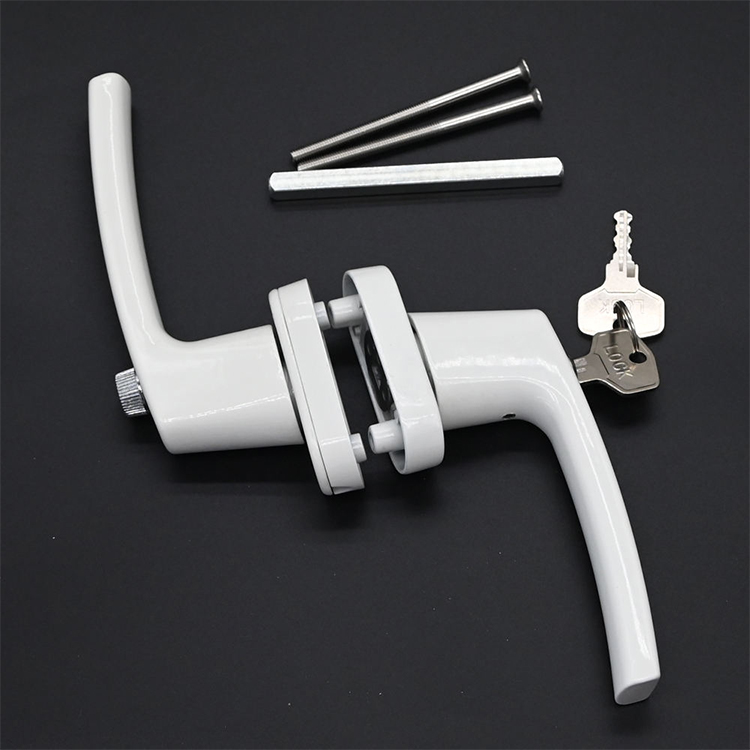
A proper integrated unit may include a lever handle, spindle, lock body, latch tongue, keeper interface, gearbox link, screw fixing points, spring return, child-safety element, surface coating, nylon bushing, zinc alloy insert, stainless steel screw package, and sometimes a restrictor interface. In B2B language, it is not “a handle.” It is an operating node inside a window system.
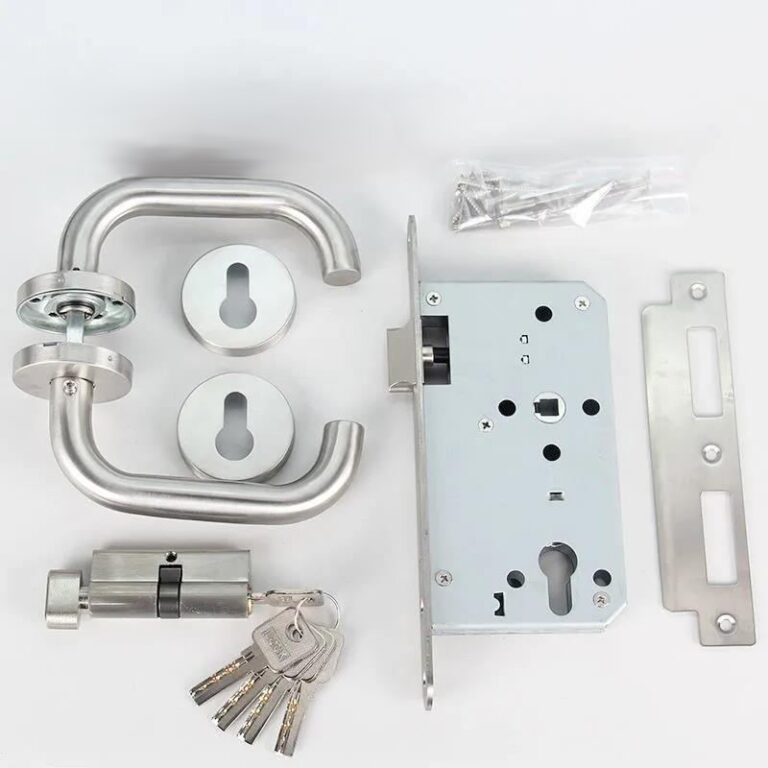
For buyers comparing product families, the starting point should be a full hardware category review, not a single pretty product photo. Foshan Chier’s door and window handles category is useful because it shows how casement handles, locking handles, lift-slide handles, and integrated handle locks sit in the same wider hardware family.
And that matters because window handle designs fail at the connection points: handle-to-spindle, spindle-to-lock, lock-to-keeper, screw-to-profile, coating-to-substrate, and user-to-feedback.
The Pros: Why Integrated Window Lock Handles Keep Winning Specifications
Cleaner Appearance Without the Hardware Mess
The first advantage is obvious: fewer visible parts.
Integrated locking window handles remove the clumsy look of separate latches, thumb turns, surface bolts, and auxiliary catches. On slim aluminum frames, this matters. On black powder-coated systems, it matters even more because every extra screw cap and protruding latch becomes a visual interruption.
I like clean lines. I just do not trust them blindly.
A well-designed black aluminum casement window lock handle can make the whole sash feel more expensive, especially when the lever geometry, base plate, screw cover, and finish are proportioned to the frame. This is where a product like a black aluminum casement window lock handle for private-label OEM supply fits the current market: modern color, slim profile, and integrated function without making the window look overbuilt.
Easier Daily Operation for Normal Users
Most users do not want a lesson in hardware sequencing. They want to close the window and know it is locked.
That is where integrated window lock handles perform well. One motion can control both the sash and the lock. The handle position can give a fast visual cue: horizontal means open, vertical means locked, or the reverse depending on system design. For hospitality, apartments, schools, and rental housing, that matters because users are not trained installers.
Here is the hard truth: a separate latch can be more serviceable, but it is also easier for an occupant to ignore. A built in window lock tied to the handle reduces that user error.
Better SKU Control for OEM and Project Buyers
OEM buyers care about beauty until inventory starts bleeding money.
Integrated handle lock designs can reduce separate hardware SKUs, simplify packaging, speed assembly-line picking, and make private-label programs easier to manage. If a window factory can pair one casement window lock handle with a defined sash profile, keeper, screw pack, and finish code, the purchasing team has fewer loose variables.
This is not glamorous. It saves money.
For project teams comparing accessories across locks, hinges, latches, restrictors, and handles, the door and window accessories buying guide makes the right point: small hardware should be judged as a system, not as disconnected decorative parts.
Stronger Perceived Security
Perception sells.
A window with a loose-looking latch feels cheap, even if the latch technically passes a basic load test. A window with a firm integrated lock handle feels controlled. That tactile “click” matters in showrooms, model homes, hotels, and retail samples.
But perceived security is not the same as tested security. I have seen buyers approve locking window handles because the sample felt heavy in the hand, while nobody asked for cycle testing, salt-spray data, screw retention, torque range, or keeper tolerance. That is not procurement. That is gambling with a nicer vocabulary.
The Cons: Where Integrated Designs Can Hurt You Later
One Failure Can Disable Two Functions
This is the biggest weakness.
When the handle and lock are separate, a handle problem may still leave the lock serviceable, and a lock problem may not require replacing the visible handle. When the functions are integrated, one internal failure can affect opening, closing, and locking at the same time.
That is bad news in apartments. It is worse in hotels. It is a headache in high-rise projects where access, tenant coordination, and replacement stock turn a small part into a service ticket chain.
A separate latch looks old-fashioned until maintenance asks how fast it can be replaced.
Hidden Alignment Problems
Integrated window lock handles are less forgiving than they look.
If the sash drops 1.5 mm, if the keeper is mounted slightly off, if the profile wall thickness varies, or if installers over-torque screws into thin aluminum, the lock may still engage but feel rough. Users then force the handle. Springs wear. Spindles twist. Screw holes oval out. The supplier gets blamed. Sometimes the real culprit is the system stack-up.
This is why I dislike catalog-only sourcing. A custom design like a custom aluminum window handle lock should be checked against actual frame drawings, opening direction, installation torque, keeper position, gasket compression, and expected cycle count before bulk approval.
Child Safety Can Be Misunderstood
A lock is not a fall-prevention device.
That sentence should be printed on more sample boxes. The U.S. Consumer Product Safety Commission reported that an estimated 5,600 children age 12 and under were treated in emergency departments in 2024 after falling out of windows, and about one in three required hospitalization, according to the CPSC’s 2026 National Window Safety Week release. That is not a styling issue. That is a safety issue.
Integrated locking handles can help prevent casual opening, especially with key-locking or child-resistant functions. But they are not substitutes for window guards, window opening control devices, or tested fall-prevention systems. ASTM F2090-21, the standard for window fall prevention devices, exists because ordinary locks do not answer every child-safety scenario.
New York City is the blunt example. If a child age 10 or younger lives in an apartment in a building with at least three apartments, window guards are required, according to NYC Health’s window guard guidance. That legal reality should stop anyone from marketing a basic locking window handle as a full child-safety solution.
Harder Field Replacement
Integrated parts look simple on the wall. They may not be simple in the field.
If the replacement part must match spindle length, screw spacing, base plate footprint, finish batch, latch throw, handedness, keeper geometry, and internal gearbox compatibility, your aftermarket plan had better be real. Otherwise a discontinued handle becomes a project-wide headache.
This is where I become old-fashioned: I want spare parts strategy before the purchase order. Not after.
Integrated vs Separate Window Lock Hardware: The Specification Table
Factor
Integrated Window Lock and Handle
Separate Handle + Separate Lock
Appearance
Cleaner, fewer visible parts, better for minimalist aluminum systems
More visible hardware, can look busy on slim frames
User operation
Usually simpler; one action controls movement and locking
May require two motions or user awareness
Serviceability
Can be harder if one unit controls multiple functions
Easier to replace one failed component
Security feel
Stronger perceived security when handle feedback is firm
Depends heavily on latch quality and placement
Child safety
Helpful only if designed with key lock, restrictor, or child-resistant function
Can be paired more flexibly with separate guards or stops
OEM inventory
Fewer SKUs if standardized well
More part numbers but more replacement flexibility
Failure risk
One failure may affect both handle and lock
Failure is more isolated
Best use case
Modern casement windows, project supply, private-label systems, clean architectural frames
Retrofit work, service-heavy buildings, low-cost repairs, systems needing flexible replacement
The Materials Problem Nobody Wants to Talk About
The finish sells first. The substrate fails later.
Matte black is fashionable, and I understand why. It photographs well. It matches aluminum frames. It makes cheap windows look sharper. But coating is not magic. If the base material, pretreatment, coating thickness, curing process, screw material, and drainage design are wrong, the handle becomes a corrosion experiment attached to someone’s living room.
Aluminum alloy is not one thing. Zinc alloy is not one thing. Stainless steel is not automatically better. Nylon bushings can be excellent or embarrassing depending on grade and heat exposure.
For serious sourcing, I would start with Chier’s material selection guide for aluminum window handles before signing off on “aluminum” as if that word alone means anything. The specification should ask for process, alloy family, coating method, salt-spray performance target, fastener pairing, cycle test data, and packaging protection.
And yes, I would ask for the ugly test photos. Perfect showroom samples teach you less than failed samples.
My Specification Checklist Before Approving Window Lock Handles
Ask These Questions Before You Buy
What is the exact opening type: casement, awning, tilt-turn, sliding, lift-slide, or hybrid?
What is the spindle length, spindle material, and torque requirement?
What is the latch throw, keeper tolerance, and gasket compression range?
What screw size and screw material are included?
Has the handle been cycle-tested at the expected operating load?
Is the lock key-operated, push-button, child-resistant, or simply position-based?
Can the unit be replaced without damaging the sash?
Is the finish tested for the real climate: coastal salt, high UV, industrial pollution, humid bathrooms, or freezing winters?
Does the packaging protect the finish during ocean freight and jobsite storage?
Do you have a spare-parts plan for year three, year five, and year seven?
This is where the hardware compliance guide for aluminum windows and doors becomes more than paperwork. Compliance is not a slogan. It is the documented match between the installed assembly, the tested configuration, the label, the drawing, and the real part shipped.
The Hard Buyer Opinion: Integrated Is Best When the System Is Controlled
Here is my blunt position.
Integrated window lock handles are excellent for controlled OEM systems where the profile, sash weight, keeper, screw fixing, gasket compression, opening angle, finish, and replacement program are all specified together. They are risky when a buyer grabs a nice-looking handle from a catalog and expects it to behave across five unrelated window systems.
That is the line.
For a new aluminum casement program, I would usually favor an integrated casement window lock handle if the supplier can prove fit, function, finish, and service support. For a messy retrofit project with unknown frame tolerances, I would be more cautious. Separate hardware may look less refined, but it can save you when the building is old, the frames are inconsistent, and the maintenance team needs cheap replacement parts fast.
The best window handles for security are not the heaviest handles. They are the ones that match the system and keep working after real users abuse them.
FAQs
What are integrated window lock and handle designs?
Integrated window lock and handle designs are hardware assemblies that combine the user grip, operating movement, and locking function into one visible component, allowing a window to be opened, closed, and secured through the same handle instead of using a separate handle and independent latch or lock. In practice, they are common on aluminum casement windows, modern sliding systems, and private-label OEM window hardware programs.
They are popular because they look cleaner, reduce part count, and make operation easier for ordinary users. The trade-off is that service access, lock alignment, spare-part matching, and internal mechanism quality become more important.
Are integrated window lock handles more secure than separate locks?
Integrated window lock handles are more secure only when the handle, lock body, keeper, spindle, screws, sash profile, and installation tolerances are designed and tested as one complete assembly rather than mixed from unrelated catalog parts. Security depends on the system, not the shape of the handle alone.
A heavy handle with weak screws is not secure. A sleek lock with poor keeper alignment is not secure. A good integrated design should give firm tactile feedback, resist forced movement, and maintain engagement after repeated cycles.
What are the biggest disadvantages of locking window handles?
The biggest disadvantages of locking window handles are harder field replacement, higher dependence on alignment, possible internal mechanism failure, false confidence around child safety, and greater risk when one integrated part controls both opening and locking. These issues usually appear after installation, not during sample review.
This is why buyers should test real assemblies, not loose samples on a desk. The handle must be checked with the actual frame, gasket, keeper, screws, sash weight, and installation method.
Are built in window locks safe for children?
Built in window locks can help reduce casual opening by children, but they should not be treated as complete child-fall protection unless they are part of a tested safety strategy that may include window guards, window opening control devices, restrictors, and local code compliance. A lock is helpful, but it is not enough by itself.
The CPSC data on child window falls makes this painfully clear. If the application involves apartments, schools, hotels, or family housing, safety claims should be conservative, documented, and aligned with the relevant jurisdiction.
How should OEM buyers choose the best window handles for security?
OEM buyers should choose window handles for security by matching the handle design to the window system, then verifying lock engagement, keeper tolerance, screw retention, material grade, coating durability, cycle performance, child-safety needs, and spare-part availability before approving mass production. The best choice is proven by evidence, not appearance.
My recommendation is simple: request drawings, samples, test reports, installation instructions, finish data, packaging details, and replacement-part commitments before placing a bulk order.
Your Next Steps: Do Not Approve the Handle Until the System Is Proven
Integrated window lock and handle designs can be the right choice. I like them when they are engineered honestly. I distrust them when they are sold as decoration with a lock added as a feature line.
Before you approve a new window lock handle, compare the handle against the actual sash, keeper, screw package, finish requirement, safety expectation, and replacement plan. Ask for samples. Ask for test data. Ask what fails first.
Then ask the question that exposes weak suppliers fast: “Show me the complete system, not just the handle.”
For OEM buyers, distributors, and project teams sourcing modern locking window handles, start by reviewing the full door and window handles range and then request specifications for the exact integrated lock handle design that matches your window system.