Procura soluções de hardware que cumpram as normas europeias e americanas?
Utilize este modal de inquérito guiado para passar de um formulário de orçamento genérico para uma conversa técnica mais clara. Os compradores podem escolher se precisam de preços, ficheiros CAD / 3D ou suporte OEM / ODM antes de partilharem os detalhes de contacto.
Conceção que privilegia a compatibilidade entre sistemas de portas e janelas
Produção repetível com pontos de controlo de inspeção claros
Documentação e controlo de alterações para programas de longa duração
Suporte de engenharia reativo para feedback de ajuste e de campo
Amostragem: protótipos + validação da instalação + controlos funcionais
Falar com o nosso chefe
No. 8 South Sanjian Development Zone, Bajia, Jinsha, Danzao Town, Nanhai District, Foshan, Guangdong, China
Inside a typical lever-operated multipoint door lock, that movement rotates the gearbox follower, drives connected mechanisms along the door edge, and brings multiple hooks, bolts or cams into engagement with matching keepers mounted in the surrounding frame.
So why do some expensive multipoint door locks become almost impossible to operate after installation?
Because the number of locking points tells you remarkably little about how well the complete mechanism works.
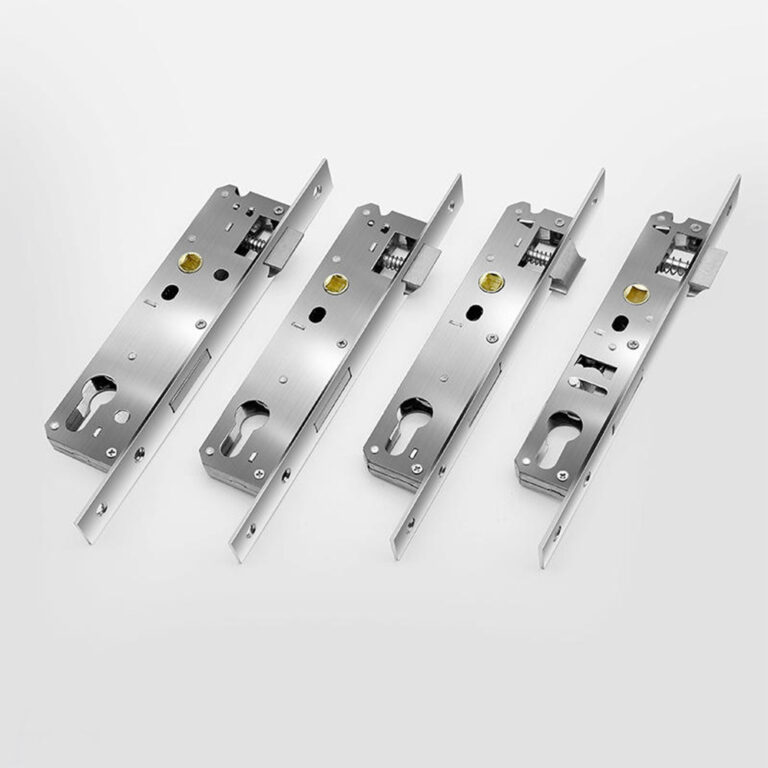
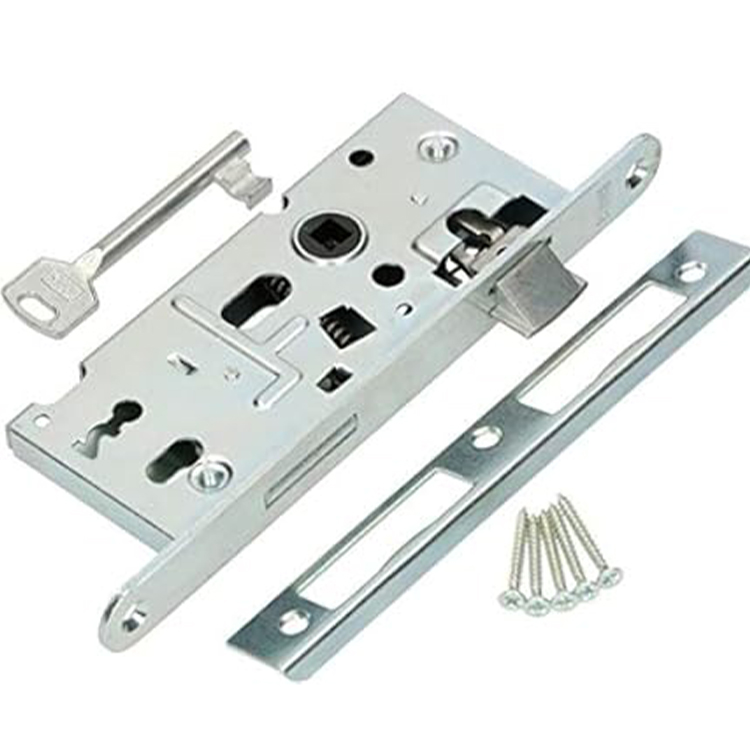
A multipoint door lock secures a door at multiple positions through a connected mechanical assembly. Its principal components include a central gearbox, a supporting faceplate, remote locking points, drive connections and corresponding frame-mounted keepers.
The mechanism sounds simple. The engineering isn’t.
I consider bolt-count marketing one of the weaker ways to judge door hardware. Five poorly aligned locking points can create more operating resistance than three properly matched ones. A strong gearbox cannot compensate for an incorrect keeper profile, and a premium faceplate will not correct a door that has dropped out of square.
The real question is not how many locking points a door has.
It is whether every component engages correctly, consistently and without unnecessary mechanical resistance.
How Do Multipoint Door Locks Work?
Most mechanically operated multipoint locking systems transfer one operating input to several locking positions along the door edge.
That input may come from a lever handle, key cylinder, thumbturn or automatic triggering mechanism.
The exact operating sequence depends on the lock design.
The Six Stages of a Typical Lift-Lever Multipoint Lock
For a conventional lift-lever system, the sequence generally works like this:
The door closes. A spring-loaded latch engages the central strike, keeping the door shut without necessarily engaging the remote locking points.
The handle lifts. The square spindle rotates the gearbox follower.
The gearbox transmits movement. Internal cams or gears drive connected rods or sliding strips along the door edge.
The locking points move. Hooks, bolts or cams engage their designated frame keepers.
The key secures the mechanism. In many lift-lever designs, the cylinder operates a deadbolt or blocking mechanism to prevent the locking elements from being retracted.
Unlocking reverses the process. The appropriate key and handle sequence withdraws the locking elements and releases the latch.
Not every system follows this sequence.
For example, the FUHR multisafe 856 multipoint locking system uses a lever-operated arrangement in which lifting the handle engages the locking mechanism and turning the key extends the main deadbolt.
Key-operated and automatic multipoint locks work differently.
That distinction affects installation, user instructions and replacement compatibility.
Why Closing the Door Is Not the Same as Locking It
This is not just a theoretical concern.
On November 1, 2024, Hampshire and Isle of Wight Constabulary issued a burglary-prevention warning following reports of residential burglaries in Hart and Rushmoor, England.
Its official police advice specifically reminded residents with uPVC multipoint doors to lift the handle and lock the door using the key.
The warning did not establish that defective multipoint locks caused those burglaries.
It did highlight an easily overlooked operating requirement: on certain lock designs, the door can appear closed while its full locking mechanism remains unsecured.
An automatic multipoint lock may behave differently. Users must follow the instructions for the actual mechanism installed.
Inside the Multipoint Lock Mechanism: Four Parts That Must Work Together
The gearbox, faceplate, locking points and keepers form a coordinated assembly.
Each component performs a separate mechanical function, and each introduces its own dimensional and installation requirements.
1. The Gearbox: Where Movement Is Controlled
The multipoint lock gearbox is the central operating unit, usually positioned behind the handle and cylinder.
Depending on the model, it may contain a spindle follower, latch mechanism, deadbolt, springs, cams, gears and connections to upper and lower drive strips.
Its function is to convert an operating input into controlled movement.
When the handle rotates, the gearbox transfers that movement to the connected locking mechanism. The remote locking elements then move through their designed travel.
The gearbox must coordinate that travel accurately.
If a hook needs more movement than the connected drive can provide, engagement may remain incomplete. If the linked mechanism meets excessive resistance, that load returns through the connecting strips to the gearbox.
This is one reason a worn gearbox may be the consequence of another problem rather than its original cause.
Gearbox compatibility involves several measurements:
Backset: distance from the faceplate front to the spindle centre.
PZ centres: distance between the handle spindle and cylinder centres.
Spindle size: square-section dimension of the operating spindle.
Case depth: space occupied by the gearbox inside the door.
Connector geometry: the shape and position of the moving connections.
Operating sequence: how the handle and cylinder control the locking elements.
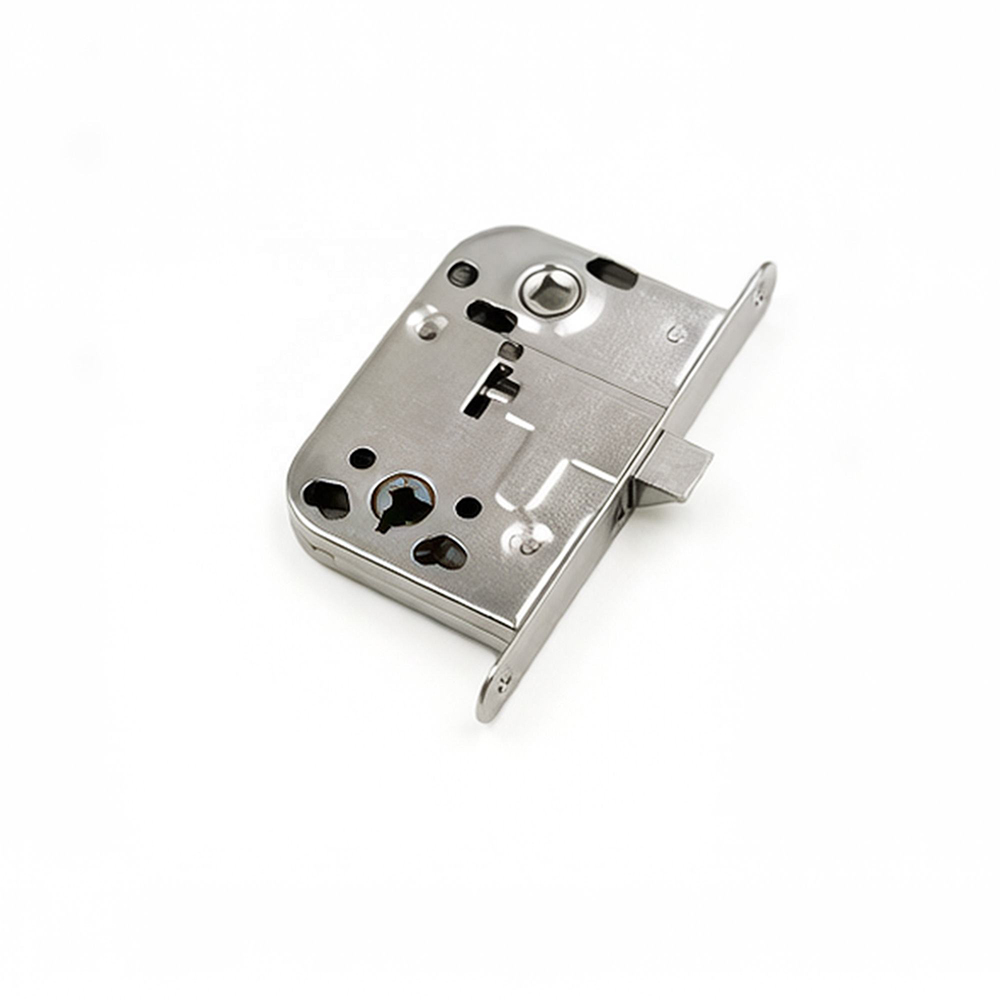
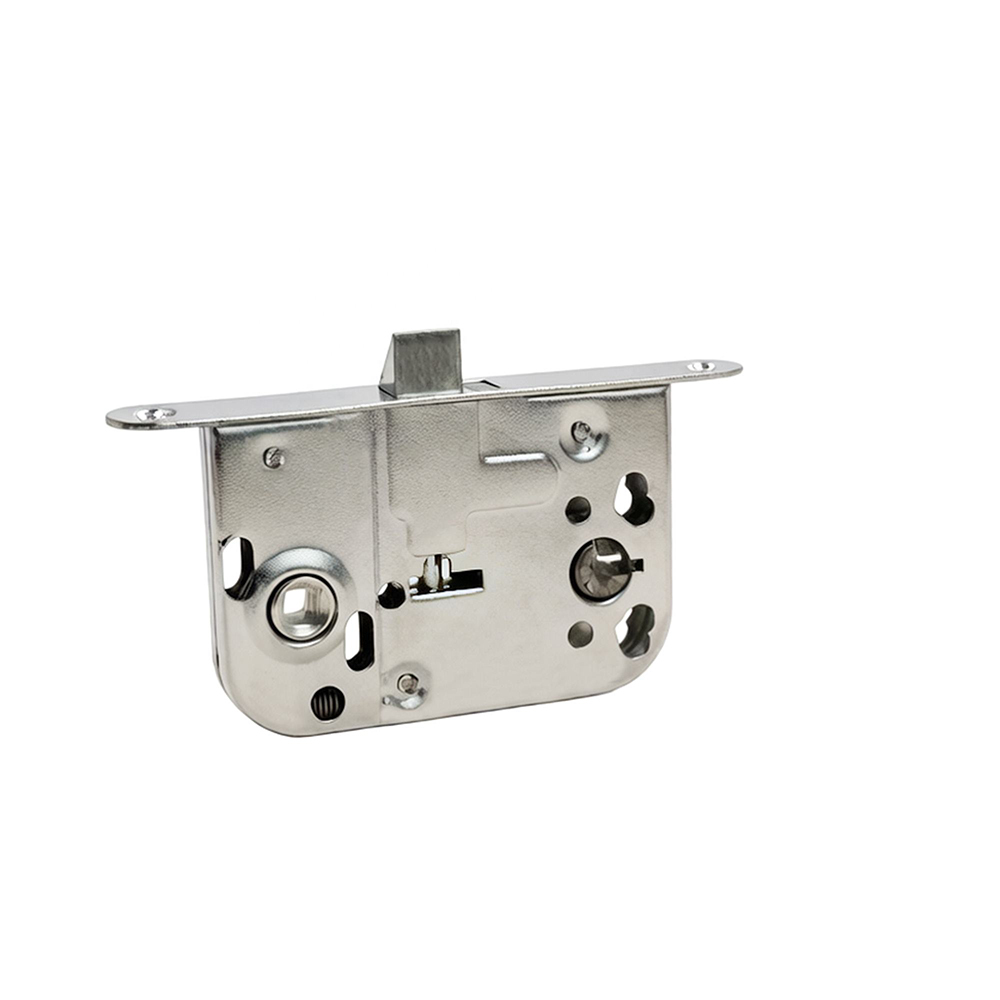
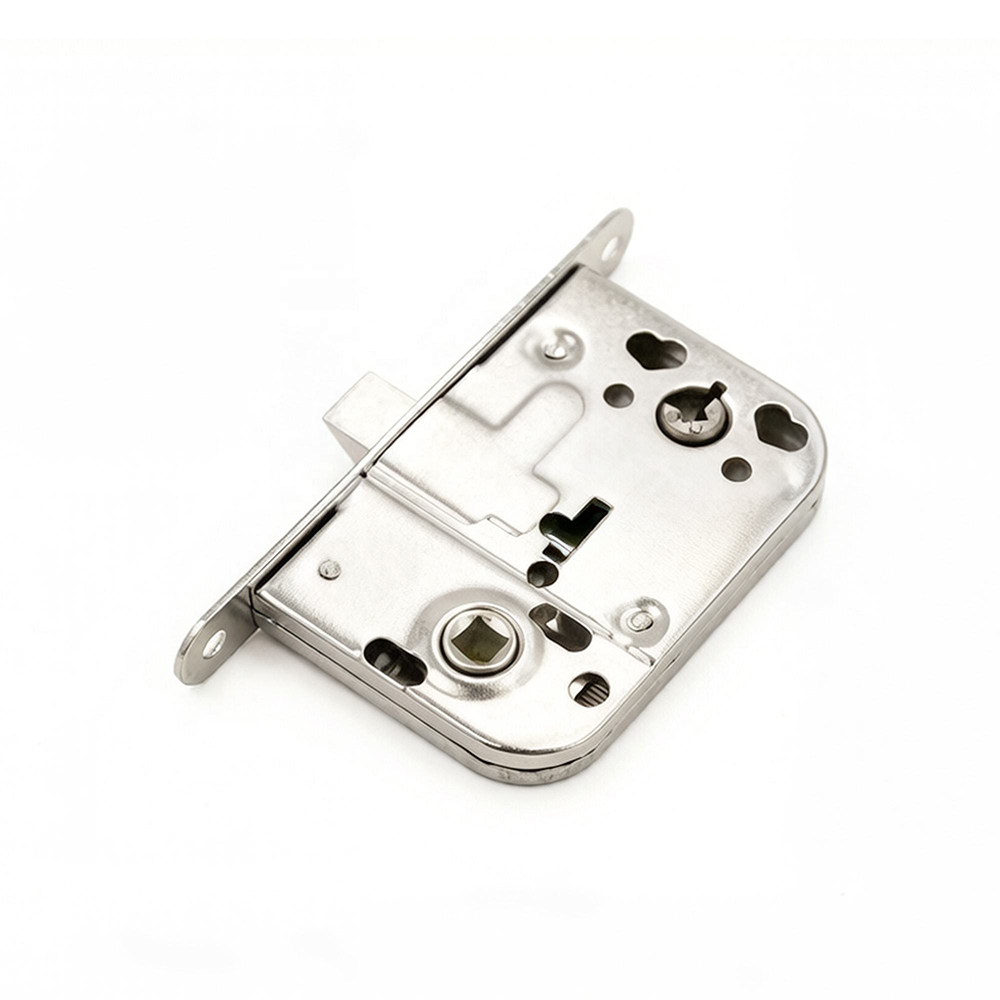
Its product configuration illustrates why the central case, spindle follower, euro-profile cylinder opening and faceplate should be evaluated as one assembly.
A gearbox that physically enters the door recess is not automatically a compatible replacement.
2. The Faceplate: More Than a Decorative Metal Strip
The multipoint lock faceplate is the long metal section installed along the opening edge of the door.
It positions and supports the lock assembly while providing openings for the latch, bolts, hooks and other locking elements.
On many designs, moving drive strips operate behind the faceplate.
The faceplate should not be confused with those moving components. Its primary role is structural positioning and mechanical support.
Faceplates can have different profiles, including flat strips and U-shaped channels.
The FUHR multisafe 856 specification, for example, identifies flat faceplates in 16 mm, 20 mm and 24 mm widths, alongside a U-shaped 24 × 6 mm option.
These are product configurations, not universal industry dimensions.
A correctly selected faceplate must fit the door-edge preparation without distorting the connected mechanism.
Problems arise when:
The faceplate is wider than the prepared recess.
The channel profile does not match the door construction.
Fixing screws pull the strip out of alignment.
The faceplate bends during installation.
The strip interferes with the frame as the door closes.
Aluminum, uPVC and timber doors can impose very different installation constraints.
Aluminum profiles have defined extrusion cavities. uPVC doors may contain internal reinforcement. Timber doors offer more machining flexibility but can experience dimensional movement with changing moisture conditions.
I would never approve a faceplate from width and length alone.
Its cross-section, fixing arrangement and relationship to the gearbox matter just as much.
3. Locking Points: Hooks, Rollers and Bolts Are Not Equivalent
Multipoint lock locking points can perform different jobs, even when they are operated by the same gearbox.
This is where specifications often become misleading.
The term five-point locking system describes a quantity. It does not fully describe how the system restrains the door.
Parafusos de gancho engage behind compatible retaining surfaces in frame keepers. Their shape can help resist separation between the door edge and frame, provided the hook, keeper and surrounding structure are correctly designed.
Cames de rolos often help control the relationship between the door leaf and its weather seals. Adjustable rollers can influence compression and closing resistance.
Câmaras de cogumelos use an enlarged head designed to engage with a compatible receiving profile. Their security contribution depends on the complete arrangement.
Straight or round bolts project into corresponding receivers and provide positive locking engagement when the bolt throw and receiver depth match.
Parafusos de fixação extend toward prepared receiving positions, commonly at the head or threshold.
Different designs combine these components in different ways.
A system with two hook bolts and compression rollers may behave differently from one with several projecting round bolts.
Neither should be judged by appearance alone.
The engineering question is whether the chosen locking points provide the required restraint, compression and operating characteristics for the door.
4. Keepers: The Frame-Side Components That Complete the Lock
Multipoint door lock keepers are the frame-mounted components that receive the moving locking elements.
They may also be called keeps, strike plates or receivers.
Without properly matched keepers, a multipoint locking mechanism cannot perform as intended.
Consider a hook bolt entering its keeper.
The opening must provide enough clearance for the hook to enter, move through its intended path and engage behind the retaining surface.
If the keeper sits too high, the hook may collide with its edge.
If the receiver is too shallow, the bolt may fail to achieve its full travel.
If the keeper’s position creates excessive seal compression, the operating force at the handle may increase.
These problems are often felt at the gearbox, even though the original interference occurs at the frame.
That is why I consider keeper geometry a first-order specification item rather than an installation accessory.
The relationship between bolt spacing, projection, keeper depth and fixing location must be established before installation.
Multipoint Door Lock Components: Function and Failure Comparison
The table below summarizes how the major components contribute to operation and where compatibility problems commonly arise.
Componente
Mechanical Function
Typical Problem
Essential Check
Caixa de velocidades
Converts input into coordinated locking movement
Internal wear or incompatible drive travel
Backset, PZ, spindle and connectors
Placa frontal
Positions and supports the lock mechanism
Distortion or incorrect profile fit
Width, thickness, section and fixing centres
Drive strips or rods
Transfer movement to remote locking points
Restricted travel or damaged connections
Connection geometry and movement
Parafusos de gancho
Engage behind retaining surfaces
Encaixe incompleto do gancho
Hook throw and keeper profile
Cames de rolos
Control compression and engagement
Excessive closing pressure
Cam position and adjustment
Straight bolts
Extend into frame receivers
Insufficient insertion depth
Bolt projection and receiver clearance
Guardiões
Receive and retain locking elements
Misalignment or weak fixing
Position, depth and structural support
A multipoint door lock is a system of connected interfaces.
One incompatible component can compromise the operation of otherwise serviceable hardware.
Why Multipoint Door Locks Fail: The Open-Door Test
A hard-to-lift handle is a symptom, not a diagnosis.
It can indicate damaged gearbox components, but it may also result from door sag, displaced keepers, excessive weatherseal pressure or friction in the connected locking mechanism.
Before recommending replacement, I would start with one simple test.
Test the Mechanism With the Door Open
With the door fully open, operate the handle slowly while observing the movement of the locking points.
Do not force the handle past resistance or operate the door in a way that could leave you locked out.
Then compare the operating resistance with the door closed.
The results provide useful diagnostic information.
Smooth when open, stiff when closed: The mechanism can move without frame interference, so door alignment, keeper position and gasket compression become leading suspects.
Stiff in both positions: The handle, spindle, gearbox or connected locking elements deserve closer inspection.
One locking point does not move correctly: A local obstruction, damaged linkage or individual locking component may be responsible.
The key binds only when the door is closed: The mechanism may not be completing its intended engagement because of frame-side resistance.
These observations narrow the possible causes. They do not prove that any single component is defective.
Replacing the gearbox may be reasonable when the fault is isolated and a compatible replacement is available.
But consider a door with misaligned upper and lower keepers.
Every time the user lifts the handle, the remote locking points meet excessive resistance. The connected drive strips transmit that resistance back to the central mechanism.
Eventually, internal components may wear or fail.
A new gearbox might restore operation temporarily, but it will face the same loading conditions unless the alignment problem is corrected.
But inspect everything that could have caused the failure.
What Security Standards Reveal About Multipoint Locks
Security claims need better evidence than a photograph showing several extended bolts.
Three authoritative sources help explain why.
BS EN 15685:2024 Recognizes the Lock-and-Keeper Relationship
The British Standards Institution’s BS EN 15685:2024, published as a British Standard on January 31, 2025, specifies characteristics and test methods for mechanically operated multipoint locks, latches and locking plates.
The scope includes corresponding locking plates and compatible assemblies made from subcomponents.
This is significant because it recognizes that the working lock and its receiving hardware must be considered together.
It does not mean that every multipoint lock automatically complies with the standard, or that compliance alone establishes the fire performance of a particular doorset.
A manufacturer’s specific test documentation still matters.
Approved Document Q Focuses on Complete Doorset Security
da Inglaterra Approved Document Q: Security in Dwellings, first published in March 2015, addresses resistance to unauthorized access in relevant new-dwelling applications.
Its guidance covers robust door and window construction alongside appropriate security hardware.
The key distinction is that security is a property of the overall doorset arrangement, not simply the lock’s advertised bolt count.
A strong locking mechanism may offer limited benefit if the frame, hinges or keeper fixings cannot support the relevant loads.
Buyers should also distinguish component testing from complete doorset testing, including claims associated with PAS 24.
Burglary Statistics Do Not Prove Hardware Performance
That total includes residential and non-residential burglary.
It does not establish which multipoint lock designs resisted attack successfully or which failed.
This is an important limitation.
I would be skeptical of any hardware marketing that uses national burglary totals as direct evidence that a particular lock is more secure.
Independent product and doorset testing offers a much stronger basis for that conclusion.
What to Check Before Buying or Replacing a Multipoint Door Lock
The most reliable selection process begins with measurement, operating compatibility and the door profile.
A common European-style configuration might have a 35 mm backset, 92 mm PZ centres and an 8 mm square spindle.
Those dimensions alone do not identify a complete replacement.
For example, FUHR’s multisafe 856 product family includes multiple backsets, locking configurations and faceplate formats. Selecting one dimension correctly does not guarantee that the remaining interfaces match.
Measure the Complete Mechanism
At minimum, record:
Gearbox backset and PZ centres
Spindle size and handle fixing centres
Faceplate width, length and cross-section
Gearbox depth and fixing positions
Overall locking-strip length
Positions of every hook, cam and bolt
Locking-point movement and projection
Keeper dimensions and locations
Handing and operating sequence
Use a consistent reference point when recording the vertical positions of locking elements.
A sound specification must account for the hardware’s intended environment.
For aluminum doors, check the extrusion cavity, reinforcement arrangement and fixing provisions.
For uPVC doors, identify the profile system and reinforcement locations.
For timber doors, consider mortise dimensions, remaining material around the lock and possible dimensional movement.
The keeper system must also match the frame construction.
Finally, confirm the relevant performance, escape-route and installation requirements. Hardware intended for an emergency exit may require a different release arrangement from a conventional residential entrance lock.
The cheapest compatible-looking lock is not necessarily the lowest-cost solution.
Repeat service visits, incompatible replacement parts and premature wear can quickly outweigh an initial saving.
FAQs
Como funcionam as fechaduras multiponto?
Multipoint door locks work through a connected mechanism that moves several locking elements using a single operating input, such as a handle, key cylinder or automatic actuator, allowing hooks, bolts or cams positioned along the door edge to engage corresponding keepers installed in the frame at multiple locations.
In common lift-lever systems, raising the handle engages remote locking points and turning the key secures the mechanism.
Qual é a função de uma caixa de velocidades com bloqueio multiponto?
A multipoint lock gearbox is the central operating mechanism that converts handle or cylinder movement into the motion needed to control the latch, deadbolt and connected locking components, coordinating their movement through internal cams, gears or other linkages that drive remote locking points along the door edge.
A suitable replacement must match the gearbox’s dimensions, connections and operating sequence.
Qual é a diferença entre uma placa frontal e um retentor?
A multipoint lock faceplate is the metal component installed along the door edge that positions and supports the locking mechanism, while a keeper is the corresponding frame-mounted component designed to receive and retain a hook, bolt, cam or latch when the locking mechanism operates and the door is secured.
Both components must match the door’s geometry and locking arrangement.
Por que é que a maçaneta da minha fechadura multiponto é difícil de levantar?
A multipoint door lock handle becomes difficult to lift when excessive mechanical resistance prevents the gearbox or connected locking elements from moving normally, often because of door sag, misaligned frame keepers, excessive seal compression, worn gearbox parts, damaged connecting rods or a locking point that cannot complete its intended travel.
Compare operation with the door open and closed before deciding which component requires attention.
É possível substituir separadamente a caixa de engrenagens de uma fechadura multiponto?
A multipoint door lock gearbox can be replaced independently when the failure is confined to the central mechanism, the remaining locking strip is in serviceable condition, and a replacement can be found with compatible dimensions, spindle and cylinder positions, drive connections, fixing geometry and operating characteristics.
If multiple components are worn or damaged, replacing the complete strip may be more reliable.
As fechaduras de cinco pontos são melhores do que as de três pontos?
A five-point door lock uses more locking positions than a three-point arrangement, but the additional points do not automatically provide greater security because real performance depends on locking-element design, engagement depth, keeper strength, frame construction, installation quality and the verified performance of the complete doorset under relevant test conditions.
Compare the tested configuration rather than using locking-point count as a standalone security rating.
Final Thoughts: Specify the Complete Locking System
A multipoint door lock is not simply a gearbox attached to a long metal strip.
It is a coordinated mechanism in which the gearbox generates movement, the faceplate locates the components, the locking points engage and the keepers provide the corresponding frame-side restraint.
If those parts do not match, the system cannot perform as intended.
For door manufacturers, hardware distributors and OEM buyers, I would prioritize three things before approving an order: dimensional compatibility, repeatable mechanical operation and documented performance.
CHIER supports multipoint door locking hardware sourcing, technical matching and OEM/ODM development for different door systems.
If you are selecting hardware for a new door design or replacing an existing multipoint locking mechanism, prepare the following information:
The right multipoint lock is not the one with the most locking points. It is the one whose complete mechanism works reliably with the door it was designed to secure.