Looking for hardware solutions that meet European / American standards?
Use this guided inquiry modal to move from a generic quote form to a clearer technical conversation. Buyers can choose whether they need pricing, CAD / 3D files, or OEM / ODM support before sharing contact details.
Compatibility-first design across door / window systems
Repeatable production with clear inspection checkpoints
Documentation and change control for long-running programs
Responsive engineering support for fit and field feedback
A supplier may call one product a sash lock, another may market nearly the same mechanism as a crescent lock, and a third may use “cam lock” because the rotating part happens to look like a cam, even though the installation geometry and security performance are completely different.
Why should buyers care?
Because a lock name does not tell you whether the keeper will align, whether the sash will pull tightly against the seal, whether the handle will clear the frame, or whether the mechanism will still operate after the window shifts by 1–2 mm.
My blunt view is that the window hardware trade spends too much time selling shapes and too little time documenting interfaces. A black finish, a heavy lever and a satisfying click may help a showroom sample. They do not prove that the lock fits the window.
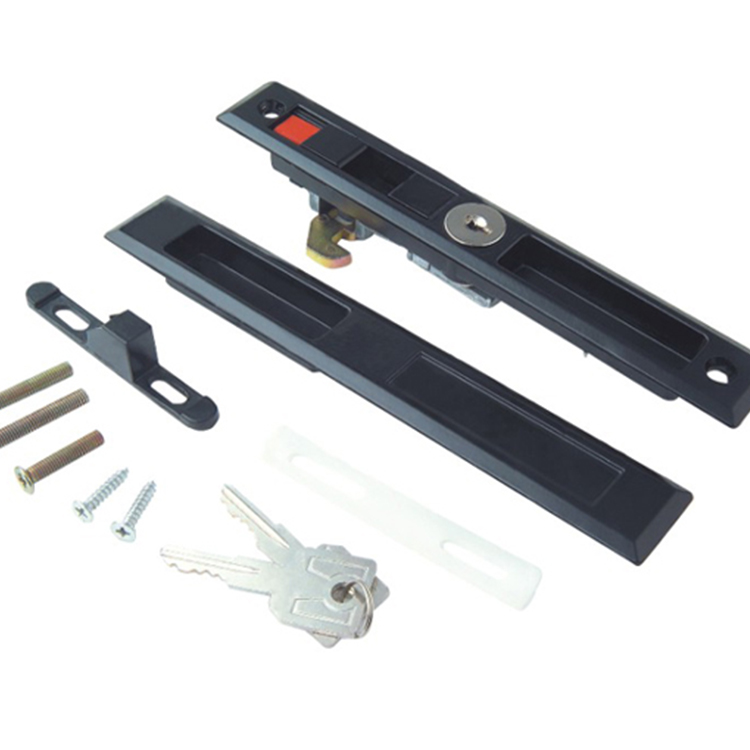
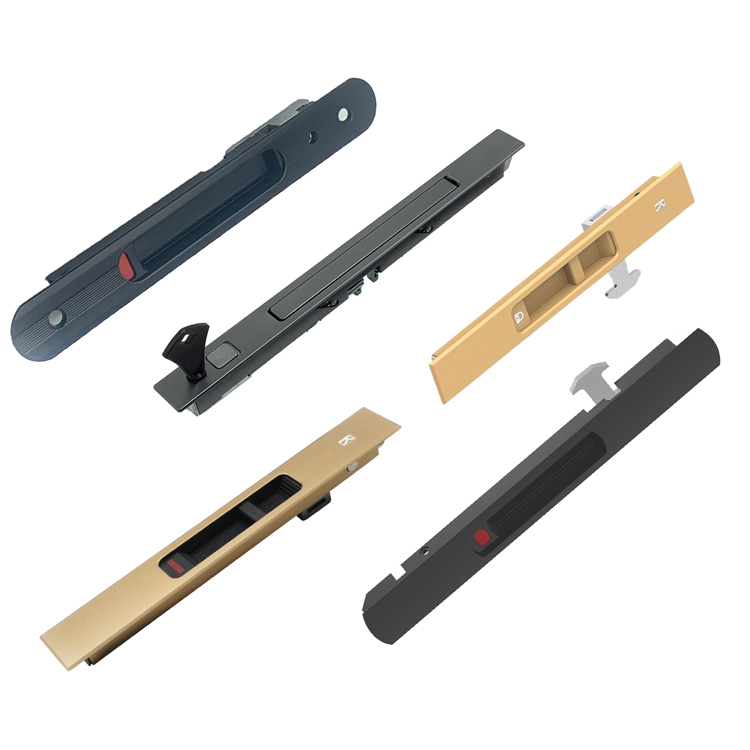
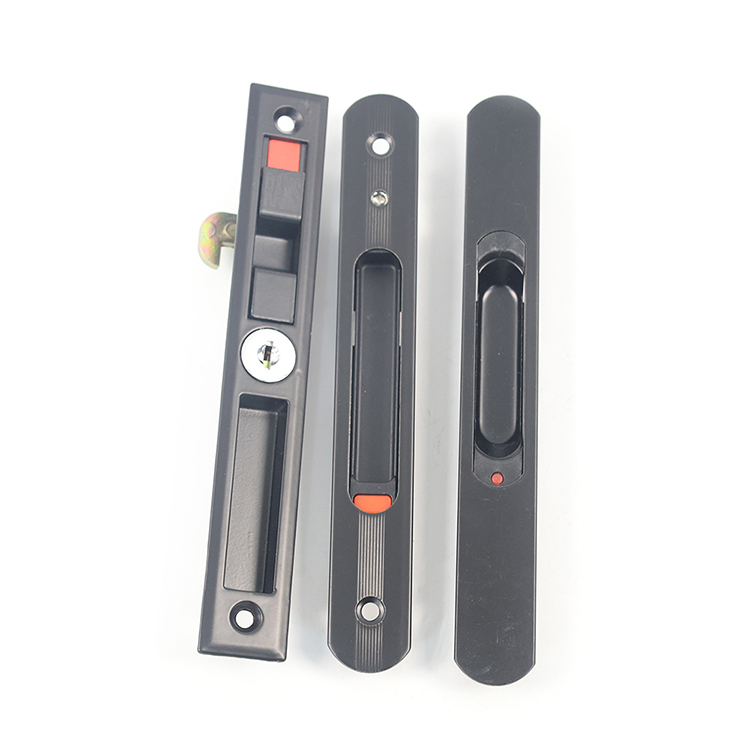
The correct starting point is the opening type, sash movement, profile dimensions, locking interface and required performance. CHIER’s current window and door lock collection reflects that application-first approach by separating sash, casement, sliding and multipoint hardware rather than treating every product as a generic latch.
The Five Main Types of Window Locks at a Glance
Window lock type
Typical window application
Locking action
Main advantage
Main weakness
Best buyer question
Sash lock
Single-hung, double-hung and sliding windows
Joins or blocks movable sashes
Simple, compact and economical
The term covers several different mechanisms
What exact sash overlap and keeper position does it require?
Cam lock
Sliding, casement, utility and specialist windows
A rotating cam engages behind a keeper
Low part count and fast operation
Limited pull-in force on basic models
Is the cam designed to latch, compress or resist forced entry?
Crescent lock
Hung and horizontal sliding windows
A curved sweep rotates into a keeper
Pulls meeting rails together
Poor alignment quickly reduces engagement
How much sweep engagement remains at maximum tolerance?
Espagnolette lock
Casement, awning, tilt-turn, aluminum and uPVC windows
A handle drives rods, rollers or mushroom cams
Several engagement points from one handle
Sensitive to rod, keeper and sash alignment
What spindle, backset, travel and keeper layout are required?
Multipoint lock
Larger casement, tilt-turn and high-performance windows
A gearbox operates two or more locking points
Distributed security and gasket compression
More parts create more compatibility risks
Has the complete assembly been tested in this window profile?
Do not treat this table as a substitute for drawings. It is a screening tool.
A product can sit in two categories at once. A crescent lock is also a type of sash lock. An espagnolette is normally a multipoint mechanism. A rotating cam may appear inside a sash lock, an espagnolette or a compression latch.
The labels overlap. The dimensions do not.
Sash, Cam and Crescent Locks: Similar Shapes, Different Jobs
Sash window locks are a broad family
A sash lock is any locking device intended to secure one or more movable window sashes. In everyday North American usage, the term often describes a small surface-mounted lock positioned at the meeting rails of a single-hung, double-hung or horizontal sliding window.
That definition is useful, but loose.
A sash lock may use a crescent-shaped sweep, a rotating cam, a sliding bolt, a fork drive, a keyed cylinder or a compact lever mechanism. That is why ordering “500 black sash locks” without a dimensional drawing is not a specification. It is a gamble.
One measurement can kill the project. A keeper that sits 2 mm too low may still catch during a polite sample test, yet fail to pull the meeting rails together once production tolerances, paint thickness and frame movement appear.
Cam window locks rotate into engagement
A cam lock uses an eccentric or shaped rotating element to engage behind a keeper, strike, frame edge or mating component. The mechanism may turn through 90°, 180° or another specified angle depending on the design.
Simple enough?
Not really.
Some cam locks merely block movement. Others apply compression. Keyed quarter-turn cam locks may be designed for cabinets, access panels or industrial enclosures rather than residential windows. Calling all of them “window security locks” is marketing shorthand, not engineering.
Before choosing a cam window lock, determine what the cam must do:
Prevent the sash from sliding.
Pull the sash toward the frame.
Compress an EPDM or TPE gasket.
Resist prying or lifting.
Provide keyed access control.
Show a clear locked or unlocked state.
A thin stamped cam may be adequate for a light interior application. It is not automatically suitable for a large exterior aluminum sash exposed to wind load, chloride deposits and repeated user force.
And this is where cheap specifications become expensive. Buyers compare unit prices while ignoring cam thickness, shaft support, keeper reinforcement and fastener bite. Then they blame the lock when the real failure started in the frame.
Crescent locks draw meeting rails together
A crescent lock, also called a sweep lock, uses a curved rotating arm that travels into or around a keeper. It is most commonly associated with double-hung, single-hung and horizontal sliding windows.
Its real value is not the crescent shape. It is the pull-in action.
When the sweep and keeper geometry are correct, turning the lever draws the meeting rails toward each other. That can improve closure, reduce rattling and support more consistent seal contact. When the geometry is wrong, the lever may appear closed while only the tip of the sweep is engaged.
That is fake security.
I do not approve crescent sash locks from front-view photographs. The supplier should show the side profile, engagement depth, centerline relationship and tolerance range. A serious drawing should explain what happens when the sash is at nominal position, minimum overlap and maximum expected displacement.
The best crescent lock is not necessarily the heaviest one. It is the model whose sweep radius, keeper height, fastener pattern and operating force match the actual window.
Espagnolette Window Locks: The Mechanism Behind the Handle
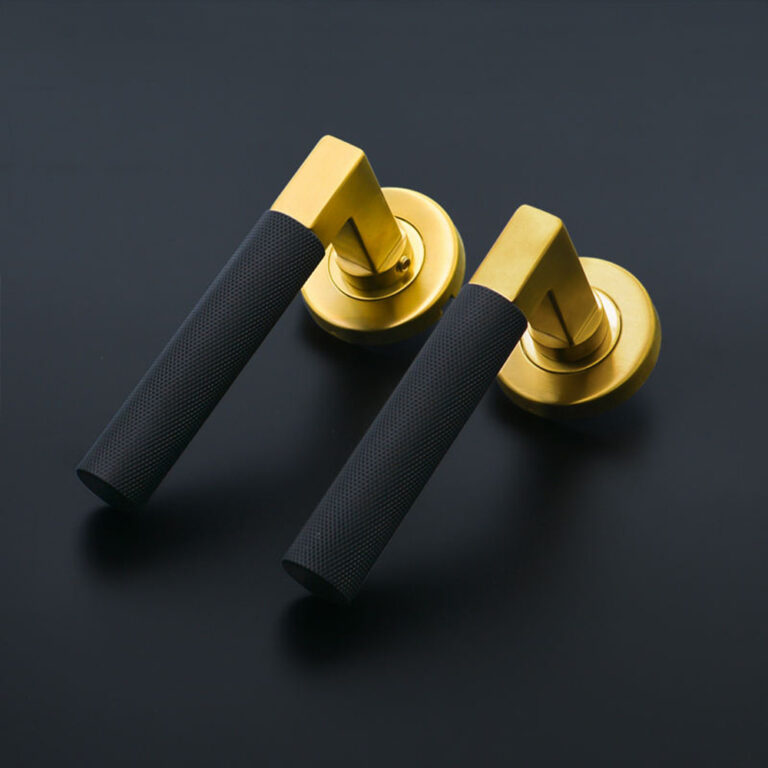
An espagnolette window lock uses a handle, spindle or fork interface to drive a rod, faceplate or transmission mechanism along the sash edge. Rollers, pins, mushroom cams or other locking elements then engage corresponding keepers around the frame.
It looks tidy.
Behind that tidy handle sits a chain of dependencies: handle rotation, spindle fit, gearbox travel, rod straightness, cam position, keeper alignment, sash stiffness, gasket compression and frame installation tolerance.
Which part gets blamed when the handle becomes stiff?
Usually the visible one. That is often wrong.
The common espagnolette interfaces buyers should measure
Many European-style espagnolette handles use a 7 mm square spindle and 43 mm fixing centers, but those figures are common conventions, not universal laws. Spindle length may vary with profile depth, and some aluminum systems use fork drives, blade interfaces or proprietary transmissions instead.
A usable specification should identify:
Spindle or fork type
Spindle dimensions and insertion depth
Fixing centers
Backplate dimensions
Screw size and thread engagement
Handle rotation angle
Gearbox backset
Faceplate width and thickness
Cam quantity and positions
Cam adjustment range
Keeper dimensions
Handing and opening direction
Do not copy a spindle length from a previous project. Measure the new profile.
A spindle that is too short may only partly engage the gearbox follower. One that is too long may bottom out, distort the handle base or create drag. Both can feel acceptable during the first few operations.
Then the callbacks start.
Mushroom cams, rollers and pins are not equal
Roller cams are often used to guide engagement and control gasket compression. Mushroom cams provide an undercut shape that can offer better resistance to separation when matched with the correct keeper. Straight pins may provide simple locating or locking functions.
But the locking element cannot be judged alone.
A mushroom cam entering a weak keeper fixed with short screws may create a strong-looking failure point attached to a weak frame. A roller adjusted too aggressively may over-compress the seal, increase handle torque and accelerate wear in the gearbox.
My opinion is unpopular but simple: adjustable hardware is only useful when the installation and quality teams know the approved setting. Otherwise, adjustment becomes an uncontrolled production variable.
Buyers evaluating these systems should review CHIER’s guide to multi-point window locking system design factors, which covers gearbox drag, keeper accuracy, rod travel, sash stiffness and other assembly-level dependencies.
Multipoint Window Locking Systems: More Points Are Not Automatically Better
A multipoint window locking system secures the sash at two or more locations through one operating action. It may use rollers, mushroom cams, hooks, bolts, pins, corner drives or combinations of these components.
More points, maybe.
A five-point lock can distribute holding force and gasket compression more evenly than a single latch, but adding components also adds friction, tolerance stack-up, keeper alignment work, installation time and new ways for partial engagement to occur.
So is five always better than three?
No.
A well-aligned three-point system with reinforced keepers and controlled operating force can outperform a seven-point system that binds, misses its upper keeper or encourages users to force the handle.
I judge multipoint systems by the entire load path:
Handle
Spindle or drive interface
Gearbox
Faceplate
Rods and corner drives
Locking points
Keepers
Fasteners
Frame reinforcement
Hinges
Gaskets
Installation tolerances
The lock should not be expected to correct a sagging sash. It should not be used as a clamp to drag a distorted frame into place. And it should not require excessive handle force simply because someone specified a thick gasket without calculating compression.
The U.S. Department of Energy states that reducing uncontrolled air leakage can lower heating and cooling costs, improve durability and improve comfort. Multipoint hardware may support that goal by distributing closure pressure, but only when the frame, seals and installed assembly are properly designed; the lock itself is not insulation. See the Department of Energy’s air-sealing guidance.
That distinction matters. I have little patience for suppliers that advertise an isolated lock as “energy efficient.” Hardware can support seal compression. It cannot manufacture a tested U-factor out of thin air.
The Evidence Buyers Should Not Ignore
Property crime has declined, but the exposure has not disappeared
The Bureau of Justice Statistics reported a U.S. property-victimization rate of 102.2 incidents per 1,000 households in 2023. In urban areas, the rate reached 192.3 per 1,000 households, up from 176.1 in 2022. The category includes burglary or trespassing, motor-vehicle theft and other household theft. Those distinctions matter, but the scale still kills the argument that window security is merely a marketing feature. Read the BJS Criminal Victimization, 2023 release.
The FBI’s 2024 national release was built from reports covering more than 14 million criminal offenses, with data submitted by over 16,000 agencies representing 95.6% of the U.S. population. That dataset is broader than any supplier’s anecdote, although it still reflects reported crime rather than every unreported event. See the FBI’s 2024 Reported Crimes in the Nation statistics.
Hard truth: falling crime figures do not excuse weak hardware. Buyers do not specify locks for the national average. They specify them for a particular opening, building, user group and risk profile.
Regulation treats the window as an assembly
England’s Approved Document Q supports Requirement Q1 of the Building Regulations 2010 for new dwellings. It states that accessible doors and windows should resist physical attack by being sufficiently robust and fitted with appropriate hardware.
Read that wording again.
It does not say “install a heavy lock.” It says the door or window must resist attack through robustness and appropriate hardware. That is an assembly requirement, not a product-description contest. The government’s Approved Document Q guidance also identifies standards used to assess enhanced security performance.
For U.S., UK or EU projects, the buyer should verify the exact local code, project specification, testing scope and accepted standard edition. A PAS 24 claim, NAFS label or laboratory report should be matched to the exact window configuration, size, hardware bill of materials and installation method.
CHIER’s guide to verifying hardware compliance for aluminum windows and doors makes the same distinction: compliance evidence normally applies to a defined assembly, not to a free-floating handle, cam or gearbox that can be substituted without review.
Child safety changes the lock decision
Security is not the only risk.
UC Davis Health reported in May 2024 that around eight U.S. children age five or younger die each year from window falls, while approximately 3,300 are injured. The hospital also warned that window screens do not stop falls and recommended window stops that limit openings to four inches where appropriate. See its window-fall prevention guidance.
That does not mean every window should be permanently restricted. Bedroom egress windows, smoke-escape routes, care facilities, schools and high-rise applications may have different release and opening requirements.
A keyed window lock can help control unauthorized opening. It can also create a dangerous delay if emergency escape depends on a missing key. The answer is not a universal product. The answer is a documented operating scenario.
How to Choose the Best Window Lock
Start with how the window moves
The opening type removes most unsuitable options immediately.
For single-hung and double-hung windows, start with sash, crescent or meeting-rail locks. For horizontal sliders, consider crescent, cam, sliding-bolt or recessed latch designs. For casement and awning windows, review cam, hook-bolt, espagnolette and multipoint systems.
Tilt-turn windows require another level of sequencing. The handle may control locked, tilt and turn positions, often through corner drives and linked hardware. A generic casement handle is not a safe substitute.
CHIER’s casement locking hardware includes recessed, hook-bolt, flush and cable-restrictor formats, showing why “casement lock” describes an application rather than one universal mechanism.
Measure the mechanical interface
A buyer should not release an order until the interface data is confirmed.
For surface-mounted sash and crescent locks, record the fixing centers, base footprint, keeper height, rail offset, overlap and engagement depth.
For espagnolette and multipoint locks, record the spindle or fork, gearbox backset, faceplate, handle centers, cam layout, keeper positions, rod travel, corner-drive requirements and sash rebate dimensions.
Use actual numbers. “Standard European size” is not a number.
I would also require a tolerance drawing showing the minimum acceptable engagement. Nominal dimensions only describe the perfect sample. Production lives elsewhere.
Match the material to the exposure
Common hardware materials include die-cast zinc alloys such as Zamak 3, die-cast or extruded aluminum, carbon steel, stainless steel, brass, POM engineering plastic and PA66 nylon.
Each has a place.
Zinc alloy can produce clean shapes and economical volume. Aluminum keeps visible handles light and corrosion resistant when the alloy and finish are controlled. Carbon steel provides strength but depends heavily on plating or coating. SUS304 stainless steel works well in many exterior conditions, while SUS316 is generally the safer discussion for severe chloride or coastal exposure.
But material names alone prove little.
Ask about the base alloy, pretreatment, coating thickness, plating stack, stainless grade, fastener material and galvanic pairing. A 500-hour salt-spray claim for one component does not prove that the full assembly will survive condensation, scratched coatings, trapped water and dissimilar-metal contact.
Balance security, accessibility and egress
The best window locks are not simply the hardest to open.
They must be difficult for an intruder, understandable for the occupant and compatible with emergency escape obligations. Schools, hotels, hospitals, apartments, detached homes and commercial buildings may require different operating logic.
Check:
Whether a key is required from the inside
Whether the locked state is visually obvious
Whether the handle can be operated with one hand
Whether the lock requires tight pinching or twisting
Whether an opening restrictor has an emergency override
Whether the key can be removed in the unlocked position
Whether partial engagement can look fully locked
Whether the hardware conflicts with an egress opening
A lock that users routinely leave disengaged because it is stiff or confusing is not a secure lock. It is expensive decoration.
Demand evidence before approving a supplier
The supplier file should contain more than a product photo and material claim.
For a serious OEM, private-label or project order, request:
Dimensioned 2D drawing
3D model where available
Material specifications
Finish and corrosion specifications
Functional test method
Cycle-test target
Static-load or forced-entry evidence
Approved keeper and fastener details
Installation instructions
Inspection plan
Golden sample or approved reference
Revision-controlled bill of materials
Packaging and labeling requirements
CHIER’s OEM/ODM window hardware program separates released-drawing OEM work from application-led ODM development and includes interface review, dimensional approval, quality checkpoints and revision control. That is the level of documentation buyers should expect before repeat orders begin.
Where Window Lock Specifications Usually Fail
The keeper is treated as an accessory
It is not.
The keeper determines where and how the locking element engages. Change its height, thickness, material, hole position or reinforcement and the lock may behave like a different product.
Always approve the lock and keeper as a set.
The fastener has nothing solid to hold
A strong lock mounted with short screws into thin, unsupported profile walls produces a clean test sample and a weak installed assembly.
Check screw diameter, length, thread engagement, insert design and reinforcement. The strongest part drawing is irrelevant when the fastener tears out first.
The lock is forced to correct frame errors
Locks should secure aligned windows. They should not pull twisted, sagging or poorly shimmed windows into position on every cycle.
Binding, worn keepers and high handle torque often point to geometry problems. Replacing the handle may hide the symptom for a week. It will not remove the load.
The buyer approves appearance before operation
Finish samples matter, especially for visible architectural hardware. But the correct order is function, fit, durability and then appearance.
Not the reverse.
A matte-black handle that exposes only 3 mm of spindle engagement is still the wrong handle.
FAQs
What are the different types of window locks?
The main types of window locks are sash locks, cam locks, crescent or sweep locks, espagnolette locks, and broader multipoint systems, with each category defined by how it engages the sash, how many points it secures, and which window opening—hung, sliding, casement, awning, or tilt-turn—it is designed to control.
Some names overlap. Crescent locks are usually sash locks, while espagnolette locks normally belong to the multipoint family. Buyers should compare the mechanism and dimensions rather than relying on the product name alone.
What is the best window lock?
The best window lock is the lock that matches the window’s opening type, profile dimensions, keeper geometry, required security level, corrosion exposure, user needs, and egress obligations while operating smoothly through the full tolerance range; a well-fitted three-point system can outperform a badly aligned five-point system.
For basic hung windows, a properly fitted crescent lock may be enough. Larger casement, tilt-turn and high-performance windows may benefit from espagnolette or multipoint hardware.
What is the difference between an espagnolette and a multipoint window lock?
An espagnolette lock is a handle-driven rod or faceplate mechanism that moves cams, rollers, or pins along a window edge, while a multipoint lock is the broader category for any system that secures the sash at two or more locations through one operating action, including espagnolette-based designs and other gearbox arrangements.
In other words, most espagnolette locks are multipoint locks, but not every multipoint lock uses a traditional espagnolette rod layout.
Are crescent locks and sash locks the same?
A crescent lock is a rotating sweep latch—usually mounted at the meeting rails of hung or sliding sashes—that draws the two sections together, while sash lock is a wider market term that can include crescent, cam, keyed, and other locking mechanisms made specifically for movable window sashes.
A supplier may use the two terms interchangeably, so verify the sweep geometry, keeper position, fixing centers and sash overlap before ordering.
How do I choose a window lock?
To choose a window lock, identify the window type and material first, then measure the backset, fixing centers, spindle or fork interface, keeper position, sash overlap, available profile depth, and required opening restriction before comparing security testing, corrosion protection, cycle life, accessibility, child safety, and emergency-egress requirements.
Send the supplier a profile drawing, photographs of the opening and existing hardware, actual measurements and the target market. Do not request a match based only on appearance.
Can window locks prevent break-ins?
Window locks reduce break-in risk by limiting sash movement, resisting casual prying, distributing holding force, and making forced entry slower and noisier, but no lock can compensate for weak glass, damaged frames, loose keepers, shallow fastener bite, poor installation, or an unlocked adjacent opening, so security must be assessed as a complete assembly.
Use locks alongside appropriate glazing, reinforced keepers, suitable fasteners, sound frame construction and disciplined installation. A lock is one part of the security chain.
Specify the Lock Before the Quote
Stop asking suppliers for “the best window lock” without giving them the window.