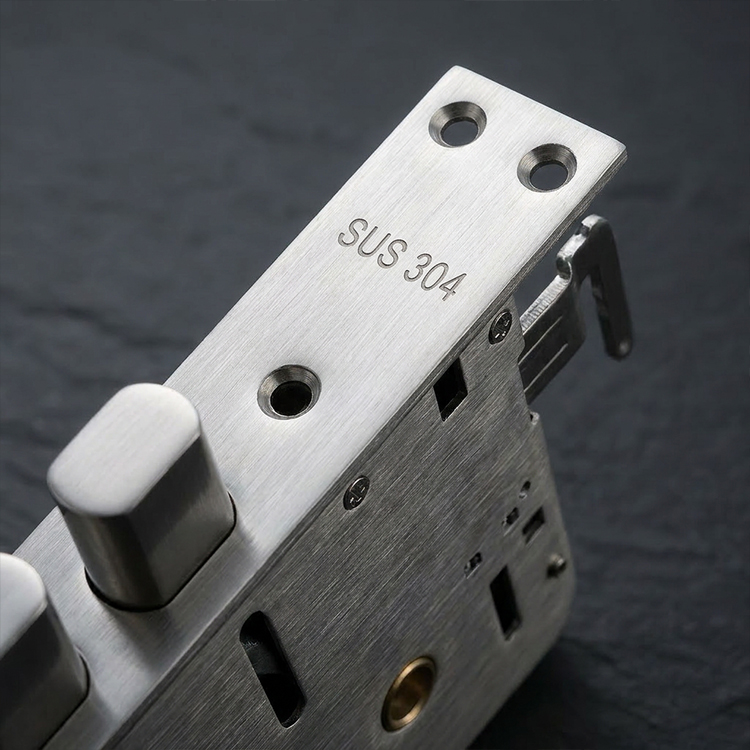
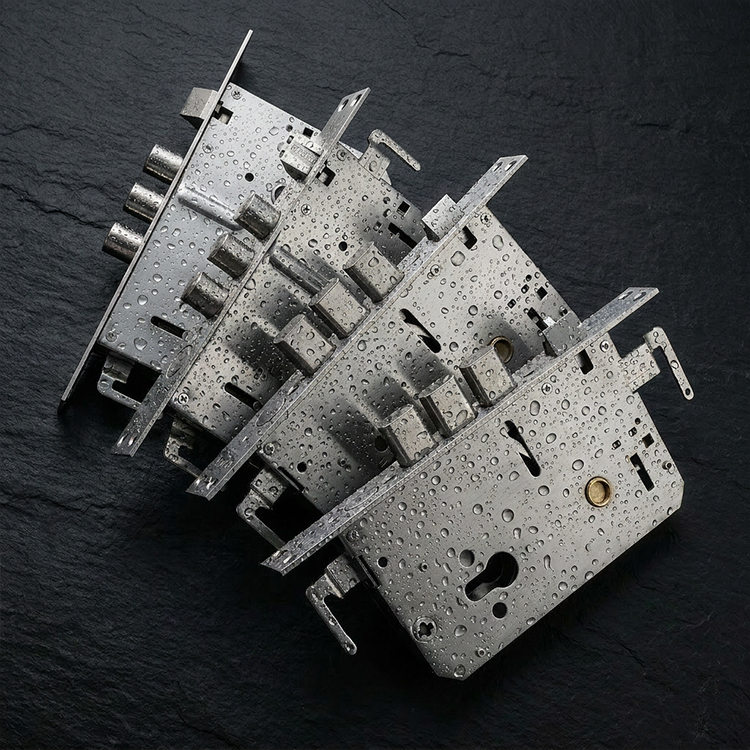
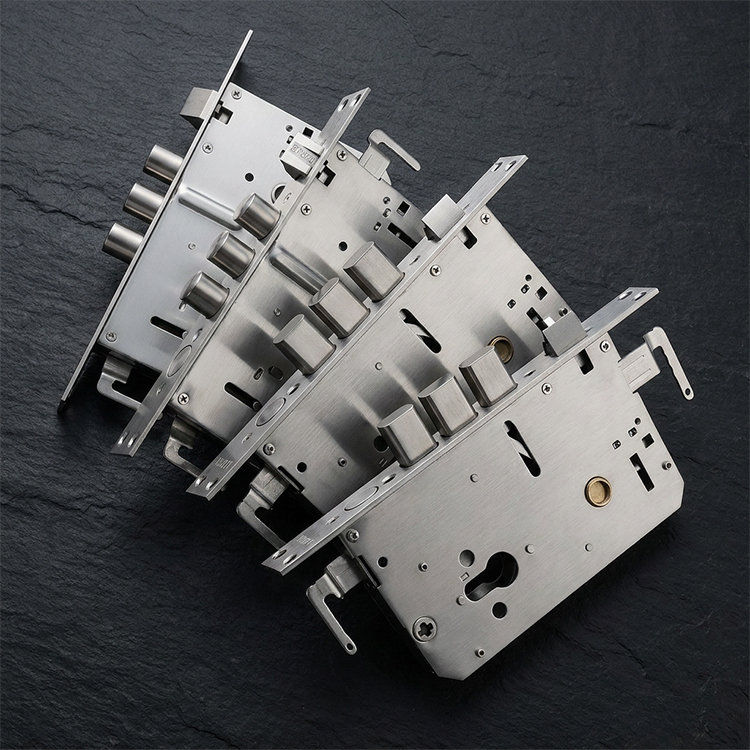
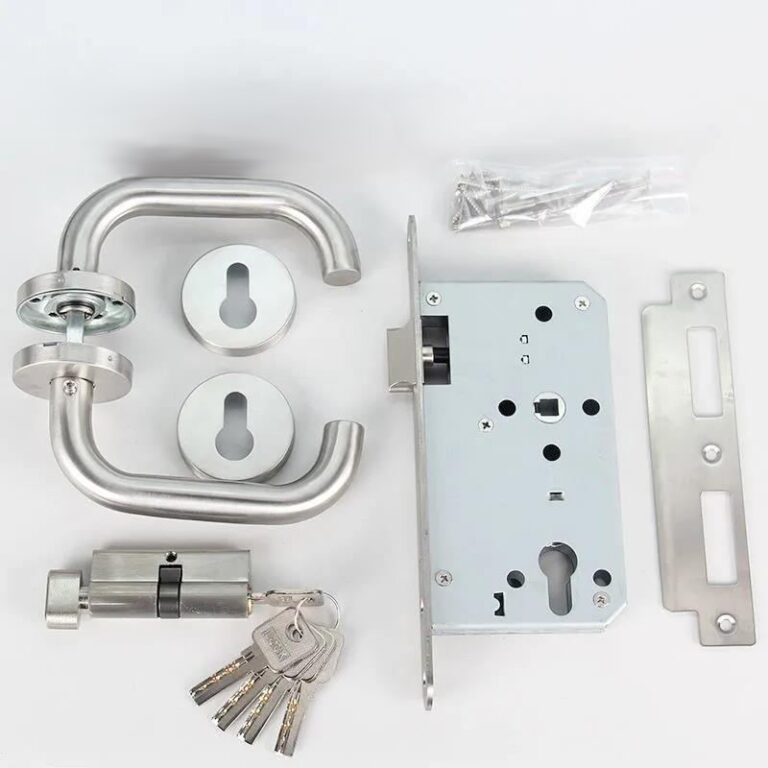
Looking for hardware solutions that meet European / American standards?
Use this guided inquiry modal to move from a generic quote form to a clearer technical conversation. Buyers can choose whether they need pricing, CAD / 3D files, or OEM / ODM support before sharing contact details.
Compatibility-first design across door / window systems
Repeatable production with clear inspection checkpoints
Documentation and change control for long-running programs
Responsive engineering support for fit and field feedback
The Uncomfortable Answer: No, More Locking Points Are Not Always Better
More is easy.
That is nonsense.
I have seen buyers approve a five-point or seven-point multi-point locking system because the catalog drawing looked stronger, while the actual door profile, keeper reinforcement, gasket pressure, hinge geometry, and installer tolerance were all quietly working against the lock before the first shipment left the factory. What exactly did the extra hooks solve?
The hard truth: a multi-point locking system is only as strong as the weakest part of the door assembly. Not the prettiest hook. Not the longest faceplate. Not the most dramatic cutaway image in a sales deck.
A good multipoint door lock spreads force across the frame. A bad one spreads failure across the frame.
That difference matters.
For anyone sourcing aluminum doors, sliding systems, premium entrance doors, or OEM hardware programs, the smarter place to start is not “how many locking points can I add?” It is whether the door can actually carry the force. That is why I would first map the door profile against proven multi-point lock systems and then review the gearbox, keeper layout, handle force, hinge position, and corrosion exposure as one working system.
The Data Does Not Reward Locking-Point Theater
The security industry loves simple claims. “Five points are safer than three.” “More hooks mean more protection.” “Maximum locking points equal maximum security.”
I do not buy it.
According to the FBI’s UCR Summary of Reported Crimes in the Nation, 2024, U.S. property crime decreased an estimated 8.1% from 2023 to 2024, and burglary decreased an estimated 8.6%. The same report still estimated 5,986,400 property crime offenses in 2024, with a property crime rate of 1,760.1 per 100,000 inhabitants. That is not an argument for decorative hardware. That is an argument for tested assemblies.
The U.S. Department of Justice COPS guide on Burglary of Single-Family Houses makes a point many hardware sales teams dislike: door security may be influenced as much by the sturdiness of the door as by the lock, and there is no clear evidence that more elaborate lock security always reduces burglary. That sentence should be printed above every procurement desk.
So where does that leave us?
It leaves us with engineering. Boring, measurable, repeatable engineering.
The UK’s Approved Document Q does recognize multipoint locking systems for secure doorsets, but it does not say “add unlimited locking points and call it done.” It references standards such as PAS 3621, PAS 8621, PAS 10621, PAS 24, BS 3621, and BS EN 356 because the assembly, egress logic, glazing, letter plate, hinge bolts, and lock behavior all matter together.
And that is the point.
A multi-point lock system should be specified like a safety mechanism, not a jewelry accessory.
Table of Contents
3 Point vs 5 Point Lock: The Comparison Buyers Actually Need
A three-point system usually locks at the center, top, and bottom. A five-point system may add extra hooks, rollers, bolts, or compression points along the lock side. In theory, the five-point system gives better frame engagement, more compression, and stronger resistance to prying.
In theory.
In the field, I ask a meaner question: can the door still operate smoothly after transport, installation, thermal movement, seal compression, chloride exposure, and 20,000 angry user cycles?
Because if it cannot, the extra locking points are just extra complaint points.
Feature
3-Point Lock System
5-Point Lock System
What I Actually Care About
Typical locking locations
Top, center, bottom
Top, upper-mid, center, lower-mid, bottom
Whether every point engages cleanly without handle abuse
Security value
Good when keepers and frame are reinforced
Higher potential when the door is tall, exposed, or flexible
Force path into the frame, not point count
User feel
Usually lighter handle force
Can feel heavier if poorly aligned
Operating torque under gasket load
Installation tolerance
More forgiving
Less forgiving
Keeper adjustability and hinge accuracy
Failure risk
Fewer parts to misalign
More rods, cams, hooks, and keepers to tune
Field service access
Best use case
Standard entrance doors, moderate heights, stable frames
Tall doors, premium systems, high wind exposure, better compression needs
Full assembly validation
Worst use case
Weak frame or low-security cylinder
Cheap profile, poor installation, no reinforcement
Marketing-led specification
The ANSI/BHMA A156.37 – 2025 Multipoint Locks standard is more useful than most sales claims because it talks about operational tests, strength tests, cycle tests, security tests, and finish tests. BHMA notes that Grade 1 multipoint locks must pass one million opening-and-closing cycles and a 1,350-pound Grade 1 bolt strength test with all latching points engaged. That is the kind of language I respect.
Not “premium feel.”
Not “European style.”
Proof.
The Locking Point Myth That Keeps Creating Warranty Claims
Here is my controversial opinion: the industry has oversold locking points because they are easy to count and easy to photograph.
A hook is visible. Tolerance is not. A roller looks impressive in a brochure. Gasket compression drift does not. A 5-point label sounds expensive. A badly seated keeper sounds like the installer’s problem.
But buyers who have handled enough field claims know what really happens.
The customer says the handle is stiff. The installer adjusts the keeper. The door works for three days. Then the slab moves, the frame settles, the bottom hook drags, the top point misses by 2 mm, and suddenly the “high-security” multipoint door lock feels cheap.
I have watched this story play out with aluminum doors, uPVC doors, large balcony doors, hotel doors, and slim-frame systems where the design team wanted thin sightlines but still expected the lock to behave like it was bolted into a reinforced steel frame.
That is fantasy.
If the gearbox is the heart of the system, the door profile is the skeleton. Weak skeleton, sick heart. Before adding extra points, I would review the lock boxes and gearboxes against actual spindle height, backset, travel, faceplate width, rod movement, and handle force.
Where More Door Locking Points Really Help
More locking points can help. I am not arguing for cheap locks or lazy specifications.
They help when the door is tall. They help when wind pressure matters. They help when seal compression has to be consistent along the edge. They help when the frame reinforcement is real, the keepers are properly fixed, and the hinge side is not being ignored.
They also help when the door is part of a climate-heavy project. Salt air, cold winters, humid coastal sites, and high UV exposure punish bad material pairings fast. Stainless steel 304 may be fine in one project; stainless steel 316 may be smarter near chloride-heavy coastal exposure. Zinc alloy, carbon steel, aluminum, nylon sliders, POM guides, EPDM gaskets, and surface coatings all interact.
Corrosion is chemistry.
If NaCl, trapped water, galvanic pairing, and scratched coatings are part of the site reality, then adding two more locking points without solving the material stack is not security. It is delayed embarrassment. For global projects, I would pair this article with climate-ready multi-point lock engineering before approving a single “marine-grade” claim.
The Parts Nobody Wants to Discuss: Hinges, Handles, and Human Abuse
A multi-point lock system does not live alone.
The handle decides what the user feels. The hinge decides whether the sash stays where the lock designer expected it to stay. The keeper decides whether locking force becomes security or friction. The fastener decides whether the frame can accept load. The installer decides whether the whole thing survives reality.
That last part hurts.
I have a simple rule: if a five-point lock needs a heroic installer to make it work, the design is not mature.
The handle should not become a wrench. The user should not need shoulder pressure to lift the lever. A child, an elderly user, or a hotel guest should not have to “learn the trick.” That is why I would review door and window handles as part of the lock decision, not after it.
And do not ignore the hinge side. Prying does not politely attack only the lock side. A door with five lock-side points and weak hinges is still a compromised assembly. If the hinge line sags, the locking points drift. If the locking points drift, the gearbox suffers. If the gearbox suffers, the handle gets blamed.
My Field Checklist Before I Believe a “Best Multi-Point Lock System” Claim
The best multi-point lock system is not the one with the most hooks. It is the one that still works after the brochure is gone.
Before I accept a 3-point, 5-point, or 7-point design, I want answers to these questions:
Does every locking point carry useful load?
A locking point that barely enters the keeper is decoration. A locking point that over-compresses the gasket is a future service call. A locking point that depends on a perfectly square opening is a trap.
Is the gearbox strong enough for real handle abuse?
People do not operate doors gently. They lift handles while pushing the door. They force keys. They slam panels. They pull before unlocking. If the gearbox, rods, and cams cannot survive ugly use, the lock is not ready.
Is the cylinder the weak spot?
A multi-point door lock security claim can collapse if the cylinder is poor. Anti-pick, anti-drill, anti-snap, controlled key systems, and cylinder protection may matter more than adding another roller.
Are the keepers adjustable and reinforced?
A keeper screwed into weak aluminum without backing, reinforcement, or proper fastener bite does not impress me. It just gives the hook somewhere theatrical to land.
Has the whole assembly been tested?
I do not care if the loose lock body passed something on a bench. I want door profile, frame, gasket, hinge, handle, cylinder, lockcase, rods, keepers, screws, and installation instructions tested as an assembly. For this reason, I would keep hardware compliance verification close to any serious purchasing conversation.
When a 5-Point Lock Is Worth It
A 5-point lock is worth considering when the door is tall, exposed, heavy, flexible, or expected to deliver better weather sealing and stronger resistance against edge separation.
That is the clean version.
The rougher version is this: if the door has enough structure to benefit from extra locking points, use them. If not, stop pretending. A five-point lock in a weak door is like putting racing brakes on a cracked bicycle frame.
Use more locking points when:
The door height creates edge bowing risk
Wind load or air-tightness performance matters
The project needs better compression along the lock side
The frame has reinforcement at every keeper location
The supplier can document cycle testing and strength testing
The installation team can adjust and service the system
The corrosion specification matches the project exposure
Avoid extra locking points when:
The profile is too narrow or weak
Keeper reinforcement is vague
The handle force is already high
The door has poor hinge control
The project has no maintenance plan
The supplier cannot provide test evidence
The buyer is only chasing a marketing number
FAQs
What is a multi-point locking system?
A multi-point locking system is a door or window locking mechanism that secures the sash or door leaf at several frame locations through one handle, key cylinder, or gearbox action, using hooks, rollers, bolts, cams, or rods to spread holding force and improve compression when the full assembly is properly engineered.
In plain language, it locks the door in more than one place. But the phrase only means something when the locking points, keepers, frame, hinges, gasket, and operating force work together.
Are more locking points better in a multi-point lock system?
More locking points are better only when the door profile, frame reinforcement, keeper layout, hinge stability, gearbox travel, and installation tolerance can support the extra engagement points without increasing friction, handle force, misalignment, or service risk across real operating conditions.
So no, I would not automatically choose five points over three. I would choose the system that proves better performance under the actual door geometry.
How many locking points should a door have?
A door should have enough locking points to control edge separation, seal compression, and forced-entry resistance without overloading the handle, gearbox, rods, keepers, hinges, or frame, which means the right number depends on door height, material, exposure, compliance target, user type, and installation tolerance.
For many stable doors, three points are enough. For taller or more exposed doors, five points may make sense. For weak frames, extra points can make things worse.
Is a 3 point lock better than a 5 point lock?
A 3 point lock is better than a 5 point lock when the door is smaller, structurally stable, easier to align, and does not need extra compression points, while a 5 point lock is better when the assembly is tall, exposed, reinforced, well-tested, and able to carry additional locking loads.
The wrong five-point system can feel worse, fail faster, and cost more to service than a disciplined three-point system.
What makes multipoint door lock security reliable?
Reliable multipoint door lock security comes from verified assembly performance: strong frame reinforcement, accurate keeper placement, durable gearbox travel, corrosion-controlled materials, compatible handles and cylinders, stable hinges, tested operating force, and documented compliance evidence rather than a simple count of hooks, bolts, rollers, or locking points.
That is why I keep saying the system matters more than the number. Count parts after proving force paths.
Your Next Steps: Specify the System, Not the Myth
Do not ask a supplier, “How many locking points does it have?”
Ask better questions.
Ask what the gearbox travel is. Ask what the keeper tolerance is. Ask whether the five-point version has been tested in your exact profile. Ask how the lock behaves after cycle testing, salt spray exposure, gasket compression, hinge movement, and field adjustment. Ask what fails first.
And then ask for proof.
For OEM buyers, aluminum door brands, system houses, and project hardware teams, the smartest move is to review the full door assembly before chasing a bigger locking-point count. Start with the actual multi-point lock system options, confirm the gearbox and handle architecture, check hinge stability, and demand compliance documentation before approving production.