Looking for hardware solutions that meet European / American standards?
Use this guided inquiry modal to move from a generic quote form to a clearer technical conversation. Buyers can choose whether they need pricing, CAD / 3D files, or OEM / ODM support before sharing contact details.
Compatibility-first design across door / window systems
Repeatable production with clear inspection checkpoints
Documentation and change control for long-running programs
Responsive engineering support for fit and field feedback
I have seen buyers obsess over finish color, handle shape, and sample-room smoothness while ignoring the ugly mechanical facts that decide whether sliding door locks survive six months of real use: panel weight, stile depth, hook engagement, keeper tolerance, roller condition, gasket compression, and chloride exposure.
So why do so many purchasing teams still approve locks from a photo?
A multi-point lock for a sliding door is not just “more locking points.” That is the cheap brochure version. A real multi-point lock for sliding door applications spreads resistance across the panel, reduces lift risk, controls rattle, and—when the rest of the system is engineered properly—helps the door close with repeatable compression instead of one lonely latch pretending to do all the work.
Here is my hard opinion: the best sliding door locks are rarely the ones that look most impressive on the product page. They are the ones that match the door profile, installation method, climate, usage cycle, and service plan. If you are sourcing for aluminum sliding doors, start by reviewing the complete multi-point lock systems category, then compare it against the actual extrusion drawing, not just the marketing description.
Security Is Not a Lock. It Is a System.
The FBI’s 2024 reported crime release says more than 16,000 U.S. agencies submitted data covering 95.6% of the U.S. population, with detailed data on over 14 million criminal offenses. That does not mean every patio door is under siege. It does mean lazy security assumptions are expensive, especially when the opening is large, glazed, and located at the rear of the property.
But let’s be precise. A sliding patio door multi-point lock cannot rescue a weak frame, poor roller track, loose keeper, thin stile, exposed fastener, or glass package that belongs in a budget interior partition. I do not care how many hooks the catalog claims. If the keeper screws bite into weak material, the lock is theater.
The industry loves the phrase “sliding glass door security lock.” I hate it when it is used loosely. Security should mean measured resistance to lifting, prying, forced displacement, and unauthorized operation—not just a lock cylinder with a nice key.
A better question is this: where does the force go when someone attacks the panel?
For serious sliding systems, look at the hardware stack as a chain:
Lock body or gearbox
Hook bolts or locking tongues
Keeper plates
Profile wall thickness
Roller and track condition
Anti-lift blocks
Handle and cylinder interface
Fastener material
Drainage and corrosion protection
That is why I would pair any lock review with lock boxes and gearboxes early in the sourcing conversation. The gearbox is where smooth operation either stays smooth—or starts dying quietly.
Table of Contents
The Specification Table Buyers Should Use Before Asking for Price
Most RFQs are backwards. Buyers ask for unit price first, then wonder why tolerances, finishes, and service life collapse later.
Poor handle pairing creates bad torque and user abuse
Choose the lock and handle together
Serviceability
Replaceable lockcase, accessible keeper adjustment, spare parts
Field repairs decide lifetime cost
No spare parts plan, no approval
Small parts decide.
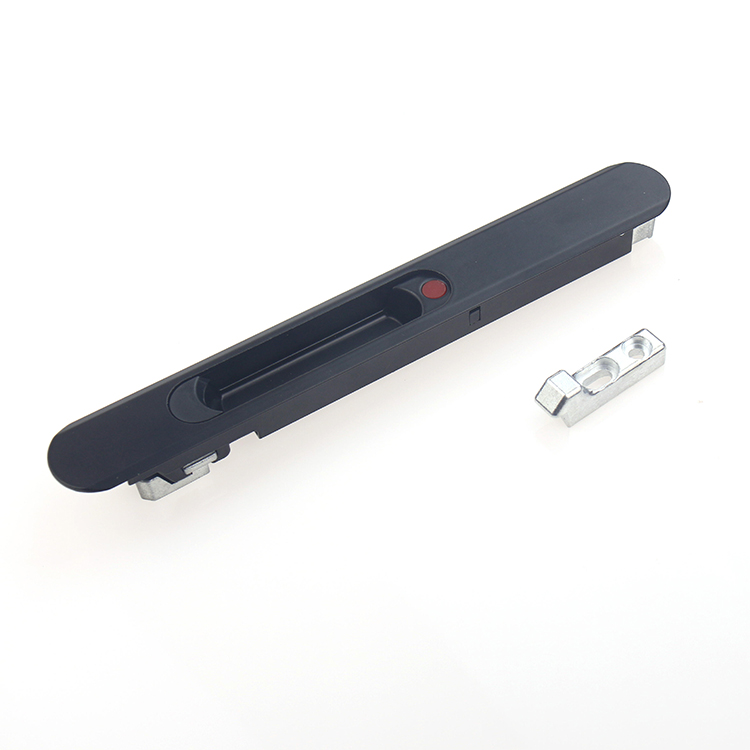
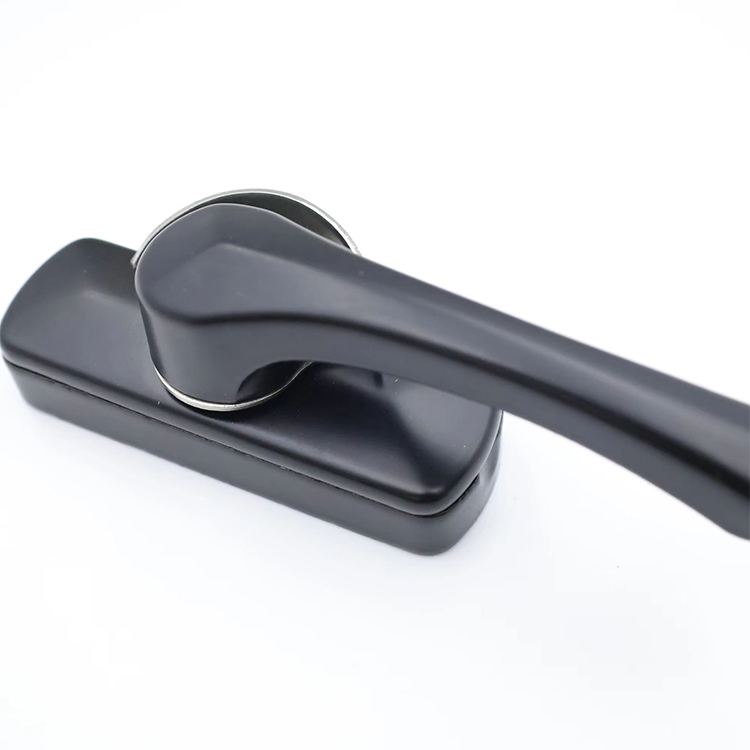
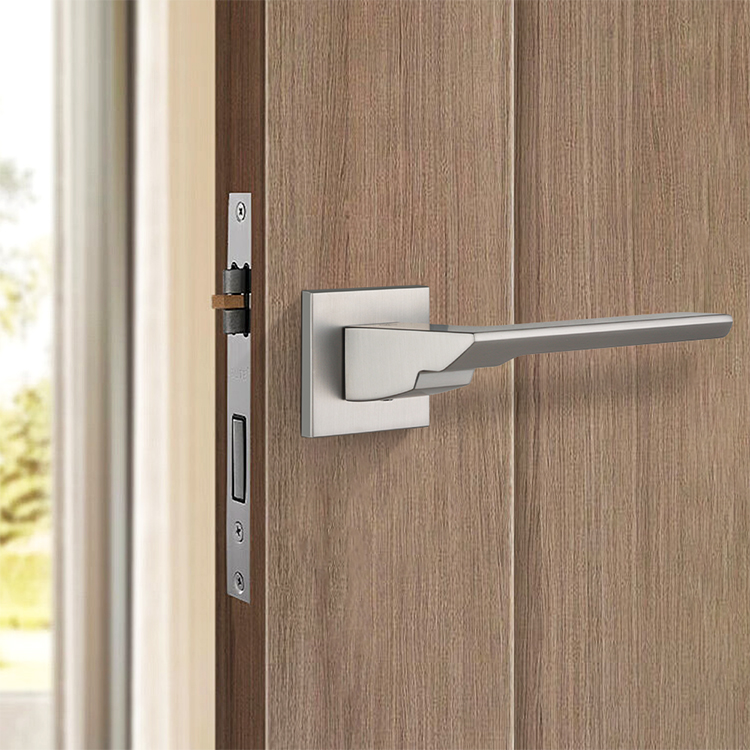
And when you are matching a multipoint patio door lock to a recessed or low-profile design, do not treat the handle as cosmetic trim; the interface between the handle, spindle, cylinder, and lockcase controls how users actually apply force every day. For that reason, I would review door and window handles beside the lock body, not after it.
The Mortise Problem Nobody Wants to Admit
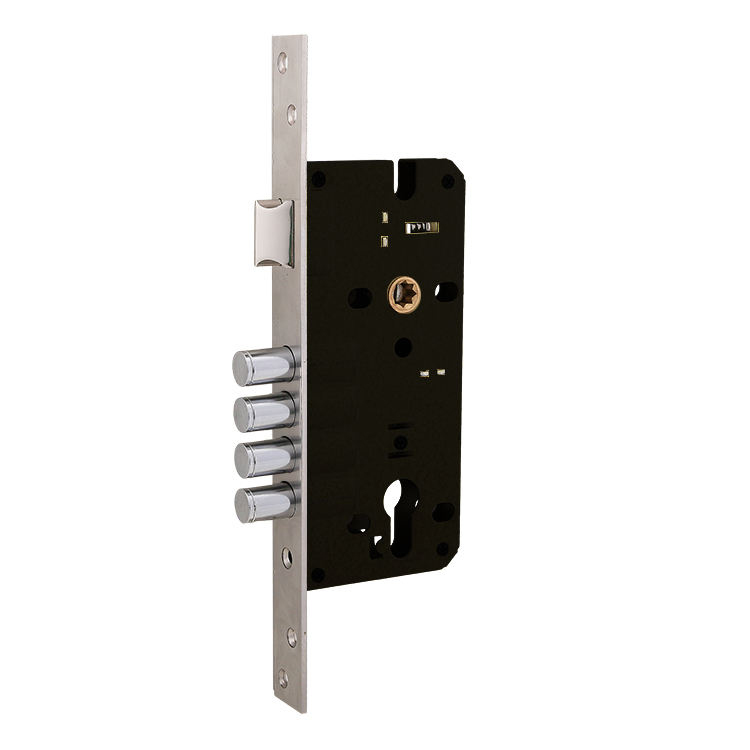
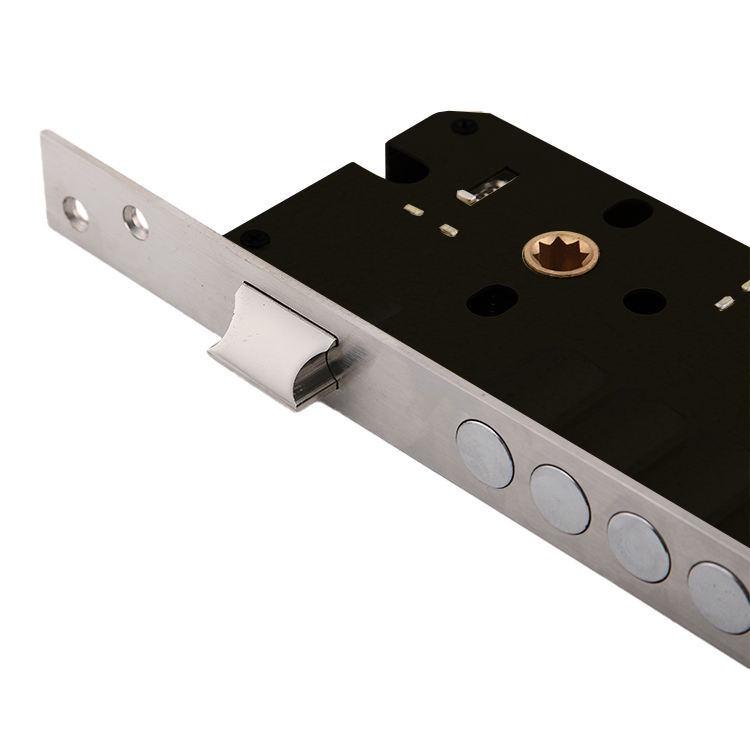
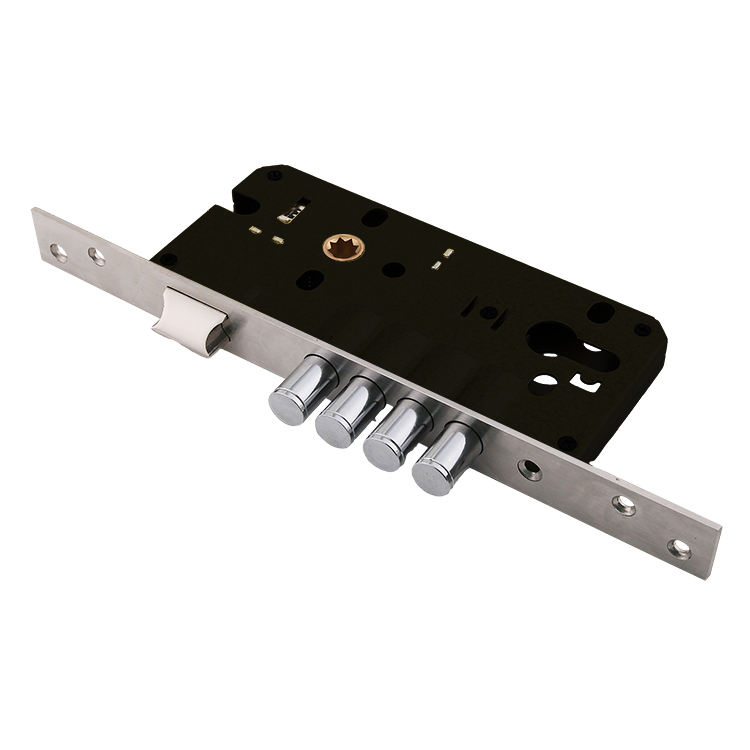
A multi-point mortise lock for sliding glass door systems can be excellent. It can also be a quiet disaster.
The mortise cut is where buyer fantasy meets aluminum reality. If the stile is too narrow, the wall thickness too thin, or the reinforcement too weak, the lock body steals structural capacity from the very profile that must resist panel movement. Then the installer blames the lock. The lock supplier blames the door factory. The door factory blames the site.
Everybody performs innocence.
Before approving a multi-point mortise lock, I would ask for five things:
Full lock body dimensions
Required cutout size
Hook throw distance
Keeper adjustment range
Fastener position and minimum profile wall thickness
If the supplier cannot provide those numbers, walk away. Politely, if you must.
For aluminum systems, the better path is to study how the full mechanism distributes force. Foshan Chier’s article on designing a reliable multi-point lock system for aluminum doors is a useful internal reference because it frames the lock around load path, not catalog appearance.
Energy, Air Leakage, and the Lock Nobody Credits
Security gets the attention. Air leakage gets the invoice.
The National Fenestration Rating Council explains that its label helps compare windows, doors, and skylights across performance categories, including U-factor, solar heat gain coefficient, condensation resistance, and air leakage; for windows, NFRC shows air leakage as a rating category with a range of ≤ 0.3.
This matters because a sliding door lock does more than resist theft. On taller panels, coastal projects, or energy-focused builds, the lock helps keep the panel pulled into the seal line. Not magically. Mechanically.
But here is the catch: multi-point locks only improve air and water performance when the frame, rollers, gasket, and keeper adjustment support the closing load. A badly adjusted sliding door with three locking points is still a badly adjusted sliding door.
I would connect this topic directly to multi-point locks for air tightness targets because the article makes the right argument: gasket compression is a system behavior, not a lock feature printed on a box.
What the 2025 Pella Recall Teaches Hardware Buyers
This one bothered me.
In February 2025, the U.S. Consumer Product Safety Commission announced a recall involving Pella Reserve and Lifestyle sliding patio doors and windows with automated shades because accessible button cell or coin batteries violated federal safety rules under Reese’s Law, creating an ingestion hazard for children. The recall covered about 340 units, with sliding doors sold for roughly $5,000 to $20,000 depending on model.
Notice what failed there. It was not a simple “lock broke” story. It was integration risk: electronics, user access, child safety, warning labels, and product governance.
That is the lesson for sliding door locks too. The lock is no longer isolated. It may interact with sensors, automation, child locks, flush handles, recessed pulls, soft-close dampers, and narrow-frame architecture. A buying team that treats hardware as a commodity SKU is begging for a field problem.
For narrow aluminum sliding systems, something like a double-hook configuration can make sense because it improves engagement in limited space, but only when the stile geometry allows it. That is where a product class such as an ultra narrow sliding door double hook lock deserves attention—not because “double hook” sounds stronger, but because narrow profiles force hard mechanical compromises.
Testing Claims: Ask for the Boring Documents
The best suppliers are usually boring in the right places.
They talk about cycles, torque, corrosion, keeper adjustment, load path, traceability, and sample validation. Weak suppliers talk about “premium quality” and hope you stop asking questions.
ANSI/BHMA A156.36-2020, for auxiliary locks, includes dimensional criteria and five classifications of tests: operational, cycle, strength, security, and finish. BHMA also notes examples such as maximum operating torque, cycle testing, force resistance, corrosion, chemicals, abrasion, and sunlight exposure. See the BHMA A156.36 hardware highlight.
No, that does not mean every sliding door lock must be sold under that exact standard. But it does tell you how serious hardware people think: test categories, repeatability, and documented limits.
When reviewing sliding door locks, I would ask for:
Cycle test summary
Salt spray or corrosion test basis
Material declaration for exposed parts
Finish specification
Lockcase drawing
Keeper drawing
Installation tolerance range
Packaging method for export
Spare-part availability
Batch traceability process
If the lock is for coastal projects, ask about 304 vs 316 stainless steel and galvanic compatibility. If it is for cold climates, ask about lubricant behavior and operating force at low temperature. If it is for a child-heavy residential project, ask how the lock prevents easy unintended operation without trapping occupants.
How I Would Choose the Best Locks for Sliding Doors
I would not start with “best.”
I would start with failure mode.
For a high-traffic residential sliding patio door, I want smooth handle feel, reliable hook engagement, anti-lift support, corrosion-resistant exposed parts, and easy keeper adjustment. For a luxury lift-slide system, I care more about weight, operating sequence, and compression consistency. For a narrow aluminum slider, I care about mortise depth and profile strength. For coastal apartments, I care about chloride exposure before I care about finish color.
The best locks for sliding doors are the locks that answer the project’s biggest risk first.
If security is the risk
Choose multi-point engagement with strong keepers, anti-lift support, and protected fasteners. Do not oversell the lock if the glass and frame are weak.
If air leakage is the risk
Choose a system that pulls the panel evenly into the gasket line and allows post-installation adjustment. A lock cannot compensate for a warped frame.
If corrosion is the risk
Specify 316 stainless steel for exposed and stressed parts where salt exposure is meaningful. Be suspicious of decorative plating over cheap ferrous parts.
If service cost is the risk
Choose a lockcase and keeper system that can be adjusted, replaced, and sourced again after the first production run. A beautiful orphan part is still an orphan.
If appearance is the risk
Use flush or recessed hardware, but confirm cutout dimensions and hand clearance. Minimalist hardware often creates maximum engineering headaches.
For finishing the system around the lock—keepers, bolts, rollers, and supporting components—review window and door accessories as part of the same approval process. Accessory mismatch is one of those small mistakes that becomes expensive only after shipment.
The Buyer’s Field Checklist
Before you approve a multi-point lock for sliding door production, run this checklist:
Does the lock match the exact sliding door profile?
Has the mortise depth been checked against stile geometry?
Are the keeper positions adjustable?
Is hook engagement measurable?
Are anti-lift features included elsewhere in the system?
Does the handle create comfortable operating torque?
Are exposed parts suitable for the climate?
Are fasteners compatible with the base material?
Has the supplier provided drawings, not just photos?
Can the same lock be supplied consistently for repeat orders?
Are spare parts available?
Has packaging been planned for export protection?
Has the lock been tested with the actual door, not only on a bench?
That last line matters most. Bench testing is useful. Door-system testing is where the truth leaks out.
FAQs
What is a multi-point lock for a sliding door?
A multi-point lock for a sliding door is a locking system that secures the moving panel at two or more engagement points, usually through hooks, bolts, tongues, or mortise mechanisms, so the door resists lifting, spreading, rattling, and uneven seal compression better than a basic single-point latch. In practice, it must be matched to the door profile, keeper layout, roller condition, and handle hardware.
Are multi-point locks better than standard sliding door locks?
Multi-point locks are better than standard sliding door locks when the door is large, exposed, high-value, or expected to deliver stronger security, tighter closure, and better long-term alignment, but they are not automatically better if the frame, rollers, keepers, and installation tolerances are poorly designed. A cheap multi-point system can fail faster than a well-matched single-point lock.
How do I choose a sliding patio door multi-point lock?
To choose a sliding patio door multi-point lock, confirm the door profile, panel weight, stile depth, locking-point layout, hook throw, keeper adjustment range, handle compatibility, corrosion exposure, and service plan before comparing price or finish. The right lock is the one that fits the system’s failure risks, not the one with the most aggressive catalog language.
What is the best lock for a sliding glass door?
The best lock for a sliding glass door is usually a properly matched multi-point hook or mortise system with anti-lift support, strong keepers, corrosion-resistant exposed parts, smooth handle operation, and documented compatibility with the exact door profile and frame assembly. For narrow aluminum systems, double-hook designs may be useful when profile depth is limited.
Can a multi-point lock improve sliding door security?
A multi-point lock can improve sliding door security by distributing locking resistance across several points, reducing panel movement, improving hook engagement, and making lifting or spreading attacks harder when the frame, glass, keepers, fasteners, and anti-lift components are also properly specified. It should be treated as one layer of the security system, not the entire defense.
Your Next Steps
Do not buy sliding door locks from a catalog page alone.
Send the supplier your door profile drawing, panel size, panel weight, target market, climate exposure, handle style, security expectation, and annual volume. Ask for the lock body drawing, keeper drawing, material specification, finish data, test summary, and spare-part plan.
Then test the lock in the actual sliding door assembly.
If you are sourcing for OEM, ODM, wholesale, or export projects, start with a system-level review of sliding door locks and multi-point lock systems and build the specification around fit, force, corrosion, serviceability, and repeatable production—not around the cheapest lock that looks acceptable in a sample box.