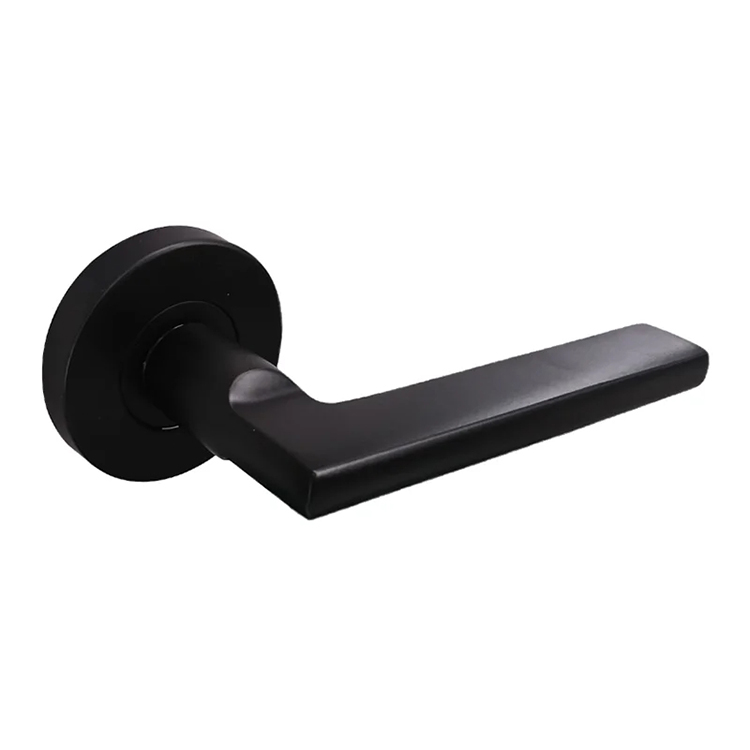
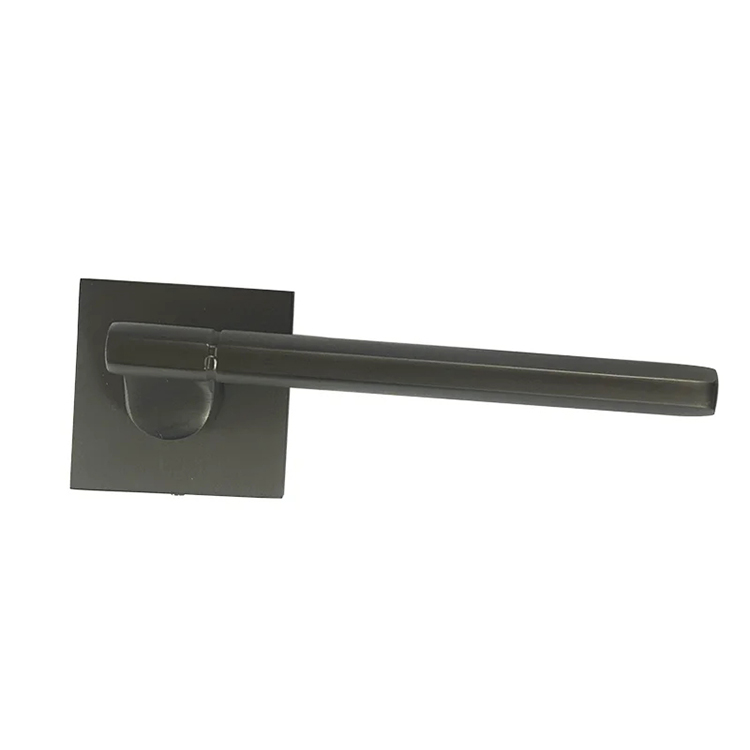
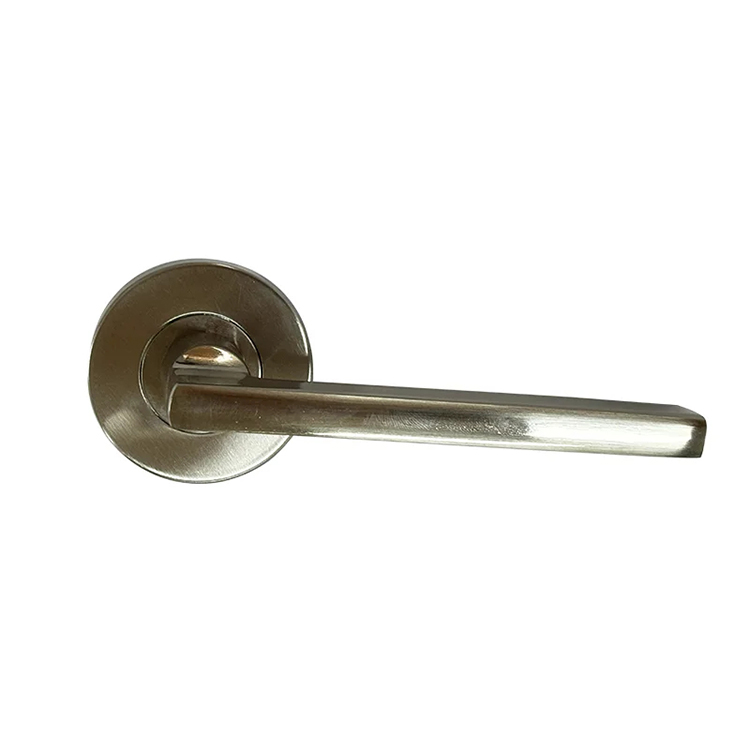
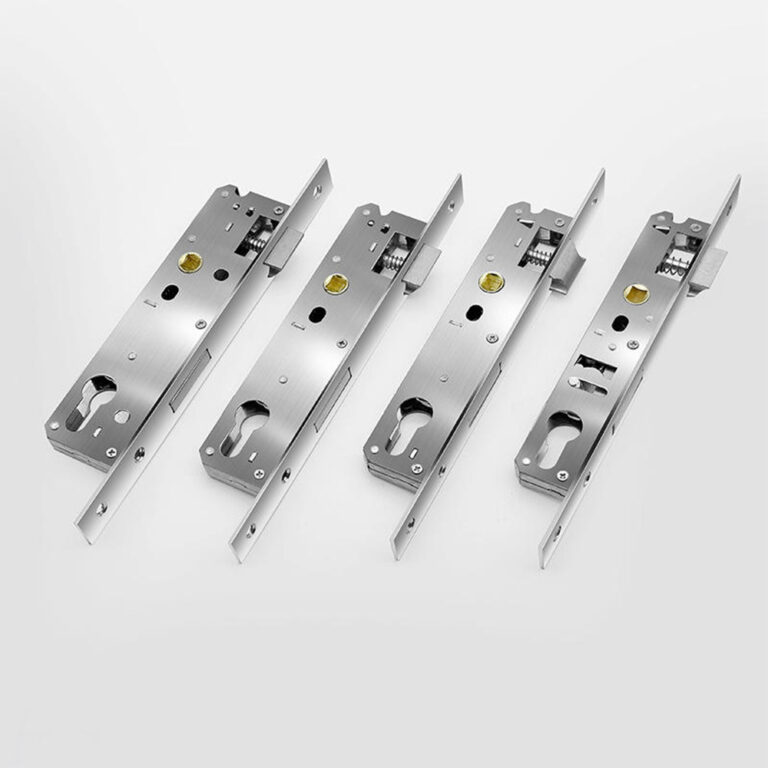
Looking for hardware solutions that meet European / American standards?
Use this guided inquiry modal to move from a generic quote form to a clearer technical conversation. Buyers can choose whether they need pricing, CAD / 3D files, or OEM / ODM support before sharing contact details.
Compatibility-first design across door / window systems
Repeatable production with clear inspection checkpoints
Documentation and change control for long-running programs
Responsive engineering support for fit and field feedback
A lever can sit perfectly level in a showroom photograph, carry the right finish code, match a 92 mm PZ backplate, and still collapse into an embarrassing droop once its mass, spindle friction, and lock-case return spring meet on the actual door.
So why do buyers keep approving the handle and lock as separate products?
The real issue in sprung vs unsprung door handles is not which version sounds more substantial. It is where the return torque comes from, how much torque is available, and whether that force remains sufficient after the hardware has been installed, tightened, cycled, contaminated, and worn.
My blunt view is that “sprung” has become a dangerously lazy purchasing description. It tells us that a spring exists. It does not tell us the spring torque, working angle, fatigue life, friction allowance, handle mass limit, or compatibility with a particular mortice lock.
That paperwork gap causes drooping levers, incomplete latch projection, stiff operation, warranty arguments, and entire batches of handles that look right but behave badly.
The Return Mechanism Is a System, Not a Handle Feature
A sprung door handle contains a spring cassette, torsion spring, or another return element inside the rose or backplate. After the lever is pressed down, this mechanism helps bring it back to its horizontal rest position.
An unsprung door handle has no independent return spring. The handle, spindle, and opposite lever must be returned by the follower spring inside the latch, mortice lock, or multipoint gearbox.
There is also a middle category: spring-assisted furniture. Its internal spring contributes return torque but may not have enough force to return the handle fully without assistance from the lock case.
This is not informal trade language. BS EN 1906:2012, published on 31 August 2012 and listed by BSI as current but under review, covers operating torque, return mechanisms, free play, durability, strength, and corrosion resistance for both sprung and unsprung lever furniture. Its operation classifications distinguish Type A spring-assisted furniture, Type B spring-loaded furniture, and Type U unsprung furniture.
The simple torque equation buyers should understand
The return condition can be expressed as:
Available return torque = handle spring torque + lock spring torque − assembly friction
For reliable operation:
Available return torque must exceed the torque required to lift the lever assembly
The required torque rises when:
The lever becomes longer.
The lever becomes heavier.
More mass sits farther from the spindle axis.
The rose bearing drags.
Through-bolts distort the backplate.
The spindle binds inside the follower.
The two handle bases are misaligned.
Powder coating, plating, dirt, or worn bushes increase friction.
A long solid lever produces a larger turning moment than a short hollow lever, even when both products fit the same 8 mm spindle. Basic mechanics explains why: torque equals force multiplied by the perpendicular distance from the rotational axis.
Pretty handles are heavy.
And when a buyer places a long, solid unsprung lever on a lock case designed around lighter furniture, the lock spring is forced to carry a load it was never selected to manage. The lever may return during the first sample inspection, then begin sitting several degrees below horizontal after the assembly beds in.
Would I approve that combination because it returned correctly five times on a desk? No.
Sprung vs Unsprung Door Handles Compared
Handle type
Source of return force
Suitable lock arrangement
Main advantage
Common failure mode
What must be verified
Sprung handle
Spring inside the rose or backplate, assisted by any lock spring
Standard latch or lock case with compatible follower action
Less dependent on lock-case spring strength
Excessively stiff action when paired with a strong lock spring; failed spring cassette
Combined operating torque, return angle, spring life, internal stop and lock compatibility
Spring-assisted handle
Handle spring and lock-case spring work together
Lock or latch designed to provide part of the return force
Useful for heavier decorative levers
Lever stops short of horizontal because neither spring provides enough torque alone
Actual handle mass, working angle, combined return reserve and latch travel
Unsprung handle
Lock-case or latch follower spring only
Heavy-spring lock case specifically approved for unsprung furniture
Simpler handle construction and cleaner architectural detailing
Lever droop, weak return or incomplete latch projection
Lock follower torque, lever length, lever mass, friction and full assembly cycling
The HOPPE explanation of the EN 1906 classification key confirms the A, B, and U operation categories. But the letter at the end of a classification code still does not approve an arbitrary handle and lock combination. It identifies the furniture type, not every mating lock case that can safely operate it.
Sprung handle with a sprung lock case
This is common and often reliable. It is not automatically ideal.
Both springs contribute return torque, which can produce a positive, sharp action. But adding two strong springs can also make the handle unnecessarily hard to depress. The spindle, follower, bearing surfaces, and spring cassette then experience the combined resistance on every cycle.
The hard truth?
More spring is not always better. The correct target is controlled return with acceptable operating force, not the most violent snap-back a factory can demonstrate.
Unsprung handle with a weak lock case
This is the combination most likely to droop.
The lock follower may return correctly without the handles fitted because it is lifting almost no external mass. Add two levers, a spindle, rose friction, fixing pressure, and a long centre-of-gravity distance, and that apparently healthy lock spring can become inadequate.
A bench test of the bare lock proves very little.
Spring-assisted furniture with a coordinated latch
EN 1906 recognises that especially heavy handles may need the combined action of a handle spring and latch spring. The standard preview also notes that these designs may use a restricted operating angle—often around 40 degrees—with a latch selected to retract fully within that travel.
That is coordinated engineering. It is not guesswork.
How to Match Door Handles to a Lock Case
I would not approve a sprung or unsprung handle from a product photograph, a finish sample, or a spreadsheet line that merely says “standard European lock.”
There is no useful universal lock.
1. Identify the handle operation category
Ask the supplier to state whether the furniture is:
Fully sprung
Spring-assisted
Unsprung
For tested products, request the complete EN 1906 classification rather than a cropped certificate logo. The eighth digit should identify the operating type.
Then ask a harder question: what return torque is available across the working angle?
Many sellers cannot answer it. That tells you something.
2. Identify the lock case, not merely the lock function
“Bathroom lock,” “mortice latch,” and “euro lock” describe broad functions. They do not identify the follower spring.
Record:
Manufacturer and model
Backset
Case depth
Follower size
Spindle size
Follower rotation angle
Latch withdrawal travel
Spring configuration
Suitability for sprung, assisted, or unsprung furniture
Mechanical locks and latches fall under a separate product family from lever furniture. BS EN 12209 guidance addresses the durability, strength, security, and function of mechanically operated locks, latches, and locking plates. A handle certificate cannot substitute for evidence covering the lock case.
3. Check the boring dimensions before testing return
Spring compatibility does not rescue a dimensional mismatch.
An 8 mm square spindle is common on UK external lever handles, but common is not universal. A casual measurement taken from the edge rather than the centre of an 8 mm spindle hole creates an error of about 4 mm. Two 92 mm PZ handles can also use different fixing centres, placing a through-bolt directly into the lock body.
For scale, the HOPPE Dallas 1643/2221/2210 example combines a 92 mm keyhole distance, an 8 mm spindle, and a stated 67–77 mm door-thickness range. One handle set. Three independent compatibility figures. Return type becomes another required figure, not a replacement for them.
4. Assemble the actual pair
Test the parts that will be supplied:
Interior and exterior handles
Production spindle
Production lock or latch
Correct through-bolts
Correct door or representative test block
Production bushes, washers, roses, plates, and grub screws
Tighten the fixings to the intended assembly condition. A loose display sample can return beautifully because the plates are floating. The same handle may bind when its bolts are tightened against a door skin or reinforced profile.
This is why CHIER’s door handle selection range asks buyers to compare door thickness, fixing centres, spindle connection, handing, and lock arrangement rather than selecting by lever shape alone.
5. Check more than horizontal return
A practical acceptance test should confirm:
The lever retracts the latch fully.
The latch projects fully when the lever is released.
The handle returns immediately without assistance.
The lever stops at the intended horizontal position.
Both sides behave consistently.
The spindle does not wind up, twist, or bind.
The action remains acceptable after repeated cycles.
Tightening the backplates does not change the result.
The lever returns from partial and full operating angles.
The assembly still works after realistic tolerance variation.
Do not ignore sound. Scraping, clicking outside the intended stop, delayed return, or a metallic “double snap” can reveal misalignment, spring interference, or an internal cassette fighting the lock follower.
6. Approve a controlled sample, not a verbal promise
For bulk orders, the approved sample should identify the handle, spring cassette, spindle, lock model, fixing arrangement, door thickness, and finish.
Then control those items during production.
CHIER’s hardware quality-control and testing process treats interface fit, operation, mounting centres, spindle or fork length, lock travel, and handing as critical-to-quality characteristics. That is the correct approach because a part can pass visual inspection and still fail as an assembly.
Evidence That Changes the Specification
The door hardware trade has plenty of opinion. We also have hard numbers.
EN 1906 tests the mechanism, not the marketing copy
BS EN 1906 covers return-mechanism torque, operating torque, free angular movement, durability, static strength, fasteners, and corrosion resistance. Its durability grades include 100,000 cycles for medium-frequency use and 200,000 cycles for high-frequency use. It also divides use into four categories, from cared-for residential doors to high-frequency doors exposed to violent treatment.
That 200,000-cycle figure matters.
A handle that returns during a ten-cycle factory demonstration has completed 0.005% of a 200,000-cycle endurance target. The demonstration may confirm basic assembly. It does not establish durability.
Accessibility rules punish excessive spring force
The U.S. Access Board’s ADA guidance for doors and gates states that operating hardware must permit one-hand use, avoid tight grasping, pinching, or wrist twisting, and operate with no more than 5 lbf. The hardware force is assessed separately from the continuous force used to swing the door.
England’s Approved Document M provides the accessibility baseline for buildings, and its guidance uses door-opening-force benchmarks of no more than 30 N from 0 to 30 degrees and 22.5 N from 30 to 60 degrees in applicable conditions. Those numbers measure door movement rather than lever return torque, but they expose the same design conflict: hardware must close and latch reliably without becoming unreasonably hard to operate.
So a violently over-sprung handle is not evidence of quality. It may be evidence that nobody checked usability.
Fire doors must overcome latch resistance
The Fire Safety (England) Regulations 2022 fire-door guidance says a fire door should close fully into its frame under its self-closing device, overcoming resistance from the latch or floor friction. The recommended check releases the door from fully open and again from approximately 15 degrees. Doors to stairways, lobbies, and corridors covered by the regulations require checks every three months.
The door closer performs the door-closing work. The handle and lock must still release and re-latch correctly.
And this is where poor handle return becomes more than an appearance complaint. A drooping lever may hold the follower partly rotated. That can reduce latch projection or prevent the mechanism from settling into its designed rest state.
BSI also makes an important distinction: EN 1906 performance alone does not prove suitability for a fire or smoke door. Fire-door suitability requires appropriate fire-performance evidence for the furniture and the complete doorset application.
Diagnosing Lever Droop Without Replacing Random Parts
Installers often replace the handle first because it is visible.
That can be the wrong diagnosis.
Test the lock case without the handles
Remove both handles and the spindle. Rotate the follower carefully with a suitable test spindle.
If the follower returns slowly, stops short, or feels gritty without any handle load, suspect the lock spring, follower bearing, contamination, or internal wear.
If the follower returns strongly when unloaded but struggles with the handles installed, suspect a handle-to-lock torque mismatch or assembly friction.
Test each handle away from the lock
A fully sprung handle should return through its own mechanism when tested correctly off the door. If one side returns and the other does not, inspect the spring cassette, stop, bush, and lever fixing.
An unsprung handle will not behave the same way. Do not reject it simply because it hangs downward when unsupported. That is its design.
Loosen the fixing bolts slightly
If return improves immediately, the assembly is binding.
Likely causes include:
Misaligned roses or backplates
Through-bolts passing too close to the lock case
Distorted door skins
A spindle that is too long
Unequal plate seating
Bushes compressed by excessive tightening
Fixing holes drilled off-axis
Fix the geometry. Do not specify a stronger spring to overpower bad installation.
Watch the latch bolt
Operate the lever slowly and release it while observing the latch.
The latch should project fully and positively. A lever that appears nearly horizontal can still leave the follower slightly rotated, particularly where the lever stop and lock stop do not agree.
Close enough fails.
FAQs
What is the difference between sprung and unsprung door handles?
Sprung door handles contain a return spring inside the rose or backplate, while unsprung door handles contain no independent return spring and depend on the latch or lock case to lift the lever back to its rest position after operation.
Spring-assisted furniture sits between the two categories. Its handle spring contributes torque, but the lock spring may still be needed to complete the return. EN 1906 identifies these arrangements as spring-loaded, unsprung, and spring-assisted furniture.
Do unsprung door handles need a sprung lock case?
Unsprung door handles need a lock case or latch with enough follower-spring torque to return the complete fitted lever assembly, including both handles, the spindle, bearing friction, and any misalignment; the word “sprung” alone is not proof that the lock has enough reserve for a long or heavy lever.
The lock manufacturer should confirm suitability for unsprung furniture. Where that evidence is unavailable, test the actual combination rather than assuming every mortice lock contains the same follower spring.
Can I use a sprung handle with a sprung lock?
A sprung handle can be used with a sprung lock case when the combined spring force remains within the acceptable operating range, returns cleanly, and does not make the lever excessively stiff; this is common, but the assembled pair should still be tested because two return springs add torque rather than automatically improving performance.
Check operating force, full latch withdrawal, horizontal return, spindle alignment, and cycle performance. For accessible doors, also review the applicable operating-force requirements.
Which lock case is best for unsprung handles?
The best lock case for an unsprung handle is a model whose manufacturer states that its follower spring can return unsprung furniture of the proposed lever length and mass, and whose complete handle-lock combination passes return, latch-retraction, durability, accessibility, and—where relevant—fire-door evidence requirements.
A “heavy spring” description is not enough. Request the lock model, test classification, maximum approved lever data, follower angle, spindle size, and sample evidence.
How do I test mortice lock compatibility?
Handle-to-lock compatibility is tested by assembling the actual handles, spindle, fixings, door thickness, and lock case, then checking full latch withdrawal, immediate lever return, horizontal rest position, low friction, and repeat performance from multiple operating angles without manually helping the lever or loosening the backplates.
Repeat the test after the fixings have been tightened correctly. Then cycle the assembly and inspect it again for droop, increased friction, reduced latch projection, free play, or spring noise.
Why does my door handle droop after installation?
Door-handle droop means the available return torque is lower than the combined load created by the lever weight, spindle, friction, misalignment, and lock mechanism, or that a spring or bearing component has already failed and can no longer restore the lever to its intended rest position.
Remove the handles and test the lock follower first. Then test sprung handles individually and reassemble the set while checking bolt pressure, spindle length, rose alignment, and latch projection.
Specify the Pair, Not the Parts
Stop buying a handle and a lock case as two unrelated SKUs.
Specify one working assembly.
Record the handle operation type, lever mass, lever projection, spindle, PZ centres, fixing centres, lock model, follower action, door thickness, operating force, return performance, cycle requirement, and any accessibility or fire-door evidence. Approve the physical combination before authorising volume production.
For a private-label or system-specific programme, use CHIER’s OEM and ODM door-hardware development process to align the handle base, spindle, handing, lock interface, samples, drawings, inspection criteria, and revision control before release.
And when requesting a technical review, send the handle and lock specifications together. Include photographs, drawings, door thickness, spindle details, mounting centres, lock identification, required quantities, finishes, and the intended application.