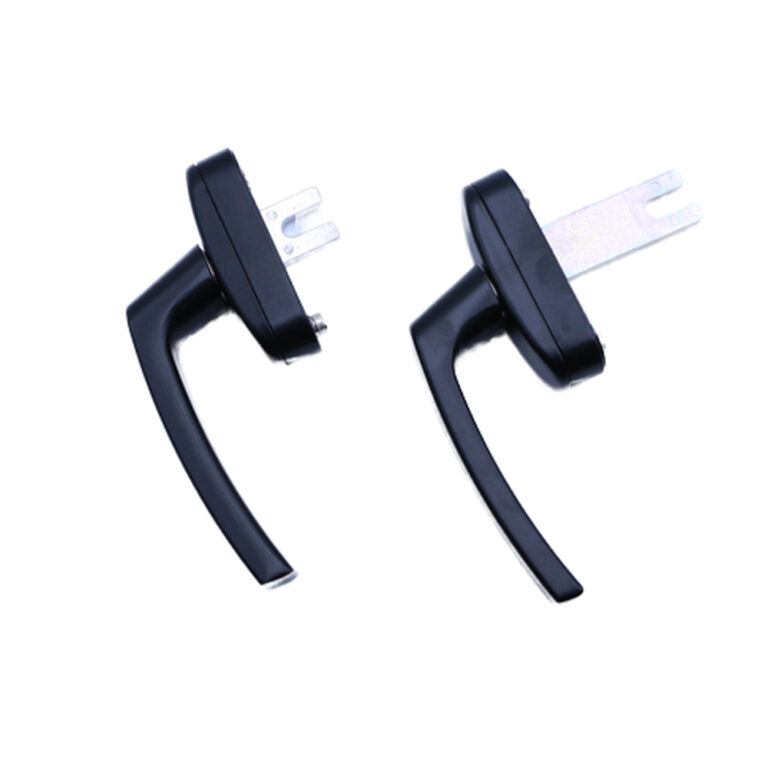
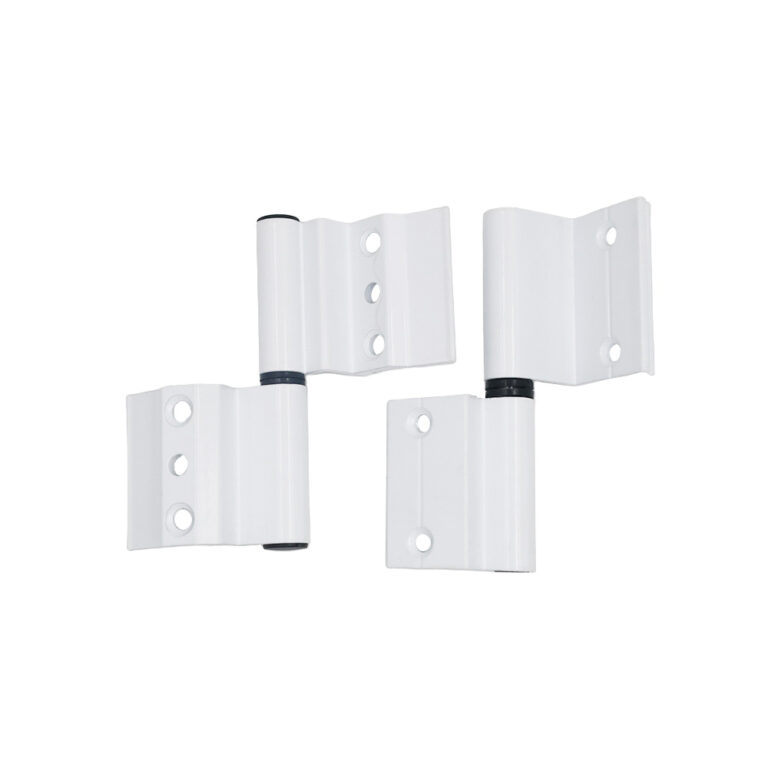
Looking for hardware solutions that meet European / American standards?
Use this guided inquiry modal to move from a generic quote form to a clearer technical conversation. Buyers can choose whether they need pricing, CAD / 3D files, or OEM / ODM support before sharing contact details.
Compatibility-first design across door / window systems
Repeatable production with clear inspection checkpoints
Documentation and change control for long-running programs
Responsive engineering support for fit and field feedback
The five labels in this title do not sit at the same technical level: espag and cockspur describe operating or locking interfaces, tilt-and-turn describes a complete sash-and-gearing system, while casement and sliding describe how the window itself moves.
So why do catalogues present them as interchangeable styles?
Because selling by appearance is easy. Explaining spindle engagement, keeper geometry, step height, handing, backset, sash movement and operating torque takes work.
Here is the hard truth: a window handle is not simply the part your hand touches. It is the user interface for a mechanical chain hidden inside or around the sash. Choose the wrong interface and the handle may fit the screw holes yet fail to operate the lock. Choose the wrong geometry and it may open the window but strike the frame, blind or adjacent panel.
I take a blunt view of this. A matching finish proves almost nothing.
The Classification Problem Most Window Handle Guides Ignore
The phrase types of window handles usually mixes three different classification systems:
Opening type: casement, sliding, tilt-and-turn, awning or hung.
Drive interface: square spindle, fork, blade, direct cam, crank or projecting spur.
Locking architecture: single-point latch, espagnolette strip, multipoint gearing or an independent lock.
A casement window, for example, might use an espag window handle connected to a concealed locking strip. Another casement might use a fork-drive handle. A third might use a crank operator rather than a lever.
That means “casement” and “espag” are not competing answers. One describes the window’s movement; the other describes how the handle communicates with the locking mechanism.
The same problem appears with tilt-and-turn windows. Their handles may resemble ordinary espagnolette window handles from the outside, but the internal gearing controls several states rather than a simple locked-or-unlocked movement.
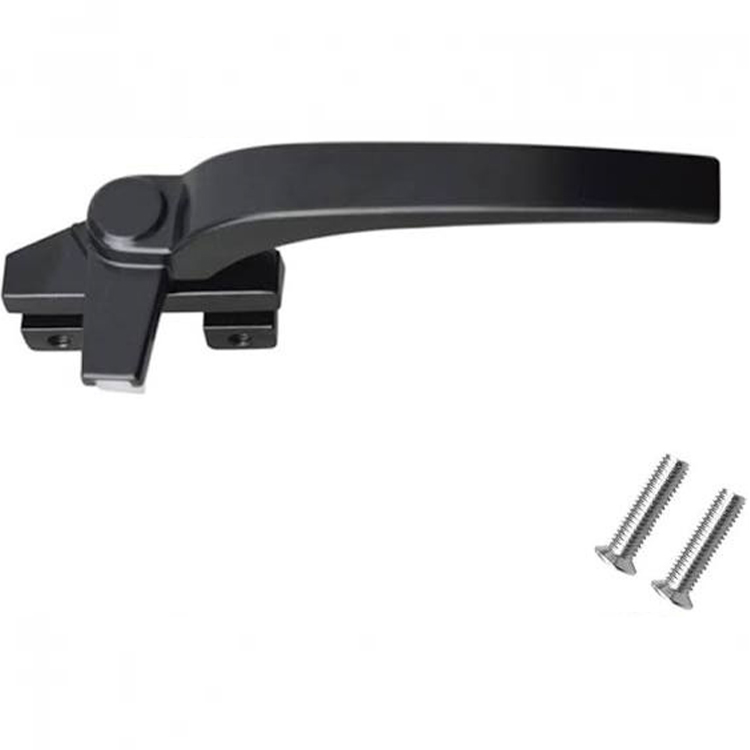
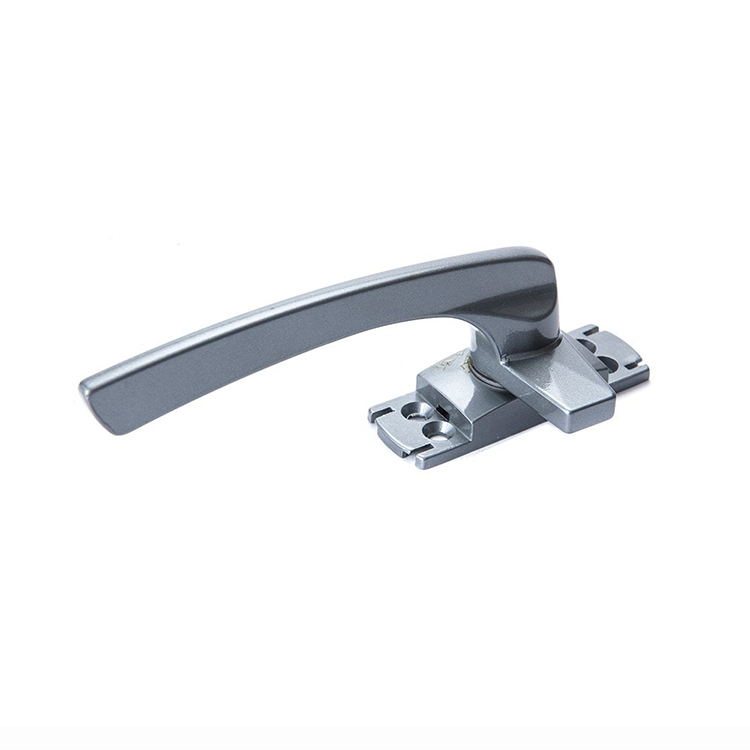
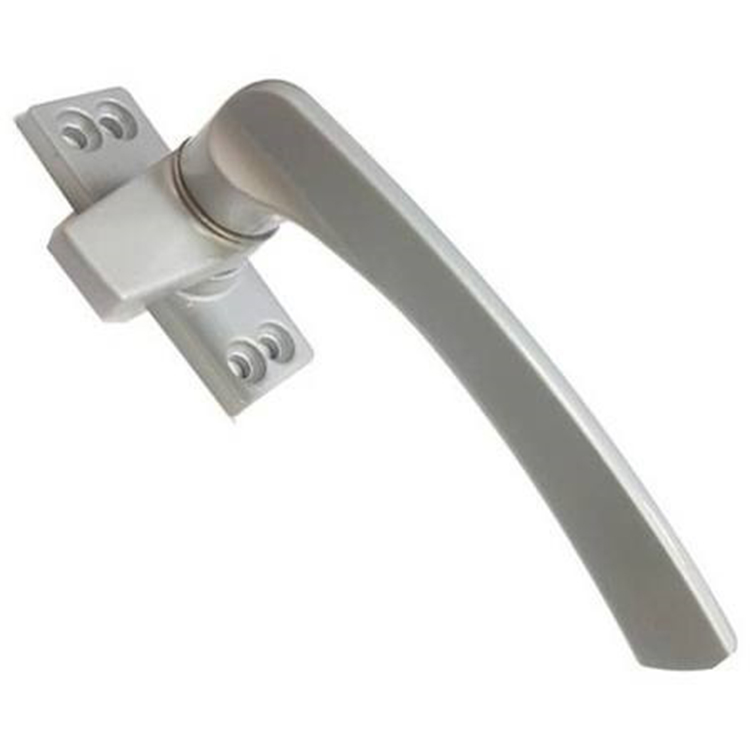
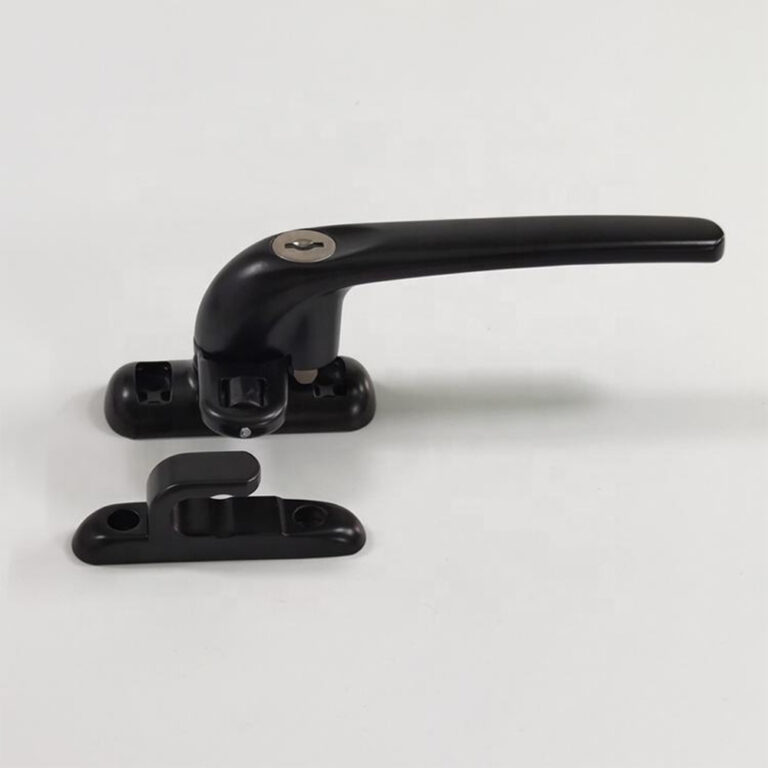
Before comparing finishes or prices, buyers should review handles by application, mounting format and operating interface. CHIER’s door and window handles catalogue separates casement, sliding, lever, recessed and profile-mounted designs rather than pretending one decorative category fits every system.
Window Handle Types Compared
Handle type
What the name actually describes
How it operates
Measurements that matter
Typical application
Common buying mistake
Espag handle
A handle-to-lock interface
A square spindle rotates an espagnolette or multipoint strip
Fixing centres, spindle width, exposed spindle length, backset, rotation direction
Modern uPVC, aluminum and timber casements
Assuming every 7 mm spindle handle is interchangeable
Cockspur handle
A projecting latch arrangement
A nose or spur closes over a wedge on the frame
Step height, nose length, handing, fixing pattern, wedge position
Older uPVC and aluminum windows
Ordering by appearance without measuring step height
Tilt-and-turn handle
The control for multi-mode perimeter gearing
Handle position selects closed, tilt or full inward turn
Spindle, fixing centres, gearing brand, mode sequence, lock function
European-style uPVC, timber and composite systems
Treating it as an ordinary espag replacement
Casement handle
A broad application category
May operate a spindle, fork, blade, cam, latch or crank mechanism
Side-hung and top-hung outward or inward opening windows
Believing “casement handle” identifies one standard connection
Sliding handle
A broad application category
Pulls the panel and may operate a latch, hook or recessed lock
Stile width, projection, panel overlap, fixing centres, lock interface
Horizontal sliders, lift-slide systems and sliding doors
Selecting a deep handle that collides with the overlapping panel
The categories overlap.
That matters because a replacement can look almost perfect and still be mechanically wrong. A buyer who identifies only the visible lever has completed perhaps one-third of the job.
Espag Window Handles: Common, Simple-Looking and Frequently Misordered
An espag window handle turns a spindle that drives an espagnolette locking strip concealed along the sash edge. As the handle rotates, cams or rollers move into keeps positioned around the frame.
One handle. Several locking points.
This arrangement is common on modern uPVC casement windows because it allows a compact lever to control distributed locking and gasket compression. It can also appear on aluminum and timber systems.
The 7 mm and 43 mm Trap
You will often encounter a 7 mm square spindle and 43 mm fixing centres when researching replacement espag window handles. Those dimensions are useful reference points, but they are not permission to stop measuring.
For example, NiCo’s standard espagnolette technical data specifies a 7 mm square spindle drive and handle fixing holes at 43 mm centres, together with 20 mm or 22 mm lockcase backsets. That is a defined product specification, not a universal rule governing every window mechanism.
The exposed spindle length still has to match the distance from the handle base to the gearbox engagement point. Too short and it may barely engage or fail to engage. Too long and the handle base may not sit against the sash.
And forcing it is not a solution.
When identifying an espag handle, record:
Fixing-hole centres
Spindle width and shape
Exposed spindle length
Handle rotation direction
Locking or non-locking function
Inline, left-handed or right-handed layout left-handed or right-handed layout
Available clearance around the lever
Gearbox brand or markings, when visible
A sloppy spindle fit can produce backlash, wobble and incomplete lock movement even when the handle appears to work. CHIER’s guide to window handle failures such as wobble, droop and sticking is worth checking before blaming the visible lever.
Are Espag Handles the Best Window Handles for uPVC Windows?
Often, but not automatically.
An espag handle is usually the logical choice when a uPVC casement already contains a compatible espagnolette or multipoint strip. It is not the best choice merely because the frame is made from uPVC.
Frame material does not identify the mechanism.
Older uPVC windows may use cockspur handles. Tilt-and-turn uPVC windows require handles matched to their multi-position gearing. Sliding uPVC windows need a pull, recessed handle or latch arrangement suited to panel movement.
Cockspur Window Handles: The Step Height Decides Everything
A cockspur handle uses a projecting nose, hook or spur that closes over a wedge fixed to the frame. Unlike an espag handle, it does not normally drive a long concealed strip through a square spindle.
Old-fashioned? Sometimes.
Obsolete? Not necessarily.
Cockspur window handles remain common in replacement work because many older aluminum and early uPVC windows were built around this simple arrangement. The mechanism is visible, understandable and often repairable without replacing a full locking strip.
But cockspur replacements punish guesswork.
Measure the Step Height
The step height is the vertical relationship between the underside of the spur and the handle’s mounting surface. It determines whether the nose lands correctly on the wedge.
ASSA ABLOY’s Mila cockspur handle specification uses interchangeable wedges to accommodate rebate heights of 9 mm, 13 mm, 17 mm and 21 mm. Those are practical market examples, but the installed window must still be measured rather than assigniar number. citeturn350657view11
A spur that sits too high may not secure the sash. One that sits too low may require excessive force, damage the wedge or prevent the handle from closing fully.
Check these details:
Step height
Spur or nose length
Wedge thickness and position
Left- or right-handed operation
Screw-hole arrangement
Distance from the handle base to the sash edge
Whether the existing wedge can be adjusted or replaced
Here is my controversial opinion: so-called universal cockspur handles are useful repair products, but “universal” usually means adjustable across a stated range. It does not mean dimension-free.
Tilt-and-Turn Window Handles: One Lever, Three Mechanical States
A tilt-and-turn handle controls a perimeter hardware system that allows the sash to perform two different opening movements.
In one position, the sash remains closed and locked. In another, its top edge tilts inward for ventilation. In the full-turn position, the sash swings inward like a door.
The handle is the selector.
ERA describes typical tilt-and-turn handle positions as 0°, 90° and 180°, with the internal gearing translating each position into the intended sash movement. It also offers locking, non-locking and tilt-lock configurations for different security and coquirements. citeturn350657view12
That word “typical” matters. Handle orientation and sequence can vary between system designs, installation orientations and tilt-before-turn arrangements. Never force a handle because an online diagram shows a position that appears different from your window.
Why an Ordinary Espag Handle May Be Wrong
A tilt-and-turn handle may use familiar-looking fixing centres and a square spindle. That visual similarity tempts buyers to treat it as a decorative espag lever.
Bad idea.
The handle, gearing, mishandling device, hinges, corner drives, keeps and locking points operate as one system. A replacement must preserve the correct rotation range, detents, lock state and system compatibility.
Lockable tilt-and-turn handles also need careful specification. A standard key lock may secure the handle only in the closed position. A tilt-lock arrangement may permit ventilation while preventing the user from moving into full-turn mode without a key.
Those are different safety functions.
Casement Window Handles: A Window Category, Not One Mechanism
A casement window is a hinged sash, usually side-hung or top-hung. The phrase casement window handle therefore describes where the handle is used, not necessarily how it connects to the lock.
That distinction is routinely missed.
Casement window handles may use:
Square-spindle drives
Single- or dual-fork drives
Flat blade connections
Direct cams
Projecting latches
Crank operators
Integrated lock-and-handle assemblies
Two casement handles can have nearly identical levers and completely different interfaces behind their bases. CHIER’s engineering guidance describes the visible handle as only one part of a chain that may include the spindle or fork, gearbox, rods, cams, keeps, hinges, frd fasteners. citeturn546261view0
Handing and Clearance Are Not Minor Details
Some casement handles are inline and can work in either direction. Others are handed because the lever shape, latch direction, fork orientation or available frame clearance makes left and right versions mechanically different.
Then there is projection.
A long lever produces more mechanical advantage, reducing the hand force required for a given operating torque. But it may also strike a reveal, insect screen, blind, adjacent sash or wall.
A shorter lever looks clean. It may also punish the user.
The right answer comes from installed testing, not a rendering. CHIER’s window handle ergonomics guide examines effective lever radius, grip clearance, sash alignment and operating torque as connected design variables.
Sliding Window Handles: Projection Can Make or Break the Product
Sliding window handles serve a different physical job. They must provide enough grip to move a sash horizontally while remaining compatible with narrow stiles, overlapping panels, tracks, screens and locking hardware.
The lever does not swing a hinged sash. It pulls mass along a track.
Sliding window hardware may include:
Surface-mounted pull handles
Lever-operated latches
Crescent or cam latches
Recessed finger pulls
Fold-flat handles
Flush locks
Hook-lock handles
Lift-slide operating handles
A recessed handle reduces projection, which can be valuable where one panel passes in front of another. But a shallow recess may provide poor finger access. A large projecting pull offers better grip but may collide with the overlapping sash.
There is no free geometry.
Panel weight also matters, although the handle does not carry the full panel load. Dirty tracks, worn rollers and distorted frames can increase pulling force until users begin loading the handle and its fixings far beyond the designer’s neat laboratory assumptions.
For a sliding system, record the stile width, panel overlap, available recess depth, fixing locations, pull direction, lock type and operating resistance before approving the handle.
Safety, Accessibility and Security: The Handle Is Not Decoration
A window handle affects whether a user can understand, secure and operate an opening. But it should never be marketed as though the handle alone provides a complete fall-prevention or burglary solution.
Systems matter.
Child Safety Requires More Than a Key
The U.S. Consumer Product Safety Commission’s 2026 Window Safety Week release reported that an estimated 5,600 children aged 12 and under were treated in emergency departments after window falls in 2024. About one in three required hospitalization, and the agency knew of at least 25 deaths involving children aged 121 and 2023. citeturn350657view6
A lockable handle may help control access. It is not automatically a window guard, opening-control device or restrictor.
And an insect screen is not fall protection.
Specifications for homes, schools, hotels, care settings and upper-floor rooms should examine the complete opening limit, hardware release method, emergency needs, user population and applicable local requirements.
Accessible Operation Can Be Measured
The U.S. Access Board’s guidance for operable parts states that covered controls must be usable with one hand, without tight grasping, pinching or twisting of the wrist, and with no more than 5 pounds-force, or approximately 22.2 N, required for operation. It identifies lever-shaped handles as an accessible form when the completeequirements. citeturn350657view7
That does not mean every residential window in every country automatically falls under that exact requirement. Project scope and jurisdiction still govern.
But it exposes weak design.
A tiny lever that requires fingertip pinching, a lock button that needs two simultaneous actions or an overloaded mechanism requiring excessive force should not be defended as “premium minimalism.”
Security Is an Assembly Claim
England’s Approved Document Q guidance, last updated on November 22, 2024, addresses doors and windows in new dwellings that must resist physical attack and be fitted with appropriate hardware. The important phrase is “appropriate harding handle.” citeturn350657view8
A key cylinder in the lever does not prove that the sash, glazing, lock strip, keeps, fasteners and frame form a secure assembly.
For professional sourcing, handle performance should be tied to applicable test evidence and classification rather than brochure language. CHIER’s guide to EN 13126-3 window handle classification gives buyers a more disciplined route for reading performance claims.
How to Identify Window Handle Types in Five Minutes
Start with the window, not the handle.
1. Observe How the Sash Moves
Does it swing on side hinges, project outward from the top, slide horizontally, tilt inward or perform both tilt and turn movements?
This identifies the application family, although not yet the exact handle interface.
2. Watch What the Handle Does
Does rotating the lever move several locking points around the sash? Does a visible spur close over a wedge? Does a pull merely move a sliding panel? Does the lever select several opening modes?
Operation tells you more than finish.
3. Inspect the Concealed Connection
After making the window safe and removing the fixing cover, a competent person can identify whether the handle uses:
A square spindle
A fork or twin-prong drive
A flat blade
A direct cam
A projecting cockspur nose
A crank shaft
No operating drive at all, as with a simple pull
Do not allow the internal lock to move or fall out of position during inspection.
4. Measure Before Ordering
For an espag handle, measure the fixing centres and exposed spindle length.
For a cockspur handle, measure the step height, nose length and handing.
For tilt-and-turn hardware, identify the system, spindle, rotation sequence and lock function.
For sliding hardware, check projection, recess depth, stile width, fixing pattern and panel overlap.
5. Use the Four-Photo Rule
Take four clear photographs:
Handle installed from the front
Handle and frame from the side
Base and fixing arrangement
Rear interface after removal
Add a ruler or calliper to the dimensional photographs.
One blurry image of a black lever is not identification. It is a request for someone else to guess.
6. Record Every Marking
Look for logos, codes, gearbox stamps, patent numbers and casting marks. Search those markings together with the opening type and dimensions.
For a professional order or replacement programme, CHIER’s hardware checklist by opening type provides a broader system-level review before components are approved.
The Best Window Handles for uPVC Windows Depend on the Existing System
There is no single best window handle for every uPVC window.
For a modern side-hung uPVC casement with an espagnolette strip, the best choice is normally a compatible espag handle with the correct spindle, fixing centres, handing and rotation.
For an older uPVC sash with a projecting latch, the correct cockspur handle and step height may be the only sensible answer.
For a tilt-and-turn uPVC window, use a handle approved for the installed gearing and required operating sequence.
For a sliding uPVC window, select a pull or locking handle that respects stile width, overlap and latch geometry.
I would reject any buying guide that chooses a winner based only on aluminum versus zinc alloy, black versus white or locking versus non-locking.
Compatibility comes first. Then ergonomics. Then evidence. Finish comes later.
FAQs
What are the main types of window handles?
The main types of window handles are espag, cockspur, tilt-and-turn, casement-specific and sliding handles, but these labels describe different things: some identify the locking interface, some identify the window’s opening method, and some describe a complete gearing system, so correct identification requires both the sash type and the concealed drive connection.
Espag handles drive a locking strip through a spindle. Cockspur handles close a projecting spur over a wedge. Tilt-and-turn handles select several gearing modes, while casement and sliding handles cover broader groups containing multiple interface designs.
How do I identify an espag window handle?
An espag window handle is a lever handle that turns a square spindle into an espagnolette or multipoint locking strip, typically moving several cams along the sash edge; identify it by removing the cover, checking for a square spindle, measuring the fixing centres and confirming the spindle length before ordering a replacement.
Do not rely only on the frequently encountered 7 mm spindle and 43 mm fixing-centre combination. Confirm the actual measurements, handle rotation, handing, lock function and available frame clearance.
What is the difference between espag and cockspur window handles?
The difference between espag and cockspur window handles is that an espag handle drives a concealed locking strip through a spindle, while a cockspur handle uses a projecting nose or spur that closes over a wedge on the frame, making their mounting dimensions, adjustment method and replacement logic fundamentally different.
An espag replacement depends heavily on spindle and fixing dimensions. A cockspur replacement depends on step height, nose geometry, wedge position and handing.
Can a tilt-and-turn handle replace an ordinary espag handle?
A tilt-and-turn window handle is the control for a complete multi-position gearing system that selects closed, tilted ventilation and inward-turn opening modes, so it should not be treated as a generic espag replacement even when the lever, spindle or screw spacing appears similar from the outside.
The correct replacement must preserve the intended rotation range, lock states, detents and compatibility with the installed gearing. Confirm the hardware manufacturer or system before ordering.
What are the best window handles for uPVC windows?
The best window handles for uPVC windows are the handles that exactly match the installed opening type, lock interface, fixing centres, spindle or spur dimensions, handing, security requirement and operating force; for most modern uPVC casements that often means a compatible espag handle, while older windows may require cockspur hardware.
Tilt-and-turn and sliding uPVC systems require their own compatible handle arrangements. Frame material alone is not enough information to select the correct product.
Match the Handle Before You Request a Price
Do not send a supplier one front-view photograph and ask for “the same handle in matte black.”
Send evidence.
Record the opening type, frame material, fixing centres, spindle or fork dimensions, cockspur step height where applicable, handing, lock function, available clearance, required finish, estimated quantity and target market. Include the four identification photographs and any profile or gearbox drawings you have.
For repeat orders, private-label ranges or a new system, use CHIER’s OEM and ODM window handle development process to review the application, profile section, mating hardware, drawings, samples, finishe production. citeturn350657view4
Then take the next step: send your measurements, drawings, photographs and required quantity to CHIER’s door and window handle manufacturing team for a compatibility review and project quotation.