Looking for hardware solutions that meet European / American standards?
Use this guided inquiry modal to move from a generic quote form to a clearer technical conversation. Buyers can choose whether they need pricing, CAD / 3D files, or OEM / ODM support before sharing contact details.
Compatibility-first design across door / window systems
Repeatable production with clear inspection checkpoints
Documentation and change control for long-running programs
Responsive engineering support for fit and field feedback
In a lever handle vs pull handle decision, the most expensive mistake is choosing by silhouette before anyone has defined the door movement, latch function, operating force, traffic level, accessibility requirement, and egress strategy.
Why pay for a premium finish when the handle cannot operate the door properly?
Here is the direct answer: Use a lever handle when the user must retract a latch or operate a lock mechanism. Use a pull handle when the user only needs a strong, fixed grip to move a sliding, swinging, or non-latching door.
That sounds simple. It is not.
A heavy aluminum entrance door may need a pull outside and panic hardware inside. A sliding door may need a recessed pull because a projecting lever will collide with the frame. A hotel room may need an electronic lever lock. And an accessible entrance may accept either lever-shaped hardware or a U-shaped pull, provided the entire operating system meets accessibility requirements.
The handle is one component. The door is the system.
The Real Difference Is Mechanical, Not Visual
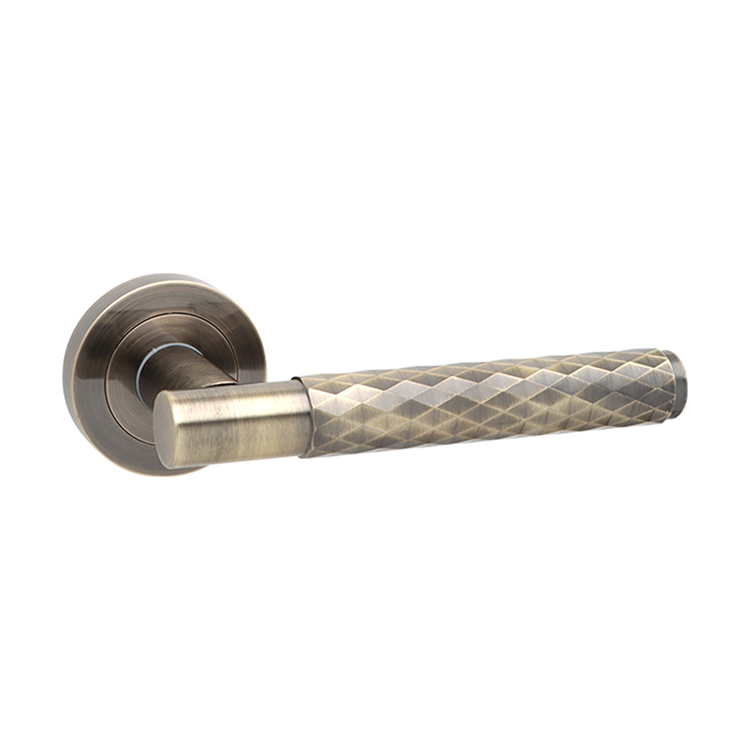
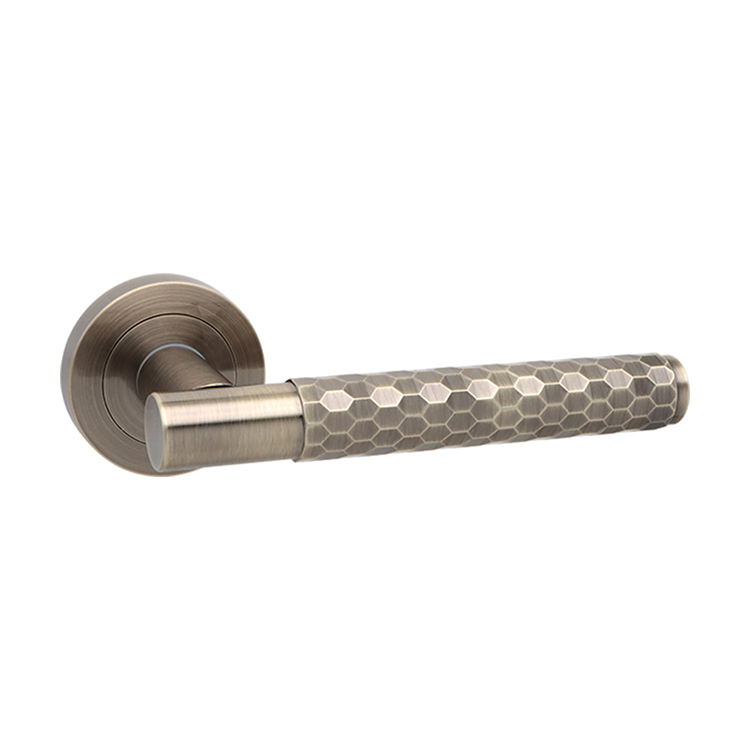
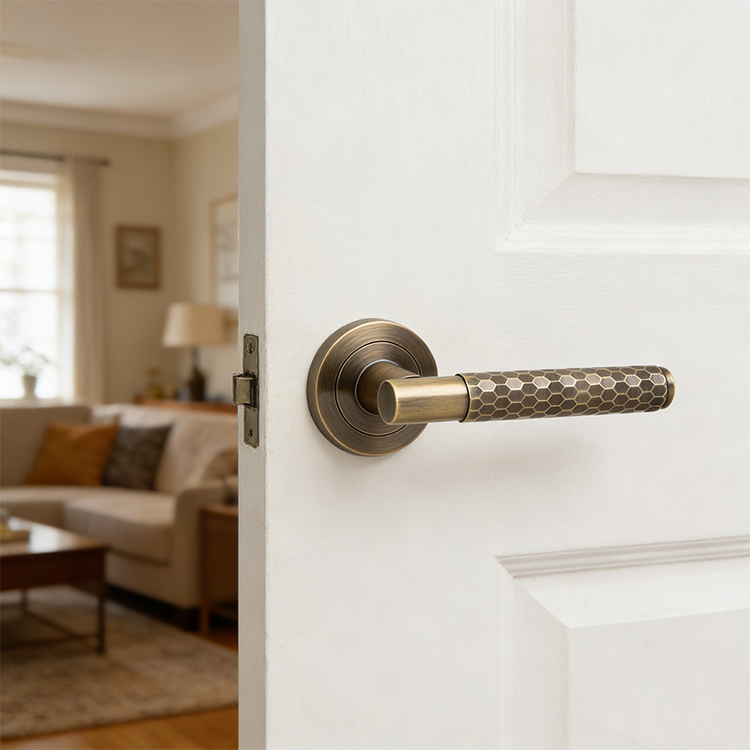
A lever door handle is normally an actuator. Pushing the lever rotates a spindle, retracts a latch bolt, operates a lock case, or moves part of a multipoint locking system.
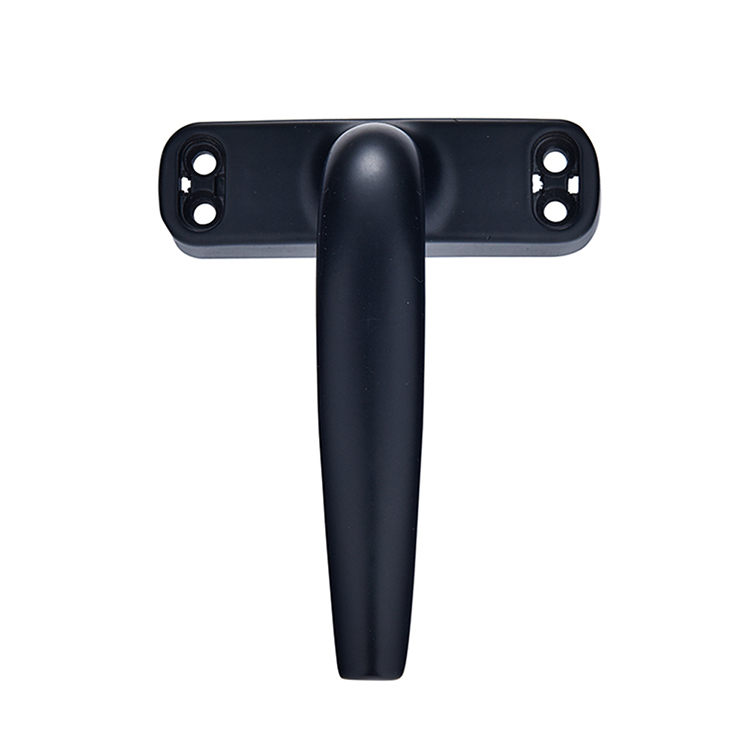
A pull door handle is normally fixed. It gives the user leverage to move the door, but it does not usually retract a latch by itself. The door may instead rely on a roller catch, magnetic lock, deadbolt, automatic operator, touch latch, panic bar, or separate locking device.
That changes everything.
I think many door schedules are written backward. Someone approves a fashionable handle first, then asks an engineer to make the lock, stile, closer, and frame accommodate it. That is how projects inherit loose fixings, excessive operating force, poor knuckle clearance, and hardware combinations that never felt right from day one.
My rule is blunt: Specify the door function first. Select the handle second.
Is the door hinged, pivoted, sliding, folding, or pocketed?
Must the handle retract a latch?
Is the opening part of an accessible route?
Is it an emergency exit or fire-rated assembly?
Will users push, pull, lift, rotate, or perform more than one action?
What lock, closer, hinge, seal, and access-control system must the handle work with?
Miss one of those questions and the “best” handle can become the wrong hardware.
Lever Handle vs Pull Handle Comparison
Decision Factor
Lever Handle
Pull Handle
Better Choice
Primary function
Rotates a spindle and operates a latch or lock
Provides a fixed grip for moving the door
Depends on whether unlatching is required
Hinged passage door
Excellent
Usually needs a separate latch-release method
Lever handle
Sliding or pocket door
May project too far or hit the frame
Available in projecting, flush, edge-pull, and recessed forms
Pull handle
Accessible operation
Strong option when usable with one hand and low force
U-shaped pulls can also provide accessible loose-grip operation
Either, if the complete system complies
Heavy entrance door
Lever operates the latch but may not provide the best pulling grip
Full-hand grip can improve control of a heavy leaf
Pull outside; compliant release inside
Emergency egress
May be acceptable in some applications
Fixed pull alone does not release a latched exit door
Lever, panic hardware, or another approved release
Multipoint locking system
Commonly operates the gearbox and locking points
Usually cannot operate the system without a thumb control or separate actuator
Lever handle
High-cycle simplicity
Contains moving interfaces and depends on spring and lock compatibility
Fewer moving parts in the handle itself
Pull handle
Privacy or keyed lock
Easily integrated with latch and lock functions
Requires separate locking hardware
Lever handle
Snag risk
Long or poorly returned levers can catch bags and clothing
Smooth pulls can reduce snagging, depending on projection
Pull handle
Maintenance risk
Can droop, wobble, or fail to return when springs and spindles are mismatched
Can loosen or flex when fixings and door reinforcement are inadequate
Depends on specification quality
Typical commercial use
Offices, hotels, clinics, classrooms, staff doors
Storefronts, lobbies, sliding panels, glass doors
Application-specific
Neither handle is automatically more durable.
A badly supported pull can loosen around its mounting points. A lever can remain stable through years of use when its spindle, return spring, lock follower, fasteners, and door preparation are correctly matched.
The hard truth? Most failures blamed on “cheap handles” are system failures wearing a handle-shaped disguise.
Where Lever Handles Are the Better Choice
Hinged Doors That Must Retract a Latch
A lever is the logical choice for a hinged passage, privacy, storeroom, office, bedroom, hotel, or classroom door when one movement must retract the latch.
The user pushes down. The spindle rotates. The latch retracts.
Simple.
A pull handle cannot perform that sequence unless it includes an additional thumb latch, paddle, electronic release, or concealed mechanism. At that point, it is no longer just a fixed pull.
For commercial door hardware, fewer user actions usually mean a clearer operating sequence. That matters in offices, healthcare buildings, hospitality projects, schools, and any opening used by visitors who should not need instructions.
Accessible Routes and Inclusive Buildings
Lever handles are widely specified for accessible openings because they can be operated with one hand and without gripping the hardware tightly.
The U.S. Access Board’s door and gate guidance states that accessible hardware must permit one-hand operation, avoid tight grasping, pinching, or wrist twisting, operate with no more than 5 lbf or 22.2 N, and generally sit 34 to 48 inches—865 to 1,220 mm—above the floor. It identifies both lever-shaped handles and U-shaped pulls as user-friendly forms.
Notice the wording. The rule does not say “install any lever and walk away.”
The lever’s shape, return, operating force, latch resistance, mounting height, and surrounding clearance still matter. A short lever driving a stiff lock case may look compliant while demanding too much force. A sculpted lever that requires fingertip control may also perform poorly for users with limited dexterity.
Accessibility is not a niche concern. CDC data released on July 16, 2024, reported that more than one in four U.S. adults—over 70 million people—had a disability in the 2022 Behavioral Risk Factor Surveillance System. Among adults aged 65 or older, the reported prevalence was 43.9%.
That is not a marginal user group. It is a major portion of the market.
Multifamily and Public-Facing Doors
Legal enforcement shows what happens when accessible hardware is treated as a decorative upgrade.
In September 2021, a U.S. Department of Justice settlement involving 38 multifamily housing complexes in North Carolina required the installation of lever handles, along with wider doorways and other accessibility corrections.
A separate August 2021 settlement concerning four North Dakota apartment complexes and a rental office also required lever handles. The defendants were required to contribute $100,000 to a settlement fund—bringing the combined fund to $120,000—and pay a $5,000 civil penalty.
Those disputes involved inaccessible knob-style hardware rather than a direct lever-versus-pull argument. Still, the lesson is impossible to miss: door operability is judged as a functional condition, not as a designer’s intention.
Multipoint Locking Doors
Lever handles are generally the stronger choice when the door uses a gearbox or multipoint locking system.
The lever must transmit enough controlled movement to retract the latch and, depending on the design, operate hooks, rollers, bolts, or compression points. Handle length, spindle engagement, follower geometry, gearbox resistance, gasket compression, and sash alignment all affect the user’s experience.
More locking points do not automatically produce a better door.
A poorly aligned system can make a long lever feel heavy, cause the handle to droop, or tempt users to force it. Before approving the handle, the lock interface should be reviewed as one assembly through a multipoint locking system engineering process.
Interior Privacy and Security Doors
Bathrooms, bedrooms, hotel rooms, consultation rooms, and private offices often need passage, privacy, keyed, or electronic locking functions integrated into the operating hardware.
A lever lockset handles this neatly.
It can combine the grip, latch actuation, cylinder, thumb turn, indicator, electronic credential reader, or emergency release within one coordinated set. A fixed pull can still be used, but it normally requires additional hardware and a less obvious operating sequence.
For interior doors, the lever usually wins because it does more work with fewer components.
Where Pull Handles Are the Smarter Choice
Sliding, Pocket, and Bypass Doors
Pull handles belong naturally on sliding doors because the user applies force parallel to the wall or track rather than rotating a latch spindle on a swinging leaf.
Projecting pulls work where there is enough clearance. Flush pulls suit panels that overlap. Recessed edge pulls suit pocket doors that disappear into a wall cavity. Lift-slide doors may use specialized handles that combine grip and mechanism operation.
This is where careless selection gets expensive.
A pull that projects 60 mm may collide with the fixed panel. A recessed pull may leave inadequate finger depth. A narrow aluminum stile may not support the proposed fixing pattern. And a large panel with high roller resistance may need more usable grip length than the architect’s minimalist sketch allows.
For a more technical selection process, use window and door hardware design guidance to evaluate panel weight, stile width, lock type, grip depth, projection, and mounting structure together.
Storefront and Lobby Entrance Doors
A fixed pull is often the right hardware on the exterior side of a commercial entrance because it provides a clear, full-hand grip and can be through-bolted into a reinforced stile.
But the exterior pull is only half the story.
On the egress side, the door may need a lever, panic bar, paddle, automatic operator, or another approved release method. A fixed pull by itself does not release a latched exit door.
OSHA requires employees to be able to open an exit-route door from inside without keys, tools, or special knowledge. Its rule also permits devices such as panic bars that lock only from the exterior. For rooms designed for more than 50 occupants—or containing high-hazard materials—the connecting door must swing in the direction of exit travel.
So the common pairing makes sense:
Exterior side: pull handle for controlled entry Interior side: panic hardware or another compliant release for immediate exit
Do not copy that combination blindly. Fire ratings, occupancy classification, access control, local building codes, and the authority having jurisdiction may impose additional requirements.
Heavy Doors That Do Not Need Handle-Operated Unlatching
A long pull gives the user a full-hand grip and more freedom to choose where force is applied. That can feel more natural on heavy timber doors, large aluminum entrance leaves, glass doors, pivot doors, and oversized architectural panels.
But do not confuse grip with opening force.
Door weight, closer power, hinge friction, pressure differences, weather seals, latch resistance, and wind loading determine how hard the door is to move. Replacing a short pull with a longer one may improve control, but it will not repair a badly adjusted closer or misaligned hinge.
The Access Board also distinguishes hardware operating force from door opening force. Its guidance notes that exterior hinged doors do not have the same 5 lbf maximum opening-force limit because wind, gasketing, HVAC pressure, energy requirements, and positive latching can demand more force. The associated hardware itself must still satisfy applicable operability requirements.
Hardware cannot rescue bad geometry.
High-Cycle, Low-Complexity Openings
A fixed pull has no spindle, follower, return spring, or latch actuator inside the handle itself. That mechanical simplicity can be useful on high-traffic doors controlled by roller catches, magnetic locks, automatic operators, floor closers, or separate access-control systems.
Fewer moving components can mean fewer handle-related failure points.
But the mounting still matters. I would reject any large pull specification that fails to define:
Through-bolt diameter and center distance
Door or stile reinforcement
Maximum handle projection
Grip diameter and usable clearance
Back-to-back or single-sided mounting
Anti-rotation details
Fastener material
Field tightening access
Compatibility with glass, aluminum, timber, or steel construction
A beautiful pull attached to weak sheet material is not premium hardware. It is a future service call.
Which Handle Is Right for Each Door Application?
Door Application
Recommended Hardware
Why
Residential bedroom door
Lever passage or privacy set
Operates the latch and supports simple one-hand use
Residential bathroom door
Privacy lever with emergency release
Combines latch operation, privacy, and outside emergency access
Hotel guest-room door
Electronic or mechanical lever lockset
Integrates credential control, latch operation, and room security
Standard office door
Lever handle
Clear operation for frequent users and visitors
Accessible public doorway
Lever or compliant U-shaped pull with an appropriate release
Must support one-hand operation without tight gripping or twisting
Commercial storefront exterior
Fixed pull
Strong grip, clear entry cue, and robust through-bolted mounting
Commercial storefront interior
Panic hardware, lever, or approved egress release
Exit must not depend on a key, tool, or special knowledge
Sliding patio door
Pull, recessed pull, or integrated lock handle
Matches horizontal movement and available frame clearance
Pocket door
Flush pull with edge pull
Allows the panel to enter the pocket without hardware collision
Barn door
Projecting pull
Provides enough grip and hand clearance for lateral movement
Large pivot door
Long pull, often with separate locking hardware
Gives users more control over a large, heavy leaf
Multipoint entrance door
Lever handle matched to the gearbox
Operates the latch and multipoint mechanism through a spindle
Healthcare consultation room
Lever or automatic operator
Supports simple use and can reduce reliance on fine hand movement
Fire-exit door
Listed fire-exit hardware or other approved hardware
Hardware must match the rated assembly and egress requirements
Utility room
Lever if latched; pull if non-latching
Function matters more than appearance
Automatic entrance
Pull only where manual operation is intended and permitted
Automatic controls, breakout requirements, and manual fallback govern selection
Frameless glass door
Back-to-back pull with suitable glass preparation
Spreads load through purpose-made mounting points
High-security door
Lever, pull, or mixed set tied to the security system
Lock, cylinder, strike, frame, and access control provide security—not handle shape alone
The best handle for commercial doors is often not one handle at all. It is a coordinated hardware set with different functions on each side.
That is the point many online comparisons miss.
What Professional Buyers Must Put in the Hardware Specification
“Black lever handle” is not a specification.
Neither is “600 mm stainless pull.”
A usable RFQ or hardware schedule should define the entire interface. For custom OEM/ODM door hardware programs, I would require the following information before approving samples:
Door and Application Data
Door type: hinged, sliding, pivot, folding, or pocket
Door material: aluminum, steel, timber, glass, PVC, or composite
Leaf dimensions and weight
Stile width and internal reinforcement
Door thickness
Handing and swing direction
Interior or exterior exposure
Fire rating, where applicable
Expected traffic or operating cycles
Target market and applicable regulations
Handle Function
Fixed pull or moving lever
Passage, privacy, entrance, storeroom, classroom, or dummy function
Required latch operation
Locking method
Emergency-release requirements
Access-control integration
Back-to-back, single-sided, or concealed fixing
Return-to-door lever requirement
Required grip and knuckle clearance
The Access Board recommends at least 1½ inches—38 mm—of knuckle clearance for bars, pulls, and similar hardware intended to support easy gripping.
Lock and Interface Dimensions
Lock-case model or drawing
Spindle size and engagement length
Backset
Handle-to-cylinder center distance
Latch throw
Follower rotation
Return-spring responsibility
Escutcheon or rose dimensions
Fixing centers
Through-bolt locations
Profile machining details
Door-System Components
The handle cannot be approved in isolation from the hinges, closer, lock, seals, frame, and strike.
A sagging door increases latch friction. Excessive closer power increases opening force. Thick weather seals affect positive latching. Weak stile reinforcement allows a pull handle to flex. Misaligned multipoint keeps turn a normal lever stroke into a two-handed struggle.
A matte-black finish can be applied to aluminum alloy, zinc alloy, stainless steel, or other substrates. Those products may have different weights, corrosion behavior, casting limitations, wall thicknesses, fastening methods, and price points.
For exposed pulls, buyers often compare AISI 304 and AISI 316 stainless steel. For lever bodies, aluminum and zinc alloys are common options. The correct choice depends on structure, environment, finishing process, corrosion exposure, and target cost.
And ask for a physical finish sample.
“Brushed stainless,” “satin nickel,” “anodized silver,” and “silver powder coat” are not interchangeable descriptions. Put them next to one another under project lighting and the difference becomes obvious.
Samples, Drawings, and Approval Records
Before mass production, approve:
Dimensioned product drawing
Door-preparation drawing
Lock and spindle interface
Material declaration
Finish reference
Functional sample
Installation fasteners
Packaging arrangement
Model and revision number
Inspection criteria
Golden sample
Change-notification process
The CHIER technical download center can be used to request catalogs, model specifications, mounting drawings, spindle and lock-interface details, finish information, and other product-specific files.
Pretty renderings do not control production. Approved dimensions do.
The Hard Truths Buyers Learn After Installation
A Lever Handle Is Not Automatically Accessible
A lever may still fail the user when it is too short, too stiff, mounted too high, shaped for fingertip control, or connected to a resistant latch.
“Lever-shaped” is not the final test. Operability is.
A Pull Handle Is Not Automatically Easier
A pull with inadequate knuckle clearance, an oversized grip, sharp transitions, excessive projection, or a slippery finish can be uncomfortable. On a latched door, it may also force the user to perform a second action elsewhere.
More metal does not equal better ergonomics.
Security Does Not Come From the Handle Shape
A lever is not inherently less secure. A pull is not inherently more secure.
Security comes from the cylinder, lock body, deadbolt or multipoint mechanism, strike, frame reinforcement, fasteners, access-control logic, glass protection, door construction, and installation quality.
The handle is how the user communicates with that system.
Many “Handle Failures” Start Somewhere Else
A drooping lever may point to a weak return spring, worn lock follower, excessive spindle clearance, or incorrect spring responsibility.
A loose pull may point to thin door skins, missing reinforcement, poor thread engagement, unsuitable washers, or repeated overtightening.
A sticking handle may actually be a sagging door.
Check the system first.
The Cheapest Part Can Create the Largest Complaint
A handle is touched every time the door is used. Users may never see the lock case, hinge bearing, closer valve, or internal reinforcement, but they feel the handle immediately.
A weak handle makes the entire door feel cheap.
That is why I would spend less time debating whether the finish is “charcoal” or “graphite” and more time testing grip clearance, latch force, return action, edge alignment, and fixing rigidity on a real door sample.
FAQs
Which is better, a lever handle or a pull handle?
A lever handle is generally better for a hinged door that must retract a latch, while a pull handle is generally better for a sliding, non-latching, or push-pull door that needs a strong fixed grip; the correct choice depends on door motion, lock function, accessibility, egress, and user force.
For many commercial entrances, the correct answer is a mixed set: a pull on the entry side and panic hardware, a lever, or another approved release on the exit side.
Can a pull handle be ADA-compliant?
A pull handle can be ADA-compliant when its shape permits one-hand operation with a loose grip or closed fist, provides adequate knuckle clearance, sits within the required reach range, and does not demand more than 5 lbf to operate any associated latch or control; the entire door system still must comply.
U-shaped pulls can accommodate a broad range of users. But a fixed pull does not solve the operation of a separate stiff latch, lock, or closer.
What is the best handle for commercial doors?
The best handle for commercial doors is the hardware set that matches traffic, latch function, fire and egress rules, accessibility, closer force, security, and maintenance capacity; in practice, many storefronts use an exterior pull with a lever, panic bar, automatic operator, or other code-compliant release on the egress side.
There is no universal commercial handle. An office door, hospital corridor, hotel room, loading area, and retail entrance perform different jobs.
Are lever handles safer than pull handles?
A lever handle is not inherently safer or more secure than a pull handle because security comes from the lock case, cylinder, strike, fasteners, door construction, frame reinforcement, and egress design; the handle mainly determines how a user applies force and whether the latch can be released.
Levers are often easier for users with limited grip strength. Pulls can provide strong control of a heavy door. Safety depends on the complete assembly.
Should exterior and interior doors use different handles?
Interior doors usually favor lever handles when privacy or passage latches are needed, while exterior doors may use lever sets, fixed pulls, or mixed hardware depending on seals, wind, closers, locks, access control, and egress; exterior selection must be made as a tested door-system decision, not a finish choice.
Exterior hardware must also account for corrosion exposure, temperature changes, water entry, wind pressure, security, and positive latching.
Specify the Door Before You Specify the Handle
Do not send a supplier a product photo and ask, “How much?”
Send the door type, profile drawing, panel weight, stile width, door thickness, swing direction, lock case, backset, spindle or cylinder centers, fixing requirements, finish, target market, annual volume, packaging needs, and performance expectations.
Then compare the solution against the real application.