Looking for hardware solutions that meet European / American standards?
Use this guided inquiry modal to move from a generic quote form to a clearer technical conversation. Buyers can choose whether they need pricing, CAD / 3D files, or OEM / ODM support before sharing contact details.
Compatibility-first design across door / window systems
Repeatable production with clear inspection checkpoints
Documentation and change control for long-running programs
Responsive engineering support for fit and field feedback
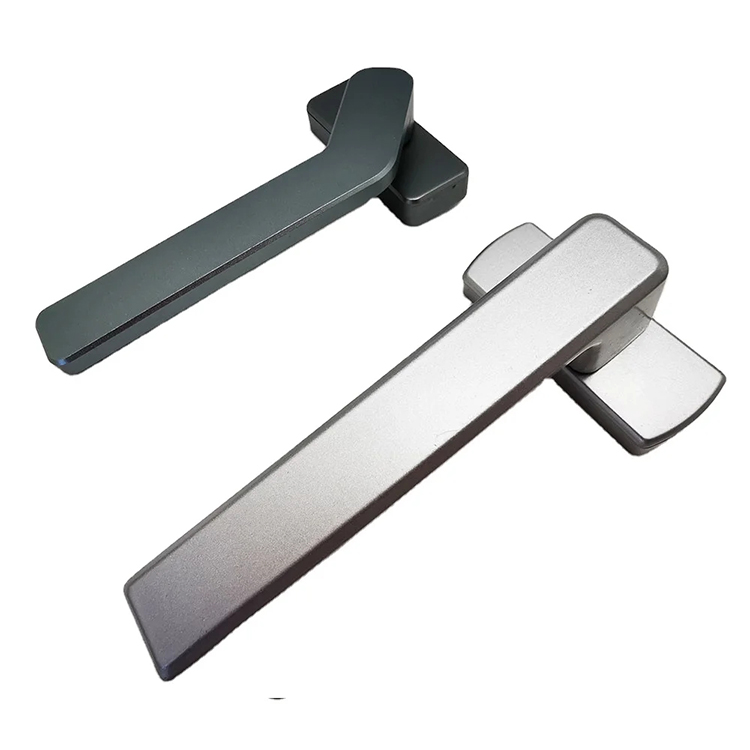
Two lever handles can share the same black finish, the same rose diameter, the same spindle format, and nearly the same catalog photograph, yet one may spend its life in a dry bedroom while the other faces rain, salt-bearing air, UV exposure, freezing weather, gasket resistance, locking loads, and thousands of entrance cycles.
So why would we specify them the same way?
We shouldn’t.
That is the basic mistake behind a surprising number of door-hardware problems. Buyers compare appearance first, dimensions second, and actual operating environment somewhere near the bottom of the spreadsheet.
I would reverse that order.
When comparing exterior vs interior door handles, start with exposure, operating load, security function, door construction, lock interface, and compliance. Color comes later.
Exterior vs Interior Door Handles: The Performance Gap
An exterior handle is part of the building envelope and often part of the security system. An interior handle is primarily an operating interface between a person and an internal door.
That difference changes almost everything.
Performance Requirement
Exterior Door Handles
Interior Door Handles
Weather exposure
Rain, humidity, condensation, UV, freeze-thaw, salt air possible
Usually controlled indoor environment
Corrosion resistance
High priority
Moderate to low depending on building use
Security role
Frequently connected to keyed, deadbolt, or multipoint locking
Often passage, privacy, office, or access-control use
Seal resistance
May operate against compressed weather seals
Usually little or no perimeter seal compression
Wind influence
Can affect door opening force and closure
Normally minimal
Surface finish
Must survive outdoor exposure and cleaning
Mostly wear, cleaning, appearance
Fastener protection
High priority because moisture can enter joints
Lower exposure risk
Lock interface
Often security-sensitive and load-bearing
Usually simpler latch or lock function
Accessibility
Must still satisfy applicable hardware rules
Often subject to both hardware and door-opening-force rules
Testing priority
Corrosion, durability, operation, finish, load
Cycle life, ergonomics, finish, latch function
This is why I dislike the phrase “same handle, outdoor finish.”
Sometimes that approach works. Often it hides weak screws, springs, base plates, spindle materials, coating pretreatment, or lock interfaces beneath a better-looking topcoat.
A complete door and window handle program should be specified as an assembly, not as a decorative casting. CHIER’s current product scope includes aluminum alloy, zinc alloy, stainless-steel components, different mounting structures, spindle arrangements, and finishes rather than treating every handle as one universal specification.
Exterior Door Handles Have to Fight the Environment
The outdoor environment attacks hardware from several directions at once.
Rain is obvious. Condensation isn’t.
Salt is worse.
The chemistry behind coastal exposure is not marketing folklore. NIST notes that sea spray contains sodium chloride, NaCl, which introduces corrosive chloride ions into exposed materials. The U.S. Department of Defense’s door-corrosion guidance also warns that stainless steel can still experience pitting in marine and salt-spray zones.
That last point matters.
“Stainless” does not mean “corrosion-proof.”
304 vs 316 Is a Starting Point, Not a Complete Specification
AISI 304 and AISI 316 stainless steels are both common engineering materials, but I would pay far more attention to 316 when chloride exposure becomes serious. NOAA technical guidance has specifically used Type 316 stainless steel where improved corrosion resistance was required, while also warning that chlorides can still create corrosion problems.
But material grade alone does not rescue a poor handle.
You still have screws.
You still have springs.
You still have a spindle.
You still have a base plate, retaining hardware, machining edges, coating interfaces, and potentially dissimilar-metal contact.
So when someone says, “The lever is stainless steel,” my next question is simple: what is everything else made from?
For coated aluminum or zinc-alloy exterior door handles, buyers should define the substrate, pretreatment, coating system, test method, exposure period, assembled test condition, and acceptance criteria. CHIER’s quality control and testing process makes the same distinction: a salt-spray-hour number by itself should not be treated as a prediction of exact field life.
That is a hard truth the hardware industry sometimes avoids because “500 hours” sells more easily than a discussion about substrate preparation, scratches, edges, crevices, and post-test acceptance.
Exterior Handles Also Work Against Seals, Wind, and Door Pressure
A front entrance is not simply an interior door exposed to rain.
Exterior doors are expected to separate indoor and outdoor environments. Gaskets and weatherstripping have to compress. The latch has to pull the leaf into the seal. Wind pressure can act on the door. HVAC pressure can add another variable.
The U.S. Access Board explicitly recognizes this difference. Its ADA guidance states that exterior swing-door opening force is affected by wind loading, gasketing, HVAC systems, energy requirements, and door weight; for that reason, the 5 lbf maximum opening-force rule applied to many accessible doors does not set the same maximum for exterior hinged doors.
Notice the distinction, though.
The door-opening force and the force required to operate the handle or lock hardware are not the same test.
Under the 2010 ADA framework, accessible door and gate hardware must allow one-hand operation, avoid tight grasping, pinching, or wrist twisting, and operate with no more than 5 lbf of force. Operable parts are generally positioned 34 to 48 inches above the finished floor or ground.
That makes lever geometry more than styling.
And it makes poor lock alignment expensive.
Weather Sealing Changes the Locking System Too
The U.S. Department of Energy describes weatherstripping as a method for sealing moving components such as doors and operable windows. Once a door depends on seal compression, the handle, latch, keeper, hinges, frame alignment, and lock cannot be evaluated as isolated parts.
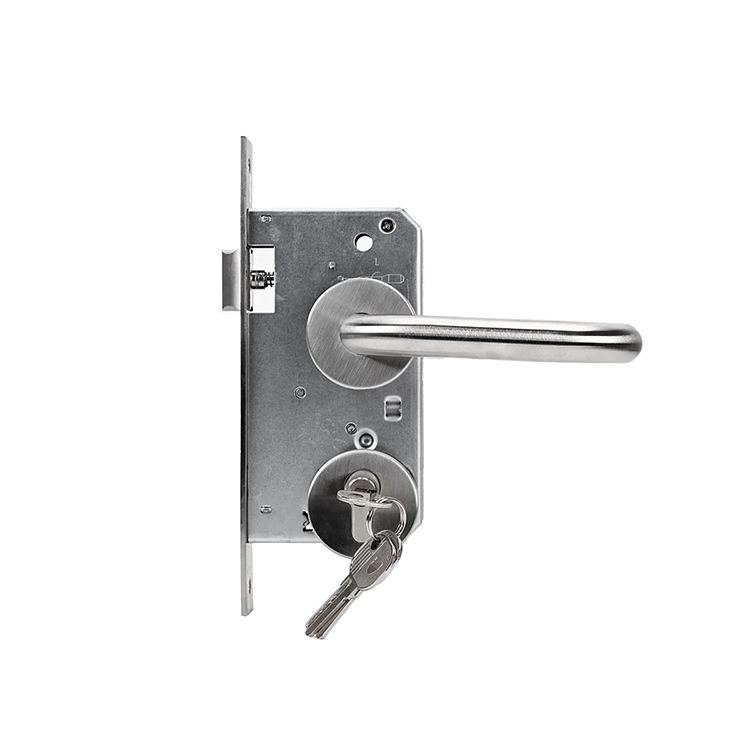
A multipoint system may include a central gearbox, long faceplate, hooks, pins, rollers, bolts, or other locking elements. CHIER’s current selection guidance identifies backset, handle-to-cylinder centers, spindle follower, faceplate dimensions, locking-point positions, and keeper layout as system-level parameters.
More locking points do not automatically mean better performance.
Bad alignment plus more locking points can simply mean more resistance.
Then the user lifts or turns the handle harder. The spindle sees more torque. The gearbox sees more load. The handle starts to droop. Screws loosen.
And everyone blames the handle.
Interior Door Handles Have an Easier Environment, but Different Failure Risks
Interior handles generally escape direct rain, salt spray, and large thermal swings.
That doesn’t make them low-performance hardware.
It changes the definition of performance.
For an office corridor, hotel room, school, hospital, apartment, or public building, I care more about operating comfort, cycle life, lever return, latch engagement, accessibility, noise, finish wear, cleaning resistance, projection, and maintenance.
High traffic can punish an interior handle harder than weather ever will.
Think about a busy washroom, hospital corridor, classroom block, or commercial office entrance. A handle might cycle hundreds of times per day. Small spring weaknesses or loose fasteners become visible quickly.
This is where buyers make the opposite mistake: they over-specify corrosion resistance while under-specifying mechanical life.
Wrong problem.
Accessibility Can Matter More Indoors Than Material Grade
The United States has already provided a useful enforcement example.
In a 2014 voluntary compliance agreement involving Lehman College Center for the Performing Arts, door knobs serving the Concert Hall orchestra level were replaced with lever hardware that could be operated with one hand without tight grasping, pinching, or wrist twisting. The agreement specifically referenced the 2010 ADA Standards. Read the DOJ agreement.
That is not theoretical ergonomics.
It was a compliance issue.
For accessible applications, the U.S. Access Board recommends hardware usable with a loose grip or closed fist and notes that round knobs requiring wrist twisting do not comply with the cited requirements. See the U.S. Access Board door hardware guidance.
So no, “interior” does not mean “anything goes.”
Security Door Handles Must Be Specified as Part of the Lock
There is another divide between exterior and interior door hardware: attack resistance.
Most bedroom handles are not expected to defend an exterior opening.
Entrance hardware is.
The handle itself is only one part of that chain. A beautifully machined lever connected to weak fixings, an exposed cylinder, a poorly supported lock case, or a misaligned keeper is not a serious security specification.
The national crime trend does not change that engineering responsibility. In its May 13, 2026 early look at 2025 crime data, the FBI estimated that U.S. property crime decreased 12.4% from 2024 to 2025. See the FBI release.
Good news.
Still not a reason to downgrade exterior entry hardware.
Security door handles should be evaluated with the lock body, cylinder or access-control interface, spindle, through-fixings, door construction, frame, keeper, hinge support, and expected attack direction.
For multipoint systems, I would document at least:
Backset
Handle-to-cylinder center distance
Spindle section and length
Fixing-center dimensions
Door thickness
Handle handing
Lock travel
Keeper positions
Required gasket compression
Exterior exposure category
This is also where an OEM/ODM door hardware program becomes useful: application, profile section, mating hardware, target market, finish, inspection criteria, and revision control can be defined before mass production instead of reconstructed after field problems appear.
The Best Door Handle Material Depends on the Actual Door
I do not believe there is one “best material” for every exterior or interior handle.
That answer is too easy.
For dry residential interiors, zinc alloy or aluminum alloy with a controlled finish can make perfect commercial sense. For high-traffic commercial interiors, structural design and cycle durability may matter more than extreme corrosion protection. For unsheltered entrances or coastal projects, corrosion resistance moves much higher on the list.
The decision should look more like this:
Dry Interior Applications
Focus on grip geometry, return spring performance, finish consistency, latch compatibility, cycle life, cleaning resistance, and cost.
Humid Interior Applications
Bathrooms, pool facilities, food-service areas, and similar spaces deserve better corrosion planning even though they are technically “interior.”
Sheltered Exterior Applications
A handle beneath a deep canopy still faces humidity, condensation, temperature changes, and airborne contaminants. Do not automatically apply an interior specification.
Unsheltered Exterior Applications
Rain, direct sun, moisture retention, temperature cycling, contamination, and seal loads move corrosion testing and complete-assembly validation much higher on the approval list.
Coastal and Salt-Exposed Applications
Chloride exposure demands much more skepticism. Material grade, finish system, fasteners, dissimilar metals, crevices, drainage, cleaning, and third-party corrosion evidence should all be reviewed.
If the supplier cannot tell you what was actually tested, I would not be impressed by the test certificate.
How Professional Buyers Should Specify Exterior vs Interior Door Hardware
A useful RFQ should describe the door before it describes the handle.
That sounds obvious. It rarely happens.
Instead of sending a photograph and asking, “Price for 10,000 pieces?”, give the manufacturer enough information to determine what the product actually has to survive.
I would include:
Exterior or interior application
Residential, commercial, hospitality, healthcare, school, or other building type
Door material and profile drawing
Hinged, sliding, lift-slide, or other operating type
Door thickness
Handle and cylinder center dimensions
Spindle size and length
Required lock or gearbox interface
Environmental exposure, including coastal distance where relevant
Finish requirement
Cycle-life requirement
Accessibility requirement
Corrosion or salt-spray test requirement
First-order quantity and annual forecast
Packaging, labeling, and documentation requirements
That is how a buyer gets comparable quotations.
Otherwise, Supplier A may quote an indoor zinc-alloy structure, Supplier B may assume a heavier exterior platform, and Supplier C may include stainless components and third-party testing.
The three prices look comparable.
They aren’t.
What I Would Check Before Approving a Production Sample
My approval rule is simple: test the interface, not just the appearance.
First, mount the handle on the real or representative door profile.
Operate the complete lock.
Check lever return.
Check spindle engagement.
Check screw seating.
Check the keeper.
Check the gasket.
Then repeat.
For exterior hardware, inspect hidden areas after environmental testing, not merely the face of the lever. Springs, screws, spindle ends, mounting plates, exposed machining, interfaces beneath roses, and dissimilar-metal contact can reveal problems long before the decorative surface looks bad.
CHIER’s current hardware quality control and testing framework follows that same model-specific logic: dimensional fit, operating torque, strength, cycle durability, finish, adhesion, corrosion exposure, and traceability are defined against the actual program rather than one generic test statement.
That approach costs more effort before purchase.
It usually costs less after shipment.
FAQs
What is the difference between exterior and interior door handles?
Exterior door handles are hardware designed for entrance or outside-facing doors where weather, corrosion, temperature variation, seal compression, security, and environmental exposure may affect performance, while interior door handles generally operate in controlled indoor conditions and are specified more heavily around ergonomics, accessibility, privacy, traffic level, appearance, and mechanical cycle life.
The biggest mistake is treating the distinction as cosmetic. An exterior-rated finish on an otherwise indoor assembly may leave springs, screws, spindle components, or internal plates vulnerable.
Can I use an interior door handle on an exterior door?
An interior door handle should only be used on an exterior door when its manufacturer has specifically validated the complete handle assembly for the expected outdoor exposure, locking load, door profile, seal compression, corrosion environment, finish durability, fasteners, and applicable building requirements rather than merely confirming that the visible lever fits.
Physical compatibility is not performance compatibility.
A handle may bolt onto the door perfectly and still corrode, loosen, bind the lock, lose finish adhesion, or create service problems after outdoor exposure.
What is the best material for exterior door handles?
The best material for an exterior door handle is the material-and-finish system that meets the project’s actual corrosion, strength, appearance, environmental, maintenance, and cost requirements after the complete assembled hardware has been tested, rather than a material selected only because its catalog label says stainless steel, aluminum, or zinc alloy.
AISI 316 deserves serious consideration in chloride-heavy environments, while 304 stainless steel, aluminum alloys, and properly finished zinc alloys can be appropriate in less aggressive applications when validated for the intended exposure. Material grade is only one part of the system.
Are lever handles better than door knobs?
Lever handles are generally better for accessible doors because they can be designed for one-hand operation without the tight grasping or wrist twisting associated with conventional round knobs, and U.S. accessibility guidance specifically identifies lever-shaped handles and U-shaped pulls as designs that accommodate a broader range of users.
That does not mean every lever automatically complies.
Operating force, mounting height, grip clearance, projection, return action, lock function, and local code requirements still need to be checked.
How should I specify exterior door handles for bulk purchasing?
Exterior door handles for bulk purchasing should be specified with the door profile, application, environment, material system, finish, mounting centers, spindle dimensions, lock interface, handing, cycle requirement, corrosion-test requirement, acceptance criteria, packaging, inspection documentation, and expected annual volume so every supplier quotes against the same technical definition.
Do not approve 5,000 or 50,000 handles from a photograph.
For a custom program, use the CHIER OEM/ODM process to align the drawing, mating hardware, materials, finish, testing, approved sample, packaging, and revision baseline before production release.
Final Thoughts: Specify the Door Handle for the Environment
Exterior vs interior door handles are not separated by style.
They are separated by duty.
Exterior handles have to deal with water, humidity, NaCl-bearing coastal air, corrosion, temperature changes, gasket compression, wind effects, security hardware, and sometimes multipoint locking. Interior handles trade much of that environmental exposure for different priorities: accessibility, high-frequency operation, privacy, quiet operation, finish wear, and maintenance.
And this is where buyers can save themselves a lot of trouble.
Do not ask only, “What material is the handle?”
Ask what was tested.
Ask what components were tested.
Ask whether the test used the assembled product.
Ask which lock and door profile were used.
Ask what failed.
Ask what passed.
If you are sourcing exterior door handles, interior door handles, security door handles, multipoint lock hardware, or a custom OEM handle series, send your door profile, application, dimensions, required finish, target market, environmental conditions, and expected quantity through CHIER’s technical quotation and project review page. The goal should not be to find a handle that simply fits the holes.