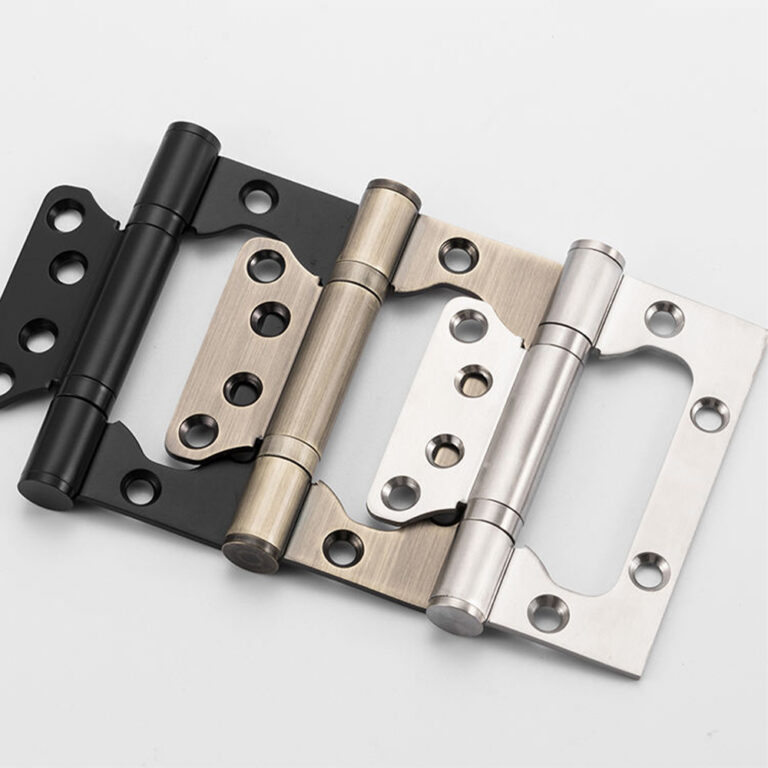
Looking for hardware solutions that meet European / American standards?
Use this guided inquiry modal to move from a generic quote form to a clearer technical conversation. Buyers can choose whether they need pricing, CAD / 3D files, or OEM / ODM support before sharing contact details.
Compatibility-first design across door / window systems
Repeatable production with clear inspection checkpoints
Documentation and change control for long-running programs
Responsive engineering support for fit and field feedback
A die-cast zinc lever, an extruded aluminum pull bar, and a stamped steel faceplate can sit on the same aluminum door, yet each one is formed differently, tooled at a different cost, finished by a different route, and likely to fail in a different way. For procurement and engineering teams, the forming process is not a background detail. It sets the geometry you can afford, the finishes you can apply, the defects you need to inspect for, and the tooling budget you commit before the first sample arrives. This guide explains how casting, extrusion, and stamping work in door and window hardware, how each performs, and what to define before you request a quotation.
What Is the Difference Between Cast, Extruded, and Stamped Hardware?
Cast hardware is formed by injecting molten metal into a steel mold. Extruded hardware is formed by pushing heated metal through a shaped die. Stamped hardware is formed by pressing sheet metal into shape with a punch and die. The starting material and the physics of each route decide what the part can look like.
Die casting. The North American Die Casting Association (NADCA) describes die casting as forcing molten non-ferrous metal, most commonly aluminum, into a mold under pressure. In door and window hardware this covers aluminum (A380, ADC12) and zinc alloy (Zamak) lever bodies, lock housings, gearbox bodies, and escutcheons. Dies can form irregular cross-sections, ribs, bosses, and fine surface detail in one shot.
Extrusion. In extrusion, the metal stays solid while it is forced through a die. NADCA’s comparison of die casting versus metal extrusion notes that the cross-section stays uniform along the whole piece, which is then cut to length. Cross-section changes, holes, and slots require secondary machining. Examples include long pull handles, track sections, and rails, usually in 6xxx-series aluminum such as 6063.
Stamping. NADCA’s page on die casting versus metal stamping explains that stamping feeds sheet or coil into a press and is almost always a cold-working process. It works on ferrous and non-ferrous metals alike. Typical hardware parts include faceplates, strike plates, keeps, hinge leaves, cover plates, and brackets.
NADCA is a die casting trade body, so treat its comparisons as useful but not neutral. Its geometry point matches general practice: die casting handles complex 3D shapes, while stamping becomes more economical as the part gets simpler.
How the Three Processes Compare for Hardware Buyers
The table below is qualitative guidance for typical door and window hardware. The tooling figures come from the Aluminum Extruders Council (AEC). Everything else is a general engineering comparison, not a measured specification.
Factor
Die casting
Extrusion
Stamping
Starting material
Ingot melted into alloy
Aluminum billet
Sheet or coil blank
Geometry freedom
Highest: 3D shapes, bosses, ribs, logos
Constant cross-section only
Flat or formed sheet; limited solid features
Typical tooling (AEC figures)
$25,000 and up
$500 to $5,000
$5,000 and up
Secondary operations
Trimming, machining of datums and threads, deburring
Cutting, drilling, tapping, milling, end finishing
Deburring, tapping or inserts, assembly, edge treatment
Die lines, shade variation after anodizing, bow or twist over length
Burrs, springback variation, cut-edge corrosion, deformation of thin sections
Usually the best fit
Compact, detailed, three-dimensional parts
Long, uniform parts
Thin, flat, load-bearing or high-volume parts
Which Process Fits Which Door and Window Hardware Component?
A common sourcing error is a process mismatch. One example is a flat bracket cast because its drawing was copied from a decorative handle. Another is a part designed as a casting but quoted as a stamping. This table maps common components to the process that usually fits. It is a starting point for discussion, not a universal rule.
Component
Process that usually fits
Reason
What to confirm
Window handle or lever body
Die casting (zinc or aluminum)
Ergonomic curves, spindle pockets, fixing bosses
Alloy grade, boss wall thickness, plating or coating system
Long sliding-door pull
Extrusion, with machined or cast end details
Uniform section, low tooling cost, low mass
Alloy and temper, hole positions, finish match to profile
Gearbox or lock housing
Die casting, often with stamped cover plates
Internal cavities and mounting features
Datum machining, fatigue of load points
Faceplate, strike plate, keep
Stamping
Flat, thin, repeatable, load carried in the sheet
Thickness, material grade, burr side, hole position
Hinge leaf or bracket
Stamping, extrusion, or casting depending on load and design
Load path and cycle target drive the choice
Test data for the finished hinge, not just material labels
Decorative rose or escutcheon
Die casting or stamping
Detail level against price
Edge quality, flatness, finish coverage in recesses
How Do Cast, Extruded, and Stamped Parts Fail Differently?
Process determines the typical weak point. Naming the weak point in the specification is more useful than writing “high-strength alloy.”
Cast Components: Hidden Defects Behind a Good Surface
Die casting produces the best detail, but it also produces defects a buyer cannot see from a sample. Porosity, cold shuts, and thin sections can sit behind a clean surface. They matter most where force concentrates: spindle sockets, screw bosses, hinge lugs, and keeper contact points. A powder coat may also show pinholes if porous castings outgas during curing. CHIER’s powder coating vs anodizing comparison for aluminum handles attributes this to casting quality as much as to the coating itself.
Zinc alloy adds its own considerations. Its corrosion protection usually depends on an intact plating or coating, and sustained loads at elevated temperature need attention to creep. The material-level trade-offs between aluminum, zinc, and stainless steel are covered in CHIER’s guide to aluminum, zinc alloy, and stainless steel door and window hardware.
Extrusion gives a uniform section. NADCA says extruded aluminum, magnesium, and zinc alloy parts can show strength similar to die-cast parts with higher ductility, although die-cast parts are stiffer. The AEC’s design material also lists 6063-type alloys among the 6xxx series noted for finish and corrosion behavior. It describes 2xxx-series alloys as high-strength but relatively low in corrosion resistance. For handles and pulls that will be anodized or powder coated, the alloy choice matters before the finish does.
The weak points are different. Die lines can show through thin anodized layers. Different alloys, tempers, or lots can anodize to visibly different tones, so a die-cast handle will not necessarily match an extruded profile. Long parts also need straightness and twist limits written into the drawing. Every hole, pocket, and thread is a machining operation, which is where extruded designs often lose their tooling advantage.
Stamped Components: Strong in Plane, Limited in Depth
Stamped steel or stainless sheet is ductile and consistent in thickness. That suits flat parts that carry load in tension or shear, such as keeps and faceplates. Typical issues are burrs on the cut side, bend-angle variation from springback, deformation of thin sections, and corrosion at cut edges where a plated or coated sheet exposes the base metal. Stamping struggles with solid bosses, deep threads, and sculpted surfaces. Designers add formed collars, rivet nuts, inserts, or a second component, and each one adds cost and an interface to inspect.
NADCA also points out that stamping generates a large amount of scrap even when it is recyclable, which can show up in material cost.
Finish Compatibility Depends on the Process, Not Just the Alloy
Finish decisions are often made after the process is locked, which is backward. The forming route limits which finishes are practical.
Anodizing suits extruded 6xxx-series aluminum. CHIER’s finish guide states that high-silicon casting alloys such as A380 and ADC12 generally anodize poorly and are more often powder coated.
Powder coating works across cast aluminum, extrusions, and steel stampings. Film thickness affects pivot bores, spindle holes, and threads, so masking needs to be on the drawing.
Plating is the usual route for zinc castings and steel stampings. Pores, sharp edges, and thin-coating zones are where protection starts to fail.
Mixed assemblies need separate finish logic for every part. A cast handle body, extruded backplate, and stamped keeper may each need a different finish yet still look matched under the same light.
Salt spray hours do not translate into years of service life, so any corrosion requirement should name the test method, specimen condition, and failure criteria. For stamped parts, include the cut edges in the specimen.
Is the Process with the Lowest Tooling Cost Also the Cheapest Part?
Not necessarily. The Aluminum Extruders Council’s design presentation lists typical part tooling costs of $500 to $5,000 for aluminum extrusion, $5,000 and up for stampings, and $25,000 and up for die castings. These are general reference figures from a 2021 revision, not quotes. Actual tooling depends on part size, complexity, number of cavities or stations, and steel specification. The AEC is also an extrusion trade association, so read the comparison with that in mind.
The useful lesson is that tooling is only one line in the total cost:
Total part cost = material + forming + secondary machining + finishing + inspection + rejects + assembly + packaging + freight.
Low tooling can mislead in both directions. An extruded design with many drilled and tapped features may accumulate machining time that a die-cast version would have formed in the mold. A die-cast design may justify its tooling only above a certain annual volume, and a stamped design may need extra assembly steps to replace a cast boss.
A Common Assumption Worth Challenging
Many buyers treat stamped parts as the economy option and cast parts as the premium option. That ranking holds for visual and tactile character, because cast zinc gives weight and detail. It does not hold for every function. For thin, flat, load-bearing parts such as keeps, strike plates, and faceplates, a stamped steel or stainless component can be the more reliable choice. The load runs through ductile sheet rather than a thin, possibly porous cast section. Conversely, a stamped part is a poor substitute for a compact 3D housing with bosses and internal cavities. The right test is the load path, the finish, and the volume, not the process’s reputation. Validate the decision with assembly-level testing rather than relying on the process label.
Illustrative Scenario: One Handle, Three Routes
This is a hypothetical example, not a customer case. A buyer needs a 600 mm pull for an aluminum sliding door in a matte black finish at a moderate annual volume. Casting a long, uniform bar is an expensive way to make a constant section. An extruded bar cut to length, drilled, tapped, and powder coated is a natural fit. If the design adds a branded end cap with a recessed logo, a small die-cast cap becomes reasonable. A stamped sheet-metal version would struggle to deliver the same solid-section feel. The best specification here is a hybrid, with each part made by the process that matches its geometry.
Why Hybrid Assemblies Often Outperform Single-Process Designs
A finished window or door handle is a mechanical assembly, not a single part. A cast body, a steel spindle, a stamped stainless keeper, and an extruded rail may each use a different process because each carries a different load or sits in a different exposure. The risk is in the interfaces: galvanic contact between dissimilar metals, thread engagement in thin sections, and finish variation across processes.
That is why component-level process choice belongs in the bill of materials, not just in the part drawing. Teams building one can follow CHIER’s walkthrough on how to build a complete hardware BOM for an aluminum door or window system. They can then record the forming process, alloy, finish, and test requirement against each line.
What Quality Checks Match Each Process?
Quality control should follow the failure mode, not a generic checklist.
Cast parts: alloy certificate, dimensional check of datums and bosses, and a screw-boss pull-out or torque-out test where the part is load-bearing. Add a review of porosity risk at critical sections by an agreed method, plus coating adhesion and appearance checks.
Extruded parts: alloy and temper declaration, straightness and section dimensions, hole and pocket positions after machining, die-line appearance limits, and shade approval for anodized or coated parts.
Stamped parts: material grade and thickness, burr direction and acceptable burr limits defined by the drawing, bend-angle and flatness checks, hole position, and edge treatment.
For a working example of how a supplier structures this, CHIER’s quality control and testing page describes first-article approval and critical-to-quality dimensions. It also covers in-process patrol inspection across die casting, stamping, CNC machining, and finishing coordination, plus finish and corrosion controls. Buyers who want to see the production route in person can use the factory tour to check which operations happen on site and which rely on approved external processes.
What Should Buyers Specify Before Requesting a Quote?
A supplier cannot recommend the right process from a photo. Send the information that sets the process, tooling, and price.
Drawings and samples. 2D and 3D files, or a physical sample, with critical-to-quality dimensions marked.
Function and load. Opening type, sash or leaf mass, operating-cycle target, and which surfaces carry force.
Material and alloy. Exact grade or acceptable equivalents, not just “aluminum” or “zinc.”
Finish system. Pretreatment, coating or plating type, color reference, gloss, texture, and masked areas.
Corrosion and test requirements. Test method, specimen condition, duration, and failure definitions.
Volume plan. First-order quantity, annual forecast, and SKU mix, because they decide whether a die-cast, stamped, or machined-extrusion route pays back.
Packaging and delivery. Labeling, protection against finish damage, and the required schedule.
Change control. Who approves alloy, process, or finish changes after the sample is signed off.
Ask which forming steps the supplier performs in-house and which are outsourced. CHIER’s manufacturing capacity page lists die casting and stamping or pressing as forming processes, supported by CNC machining, drilling, and tapping. It says capacity is reviewed per product and process route. It does not list extrusion as a forming process, so confirm in the RFQ whether an extruded blank is supplied by the buyer, bought from an approved source, or replaced with another route.
Frequently Asked Questions
Is die casting stronger than extrusion or stamping?
Not as a general rule. Strength depends on alloy, section thickness, defects, and load direction. NADCA says extrusions can show similar strength with higher ductility, while die castings are stiffer. Specify the load path and test the finished part.
Which process has the lowest tooling cost for hardware?
Aluminum extrusion usually has the lowest tooling cost. The AEC presentation cites $500 to $5,000 for extrusion, $5,000 and up for stamping, and $25,000 and up for die casting. Machining and finishing can still change total part cost.
Can die-cast handles be anodized?
Usually not with good results. High-silicon casting alloys such as A380 and ADC12 generally anodize poorly and often show uneven color, so die-cast handles are typically powder coated or plated. Extruded 6xxx-series aluminum is the more reliable anodizing substrate.
When is stamping better than casting for door and window hardware?
Stamping is usually better for thin, flat, repeatable parts such as keeps, strike plates, faceplates, and brackets, particularly at higher volumes. Casting is better when the part needs bosses, ribs, internal cavities, or sculpted three-dimensional surfaces in a single piece.
Do extruded hardware parts need secondary machining?
Yes, in most cases. An extrusion has a constant cross-section, so cut ends, holes, slots, threads, and any cross-section change are added afterward by machining. Those operations affect cost, so quote them together with the profile and finish.
How can a buyer tell how a hardware component was made?
Check the part itself. Castings show parting lines, ejector-pin marks, and gate remnants. Extrusions show lines running along the length and machined cut ends. Stamped parts show uniform thickness, burr edges, and bend lines. Confirm with the supplier’s process route instead of relying only on appearance.