Looking for hardware solutions that meet European / American standards?
Use this guided inquiry modal to move from a generic quote form to a clearer technical conversation. Buyers can choose whether they need pricing, CAD / 3D files, or OEM / ODM support before sharing contact details.
Compatibility-first design across door / window systems
Repeatable production with clear inspection checkpoints
Documentation and change control for long-running programs
Responsive engineering support for fit and field feedback
A hinge order can go wrong before the hinges leave the factory. A schedule that says “left-hand door” without naming the viewing side, or that lists “outward opening” without saying outward from which space, leaves the supplier to guess. Door hinge handing is the description of which edge of the door carries the hinges, seen from an agreed side, together with the direction the leaf swings. Those two facts decide where the hinge barrels end up, whether a handed hinge is required, how exposed the pins are, and how the lock and handle must be configured.
This guide explains how to read handing and opening direction from the hinge’s point of view, which hinge types care about hand, and what to put on a drawing so distributors, installers and OEM brands get the right part the first time.
What Does Handing Mean for a Door Hinge?
Door handing is defined by the hinge edge and the swing direction, viewed from a stated reference side. The hinge edge tells you left or right. The swing direction tells you whether the leaf moves away from the observer or toward the observer. Neither fact is complete without the other, and neither means anything until the viewing position is named.
In North American commercial practice, the reference position is usually the secure side, also called the key or exterior side. Dash Door’s handing guide uses that convention. Hinges on the left with the door pushing away is Left Hand (LH). Hinges on the right with the door pushing away is Right Hand (RH). A door that pulls toward the observer becomes Left Hand Reverse (LHR) or Right Hand Reverse (RHR). The same guide notes that outswinging doors are reverse-bevel doors.
For hinge buyers, the practical meaning is simpler:
Hinge edge decides which jamb and which door edge receive the hinge leaves and any mortise or prep.
Swing direction decides which face of the door the hinge barrels sit on, which affects exposure, clearance and the pin’s tamper resistance.
Hand of the hinge itself only matters if the hinge model is not symmetrical. That is a product question, covered below.
How to Determine Hinge Side and Opening Direction
Use the same four steps on every opening, and write the result on the schedule rather than relying on memory.
Choose the reference side. Stand on the secure, key or exterior side. For interior doors with no obvious secure side, the project must assign one, such as the corridor side, and apply it to every room.
Face the closed door and locate the hinges. Hinges on your left means left; on your right means right.
Open the door and note the motion. Away from you is inswing relative to that side. Toward you is outswing relative to that side.
Record the result in words and a plan sketch. Write the code (LH, RH, LHR or RHR), and add “hinges on left, door swings toward corridor” or similar. Mark the push side, pull side and the opening arc.
“Inward” and “outward” are location-dependent words. A door between a room and a corridor swings out of one space and into the other. Name the space (“opens into Room 204”) or the direction of egress, and the ambiguity disappears. The door handle handing guide on the CHIER site covers the lever and lock side of the same question in more detail, including reversible handle limits.
Inswing vs Outswing: What Changes for the Hinge?
On an inswing door the hinge barrels sit inside the protected space. On an outswing door they sit on the outside face, where anyone can reach them. That single geometric fact drives most of the hinge decisions in the table below.
Factor
Inswing door
Outswing door
Barrel and pin location
Inside the protected room
Outside, on the public or corridor face
Pin tamper risk
Low; pin is not reachable from outside
Higher; a loose pin can be driven out unless the hinge is secured
Typical hinge feature to specify
Standard butt hinge may be adequate for the application
Non-removable pin (NRP) or security stud, depending on the security requirement
Weather exposure
Hinges are sheltered
Barrels and fasteners see rain, dust and salt air, so material and finish matter
Egress consideration
Can conflict with exit rules for crowded or hazardous rooms
Often required for larger occupancies and high-hazard rooms
Clearance check
Door swings into room furniture and walls
Door swings into corridors, ramps and neighboring doors
Handing code
LH or RH
LHR or RHR
Security: why outswing exterior doors need pin protection
A standard loose-pin butt hinge allows the pin to be removed from the closed door when the barrel is exposed. A non-removable pin hinge uses a set screw in the barrel to lock the pin in place. A security stud is a projection on one leaf that engages a hole in the other leaf when the door is closed, so the leaves stay interlocked even if the pin is removed. Which one is needed depends on the opening’s risk level and any project specification. Do not assume the finish drawing already covers it.
Egress: swing direction can be a compliance matter
Direction of swing is not purely a design preference. Under OSHA’s exit route rule, 29 CFR 1910.36, a side-hinged door must be used to connect a room to an exit route. That door must swing out in the direction of exit travel if the room is designed for more than 50 occupants or is a high-hazard area. That is a U.S. workplace safety rule. Building codes, fire codes and other countries’ regulations differ, so confirm the governing requirement for the destination market before fixing the swing and the hinge specification.
Clear opening and hinge projection
With the door at 90 degrees, the hinge barrel, leaf thickness and door thickness reduce the clear opening width. On narrow openings or accessible routes, a standard butt hinge may not leave enough width, and a swing-clear or offset hinge may be considered. Ask the supplier for the hinge’s projection dimensions and check them against the frame drawing instead of relying on the nominal door width.
Are Door Hinges Handed?
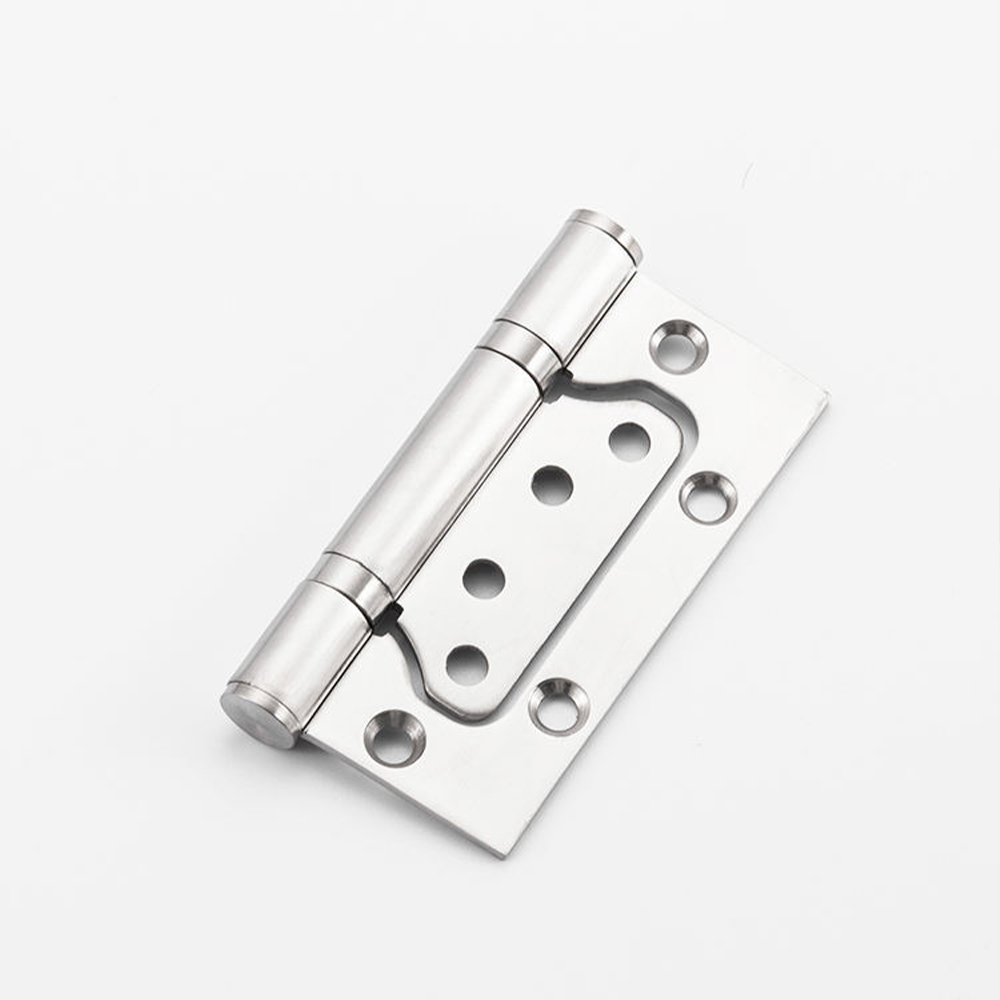
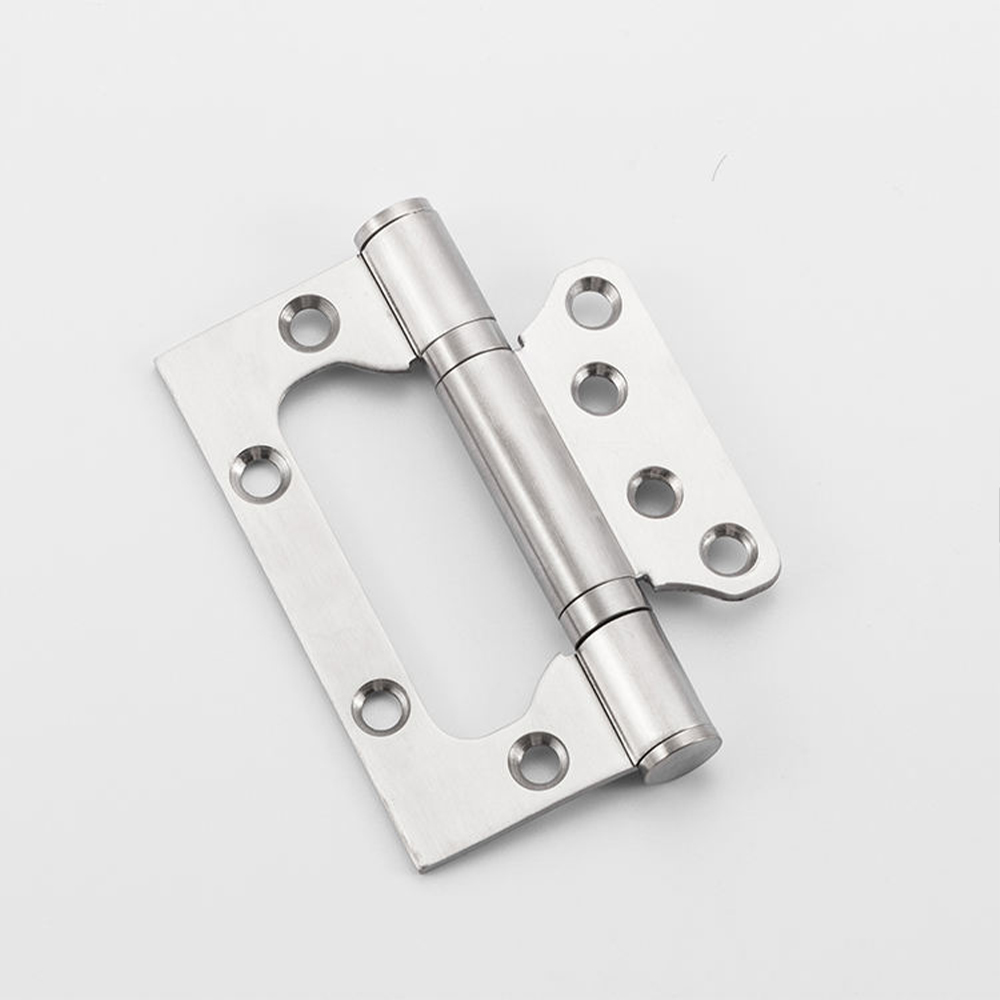
Most standard butt hinges are not handed: the same hinge works on a left-hand or right-hand door.Monroe Engineering’s guide to hinge hand explains that most butt hinges are common between left and right because the hole pattern is the same on both sides. It also notes that some hinges become left or right handed because of symmetry or mounting, with offset mortise-style hinges as an example.
So the door has a hand, but many hinges do not. The risk sits in the exceptions, which are easy to miss when a buyer treats “hinge” as one generic category.
Hinge type
Usually handed?
What to verify before ordering
Plain butt hinge (symmetrical leaves, same hole pattern)
Bearing arrangement, load rating basis, pin type (loose, fixed, NRP)
Rising butt hinge
Often yes, sold as left or right
Which hand closes the door the way you need, and the lift per opening
Spring or self-closing hinge
Model-dependent
Spring direction, tension adjustment, single or double action
Concealed hinge
Model-dependent
Whether the model is universal or supplied in left and right versions, plus opening angle and mortise prep
Continuous hinge
Usually no
Length cut-down, fastening pattern, door and frame material
Adjustable hinge (2D or 3D)
Model-dependent
Adjustment axes, travel range, hinge-side access to adjustment screws
The table is a screening aid, not a specification. Hinge families vary by manufacturer, and a drawing for the exact part has the final word. Handed behavior is most likely where a hinge has an offset, a lifting cam, a spring cassette or a concealed body. For adjustable products, the 2D vs 3D adjustable door hinge guide explains which correction axes matter and why the model-specific drawing should be checked.
A reversible hinge does not make the door reversible
A symmetrical butt hinge removes one ordering risk, but the door can still be wrong. Hinge side fixes the latch edge, the lock prep, the strike location, the closer arm position and the handle orientation. A buyer who relies on “the hinges are universal” may still order doors, locks and trim in the wrong hand.
Why Terminology Differs and How to Prevent Order Errors
“Left hand” does not mean the same thing in every catalog. Conventions can differ by region, publisher and product category, and a code that is clear to one team can be read differently by another. Schlage’s handing guide makes a related point: determining handing for locks and levers differs from determining handing for ordering and hanging doors.
To prevent mix-ups on international orders:
Put a plan-view sketch on every drawing, showing hinge edge, swing arc, push and pull sides and the reference side.
State the convention in words (“viewed from the secure side, outside the building”).
Photograph a sample opening from the reference side and attach it to the purchase order.
Confirm in writing how the supplier reads LH, RH, LHR and RHR before samples are made.
For paired doors, label the active and inactive leaf.
An illustrative scenario
This is a hypothetical example, not a customer case. A distributor orders 300 interior door sets for a hotel corridor project. The schedule says “LH” for every opening, but about half the rooms open into the room and half open toward the corridor, and nobody noted the reference side. The hinges are symmetrical, so they fit either way. But the doors, latches and levers are handed, and the rooms with the opposite orientation get the wrong trim and latch bevel. The hinge was never the problem. The schedule was.
Coordinate Hinges With Handles, Locks and Opening Type
Hinges are one interface in a hardware set. The same handing decision affects the lever’s return direction, the latch bevel, the cylinder position and the strike, so the data on one opening should feed all of them. Before releasing a set, run the lock and handle through the door handle and lock compatibility pre-order checklist. It lists backset, door thickness, spindle, PZ centers, handing, lock case, faceplate and keeper fit.
Opening type also changes what the set needs. A swing door, a sliding door and a tilt-and-turn window do not share the same hardware list, and mixed projects tend to lose track of this. The door and window hardware checklist by opening type is a useful cross-check for hinges, locks, handles, latches, closers and safety devices across a mixed schedule.
Does a Universal Hinge Solve the Handing Problem?
A common assumption is that the cheapest way to avoid handing errors is to buy “universal” or reversible hardware everywhere. It helps in one narrow area: fewer SKUs, and fewer left-versus-right hinge variants to stock. It does not remove the need for a controlled schedule, and it can hide trade-offs.
A hinge that fits either hand may not be the right hinge for an outswing exterior door, where pin security matters. A reversible lever may be compatible with the lock only on certain door thicknesses. In a high-volume program, the lower-risk approach is usually to fix the handing data first, then choose the minimum number of hinge and handle variants that cover it. That works best when the opening list is stable. For small, mixed or retrofit orders, a universal hinge can be a sensible way to cut stock.
What Should Buyers Specify Before Requesting a Hinge Quote?
A hinge quotation is only as accurate as the opening data behind it. Gather these items first:
Opening schedule: quantity per opening type, hinge edge, swing direction, reference side and plan sketch.
Door data: material, thickness, height, weight, and whether a closer, seal or glazing adds load.
Frame data: material, rebate, mortise or non-mortise prep and fastener path.
Hinge type and size: butt, ball bearing, spring, concealed or continuous; leaf size, thickness, knuckles and hole pattern.
Pin and security features: loose pin, fixed pin, NRP or security stud, especially on outswing doors.
Handed or non-handed: confirm whether the model comes in left and right versions.
Material and finish: stainless steel, plated or coated, and the exposure conditions at the site.
Compliance and test requirements: the applicable standard, load or cycle testing and any fire or accessibility rules for the destination market.
Packing and labelling: carton quantity, private label needs, and how handed items are marked.
Buyers can compare available butt hinges, ball bearing hinges, stainless steel hinges, spring hinges, concealed hinges and continuous hinges on the door hinges category page before sending a drawing. If a project needs a non-standard leaf size, hole position, pin structure or finish, the OEM and ODM development process outlines the stages from design-for-manufacturing review through tooling, samples, quality planning and packaging. Confirm any specific MOQ, lead time or capability with the supplier directly.
Frequently Asked Questions
How do I know if a door is left-hand or right-hand?
Stand on the secure or key side facing the closed door. If the hinges are on your left, the door is left-hand; if on your right, it is right-hand. If the door swings toward you, add “reverse.” Confirm the convention your supplier uses.
Are door hinges left-handed or right-handed?
Most standard butt hinges are the same for both hands because the hole pattern is symmetrical. Some types, such as rising butts, certain spring hinges and some concealed or offset hinges, can be handed. Check the model drawing before ordering.
What is the difference between inswing and outswing doors?
An inswing door opens into the room or protected space, so the hinge barrels are inside. An outswing door opens toward the corridor or exterior, which exposes the barrels and usually calls for non-removable pin hinges or security studs on exterior doors.
What does LHR or RHR mean on a door schedule?
LHR and RHR mean Left Hand Reverse and Right Hand Reverse. The hinges are on the left or right as seen from the secure side, and the door swings toward the viewer. This usually describes an outward-opening door in commercial schedules.
Do outswing doors need special hinges?
Exterior outswing doors usually need hinge pins that cannot be removed from the outside, such as non-removable pin hinges or security studs. Load, corrosion resistance and local code also matter. The right specification depends on the door’s security and exposure requirements.
Can the same hinge be used if I change the door’s swing direction?
Often yes for symmetrical butt hinges, but changing the swing moves the barrels to the other face of the door and may expose the pin. Handed hinges, locks, latches, closers and trim may also need to change.
What should I send a hinge supplier to avoid handing errors?
Send a plan-view sketch showing the reference side, hinge edge, swing arc and push and pull sides. Add door weight, thickness, hinge type, pin security needs, finish and quantity, and ask the supplier to confirm how it reads LH, RH, LHR and RHR.